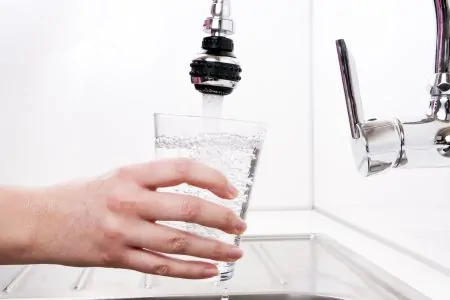
Thanks to modern plumbing, more of us have easy access to clean water than ever before. However, if you have ever used your faucet to fill a glass of water and noticed an unusual smell, you know that it isn’t always perfect.
Nobody wants to drink something that smells and tastes like chemicals, but it is essential that we drink water. If your water supply is flawed, it’s possible to attach a water filter to your faucet and purify your tap water.
In this article, we will take a closer look at home water filters, how they work, and why you might need one. We have also provided faucet water filter reviews of what we consider to be the best products available today.
- Lasts about 6 months
- Stainless steel design
- 0.5 GPM flow rate
- Budget-friendly
- No tools needed
- On/Off switch
- Protected by warranty
- Contributes to charity
- Instant access to pure water
- Indicator light
- Excellent customer support
- Aesthetically pleasing design
- Great value for money
- Stylish looks
- Eliminates harmful contaminants
- Easy filter replacement
- Filter indicator light
- Compact size
- Same features as costlier filters
- CE and ROHS certified
- Eliminates bad tastes and odors
Review Methodology: At Sensible Digs, we take pride in our hands-on experience and professional assessment of the best faucet water filters. Our comprehensive analysis and reviews are based on rigorous testing, comparing various models on key performance criteria such as filtration efficacy, flow rate, and durability. Our findings are grounded in quantitative data, ensuring you receive an objective measure of each product’s performance. We delve into design details, highlighting how they impact the user experience. By tracking and ranking each product, we provide the evidence you need to make an informed decision about the filter that best suits your needs. Trust in our expertise, as we navigate the complexities of choosing the best faucet water filter for your home.
The Best Faucet Water Filter Reviews of 2024
Now that you know everything you need to know about faucet water filters, it’s time to take a look at some of the best products you can buy. We have given you a head start by reviewing seven of the best faucet water filters on the market today.
Engdenton Stainless Steel Water Filter
Best Designed Faucet Water Filter
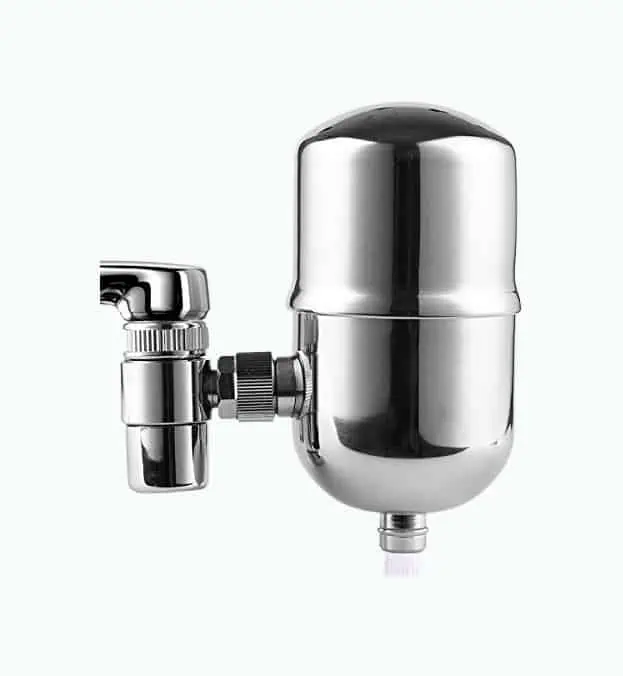
If your kitchen appliances are stainless steel, this tap water filter will blend seamlessly into your current aesthetic. The system is made of high-quality food-grade stainless steel and is both durable and crack-proof.
It uses activated carbon fiber to filter your water and can eliminate dirt and other organic compounds. It also inhibits bacterial growth. However, it is unable to filter out any completely dissolved solids as these can pass through an activated carbon filter.
The filter can swivel 360 degrees and should last for about six months, or 320 gallons of water.
What We Like
Long-Lasting
A long-lasting filter will save you time and money. You won’t need to worry about replacing any parts until after about six months of use. This is helpful if you lead a busy lifestyle.
Stainless Steel Design
Stainless steel is not only easy to clean, but it also has a sleek look. It leaves less room for corrosion, which reinforces its long lifespan. Other benefits of stainless steel include fire and heat resistance and impact resistance.
High Flow Rate
A high flow rate is very handy, especially if you need a drink of water quickly. This filter provides 0.5 GPM (gallons per minute), so you don’t need to worry about waiting for your glass to fill up.
What We Don't Like
Doesn’t Fit All Faucets
The biggest downside of this filter is that it won’t fit all faucet shapes and sizes snugly. This means customers have complained of leaking from the faucet as well as water spraying everywhere. Pay close attention to the design of your faucet before choosing this product.
Product Specs
| Gallons Per Minute | 0.5 GPM |
| Filter Type | Activated Carbon |
| Compatible Faucets | Standard |
| Filter Lifespan | 320 Gallons |
| Additional Features | Stainless steel |
Our Ratings
User Experience
PUR Plus Faucet Mount Filtration System
Best Lead Reducing Water Filter
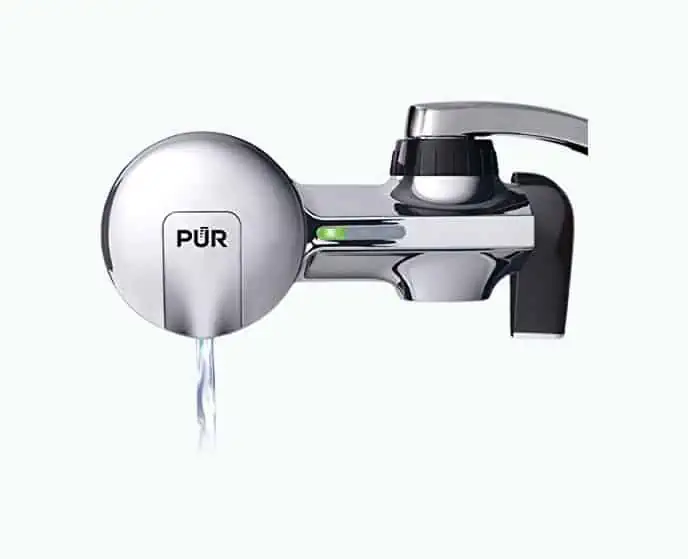
For cleaner, filtered water — the PUR Plus Faucet Mount Filter is a great option. It reduces lead and 70 other water contaminants including mercury and pesticides.
Tests showed that PUR reduces contaminants more than many other brands. This was based on a year spent comparing their product to bottled water.
How does it work? The activated carbon and ion exchange reduces the contaminants in the water. Then, the mineral core releases water with a crisp and refreshing taste. With this water filter, you can drink and stay healthy and hydrated, without consuming contaminants.
What We Like
Save Money
This water filter for your sink is a budget-friendly product, especially if you have previously had to buy bottled water. You could save up to a thousand dollars per year, depending on how many bottles of water you previously bought. You will be able to cut back on unnecessary spending and plastic waste as you can drink straight from the tap instead.
Easy Installation
Within a few minutes of receiving the product, you will be able to install it and enjoy fresh, clean water. It has a one-click attachment — no tools required. It works with most faucets, but not pull-out or hand-held ones.
Easy to Use
This water filter has an on/off switch. When you’re ready to use it, you simply turn it on, then back off when you’re done. Another great feature is that, when the filter needs to be changed, the unit will tell you! A little green indicator light will blink to show that it is time for a new filter. This should happen approximately every three months.
What We Don't Like
Leaky
Some customers have reported that the unit leaks, especially when you use the faucet at maximum water pressure. These leaks tend to come from the top of the adapter and to the side of the filtered water hole. Part of why this is a problem is that you can’t tell whether or not the leaked water has already been filtered. You might have half a glass of clean water and half of unfiltered, contaminated water.
Product Specs
| Gallons Per Minute | Not specified |
| Filter Type | Carbon and ion exchange |
| Compatible Faucets | Most, except pull-out or hand-held faucets |
| Filter Lifespan | 100 Gallons |
| Additional Features | Reduces 10x more contaminants than Brita (and other brands) |
Our Ratings
Personal Perspective
Waterdrop WD-FC-02 Long-Lasting Filtration System
Best Customer Service
If you like helping others and believe everyone deserves clean drinking water, this filter is for you.
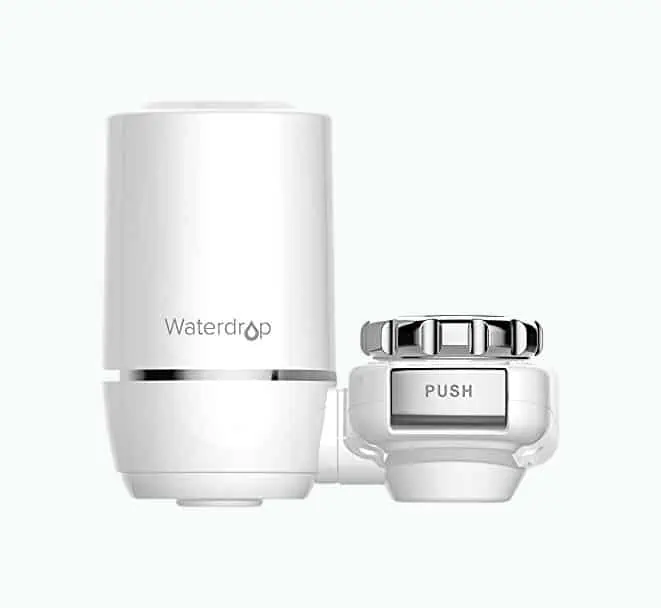
For every filter purchased, an entire day’s worth of clean drinking water is donated to one of two African schools.
This model also includes a 30-day satisfaction guarantee and a one-year limited warranty.
What We Like
Additional Benefits
It is very frustrating when you buy a product that doesn’t live up to your expectations. That won’t be a problem with this filter, as you are protected by both a 30-day satisfaction guarantee and a one-year limited warranty.
Works With A Charity
Waterdrop is partnered with The Water Project and specifically donates to the Ematsuli and Shiru primary schools in Africa. It is nice to know that your purchase will also benefit those in need.
Instant Access to Pure Water
This system provides 320 gallons per minute, which means instant access to pure water. This is great when you need a drink, as you won’t have to wait for the filter to kick in.
What We Don't Like
Compatibility Issues
This filter may not absolutely fit other faucet type so it is something to bear in mind when checking this out. Make sure to do your research if Waterdrop WD-FC-02 will perfectly fit your faucet to avoid the hassle of return.
Product Specs
| Gallons Per Minute | 0.5 GPM |
| Filter Type | Japanese UF+ACF Filter |
| Compatible Faucets | Standard |
| Filter Lifespan | 320 Gallons |
| Additional Features | 30-day money-back guarantee |
Our Ratings
Community Feedback
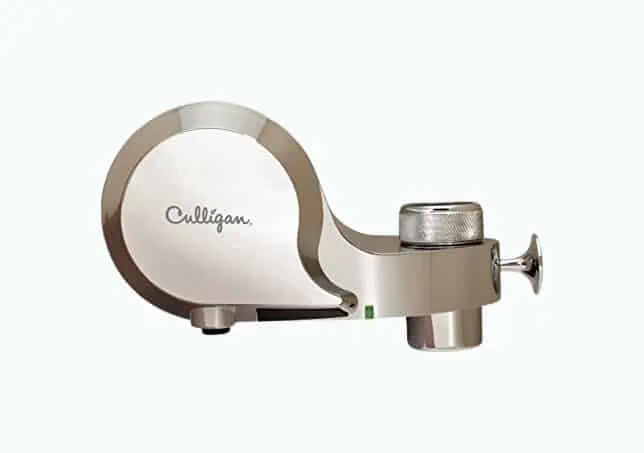
Culligan FM-100-C Faucet Mount Filter
Easy to Know When to Change
This filter is very convenient. It has a life indicator that will display a red light when it’s time to replace the filter cartridge. Each cartridge can purify up to 200 gallons of water before it needs to be changed.
It’s also very compact, making it an excellent option for anyone who doesn’t want to compromise on looks. The cartridge is easy to replace and it is available in both white and chrome finishes.
What We Like
Convenient Light Indicator
The life indicator is helpful as it is otherwise easy to lose track of when to replace a filter cartridge. This one has a light indicator that alerts you when it’s time to switch the cartridge. This ensures your water stays clean and you don’t encounter issues caused by a clogged filter.
You will probably notice a change in taste when the filter has run its course, but it’s still good to be prompted.
Free Installation Help
Culligan offers free advice and support to anyone who calls the company’s toll-free number. They encourage customers to call with any questions regarding installation or other issues and will help you work through the problem.
Aesthetically-Pleasing Design
The filter is very compact and blends in nicely with almost any color and design. This means the filter can contribute to the overall appearance of your kitchen, rather than contrast with it.
What We Don't Like
Issues With Leaking
Some users have experienced issues with leaking and the plastic adapters. As hot water expands plastic, try not to use your hot water for too long at one time. This will prevent most leak issues.
Product Specs
| Gallons Per Minute | 0.5 GPM |
| Filter Type | Activated Carbon |
| Compatible Faucets | Standard |
| Filter Lifespan | 200 Gallons |
| Additional Features | Life indicator light |
Our Ratings
First-Hand Impression
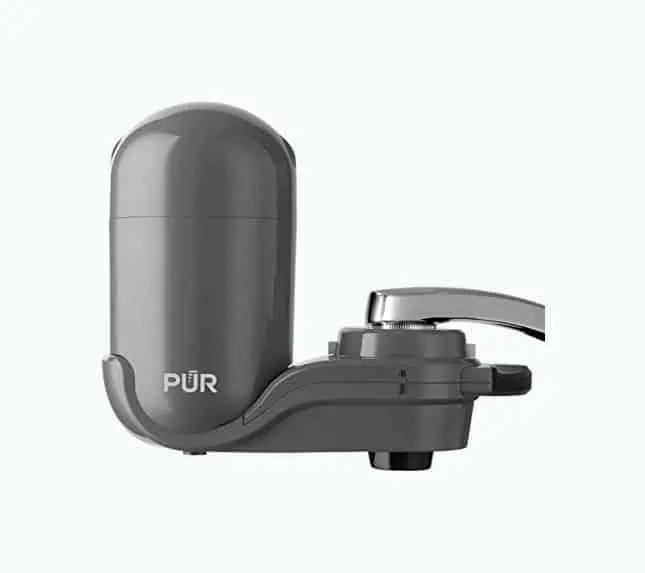
Pur Plus Faucet Mount Water Filtration System
Easiest to Use
This grey option will blend in with similar finishes in your kitchen. It has a sleek design and will fit any standard kitchen sink faucet.
We like this one because it is easy to install and use. In fact, no tool is needed for its installation.
The filter utilizes activated carbon and ion exchange to purify the water, this therefore reduces contaminants such as heavy metals like lead and mercury and allows you to enjoy 378.5 liters of filtered water. It is recommended to replace your filter every 3 months to maintain water quality. Additionally, a LED indicator light will tell you when the filter needs replacement.
What We Like
Great Value for Money
Each Pur Plus faucet filter provides up to 100 gallons of water which is cost-efficient instead of buying bottled waters which will cost you much.
Great for Aesthetics
This model doesn’t force you to compromise on looks. The exterior matches countless faucet designs, and its cylindrical shape is sleek and easy on the eyes. This makes it an excellent choice for both kitchen and bathroom faucets.
Eliminates Harmful Contaminants
This filter gets top marks for how many contaminants it filters out. Not only does it improve how your water tastes, but it removes lead, softens water, and eliminates mercury.
What We Don't Like
Doesn’t Fit All Faucets
The only real downside to this filter is that it doesn’t fit every faucet. Adapters are available to overcome this issue, but they aren’t subtle and can be quite unattractive. This isn’t a huge problem if you aren’t bothered by how your faucet looks — this filter is still excellent at what it does.
Product Specs
| Gallons Per Minute | Not specified |
| Filter Type | Activated Carbon & Ion Exchange |
| Compatible Faucets | Standard |
| Filter Lifespan | 100 Gallons |
| Additional Features | No tools installation |
Our Ratings
User Experience
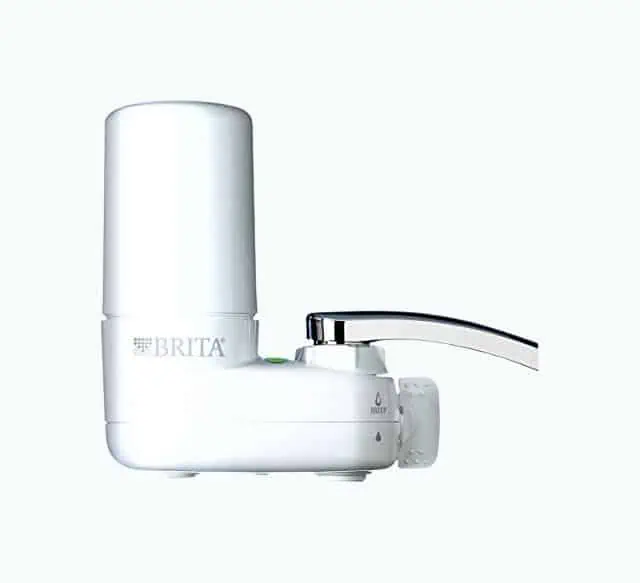
Brita White On Tap Faucet Water Filter
Crowd Favorite
This filter uses a multistage water filter to eliminate parasites and reduce chlorine, as well as other impurities. Its technology helps improve water quality. It also has a filter replacement indicator, which gives you a heads up when you need to change the filter for continued safe water access.
The filter is long-lasting, compact, and requires no tools during installation.
What We Like
Easy Filter Replacement
These filters are perfect for anyone who wants an option that is low maintenance and easy to install.
Filter Indicator
Some water faucet filters are not equipped with a replacement indicator, which makes it harder to keep track. The filter is the most important part of the system and, to maintain optimal performance, a filter indicator tells you when it needs to be replaced.
Value for Money
This company provides good value for money by improving the quality of your water supply without needing to break the bank.
What We Don't Like
Faulty Indicator
Although this model filters water effectively, one customer reported that the filter indicator was somewhere between green and red within days of installation.
This issue doesn’t appear to be widespread but, as the indicator is a selling point, it is concerning.
Product Specs
| Gallons Per Minute | N/A |
| Filter Type | Multistage Filter |
| Compatible Faucets | Standard |
| Filter Lifespan | 100 Gallons |
| Additional Features | Space-saving design |
Our Ratings
Personal Perspective
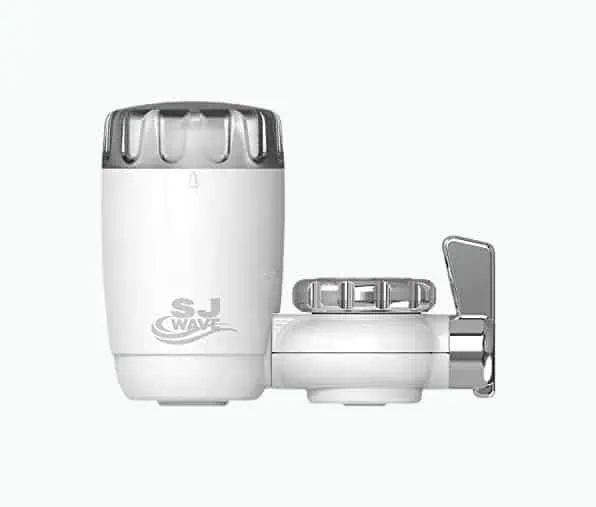
SJ Wave Faucet Water System
Best Budget Faucet Water Filter
If you are looking for cleaner water without breaking the bank, this option provides excellent value for money.
Despite its budget-friendly price, it still offers most of the features of the other filters on our list. It uses activated carbon and is equipped with an extra layer of filtration to soften and filter impurities out of your water. It fits the majority of standard home faucets.
What We Like
Budget-Friendly
Cost is an important factor in any home improvement purchase, however big or small it is. This filter made our list specifically for its budget-friendliness. It offers most of the same benefits as other water filters but at a reduced price.
Easy to Install
Installing this filter is straightforward. It doesn’t require any tools and will fit most standard faucets. However, keep in mind that it won’t fit unconventional faucet types.
Eliminates Odor
If you have ever turned on your faucet only for foul-smelling water to pour out, you know how unpleasant it is. This filter eliminates the unwelcome odors that sometimes come from unfiltered tap water.
What We Don't Like
Awkward Sizing
The main issue we have seen with this filter is that some people had trouble fitting it, even with a standard faucet. Before purchasing it, you should carefully measure your faucet to ensure the filter will fit properly.
Product Specs
| Gallons Per Minute | 0.5 |
| Filter Type | Activated Carbon |
| Compatible Faucets | Standard |
| Filter Lifespan | 320 Gallons |
| Additional Features | Post-filtration layer |
Our Ratings
Community Feedback
| Product | Best For | gal. p/m | Filter Type | Compatible Faucets | Filter Lifespan |
|---|---|---|---|---|---|
| Engdenton Stainless Steel Water Filter | Design | 0.5 GPM | Activated Carbon | Standard | 320 gal. |
| PUR Plus Faucet Mount Filter | Lead Reducing | N/A | Carbon and ion exchange | Standard | 100 gal. |
| Waterdrop WD-FC-02 | Customer Service | 0.5 GPM | Japanese UF+ACF Filter | Standard | 320 gal. |
| Culligan FM-100-C Faucet Mount Filter | Changing Filter | 0.5 GPM | Activated Carbon | Standard | 200 gal. |
| Pur Plus Faucet Water Filtration | Ease of Use | N/A | Activated Carbon & Ion Exchange | Standard | 100 gal. |
| Brita White On Tap Faucet Water Filter | Crowd Favorite | N/A | Multistage Filter | Standard | 100 gal. |
| SJ Wave Faucet Water System | Budget-Friendly | 0.5 GPM | Activated Carbon | Standard | 320 gal. |
How Water Filters Work
Water filters are a pretty simple concept — they remove impurities from your water. However, there is more to it, and more than one type of filter. In this section, we will explain the different types of water filters, as well as the advantages and disadvantages of each.
There are four main types of water filters:
Activated Carbon
Activated carbon filters are among the most popular and use charcoal to draw out any impurities from your water. They achieve this through the process of adsorption — when molecules bind to the surface of a compound.
These filters are excellent at removing unwanted chemicals and impurities. However, they won’t be able to rid your water of limescale, nitrates, or other “hard” factors.
Although activated carbon filters require periodic replacement as impurities clog the pores, they are a good option for anyone seeking a natural, eco-friendly way to clean their water. They will also last a significant amount of time.
Reverse Osmosis
Osmosis describes the passage of water through a semipermeable membrane, from a lower concentration of dissolved solutes to a higher concentration (1). During osmosis, the liquid is working to achieve equilibrium. Reverse osmosis, on the other hand, uses pressure to reverse this process and separate a substance from the liquid, rather than finding an equilibrium.
That sounds very complicated but in practice, it simply means a reverse osmosis filter uses pressure to remove unwanted materials from your water. A reverse osmosis filter is a great option because it will remove almost any harmful contaminants from your water supply.
Ion Exchange
When water comes into contact with an ion exchange filter, a chemical reaction occurs. This reaction removes dissolved ions from your water and then replaces them with ones that have a similar charge (2). Ion exchange is best for removing sodium and magnesium from water.
Ion exchange water filters are also very effective at softening your water. This can be very useful if you are dealing with hard water stains that need removal.
One negative of these filters is that they require periodic use of a particular type of salt to prevent mineral build-up in the unit. If you want a filter with minimal maintenance, this isn’t the best option.
Distillation
Distillation is essentially advanced boiling. As the water is boiled, steam is trapped in a separate container. The trapped vapor then condenses back into liquid form. Distillation is the least common of the four household water filtration systems, but it can be very effective (3).
This method is excellent at eliminating harmful bacteria and other contaminants, including both organic and inorganic compounds. However, it is a time-consuming process
Why You Need a Faucet Water Filter
Before water reaches your sink, it travels a long way, passing through an intricate network of pipes before arriving in your home. During that journey, dirt and other contaminants can find their way into your drinking water.
If consumed, those bacteria and other microscopic organisms can make you ill. A proper filtration system can remove those organisms, preventing their harmful effects and improving the taste of your water.
Here are some of the major benefits of installing a sink water filter:
- Filters remove sediment: Nobody wants to taste soil or clay in their water. While trace amounts of these don’t pose an immediate health risk, they can cause bad-tasting water.
- Reduce mineral levels: Minerals are beneficial for the body, but only in very small doses. Minerals such as iron and magnesium can also cause a metallic taste in your water.
- Get rid of pathogens: Filters are useful for keeping unhealthy bacteria from reaching your body. To ensure this, make sure you choose a filter listed as micro, ultra, or nano.
- Reduce chlorine levels: Most water treatment facilities use chlorine to kill bacteria before they reach the pipeline. This chlorine can give your water an unpleasant taste. Chlorine can also react with some metals to produce hazardous materials.
- Removes lead and chemicals: Filters are also very useful for removing lead and pesticides from drinking water.

Things to Keep in Mind
Before rushing to install a faucet water filter onto your sink, there are some things you should bear in mind. Perhaps the most important decision is to figure out which type of filter you need.
The Right Filter

Consumer Confidence Reports (CCR)
By July 1st of each year, you should receive a CCR, commonly known as an “annual water quality report”. In it, you will see where your water supply comes from and everything it contains.
The Environmental Protection Agency (EPA) offers a way for you to find the CCR for your area (4). You can search by your state as a whole, or you can see more specific data by providing your city or county.
Keep in mind that this report only states what is in your local water supply. It won’t tell you whether or not there is lead or other contaminants in your pipes.

Water Testing Kits
The best way to determine which type of filter you need is to personally test your water supply. Water supply test kits are available at most home improvement stores, but it is worth asking your local health department for one. In many cases, the health department will give you a testing kit for free (5).
Test Your Water

NSF Certification
Different filters work to remove different particles from the water. Search the packaging for an NSF (National Science Foundation) certification for what you want to filter out.
When a product is NSF-certified, it means the company adheres to strict standards with its products (6). Rather than receiving a one-time certification, products must be tested regularly to maintain their certification.

Cost and Maintenance
Keep in mind that as well as the initial cost of the filter, you will need to pay for any maintenance it requires. All filters will need to be replaced at some point, so if you prefer a hands-off approach, choose one with a proven track record of long lifespans.
Some faucet water filters include replacement parts, which can help reduce the extra costs.
FAQs

How Do You Install a Faucet Water Filter?
A faucet water filtration system includes the filter system itself and an adapter for your faucet. Installation methods vary depending on the brand and product, but they are all installed in similar ways. The adapter will need to be screwed onto your faucet and connected to your system.

How Should You Use a Faucet Water Filter?
Filter systems vary. Some filters don’t require any extra work once they’re installed. However, there are others that are equipped with a switch. This will allow you to switch from unfiltered to filtered water. This prolongs the life of the filter but you need to make sure your filter is on the right setting before using it.

Will My Filter Fit My Faucet?
When looking for a filter, you need to know the number of threads your faucet has. Make sure the thread number of the filter matches the thread number of your faucet. For example, if your faucet has eight threads, you should try to find a filter that also has eight threads.
What Are Faucet Threads?
Faucet threads are the grooves at the end of your faucet. They look similar to what you can find on the spout and cap of a plastic bottle. Choosing a filter that has the same number of threads as your faucet will ensure a snug, neat fit when you install the water filter.

How Often Should I Clean and Replace My Filter?
Depending on the shelf life of the sink filter attachment, it might last up to nine months. However, most companies recommend changing their filters every three to six months. Some faucet water filters have an indicator light that will tell you when it is time to replace the filter, removing any guesswork.

Is Buying a Faucet Water Filter Worth It?
A faucet water filter is worth it in the following scenarios: you like to drink tap water, the tap water in your area is contaminated, you have hard water, and this causes skin/scalp problems the more you shower.
Water filtration comes with a wide array of benefits, with the most important one being customizable contaminant removal.
It’s also a more eco-friendly approach to drinking water. If the tap water in your area is impossible to drink, you likely buy a lot of bottled water, which increases your household’s plastic waste.

How Long Do Faucet Water Filters Last?
Depending on the manufacturer’s recommendations, you should replace the filter attached to your faucet every two to three months. Remember that a filter’s lifespan can be shortened by high-traffic houses and the poor water quality in your home.

Which Faucet Water Filter Removes the Most Contaminants?
Systems that use reverse osmosis are typically the most efficient kind of water filtration available.
They can include more than seven stages of filtration and use a process called reverse osmosis, which enables them to remove 99 percent of contaminants from the water. These are connected directly to your water supply.

Do Faucet Water Filters Make Tap Water Taste Better?
Yes, faucet water filters make tap water taste better. However, remember that this is a filter, not a purifier.
When you turn on your sink’s faucet, the water first goes through a screen made of non-woven material wrapped around the filter. This screen captures sand and other forms of sediment.
After that, the water travels through a zeolite and carbon block that has been squeezed. There are millions of microscopic pores on the surface of each tiny granule of carbon.
These pores function similarly to a sponge and are excellent at extracting pollutants like chlorine from the water.
When water moves through carbon at a slower rate, there is more time for carbon to come into touch with the water, which increases the number of contaminants that can be removed.

What Do Faucet Water Filters Not Remove?
First, we have to establish what type of filter we’re talking about. For example, carbon filters are efficient in removing VOCs or chlorine but less effective when dealing with heavy metals, salts, or minerals. Filters, in general, won’t be able to remove bacteria from the water either.

Are Faucet Filters Better Than Pitchers?
There are plenty of reasons why faucet filters are considered better than pitchers. Because pitchers cannot address water concerns beyond a modest change in flavor or quality, they are best suited for usage in households with high-grade water.
On the other hand, if your household goes through substantial quantities of water regularly, a pitcher filter might not be the most effective or cost-effective alternative.
In this scenario, you should consider installing a faucet filter that will give you immediate access to drinking water with a more vibrant flavor straight from your tap or anywhere close to your tap.