A water filter pitcher is a great option if you want cleaner, safer drinking water without breaking the bank or altering your plumbing. They are affordable, easy to use, and very straightforward to maintain.
Water filter pitchers have rapidly grown in popularity in recent years and they are now a common sight in kitchens and offices. However, with so many different pitchers to choose from, you might struggle to sort the best models from the rest.
In this article, to help you choose, we have shared our top eight water filter pitcher reviews, chosen based on their effectiveness, size, and lifespan. We have also shared some tips to keep in mind when shopping for a pitcher of your own.
- Retains healthy minerals
- Removes heavy metals
- Filters fluoride
- No unpleasant aftertaste
- Quick filtration
- 3-month filter life
- Two filtration technologies
- Removes pathogens
- Durable glass
- 10-cup capacity
- BPA-free plastic
- Colorful design
- Five-layer filtration
- 5.4-liter capacity
- Water quality meter
- NSF-approved
- 5-stage filter
- Retains beneficial minerals
- Sticker filter chart
- No digital components
- Streamlined design
- Built-in spigot
- 18-cup capacity
- Electronic indicator
Review Methodology: At Sensible Digs, our hands-on experience and thorough research are used to guide our analysis and evaluation of the best water filter pitchers. We compare and test each product, using a series of rigorous benchmarks and criteria to measure performance. Our professional team scrutinizes every detail, from design choices to user experience. We track and rank every water filter pitcher, focusing on key decision-making factors such as filtration speed, capacity, material quality, and ease of use. This in-depth assessment, backed by solid evidence and data, allows us to recommend the top performers in the market. With Sensible Digs, you get a clear, objective, and trustworthy review that helps you make the best choice for your needs.
The Best Water Filter Pitchers of 2024
A water filter pitcher is a small investment that will provide cleaner, safer water whenever you need it, without having to make adjustments to your home’s plumbing system. Our water filter pitcher reviews take a closer look at eight of the best models you can buy today, chosen for their price, size, and effectiveness.
Invigorated Water pH Restore Pitcher
Best for Water Hardness
If you prefer hard water, this Invigorated Water model is a great option. Not only does it remove numerous toxins, but it also increases the alkalinity of your water. The resulting antioxidant water has calcium added during the filtration process.
This product can remove heavy metals including copper, zinc, arsenic, and lead. It also clears chemical toxins such as chlorine, chloramine, and to a lesser extent, fluoride. Don’t worry about organic pollution, as this filter also removes rust, sand, and sediment.
What We Like
Mineral Water
Water is considered hard with higher alkalinity than neutral. Mineral water usually has health benefits, but this pitcher increases those positive qualities. It adds calcium and selenium, has antioxidizing properties, and reduces the acidity of your water.
Removes Lead
One of the standout qualities of this pitcher is that it can remove lead, along with other heavy metals. It removes the most common toxins found in municipal water, which enhances its health benefits.
Removes Fluoride
Not all water filter pitchers can remove fluoride from your water, so it’s good to find one that does. It tackles numerous contaminants including heavy metals, chemicals, and organic pollution. This is a well-rounded pitcher that deserves the praise it receives from customers.
What We Don't Like
Strong Taste
This pitcher effectively removes contaminants, but some customers complain that the filtered water has an unpleasant taste. This is subjective, and the majority of customer reviews don’t mention problems with the taste. As the filter adds minerals, it isn’t surprising that the taste is affected, if only slightly.
Quality Is Lacking
Some customer reviews mention that the quality of the pitcher and lid could be better. This is seen in manufacturing defects and the pitcher being broken easily. However, there are no complaints about the filter or the pitcher’s overall effectiveness.
Product Specs
| Heavy metal purification? | Copper, zinc, arsenic, lead |
| Chemical purification? | Chlorine, chloramine, fluoride |
| Water softening? | No (hardens water) |
| Capacity | 14.7 cups/3.5 liters |
| Filter | Activated carbon |
| Special features | High negative oxidization reduction potential, adds calcium and selenium |
Our Ratings
User Experience
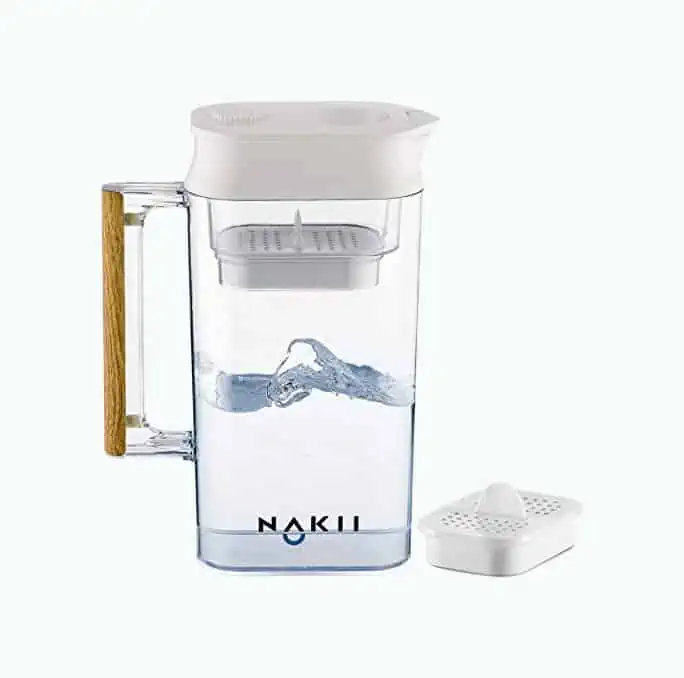
Nakii Water Filter Pitcher
Best Quality Water
This Nakii pitcher offers excellent value for money and has received strong positive feedback from customers. It is large, durable, efficient, and provides among the best water quality we have seen from a pitcher.
This pitcher filters water more quickly than many of its competitors, with 1.3 liters of water purified in just a minute. Nakii also claims that its filters last twice as long as its competitors, with maintenance only required every three months.
It can filter heavy metals, organic pollutants, and toxins. These include mercury, rust, limescale, sediment, and chlorine. It also removes odors, so your water will smell as pure as it tastes. Furthermore, it has been approved by FDA and was certified by WQA for NSF/ANSI 42 and NSF/ANSI/CAN 372.
What We Like
Great-Tasting Water
Customer feedback on the purified water quality is excellent. The filter doesn’t cause an aftertaste and removes any hint of chlorine and other contaminants. The resulting water is clean, fresh, and free from common contaminants, which are the priorities of a water filter pitcher.
It Works Fast
This filter is much faster than many competitors. While most other water filter pitchers take several minutes to filter a full reservoir, this model only takes a minute.
This speed doesn’t come at the expense of effectiveness, as the filter is still very thorough.
Low Maintenance
Three months are less than the average lifespan of six months but these filters still last longer than most of their competitors. This means you will spend less time on maintenance, and less money on filter replacements. And if you get to spend for filter replacements, it won’t costs you much too.
What We Don't Like
Fuss About Filter
This product’s filters are strong and durable, but there are some questions about the filter. Some customers complained that the filter tips and drips thereby mixing the unfiltered water into the filtered one.
Product Specs
| Heavy metal purification? | Lead, rust, mercury |
| Chemical purification? | Chlorine |
| Water softening? | No |
| Capacity | 2.35 liters |
| Filter | Activated Carbon Fiber |
| Special features | None |
Our Ratings
Personal Perspective
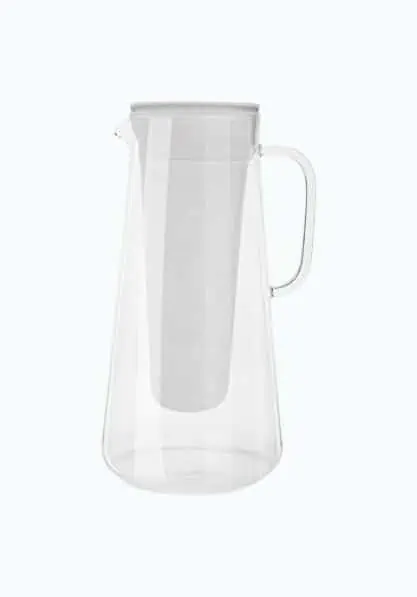
LifeStraw Premium Water Filter Pitcher
Best for Filtering Germs
The LifeStraw Premium pitcher is a great option if you prefer mineral water. It uses activated carbon and ion-exchange filters that do a lot more than simply clean your water.
Its standout quality is that it not only removes pathogenic microorganisms but also filters harmful chemicals and other heavy metals.
The membrane microfilter can last for up to a year or until it has filtered 264 gallons. The filters are durable and designed to last longer before they become clogged.
This pitcher is made more user-friendly and convenient by its easy-fill lid.
What We Like
Two Filtration Technologies
This pitcher uses a dual filtration system. First, the membrane microfilter removes harmful pathogens such as bacteria and parasites that are often present in unfiltered water. Then, an activated carbon and ion-exchange filter is responsible for removing heavy metals such as lead and mercury, as well as chemicals including PFAS, pesticides, and herbicides.
This filter preserves magnesium and potassium in the water, which both have health benefits. Although the membrane microfilter needs to be replaced annually, the activated carbon and ion-exchange filter needs to be changed every two months.
Softer Water
Unlike some filter pitchers, this one softens your water. It doesn’t remove magnesium or potassium, electrolytes that your body needs to function properly. This means you get the best of both worlds: softer water that hasn’t had its healthy contents removed.
Fights Pathogens
The membrane microfilter gives this pitcher antibacterial properties, something that many filter pitchers fall short in. As a result, you will drink some of the cleanest water you have ever tasted.
Break-Resistant Glass
Made of borosilicate glass, this filter is far more resistant to breakages, making it a safer choice for homes with small children. Its smooth surface and shape also make cleaning much easier.
What We Don't Like
Lack of Information
We know that this pitcher filters out several pathogens and heavy metals, but we need more information regarding how to clean and maintain the filter to extend its lifespan.
Product Specs
| Heavy metal purification? | Lead, mercury, chromium, cadmium and copper. |
| Chemical purification? | Chlorine, pesticides and herbicides, dirt, sand. |
| Water softening? | Yes |
| Capacity | 7 cups/1.65 liters |
| Filter | Membrane microfilter. Activated carbon + ion exchange filter |
| Special features | Easy-fill lid. |
Our Ratings
Community Feedback
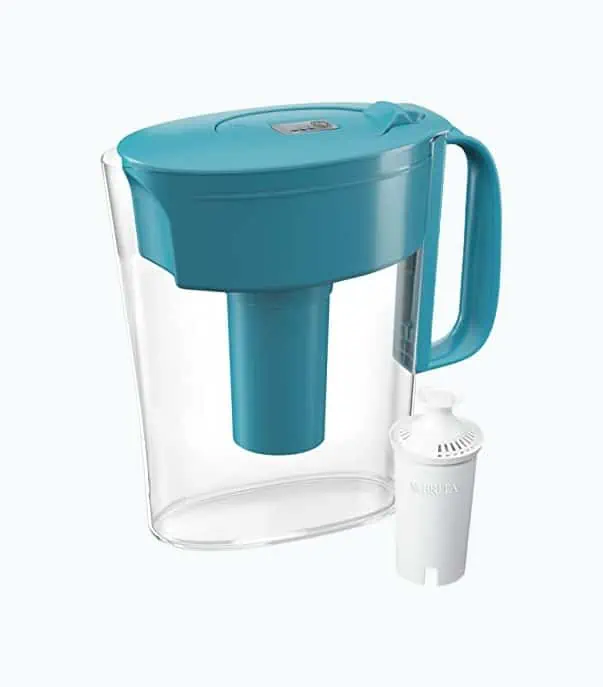
Brita Grand
Best for Your Budget
Brita is a consumer favorite for home filtration, and this product lives up to that reputation. It provides the best of Brita at a lower cost than you might expect.
This pitcher filters out cadmium, copper, mercury, and chlorine, which also improves the taste and smell of your water. It has a 10-cup capacity and is made of BPA-free plastic.
There are also some helpful features to make life easier. The lid is easy-fill and locks into place, and the pitcher also has an indicator and a soft-touch handle.
What We Like
Great Value
Despite being a budget-friendly pitcher, this doesn’t lack any of the expected features. Its design is streamlined, there are user-friendly features and it has the standard 10-cup capacity. Brita has again proven itself as an industry leader and produced an excellent pitcher at a reasonable cost.
Excellent Design
The easy-fill lid is made even better by its lock. The design of this pitcher is excellent, from its build to its lid. It is easy to use and the likelihood of spills or breakages is minimal.
Stylish Appearance
You can choose from a range of colors if you want to match your pitcher to your kitchen’s decor. This product proves that just because a pitcher is a water filter, it doesn’t mean it can’t look good.
What We Don't Like
Difficult Disassembly
The lid locking into place can be both a positive and a negative. Many customers mention that assembling this pitcher is simple, but taking it apart can be frustrating. The first time can be tricky, but people seem to get to grips with it quickly.
It’s Fragile
Some customer reviews mention that you should handle this pitcher with care as it isn’t very durable. There are also reports of it breaking and cracking without much force being applied, so be careful not to drop it.
Product Specs
| Heavy metal purification? | Chromium, copper, mercury |
| Chemical purification? | Chlorine |
| Water softening? | No |
| Capacity | 10 cups/2.6 liters |
| Filter | Activated carbon |
| Special features | LED display, easy-fill lid, lid lock, soft-touch handle |
Our Ratings
First-Hand Impression
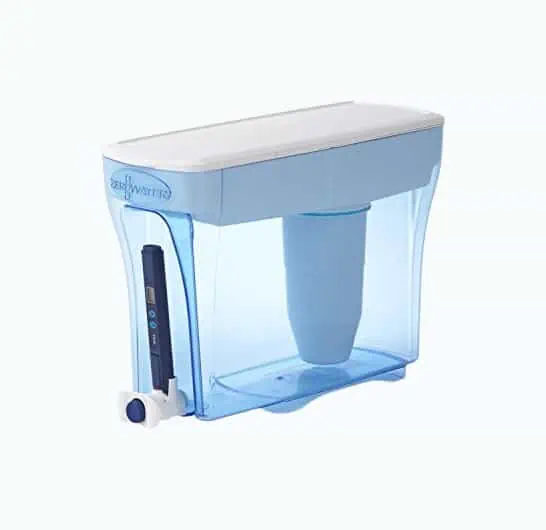
ZeroWater ZD-018 Water Filter Pitcher
Largest Capacity Water Filter Pitcher
This water filter pitcher uses five-layer filtration to remove heavy metals from your water. It can remove chromium, perfluorooctanoic acid, fluoride, mercury, aluminum, and lead. Your water quality will improve, and so will its taste as a result.
It is built with BPA-free plastic and has a 23-cup capacity. The TDS Meter removes any guesswork by measuring the contaminants in your water before and after it is filtered, which is a very rare feature.
What We Like
Five-Layer Filtration
The majority of pitcher filters are unable to remove fluoride, but this one does. It also clears chlorine and limescale from your water, leaving you with purer water than most competing brands.
Easy To Use
Perhaps the biggest drawback of pitcher filters is how often they need to be refilled. In contrast, this pitcher has a 5.4-liter capacity and should last a while longer than average before you need another trip to the faucet.
Water Quality Meter Included
This pitcher’s standout feature is its water quality meter. It tells you how many contaminants are removed from your water by the filtration process and confirms that it is safe to drink.
What We Don't Like
Height
This pitcher is too tall to fit into some standard refrigerators at a height of 15 inches.
Product Specs
| Heavy metal purification? | Lead, chromium & PFOA/PFOS |
| Chemical purification? | Fluoride, chlorine, iron |
| Water softening? | Yes |
| Capacity | 23 cups/5.4 liters |
| Filter | 5-level filtration: ion exchange |
| Special features | TDS meter |
Our Ratings
User Experience
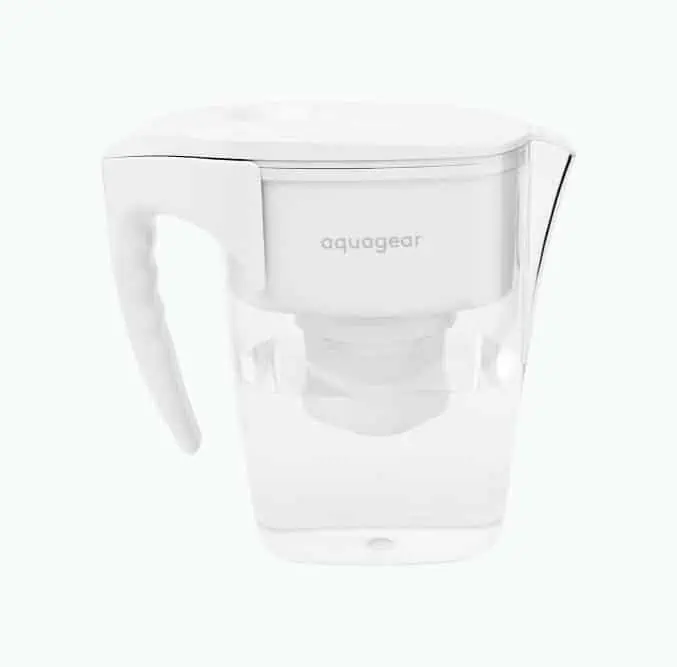
Aquagear Water Filter Pitcher
Best High-End Model
If you’re willing to spend more on a water filter pitcher, this Aquagear product is well worth the money. It is NSF-approved, having undergone testing in Flint, Michigan to prove its effectiveness.
This pitcher incorporates triple-capacity, five-stage filters designed to last longer and filter more thoroughly than its competitors. It filters out the usual heavy metals, as well as lead, chloramine, chlorine, and fluoride.
It retains your water’s mineral content for healthier hydration. Your investment is also protected by a lifetime guarantee.
What We Like
Purifies More
This pitcher filters beyond our usual expectations to provide water of excellent quality. It filters out lead, chloramines, and fluoride — something that not all pitcher filters are capable of.
Retains Minerals
This product not only purifies your water, it also retains its beneficial mineral content. Some filter brands don’t distinguish between good and bad materials in your water, but this one does.
Proven Efficiency
This filter is BPA-free, recyclable, and both NSF and FDA-approved. It was tested on the water in Flint, Michigan for copper and lead removal, so it is proven in real-world scenarios.
What We Don't Like
Costs More
This is a highly effective and efficient filter, but you get what you pay for. It is significantly more expensive than most of our other recommendations. It is worth the money but might cost more than your budget permits.
Frustrating Design
Some users complain that the lid is not well designed and that spills are always possible. If the water overflows, it will recontaminate the water that has already been filtered. You might want to watch this pitcher closely, if possible.
Product Specs
| Heavy metal purification? | Chromium, copper, mercury, lead |
| Chemical purification? | Chlorine, fluoride |
| Water softening? | No |
| Capacity | 8 cups/1.8 liters |
| Filter | Triple capacity, 5-stage |
| Special features | Premium food-grade build, NSF and FDA-approved, recyclable |
Our Ratings
Personal Perspective
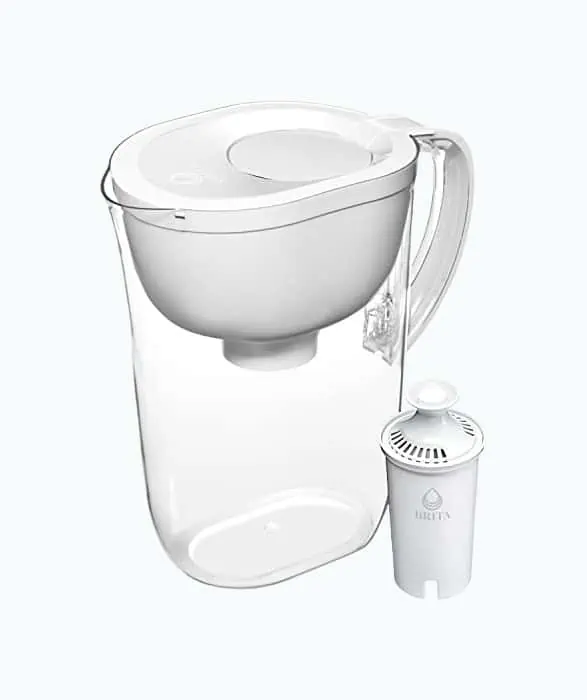
Brita Everyday Pitcher
Best Starter Pitcher
If you want a simple pitcher without many extra features, we recommend this Brita model. It is streamlined, easy to use, and has all the essential features you need from a water filter pitcher.
It is BPA-free, has a 10-cup capacity, and includes a sticker filter chart for easy reference. The filter removes copper, cadmium, mercury, and chlorine.
There isn’t much more to it! This is a no-nonsense filter for anyone seeking healthy hydration without needing to learn about extra features. It is simple, effective, and has everything you need.
What We Like
No Digital Components
If you prefer not to have any digital features on your filter, this model is ideal. There is still a filter indicator, but no batteries are required to use it.
Streamlined
This product doesn’t have any unnecessary features. It is a straightforward water filter pitcher with no complicated components. If you want a pitcher that does its job without overcomplicating matters, this is a great choice.
Ease of use is emphasized with this product. It will be user-friendly enough for anyone, even people who usually try to avoid using technology.
Fair Price
This isn’t the most affordable Brita on the market, but it is also far from the most expensive. It is intended for effortless everyday use without breaking the bank.
This pitcher is one of the best low-budget water filter pitchers you will find, without compromising its effectiveness.
What We Don't Like
Frustrating Filling
To fill this pitcher, you will need to remove the entire lid. This isn’t a major issue but it does make it less convenient to use. Buyers are still satisfied with this product overall.
Insecure Filter
Another recurring issue is that the filter is known to pop out of place. Some customers also complain that the lid comes loose easily, which can lead to spills. Check that everything is securely in place before you use the pitcher.
Product Specs
| Heavy metal purification? | Chromium, copper, mercury, lead |
| Chemical purification? | Chlorine, fluoride |
| Water softening? | No |
| Capacity | 8 cups/2.6 liters |
| Filter | Activated carbon |
| Special features | Filter indicator sticker |
Our Ratings
Community Feedback
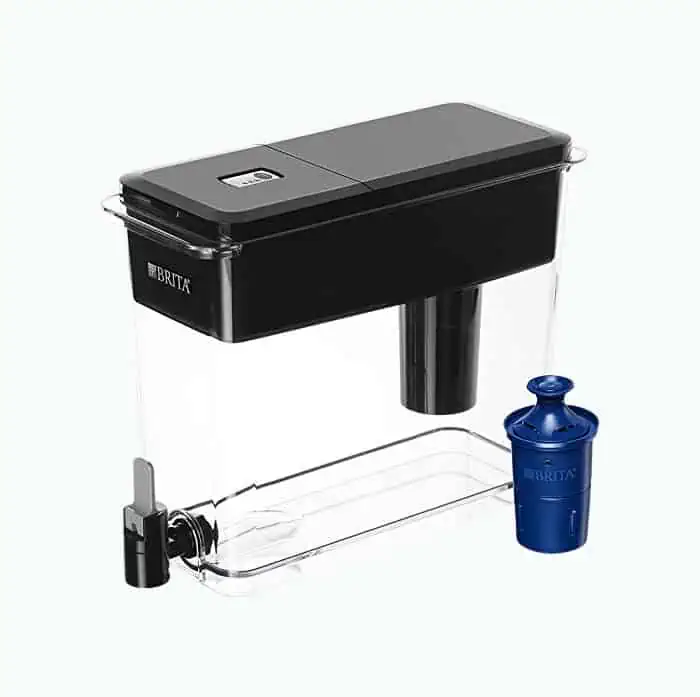
Brita Ultramax Dispenser
Most Convenient
The Brita Ultramax Dispenser is far from an ordinary water filter pitcher. It features a built-in spigot, so you won’t need to lift the entire unit when you want to pour a glass of water.
With an 18-cup capacity, it is one of the largest of our recommendations. This makes it a great option for families or people who consume a lot of water throughout the day. This also means you won’t have to refill it as often.
This tabletop dispenser can filter cadmium, copper, mercury, and lead, as well as chlorine. It also has a helpful electronic indicator.
What We Like
Large Capacity
18 cups is an excellent capacity, especially in a busy home. As the unit has a spigot, you won’t need to lift any extra weight when you pour a drink. This also means you won’t need to refill the reservoir as frequently.
Affordable
You don’t pay extra for this unit’s special features. This model is available at a price that is in line with other pitchers, so it offers good value for money.
It has a higher capacity than other pitcher filters and is easier to use. This makes it a great alternative to conventional pitchers that cost similar amounts.
Hassle-Free
Spills are common with water pitchers, but this unit’s spigot means they won’t be a problem. This product functions as both a water filter and a dispenser. It is easier to use and more accessible as a result.
Consider this water filter dispenser if your household contains children or anyone with limited strength, who may be unable to lift or use a standard pitcher.
What We Don't Like
Be Wary of Leaks
It is important to be gentle with the spigot, as it weakens over time. However, some customer reviews mention that the spigot began to leak after a few months. If this occurs, you should contact customer support.
Flimsy Filters
Some customers complain that the filters aren’t as durable as they should be. You might need to replace them sooner than recommended by the manufacturer, which will increase both the cost and maintenance time.
Product Specs
| Heavy metal purification? | Cadmium, copper, mercury, lead |
| Chemical purification? | Chlorine |
| Water softening? | No |
| Capacity | 18 cups/4.2 liters |
| Filter | Activated carbon |
| Special features | Spigot, electronic indicator, easy-fill lid |
Our Ratings
First-Hand Impression
| Product | Best | Heavy metal purification? | Water softening? | Capacity | Filter |
|---|---|---|---|---|---|
| Invigorated Water pH Restore | For Water Hardness | Copper, zinc, arsenic, lead | No | 14.7 cups/3.5 liters | Activated carbon |
| Nakii Pitcher | Quality Water | Lead, rust, mercury | No | 2.35 liters | Activated carbon fiber |
| LifeStraw Premium | For Filtering Germs | Lead, mercury, chromium, cadmium, copper | Yes | 7 cups/1.65 liters | Membrane microfilter, Activated carbon + ion exchange filter |
| Brita Grand | For Your Budget | Chromium, copper, mercury | No | 10 cups/2.6 liters | Activated carbon |
| ZeroWater ZD-018 | Largest Capacity | Lead, chromium & PFOA/PFOS | Yes | 23 cups/5.4 liters | 5-level filtration: ion exchange |
| Aquagear Water Filter Pitcher | High-End Model | Chromium, copper, mercury, lead | No | 8 cups/1.8 liters | Triple capacity, 5-stage |
| Brita Everyday Pitcher | Starter Pitcher | Chromium, copper, mercury, lead | No | 8 cups/2.6 liters | Activated carbon |
| Brita Ultramax Dispenser | Most Convenient | Cadmium, copper, mercury, lead | No | 18 cups/4.2 liters | Activated carbon |
How to Choose the Best Water Filter Pitcher
At a glance, filter pitchers don’t look much different from ordinary jugs, but there is a lot more to them. To help you choose the best water filter pitcher possible, you should keep these points in mind when shopping.
Check Its Capacity
It is easy to assume that bigger is always better where filters are concerned, but a larger pitcher will be heavier when full and will take longer to filter. On the other hand, a pitcher that is too small will require constant refilling.
Consider how much water you need throughout the day and choose a pitcher accordingly. You need to find the right balance of sufficient capacity and ease of use.

Material Used
Pitchers are available in a variety of materials and each type has advantages and disadvantages. Which material you should choose is largely a matter of personal preference.
Plastic and metal pitchers are safer and more durable, but the material must be BPA-free to prevent contaminants from entering the water after it has been purified. On the other hand, glass pitchers don’t contain any BPAs, but they are also more fragile and usually heavier.

What Does It Filter?
This is more important if you have noticed a specific issue with your water source. Different filters will remove different contaminants, so make sure your chosen filter will remove your specific contaminants.
Not all pitchers will filter out every type of heavy metal, while others are unable to filter out chlorine. This depends on the individual brand or product, so look closely at the specifications.

Will It Soften Your Water?
Not all filters will soften water, so you will need to do some research if you want a model that does.
Keep in mind that you are unlikely to find a true water-softening pitcher. Instead, look for ionizing filters that alter the alkalinity of your supply. Softer water will naturally result from this.
Be Aware

Is It NSF-Certified?
The easiest way to determine if your water pitcher is safe to use is to look for the National Sanitation Foundation (NSF) seal of approval. This organization regulates which filters are the safest to use, to ensure you have access to safe water.
Checking whether or not a product is certified is very easy, as the NSF maintains a comprehensive database. If you are in any doubt, you can simply look up the brand or model that interests you (1).
This isn’t to say that you should avoid water filter pitchers without this seal, but it is a reliable way to prove that a filter product will be safe.

Consider the Filter Costs
Maintenance costs are generally quite low for water filter pitchers, but you still need to pay attention to the price of replacement cartridges.
Activated carbon filters are the most popular type, so double-check which filters your pitcher accepts. You don’t want to encounter any difficulties later if the filters are specialized, rare, or expensive to replace.
Remember that you will need to replace the filter at least twice per year, so choose filters that are affordable and easy to find.

Does It Have Special Features?
Some top-rated water filter pitchers have advanced features that make them more convenient and easier to use. One of the most common features is a digital indicator that informs you when it is time to replace the pitcher’s filter.
These extras aren’t necessary and won’t impact how effective the pitcher is at filtering water. However, they can make life a little easier and mean you won’t have to manually keep track of your filter’s lifespan. They will increase the cost of the pitcher, if only slightly, so keep this in mind before you choose one.
Make the Most of Your Water Filter Pitcher
Here are some steps you can take to ensure your pitcher continues to function properly for as long as possible:
- Don’t let the filter stand: If you have a carbon filter, you should replace it if it has been opened without being used for more than two weeks (2).
- Cold water only: Most manufacturers warn against filtering warm water using their pitchers. It can damage the filtration material, significantly reducing its effectiveness. Some manufacturers also say to only use disinfected water, but most municipal water in the United States is treated before it reaches your home.
- Flush your pitcher: Before using your water purifier pitcher for the first time, you should clean it. Filters are at risk of contamination when they are packaged and shipped. Flushing your pitcher will remove dust and debris, and it activates the carbon inside the filter.
- Trust manufacturer instructions: As a general rule, you should replace your pitcher’s filter twice per year. However, if the user manual says to replace the filter more often, even monthly, you should follow those guidelines instead.
- Fridges are fine: Most manufacturers recommend storing your pitcher in a refrigerator. This won’t impact the effectiveness of the filter itself, but it will keep your filtered water cooler and fresher for longer.
Before You Buy a Water Filter Pitcher
Water filter pitchers are versatile, convenient, and effective, but they are not perfect. Before you buy one, keep the following drawbacks in mind.
They Filter Slowly
If you need a quick drink but your filtered water pitcher is empty, it can take a while to filter the water you fill it with. In some cases, it can take as long as 15 minutes to filter a full reservoir of water. To avoid having to resort to drinking water from your faucet, it is a good idea to always refill your pitcher after drinking from it.
Limited Supply
Water filter pitchers offer many benefits but they can’t filter large amounts of water without being refilled. Their compact size and ease of use make them ideal for drinking water but not much else. If you want purified water for bathing or cleaning your home, it is worth investing in a bigger system.
They Don’t Disinfect
Pitchers are excellent for filtering out a wide range of contaminants, but they probably won’t be able to protect against certain pathogens. However, they will remove bacteria, which is why it is important to replace the filters regularly.
FAQs

Is It Worth Buying a Water Filter Pitcher?
Water filter pitchers are worth it if you have contaminated water in your area. Consumer Reports and The Guardian conducted a study on water contamination. They found lead in almost every water sample tested from community water systems serving more than 19 million people.
Lead is a heavy metal released into drinking water when water pipes and plumbing fixtures in homes corrode. It’s not uncommon to use chlorine to kill germs in the water. Nevertheless, the byproducts of disinfection can also harm one’s health.
A correlation has been found between higher levels of chlorine exposure and increased rates of cancer, particularly in more rural and low-income locations.
Filter pitchers for water are not a miracle cure, but many can lower the amount of chlorine, lead, and disagreeable tastes or odors in the water.

What Water Filter Pitcher Removes the Most Contaminants?
According to a 2022 product review, The Clearly Filtered pitcher can eliminate more than 365 contaminants usually found in tap water.
This is the highest number of contaminants removed by a water filter pitcher. This product comes with plenty of water quality certifications and is considered better than the popular Brita pitcher.

What Do Water Filters Not Remove?
Water filters do not remove all the potential contaminants found in tap water. For instance, most water filters can’t remove bacteria, and the only exception to this rule is the

How Do I Extend the Life of My Water Filter Pitcher?
The best way to extend the life of your water filter pitcher is to make sure you change the filters as per the manufacturer’s instructions.

Is Zerowater Better Than Brita?
Out of these two brands, Brita is regarded as the better one. It can remove contaminants better but also helps get rid of water odors more efficiently. Brita is more compact, therefore, more efficient if you like to keep the water pitcher in the fridge and have them occupy less space.
If you are concerned about lead in the water, then you want to go for ZeroWater because it can remove lead, which Brita filters can’t do. However, note that ZeroWater filters are more expensive to replace.