Clean water is a vital part of living healthily and, for most people, the majority of that water comes from a kitchen faucet. To ensure you are consuming clean water, you could install an under sink water filter, which cleans the water right before it leaves your faucet.
Under sink water filters have become increasingly popular, particularly in small homes where you might only need to purify one or two outlets. However, with so many options to choose from, it might be unclear which one you should choose, or if you should buy one at all.
To help you decide, this article will explore why under sink water filters have become popular, and why you might consider getting one. We have also provided under sink water filter reviews of our top picks, based on budget, effectiveness, size, and required maintenance.
- Filters 50,000 gallons of water
- Uses KDF-55 filtration media
- Doesn't require filter replacement
- Removes lead
- Retains essential minerals
- Built-in shut-off valve
- NASI certified
- Direct connect wall-mounted
- Filters last 3 years
- Reverse osmosis system
- Six-stage filtration
- Processes 75 gallons per day
- Suitable for well water
- Five-step filtration system
- Includes lead-free faucet
- Water flow rate of 2.25 GPM
- Compact size
- Filtrete Advanced filter
- 11 stages of filtration
- Filters 100 gallons per day
- Approved for use with well water
Review Methodology: At Sensible Digs, we’ve undertaken meticulous research and hands-on testing to analyze and review the best under sink water filters. Our team of professionals has made a thorough assessment, comparing the performance of various models, using set criteria and benchmarks to provide an accurate evaluation. We track data and record findings, focusing on key decision-making factors such as filtration capabilities, installation ease, and filter lifespan. Our reviews and results are based on first-hand experience and evidence, offering you a comprehensive guide that stands apart from others. We delve into the design choices of each filter, measuring their impact on user experience. Trust our expertise to guide you in making the best choice for your home.
The Best Under Sink Water Filter Reviews of 2024
To help you narrow down your options, we have provided reviews of what we consider the best filters you can buy today. We took both user feedback and professional reviews into consideration when picking these top-rated products, and ranked them based on budget, effectiveness, size, and required maintenance.
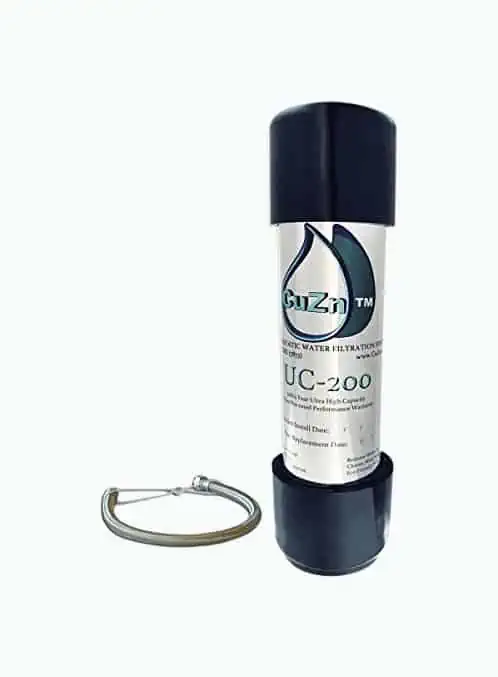
CuZn UC-200 Under Counter Water Filter
Best for First-Time Installers
With a small footprint, this model is suitable for use almost anywhere.
It is easy to install and low maintenance. Designed to process 50,000 gallons of water — or to be used for five years — you won’t need to worry about having to work on it regularly.
A multistage processing system provides comprehensive filtration and addresses common water problems. Test your water before buying this unit as it won’t filter out some impurities, including fluoride. It is bacteria and mold-resistant, which keeps it functioning for longer.
This product is designed to be used exclusively with municipal water. While installation is easy on standard plumbing set-ups, it can also be modified for non-standard plumbing. Customer support can be contacted for an additional installation kit or to answer any questions.
What We Like
Great Warranty
This unit includes a five-year warranty that covers product or component failure. It also comes with a great 90-day money-back guarantee to ensure customer satisfaction. If it doesn’t perform to your expectations, you can expect your return to be hassle-free with no questions asked.
Easy to Install
An excellent option for a first-time installer, everything you need is included with your purchase. Remove the hose, attach the new unit, and your filter begins working immediately — it hooks directly into the existing cold water line.
Some under sink water filters require an additional faucet or water lines, though many work without a separate faucet. For this installation, you should only need an adjustable wrench. If you find yourself stuck during the process, a detailed instruction manual and a how-to video are included to guide you.
Multistage Filtration
Although this is a single enclosed unit that doesn’t occupy much space, it still has a multistage filtration process. Acid-washed coconut shell and activated carbon target foul odors and unpleasant taste.
A micro sediment membrane works to remove debris and particles. One more stage, which uses KDF-55 filtration media, targets bacteria and inorganic contaminants such as lead and heavy metals.
The three-step filtration process leaves you with great-tasting water that contains far fewer contaminants.
No Filters to Replace
Designed to work for five years (or to process 50,000 gallons of water), there is no need to swap out filters. When the time comes, you simply remove the whole unit and replace it with a new one. This keeps maintenance simple and straightforward, with no extra care needed in the meantime.
What We Don't Like
Not for Well Water
This filter is designed for municipal water as the supply is already regulated and falls within specific parameters. Although this filtration method is a great option for light filtration of city water, it isn’t heavy-duty enough to tackle well water.
If you have a well, look for something larger and more sophisticated as your primary filtration system.
Product Specs
| Weight | 8 pounds |
| Dimensions | 4.5 inches by 4.5 inches by 15 inches |
| Installation Method | Directly connect to cold water hose; necessary installation components included |
| Flow Rate | 2 GPM |
| Capacity | High capacity |
Our Ratings
User Experience
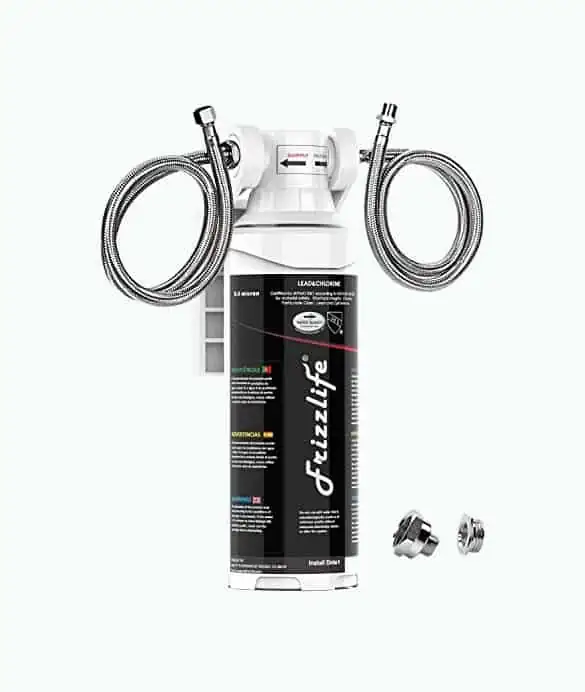
Frizzlife Under Sink Water Filter System
Best Budget Under Sink Water Filter
A two-stage filtration system is designed to remove the bulk of heavy-metal contaminants from your drinking water. These include mercury, rust, other organic compounds, and carcinogens. During the process, bad odors and unpleasant tastes are also filtered out of the water.
This unit is suitable for use on both ½-inch and ⅜-inch cold water lines. Converter fittings are included to make installation quick and easy. A built-in shut-off valve grants you extra control during filter changes.
Each system is designed for high capacity and will work for two years or the processing of 1,600 gallons of water. For optimal performance, look to replace the inner filter every 6 to 8 months.
What We Like
Great for Removing Lead
This is an excellent choice if you want to clear your water of heavy metals. Its two-stage filtration technology uses 0.5 microns of carbon. This sophisticated compound filter can remove 99.9% of lead from your drinking water.
Ongoing Money-Saver
Not only is this unit budget-friendly to buy and install, but it is also affordable to maintain. The inner filter costs far less to replace than enclosed plastic filter models. This means you will save money in both the short and long term.
Affordable filters also mean you can replace them more often, letting you always enjoy fresh-tasting water.
Won’t Interfere with Essential Minerals
This filter does a great job of removing impurities from your drinking water, but it is designed to intentionally leave essential minerals where they are. Calcium, potassium, sodium, and magnesium — all building blocks for a healthy body — will remain in the water.
If you have an imbalance of any of these essential minerals, including fluoride, post-filtration, you might want to consider an alternative filter.
Installation Components Included
Installation is quick and easy. This is a direct connect system that ties straight into your existing hose. Anyone can use the twist-in design, and it takes less than three minutes to set up or change.
Included with this filtration system are the following components: filter system, converter, two wrenches, water tape, three screws, one inlet hose, and one outlet hose. No additional installation materials are required.
What We Don't Like
Only for Use with Municipal Water
This model isn’t designed for heavy-duty filtration. Larger impurities and contaminants found in completely untreated water — such as that from a well — can easily clog the filter.
Even if the filter is still usable, these contaminants can significantly inhibit the water flow, slowing the filtration process.
Product Specs
| Weight | 4.35 pounds |
| Dimensions | 13.8 inches by 5.6 inches by 5.3 inches |
| Installation Method | Direct connect to cold water hose; necessary installation components included |
| Flow Rate | 2 GPM |
| Capacity | High capacity |
Our Ratings
Personal Perspective
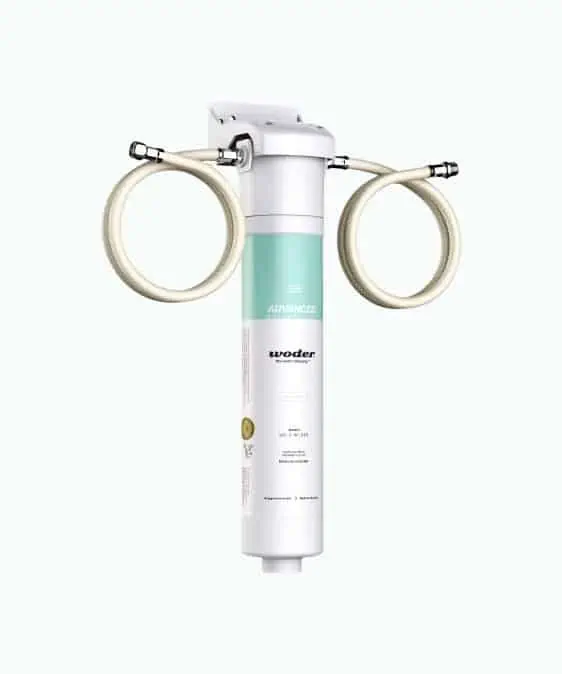
Woder 10K-Gen3 High Capacity Filtration System
Best Low-Maintenance Under Sink Water Filter
This Woder filter is an excellent option for reducing turbidity, odors, and unwanted particles in your water.
This filtration system is easy to install and has great longevity, with minimal maintenance. You can expect to replace the filter cartridge every few years, or every 10,000 gallons, to keep your water clean and fresh.
No additional plumbing work is needed, and it is suitable for a novice to install alone. This is a direct connect model that screws into the existing cold water line; it shouldn’t be used with hot water. All the components needed to complete the installation are included with this product.
What We Like
Provides High-Quality Drinking Water
This unit removes many of the heavy-metal contaminants you don’t want in your water. It is designed to target rust, mercury, lead, chromium 6, and VOCs while also reducing odor and taste issues.
This filter not only removes the bad stuff, it also leaves the good stuff behind! Magnesium, calcium, potassium, and other essential minerals remain where they are to provide healthy and great-tasting water.
Low Maintenance
This is a high-capacity unit that is designed to work for three years without needing to be replaced. That equates to about 10,000 gallons of water.
Replacement cartridges are readily available when the time comes to refresh your filtration system.
Simple to Install
Even inexperienced DIYers can successfully install this unit.
It is a direct connect wall-mounted option that screws into your existing cold water connection line. Your purchase includes two hoses, the filter, and the head with built-in valves to make installation quick and easy.
Filters Are Fully Tested
This model — like all Woder filters — has been extensively tested. It fulfills the National American Standards Institute requirements when tested by independent laboratories. This means you can expect a high-quality product and healthy, great-tasting water.
What We Don't Like
Not Recommended for Hot Water Use
Using this filter with hot water will shorten its life expectancy. While it will still filter the water effectively, it will not last as long.
You will also need to stay away from heavy sodium and softened water to extend the filtration system’s life.
Not Suited for Well Water
Like other small filters, this model is designed for municipal water that has already been treated. This water has already had rough sediment and strong imbalances removed, making it suitable for the less intensive filtration these systems provide.
If you want to filter water from a well, you should consider a whole-house filtration system instead.
Product Specs
| Weight | 2.85 pounds |
| Dimensions | 3 inches by 3 inches by 15 inches |
| Installation Method | Direct connect; installation components included |
| Flow Rate | 2 GPM |
| Capacity | High capacity |
Our Ratings
Community Feedback
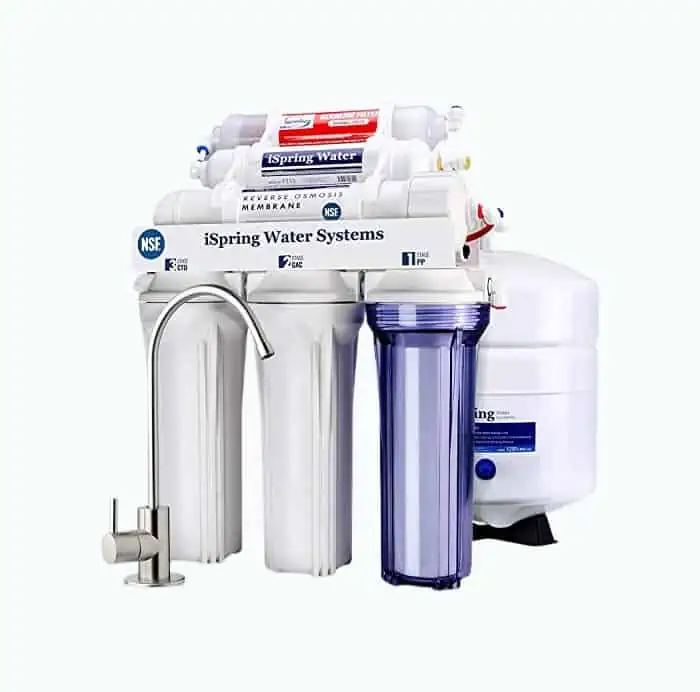
iSpring RCC7AK 6-Stage Water Filter System
Best Under Sink Water Filter for Preserving Essential Minerals
If you are looking for a little more from your water filtration system, you should consider this unit. It is a reverse osmosis system designed to fit in tight spaces while filtering and softening your water.
Although this model isn’t recommended for well water use, a variant equipped with UV filtration is available and it is appropriate for well water. This unit is capable of processing 75 gallons of water per day.
What We Like
Thoroughly Removes Contaminants
A heavy-duty system, this filter can remove over 99% of more than 1,000 different contaminants that are found in water. These include common impurities such as lead, arsenic, chlorine, and fluoride. There will also be fewer bacteria and viruses in your water when using this system — it can even combat persistent giardia.
Six-Stage Filtration
Most reverse osmosis systems have five stages of filtration. These units do an exceptional job of removing contaminants, but they are so effective that they also strip the water of essential nutrients. This can leave you with nutrient-deficient water that is also on the acidic side.
This system’s sixth stage places those minerals back into your water, leaving you with balanced water that tastes natural but is free of impurities.
High-Quality Components
The quality of the components used means your filter will last you longer and require less maintenance throughout its lifespan.
The first stage’s housing canister is transparent, letting you easily check on the primary filter’s status. Visual assessment is quick and you will know when it’s time to replace your filter.
Rigorously Tested
These filters have been extensively tested to ensure there are no leaks or drops in water pressure. This not only gives you a more efficient filtration system, but it also prevents leaks that could damage your home.
This model is approved for drinking water but does come with a “Prop 65” warning due to the PVC used in its construction. The warning is included for public awareness and is required by California law.
What We Don't Like
Complicated to Install
Reverse osmosis systems are complicated and take longer to install than direct connect units. If you have any doubts about the process, consider hiring a plumber to complete the installation.
Product Specs
| Weight | 20 pounds |
| Dimensions | 14.5 inches by 5.2 inches by 18.5 inches |
| Installation Method | Wall-mounted; installation components included |
| Flow Rate | .05 GPM |
| Capacity | High capacity |
Our Ratings
First-Hand Impression
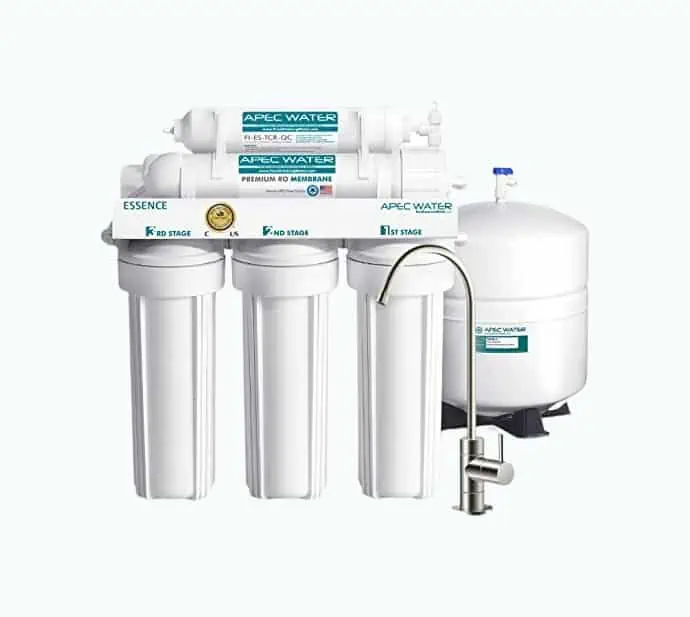
APEC Top Tier 5-Stage Water Filter System
Best Budget Reverse Osmosis System
Designed with tight spaces in mind, this is a reverse osmosis system that should fit comfortably beneath your kitchen sink.
It uses a five-step filtration system that removes 99% of water contaminants. Not only will debris and sediment be removed, but so will harmful chemicals and organic agents, such as viruses and bacteria.
This includes a 100% lead-free faucet and FDA-certified food-grade tubing to complete your installation. This ensures no impurities will get into your water between the filtration system and your open faucet.
What We Like
Suitable for Well Water Use
This APEC model is capable of handling all water sources, even if the water hasn’t been treated previously. It can filter out 1,000 different contaminants and leaves your water tasting fresh and free of impurities. As you might expect, this filter is also appropriate for use on municipal water.
Exceptional Warranty
Upon registration, you receive a two-year extended warranty that covers your product for defects or damage. It is guaranteed to remove 99% of your water’s impurities and remain leak-free.
High-Quality Construction
Top-quality materials have been used in the construction of this reverse osmosis filter.
It is clearly labeled for easy installation and maintenance. The product has been designed and engineered in the United States. While components are manufactured elsewhere, all assembly occurs in the United States.
Customer Support for Installation
Installing a sophisticated water filtration system can be complicated. Thankfully, this filter comes with an easy-to-follow instruction manual. While the filter may be more complicated than others to set up, it’s still designed for homeowners to install alone.
If you encounter any difficulties during installation, customer support is available to walk you through the process. A video tutorial is also available to make installation a breeze.
What We Don't Like
You Will Lose Healthy Minerals
This filter does a fantastic job of removing harmful substances from your drinking water. However, during the filtration process, you will also lose many of the minerals you do want — ones that are beneficial to your health.
You should consider adding some of those minerals back into your water or compensating with supplements. Regularly test your water and keep an eye on your health after you install the filter.
Product Specs
| Weight | 25 pounds |
| Dimensions | 16 inches by 5.2 inches by 17.5 inches |
| Installation Method | Wall-mount |
| Flow Rate | 0.03 GPM |
| Capacity | High Capacity |
Our Ratings
User Experience
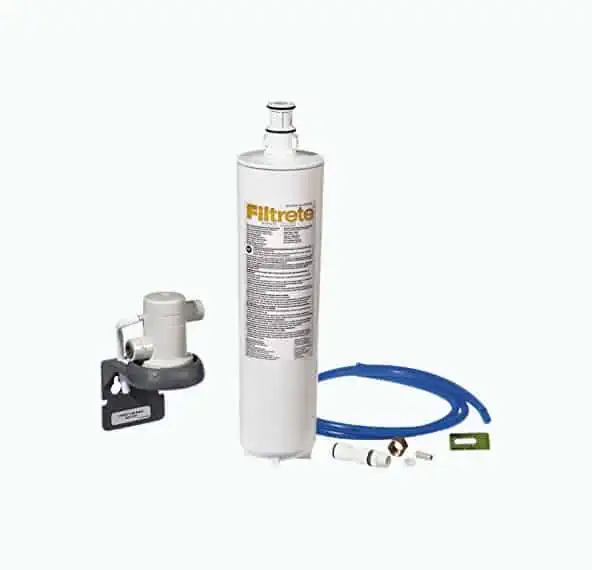
Filtrete Advanced Under Sink Water Filtration System
Best Under Sink Water Filter for Small Spaces
This small filter packs a tremendous punch, capable of removing rust, sediment, chlorine, and negative odors and tastes. It will reduce the contaminants in your water by more than 99%. Despite being so thorough, it won’t impede water flow.
Installation is quick and easy, taking less than half an hour. Keep in mind that you can use this filter safely anywhere outside the kitchen — something to think about before installation.
Expect to replace the filter every six months. More heavy-duty Filtrete filters can be used with this system.
What We Like
Small Footprint
You won’t have to worry about space with this filter, making it a great choice for almost any under-sink area. It is designed to be mounted against the wall, connecting directly to the cold water line.
Multiple Filter Options
This system comes equipped with a Filtrete Advanced filter. However, it is designed to work with other filters in the same line. You can choose from Maximum, Advanced, or Standard filters to get exactly the kind of filtration you need.
Simple Installation
The straightforward installation process will see your new water filter set up in just a few minutes.
Start by turning off the water, then connect the supply hose to the quick-connect outlet on the filter head. Attach the second supply hose to the other quick-connect point on the filter head.
Once the head is installed, it takes just a quarter of a turn to lock the filter into place. Turn the water back on and you will be up and running.
Great Water Flow
With a water flow rate of 2.25 GPM, this unit provides fast filtration. It is intended to process 2,000 gallons of water and should be replaced every six months.
If your water has more sediment or you use more water than the average household, you may need to replace it more frequently.
What We Don't Like
You May Need a More Substantial Filtration System
This filter is intended for low-demand usage and may not be sufficient for heavy-duty filtration.
Although this filter won’t slow the water flow, it can become clogged by larger sediment or debris. If your water has a lot of impurities, as is usually the case with well water, you may want to consider a different kind of filter. Check out an APEC or Express Water filter.
Double Check Your Hoses
This product includes most of what you need to complete your installation. Standard sink hoses are usually 1/2-inch or 3/8-inch.
While some under sink inline water filter products include fittings for conversion, this one doesn’t. To complete the installation, you will need to make sure this unit works with your hoses, or buy the necessary components separately.
Product Specs
| Weight | 3.17 pounds |
| Dimensions | 4 inches by 6.8 inches by 14 inches |
| Installation Method | Wall-mounted direct connect |
| Flow Rate | 2.25 GPM |
| Capacity | High capacity |
Our Ratings
Personal Perspective
Express Water Ultraviolet Reverse Osmosis Filter
Best UV Reverse Osmosis Filter
If you have been looking for an under sink water filter that can handle heavy-duty filtration, your search might be at an end.
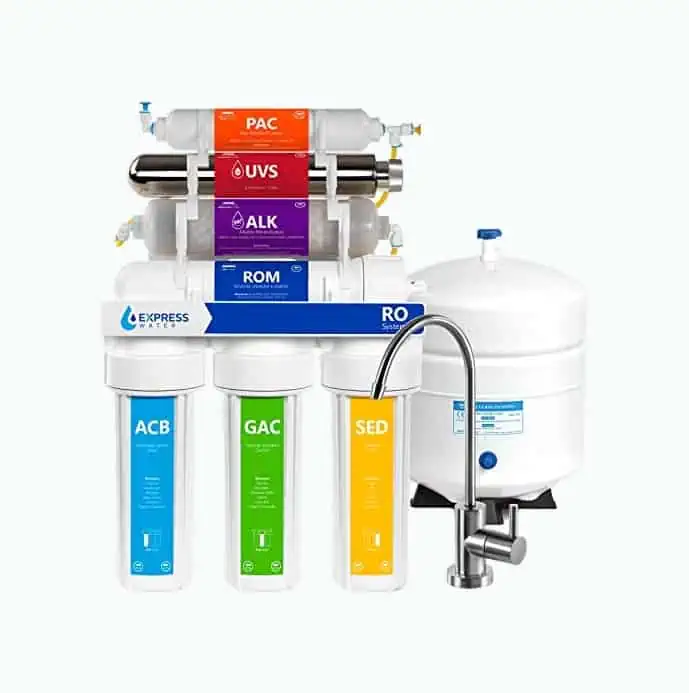
Its 11-stage filtration process removes contaminants, keeps your water mineral-rich, and leaves it tasting fresh and clean. Odor, sediment, and other impurities are removed from your water without impacting convenience or reducing flow rate.
Although this filter is more complicated to install than others, it is designed to be user-friendly. A color-coded installation system helps you through the setup process and cartridge replacement. This makes self-installation far more achievable.
It has been tested and certified by independent laboratories and comes with a one-year warranty.
What We Like
11 Different Stages of Filtration
Each filtration stage targets a different issue, leaving you with fresh-tasting water that is free of impurities.
Stages 1 to 5 work as expected of a traditional reverse osmosis unit.
Stages 5 to 9, the alkaline filter stages, add the healthy minerals back into the water.
Stage 10 uses an ultraviolet filter to destroy harmful microorganisms such as E. coli.
In the final stage of filtration, the water is passed back through a post-activated carbon filter to ensure it tastes fresh.
Approved for Use with Well Water
This is an under sink filtration unit, but it can still deal with the toughest of water sources, such as previously untreated water, well water, and natural water sources.
It is equipped to remove organic microorganisms, bacteria, and viruses, so you can rest assured that your water is safe for consumption.
Exceptional Capacity
Reverse osmosis systems are more sophisticated, so it takes longer for the water to make its way through them. This unit processes 0.8 GPM and can filter 100 gallons of water per day.
Versatile Product
This filter can be used anywhere; your home, apartment, office, or an RV. This is a major bonus as most comparable products are designed to be used in a specific type of space.
What We Don't Like
Isn’t Compact
With multiple cartridges needed to complete the 11 stages of filtration, this system is not compact. Even if you have ample space under your kitchen sink, you might struggle to fit this filter in comfortably.
Requires Maintenance
You will probably love that the complex filtration process produces great-tasting water. However, if you’re looking for a unit that you can set up and ignore, this isn’t it. The pre-filters (sediment, carbon block, and granular activated carbon) need to be replaced every six months.
The rest of your filters will need to be replaced yearly. Although filter changes are designed to be quick and easy, they are still an extra task you will need to take care of. Replacing filters will also add to the cost of keeping your system running.
Product Specs
| Weight | 30.2 pounds |
| Dimensions | 15 inches by 14 inches by 5 inches |
| Installation Method | Wall-mount |
| Flow Rate | 0.8 GPM/100 gallons a day |
| Capacity | High capacity |
Our Ratings
Community Feedback
| Product | Best For | Weight | Dimensions | Installation Method | Flow Rate | Capacity |
|---|---|---|---|---|---|---|
| CuZn UC-200 Under Counter | First-Time Installers | 8 lbs | 4.5″ x 4.5″ x 15″ | Directly connect – cold water hose; necessary installation components included | 2 GPM | High capacity |
| Frizzlife Under Sink | Budget Filtration System | 4.35 lbs | 13.8″ x 5.6″ x 5.3″ | Direct connect – cold water hose; necessary installation components included | 2 GPM | High capacity |
| Woder 10K-Gen3 High Capacity | Low-Maintenance | 2.85 lbs | 3″ x 3″ x 15″ | Direct connect; installation components included | 2 GPM | High capacity |
| iSpring RCC7AK 6-Stage | Preserving Minerals | 20 lbs | 14.5″ x 5.2″ x 18.5″ | Wall-mounted; installation components included | .05 GPM | High capacity |
| APEC Top Tier 5-Stage | Budget RO System | 25 lbs | 16″ x 5.2″ x 17.5″ | Wall-mount | 0.03 GPM | High Capacity |
| Filtrete Advanced Under Sink | Small Spaces | 3.17 lbs | 4″ x 6.8″ x 14″ | Wall-mounted direct connect | 2.25 GPM | High capacity |
| Express Water Ultraviolet Reverse Osmosis | UV RO Filter | 30.2 lbs | 15″ x 14″ x 5″ | Wall-mount | 0.8 GPM/100 gal. a day | High capacity |
Types of Under Sink Water Filters
There are two broad types of water filters you will encounter in under-sink models: reverse osmosis and charcoal.
Reverse Osmosis
Reverse osmosis filtration systems are considered the gold standard of residential filters. They are capable of removing a variety of contaminants and are available in both large and small units.
Although these filters are highly effective, their main drawback is that they often cause a noticeable decrease in water pressure.
Reverse osmosis filters provide clean, safe water. Just keep in mind that they also require more comprehensive maintenance. Many systems are complicated and can be challenging for an inexperienced handyman to install alone.
Pros
- Removes many different impurities
- Works on all water types
- Provides great tasting water
Cons
- Can be challenging to install
- Usually more expensive with more upkeep
Charcoal
Carbon filtering uses active charcoal carbon filters to remove impurities from the water. It works very well at removing chlorine, sediment, and VOCs, leaving you with odor-free, better-tasting water.
These filters are quite environmentally friendly and can be very affordable. They are also straightforward to install and, while they do require maintenance, replacement filters are inexpensive and easy to swap out.
Pros
- Affordable
- Space-saving and easy to install
- Can be used on most plumbing systems
Cons
- May need frequent filter replacements
- Won’t filter all impurities
How to Choose (Buying Guide)
When it comes to an under sink water filtration system, everyone’s situation is different. Which filter you need will depend on your local water supply, the size of your home, and whether or not you want to remove the mineral content from your water. To help you find your ideal filter, keep the following in mind:

Test Your Water
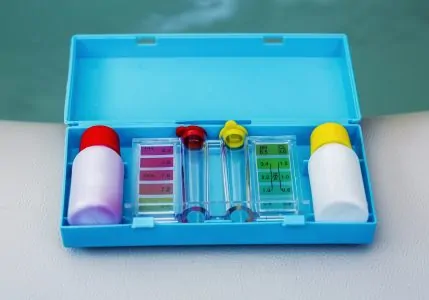
It’s easy to test your water using an at-home water test kit. A simple test can tell you which impurities are in your water, which should help you narrow down your filter options (1).

Look for Soft Water
Ideally, you want your water to be odorless and to taste clean and fresh. Soft water will provide the refreshing taste you’re looking for, so focus on the filters that can turn hard water into soft.

Consider the Output Rate
Every water filter system will have an output rate listed among its specifications. This measurement tells you how quickly the unit can filter your water. The higher the output rate, the more filtered water you will be able to receive quickly.
Check Compatibility
If you have an older or non-standard sink, you must ensure that the filter you choose will fit your plumbing system. If your plumbing is difficult to work with, you might need to consider paying for professional installation.

Maintenance and Ease of Use
There are some very complicated filter systems out there. If you intend to install and maintain the filter yourself, look for units that are easy to work with and require minimal maintenance.

Consider a Multistage System
If you want truly refreshing water, a multistage system may be the way to go. The water passes through dedicated canisters, each designed to remove a specific contaminant to provide far cleaner water overall.

Establish Your Budget
A simple charcoal filter can do a great job of removing contaminants without breaking the bank. A sophisticated system can remove more, but this extra effectiveness will be reflected in its price. Know what you need from a filter and how much you are willing to spend before you start shopping.
On City Water?
FAQs
What Is an Under Sink Water Filter?
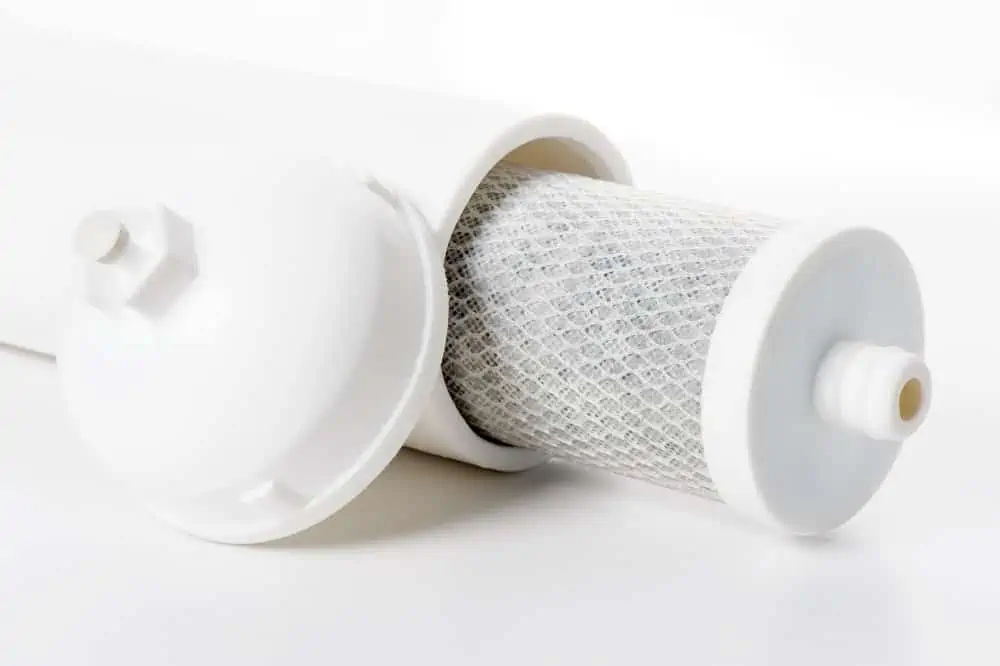
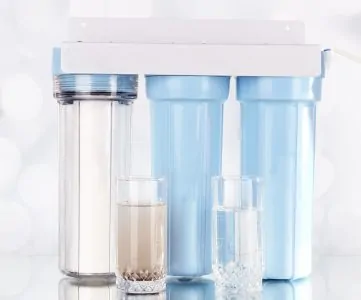
An under sink water filter is a filtration system that is mounted beneath your sink or countertop. Like a filter pitcher or countertop water filter, it removes contaminants and impurities from your water supply. By filtering out anything that taints your water supply as it travels to your home, you will be left with water that tastes better and is safer to drink.
All water filtration systems can improve your water quality, but an under counter water filter doesn’t require any extra work on your part. Once it is installed, the filter will be active whenever you turn the faucet on. There’s no need to worry about refilling a pitcher or flicking a switch every time you want clean water.

What Is the Best Under Sink Water Filter?
The best type of under sink water filter is a reverse osmosis filter, which will work with any water type and filters out a huge range of harmful substances that might be in your water supply. They are considered the gold standard of home water filters, but they are more expensive, quite complicated to install, and might also filter out beneficial minerals in your water.

What Are the Disadvantages of Filtered Water?
Depending on how clean your water supply is, filtered water is kinder to both yourself and your home’s plumbing. However, there are some drawbacks. Filtering your water costs money, and it could be unnecessary if your water supply is already very clean. Some filters will also be too thorough and can filter out beneficial minerals and fluoride, both of which can be beneficial to your body in small amounts.

Is an Under Sink or Whole House Water Filter Better?
Whether you should get an under sink or whole house water filter depends on your circumstances. If you have a large home with numerous outlets, a whole house filter will ensure everyone in your home receives the same clean water. On the other hand, if you have a holiday cabin that only has one main water outlet, an under sink filter will be sufficient without needing to spend a lot of money. Consider under sink for small homes and the whole house for large ones.

Are Under Sink Water Filters Worth It?
Under-sink water filters are worth it if you’re having problems with tap water that’s not safe to drink. Even though they do not generate cooled water, under-the-counter water filters give your household cleaner water and a better flavor than water pitcher filters.
Additionally, given their user-friendliness and high level of filtering capability, under-sink water filters are the superior option for many households.

How Long Do Under Sink Water Filters Last?
Under sink filters used in residential homes can last between 6 months and one year. Those used in a commercial setting should be changed every six months, preferably every 4.

Are Under Sink Water Filters Safe?
There is no reason to consider under-sink water filters unsafe. Under-sink water filters give users quick and easy access to filtered water from a single point of water entry.
As a result, you won’t have to spend more money on a more expensive solution or continually refill a pitcher. In addition to that, because they don’t generate any effluent, under-sink filters are becoming an increasingly popular choice in today’s market.

How Often Should I Replace My Under Sink Water Filter?
When used in a commercial setting, an under-sink water filter usually lasts four to six months and up to a year when used in a residential home.
Which Is Better, Reverse Osmosis or Filtration?
Generally speaking, reverse osmosis is considered the best water filtration form. It is possible to remove nearly anything from water using reverse osmosis, but the process is more effective if big particles are removed from the water first.
This helps prevent the membrane from being clogged too quickly. When a membrane becomes contaminated, the quality and quantity of the water it produces are diminished.

What Do Under Sink Water Filters Not Remove?
Under sink water filters can’t remove bacteria from the water since they are not purifiers. However, the correct answer to this question is based on the type of filter in questions. For instance, some filters can remove chemicals but can’t eliminate germs in the water.