Our Top Picks
- 99.8% energy efficient
- Patented self-modulating technology
- Digital display & thermostat
- Dedicated frost-protection setting
- Glass-lined tank, brass fittings
- Plug-in 120V, 6-year warranty
- 7+ gallon water tank
- Simple plug-in installation
- 6-year warranty
- Made of glass-lined material
- CFC-free foam insulation
- Sleek design blends with decor

- 2.5 gal glass-lined tank
- Heat rate of 6.8 gal/hr
- User-friendly thermostat with three modes
Our Review Criteria: Capacity governs an under sink water heater: tank size or flow rate determines whether the unit keeps up with the fixture it serves. We weighed recovery time, the footprint inside a cabinet, and the electrical supply each model needs, then checked every manufacturer’s published figures against verified owner feedback and ENERGY STAR and Department of Energy efficiency guidance. We confirm every pick is currently sold and in stock and swap out any model that goes out of production.
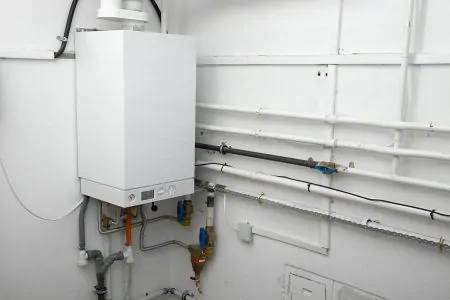
An under sink water heater sits in the cabinet below one faucet and heats the water right there, so hot water shows up in seconds instead of after a long run down cold pipe.
Two designs do the job. A mini-tank keeps a few gallons hot and ready on a standard wall outlet, while a tankless unit heats on demand and asks for a lot more electrical power.
We compared the best under sink water heaters on capacity, cabinet footprint, recovery time, and the wiring each one needs, so you can match a unit to your sink before you buy.
Why Buy an Under Sink Water Heater?
You buy an under sink water heater to get hot water instantly at one specific faucet, without waiting for it to travel from your main tank. It works as a point-of-use booster, not a replacement for your whole-home system, giving that one sink, bathroom, or RV its own dedicated hot water source.
The gain is largest where the pipe run is longest: a garage sink, an attic bathroom, a wet bar at the far end of the house, a boat, a cottage, or an RV with no central tank at all. Every foot of cold pipe between the main heater and that tap is water you send down the drain before the temperature comes up.
A point-of-use unit does not replace your main heater, and it will not fix weak pressure or a slow-filling tub. It solves one problem, the wait at one fixture, and it solves that one well.
Here are the primary benefits of installing one of these units.
- Speed: A tankless under sink unit supplies hot water instantly; a mini-tank version keeps a ready supply so you don’t have to wait.
- Efficiency: You reduce water waste significantly since you aren’t running the faucet for minutes waiting for heat.
- Space Saving: These units are compact enough to fit inside a standard cabinet or vanity.
- Simple Installation: Many mini-tank models plug into a standard outlet, making them a relatively easy DIY project.
- Improved Hygiene: Point-of-use systems reduce the distance water travels, which can lower contamination risks compared to long pipe runs (1).
Quick Tip
What Types of Under Sink Water Heaters Are There?
Under sink water heaters come in two types: mini-tanks, which store 2.5 to 7 gallons of hot water and usually run on a standard 120-volt outlet, and tankless units, which heat water only while the tap is open and usually need a 240-volt circuit. Both end the wait at the faucet, so the choice comes down to how much hot water that fixture draws at once and what power reaches the cabinet.
Tankless Water Heater
An under sink tankless water heater is the most compact option. It is usually about the size of a thick textbook.
These units heat water on demand using high-powered heating elements. When you turn the tap on, the heater activates; when you turn it off, the heater stops. This means you have a limitless supply of hot water, provided you don’t exceed the unit’s flow rate capacity.
Because they don’t store standby water, they waste no standby heat, and the Department of Energy estimates a demand water heater can be 8 to 24 percent more efficient than a storage tank for low daily use. The trade-off is that they need significant electrical power to heat water instantly.
They are ideal for consistent usage but can struggle if your hot water demands are high or if the incoming groundwater is extremely cold.
Pros
- Endless hot water supply.
- Zero standby heat loss.
- Tiny footprint saves cabinet space.
- Lower maintenance needs (no tank to flush).
Cons
- Higher upfront cost.
- Often requires complex electrical upgrades (hardwiring).
Mini-Tank Water Heater
Mini-tank heaters act like a battery for hot water. They hold a small volume (usually 2.5 to 7 gallons) of hot water ready for immediate use.
These are generally easier to install than tankless versions because most 2.5 and 4-gallon models plug directly into a standard 120-volt wall outlet. They are perfect for “buffering” the line, providing instant hot water while the water from your main tank travels to the sink.
They are excellent for RVs, isolated sinks, or outdoor kitchens. However, once you deplete the tank, you have to wait for it to reheat (recovery time).
Pros
- Usually plugs into a standard outlet (DIY friendly).
- Instant flow without a minimum activation rate.
- Consistent temperature for hand washing.
- Lower upfront cost.
Cons
- Runs out of hot water if usage is heavy.
- Takes up more cabinet space than tankless.
- Requires anode rod maintenance.
How Do You Choose an Under Sink Water Heater?
You choose an under sink water heater by matching four things to that one sink: the cabinet space left once the P-trap and disposal are in, the electrical supply at that spot, the capacity or flow rate the fixture actually needs, and how cold your incoming groundwater runs. Get those four right and the rest is preference.
Groundwater Temperature
If you choose a tankless unit, your geography dictates performance. In the North, groundwater can be as cold as 40°F. In the South, it might be 70°F.
A tankless heater has to work much harder in Minnesota than it does in Florida to reach the same output temperature. If you live in a cold climate, you need a unit with a higher kW rating, or you should stick to a mini-tank system which isn’t affected by flow rate in the same way.
Product Reviews
Here are the five picks, ranked by how well each one matches a real under sink situation, from a 2.5-gallon plug-in at a hand-washing sink to a 7-gallon buffer behind a busy kitchen.
EcoSmart ECO 11 Tankless Under Sink Water Heater
Best for Energy Efficiency

The EcoSmart ECO 11 is a compact tankless unit designed for those who want endless hot water without the bulk of a tank.
EcoSmart rates the unit at 99.8 percent energy efficiency, which holds up because it only draws power while the water is running, with no tank to keep hot the rest of the day. EcoSmart utilizes self-modulating technology, which adjusts the energy output based on how much water is flowing and how cold the incoming water is.
However, be aware of the power requirements. Unlike the Bosch mini-tank, the ECO 11 requires a 240-volt connection and a 60-amp breaker. It is small (roughly the size of a shoebox), freeing up valuable cabinet space, and features a clear digital display for precise temperature control.
What We Like
True On-Demand Heating
You never run out of hot water. As long as you have electricity and water supply, this unit will keep heating, making it great for high-volume tasks.
Space Saver
Measuring about 11.5 x 8 inches, it mounts to the wall and leaves plenty of room in your cabinet for cleaning supplies.
Digital Control
The digital interface allows you to set the temperature to the exact degree. This is a massive upgrade over the vague dials found on many competitors.
Lifetime Warranty
EcoSmart backs the heat exchanger and electronics with a lifetime warranty, provided you register the product and have it installed professionally.
What We Don't Like
Requires Hardwiring
This is not a plug-and-play unit. You likely need an electrician to install the necessary breaker and wiring.
Cold Climate Struggle
In regions with very cold groundwater (below 60°F), the flow rate will drop significantly to maintain temperature. It works best in warmer climates or for low-flow sinks.
Product Specs
| Tank volume | Tankless |
|---|---|
| Voltage | 240 V |
| Recovery rate | 2 GPM |
| Temperature range | 80 to 140 degrees Fahrenheit |
| Weight | 6.5 pounds |
| Dimensions | 11.5 inches by 8 inches by 3.75 inches |
Stiebel Eltron SHC 2.5 Mini-Tank Under Sink Water Heater
Best for Colder Regions
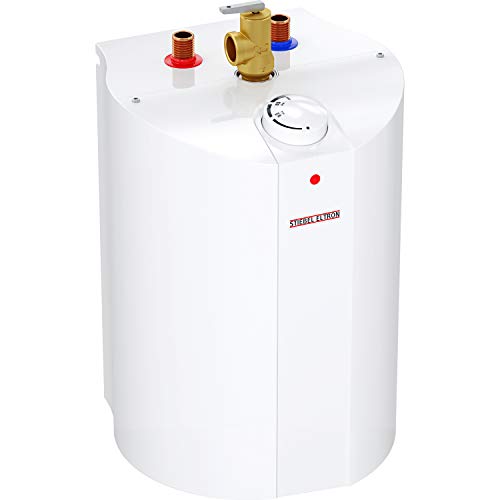
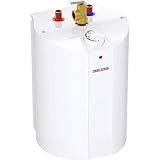
The Stiebel Eltron SHC 2.5 is a German-built point-of-use mini-tank, and we picked it for installs where the cold matters. Its standout feature is a dedicated frost-protection setting on the thermostat dial. Leave the dial in that position and the heater holds the tank just above freezing, which is what you want in a garage, basement, or unheated cabin (no long waits, no cracked tank).
It holds 2.5 gallons, runs on a standard 120-volt plug at 11.3 amps, and recovers a full tank in about 18 minutes (4). The tank is glass-lined steel with a stainless dip tube and brass connections, so it stands up to corrosion, and it ships with a 6-year tank warranty, longer than most mini-tanks this size. A combination temperature and pressure relief valve comes pre-installed.
What We Like
Dedicated Frost-Protection Setting
A marked position on the dial keeps the tank just above freezing, so the unit and the pipes around it survive a cold snap in an unheated space. That is the reason it earns the cold-regions pick.
Long Tank Warranty
The 6-year tank warranty (2 years on other parts) is longer than most competitors offer at this size, a fair sign of how the glass-lined tank is built to last.
True Plug-In Install
It runs on a standard 120-volt outlet at 11.3 amps, with a flat back and an included bracket for wall mounting. No electrician and no special wiring.
What We Don't Like
Small Tank, Quick to Empty
At 2.5 gallons it is built for one fixture. Run two taps back to back and you will outpace it, then wait about 18 minutes for a full reheat.
Top-Mounted Connections
The plumbing connects on top, so leave clearance above the unit, and budget for a couple of adapters since some installs need extra fittings to meet standard US lines.
Product Specs
| Tank volume | 2.5 gallons |
|---|---|
| Voltage | 120 V |
| Recovery rate | 18 minutes (full tank) |
| Temperature range | 86 to 140 degrees Fahrenheit |
| Weight | 15.9 pounds |
| Dimensions | 18.7 inches by 11 inches by 10.6 inches |
Bosch Electric ES8 Tronic 3000 Water Under Sink Water Heater
Best for High Hot Water Demands

If you have a busy kitchen or a high-traffic bathroom, a 2.5-gallon tank might not cut it. The Bosch ES8 offers a generous 7-gallon capacity, providing a much larger buffer of hot water.
This unit is significantly larger than the ES4, weighing about 30 pounds empty and measuring roughly 17.5 inches square. It retains the easy installation of its smaller sibling, utilizing a corded plug rather than hardwiring.
It can be mounted horizontally or vertically (though vertical is usually preferred for capacity), giving you flexible installation options. The glass-lined tank ensures clean water delivery and long service life.
What We Like
High Capacity
With 7 gallons on standby, you can wash a significant amount of dishes or run a longer bathroom routine without the water turning cold.
Plug-In Power
Despite its larger size, it still runs on standard 120V power. You get big performance without the need for an electrician.
Flexible Mounting
You can mount it on the wall or place it on the floor. It even allows for horizontal installation if your cabinet is wide but short.
What We Don't Like
Slower Recovery
Because it holds more water but uses the same heating element power as smaller units, it takes longer (around 10+ minutes) to fully reheat the tank once emptied.
Product Specs
| Tank volume | 7+ gallons |
|---|---|
| Voltage | 120 V |
| Recovery rate | 6.8 GPH |
| Temperature range | 65 to 145 degrees Fahrenheit |
| Weight | 29.5 pounds |
| Dimensions | 17.5 inches by 17.5 inches by 14.5 inches |
Bosch Electric Mini-Tank Under Sink Water Heater
Best for Low Hot Water Demands

The Bosch Tronic 3000 T is a point-of-use mini-tank that solves the “waiting for hot water” problem efficiently. We selected the 4-gallon model as the sweet spot, but it is also available in 2.5 and 7-gallon sizes.
This unit features a premium glass-lined tank insulated with thick CFC-free foam. This insulation is critical for a standby unit, as it keeps the water hot without constantly drawing power.
Installation is where this unit shines. It uses a standard 120-volt plug, meaning you can likely install it yourself without hiring an electrician. You can mount it on the wall with the included bracket or sit it on a shelf under the sink. It includes a pressure relief valve and a simple dial thermostat.
What We Like
DIY Installation
Because it plugs into a standard wall outlet, you don’t need to mess with breaker panels or hardwiring. It simplifies the process significantly for the average homeowner.
Smart Insulation
The thick foam lining minimizes standby heat loss. The water stays hot for longer periods, so the heating element doesn’t have to cycle on as frequently.
Immediate Results
Once installed, the wait time for hot water drops to near zero. It acts as a buffer, giving you instant heat while the main line catches up.
What We Don't Like
Thermostat Lacks Precision
The dial uses “Ideal,” “Max,” and “Min” rather than specific degrees. You may have to experiment to find the exact temperature you prefer.
Round Bottom Design
While it can sit on a shelf, the bottom isn’t perfectly flat. It requires the rubber feet (included) or the wall bracket to stay stable.
Product Specs
| Tank volume | 4 gallons |
|---|---|
| Voltage | 120 V |
| Recovery rate | 6.8 GPH |
| Temperature range | 65 to 145 degrees Fahrenheit |
| Weight | 17.4 pounds |
| Dimensions | 13.75 inches by 13.75 inches by 13.5 inches |
Camplux ME25 Electric Under Sink Water Heater
Best for Outdoor Living

Camplux is a go-to brand for outdoor and portable water heating, and the ME25 fits right into that niche. This 2.5-gallon electric mini-tank is ideal for RVs, patio sinks, or campers.
It features a glass-lined tank with high-efficiency insulation. The thermostat knob is simple and includes a dedicated “snowflake” setting. This acts as a freeze-protection mode for when you leave your RV or cabin during the winter months.
Safety is a priority here, with included overheat protection and a pressure relief valve. It plugs into a standard 120V outlet, making it easy to set up at a campsite or in a renovation project.
What We Like
Freeze Protection Setting
The dedicated setting on the dial makes winterizing easier. It keeps the water just warm enough to prevent the tank from cracking in freezing temps.
Compact and Portable
Its small stature makes it easy to tuck into tight RV cabinets or under small wet bars.
Safety First
The overheat protection system cuts power if water temperatures get dangerous, providing peace of mind in tight living quarters.
What We Don't Like
Clearance for Pipes
The water connections are on top. When measuring your cabinet, add at least 4 to 6 inches of clearance above the unit to accommodate the piping and relief valve.
Product Specs
| Tank volume | 2.5 gallons |
|---|---|
| Voltage | 120 V |
| Recovery rate | 6.8 GPH |
| Temperature range | 77 to 140 degrees Fahrenheit |
| Weight | 20 pounds |
| Dimensions | 17.25 inches by 11.75 inches by 10.38 inches |
| Product | Award | Volume | Voltage | Recovery Rate | Temp Range | Weight | Dimensions |
|---|---|---|---|---|---|---|---|
| EcoSmart ECO | Energy Efficiency | N/A | 240 V | 2 GPH | 80 – 140 F | 6.5 lbs | 11.5″ x 8″ x 3.75″ |
| Stiebel Eltron SHC 2.5 | Colder Regions | 2.5 gal | 120 V | 18 min | 86 – 140 F | 15.9 lbs | 18.7″ x 11″ x 10.6″ |
| Bosch Tronic ES8 | High Hot Water Demands | 7+ gal | 120 V | 6.8 GPH | 65 – 145 F | 29.5 lbs | 17.5″ x 17.5″ x 14.5″ |
| Bosch Electric Mini-Tank | Low Hot Water Demands | 4 gal | 120 V | 6.8 GPH | 65 – 145 F | 17.4 lbs | 13.75″ x 13.75″ x 13.5″ |
| Camplux ME25 | Outdoor Living | 2.5 gal | 120 V | 6.9 GPH | 77 – 140 F | 20 lbs | 17.25″ x 11.75″ x 10.38″ |