The best portable hot water heater will help you enjoy some of the comforts of home while on a camping trip. However, there are numerous heaters available and it can be difficult to decide which one to buy.
To help you choose, we have compared the leading portable tankless water heaters on the market. We evaluated them based on portability, safety features, ease of use, and energy savings.
To save both time and money by choosing the best portable water heater for camping, this guide should help!
- Small, weighs just 14.2 lbs
- Flame-failure & anti-freeze protection
- Includes showerhead & gas regulator
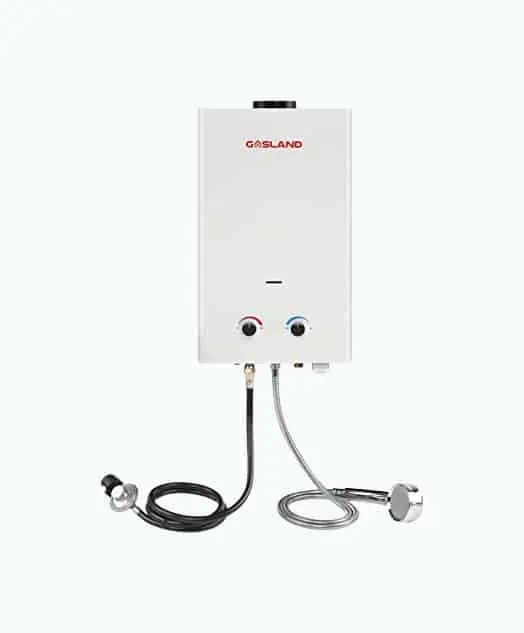
- Automatic shut-off protects children
- Saves up to 11.5% more energy
- Includes showerhead & gas pump
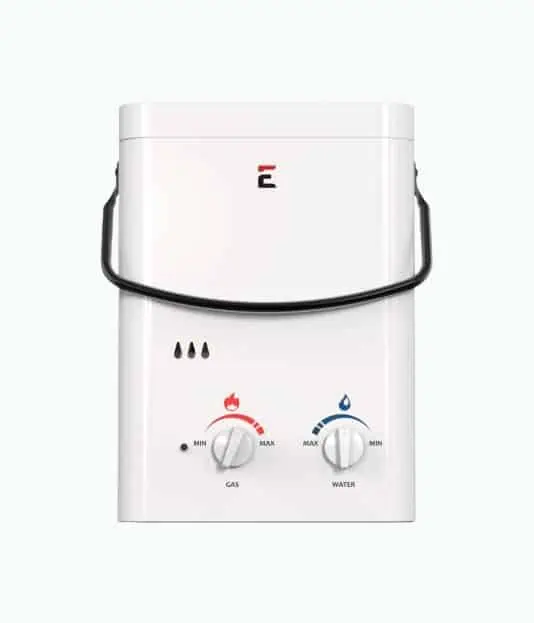
- Among the smallest heaters available
- Weighs just 14 lbs
- Automatic shut-off saves energy
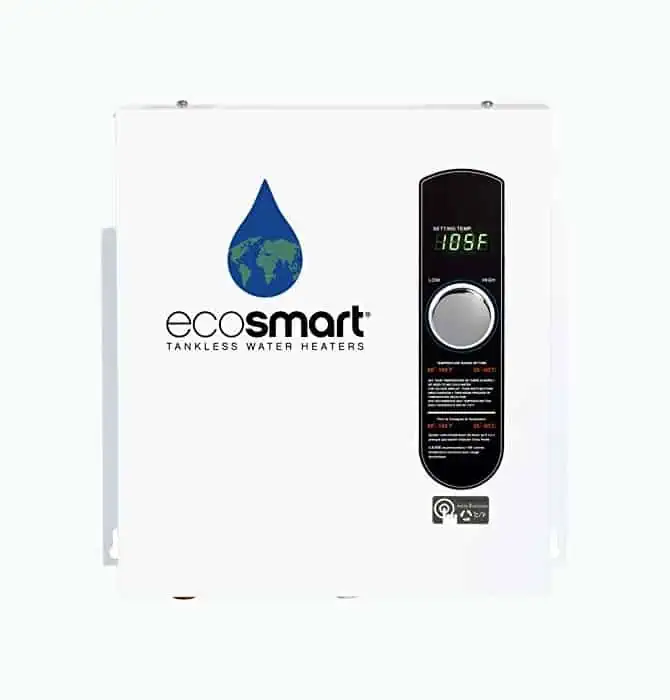
- Stylish digital design
- Claims to save as much as 50% in water-heating costs
- Lifetime warranty
Review Methodology: At Sensible Digs, we prioritize providing you with trustworthy and reliable information on the best portable tankless water heaters. Our team of professionals conducts thorough research and hands-on testing, using well-defined criteria and performance benchmarks to evaluate and rank each product. We analyze data, compare features, and assess user experiences to help you make informed decisions. Our comprehensive reviews highlight the key factors, such as efficiency, capacity, design, and ease of use, that set the top portable tankless water heaters apart from their competitors. We share our findings, results, and evidence-based recommendations to ensure you can confidently choose the best product for your needs.
The Best Portable Tankless Water Heaters of 2024
Here is our list of the five best portable tankless water heaters on the market.
Camplux 5L Portable Propane Tankless Water Heater
Best Simple Portable Tankless Water Heater
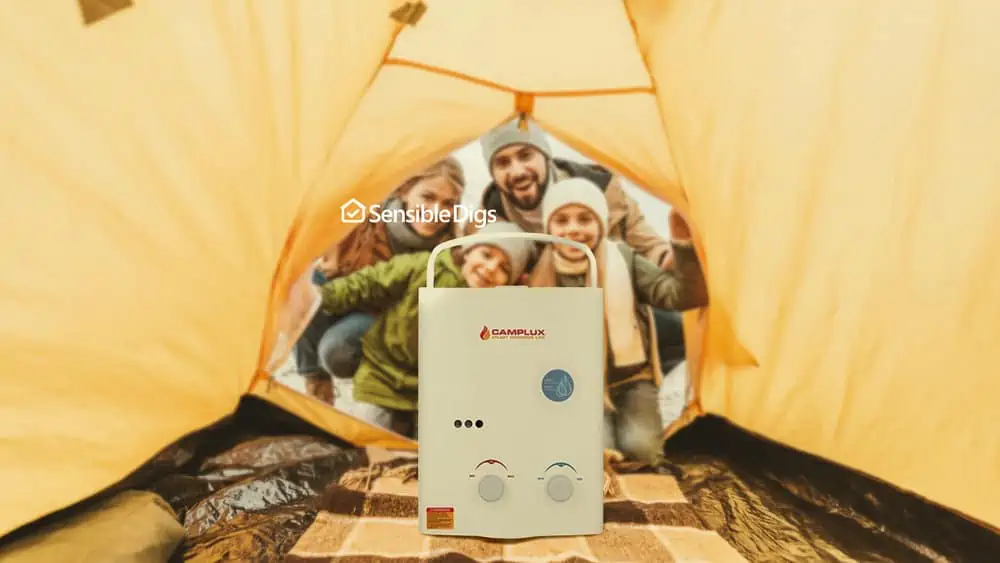
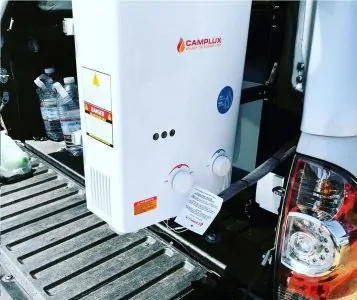
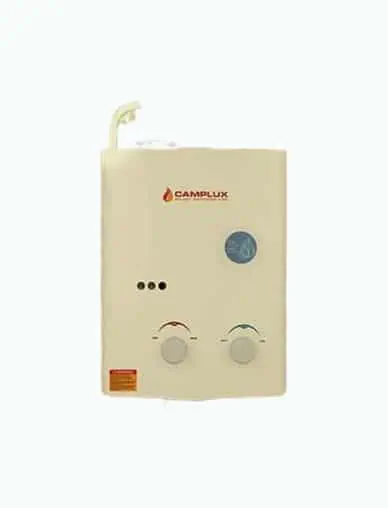
This easy-to-use portable water heater is ideal for novices or anyone who wants something less high-tech. Its layout features minimal knobs to make it simple to use. It uses gas so there’s no need for electricity; simply connect it to a BBQ gas canister and you’re all set.
It comes with everything you need to put it all together, including the correct connectors. All you need to do is follow the instructions and you’ll have hot water in no time.
What We Like
Small, Lightweight, and Portable
The main selling points of this heater are its compact size and being lightweight. It is one of the smallest and lightest on our list, weighing just 14.2 pounds. It is made even easier to carry by its built-in handle.
Great Safety Features
This heater has several built-in safety options, including flame-failure protection and anti-freeze regulation. If you’re planning a winter camping trip, you can rest assured that the water and components won’t freeze on you.
Extras Included
This heater is ideal for anyone new to camping. There’s no need to buy any extras, as this heater includes everything you need to operate it smoothly, such as a showerhead and gas regulator.
What We Don't Like
Not Recommended for Use at Over 2000 Feet Elevation
If you’re planning a hiking trip into the mountains, this heater won’t be suitable for your needs. The pressure changes at high altitudes will prevent the heater from working properly.
Product Specs
| Dimensions | 11.42 inches by 4.33 inches by 14.8 inches |
| Weight | 14.2 pounds |
| Volume | 5 liters |
| Flow Rate (Gallons Per Minute) | 1.32 GPM |
| Input Type | Gas operated |
| Temperature Range | 46.4 to 114.8 degrees Fahrenheit |
| Package Includes | 1 x gas regulator, 1 x showerhead, 1 x gas inlet connector, hose |
Our Ratings
User Experience
Gasland BS264 Tankless Water Heater
Best for Families
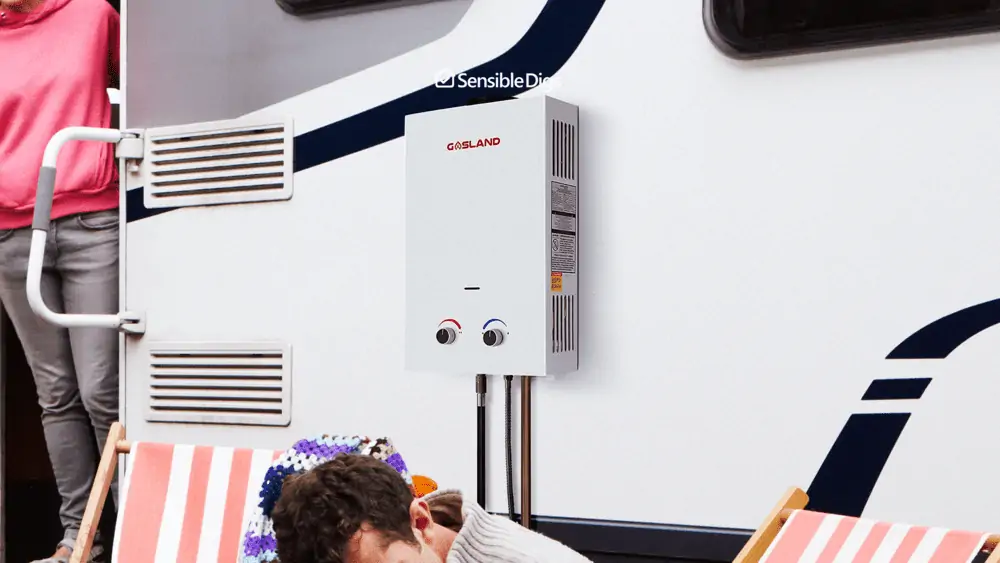
The Gasland BS264 is one of the heaviest and least compact of our five heaters. Thankfully, it has a built-in handle, so it’s not all bad news.
It seems to be designed with family in mind, with safety mechanisms that include anti-freeze protection and automatic shut-off at 167 degrees Fahrenheit. This means children can use the water heater without the danger of the water becoming too hot. The flame-failure device will automatically stop the gas supply if the flame is extinguished.
With a 10-liter capacity and a flow rate of 2.64 GPM, this machine means business.
What We Like
Family-Friendly Safety Features
Safety was clearly a priority here. We particularly appreciate the automatic shut-off at 167 degrees Fahrenheit to protect young users.
Energy-Saving Ethos
This heater embodies the energy-saving ethos. The advanced combustion system ensures 11.5% more energy is saved compared to traditional heaters.
Adaptors and More Included
We love that all the required adaptors and add-ons are supplied, including a showerhead, gas pump, and others. This makes it relatively easy to use, even for a novice.
What We Don't Like
Relatively Heavy (22 lbs)
Although it is advertised as small and lightweight, this heater is neither when compared to our other products.
At 22 pounds, it can quickly begin to feel heavy when carried over long distances. Even so, is not very heavy and there are some heaters on the market that weigh even more.
Product Specs
| Dimensions | 11.8 inches by 6.1 inches by 17.3 inches |
| Weight | 22.1 pounds |
| Volume | 10 liters |
| Flow Rate (Gallons Per Minute) | 2.64 GPM |
| Input Type | Gas operated |
| Temperature Range | Up to 167 degrees Fahrenheit |
| Package Includes | 1 x hose, 1 x showerhead, 1 x gas connector |
Our Ratings
Personal Perspective
Eccotemp L5 Portable Tankless Water Heater
Best Energy-Saving Portable Tankless Water Heater
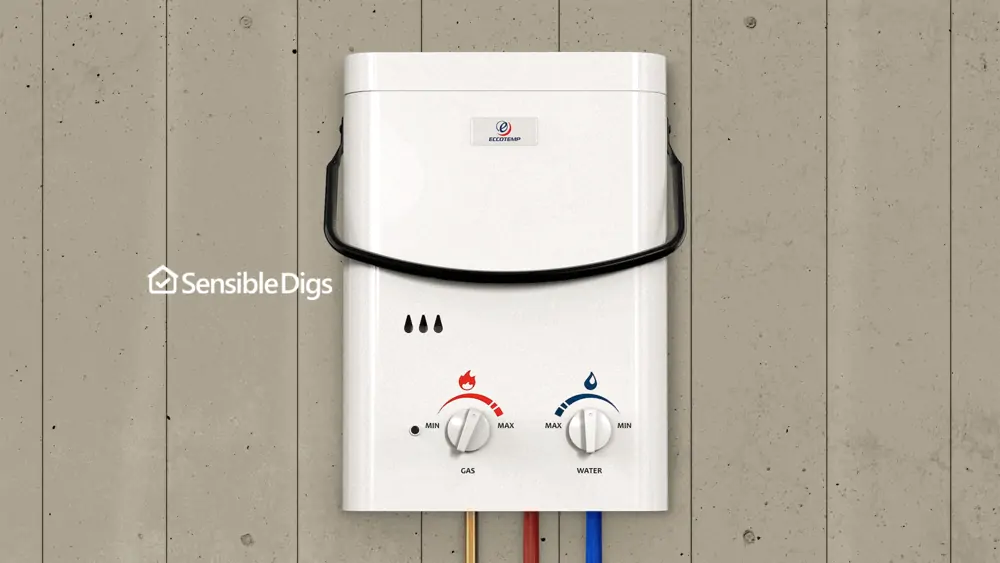
The Eccotemp water heater is another easy-to-use option thanks to its simple dials and all the necessary add-ons, including a showerhead. It’s also compact and lightweight at 14 pounds, which makes it ideal for traveling and serving as a camp shower heater.
Our favorite feature of this heater is the automatic shut off. When the product has been on for longer than 20 minutes, it will automatically turn itself off, ideal for saving energy.
What We Like
Easy to Use and Portable
We love this product’s simplicity and lightweight build. This is one of the lightest and smallest options, which is always a positive. At a mere 4 inches by 13 inches by 8 inches, it’s remarkably small.
Automatic Shut-Off
There is a greater focus on energy-saving than ever before. This heater shuts off automatically after 20 minutes, keeping your usage in check.
What We Don't Like
No Overheating Shut-Off Option
Despite its other features, the Eccotemp doesn’t have a maximum temperature shut off. If you have children, you will need to be careful to monitor the temperature while the heater is in use.
Product Specs
| Dimensions | 4 inches by 13 inches by 8 inches |
| Weight | 14 pounds |
| Volume | 5 liters |
| Flow Rate (Gallons Per Minute) | 1.45 GPM |
| Input Type | Propane gas operated |
| Temperature Range | N/A |
| Package Includes | 1 x gas regulator, 1 x hose, 1 x hose adapter, 1 x showerhead |
Our Ratings
Community Feedback
EcoSmart ECO 27 Electric Tankless Water Heater
Best Digital Option
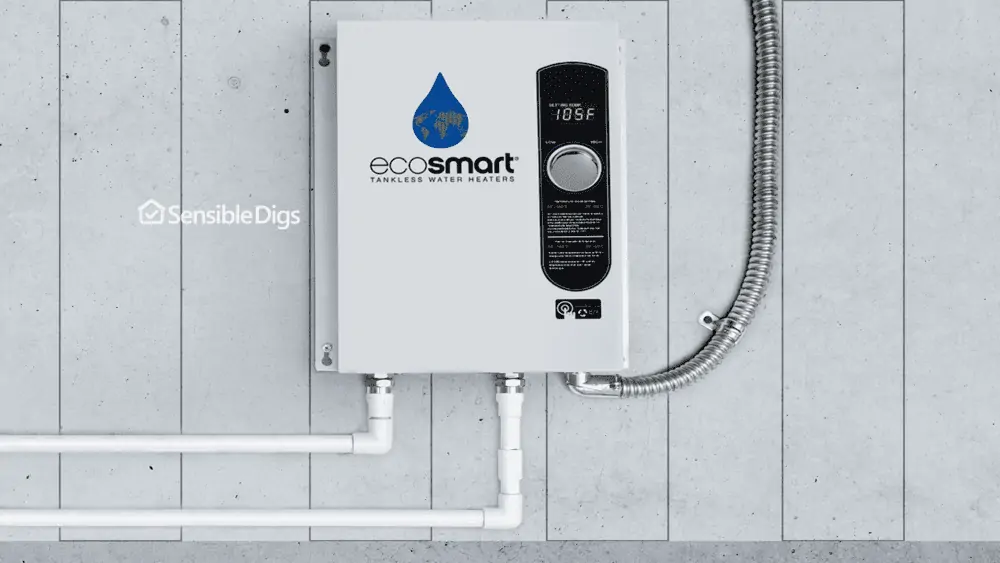
This modern heater is ideal for anyone who is a little more tech-savvy, due to its digital controls. It’s also easy on the eye, so if you want a bit of extra style, this is the best choice for you.
The digital temperature control allows you to monitor the temperature in 1-degree increments. Another key component that sets this product apart is the energy and money-saving mechanism.
This advanced technology will determine how much energy is needed based on how much hot water you require. If you care about the environment, as we do, this will be an ideal option.
What We Like
Stylish Design
Thanks to the digital features of this unit, it is both stylish and functional. We appreciate the preciseness of the temperature gauge. With the ability to monitor to the exact degree, there will be no guessing with this heater.
Energy-Saving Technology
The energy-saving mechanism makes this an excellent choice. Although tankless water heaters are usually designed with energy in mind, this heater goes even further. The company claims it could save as much as 50% in water-heating costs.
Lifetime Warranty
A lifetime warranty is usually a good sign that a company knows its product works. When they have confidence, it also gives us confidence.
What We Don't Like
No Extras Included
If you want a convenient all-in-one package, this probably isn’t your best option. Unlike other heaters on this list, it doesn’t include additional accessories such as a showerhead or connectors.
This is a deal-breaker for some buyers, so it’s best to know ahead of time.
Product Specs
| Dimensions | 3.6 inches by 17 inches by 17 inches |
| Weight | 13.75 pounds |
| Voltage | 240 volts |
| Flow Rate (Gallons Per Minute) | 3 GPM |
| Input Type | Electricity operated |
| Temperature Range | 80 to 140 degrees Fahrenheit |
| Package Includes | N/A |
Our Ratings
First-Hand Impression
| Product | Award | Dimensions | Weight (lbs) | Volume (L) | Flow Rate (GPM) | Input Type | Temp. Range (F) |
|---|---|---|---|---|---|---|---|
| Camplux 5L | Best for Simplicity | 11.42″ x 4.33″ x 14.8″ | 14.2 | 5 | 1.32 | Gas | 46.4 – 114.8 |
| Gasland BS264 | Best For Families | 11.8″ x 6.1″ x 17.3″ | 22.1 | 10 | 2.64 | Gas | Up to 167 |
| Eccotemp L5 | Best For Energy Saving | 4″ x 13″ x 8″ | 14 | 5 | 1.45 | Propane | N/A |
| EcoSmart ECO 27 | Best Digital Option | 3.6″ x 17″ x 17″ | 13.75 | N/A | 3 | Electricity | 80 – 140 |
Why Tankless?
Heaters with tanks are usually found in homes and can hold a finite amount of heated water. Although they are convenient, they’re also known to waste energy, as they need to maintain the temperature of the water they hold. They can also run out of warm water, due to the limited amount held in their tanks.
In contrast, tankless water heaters receive cold water and heat it almost instantly. This saves around 24% to 34% of energy compared to tank heaters, as they don’t need to maintain the temperature for prolonged periods (1). This also means you can use hot water indefinitely.
The main drawback of tankless heaters is that their initial cost is usually greater than a tank heater. The most expensive tankless water heaters can cost a few hundred dollars more than one with a tank (2). However, you should make up for this by saving money on energy bills.
Types of Portable Tankless Water Heater
There are two main types of camping hot water heater: gas and electric. Here are the pros and cons of each.
Electric
Electric water heaters can be plugged into your car battery or a campsite electrical outlet to produce hot water. This is usually more convenient than gas, as gas canisters are heavy and require a lot of car space. An on-demand camping water heater means you no longer need to haul a metal canister around with you; simply plug it in and go.
Pros
- Easy to use.
- Convenient.
Cons
- More expensive.
- Unusable during a power outage.
Gas
Although gas is less convenient than electricity, propane is a reliable way to ensure you can use hot water, even if the electricity isn’t working. Power cuts are unpredictable and disruptive, but you can get hot water wherever you need it with gas water heaters.
Pros
- Can be used even during a power outage.
- Cheaper to operate.
Cons
- Gas canisters are large, heavy, and may occupy a lot of space.
- Canisters contain a finite amount of gas.
What to Look For – Buying Guide
Consider these factors before making a decision.

Small, Lightweight, and Compact
Portability depends on the all-important size factor. You don’t want to haul a big, heavy box around the campsite or have it occupy too much room in your car or RV.
All of the products on our list fit the bill. They are lightweight and no more than 17-inches long or tall. They each weigh less than 23 pounds, so you won’t hurt your back lifting them.
Most of these options have a built-in handle so you can relocate your water heater with minimal hassle.

Safety Features
Safety is key, especially if you bring young family members along to the campsite.
A safety feature of some portable tankless water heaters is an auto turn-off device. This mechanism automatically shuts the device off under specific circumstances. For example, some heaters automatically turn off if their water temperature exceeds 167 degrees Fahrenheit.
Others shut off if the device is angled too greatly — approximately 45 degrees in any direction — to prevent any accidents.
Some gas heaters also have flame-failure devices, so they don’t build up too much gas if the igniter flame is extinguished. Finally, there are options with anti-freeze protection to defend them against colder temperatures.
Some of the options below have one, two, or even three of these mechanisms built in. Whatever your needs, there’s an option for you.

Easy to Use
This factor depends on the user, as some people find digital mechanisms easier to use and others prefer manual. Most of the options below are manual, with knobs to adjust the temperature and pressure. We have also listed one high-tech digital option, so you have plenty of choice in this area.
Another important factor is whether the product comes with all the add-ons you need. These include showerheads and hoses, as well as connectors to attach these to your water heater.
Most of the products below have add-ons included, which make them stand out from the crowd. Simply read the instructions to see how they fit together, and you’ll be good to go.

Energy-Saving
We’ve already touched on the energy-saving qualities of tankless water heaters. However, some of the products we’ve shared below don’t stop there, with further energy-saving features.
For example, some heaters shut off after a specific amount of time to avoid wasting energy. Others calculate the amount of energy needed depending on how much hot water you use.
We all love doing our bit for the environment, and some of these water heaters will help you do that.
FAQs

Are Portable Tankless Water Heaters Worth It?
This largely depends on what you intend to use it for. If you want hot water in an outbuilding or part of your house that isn’t on the main hot water system, you are probably better off buying a larger tankless water heater. If you are a keen camper and want to be able to take hot water with you, a portable heater is versatile and convenient.

What are the Drawbacks of a Portable Tankless Water Heater?
Tankless water heaters have numerous benefits but they aren’t perfect. Their diminutive size means they can only supply a limited amount of hot water at any time, so they aren’t suitable for multitasking. Some portable heaters are so small that they will struggle to provide enough water for an effective shower.

Will a Portable Tankless Water Heater Work if the Power Goes Out?
This depends on the type of water heater you own and how its power is being supplied. If you own a gas heater, it will work for as long as your gas canister lasts. If your heater is electric and is plugged into the main power supply, a power cut will prevent it from operating until the power is restored.

What Size of a Tankless Water Heater Do I Need?
To determine what size of a tankless water heater you need, you must consider the maximum amount of water used within your household at peak times. The effectiveness of tankless water heaters can be measured by the highest temperature increase while maintaining a specified flow rate.
Figure out how many devices you want to run simultaneously and add up their flow rates. For instance, 2 simultaneously running showers will need 5 gallons of hot water per minute.

How Many Amps Do You Need for a Tankless Water Heater?
Tankless electric water heaters need a 240 volts and 30 amps circuit and either a non-metallic or metallic cable that is 10-2 in size. This indicates that the circuit breaker does not supply electricity to equipment besides the water heater.
Every 4,500-watt water heater, regardless of gallon capacity, can be powered by a circuit breaker rated for 30 amps.

How Do You Use a Portable Tankless Water Heater?
You can use a portable tankless water heater anywhere as long as you have either electricity or gas to run it. Electric power is the more common option. Because it is equipped with a sensor, a heat exchanger, a valve fan, and a power supply, the process may be completed reasonably.
The power source is activated as soon as the sensor is engaged, and the burner begins to heat up. The water temperature quickly rises to the desired level as it moves through the heating system.

How Do You Hook Up a Portable Water Heater?
To hook up a portable water heater, you will need a power supply, typically gas or electric. If you intend to use your new water heater indoors and outside, you should purchase an electric type rather than a gas-powered one.
Using a water heater that is powered by batteries is quickly becoming one of the most common alternative ways to power a water heater. You won’t need so much as an ounce of electricity to get these heaters going.
Extend its life by utilizing a hybrid power source that combines propane and batteries. The sort of power source used can be selected by the purchaser according to his or her preferences and needs.