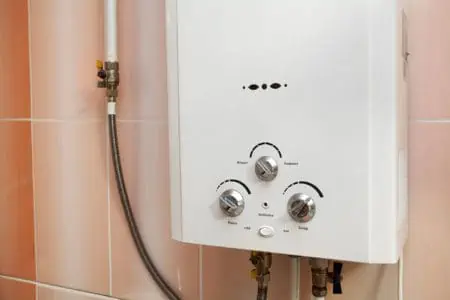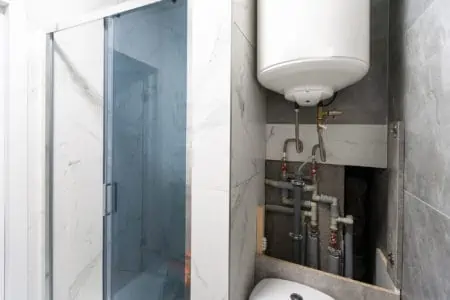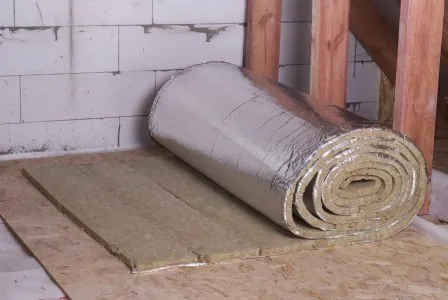
A blanket could help your heater keep your water warm during the coldest months of the year. You will need a specific type of thermal blanket to accomplish this: a water heater blanket is designed to insulate your heater from the outside.
With so many water heater blankets available, it can be difficult to decide which blanket is the best fit for you and your heater. To help you choose, we have created this list of the best water heater blankets to save energy today.
We have reviewed and compared five of the best water heater blankets based on their material, size, ease of installation, and insulation benefits.
- Double layered foil
- Vapor barrier
- Durable and suitable for outdoor use
- Fits tanks from 30 to 80 gallons
- Can be cut for a better fit
- Instructions & tape included
- For all types of water heaters
- Thick fiberglass insulation
- Vinyl protects against water & mold damage
- Free from toxic materials
- Will fit in narrow spaces
- Efficient R-value of 7.2
- Safe, non-toxic materials
- Enough material for a 60 gallon tank
- Includes tape, spacers, and instructions
Review Methodology: At Sensible Digs, we pride ourselves on providing thorough and reliable analysis of the best water heater blankets available on the market. Our experienced professionals conduct extensive research, hands-on testing, and in-depth assessments to rank and compare products based on key criteria such as insulation performance, ease of installation, durability, and cost-effectiveness. We evaluate each product from a user’s perspective, considering design choices and their impact on user experience. By sharing quantitative data, evidence-based findings, and expert insights, we help you make informed decisions on the ideal water heater blankets that set them apart from competitors. Trust Sensible Digs to guide you through the essential factors of selecting the perfect water heater blanket for your needs.
The Best Water Heater Blankets of 2024
Whether you have a gas or electric heater, here are five excellent water heater blankets to consider.
SmartShield Reflective Insulation Roll
Best Water Heater Blanket for Multiple Uses
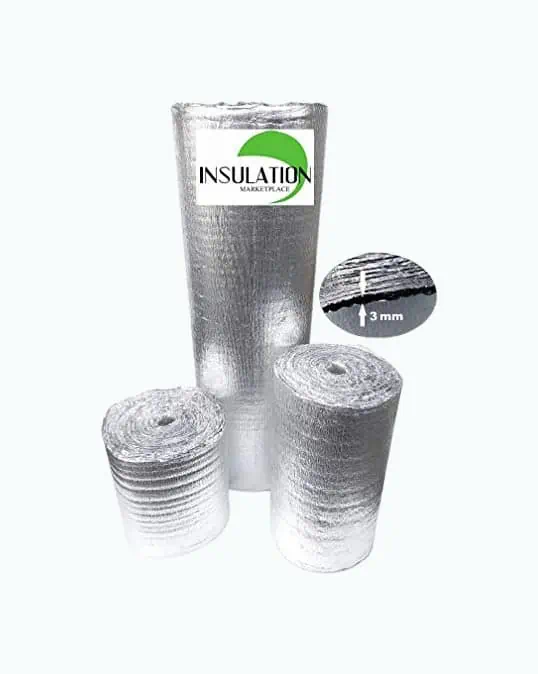
This reflective insulation shield has many uses, including insulation for water heaters and flooring. The insulation consists of reflective foil layers with polyethylene foam in between.
The insulation is non-toxic and it holds a class 1/class A fire rating. It won’t cause any allergic reactions as it doesn’t contain fiberglass.
The blanket has a vapor barrier so you won’t need to worry about mold or other damage caused by moisture. It can even be used outdoors, so if you have a heater that is exposed to the elements, it is a great option.
You receive 24 inches by 50 inches of insulation with this product, which can be cut to fit your tank. Keep in mind that this is not a kit; you won’t be provided with any extras such as tape.
What We Like
Double Layered Foil
You will enjoy excellent insulation from the two layers of foil with foam in between. It not only reflects the lost heat back to the tank but also absorbs and holds the heat.
Vapor Barrier Keeps It Dry
The vapor barrier absorbs any moisture that might be present. It also prevents mold from forming, extending the blanket’s lifespan and keeping you safe.
Good for Indoors and Outdoors
Due to the durable barrier, you can use it outdoors. If you have a heater in a partially covered area or in a cold basement, this will help it maintain its temperature.
Non-Toxic Materials
The insulation doesn’t contain any material which could cause an allergic reaction. This can be important for families with children, as children are often more sensitive to allergens.
What We Don't Like
Doesn’t Include Tape or Instructions
This isn’t a kit, so you won’t be provided with instructions or extras such as tape. These are easy obstacles to overcome; many choose to simply use gaffer tape to seal the blanket.
Product Specs
| Weight | 3.4 pounds |
| Dimensions | 24 inches x 50 feet, 3mm. thick |
| Material | Aluminum foil, polyethylene foam |
| Extras | None |
Our Ratings
User Experience
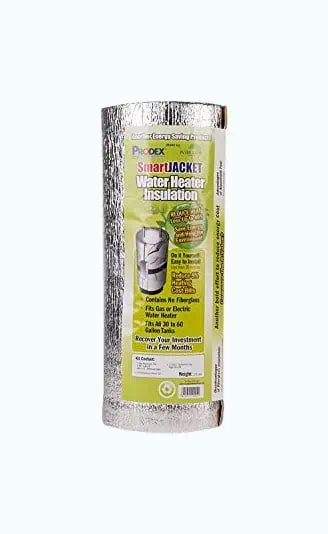
SmartJacket Water Heater Blanket
Best Material
If you want something easy to set up, this blanket might be ideal. It fits all tanks from 30 to 80 gallons and can also be used on either gas or electric heaters.
The blanket has an R-value of 7.1, which means you could reduce heat loss by up to 40 percent. It’s easy to install as all you need to do is fit it around pipes and vents, then cut as needed, and wrap it around.
You’re provided with tape and easy-to-follow instructions. However, some customers have mentioned that the tape isn’t as strong as they would like.
The blanket consists of two sides of aluminum foil with a closed-cell polyethylene foam in between. This closed-cell foam is a leading insulation material (1).
What We Like
Fits a Range of Sizes
The size of the blanket means it can easily fit on tanks ranging from 30 to 80 gallons. You won’t need to guess the size of your heater if you’re a first-time blanket buyer.
Easy Installation
To fit the blanket, you simply need to measure around pipes and vents. As the blanket doesn’t contain any fiberglass, you won’t need to wear protective gear.
Instructions and Tape Are Included
To make the installation even easier, you’re provided with instructions and tape. The instructions are in-depth and specify which tools you’ll need.
What We Don't Like
Customers Felt the Tape Wasn’t Strong Enough
Some customers found that the tape eventually would fall off. Many recommend using a stronger alternative tape during installation.
Product Specs
| Weight | 2.35 pounds |
| Dimensions | 5mm. thick, 84 inches by 24 inches |
| Material | Double-sided aluminum foil, closed-cell polyethylene foam |
| Extras | Tape and instructions |
Our Ratings
Personal Perspective
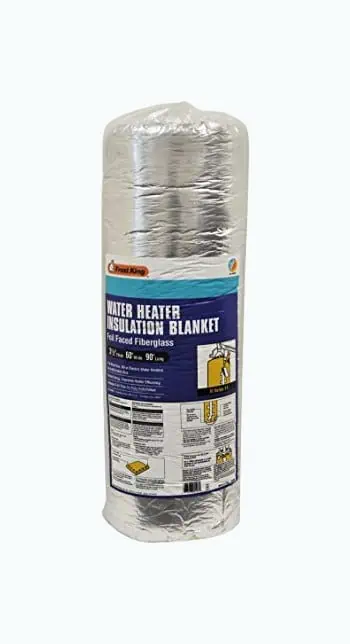
Frost King Water Heater Blanket
Best All-Season Insulation
If you have ever spent a winter with limited hot water, this blanket would have been helpful. It’s a 3-inch-thick fiberglass insulation jacket with a vinyl back. It claims to fit tanks up to 60 gallons, however, customers have found it depends on the type of unit.
This hot water heater blanket is safe to use on all types of heaters, but it’s important not to cover up any vents if you have a gas tank.
Vinyl is often used on fiberglass insulation. Fiberglass absorbs and holds hot air, while the vinyl prevents moisture from passing through the insulation. This will not only make the blanket last longer, but it also means your heater will be dry and mold-free.
If you’re a DIY kind of person, you’ll likely love this kit. You get all the things you need to set up the blanket, including instructions and tape.
What We Like
Safe for All Types of Water Heaters
This fiberglass insulation blanket is safe to use on gas, electric, and oil water heaters. This means you won’t need to search to find the right one. If you get a new unit in the future, you could continue to use the same blanket.
Thick Fiberglass Insulation
One of the main reasons why we like this product is due to its insulation. Fiberglass is one of the leading insulation materials. It is used worldwide to insulate homes and pipes and will prevent you from losing valuable energy.
Vinyl Back Prevents Water and Mold Damage
Vinyl is one of the most widely-used materials, along with fiberglass. It typically has a black or white exterior and it keeps out moisture that could damage the blanket and tank. The vinyl should make the blanket last for many years.
What We Don't Like
Customers Note That It Barely Fits a 40-Gallon Tank
Some customers have noted that the blanket is smaller than they initially believed. They had difficulty getting it to wrap around a 40-gallon tank.
Product Specs
| Weight | 6.55 pounds |
| Dimensions | 3-inches thick, 60 inches by 90 inches |
| Materials | Fiberglass and vinyl |
| Extras | Plastic tape |
Our Ratings
Community Feedback
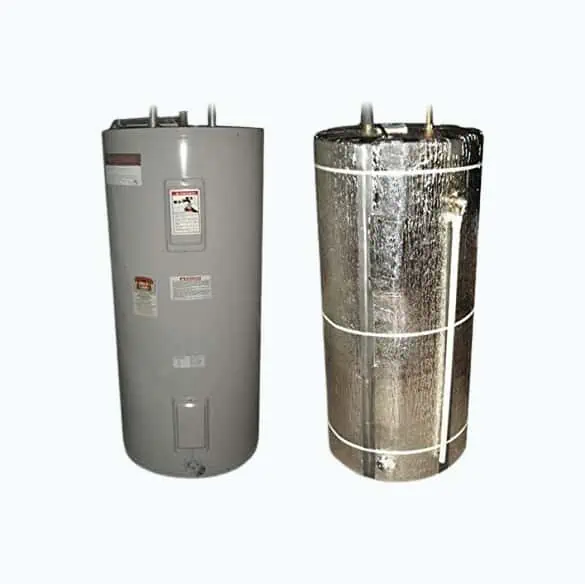
US Energy Products Insulation Blanket
Best Lightweight Water Heater Blanket
If you want a water heater insulation blanket that won’t take up much space, this could be it. The aluminum foil makes this blanket very thin and lightweight; it’s only about 1.25-inches thick.
With the kit, you will receive 42 square feet of material. That is 4 feet by 7 feet, plus a smaller 2 feet by 7 feet piece. The blanket has a high R-value of 7.2, helping you save even more on your energy bills.
Although foil isn’t as popular as fiberglass, it doesn’t mean it is less effective. The foil reflects the heat radiation from the tank and sends the heat back, keeping the tank at its intended temperature.
This blanket contains no fiberglass or toxic materials, so it’s safe for you and the environment. Due to its large size, the blanket could fit any tank between 20 gallons and 80 gallons. It is also safe for gas and electric heaters.
What We Like
Lots of Material
You get great value for money in terms of material. You get 42 square feet of foil in two pieces, one large and one small. The amount of material means you might be able to wrap your tank twice if needed, depending on how large it is.
Free From Toxic Materials
Although fiberglass provides great insulation, it can be dangerous to handle and exposure often causes skin irritation (2). Foil insulation has fewer risks, so you won’t need any protective gear.
Thin and Lightweight
If you have limited space around your heater, a thick blanket might not fit. This foil blanket can easily wrap around even the tightest corner.
High R-Value
This foil blanket has an R-value of 7.2, which means it will significantly reduce the heat wasted. If you’re looking to save energy but don’t have the space for a thick blanket, this is a great option.
What We Don't Like
Some Customers Felt It Didn’t Hold Enough Heat
Some customers commented on how thin the product is. As a result, they felt it didn’t make a meaningful difference.
Product Specs
| Weight | N/A |
| Dimensions | 4 feet by 7 feet / 2 feet by 7 feet |
| Material | Foil |
| Extras | Aluminum foil tape |
Our Ratings
First-Hand Impression
Reflective Foil Water Tank Heater Insulation Jacket
Best Fire-Resistant Water Heater Blanket
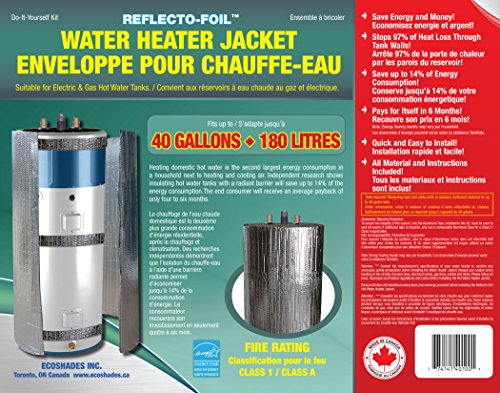
This insulation blanket is one of the most fire-resistant on the market. It is made entirely of foil and, although foil can burn, it is less potentially hazardous than foam.
It has a class 1/class A fire rating which means it won’t spread fire as quickly as other materials. The blanket is patented reflective foil, and it reflects the lost heat right back to the tank.
You receive a large kit with everything you need to fit the blanket to your heater. It includes 48 inches by 76 inches of foil to work with. You also get foil tape, foil spacers, and instructions on how to fit your blanket perfectly.
The material is approximately 0.19-inches thick and consists of layers of foil with polyethylene bubbles between them. The blanket fits 50 and 60-gallon tanks.
What We Like
Safe, Non-Toxic Materials
For anyone who wants to be kind to themselves and the environment, this is a good choice. The blanket is thin and doesn’t contain any dangerous fillers.
Plenty of Material
You get quite a lot of material and it should be enough to fit a 50 or 60-gallon tank. If yours is smaller, it’s easy to cut it down to size. A few customers mentioned that they had enough for two tanks.
Kit Includes Everything You Need
The kit includes tape, spacers, and instructions, so it’s fairly easy to get started without needing to buy extra components.
What We Don't Like
Users Mentioned It Was Difficult for One Person to Install
To fit the blanket perfectly on the tank, you might need some assistance. Some customers found it difficult, which might be due to the large piece of material.
Product Specs
| Weight | 1.3 pounds |
| Dimensions | 76 inches by 48 inches |
| Material | Patented reflective foil |
| Extras | Foil spacers, foil tape, and instructions |
Our Ratings
User Experience
| Product | Award | Weight | Dimensions | Material | Extras |
|---|---|---|---|---|---|
| SmartShield Reflective Insulation | Best For Multiple Uses | 3.4 lbs | 50′ x 24″ x 3 mm | Aluminum foil, polyethylene foam | None |
| SmartJacket Blanket | Best Material | 2.35 lbs | 84″ x 24″ x 5 mm | Aluminum foil, polyethylene foam | Tape |
| Frost King Blanket | Best All-Season | 6.55 lbs | 90″ x 60″ x 3″ | Fiberglass and vinyl | Plastic tape |
| US Energy Products | Best Lightweight | N/A | 4′ x 7′ / 2′ x 7′ | Foil | Aluminum foil tape |
| Reflective Foil Blanket | Best Fire Resistance | 2 lbs | 76″ x 72″ x 1″ | Patented reflective foil | Foil spacers, foil tape |
What Is a Water Heater Blanket?
A water heater blanket, sometimes called a water heater wrap or insulation blanket, is made to surround your water heater and provide extra insulation when necessary.
This reduces heat loss from the water heater and helps it maintain a consistent temperature. If the heater isn’t well insulated, it will constantly lose heat. The heater must then spend more energy to heat the water, resulting in a higher energy bill.
Save Your Money
The hot water tank insulation material can vary depending on the blanket’s manufacturer. This could be anything from fiberglass and foil to cotton.
Insulation is usually rated by its “R-value”, a measurement of its thermal resistance. The higher the value, the more insulation it will provide.
The R-value of the blanket is affected by factors such as:
- Material.
- Thickness.
- Density.
Which one you should choose depends on how much insulation your heater needs, if any. Some modern water heaters will require no additional insulation (4).
Do I Need a Water Heater Blanket?
The first thing to consider is the age of your heater. Older heaters often need extra insulation, especially during the winter. New water heaters are usually already insulated.
Check User Manual
Secondly, consider your local climate and where your heater is stored. If you live in a cold region and the heater is placed in your garage, it might need some extra help to stay warm.
If you keep your heater inside your home, it might not need extra insulation as your house is already keeping it warm. Essentially, if the external temperature differs significantly from the heater itself, it could benefit from a water heater insulation jacket.
A good rule of thumb is to check the outside temperature of the water heater. Simply place your hand on the unit and if it feels warm or hot to the touch, insulation is needed.
How to Choose
Here are a few things you should consider to help you buy the best water heater blanket.

Material
The two most common water heater blanket materials are foil and fiberglass, which also provide the most efficient insulation. Cotton and denim are less popular and less effective as a hot water heater cover.
Fiberglass is great at insulating but it can be difficult to work with. It’s strongly recommended that you wear protective gear including gloves and a mask. Foil is easy to work with but less effective than fiberglass.
Fire resistance is an important consideration. Most blankets hold a fire rating of “class 1/class A”, which means they are very unlikely to catch fire. Fiberglass is considered non-flammable. Cotton, on the other hand, is flammable (5).

Size and Thickness
A water heater blanket must fit properly to insulate effectively. Thankfully, finding the correct size is easy.
All you need to know is the capacity of your heater, such as 40 or 80 gallons. The blanket should clearly state which size tank it fits, letting you buy accordingly.
The thickness of the insulation blanket is something else you may want to consider. Ideally, you should choose the thickest material for the best insulation. Insulation blankets can be up to 5 inches thick.
Foil blankets are an exception to the thickness rule. They don’t need to be particularly thick as they reflect the heat instead of absorbing it. This traps the heat between the tank and the thermal blanket.
How to Install a Water Heater Blanket
When installing the blanket, it’s crucial to fit it correctly. How you fit it depends on whether you have an electric or gas-powered water heater.
1. Electric Heaters
With an electric water heater, you will need to cut the blanket to fit around the panels and valves. There is usually a controller, pressure valve, and temperature relief valve on an electric heater. You can simply cut holes in the blanket to fit around these parts.
Electric heaters tend to lose some heat from below. You can overcome this by covering the bottom of the heater if you can access it.
Once you have installed a water heater blanket, it’s important to never set the temperature above 130 degrees Fahrenheit. Setting the temperature too high could cause the wiring to overheat.
2. Gas-Powered Heaters
Be Careful
The top of the heater is where the exhaust is. Covering this part will prevent the fumes from being vented. You should also leave the bottom unwrapped. Covering these could result in a build-up of dangerous gasses.
FAQs

Do Water Heater Blankets Really Work?
A water heater blanket is an inexpensive way of insulating your water heater, costing as little as $20. Depending on your type of heater and the surrounding temperature, you could make annual energy savings of approximately 10%. This means a blanket should pay for itself quickly and will continue to be useful long after that.

What is a Hot Water Heater Blanket Made Of?
The most popular and effective water heater blanket materials are foil and fiberglass, which work in different ways but are similarly effective. Cotton and denim are also sometimes used in blankets but are now considered far less effective and are much rarer as a result.

Do Gas Water Heaters Need Blankets?
Gas water heaters can benefit from an insulation blanket for the same reasons as an electric one. However, it is critical that you are very careful when applying one. The blanket must never cover the bottom or top of the heater, as this can prevent it from venting properly and is very dangerous. It might be best to hire a professional to install it.