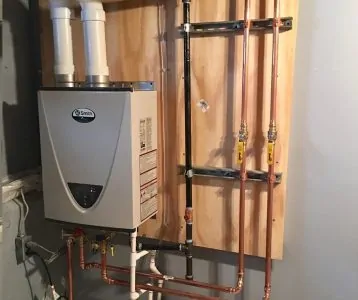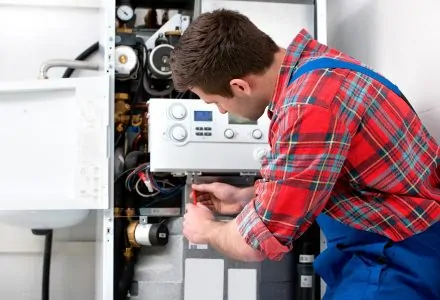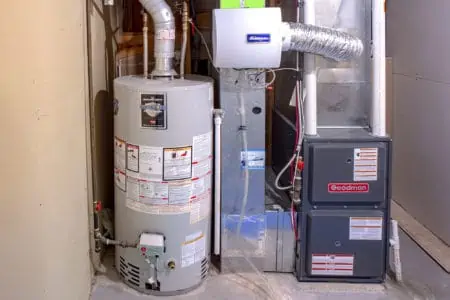
Does a tankless water heater need a filter? That’s a good question. Some people assume that tankless water heaters are less of a headache because they lack water storage capacity.
But sediment and impurities can pass through any type of water heater, and tankless models are no exception. Today, we’re going to learn more about filter types, costs, and why to get one in the first place.
Key Takeaways
- Tankless water heaters need filters to prevent scale build-up and maintain efficiency.
- Filter costs range from $30 to a few hundred dollars, depending on the type needed.
- There are various filter types, including phosphate filters, TAC filters, water softeners, and sediment filters.
- Filters typically need to be changed every six months, but monitor the filter’s condition to determine the ideal replacement frequency.
Does a Tankless Water Heater Need a Filter?
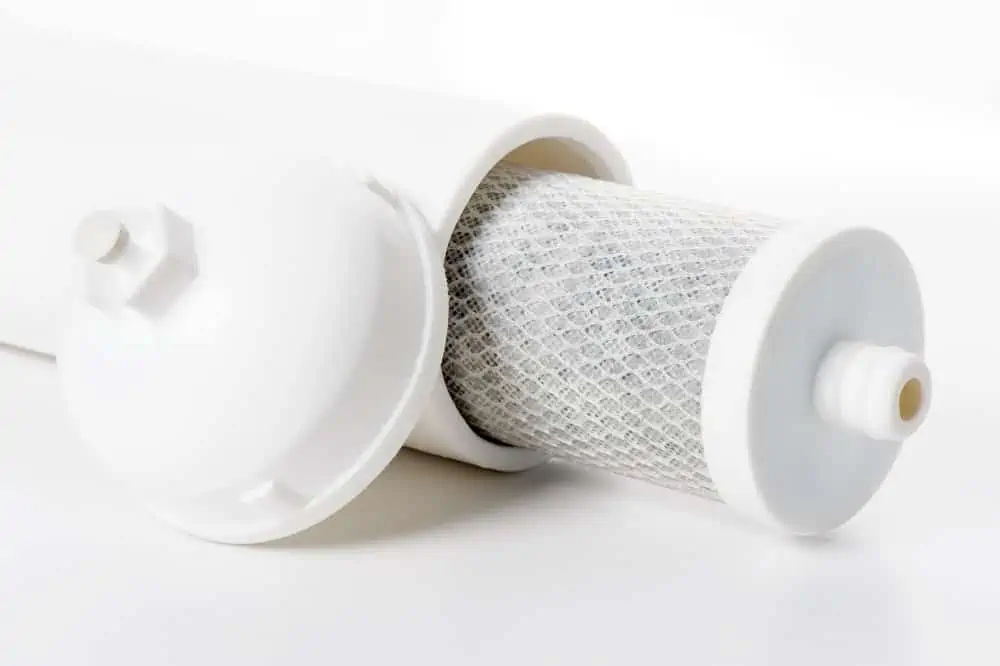
From Rheem to Rinnai, an electric or gas tankless water heater is a wise financial decision. But, make sure to keep them in good condition, or your energy costs will skyrocket.
Proper maintenance will also reduce long waiting times for hot water and allow you to reap the benefits for decades to come.
So yes, a filter is essential to a tankless water heater because it helps prevent scale build-up. Scale build-up can be detrimental to the water heater in more than one way.
But the most common outcome is that it reduces the flow rate, making the heater less efficient and damaging the heater as time goes by.
Good To Know
Hard water is water that’s full of harmful particles and minerals. It dries hair and skin, scratches dishware, and clogs water systems.
Tankless Water Heater Filter Cost
Water heater filters rely on different technologies to extend the lifespan of your tankless heater. And filter costs depend on what type of filter you need.
Prices start at $30 and can cost up to a few hundred dollars. You can buy a whole-house scale inhibitor for around $75.
Different Types of Tankless Water Heater Filters
It’s not a one-type-fits-all situation. You should know which kind meets your needs.
Phosphate Filters
Known as scale inhibitors, phosphate filters can prevent calcium and magnesium crystallization. They release phosphate particles that attach to magnesium and calcium ions. This prevents the hard minerals from coming out of the water, thus inhibiting scale formation.
The effectiveness of phosphates as an anti-scale agent is drastically reduced when they are exposed to hot water. Coldwater lines are best for the most effective application of the phosphate scale inhibitor.
TAC Filters
Short for “template-assisted crystallization”, TAC filters prevent scale from building up inside a tankless water heater. These filters will prevent magnesium and calcium from creating any scale.
They work by targeting hardness particles into nano particles so they don’t build up on the coils or other parts of your water system. This means you won’t get scale residue or hard water spots on your kitchenware.
Water Softeners
If your household gives you a rough time due to hard water, a water softener is worth considering. It’s important to note that this won’t prevent your tankless water heater from scale build-up, but it will prevent hard water damage.
There are plenty of other consequences to using hard water in your home. Soap doesn’t lather as much, your hair and your skin are drier, and there are water streaks on the shower walls and doors.
A water softener system can eliminate hardness by filtering this liquid through polystyrene resin beads.
Infused with a salt-rich brine solution, these beads are individually charged with sodium ions. As hard water passes through, ion exchange occurs, trapping magnesium and calcium ions.
Sediment Filters
Tankless water heaters are recognized for their narrow inlet design. But this inlet can become clogged if it’s contaminated with debris, dirt, or particle matter.
Tank water heaters are designed to deal with sediment better. It builds up at the bottom of the tank, and you get rid of it during normal heater flushing maintenance. But tankless models don’t have a place to store sediments.
Sediment filters are not efficient on a fighting scale. However, they will ensure an open passage throughout the tankless water heater by acting like a screen that keeps out sediments.
How to Install a Filter on a Water Heater
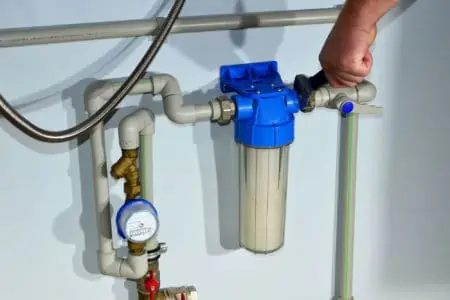
If you are going to install a water heater filter by yourself, you need to know a few plumbing basics. The filter needs to be installed in line with your current plumbing. But, you want to pick a filter location that is accessible.
Something To Consider
It’s almost always best to have a professional install a filter system.
To install the filter, you’re going to have to cut out a section of the pipe. Make sure it’s a pipe that brings water into the tank.
Using the hardware included, attach the filter system in the space you’ve cut out. Each end of the pipe should be connected to the filter. One going in, the other coming out and going to the tank.
Pro Tip
Make sure your water supply is turned off before working on that.
For a whole house filtration system, you’re going to have to change the filters every six months. It’s best to install shut-off and pass-by valves for this purpose. This allows you to change the filters while still using water throughout the house.
How Often to Change Tankless Water Heater Filters?
Tankless water filters usually need changing once every six months. However, you need to monitor the situation first. When the six months are up, if your filter is very dirty, you should consider changing it more often.
FAQs
Check out these extra tips and info before proceeding.

How Can I Tell How Hard My Water Is?
You can purchase a test kit if you want to know exactly how hard your water is. It comes with water test strips and a chart that tells you precisely the water hardness level you’re dealing with.
Where is the Filter on a Tankless Water Heater?
A tankless water heater filter is usually installed on the water supply. They are placed on the pipe before it enters the water heater. However, that’s not always the case.
If You’re Worried
Consult the manual of your tankless water heater or ask a plumber for the exact filter location if you’re not sure what to do.

How Do I Clean My Tankless Hot Water Heater Filter?
To clean the filter, you have to turn off the power to the heater. Then shut off the cold water coming in from the lower panel. Next, close the hot water valve, flush the water inside the system, remove the filter, clean any debris on it, and reinstall it.

Why Is My Water Heater Filter Leaking?
There are many potential reasons for water heater filter leaks. One common problem is that the filter is not tightly secured in place, so be sure to check that first if you notice any leaks. It could also be that the filter is not compatible with your pipes.
In the End
A lot of people assume that because these water heaters have no tank, they require less maintenance or consumables compared to a tank model.
One of the main questions on the topic of tankless heater maintenance was: does a tankless water heater need a filter? Yes, it does. The type of water heater you have has nothing to do with the water quality in your area.