There’s a lot of hype surrounding tankless units for heating water. Naturally, people started wondering: how much electricity does a tankless water heater use? Are they truly as energy efficient as experts and consumers claim? Let’s find out.
Key Takeaways
- Tankless water heaters use around 30,000W of electricity when in operation.
- They are more energy-efficient compared to tank water heaters, saving up to 34% on energy costs.
- Factors affecting power consumption include household size, Energy Star rating, and heater size.
- Choose the right size and type of tankless water heater based on your household’s hot water demand and energy source (electric or gas).
- How Does a Tankless Water Heater Work?
- How Much Electricity Does a Tankless Water Heater Use?
- What Can Affect Power Consumption?
- Energy Efficiency of Tankless vs. Tank Water Heaters
- What to Consider When Buying a Tankless Water Heater
- Pros and Cons of Tankless Water Heaters
- Is a Tankless Water Heater Worth the Cost?
- What Size Tankless Water Heater Do I Need?
- How to Make Your Water Heater More Energy Efficient
- FAQs
- The Verdict
How Does a Tankless Water Heater Work?
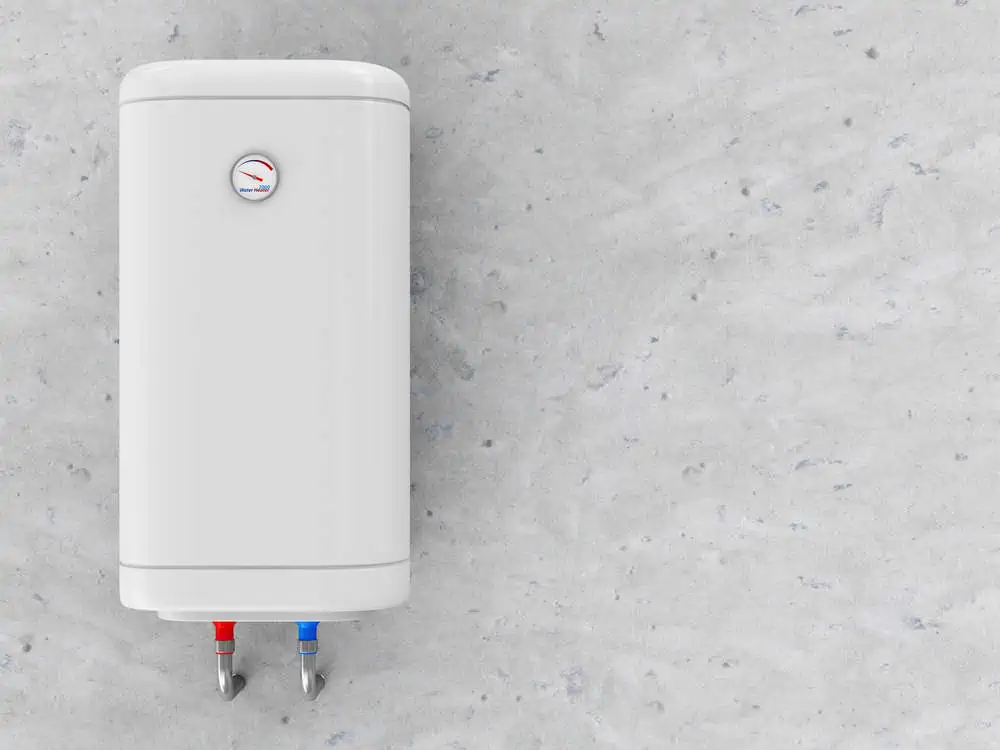
Water heaters with a storage tank can produce hot water until the tank is completely depleted. These heaters may provide a constant flow of hot water at rates that vary between two and five gallons per minute, which is ideal for a household.
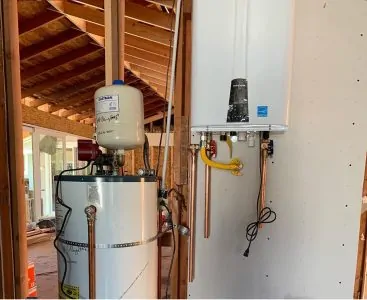
A tankless water heater doesn’t have a storage tank for water. Instead, it’s connected to the water system to heat up the water as it travels through the pipes.
Some gas-powered tankless heaters can produce even larger water flows than their electric counterparts.
Tankless water heaters can give you a constant flow of hot water. But there could be issues if you need hot water at the same time across multiple corners of the house.
How Much Electricity Does a Tankless Water Heater Use?
It’s difficult to estimate how much your heater consumes per month and year. Many variables come into play (like how many people live in your household and consume water).
To determine the tankless water heater power usage, you need to know how much electricity costs where you live and the usage of the water heater (in watts). For instance, if you have an 8-kW water heater, it will consume 8 kW per hour.
When calculating the electricity consumption of the water heater, we assume that it runs at 100 percent capacity, which is not always the case.
| Tankless Water Heater Wattage | Cost per Hour | Cost per Month | Cost per Year |
| 10 kW | $1,32 | $23,10 | $227,20 |
| 15 kW | $1,98 | $34,65 | $415,80 |
| 20 kW | $2,64 | $46,20 | $554,40 |
| 25 kW | $3,30 | $57,75 | $693,00 |
| 30 kW | $3,96 | $69,03 | $831,60 |
What Can Affect Power Consumption?
The first such factor is the size of the household because every household will have different requirements for the electricity consumption of a water heater. A home with four people will surely consume more hot water than someone living alone.
If you’ve got an Energy Star-rated tankless water heater, it means it has a more efficient power consumption compared to the units without this label.
The size and age of the tank will also have a say in the unit’s power consumption, as newer models are known for being more energy-efficient.
Energy Efficiency of Tankless vs. Tank Water Heaters
Tankless water heaters are a viable option compared to tank water heaters because of their energy-efficiency advantages.
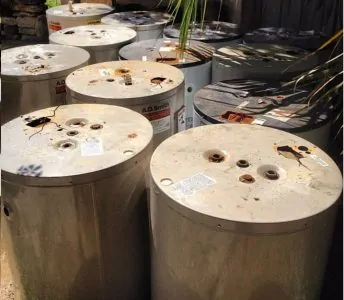
Storage tank water heaters suffer from significant standby heat loss, contributing significantly to their higher energy costs and lower efficiency. However, by selecting an insulated unit, this loss can be reduced.
A tankless water heater can save up to 34 percent on energy costs, says the Environmental Protection Agency.
That’s when you compare it to a tank water heater and if you consume 41 gallons or less of hot water per day. If your household uses more than 86 gallons of hot water each day, a tankless water heater can be 14 percent more efficient.
What to Consider When Buying a Tankless Water Heater
You have to keep a few things in mind when looking to buy a tankless water heater.
Household Requirements
A heater that is too large will lead to unnecessary expenses. But one that’s too small will prevent you from doing the dishes with hot water while someone else is taking a shower.
That’s why you need to consider the peak hot water demand in your home. Do you do the laundry while someone else is showering? Do you have multiple showers in the house? How much hot water is needed to cover this demand?
Flow Rate
Calculated in gallons per minute (GPM), flow rate is how much water an appliance needs. You have to consider how many appliances need hot water at the same time during peak demand.
Electric vs. Gas Heaters
If you don’t have a gas supply at home, you can opt for an electric tankless heater. They’re much smaller, quieter, and less expensive than their gas counterparts, but they have a very limited output.
Gas heaters are bigger, louder, and more powerful, and can heat water at higher temperatures. But they’re more expensive and require a natural gas pipe running through the household.
Pros and Cons of Tankless Water Heaters
Like every other product, tankless water heaters have their advantages and drawbacks.
Pros
- Can be very energy efficient in homes that consume less than 42 gallons of water per day.
- Have a longer lifespan compared to tank water heaters.
- Take up less space because they don’t have a tank.
- Compact and can fit into smaller households and spaces.
Cons
- Require a higher upfront investment compared to tank water heaters.
- Can be expensive to replace a storage-tank water heater with a tankless model.
- If multiple people are taking showers at the same time, the tankless water heater won’t keep up with the hot water demand.
Is a Tankless Water Heater Worth the Cost?
Even if a tankless water heater costs more money upfront, it can save money in the long run. Gas and electric tankless water heaters are more energy-efficient than their tank counterparts.
What Size Tankless Water Heater Do I Need?
This really depends on your family’s water usage. During the busiest times of the day, the average family uses 6.5 GPM (gallons per minute). So, a tankless water heater with a flow rate of seven gallons per minute is best suited to families of four.
The average water usage per household:
- Shower – 2.5 gallons per person
- Bathtub – 4 gallons per person
- Washer – 2 gallons
- Dishwasher – 1.5 gallons
- Doing dishes – 1.5 gallons
So, determine how much usage your family will take on and choose a tankless system that has a flow rate to handle it.
How to Make Your Water Heater More Energy Efficient
Many people wonder how to save money on their water heater’s consumption. If that’s something that’s been on your mind, consider the following tips:
- Turn down the thermostat, especially during the summer months.
- Insulate the water pipes and heater to make sure the water inside stays at a higher temperature for longer.
- Buy a water heater of the right size. Going with a very small water heater will cause it to overwork, which is not energy efficient.
- Use less hot water. Turn it off when you’re shampooing or turn to other tricks that reduce your overall water consumption.
FAQs

Can a Tankless Water Heater Run a Whole House?
Yes, but you’re going to have to buy a heater labeled as “whole house”. This lets a family of four use hot water at their leisure. You’ll likely not have any issues with supply or electricity.
Your other option is a point-of-use water heater. It’s a smaller unit that supplies less. But it also uses less electricity. This is okay if you have a small family and watch your water usage.

What Size Breaker Do I Need for a Tankless Water Heater?
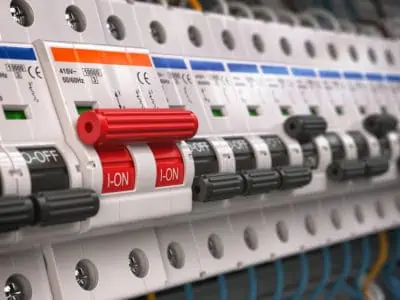
Where power requirements are concerned, a typical tankless water heater requires a 40-50 amps breaker for each wire. Usually, about 120 amps in total.
But make sure your panel has room left to support the rest of your appliances. It’s ideal to have at least a 250 amp breaker panel for an average home with a tankless water heater.

What is the Average Lifespan of a Tankless Water Heater?
The Verdict
So, how much electricity does a tankless water heater use? There are several factors that influence this, such as the size and model of the unit chosen. But we can say that tankless water heaters can help save money on electricity consumption.