If your current water heater is on its last legs or your family is growing, it might be time to upgrade to a larger water heater.
A 50-gallon tank is an ideal size for families or anyone else who needs multiple hot water sources at the same time. However, it can be tough to choose from the vast amount of heaters that are available today.
To help you choose, we have created this list of 50-gallon water heater reviews and ranked them by their efficiency, price, installation, and first-hour rating.
- HFO foam insulated
- Fits in small spaces
- Durable construction
- Non-simultaneous & simultaneous options available
- Fully automatic controls
- Hydrojet total performance system
- Suitable for almost any location
- Over temperature protector reduces energy waste
- 120 to 160°F temperature range
- 40,000 BTU burner
- Recovery rate of 44.7 GPM
- 3 position outlet blower
- Dynaclean diffuser cleans inside of tank
- Durable Coregard anode rod
- Insulated with non-CFC foam
Review Methodology: At Sensible Digs, we provide you with a thorough analysis, assessment, and comparison of the best 50-gallon water heaters on the market. Our team of experienced professionals conducts hands-on evaluations and research, using benchmarks and criteria to measure performance, efficiency, and reliability. We then rank and review the water heaters based on factors such as energy consumption, heating speed, durability, and safety features. Our data-driven approach and firsthand experience ensure that we identify the key decision-making factors and rate each product accurately, helping you make the most sensible choice for your home’s hot water needs.
The Best 50 Gallon Water Heaters of 2024
Here are five of the best 50-gallon water heaters currently on the market.
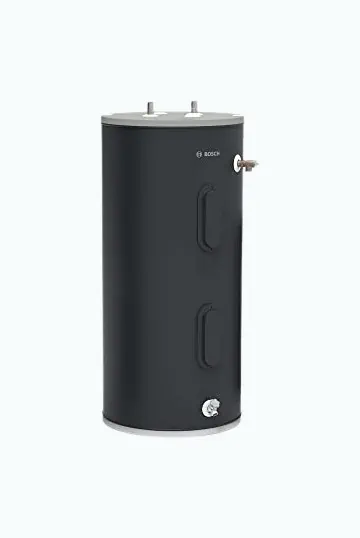
Bosch Thermotechnology 50-Gallon Water Heater
Best Electric Water Heater
Electric water heaters are easy to use, save space, and protect you from dry fire. If you’re after an electric 50-gallon water heater, Bosch has one to consider.
This gives you 50 gallons of hot water at your fingertips when you need it. With a glass-lined steel tank, it’s built to last for at least 10 years. Yes, it’s even backed by a 10-year warranty!
It even comes with two anode rodes, making this a corrosion-resistant option. This is better for your water heater and, of course, your water.
What We Like
HFO Foam Insulated
Electric water heaters can be more expensive to run. That’s why we appreciate that Bosch has insulated their water heater with HFO foam. Over time, this will bring down fuel and energy costs since it has double heating elements to conserve energy.
Fits In Small Spaces
Being only 22.25 inches wide and 48.75 inches tall, you can keep this in small spaces such as under the stairs, closets, or crawl spaces.
Durable Construction
With a 10-year warranty, you know this is built to last. This is a heavy-duty, corrosion-resistant, durable heat trap made from steel, magnesium anode rods, and a glass liner.
Convenient Features
This has a range of convenient features to make your experience easier. Firstly, it has electric hot and cold water connections, making the tank more durable. It has a plastic drain valve that’s easy to use and maintain. The heat traps keep water hotter for longer. There’s a temperature, and pressure relief valve included. Finally, it has automatic surface-mount thermostats for your convenience.
What We Don't Like
You Can’t Install It Yourself
You’ll need to hire a contractor to install this. Not every plumber will take on this job, so it can be a little tricky to get it up and running, especially if you live in a rural area with minimal tradespeople.
Product Specs
| Gallon capacity | 50 gallons |
| First-hour rating | Not specified |
| Weight | 115.7 pounds |
| Dimensions | 22.25 inches by 22.25 inches by 48.75 inches |
| BTU | Not specified |
| Warranty | 10 years |
Our Ratings
User Experience
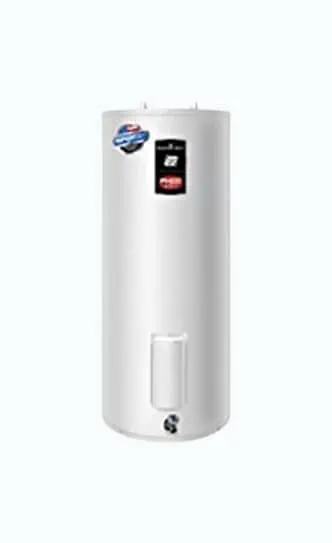
Bradford BWC 50GAL Water Heater
Best Corrosion-Resistant Water Heater
If you want something durable and corrosion- and rust-resistant, the Bradford water heater is one to consider. It has a Vitraglas lining that protects the tank from some destructive elements of hot water, making it last longer and function better.
Backed by a 6-year warranty, you know you’re getting your money’s worth when choosing this option. It is built to last for years to come, making it an excellent option for your 3-4 person household.
What We Like
Non-Simultaneous and Simultaneous Options Available
With this water heater, you can choose both simultaneous and non-simultaneous operations. This allows you to heat both elements at the same time, or just one at a time.
Fully Automatic Controls
This boasts a surface-mount thermostat that allows automatic temperature control. This makes it easier for you. The sensitive manual also has an energy cutoff to prevent overheating, making this safer for both your household and the tank.
Hydrojet Total Performance System
This technology is advanced compared to other heaters. The hydrojet system allows for a cold water inlet, reducing sediment build-up inside the tank. It also increases the first hour of hot water delivery while preventing overheating at the top of the tank.
Non-CFC Foam Insulation
You’ll experience less heat loss with this tank, thanks to the specialized insulation. Of course, this also results in less energy consumption, saving you money. Plus, it keeps the tank running more efficiently for longer so that you run into fewer water heater problems along the way.
What We Don't Like
No Energy Star Rating
While it’s efficient in its operation, it hasn’t achieved an Energy Star rating. If you’re looking to save energy and do your part for the environment, this might not meet your standards.
Product Specs
| Gallon capacity | 50 gallons |
| First-hour rating | 67 gallons |
| Weight | 150 pounds |
| Dimensions | 22 inches by 22 inches by 60 inches |
| BTU | Not specified |
| Warranty | 6-year limited |
Our Ratings
Personal Perspective
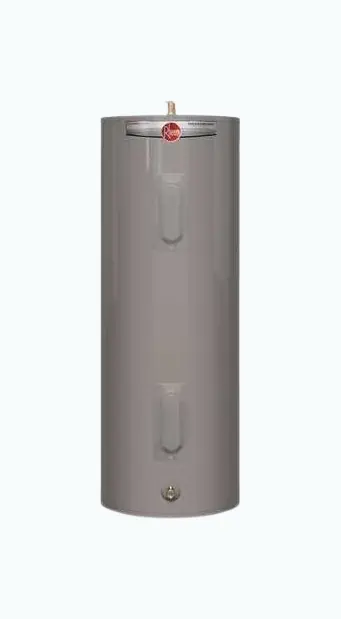
Rheem Residential Electric Water Heater
Best for Energy Efficiency
Electric water heaters are usually kinder to the environment than gas, but only if they’re energy-efficient. This 50-gallon residential heater from Rheem is currently one of the best electric water heaters for energy efficiency.
It has an Energy Factor of 0.93, indicating that it will be kinder to the environment than some other options.
Its useful features include a temperature protector to prevent overheating, an automatic thermostat, and a wide temperature range.
What We Like
Versatile Use
Whether you want to use it at home or work, this heater can be installed in a variety of locations.
Over-Temperature Protector
This heater’s energy efficiency is enhanced by its over-temperature protector. The heater limits water temperature to 160°F, at which point it will cut off. This prevents overheating, which reduces energy waste.
Good Temperature Range
The heater offers a generous heat range from 120-160°F. This allows you to choose your ideal temperature without the water becoming scaldingly hot.
What We Don't Like
Possible Leaking Issues
Some customers have complained that this tank leaks. This occurs around the top threads where the heating elements are located.
Not Very Durable
You can usually expect a large home appliance such as a heater to last around a decade. However, some customers complained their heater only lasted a few years before needing repairs or replacement. Others have said that it was showing signs of wear after just a few months.
Product Specs
| Gallon capacity | 50 gallons |
| First-hour rating | 61 gallons |
| Weight | 121 pounds |
| Dimensions | 20.25 inches by 20.25 inches by 58.875 inches |
| BTU | Not specified |
| Warranty | Six-year limited |
Our Ratings
Community Feedback
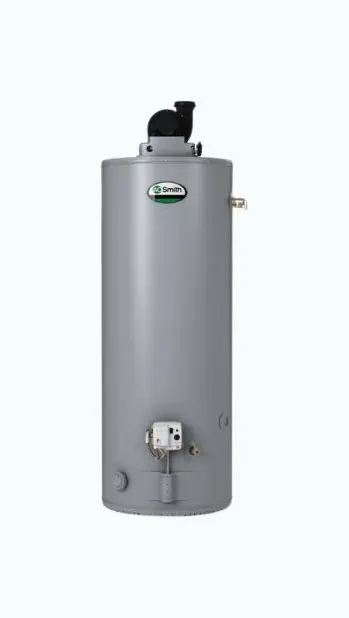
A.O. Smith GPVL-50 ProMax Gas Water Heater
Best for Fastest Recovery Rate
If you’re looking for a powerful gas water heater, this unit from A.O. Smith is worth considering. It is Energy Star qualified and designed to optimize efficiency, with a uniform energy factor of 0.72.
It boasts a 50-gallon water tank that’s heated using a 40,000 BTU burner. This heater can provide enough hot water for a family of five or more. It produces enough hot water for a 33-minute shower, or three simultaneous showers.
Rather than the usual standing pilot ignitor, this unit has a hot-surface ignitor. This is far more reliable and durable and reduces energy consumption.
Another positive is the rotatable blower outlet. This can be adjusted to three positions, which makes installation a bit easier.
What We Like
Provides Lots of Hot Water
This water heater is capable of providing enough hot water for an 80-gallon tub. That’s plenty for an average family of four people.
Recovery Rate of 44.7 Gallons per Hour
This is one of the quickest recovery rates we have seen in a while. A 44.7 gallon per hour rate in a 50-gallon tank is remarkably fast.
Outlet and Inlet Heat Traps
Every year, a huge amount of heat escapes through pipes, resulting in energy waste. These fitted heat traps along the inlet and outlet mean you won’t need to worry about wasting energy. The heat stays inside the tank, where you need it most.
Three Position Outlet Blower
A three-position outlet blower is an extra feature that might seem unnecessary until you need it. By being able to turn this outlet, it becomes far easier to install the water heater in almost any location.
What We Don't Like
Noise When the Exhaust Fan Starts Up
This isn’t a major flaw but users reported that it makes some noise when the exhaust fan starts up. Fortunately, this stops quickly once the fan is up to speed.
Product Specs
| Gallon capacity | 50 gallons |
| First-hour rating | 79 gallons |
| Weight | 213 pounds |
| Dimensions | 50.75 inches by 60.125 inches by 24 inches |
| BTU | 40,000 BTU |
| Warranty | Six-year warranty |
Our Ratings
First-Hand Impression
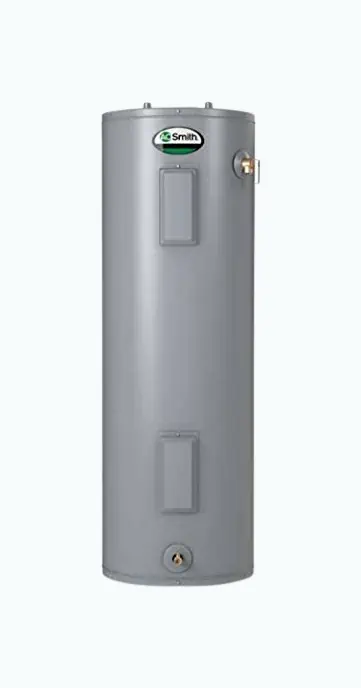
A.O. Smith ProMax Short 50-Gallon Electric Water Heater
Best for Easy Maintenance
This electric water heater is ideal for anyone who wants a unit that is easy to maintain. This heater from A.O. Smith will provide enough hot water for two showers running simultaneously, or one 26-minute shower.
One unique feature is the Dynaclean diffuser dip tube. This is essentially a power cleaner that reduces the build-up of sediment and lime.
This feature is perfect for anyone who doesn’t have the time to maintain their water heater. The Dynaclean diffuser also maximizes the outlet flow, delivering hot water faster.
On the inside of the tank, A.O. Smith fitted a CoreGard aluminum anode rod. These feature a stainless steel center that preserves the anode rods for longer than usual.
What We Like
Features a Dynaclean Diffuser Dip Tube
This is a unique and very useful feature. It power cleans the inside of the tank, eliminating lime and sediment.
Tank Fitted With a Coregard Anode Rod
This type of anode rod should outlive the standard type that usually has to be replaced every six years, if not sooner. A.O. Smith promises a long service life due to this durable material.
Insulated With Non-CFC Foam
Insulation is key when it comes to energy efficiency and this non-CFC foam will minimize energy consumption.
What We Don't Like
Requires a Plumber to Install
This is not something that everyone will be able to install. Contact your plumber and ask if they work with A.O. Smith water heaters. Some owners mentioned that their usual plumbers didn’t do so.
Product Specs
| Gallon capacity | 50 gallons |
| First-hour rating | 57 gallons |
| Weight | 176 pounds |
| Dimensions | 49.25 inches by 23 inches by 23 inches |
| BTU | N/A |
| Warranty | Six-year warranty |
Our Ratings
User Experience
| Product | Award | Capacity | First-hour rating | Weight | Dimensions | BTU | Warranty |
|---|---|---|---|---|---|---|---|
| Bosch Thermotechnology | Electric Water Heater | 50 gal | N/A | 115.7 lbs | 22.25″ x 22.25″ x 48.75″ | N/A | 10 years |
| Bradford BWC | Corrosion-Resistant | 50 gal | 67 gal | 150 lbs | 22″ x 22″ x 60″ | N/A | 6-year limited |
| Rheem Residential Electric | Energy Efficiency | 50 gal | 61 gal | 121 lbs | 20.25″ x 20.25″ x 58.875″ | N/A | 6 year limited |
| A.O. Smith GPVL-50 | Fast Recovery Rate | 50 gal | 79 gal | 213 lbs | 50.75″ x 60.125″ x 24″ | 40,000 BTU | 6 years |
| A.O. Smith Electric | Easy Maintenance | 50 gal | 57 gals | 176 lbs | 49.25″ x 23″ x 23″ | N/A | 6 years |
Gas vs. Electric
The fuel type and how much is consumed by a water heater will decide its annual operation cost. Heaters of the same size can still differ greatly in how much fuel they use. Although you can still find boilers that use oil, most modern top-rated boilers will use gas or electricity.
Gas Water Heater
A gas water heater consists of a tank with a burner at the bottom. As the water inside the tank cools, the burner is ignited to keep the temperature at a specific level.
A gas heater is fueled by either natural gas or propane. Today, most American households use natural gas.
Buying a gas-powered water heater is generally more expensive than an electric heater. However, the increased energy cost of an electric water heater can make it cost more money in the long term.
Pros
- Faster recovery rate: Gas water heaters have a faster recovery rate. This makes them more convenient for family homes.
- Heats quickly: The heater should be able to heat a full 50-gallon tank in about an hour.
- Works without electricity: A major advantage of a gas-powered heater is that it still works during power outages.
Cons
- High initial cost: The initial cost is generally higher than with electric heaters. However, they can compensate for this with lower energy bills.
- Requires regular maintenance: Maintenance is crucial with gas heaters. Failing to have your heater serviced could lead to increased wear and tear or, in severe cases, even a gas explosion.
Electric Water Heater
Electric water heaters are best suited to homes with less demand for hot water. Their recovery rate is slower than gas-powered units. On average, it will take an electric 50-gallon unit about 80 minutes to heat up.
An electric water heater consists of a tall tank with two large coils inside. The coils resemble those found in electric ovens.
One coil is near the bottom and one close to the top of the tank. The two coils heat the water simultaneously, accelerating the process.
Pros
- Dry fire protection: Dry fire protection means the upper heating element can detect whether or not it’s surrounded by water. If it can’t detect water, the heating element will shut off to prevent the heater from burning out.
- Space-saving design: Electric water heaters are generally smaller than gas boilers. This is because they don’t require venting and exhausts.
- Easy-to-use: Using an electric heater is a simple matter of plugging it in and setting the temperature.
Cons
- High running cost: Electricity is generally more expensive than natural gas or propane. This makes an electric water heater more expensive in the long run.
- Long recovery time: Electric heaters take longer than gas-powered heaters to recover. If your home has a high demand for hot water at specific times, it might be unable to keep up.
Things to Consider When Choosing a 50-Gallon Water Heater
Once you have decided on a gas or electric heater, there are some other points to consider.
First Hour Rating
It is important to consider the first-hour rating of the heater you’re considering. The first-hour rating describes the performance ability of your water heater (1).
This is calculated using the following formula:
Tank capacity x .70 + recovery time = first-hour rating.
A first-hour rating could look like this:
50-gallon tank x 0.7 + 55 = 90 gallons first hour rating.
0.7 represents 70 percent of the water heater’s capacity. As you use warm water in your home, new cold water enters the tank, diluting the hot water inside.
The water heater’s thermostat senses this temperature change and begins heating the water again.
The first-hour rating is significant because it helps you determine if the water heater is powerful enough. If your water heater is too small, you could run out of hot water before finishing your shower. On the other hand, if your heater is too large, you could waste money heating more water than you will use.
Simultaneous use is an important factor to consider. You need a water heater that will fulfill your needs and those of your housemates. This means it might need to provide hot water to multiple outlets at the same time.
This is especially true for homes with a dishwasher or washing machine without an internal heater. These appliances rely on your heater for hot water.
When searching for a new water heater, determining the first-hour rating doesn’t require a mathematician. The EnergyGuide label on the unit will display its first-hour rating.
Consider these points to decide which first-hour rating will suit you best:
- Time of day: Think about the time of day when your household uses most of its hot water. This doesn’t need to be specific but try to determine whether it’s morning, afternoon, or evening/night. Keep in mind how many people live in your house.
- Average gallons: Next, you should try to figure out the approximate amount of gallons you use during peak hours.
- Choose a tank: Once you have the approximate amount of gallons used by your home, you can use this number as a guide and find your ideal water heater.
Energy Factor
The energy factor of a unit is determined by the amount of hot water produced per unit of fuel consumed on an average day. The energy factor describes the energy efficiency of the unit (2). 50-gallon water heaters should have an energy factor of at least 0.62.

Energy Star
Not all water heaters will have an energy star. However, a 50-gallon water heater with a star is on average 15 percent more efficient than a standard unit (3).
FAQs

How Much is a Good 50 Gallon Water Heater?
In general, you should expect to pay in the region of $1,000 for a modern electric water heater and $1,200 for a natural gas equivalent. Although gas heaters are more expensive, natural gas is currently cheaper than electricity so your energy bills will be lower, effectively canceling this out.

How Long do Water Heaters Last?
On average, a new water heater should last you about a decade, ranging between eight to twelve years. This can vary greatly depending on how frequently you use the heater and how well it is maintained. Although some companies offer lifetime warranties, you will usually need to pay to replace parts after six years.

Is a 50 Gallon Water Heater Good?
A 50-gallon water tank will usually be large enough to fulfill the water demands of a four-person household. It should be able to supply water for three showers. You can get a rough estimate of how large your tank should be by adding 10 gallons per household member, so a family of seven might need an 80-gallon tank.

How Many Showers Can You Take With a 50 Gallon Water Heater?
If you have a 50-gallon water heater, you can take between three and five showers. But, a few variables could change the answer to this question.
Considering that a typical shower uses 17.2 gallons of water, it is typically possible to have enough hot water for up to five persons to take showers within an hour.
With a water heater that has a capacity of 50 gallons and a temperature setting ranging from 120 to 140 degrees Fahrenheit, you will be able to take a shower for approximately 17 minutes until there is no more hot water, and that could be enough for only two people.

How Long Does It Take for a 50 Gallon Water Heater to Warm Up?
It takes approximately 1 hour and 20 minutes for a 50-gallon water heater with elements rated at 5,500 watts and set to a temperature of 120 degrees to heat water that is brought into the unit at 60 degrees.
When water with a temperature of 40 degrees is introduced into the same tank, the process of heating the water takes 1 hour and 47 minutes.