If you’re looking for an easy way to heat your water almost instantly, a tankless water heater could be the perfect solution.
The best electric tankless water heaters save energy, time, and space, as well as reduce your bills. Tankless heaters are more popular than ever before, and the number of different models can make choosing one a daunting task.
To help you make an informed decision, we have done extensive research and selected five of the best in our electric tankless water heater reviews. You can find those reviews, and much more, in this article.
- Just 14.5 inches wide
- Lifetime warranty
- Many positive reviews
- Just 11.5 inches wide
- Sturdy tempered glass construction
- 360-degree installation
- High 5 GPM flow rate
- Advanced flow control
- 7-year warranty for leakage
- Flow rate of 4.4 GPM
- Easily replaceable parts
- Sleek metal design
- Flow rate of 3.5 GPM
- Bold blue design
- Durable copper construction
Review Methodology: At Sensible Digs, our detailed analysis and hands-on evaluation of the best electric tankless water heaters enable you to make an informed decision with confidence. We measure and compare the performance, energy efficiency, capacity, and installation process of various models, using objective criteria and real-life data. Our professional team of experts shares their experience and findings on key decision-making factors, such as temperature control, flow rate, and design choices, to rank and review each product. By assessing the results and providing first-hand evidence, we help you identify what sets the top electric tankless water heaters apart from their competitors and choose the one that best suits your needs.
The Best Electric Tankless Water Heaters of 2024
Here are five great electric tankless water heaters to consider.
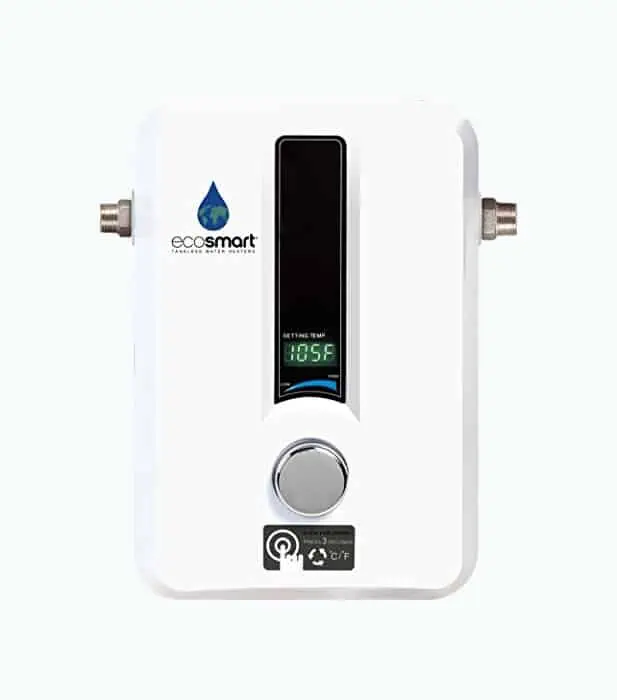
EcoSmart ECO 11 Electric Tankless Water Heater
Best Space-Saving Water Heater
The EcoSmart Electric Tankless Heater is available in several different sizes, which provide a variety of GPMs. This is useful for anyone who wants an EcoSmart heater tailored to their needs.
The unlimited warranty tells us that the company has faith in its product. You can have pretty much any part of the product replaced or fixed at no extra cost. This product doesn’t only save money by reducing energy costs but in other ways too.
Our confidence in this product is enhanced by the number of positive reviews it has received.
This is also the smallest product on our list, making it perfect for a smaller home.
What We Like
Space-Saving
Modern homes are all about aesthetics. The EcoSmart electric water heater plays into this as it will fit neatly into any area of the home.
Lifetime Warranty
This is the only option on our list with a lifetime warranty. Many others have decent warranties on specific parts of around five or six years. However, this is easily our top option in terms of its warranty.
Many Positive Reviews
There is comfort in purchasing a product that has been tried and tested by the masses and the EcoSmart water heater does not disappoint. Thousands of people have reviewed this heater positively, which gives us faith in the product.
What We Don't Like
Low GPM
This option has one of the lowest GPMs on our list. Although 1.5 GPM is enough for a small home, such as an apartment, it won’t do for a family house. If you intend to grow your family, or already have a large family, this heater probably won’t see you through the winter months.
However, if you like the EcoSmart brand but need a higher GPM, they have several options to accommodate you. They are more expensive but this is expected of a higher GPM.
Product Specs
| Dimensions | 14.5 inches by 9.8 inches by 4.1 inches |
| Weight | 6.5 pounds |
| Flow Rate (Gallons Per Minute) | 1.5 GPM |
| Activation Flow | 0.3 GPM |
| Input Temperature Range | 67 to 105 degrees Fahrenheit |
| Volts Required | 240 |
Our Ratings
User Experience
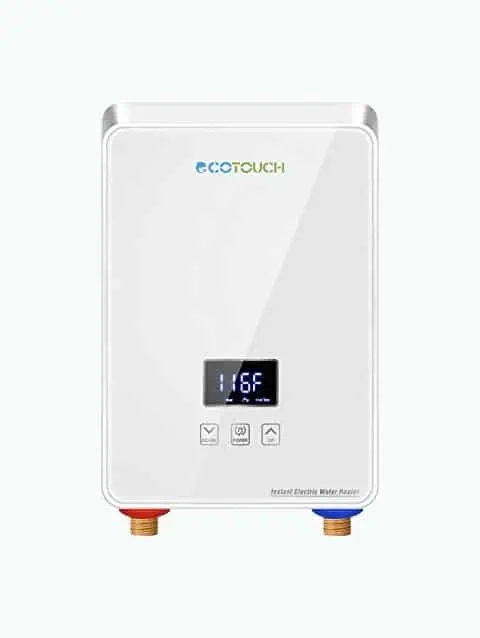
ECOTOUCH Electric Tankless Water Heater
Best Low-Cost Water Heater
This EcoTouch heater is an excellent option for anyone on a tight budget. Tankless water heaters are often more expensive than tank ones, but that isn’t always the case. This low-cost option is a prime example.
The budget-friendly price doesn’t affect the quality of the product. It will still perform its role admirably.
What We Like
Small
This is another compact option, ideal for anyone with minimal storage space for appliances. It should fit in almost any space within your home.
Two Color Options
It’s always nice to have style options and here there are two: black or white. The sleek design and choice of colors mean your water heater should blend seamlessly into your home decor.
Sturdy and Safe Construction
This heater is set apart by its sturdy construction. The sleek design is not only aesthetically pleasing but also functional. This was proven by many tests behind the scenes to ensure the product is 100 percent safe.
Made using tempered glass and with a fire retardant case, it should withstand high heat and even fires. In addition, the product’s internal electricity and water lines are completely isolated to prevent unsafe leaks.
360-Degree Installation
Due to the positioning of the input and output pipes, as well as the heater’s lightweight and compact nature, it’s pretty versatile. In fact, it can be installed in any position to fulfill your needs.
What We Don't Like
Low GPM
We’ve already discussed the importance of GPM for the effectiveness of a heater. The EcoTouch water heater has one of the lowest GPMs on our list. Depending on your requirements, this may not be the choice for you.
Product Specs
| Dimensions | 3.8 inches by 8 inches by 11.5 inches |
| Weight | 6.22 pounds |
| Flow Rate (Gallons Per Minute) | 1.5 GPM |
| Activation Flow | 0.475 GPM |
| Input Temperature Range | 67 to 109 degrees Fahrenheit |
| Volts Required | 240 |
Our Ratings
Personal Perspective
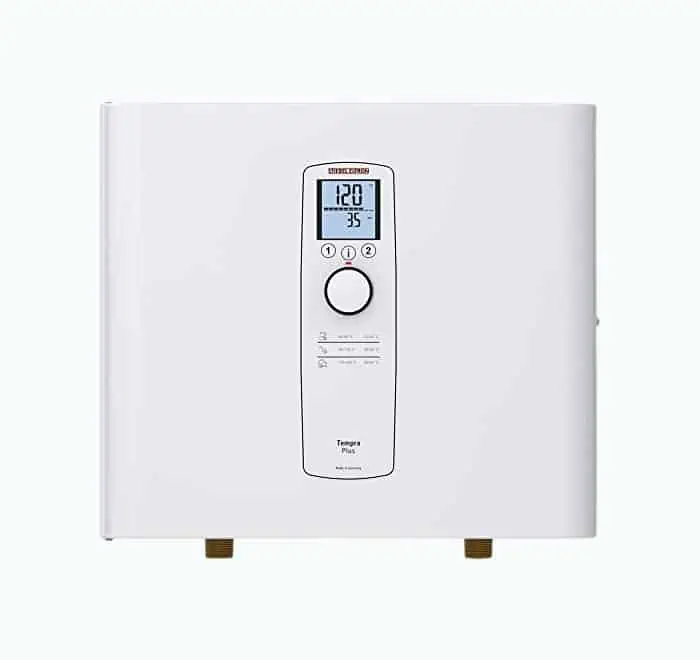
Stiebel Eltron 24 Plus Tempra Tankless Water Heater
Highest Flow Rate
The Stiebel Eltron is another option with a decent warranty. It has a seven-year warranty for leakage and three-year cover on parts.
One unique feature of this product is the switch that makes it function in near-silence. If you want to place your tankless water heater in a communal area, such as a kitchen, you may appreciate this.
The flow rate of this heater reaches a whopping 5 GPM. It can facilitate as many as three showers at once, great for a big family.
In fact, this is almost too much water, considering most houses only have one or two showers. It could be ideal for a student house, with multiple showers on each floor.
What We Like
High Flow Rate
The Stiebel electric water heater earns the accolade for the highest flow rate. This depends on the outside water temperature but it still applies in most cases, even in colder climates.
This makes it a great option for a bigger house and ideal for landlords with multiple bathrooms in their building.
Slim Design
This is not the smallest option on our list but the slim design makes up for that. It will sit snugly against the wall, occupying minimal space and blending in seamlessly. This is always a bonus.
Advanced Flow Control
Patented by Stiebel, advanced flow control is very useful for tankless water heaters. Usually, too many appliances working at once can make every appliance turn cold. However, Stiebel’s mechanism means that isn’t the case.
Instead, it maintains the temperature of each water appliance. It does this by automatically reducing the water pressure for each appliance. This means the temperature is not affected by such heavy use.
What We Don't Like
High Cost
This heater is more expensive than our other four options. Even so, the fantastic benefits this unit provides, including advanced flow control, probably make it worth the extra cost. This depends on your circumstances and available budget.
Product Specs
| Dimensions | 4 inches by 15 inches by 9 inches |
| Weight | 8.5 pounds |
| Flow Rate (Gallons Per Minute) | 4.4 GPM |
| Activation Flow | 0.5 GPM |
| Output Temperature Range | 86 to 140 degrees Fahrenheit |
| Volts Required | 240 |
Our Ratings
Community Feedback
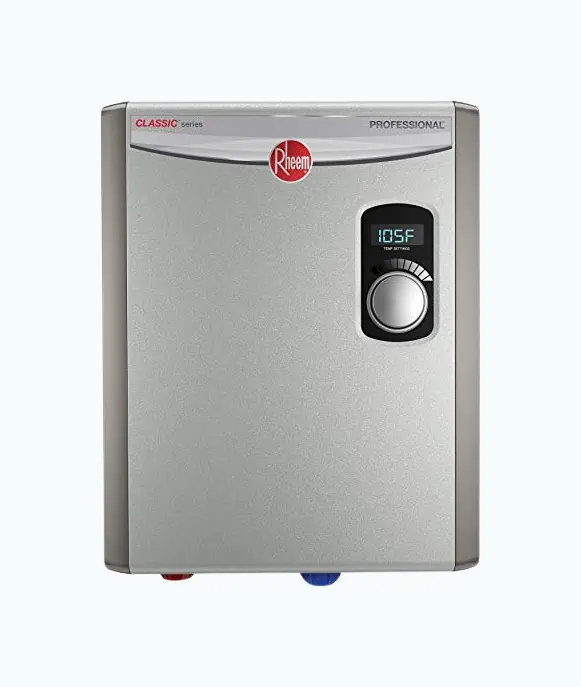
Rheem RTEX-18 Residential Tankless Water Heater
Easiest to Install
The Rheem tankless water heater is a sleek metal option for anyone who has their heater visible. With replaceable and repairable parts, it’s easy to maintain. It’s also very easy to install thanks to its 360-degree installation, so it will fit almost anywhere in your home.
Its slim exterior grants you far more options of where to install the unit. You should be able to slide it into any tight space in your home.
This is another option with a pretty high maximum GPM of 4.4. It’s perfect for a house with around two showers, so most family homes would be served well by it.
What We Like
High GPM
This heater doesn’t have the top-rated GPM of the lot but it’s still quite impressive. It is ideal for anyone with a bigger home and requires multiple appliances to be used at once.
360-Degree Installation
Not only is the product aesthetically pleasing, but you can also enjoy freedom when installing it. It can fit into the tightest spaces, such as under a sink, or inside a small cupboard.
Durable
In addition to its easily replaceable parts, the Rheem water heater has an inner mechanism made using robust copper and brass. This increases durability as these metals are known for their resistance to wear. If they do need replacing, they can easily be removed.
What We Don't Like
Short Warranty
Although this product has a five-year warranty on its heating chamber, it only has a one-year warranty on parts. That is significantly less than most of our other options. Despite having easily replaceable parts, you won’t be able to rely on free replacements for long.
Product Specs
| Dimensions | 4 inches by 15 inches by 19 inches |
| Weight | 8.5 pounds |
| Flow Rate (Gallons Per Minute) | 4.4 GPM |
| Activation Flow | 0.3 GPM |
| Output Temperature Range | 59 to 140 degrees Fahrenheit |
| Volts Required | 240 |
Our Ratings
First-Hand Impression
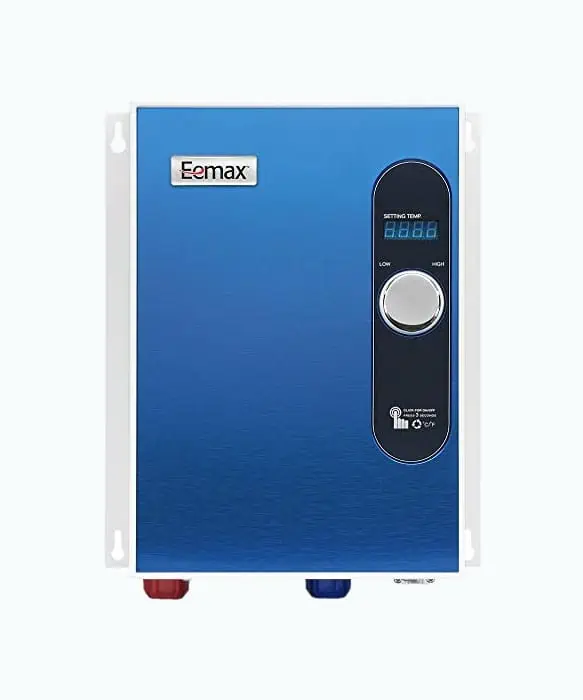
Eemax EEM24018 Electric Tankless Water Heater
Most Aesthetically Pleasing
An Eemax water heater is an attractive metal option. With a shiny blue exterior, it is bold and will certainly add some character to an otherwise dull room.
With a GPM of 3.5, this option sits in the middle of our product selection. This makes it well suited for a family home, perhaps one where the kids have left home but visit regularly. You can be confident that you will be able to cater to the whole house during a weekend visit.
According to Eemax, this is enough to accommodate one shower and two sinks in cold climates. It can supply up to four showers when the weather is warmer!
It will serve well in a house with multiple water appliances, such as a dishwasher and washing machine.
What We Like
Fancy Exterior
Although it is a little bold, the blue metal exterior is sleek and fashionable. It would suit a room that’s pretty plain and needs jazzing up or any room where it fits the existing color scheme.
If you want to keep it out of sight, its small size means it can be hidden in a cupboard. This makes it the best of both worlds.
Decent GPM
Although this heater doesn’t have the highest GPM on our list, 3.5 is more than enough in most cases. Some might say that any more than this is unnecessary, particularly in warmer climates when the GPM is a lot greater.
The Eemax option is a happy medium, working well in a household where visitors come and go.
Extras Included
This is another heater with copper components. It isn’t only easy on the eye but also makes repairs a breeze. It’s very durable, so it should last for many years to come.
What We Don't Like
Short Warranty
The Eemax water heater has a five-year warranty for leaks and one year for parts. It’s very unlikely that a product’s parts will become broken after one year, which makes the warranty somewhat redundant.
Product Specs
| Dimensions | 17 inches by 14 inches by 3.8 inches |
| Weight | 14.5 pounds |
| Flow Rate (Gallons Per Minute) | 3.5 GPM |
| Activation Flow | 0.5 GPM |
| Input Temperature Range | 55 to 105 degrees Fahrenheit |
| Volts Required | 240 |
Our Ratings
User Experience
| Product | Award | Dimensions | Weight | Flow Rate | Activation Flow | Input Temp. | Voltage |
|---|---|---|---|---|---|---|---|
| EcoSmart ECO 11 | Space-Saving | 14.5″ x 9.8″ x 4.1″ | 6.5 lbs | 1.5 GPM | 0.3 GPM | 67 – 105 F | 240 V |
| ECOTOUCH | Low-Cost | 3.8″ x 8″ x 11.5″ | 6.22 lbs | 1.5 GPM | 0.48 GPM | 67 – 109 F | 240 V |
| Stiebel Eltron 24 | High Flow Rate | 4″ x 15″ x 9″ | 8.5 lbs | 4.4 GPM | 0.5 GPM | 86 – 140 F | 240 V |
| Rheem RTEX-18 | Easy To Install | 4″ x 15″ x 19″ | 8.5 lbs | 4.4 GPM | 0.3 GPM | 59 – 140 F | 240 V |
| Eemax EEM24018 | Aesthetically Pleasing | 17″ x 14″ x 3.8″ | 14.5 lbs | 3.5 GPM | 0.5 GPM | 55 – 105 F | 240 V |
Types of Electric Tankless Water Heaters
When it comes to selecting an electric tankless water heater, there is a vast amount of choice. Whether you’re planning a camping trip or updating your home, there will be a unit designed for the task.
Here, we will look at the most efficient portable, under-the-sink, and home water heaters. These each serve a specific purpose, so it’s important to understand the differences between them.
This is the most versatile type. You can take them on a camping trip, to a festival, or to an RV park and enjoy a warm shower, wherever you are. They usually include a showerhead, so you will have everything you need.
Simply plug them into the nearest electrical outlet or your car battery and the portable water heater will do its job.
Pros
- Space-saving: Thanks to their compact size, these can easily be carried around and packed away again when required.
- Protected against harsh weather: Water heaters need to be safeguarded against the elements, particularly in colder climates. Fortunately, most portable tankless water heaters have features such as antifreeze to prevent cold weather damage.
- Safe: Portable water heaters come with extra safeguards for outdoor use. Some will shut off automatically when tilted past a 45-degree angle or after running for 20 minutes.
Cons
- Tricky to use: Unless you’re staying at a campsite, you might need to safely attach them to a car battery. This requires some prior knowledge or research if you want to get it right the first time.
These water heaters are small and designed for fitting comfortably under your sink. They can also be attached to an extra shower or bath.
This is perfect for anyone who owns a tank heater but runs out of water when they try to wash their dishes. It could also be ideal for anyone whose current water heater doesn’t quite meet the GPM requirements for their entire home.
Pros
- Save money: If you have a tight budget, these are ideal. Simply attach them to the necessary water appliance and you’ll get hot water where it’s needed most.
- Cleaner water: As these heaters are close to the outlet, the water is often cleaner than with larger heaters.
- Less environmental impact: As they provide hot water on demand, they don’t waste any unnecessary energy.
Cons
- Can’t supply the entire home: These water heaters will be too small to supply your entire home. They are simply a convenient way to provide hot water where you need it most.
Home Electric Tankless Water Heaters
This is the option which we will focus on in our product reviews: the indoor home water heater. They are the most popular option and often replace the old-fashioned tank heaters in homes. With sufficient GPM, they should provide enough hot water for every water appliance in your home at the same time.
Pros
- Save money: Compared to tank heaters, these can save you money in the long run.
- Less environmental impact: Minimal energy is required to keep these heaters running at their full capacity.
- Cleaner water: Compared to tank heaters, the water is usually cleaner, as it doesn’t stagnate in a tank all day.
Cons
- The initial cost is expensive: Electric tankless water heaters are usually more expensive to buy than tank water heaters.
Things to Consider: Buying Guide
Before taking a closer look at our selections, you need to know what you’re looking for. This will help you make a more informed choice and purchase a heater you can enjoy for many years.

GPM
GPM, or gallons per minute, describes the output of hot water your electric water heater can provide each minute. For example, 1.5 GPM can usually supply one shower and one sink at a time. The GPM can be influenced by several factors.
One factor is the external water temperature. If the water supplied to the heater is particularly low, it can take a little longer to heat up. This means the GPM will be reduced.
If you have a large family, a higher GPM will be better for you. This will ensure you can use more appliances at the same time.
Our product selections include a range of choices, from 1.2 GPM to 4.4 GPM. Whatever your requirements, there should be an option for you.

Ease of Installation
A cool feature of some electric tankless water heaters is the 360-degree installation option.
Depending on your home’s layout, you might not have an obvious place to install your water heater. With no restrictions on which way to install it, you should be able to squeeze it into tight spaces.
This is ideal if you want to keep your water heater hidden, such as in a closet. As long as there are electric outlets nearby, you will be good to go.

Size
If you’re searching for an electric tankless water heater, space-saving could be one of your main priorities. It could even be why you’re looking for a tankless heater in the first place.
All of the products below are on the small side, which is a consistent trait of tankless water heaters. Even so, we have provided a variety of dimensions.

Durability
A couple of the options below feature copper internal components to ensure the mechanisms work for long periods. This is a boost to a home appliance, as you don’t want to encounter a leak or fault when you need a shower before work.
That isn’t all. One of the options below even has fire safeguards, due to its tempered glass exterior. This is unique and robust enough to ensure it is protected long into the future.

Warranty
We expect home appliances to last a long time. That said, things do break, and it’s comforting to have the protection of a long warranty.
Given the expected lifespan of water heaters, a short warranty is relatively pointless. Some of the products below have disappointing warranties, but others are very impressive.
If you worry about spending cash on repairs, a longer warranty will be well worth it.
FAQs

What are the Downsides of a Tankless Water Heater?
A tankless water heater will usually cost more than a traditional heater with a tank. However, they are far more efficient and should save money on your energy bills, largely canceling out this difference. Although they provide hot water indefinitely, they can struggle to keep up if their GPM is too low for the appliances that are in use.

What is the Highest GPM Tankless Electric Water Heater?
The GPM ratings of tankless water heaters vary significantly, with 1.5 being the minimum acceptable for most users. Anything exceeding a rating of 4 should be plenty for most homes, but it is possible to find heaters with ratings of 5 and above. You are very unlikely to need something this powerful unless you have a very large home or multiple bathrooms in a rental property.

What is the Lifespan of a Tankless Water Heater?
Like any technology, this depends on your circumstances, maintenance, and how often the appliance is used. With an average amount of use and careful maintenance, you can expect a modern tankless water heater to work properly for around 15 years. This is about five years longer than the average tank heater, another reason to overlook the increased initial cost.

What Size Tankless Water Heater I Need?
To determine what tankless water heater you need, you have to consider the size of your household, how many water supplies it has to serve, and what the peak water usage is in your household.
The highest amount of hot water your house could require is the peak hot water demand. It is not meant to be a practical quantity; rather, its purpose is to make sure the heater is capable of meeting theoretical peak demand.

How Long Do Tankless Water Heaters Last?
When properly cared for, tankless water heaters can last up to 25 years. Tankless water heaters can have slightly higher upfront costs, which causes some people to be hesitant about purchasing one. On the other hand, tankless water heaters have a substantially longer lifespan.

Can an Electric Tankless Water Heater Run a Whole House?
Yes, electric tankless water heaters can run a whole house. Usually, they’re situated in a room or space that is out of the way, such as the laundry room or the garage. The lines carrying the hot water are routed to every fixture and appliance in the home that could require it.

Why is Tankless Water Heater Installation So Expensive?
Tankless water heater installation is expensive because the process is labor-intensive. Homeowners may expect to spend between $1,200 and $3,500 on a tankless water heater, which is more than what they would pay for a tank heater.
The increased price is due to the necessary more labor-intensive setup, as the installation requires new gas and water connections. New electrical cabling will need to be built to use tankless heaters powered by electricity.