Our Top Picks
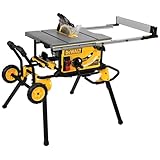
- 32-1/2-inch rip capacity
- Rack-and-pinion fence
- Rolling stand included

- Worm-drive torque
- 30-1/2-inch rip capacity
- 16-inch stand wheels

- Weighs 53 pounds
- Rack-and-pinion fence
- Site-Pro guarding

- Foot-pedal folding stand
- Multi-material blade
- Electronic blade brake

- Cuts wood, steel and aluminum
- Dado plate included
- Crosscut sled included
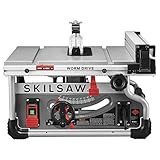
- Padded carry handle
- Dual-Field cool-running motor
- High worm-drive torque
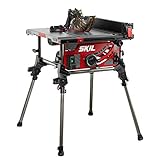
- Integrated folding legs
- Rack-and-pinion fence
- 4x4 cutting capacity

Our Review Criteria: A table saw lives or dies by its fence, since one that will not lock parallel ruins every rip cut after it. We compared rack-and-pinion designs against T-square systems, then weighed rip capacity, motor type and torque, cut depth, dust management, stand portability, and the safety hardware that matters: riving knives, anti-kickback pawls, and blade guards. We scored each saw on power, accuracy, design, and safety in quarter-point steps and assigned awards by use case, from jobsite and compact through heavy-duty, multi-material, benchtop, and budget. Assessments drew on manufacturer specifications, recognized woodworking-safety guidance, and independent user feedback. Every pick is verified currently available, and a discontinued saw is replaced with a comparable in-category model.
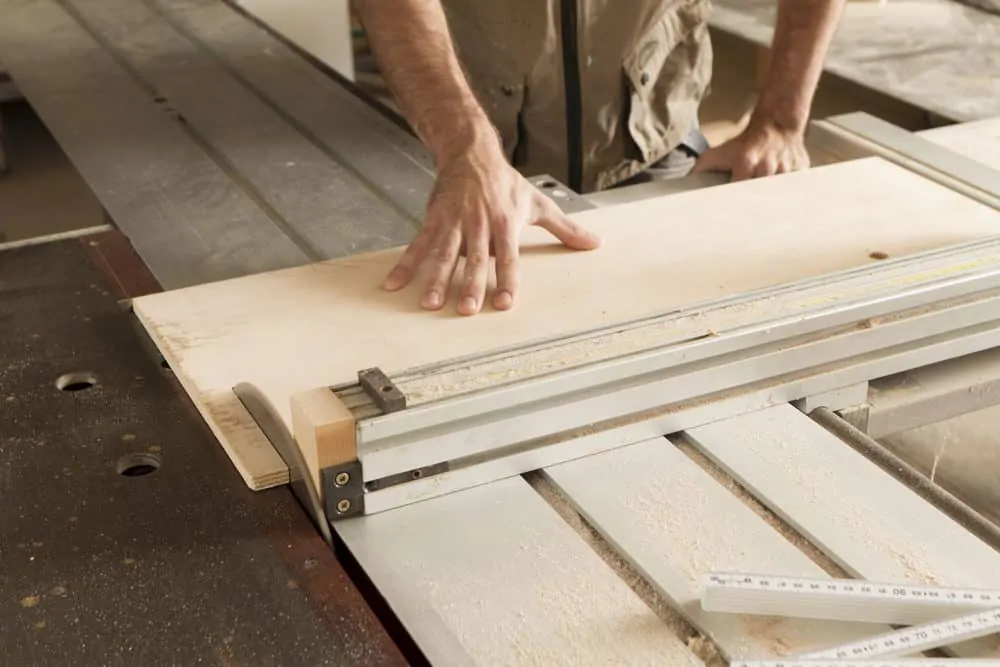
A table saw is the anchor of a working woodshop. It gives you the power to rip full sheets of plywood and the repeatable accuracy to crosscut parts that actually fit together, which is why most shops build their layout around it.
Picking one is the hard part. The market runs from compact benchtop units you carry with one hand to portable jobsite saws on rolling stands, and the right choice depends on your space, your power supply, and the stock you cut. You want a saw that balances motor strength, fence accuracy, and safety without overspending.
We compared the leading models you can actually buy today, weighing rip capacity, fence design, motor reliability, and dust management to find the best table saws for every skill level and budget.
What Is a Table Saw Used For?
A table saw is used for ripping lumber to width, breaking down full sheets of plywood or MDF, and cutting dados and rabbets for joinery. The blade, mounted on an arbor and driven by a powerful motor, protrudes through the table surface and spins at high speed to make the cut.
While other saws move across the wood, a table saw requires you to push the wood past the blade. This design makes it the ultimate tool for ripping lumber and cutting down large sheet goods like plywood or MDF. They are the workhorse of the shop, capable of making dados, rabbets, and precise joinery cuts that are difficult to achieve with hand tools.
What Types of Table Saw Are There?
Table saws come in five main types, benchtop, jobsite, contractor, hybrid, and cabinet, and each one trades off portability, power, and price differently. Here is a breakdown of the styles you will encounter.
Benchtop Table Saws
Benchtop saws are the entry-level option for DIYers and homeowners. As the name implies, they are compact units designed to sit on a workbench or a separate stand.
These are lightweight and easy to store, making them perfect for garages with limited space. You can easily toss one in the back of a truck or tuck it under a shelf when you are done. Because they use universal motors, they are loud but affordable.
While they lack the massive table space of stationary models, modern benchtop saws are surprisingly capable for home renovations and light furniture building.
Pros
- Extremely lightweight
- Easy to store
- Budget-friendly
- Great for small spaces
Cons
- Loud universal motors
- Small table surface
- Limited rip capacity
Jobsite Table Saws
Jobsite saws take the portability of a benchtop saw and add rugged durability. They typically come mounted on a rolling stand with collapsible legs, allowing contractors to wheel them around a construction site.
These saws are built to take a beating. They often feature better fence systems, riving knives, and dust ports compared to standard benchtop models.
While they are still loud and vibrate more than cast-iron saws, they offer a great balance of power and mobility for pros and serious hobbyists.
Pros
- Durable construction
- Rolling stands included
- Better fence systems
- Portable yet stable
Cons
- Small infeed/outfeed support
- Loud motor
Contractor Table Saws
Contractor saws used to be the standard for home shops. They feature a large cast-iron table and a motor hanging off the back. They are heavy enough to dampen vibration but light enough for two people to move.
Modern versions often have the motor enclosed to improve dust collection. They offer a significant upgrade in accuracy and quiet operation over jobsite saws.
This is the sweet spot for many woodworkers who want induction motor performance without the price or weight of a full cabinet saw.
Pros
- Large flat table
- Induction motor (quieter)
- Good accuracy
- Repairable parts
Cons
- Heavy to move
- Requires assembly
Hybrid Table Saws
Hybrid table saws bridge the gap between contractor saws and professional cabinet saws. They feature the enclosed base of a cabinet saw, which helps with dust collection and noise reduction.
You get the stability of heavy trunnions and a belt-drive induction motor. These saws usually run on standard 110v power, meaning you don’t need to rewire your garage to use one.
They offer excellent fences and substantial weight, making them a favorite for serious furniture makers.
Pros
- Enclosed cabinet
- Great dust collection
- Solid accuracy
- Standard voltage
Cons
- More expensive
- Difficult to move alone
Cabinet Table Saws
The cabinet saw is the gold standard. These beasts weigh over 500 pounds and rely on massive amounts of cast iron and steel to eliminate vibration.
Powered by 3 to 5 horsepower motors, they require a 220v circuit. They cut through 3-inch thick hardwood like it is butter. The fully enclosed cabinet offers superior dust extraction, and the heavy-duty trunnions ensure the blade stays perfectly aligned for years.
If you have the space and the budget, this is the last table saw you will ever need to buy.
Pros
- Extreme power
- Zero vibration
- Massive table surface
- Highly durable
Cons
- High price tag
- Requires 220v power
- Not portable
How to Choose the Best Table Saw
Buying a table saw is an investment. The right choice depends on your space, budget, and the type of projects you plan to build. Here are the critical features to inspect.
Product Reviews
We compared the table saws you can actually buy today to find the ones that deliver straight cuts and dependable power. Whether you are framing a house, ripping hardwood, or building furniture, there is a saw here that fits your work and your budget. These are our top eight table saws available right now.
DeWALT DWE7491RS 10-Inch Table Saw
Best Overall Jobsite Table Saw
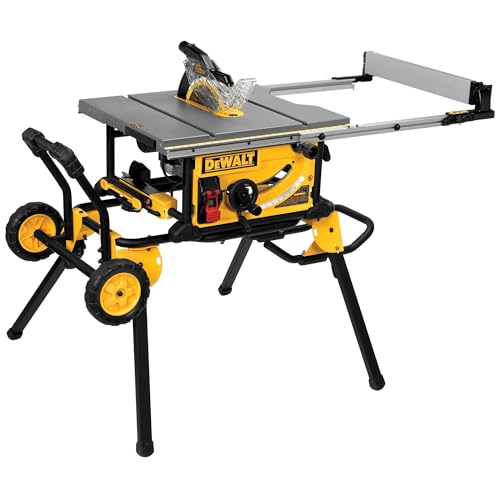
The DeWALT DWE7491RS is the saw most contractors reach for first, and it earns that reputation. The 15-amp motor pushes through pressure-treated lumber and hardwood without bogging, and the 32-1/2-inch rip capacity is wide enough to break down a full sheet of plywood against the fence in a single pass.
The reason it stays at the top of this list is the rack-and-pinion fence. Both rails move together when you turn the wheel, so the fence lands parallel to the blade every time instead of drifting the way clamp-style fences do. The rolling scissor stand deploys in seconds and keeps the saw at a comfortable working height.
What We Like
Rack and Pinion Fence
This is the most accurate fence on any portable saw. You set the width with a knob and both rails track in sync, so it locks down square and stays there through a long rip.
Mobile Without Compromise
The rolling stand is stable in use but folds flat fast, and the large wheels handle jobsite debris, curbs, and a flight of stairs. You get cabinet-saw rip capacity in something one person can load into a truck.
Genuine Capacity
At 32-1/2 inches of rip, it cuts wider than almost anything in its class, which is what makes it equally at home framing a deck or breaking down sheet goods for cabinets.
What We Don't Like
Loud Universal Motor
Like every jobsite saw, the universal motor is noisy under load. Hearing protection is not optional with this one running.
Footprint on the Stand
The wheeled stand is excellent but bulky to store in a tight garage. If you work in a small shop, measure your space for it before buying.
Product Specs
| Motor | 15 amp |
|---|---|
| Ripping Capacity | 32-1/2 inches |
| RPM | 4,800 |
| Blade Size | 10 inches |
| Warranty | 3-year limited |
SKILSAW SPT99-11 Heavy-Duty Worm Drive Table Saw
Best Heavy-Duty Table Saw
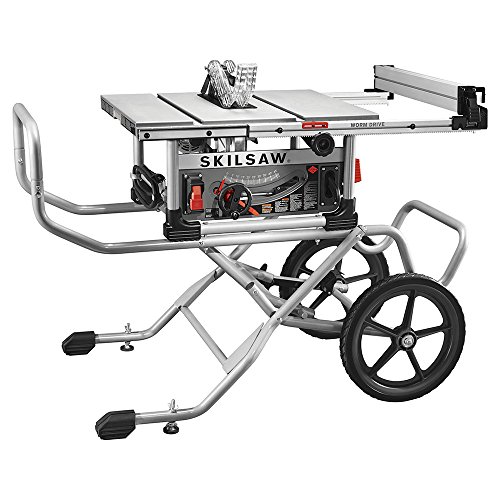
SKILSAW built its name on worm-drive circular saws, and the SPT99-11 brings that same gearing to a 10-inch table saw. Worm drive trades top RPM for torque, so this saw muscles through thick hardwood and 4x stock where lighter direct-drive jobsite saws start to stall.
It is the heavy hitter of this group for anyone who rips dense lumber all day. The 30-1/2-inch rip capacity rivals the full-size DeWALT, and the rugged rolling stand with 16-inch wheels is one of the few that genuinely competes with the gravity-rise designs for moving the saw around a site.
What We Like
Worm-Drive Torque
The worm-drive gearing gives this saw the muscle to rip 4x material and dense hardwood with a 3-5/8-inch depth of cut, more than the typical jobsite average, so it bogs down far less under heavy feed.
Big Rip Capacity
At 30-1/2 inches it handles sheet goods that most portable saws cannot, which closes much of the gap between a jobsite saw and a stationary one.
Excellent Rolling Stand
The 16-inch wheels and easy-load handles make it one of the most mobile heavy saws available, and it climbs curbs and stairs without a fight.
What We Don't Like
Heavy to Carry
The worm-drive gearbox adds weight, so off the stand this is a two-hand lift rather than a grab-and-go saw.
Fence Has a Learning Curve
The rack-and-pinion fence is accurate once dialed in, but several users note the movement takes some getting used to before adjustments feel natural.
One-Year Warranty
Coverage is a single year, shorter than the three-year protection DeWALT offers on its jobsite saws.
Product Specs
| Motor | 15 amp worm drive |
|---|---|
| Ripping Capacity | 30-1/2 inches |
| Depth of Cut | 3-5/8 inches |
| Blade Size | 10 inches |
| Warranty | 1-year limited |
DeWALT DWE7485 Compact Jobsite Table Saw
Best Compact Table Saw

If the full-size DeWALT is more saw than your space or your back wants, the DWE7485 packs the same fence engineering into an 8-1/4-inch frame that weighs 53 pounds. It is built for flooring installers, trim carpenters, and small-shop woodworkers who carry the saw to the work rather than the other way around.
The smaller blade is the trade-off, but the high-torque motor spins fast and the rack-and-pinion fence is the same precise system as its bigger sibling. You give up some cut depth and dado support, not accuracy.
What We Like
One-Hand Portable
At 53 pounds it carries with one hand and stores on a shelf or in a van, which makes it the natural pick for mobile repair and remodel work.
Pro-Level Fence in a Small Saw
You get the same rack-and-pinion accuracy as the larger DeWALT saws, so the fence locks square every time and your repeat cuts stay consistent.
Tool-Free Guarding
The Site-Pro modular guard system adjusts without tools, so swapping between the riving knife and the full guard for different cuts is quick.
What We Don't Like
Limited Cut Depth
The 8-1/4-inch blade means less maximum depth than a 10-inch saw, so a 4×4 post needs two passes rather than one.
No Dado Capability
The arbor is too short for a dado stack, which rules it out for grooved joinery without a router workaround.
Product Specs
| Motor | 15 amp |
|---|---|
| Ripping Capacity | 24-1/2 inches |
| RPM | 5,800 |
| Blade Size | 8-1/4 inches |
| Warranty | 3-year limited |
Evolution R10TBLX Table Saw With Wheeled Stand
Best Table Saw With Wheeled Stand

The Evolution R10TBLX is built around mobility. Its wheeled scissor stand folds with a foot-pedal release and rolls on large all-terrain wheels, so one person can move and set up the 86-pound saw without a second pair of hands. That makes it the pick here for anyone reconfiguring a workspace or hauling the saw between sites.
It also carries Evolution multi-material blade technology, cutting wood, mild steel, aluminum, and composites with a single blade, and it ships with a dado plate and a crosscut sled, features that are rare at this level. The dual rack-and-pinion fence keeps cuts parallel and repeatable.
What We Like
Foot-Pedal Folding Stand
The collapsible wheeled stand folds and deploys with a foot pedal, and the all-terrain wheels roll over rough ground, so solo setup and teardown is genuinely quick.
Multi-Material Cutting
The included TCT blade rips wood, mild steel, aluminum, and composites without a blade change, which is useful on mixed remodel work where you switch materials all day.
Loaded Out of the Box
A zero-clearance throat plate, dado plate, and crosscut sled come included, plus an electronic blade brake, so you spend less on extras to get real woodworking capability.
What We Don't Like
Basic Miter Gauge
The stock miter gauge is plastic and does not sit as snugly in the slot as it should, so precise crosscutters will want the included sled or an upgrade.
Poor Stand Manual
Several users report the stand assembly instructions are hard to follow, with diagrams that do not clearly match the parts, so budget extra time for the build.
Product Specs
| Motor | 15 amp |
|---|---|
| Ripping Capacity | 26 inches |
| Depth of Cut | 3-3/8 inches |
| Blade Size | 10 inches |
| Warranty | 3-year limited |
Evolution R10TS Multi-Material Table Saw
Best Multi-Material Table Saw

The Evolution R10TS is the bench-standing version of Evolution multi-material design, and it is the saw to pick if you cut more than just wood. The same patented TCT blade rips plywood in the morning, trims steel angle at lunch, and cuts composite decking in the afternoon, which suits metal fabricators and remodelers as much as woodworkers.
It also punches above its category on woodworking features. The arbor accepts a dado stack up to 15/16 inch, the included throat plate is metal with a replaceable zero-clearance insert, and a dual rack-and-pinion fence keeps the cut square. Few portable saws at this level offer dado support at all.
What We Like
True Multi-Material Cutting
One blade handles wood, mild steel, aluminum, laminate, and even reclaimed lumber with embedded nails, so you stop swapping blades and tools between materials.
Real Dado Support
The arbor takes a dado stack and the saw ships with a metal throat plate and spare zero-clearance insert, so grooved joinery is on the table, which most jobsite saws cannot claim.
Quiet Soft Start
A soft-start motor ramps up smoothly instead of jolting, which reduces the startup surge and keeps the saw from tripping a sensitive breaker.
What We Don't Like
Weak Miter Gauge
The bundled miter gauge is plastic and loose in the slot, and an aftermarket gauge loses the locking pin that ties into the crosscut table.
Confusing Stand Assembly
The stand manual is poorly labeled, and several builders had to take it apart and restart, so set aside patience for the initial setup.
Product Specs
| Motor | 15 amp |
|---|---|
| Ripping Capacity | 26 inches |
| Depth of Cut | 3-3/8 inches |
| Blade Size | 10 inches |
| Warranty | 3-year limited |
SKILSAW SPT99T-01 8-1/4-Inch Worm Drive Table Saw
Best Benchtop Table Saw
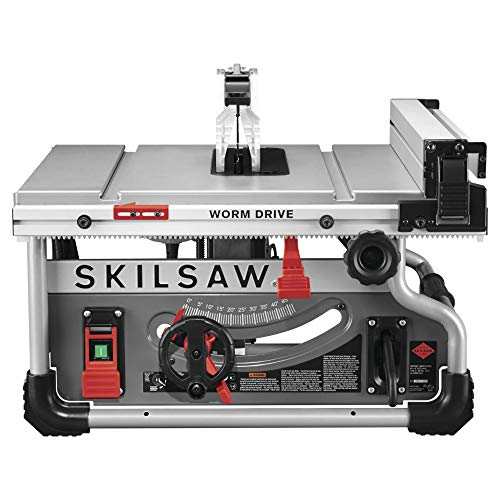
The SKILSAW SPT99T-01 takes the worm-drive torque SKILSAW is known for and shrinks it into a benchtop saw that weighs about 51 pounds. The 8-1/4-inch blade keeps it light, while the gearing gives it cutting authority that belies its size, so it is the grab-and-go pick for punch lists and small remodels.
It is the saw to set on a bench or a stand when space is tight and you still want a tool that cuts cleanly. The Dual-Field motor is designed to run cooler under continuous use, and the padded handle makes carrying it up stairs a one-person job.
What We Like
Worm-Drive Muscle
The gearing multiplies torque, so this small saw cuts with the confidence of a larger machine and rips 2x stock without slowing.
Cool-Running Motor
The Dual-Field motor moves cooling air across the windings, which lets it run longer sessions without overheating and extends motor life.
Genuinely Portable
It is compact with a padded handle, so one person carries it easily to a benchtop, a stand, or up a flight of stairs.
What We Don't Like
Short Warranty
The 180-day warranty is well short of the one-to-three-year coverage from DeWALT and other competitors.
Limited Cut Depth
The 8-1/4-inch blade handles 2x lumber and plywood but cannot get through very thick stock in a single pass.
Product Specs
| Motor | 15 amp worm drive |
|---|---|
| Ripping Capacity | 25 inches |
| RPM | 5,300 |
| Blade Size | 8-1/4 inches |
| Warranty | 180 days |
SKIL TS6307-00 Table Saw With Folding Stand
Best Table Saw for Portability

The SKIL TS6307-00 balances price and portability with a stand that folds directly into the saw body. There is no separate scissor frame to wrestle with, so it sets up fast and stows in less space, which is why it is the easiest of this group to live with in a cramped garage.
A 15-amp motor and a 10-inch, 24-tooth blade give it 4×4 cutting capacity, and the rack-and-pinion fence is a real step up from the clamp fences on ultra-budget saws. It is mid-tier rather than premium, but it covers standard jobsite and DIY tasks well.
What We Like
Integrated Folding Legs
The legs fold into the saw body, so it is less bulky than a separate stand and storage is simple, a real advantage in a small shop.
Rack-and-Pinion Fence
Both rails move together for fast, square adjustments, and once calibrated the fence holds parallel through a rip, which is uncommon at this price.
4×4 Cutting Capacity
The 10-inch blade clears a 4×4 in a single 90-degree pass, so it handles framing stock that the 8-1/4-inch compact saws cannot.
What We Don't Like
Check the Table for Flatness
Some units arrive with a slightly bowed or cupped top, so it is worth checking alignment and the eccentric washers on the fence before the first accurate cut.
Plastic Hardware
The fence lock handles and several levers are plastic and feel like they could break with rough use.
Modest Hardwood Power
It is not a cabinet saw, so hardwood over an inch thick needs multiple shallow passes rather than one deep cut.
Product Specs
| Motor | 15 amp |
|---|---|
| Ripping Capacity | 25-1/2 inches |
| Blade Size | 10 inches |
| Blade Teeth | 24-tooth carbide |
| Warranty | 3-year limited |
POWSTR 10-Inch Table Saw With Stand
Best Budget Table Saw

The POWSTR 10-inch is the entry point of this lineup, aimed at hobbyists and occasional DIYers who want a functional saw without a premium outlay. A 15-amp motor spinning to 5,000 RPM drives a 60-tooth blade, and the kit includes a stand, a push stick, and an angle stop, so you can start cutting out of the box.
It handles 90-degree cuts up to about 3-11/32 inches and bevels to 45 degrees, which covers plywood, lumber, and light hardwood for home renovations and craft projects. It is not built to the standard of a DeWALT or Evolution, but for the money it gets basic ripping done.
What We Like
Low Cost of Entry
It is one of the most affordable ways to get a 10-inch saw and a stand into the shop, which makes it a reasonable first saw for an occasional user.
Complete Starter Kit
The stand, push stick, and angle stop are included, so a beginner is not immediately buying add-ons just to make a safe cut.
Usable Cut Capacity
A 60-tooth blade and up to a 3-11/32-inch depth of cut handle most plywood, framing lumber, and DIY hardwood tasks.
What We Don't Like
Lesser-Known Brand
POWSTR does not have the long track record or service network of the established saw brands, so weigh that against the savings.
Fence Needs Watching
Budget saws of this type are finicky to set square, so measure the front and back of the blade before a precise cut.
Light-Duty Build
The aluminum table and lighter frame mean more vibration and less durability than a heavier jobsite saw under steady use.
Product Specs
| Motor | 15 amp |
|---|---|
| RPM | 5,000 |
| Max Cut Depth | 3-11/32 inches |
| Blade Size | 10 inches |
| Blade Teeth | 60-tooth |
| Product | Best | Weight | Ripping Capacity | RPM | Blade Size | Warranty |
|---|---|---|---|---|---|---|
| DeWALT DWE7491RS | Overall Jobsite | 110 lbs | 32-1/2″ | 4,800 | 10″ | 3-year limited |
| SKILSAW SPT99-11 Worm Drive | Heavy-Duty | ~90 lbs | 30-1/2″ | 5,000 | 10″ | 1-year |
| DeWALT DWE7485 Compact | Compact | 53 lbs | 24-1/2″ | 5,800 | 8-1/4″ | 3-year limited |
| Evolution R10TBLX | Wheeled Stand | 86 lbs | 26″ | 4,500 | 10″ | 3-year |
| Evolution R10TS | Multi-Material | ~70 lbs | 26″ | 4,500 | 10″ | 3-year |
| SKILSAW SPT99T-01 | Benchtop | 51.2 lbs | 25″ | 5,300 | 8-1/4″ | 180 days |
| SKIL TS6307-00 | Portability | 51.2 lbs | 25-1/2″ | 4,600 | 10″ | 3-year limited |
| POWSTR 10-Inch | Budget | ~48 lbs | 24″ | 5,000 | 10″ | N/A |
How to Use a Table Saw
Safety and procedure are everything. Before you even touch the wood, ensure your safety glasses are on and loose clothing is secured. Here is the basic workflow for a rip cut.
1. Set the Blade Height
Raise the blade so the teeth are just clearing the top of the wood. Ideally, the bottom of the tooth gullet should be level with the top surface of the material. This minimizes tear-out and improves safety.
2. Lock the Fence
Measure your desired width and slide the rip fence into place. Lock it down securely. If you have a budget saw, use a tape measure to check the distance at both the front and back of the blade to ensure it is parallel.
3. Power Up
Stand to the left of the blade (never directly behind it). Turn the saw on and let it reach full speed before moving the wood.
4. Feed the Stock
Push the wood forward with steady pressure against the fence and down onto the table. Use your left hand to guide the wood against the fence (well away from the blade) and your right hand to push.
5. Use a Push Stick
Once the end of the board reaches the table edge, switch to a push stick. Use it to push the material past the blade and riving knife. Never put your fingers near the spinning blade.
6. Power Down
Turn the saw off and wait for the blade to come to a complete stop before retrieving your off-cut or clearing scraps.
What Are the Most Important Table Saw Safety Rules?
The most important table saw safety rules cover what you wear, keeping the blade guard in place, standing clear of the kickback path, and never cutting freehand or reaching over a spinning blade. Follow these rules every single time you make a cut.