Fences are an essential part of table saws when rip-cutting and cross-cutting lumber. Without one, you will find it difficult to make even basic cuts accurately.
A fence ensures the material is where you want it, helping you cut straight lines while keeping your fingers at a safe distance. As fences are such an integral part of a table saw, it is important that you choose the right one.
To help you make an informed choice, we have reviewed ten of the best table saw fences that are currently available. We chose these fences for their size, rigidity, ease of installation, and ease of use.
- Leading brand
- Reasonably priced
- No drilling required
- Sturdy aluminum
- Three-point locking
- Good compatibility
- Ball bearing sliders
- Almost universal
- No drilling required
- Instant magnetic fit
- Simple to adjust
- Universal
- Universal
- Two-year battery life
- Digital display
- Universal
- Robust steel & aluminum
- One-handed operation
- Affordable
- Great for compact saws
- Easy to operate
- Fits various saws
- Quick installation
- Millimeter accurate
- Adjusts easily
- 457mm miter gauge length
- Loaded ball bearings
Review Methodology: At Sensible Digs, we provide you with a hands-on, detailed analysis of the best table saw fences. Our seasoned team of professionals conducts meticulous research, comparing each product’s design, performance, and user experience. We use a set of benchmarks and criteria, including installation ease, durability, accuracy, and compatibility, to rank and score each product. Our reviews are based on real-world evidence and hands-on experience, ensuring you get the most accurate information. We evaluate each product from a user’s perspective, identifying key decision-making factors and explaining what sets each product apart. From our assessment, we present our findings to help you make an informed decision.
The Best Table Saw Fences of 2024
There are as many table saw fences as there are table saws, if not more, so you will have plenty of products to choose from. To help you find the right one, we have reviewed ten of the best table saw fences that are currently available, chosen for their ease of installation and use, rip capacity, and durability.
DeWALT DW745 Table Saw Fence
Best Table Saw Fence for Small Shops
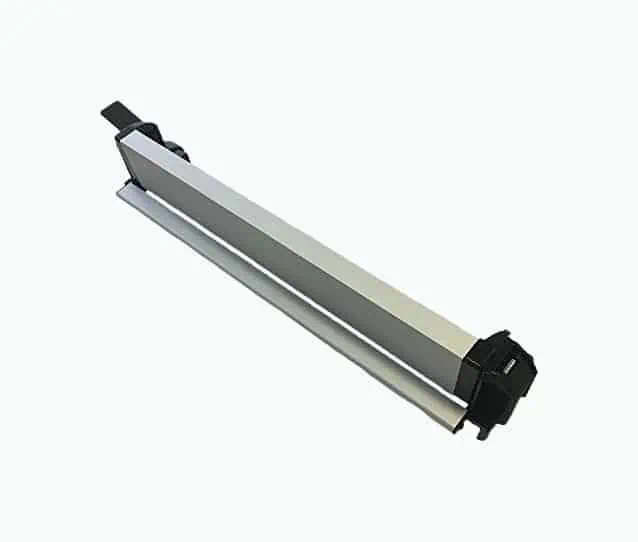
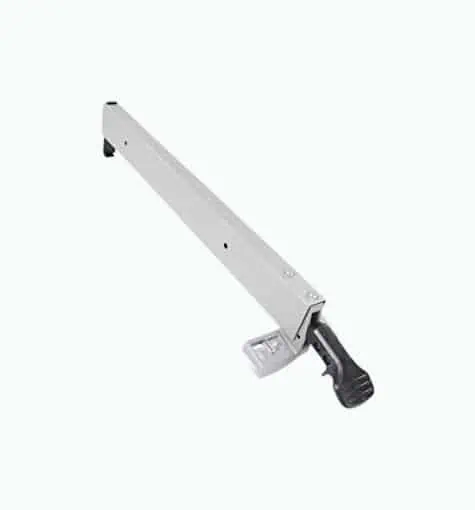
DeWALT is one of the most trusted names in power tools, which extends to this table saw fence. This fence is lightweight because it is made of aluminum but it should still withstand the rigors of a small woodshop.
This fence is far from universal as will only fit the DeWALT 10-inch DW745 table saw, which is a compact portable model. Understandably, this means a limited rip capacity of just 20 inches.
If you own a DeWALT portable table saw, this fence is an obvious choice. You might already have a small workspace or be more concerned with being able to move your saw around rather than its rip capacity.
What We Like
Leading Brand
DeWALT is one of the most widely known and highly regarded tool brands in the world. With a century of experience, you can be confident that this fence will be of high quality.
Reasonable Price
Despite not being cheap for what is essentially a strip of aluminum, this fence is still considerably less expensive than similar models from premium brands such as Vega. Ultimately, we think it is quite reasonably priced.
Easy to Install
This model replaces the existing fence on the DW745 table saw, so it includes everything you need to swap them. You won’t need to make any adjustments or drill new holes as this is a like-for-like replacement.
What We Don't Like
Build Quality
Although the fence is made of aluminum and is quite tough, the clamp ends are less robust. You will need to treat them with care or you might have to replace your saw fence relatively quickly.
Specific Model
This fence is only suitable for the DeWALT DW745 10-inch table saw, so you won’t be able to buy it for other models.
Product Specs
| Rip capacity | 20 inches |
| Length | 30 inches |
| Compatibility | DeWALT DW745 |
| Material | Aluminum |
| Cost | $$ |
Our Ratings
User Experience
Delta 36-T30T3 30-Inch Fence System
Best Fence and Rail System
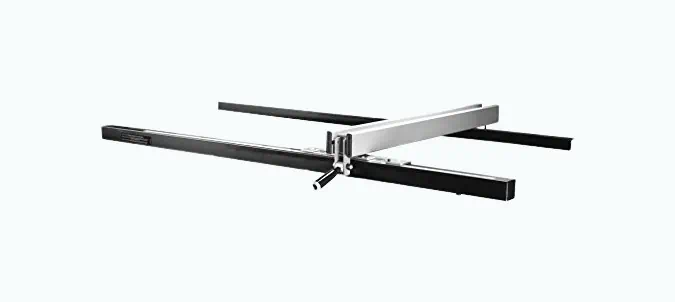
This Delta fence and rail system has a three-point locking system with twin hairline pointers. This ensures the fence is always parallel to the saw blade. It is accurate to within ¹⁄₆₄ of an inch.
It has an easy-gliding steel tubular body that allows quick and precise adjustments to avoid any unnecessary delays. This fence system is compatible with Delta, Contractor, Unisaws, and hybrid table saws.
It has a rip capacity of 30 inches. With steel tubes and an aluminum fence, it is robust and durable without being too heavy.
What We Like
Sturdy
The steel tubes are robust and ensure this product is easy to use. The fence is constructed from heavy-duty aluminum, so it is tough enough to cope with the rigors of frequent use in a woodshop.
Three-Point Locking
The three-point locking system enables you to adjust the fence while always keeping it parallel to the saw blade. It also ensures your measurements and angles will be very precise.
Compatibility
This fence system is compatible with Delta, Contractor, Unisaws, and hybrid saws. If you own any of these saws, this fence will be an excellent addition.
What We Don't Like
High Price
This fence and rail system is quite expensive, costing almost as much as an entire compact table saw. For this reason, it is probably better suited to professionals and other seasoned woodworkers.
Product Specs
| Rip capacity | 30 inches |
| Length | 37 inches |
| Compatibility | Delta, Unisaw, Contractor, Hybrid saws |
| Material | Aluminum |
| Cost | $$$ |
Our Ratings
Personal Perspective
Shop Fox W1410 Fence with Standard Rails
Best Table Saw Fence for Cabinet Making
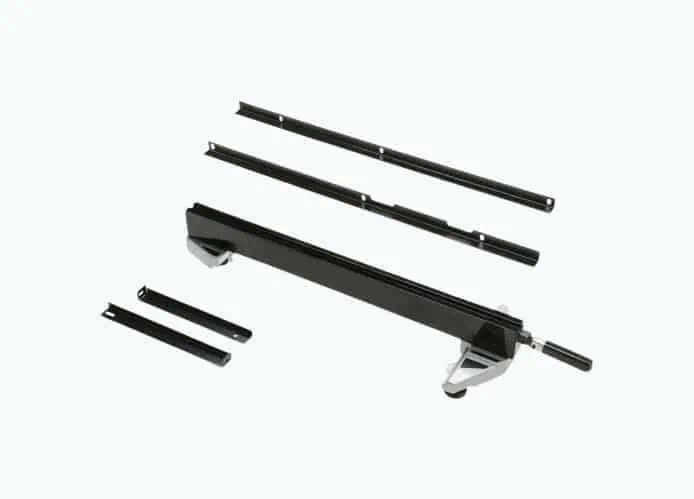
This Shop Fox fence and rail system is an ideal purchase for any cabinet maker. It slides on ball bearings, making its adjustment motion very smooth. This means it is very well suited to making precise cuts, such as those needed when creating furniture.
It fits most 27-inch table saws and has fine positioning knobs on both sides that allow for both left and right-handed use. This fine adjustment is another reason that this fence is ideal for anyone who makes furniture or other pieces that require precision.
What We Like
Ball Bearing Sliders
This fence and rail system has ball bearings that provide a very smooth action when sliding it in or out. This will make the process quick and easy, allowing you to focus on your work.
Almost Universal
This fence and rail system is compatible with the vast majority of 27-inch table saws on the market. If you are unsure whether other table saw fences will fit your unit, you can be relatively confident that this one will.
Easy Installation
Some universal table saw fences require drilling and adjusting to secure them to the unit but you won’t need to do that with this piece. The process is easier and much less time-consuming as a result.
What We Don't Like
The Price
Shop Fox makes high-quality products, which is reflected in the price of this fence. It costs more than some compact table saws, so you should think carefully before buying it. Unless you are a professional or a very serious amateur woodworker, your money might be better spent elsewhere.
Product Specs
| Rip capacity | 22 inches |
| Length | 50 inches |
| Compatibility | Most 27-inch table saws |
| Material | Aluminum |
| Cost | $$$ |
Our Ratings
Community Feedback
Carter Magfence II Universal Magnetic Fence
Best Table Saw Fence for Beginners
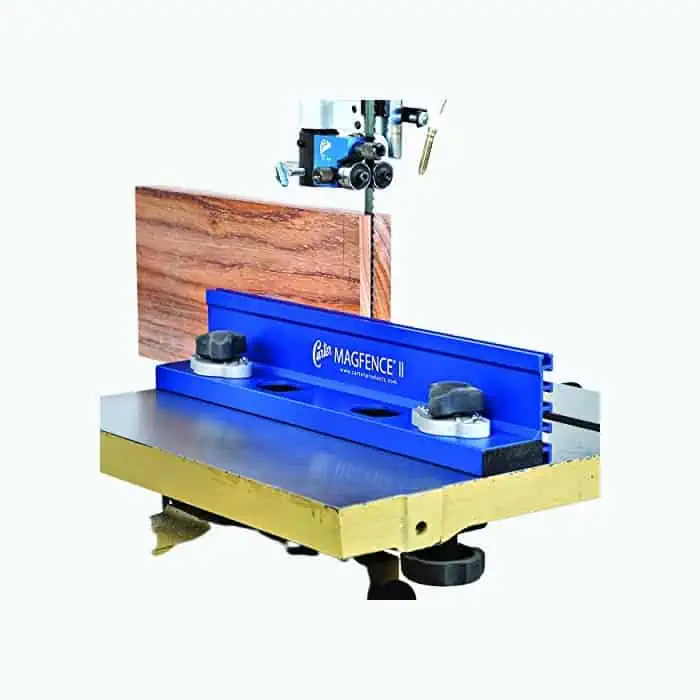
Unlike other table saw fences, the Carter Magfence uses powerful magnets to hold the fence in place. It sticks to almost any non-ferrous metal surface, making it an ideal product for beginners.
You won’t need to worry about this fence being incompatible with your saw unit, as it is an excellent universal option. Simply place it onto the saw’s table and it will attach itself magnetically.
It measures 16 inches long and 3-½ inches tall. It also has multiple T-slots. This table saw fence is ideal for inexperienced woodworkers thanks to its simple installation and adjustment.
What We Like
Instant Fit
You can simply place this fence on the table’s surface at the correct angle and it will be ready for use. Magnetic force holds it in place until you need to adjust or remove it.
Simple to Use
If you are new to using table saws and fences, this fence is a great option. Thanks to its magnetic installation and adjustment, you won’t require any prior knowledge to use it properly.
Universal
This table saw fence will fit almost any unit with a metal surface. Simply place it down, adjust it, and you will be ready to start sawing.
What We Don't Like
Insecure
Once you have gotten some experience using this beginner fence, you should move on to something more substantial. Magnets will hold the fence in place but they are no substitute for clamps that secure it properly. If you try cutting heavier pieces with this fence, it might get dislodged, resulting in inaccurate cuts.
Not for Serious Woodworkers
Experienced woodworkers and carpenters are unlikely to even consider this fence. Its magnetic mounting means it is not robust enough to withstand the rigors of heavy-duty woodshop tasks.
Product Specs
| Rip capacity | No limit as it depends on your table saw |
| Length | 16 inches |
| Compatibility | Almost every table saw with a non-ferrous surface |
| Material | Powder-coated aluminum |
| Cost | $$ |
Our Ratings
First-Hand Impression
Wixey WR700 Saw Fence Digital Readout
Best Value for Money
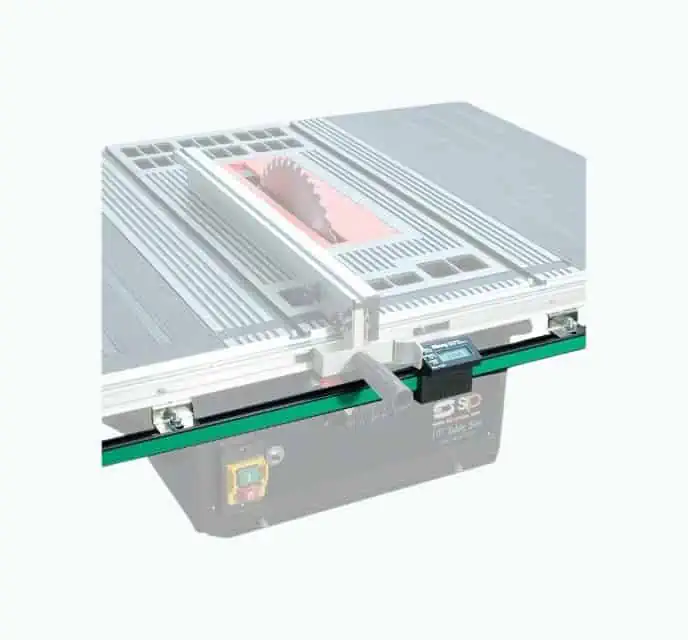
This Wixey model offers something a little different from a standard table saw fence. The 60-inch saw fence is made of aluminum and has a universal mounting bracket that will fit most table saw rails.
What sets this fence apart is its digital display. It utilizes Wixey’s “Precise Fraction Technology” to provide among the most accurate measurements of any fence. Its magnetic attachments allow you to remove the fence while keeping it calibrated.
The battery will last for up to two years, and the display is very clear and easy to read.
What We Like
Universal
This digital readout mounts on any table saw. Whatever brand of table saw you own, you will be able to ensure your saw fence is set correctly.
Long-Lasting Battery
With a two-year battery life, you will be able to depend on this Wixey digital fence without needing to maintain it regularly.
What We Don't Like
Needs to be Recalibrated
This product needs to be recalibrated frequently. It might be best to simply do this every week as part of your routine to ensure you continue making accurate cuts.
Plastic Rails
The rails that attach to the table saw via brackets are made of plastic and feel flimsy. This is important because you might dislodge the display if you knock it accidentally, potentially damaging it.
Product Specs
| Rip capacity | N/A |
| Length | 60 inches |
| Compatibility | Universal |
| Material | Plastic |
| Cost | $$ |
Our Ratings
User Experience
Shop Fox Aluma Classic Fence
Best Aftermarket Table Saw Fence
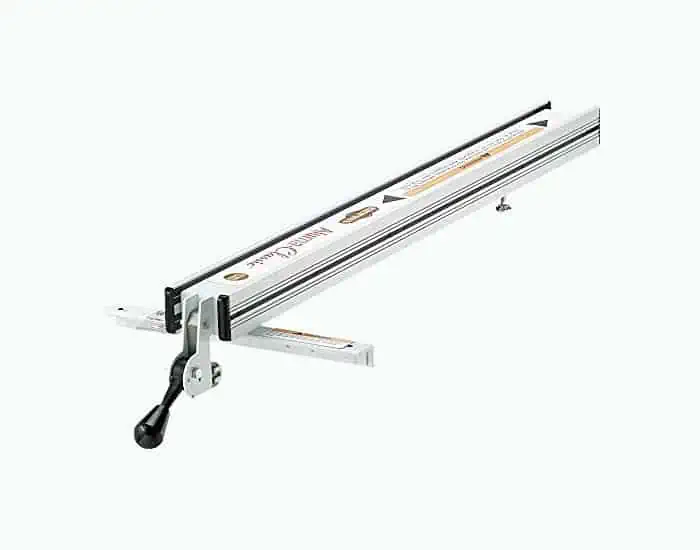
This Shop Fox Aluma table saw fence has a classic fence design. It measures 57 inches and allows for maximum rip cuts of 30 inches. This model clamps onto the saw from the front, making it a universal option.
The rail is made of a combination of steel and aluminum, which means it is robust but lightweight. The single locking cam lever means makes it quick and easy to adjust with minimal effort.
What We Like
Universal
The fence clamps onto the unit at the front, so it fits almost any type and size of table saw. This removes much of the guesswork and you should be able to buy it with confidence that it will be suitable for your needs.
Robust
The Aluma table saw fence is constructed from steel and aluminum. It is both strong and lightweight, so you won’t need to worry about it bending as some table saw fences are prone to.
Ease of Use
Table saw fences don’t come much more user-friendly than this. It operates via a cam lock handle at the front of the fence. It can be adjusted and locked with one hand, freeing up your other hand for holding stock and other items.
What We Don't Like
High Price
As always, the best table saw fences are expensive and this model is no exception. Still, if you can afford it, you can be confident that it is of very high quality, making it more suitable for professionals and expert woodworkers.
Product Specs
| Rip capacity | 30 inches |
| Length | 57 inches |
| Compatibility | Universal |
| Material | Steel and aluminum |
| Cost | $$$ |
Our Ratings
Personal Perspective
Ryobi RTS 10 10-Inch Table Saw Fence
Best Budget Table Saw Fence
The Ryobi RTS is an excellent budget table saw fence. You could buy a dozen of these fences for less than one of the most expensive fences we have looked at.
Although it offers amazing value, this fence is specifically designed for the Ryobi RTS 10-inch table saw. It is far from a universal product, so you should look elsewhere if you own another table saw.
It is made of aluminum and measures 20 inches long with a rip capacity of 30 inches, so it won’t be suitable for making substantial rip cuts. There is a single locking cam handle that makes it easier to operate this fence with one hand.
What We Like
Very Low Price
This fence is one of the cheapest we have seen. If you own a Ryobi RTS 10-inch table saw, you can buy several of these fences for less than many other single fences will cost you.
What We Don't Like
Restricted Usage
This fence is designed specifically for a Ryobi RTS 10-inch table saw. If you own any other table saw, you will need to look elsewhere.
Build Quality
Given the very low price, it is no surprise that this fence is not very durable. As it is so cheap, you should be able to replace it easily, but you might be better off simply buying a higher-quality fence.
Product Specs
| Rip capacity | 30 inches |
| Length | 20 inches |
| Compatibility | Ryobi 10-inch table saw |
| Material | Steel and aluminum |
| Cost | $ |
Our Ratings
Community Feedback
Vega U26 Table Saw Fence System
Best Quality Table Saw Fence System
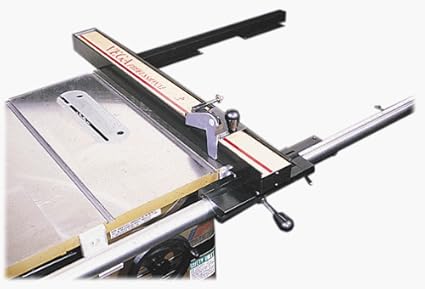
With a strong steel construction and aluminum extrusions, this professional-grade Vega system is tough and durable. Vega has chosen top-quality materials to ensure this fence is one of the best you can buy.
It has been coated with epoxy to provide a smooth finish that should stay pristine for years if used properly. Reliability has been a priority throughout, including the front and rear guide rails, fence bar, mounting brackets, jacking plates, and the hold-down bracket.
This system is designed to fit a wide range of saws, including Delta Unisaws, the Powermatic 66, and many Sears 10-inch units.
What We Like
Fits Various Saws
This fence system has been designed to fit a wide range of saws including Delta Unisaws, contractor’s saws, Powermatic Model 66, and most Sears 10-inch saws.
Ease of Installation
Customer reviews praise how easy this fence is to install. It took some reviewers an hour to install, but others accomplished it as quickly as 15 minutes. There are already bolt holes so you won’t need to drill the fence if you own a compatible saw. There are also slotted front brackets, jacking plates, and very clear instructions.
Millimeter Accuracy
This fence system excels where precision is concerned. If you want cuts that are accurate to the millimeter, this Vega fence is a great option. As it is also very robust, you will be able to cut with confidence.
What We Don't Like
Swinging When Locked
Some users have complained of the tail end swinging when locked. Even if this only puts you off by a couple of millimeters, this could be enough to affect your project as a whole.
Product Specs
| Rip capacity | 26 inches |
| Length | 36 inches |
| Compatibility | Delta Unisaws, contractor’s saws, Powermatic Model 66, and Sears 10-inch saws |
| Material | Steel and aluminum |
| Cost | $$$ |
Our Ratings
First-Hand Impression
O'skool 457mm Miter Gauge Fence System
Best Universal Tablesaw Fence
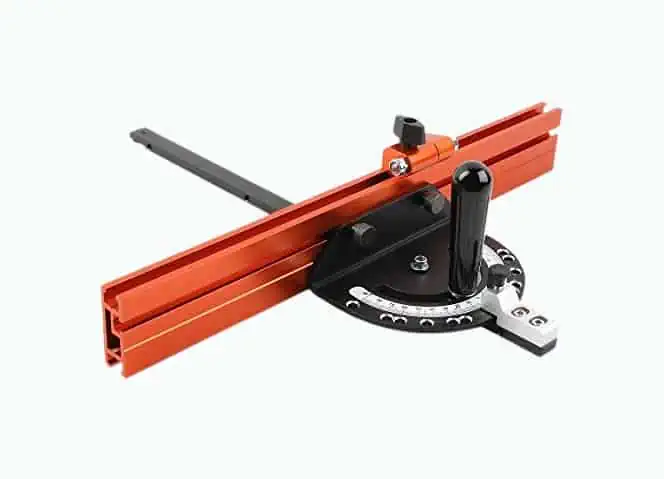
This O’skool Miter Gauge system is one of the most universal table saw fences available. It will fit most bench tools as it has a standard 19 x 9.5mm track and a 3.175m T slot. If your saw doesn’t have a T slot, you can remove the locking washer to ensure it fits.
By installing this fence, it will be easier than ever to make precise crosscuts. The solid steel protractor head has positive stops at six different angles on both sides for 13 in total. You can use this for almost any woodwork project as you will have all of the most common cutting angles.
What We Like
Adjusts Easily
Adjusting the head is easy. Simply loosen the post knob handle, pull the indexing pin out, rotate the head to your desired angle, then release the pin to lock it into place.
Miter Gauge Length
The 457mm fence is an ideal miter gauge length. It also has a flip-up length stop if you want to make the same cut many times. This high-quality, effective, and easy-to-use fence will make most woodworking projects almost effortless, especially if you are making crosscuts.
Loaded Ball Bearings
The four spring-loaded ball bearings make a significant difference in how easy this table saw fence is to use. The steel miter bar holds the ball bearings on the side, and they can be adjusted with the hex key wrench to keep the bar snug in the track.
What We Don't Like
Scratches Saw
Unfortunately, there is no coating on the miter gauge. This can lead to it scratching the saw during use. Some users have added their own protective coating to overcome this issue.
Product Specs
| Rip capacity | 18 inches |
| Length | 19.7 inches |
| Compatibility | Universal fit, for most bench tools |
| Material | Aluminum |
| Cost | $$ |
Our Ratings
User Experience
| Product | Best | Rip capacity | Length | Compatibility | Material |
|---|---|---|---|---|---|
| DeWALT DW745 | Small Shops | 20″ | 30″ | DeWALT DW745 | Aluminum |
| Delta 36-T30T3 Fence System | Fence & Rail System | 30″ | 37″ | Delta Unisaw, Contractor, Hybrid saws | Aluminum |
| Shop Fox W1410 Fence | Cabinet Making | 22″ | 50″ | Most 27-inch table saws | Aluminum |
| Carter Magfence II | Beginners | No limits | 16″ | Non-ferrous table saw | Powder-coated aluminum |
| Wixey WR700 Saw Fence | Value For Money | N/A | 60″ | Universal | Plastic |
| Shop Fox Aluma Fence | Aftermarket | 30″ | 57″ | Universal | Steel & aluminum |
| Ryobi RTS 10 Table Saw Fence | Budget Pick | 30″ | 20″ | Ryobi 10-inch table saw | Steel & aluminum |
| Vega U26 Table Saw | Quality | 26″ | 36″ | Delta Unisaw, Contractor, Powermatic | Steel and aluminum |
| O’skool 457mm Miter Gauge | Universal Fence | 18″ | 19.7″ | Universal | Aluminum |
Do I Need a Table Saw Fence?
Table saw fence systems help guide material when making rip cuts and cross-cuts. They keep the workpiece in place, preventing it from moving unexpectedly when cutting. Fences are an essential part of table saws and make them safer to use.
Despite what some experienced woodworkers might say, you should always cut with a fence. Even if they cut wood freestyle, it is very dangerous and puts you at risk of losing your fingers or worse.
A table saw is designed to enable you to make straight cuts with minimal effort. By working without a fence system in place, the lines you cut will almost certainly no longer be straight.
Fences are especially useful when cutting longer pieces or sheet material, which can otherwise be awkward to handle. A fence enables you to control the material by applying slight force as you feed it toward the blade.
Benefits of a Table Saw Fence
In 2010, it was estimated that there were more than 700,000 table saws in use in the United States (1). With so many people using table saws, it is vital that they do so safely, which is where a table saw fence comes in. There are multiple reasons to use a fence, including:
More Accurate
Accuracy is a top priority when working on any construction project or woodworking piece. A table saw fence makes it far easier to be accurate as it locks the workpiece in place, ensuring your cuts are correctly aligned. It also enables you to dictate the thickness of the cut more accurately.
Improves Productivity
Once your table saw has been configured properly, you will be able to cut numerous pieces in the time it would take you to cut one by hand. Each cut will be precise, so you won’t need to keep checking your measurements. This means you could potentially complete tasks that would previously take hours in a matter of minutes.
If you are working on a large-scale project or need to cut pieces for multiple items such as door frames, this increase in productivity means a table saw fence will pay for itself almost immediately.
Safety
Using a table saw fence will make cutting far safer. It reduces kickbacks because you can apply steady pressure to the material as you feed it toward the table saw blade. It also prevents accidents as it will keep the workpiece in place, rather than having to move it around freehand cutting, which can bring your hands dangerously close to the blade.
How to Choose the Best Table Saw Fence
Choosing the right table saw fence will allow you to make cuts more quickly and accurately, with a minimum of effort. Let’s explore some of the most important things to keep in mind when looking for your ideal fence.

Is the Fence Parallel?
It is essential that your table saw’s fence is parallel to its blade. If the fence is off-center, every cut you make will also be inaccurate. Being even slightly off with your cuts can have a disastrous effect on your project as a whole. If you are unsure how to align your fence properly, we explain how in the FAQs section later in this article.

Rigidity
The fence needs to remain rigid throughout its use. If it flexes or moves while you are working, accurate cuts will become almost impossible.
The best fence material is steel, but you typically only find it on heavy-duty professional table saws. Steel is solid, robust, and unlikely to become warped.
Most fences on woodshop table saws are made of aluminum or a mixture of steel and aluminum. You can get a sense of how sturdy a fence is by checking its weight. This is a situation where heavier is better, as you don’t want a fence that is light and flimsy.

Ease of Installation
It should be straightforward to install your new fence on your table saw. Always double-check your table saw’s compatibility when shopping for accessories. You are unlikely to find a fence that will be perfectly compatible with every saw, so you might need to drill some holes in the fence to install it securely.
If you are an inexperienced woodworker, try to find a table saw fence with a front clamp rather than a front and rear. This will allow the fence to fit any size table. If you can find one with a T-bar, even better. The T-bar will increase the rigidity of the fence and prevent it from moving during operation.

Ease of Use
The fence needs to be quick to set up and easy to master. You want to be able to adjust it relatively quickly without affecting the accuracy of your cuts. If you need to adjust the fence during use, this should also be quick and straightforward. Look for a fence that has a simple locking cam that can be operated with one hand.
Front-locking fences are ideal for one-handed operation. This will free up your other hand for tasks such as holding the stock.

Table Saw Size
Table saw fences are available in various sizes, as are table saws. The size of your table and how the fence attaches to it will influence how large it should be. Some fences have a maximum span of 27 inches, while others can reach as far as 50 inches.
Professional cabinet table saws have the widest span and are designed to handle the largest materials. In contrast, portable table saws are designed for smaller tasks such as cutting picture frames.

Rip Capacity
The rip capacity of table saw fences varies greatly from model to model. If you intend to cut large pieces of material, you will need a table saw fence that extends on rails or a cabinet saw with an increased capacity. This will allow you to cut sheet material.
Before buying a table saw fence, take the time to consider what you will need it for and choose your fence size accordingly.

Manual or Electric
Some table saw fences have digital readouts. These allow you to make extremely accurate measurements using “Precise Fraction Technology”. Others rely on a traditional gauge. This is a matter of personal preference and budget, but you should still be able to make very precise cuts without a digital display.
How to Use a Table Saw Fence
Table saw fences run parallel with the blade, typically on the right-hand side. They are either clamped at the front or the front and rear together. To adjust the fence, simply release the cam levers, move the fence to the desired position, then fasten the levers again.
There will be preset miter grooves in popular positions, as indicated on the gauge. Where you place the fence will be up to you and should be determined by the size of the workpiece.
Move the fence toward the blade for narrower rips, or further away if you are cutting sheet material. Make sure you clamp all available cam levers into place, or the fence will likely move during operation.
Apply some forward pressure when pushing the material toward the blade, using the fence for stability. As the blade cuts the material, continue applying that pressure and feed the workpiece through for a straight cut.
As you approach the blade, use a push stick to keep your hands at a safe distance.
FAQs
How Can I Check My Table Saw’s Accuracy?
Set the fence at 2 inches and cut a 20-inch long strip of three-quarter-inch thick fiberboard. Then, cut it into five pieces, each measuring 4 inches long. Take all five strips and place them edge to edge.
If it this stack measures 10 inches, your table saw fence is accurate. This method works because it accounts for cumulative errors rather than a single inaccuracy. Five errors will add up to a far more noticeable difference than one will.
How to Make Sure a Table Saw Fence is Straight
To ensure that your fence is straight, use a straight edge to check that the front and back of the fence align with the miter slot. If you get different measurements, the fence is not straight.
A more accurate way to check is to align the blade with the miter slot. You can then check the distance from the front and back of the fence to the blade.
If you are struggling to align the fence and can’t get the measurements right, your fence might be incapable of offering reliable parallel alignment.

How to Upgrade a Table Saw Fence
You might be very happy with your table saw but not with its fence. You can make adjustments to your fence using cuts of wood. Decide what rip capacity and length you want. By cutting a strip of wood and screwing it to the table saw fence, you can increase its capacity.
If you want to increase the height and rigidity of your table saw fence but don’t want to spend money on a new one, you can try building a basic box shape for the fence to sit in.

Should the Fence Always be Used on a Table Saw?
Always use the fence on a table saw to avoid damage and injury. A table saw is a powerful tool that can quickly work even the toughest lumber. However, it’s also a dangerous tool that can easily cause serious injury. A table saw’s most important safety feature is the fence.
The fence is used to guide the stock along the blade, ensuring that it remains perpendicular to the blade at all times. Suppose the stock is not kept perpendicular to the blade.
In that case, it can bind, causing the blade to kick back and potentially causing serious injury. The stock can get jammed or twisted if you don’t use the fence.

How Tall Should the Fence Be on a Table Saw Sled?
A table sled fence should be tall enough to prevent the blade from going through the top and causing damage.

What Side Should a Rip Fence be on a Table Saw?
You’ll find the rip fence placed on the right side of the saw blade. Its basic role is to keep the piece of wood in place to make a precise cut along the grain. This is really important if you’re making long or deep cuts.
The fence helps to prevent wobbling or shifting during the cut. This is great when cutting thinner or more delicate pieces and helps render more precise cuts.

How Do I Keep My Table Saw Fence from Moving?
Table saws are essential for anyone who enjoys woodworking or tinkering around in the garage. A fence allows you to make precision cuts, and it must be kept level and square to the blade at all times.
Unfortunately, it’s common for the fence to become slightly out of alignment, which can ruin your workpiece and cause dangerous kickbacks.
First, ensure the table saw is level on all four legs. Check that the blade is perfectly perpendicular to the table. Look at the bolts that attach the fence to the saw; if they’re loose, tighten them up.
You can add a wooden edge to the fence if this doesn’t fix it. Just use a piece of use and some double-sided tape.

What Is a Sacrificial Fence on a Table Saw?
It’s an auxiliary fence attached to the main fence on a table saw. The sacrificial fence makes repeated cuts in the same location without damaging the main fence. It’s also useful for making cuts too close to the edge of the table saw for the main fence to be used.
It’s attached to the main fence with clamping screws. These screws allow the sacrificial fence to be flush with the main fence.
This ensures that the blade of the saw cuts through both fences simultaneously. The sacrificial fence is usually made from a piece of hardwood or plywood approximately 1/8 inch thick.
This thickness provides enough rigidity to prevent the fence from wobbling during use. It also stops the saw blade from damaging the fence when it comes in contact.

Which Table Saw Has the Best Fence?
Botsch is arguably the best choice for a fence. Just like all their products, Botsch fences are made with quality, and they’re designed to be super durable.
They’re also adjustable, so you can always have it perfectly aligned with the blade which helps the fence from slipping out of position during use. Also, Botsch fences are easy to install, so you can be running your table saw in minutes.