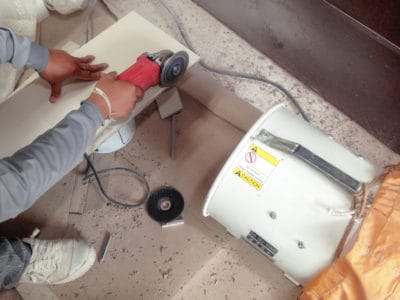
In 2002, the US government placed wood dust on their list of “known carcinogens” linked to nose, throat, and lung cancers. So, keeping your workspace free from poisonous particles is crucial.
With that in mind, we review 10 of the best dust collectors, scoring them for performance, capacity, and price.
- Cyclone action
- Improved filter efficiency
- Functions as two-stage system
- Auto-cleaning feature
- 9-gallon capacity
- OSHA certified
- Wall-mounted
- Safety switch key
- Dual-voltage motor
- Lightweight at 27 lbs
- Hepa filtration
- Power tool actuation
- Remote-controlled
- 30-gallon capacity
- Powerful 2 HP motor
- Stable and easy to maneuver
- Separates anything heavier than air
- Generously sized
- Powder coated paint job
- 1280 CFM suction
- Heavy duty steel impeller
- Portable or wall-mounted
- Has an adjustable hose
- 660 CFM rating
- Fits most tablesaws
- 3 ways to use
- Removes most hazardous waste
- Operates at just 71 dB
- universal 4-inch dust port
- Only weighs 18.6 lbs
Review Methodology: At Sensible Digs, we strive to give you in-depth, hands-on analysis and evaluations of the best saw dust collectors available. We use a precise benchmark and criteria system to compare and measure the performance of each product. We base our assessments on concrete data and evidence gathered from professional reviews and our own experience. Each review includes a detailed evaluation of design choices, key features, and factors crucial in decision-making. Our goal is to provide you with the facts you need to choose a saw dust collector that outperforms its competitors. Trust our findings, as we’ve done the research to give you the best results.
The Best Saw Dust Collectors of 2024
Not all saw dust collectors are the same, so we conducted extensive research that includes industry experts and real user’s opinions. Here is our take on the 10 best saw dust collectors money can buy.
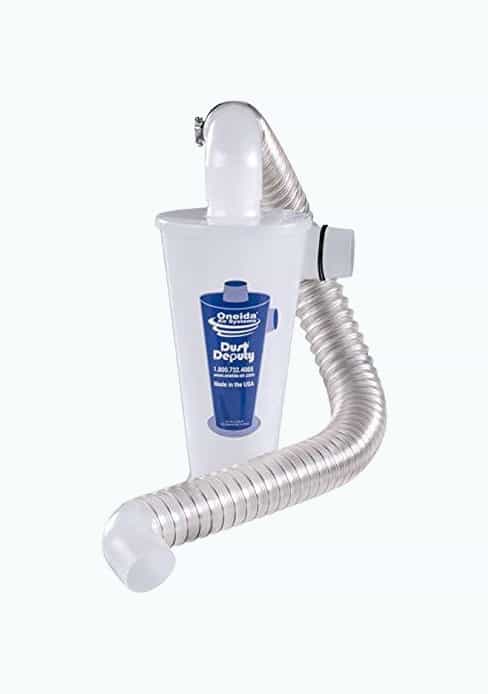
Dust Deputy Anti-Static Cyclone Separator
Best Dust Collector for Small Shops
If you have a small shop, space is a premium. This cyclonic separator by Dust Deputy is the ideal tool to use. It utilizes centrifugal force to extract 99 percent of hazardous particles from the air before it reaches your vacuum filter. This eliminates clogs and suction loss.
The Dust Deputy is designed to attach to your shop vacuum or dust extraction system to improve its performance by as much as 20 percent.
The best news is this effectively turns your single-stage collector into a two-stage model because as the dust enters the Dust Deputy, it gets forced down the tapered canister by using cyclonic action, trapping most of the debris at the bottom.
It also makes it easier to empty because all the dirt is in one place.
What We Like
Cyclone Action
Cyclone action is the efficient way to force the smallest and largest particles to the bottom of the canister, trapping them for easy removal and keeping them away from the filter.
Reduces Costs
A single-stage dust collector relies on the filter to trap the smallest particles, which takes its toll. Filters are expensive, so reducing the number of times they need replacing is crucial to managing running costs.
Makes a Single-Stage a Two-Stage
Why spend big bucks buying a complete new two-stage system when you can attach this cyclone separator to your existing system or shop vacuum? It preserves the life of the filter while improving efficiency by 20 percent.
What We Don't Like
You Still Need a Dust Collector
This is an attachment rather than the actual dust extractor, but it is a very useful part of your complete dust extraction system.
Product Specs
| Weight (pounds) | 3.09 |
| Dimensions (inches) | 14.5 x 9.5 x 9.5 |
| Cyclone action | Yes |
| CFM | 50 |
| Capacity | Customizable |
| Price | $$ |
| Warranty | Not stated |
Our Ratings
User Experience
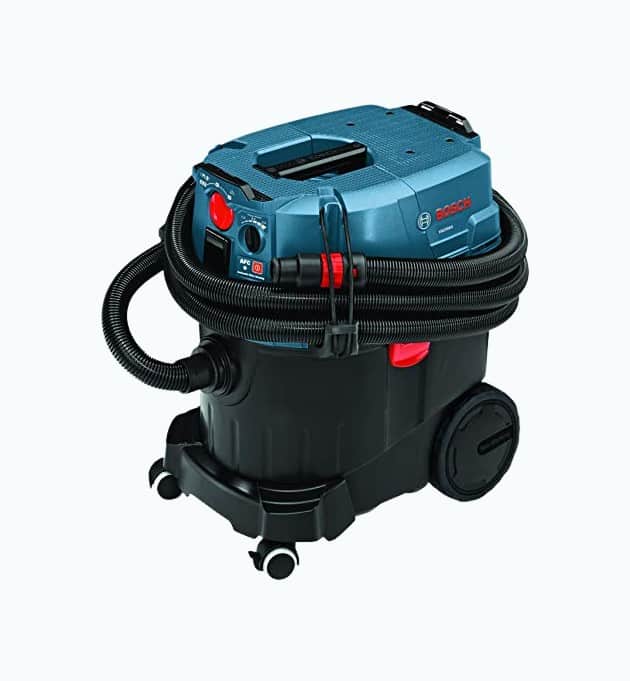
Bosch 9-Gallon Dust Extractor
Best Home Dust Collector
This Bosch dust extractor is a compact and powerful machine that suits the home garage perfectly. It has a HEPA filter that traps 99.97 percent of particles to a size of 0.3 microns, which takes care of the most hazardous material.
The filter gets a clean every 15 seconds to maintain maximum suction, plus the 150 CFM ensures that all material is efficiently moved along the hose into the belly of the dust extractor. It also has a power tool activation, which allows you to control it from the device rather than the extractor.
Its 9-gallon capacity lends it more to domestic use rather than woodshop performance. The OSHA (Occupational Health and Safety Administration) certification gives you peace of mind that it will keep you safe from hazardous waste material.
It’s also easy to store away, which is why we rated it the best for inside the home, and it could so easily have won the HEPA award, but we reserved that for another product.
What We Like
Auto-Cleaning
This feature is useful because it cleans the filter every 15 seconds to keep it free from blockages. This ensures maximum airflow and suction power.
Portable and Compact
This dust extraction system is portable and easy to store away, making it the perfect choice for the home or garage.
HEPA Filter
HEPA filters are the most effective filters money can buy. They trap particulates to the size of 0.3 microns, which removes 99.97 percent of hazardous waste.
What We Don't Like
Very Pricey
This compact Bosch dust extractor is a lot of money for what it is. It costs almost as much as some of the dust collector systems that service an entire woodshop.
Product Specs
| Weight (pounds) | 28 |
| Dimensions (inches) | 20.5 x 14.5 x 22.6 |
| Cyclone action | No |
| CFM | 150 |
| Capacity | 9-gallons |
| Price | $$$$ |
| Warranty | 1-year |
Our Ratings
Personal Perspective
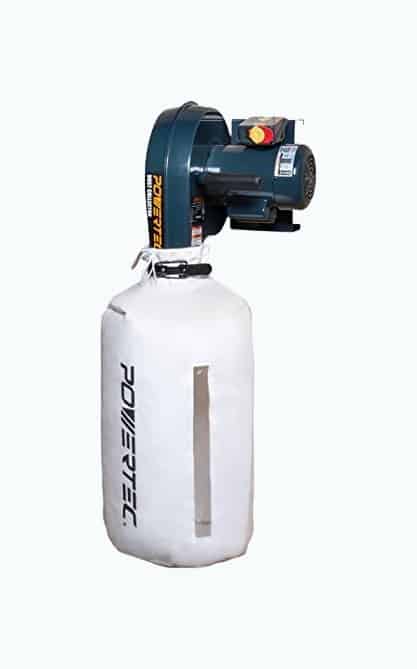
Powertec DC5370 Wall-Mounted Dust Collector
Best Wall-Mounted Dust Collector
This wall-mounted dust collector takes up less room, which is ideal if you have a smaller woodshop where space is a premium. It has a 2.5-micron filter bag, so while it isn’t as effective as the HEPA models, it still removes most hazardous waste.
The 1 horsepower dual-voltage motor has a 3,450 RPM top speed and an airflow capacity of 537 CFM. The switch key prevents usage when unattended, and can be removed to lock it in the off position.
The dust bag has a viewing window to monitor the levels and a zipper to facilitate easy dust removal.
What We Like
Wall-Mounted
Attaching your dust collector to a wall saves space and keeps it out of the way of obstructions in the woodshop. It services smaller areas and could even find a home in your home workshop.
Safety Switch Key
With safety in mind, the switch key allows you to lock the collector in the off position when it is unattended. This stops unwanted injuries.
Dual-Voltage Motor
Dual voltage means that it works with 120 and 240-volt electrical systems. This is ideal as most domestic supplies are 120 volts, and many businesses operate with upgraded 240-volt systems.
What We Don't Like
Less Effective Filtration
Unlike the Bosch model that traps 99.97 percent of particulates to a size of 0.3 microns, this Powertec can only manage 2.5 microns, making it less effective.
Product Specs
| Weight (pounds) | 40.8 |
| Dimensions (inches) | 19 x 18.5 x 16 |
| Cyclone action | No |
| CFM | 537 |
| Capacity | Not stated |
| Price | $$$ |
| Warranty | 1-year |
Our Ratings
Community Feedback
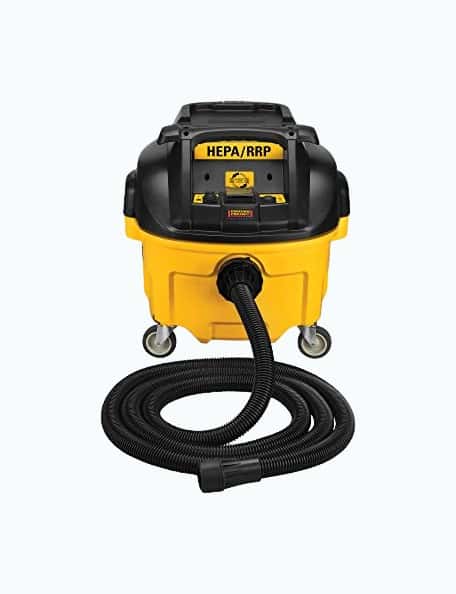
DeWALT 8-Gallon HEPA Dust Extractor
Best Dust Collector With HEPA Filter
This is similar to the Bosch model in that it is a dust extractor designed to attach directly to your power tool. It has a CFM value of 130, so slightly less than the Bosch, but it also contains a HEPA filter, trapping 99.97 percent of all particulates.
It has an auto-clean feature that ensures the filter doesn’t clog, improving suction and airflow. Bosch does this every 15 seconds, whereas this DeWALT completes that task every 30 seconds.
This DeWALT has the same power tool actuation, making it possible to control the dust extractor from the device rather than the actual unit. The 15 ft hose is anti-static, and the unit is lightweight at just 27 pounds.
What We Like
Lightweight and Portable
This dust extractor is ideal for smaller spaces in both the home and woodshop. It has casters, so it rolls easily enough, and because it weighs 27 pounds, it doesn’t take too much effort to maneuver it.
HEPA Filtration
HEPA filters are the best you can get, trapping 99.97 percent of hazardous waste material and filtering out particles up to 0.3 microns.
Power Tool Actuation
This DeWALT allows you to operate it directly from the power tool. It means you don’t have to keep stopping and walking to the dust extractor every time you want to switch it on.
What We Don't Like
Small Capacity
The storage capacity is just 8 gallons, making it an ideal dust extractor for home use and small workshops. It won’t handle industrial settings where more capacity is preferred.
Product Specs
| Weight (pounds) | 27 |
| Dimensions (inches) | 20 x 19 x 20 |
| Cyclone action | No |
| CFM | 130 |
| Capacity | 8 gallons |
| Price | $$$ |
| Warranty | 1-year limited |
Our Ratings
First-Hand Impression
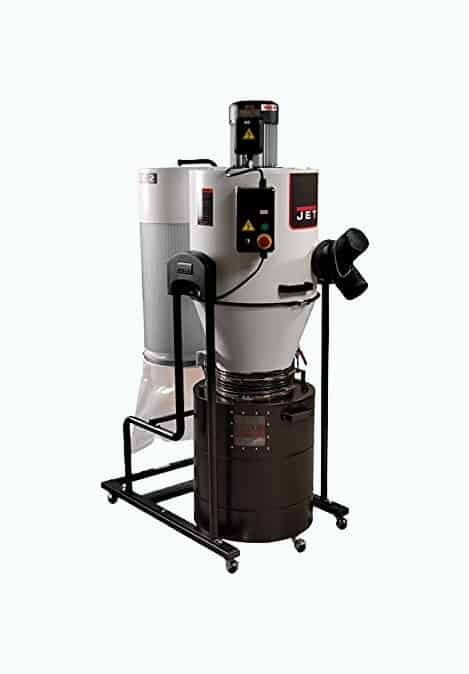
Jet JCDC-2 Cyclone Dust Collector
Best Cyclone Dust Collector
When you want the most effective dust collection, go with a cyclone model. The centrifugal action ensures that most of the debris is collected in a separator before the filter traps the smallest particles.
The canister filter traps 99 percent of particles at a size of 2 microns, so it doesn’t rival the HEPA filters, but it does remove significant amounts of hazardous waste. You also get a remote control that operates at a distance up to 50 feet away.
The capacity runs at 30 gallons, while the 2 horsepower motor generates a CFM of 938. It may not be small or light, but it does come on a caster-mounted trolley, so you can move it around the woodshop with ease.
It is the most expensive dust collector to appear on the list, placing it firmly in the professional category because very few people have the budget to justify using this at home. Still, you do get a 5-year warranty as a consolation.
What We Like
Cyclone Action
Cyclone dust collectors have a tapered canister to draw down the debris, trapping it in a separator and easing the pressure on the filter. It prolongs the life of the filter and saves you money.
Huge Capacity
This is a commercial-grade collector with a 30-gallon capacity. It means fewer trips to empty the dust, and you can undertake longer projects without fear of overfilling the collection bag.
Powerful Suction
The 2 horsepower motor has enough of a kick to generate 938 CFM to suck the most stubborn particles into the central collection canister.
What We Don't Like
Super-Expensive
This dust collector is super-expensive. It costs double the price of some on the list. If you want it, prepare to dig deep.
Weighs 235 Pounds
Thank goodness this super-heavy collector is mounted on casters because without them, at 235 pounds, it will be hard to move.
Product Specs
| Weight (pounds) | 235 |
| Dimensions (inches) | 47.5 x 27.25 x 41 |
| Cyclone action | Yes |
| CFM | 938 |
| Capacity | 30 gallons |
| Price | $$$$$ |
| Warranty | 5-year |
Our Ratings
User Experience
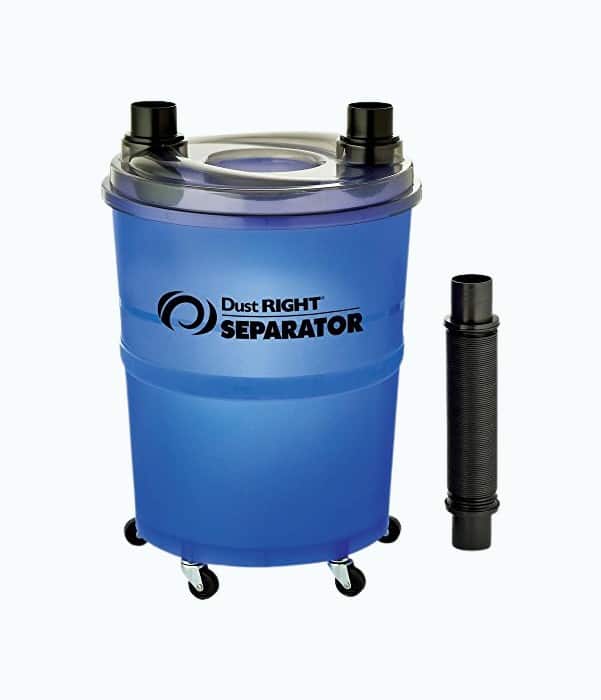
Dust Right Dust Separator Bucket
Best Dust Collector and Separator
If you need a machine that collects dust but also separates it, look no further than this bucket. The dust cyclone captures debris — including sawdust and wood chips — and separates it so that it never enters the vacuum. This reduces clogs and protects your vacuum from damage.
This bucket also has a long filter life since it prevents debris from entering the vacuum. The dust cyclone separator creates a vortex effect that ensures that the filter and suction work longer.
What We Like
Stable and Easy to Maneuver
Fitted with a five-caster base, this bucket is easy to maneuver. Whether you’re at home or in a shop, you’ll appreciate how transportable this is.
Another practical element is that the vacuum hoses connect inside the in/out ports, preventing accidental disconnections. Overall, it’s very user-friendly.
Separates Anything Heavier Than Air
No matter what you suction up with this bucket, the vacuum will separate it as long as it’s heavier than air. That includes wood dust and other small particles. None of it will get passed through to the vacuum and filter.
Generously Sized With a Translucent Bucket
The 10-gallon capacity is generous enough for most small shops. When it’s full, you can easily tell thanks to the translucent bucket.
What We Don't Like
Difficult to Open and Empty
While you can easily tell when the bucket is full, it’s hard to open the tank up and empty it. Customers find it really challenging to unscrew the top — it’s almost like a full-body workout!
Cheap Materials — May Crack
Some customers noted that this wasn’t the most durable or high-quality of dust collectors. If it does tip over, it can crack or break easily. Even the hose can crack or break with general use. It might not be a complete solution to your sawdust collecting needs.
Product Specs
| Weight (pounds) | Not specified |
| Dimensions (inches) | 17 x 17 x 25.25 |
| Cyclone action | Yes |
| CFM | N/A |
| Capacity | 10 gallons |
| Price | $$ |
| Warranty | 90 days |
Our Ratings
Personal Perspective
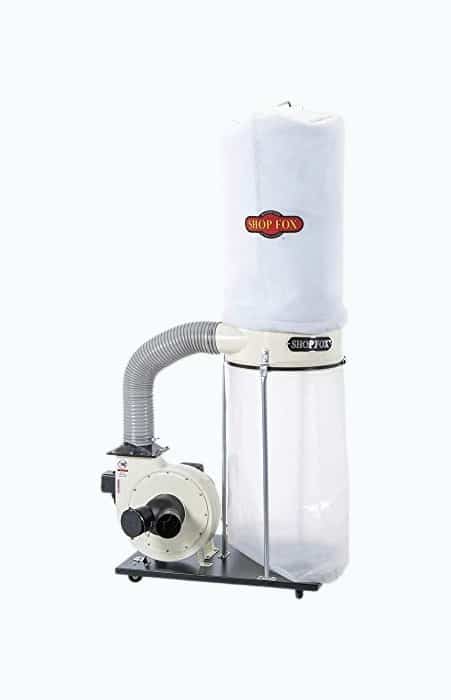
Shop Fox W1685 1,280 CFM Dust Collector
Best Multi-Machine Dust Collector
If you’re looking for a multi-machine dust collector, this is a fantastic option. With two four-inch openings, you can attach two machines to one dust collector, saving you money.
The good news is if you don’t need two ports, you can put a cap on one of the openings.
Another awesome thing about this dust collector is that it can remain stationary, or you can use it as a mobile unit.
What We Like
Powder Coated Paint Job
This machine is designed to function well and look good for a long time. The powder-coated finish means that the exterior is resistant to chipping, fading, scratches, and other wear and tear.
1280 CFM Suction
With a colossal air suction capacity of 1280 CFM, this is a fantastically powered option. This industrial unit is great for commercial sites for keeping the air clean and comfortable for working conditions.
Heavy Duty Steel Impeller
You’ll appreciate the steel impeller on this machine. Anything steel means durable, so this is built to last for a long time and handle any amount of dust.
What We Don't Like
Difficult to Install
If you’re choosing this product, get ready for a difficult installation experience. Some units came without instruction manuals, while others had missing parts. Other customers found that some of the connecting pieces lacked quality, so you may want to go out and get better replacement parts from your local hardware store.
Product Specs
| Weight (pounds) | 108 |
| Dimensions (inches) | 22.2 x 37 x 22.5 |
| Cyclone action | Yes |
| CFM | 1280 |
| Capacity | 40 gallons |
| Price | $$$ |
| Warranty | 2-year |
Our Ratings
Community Feedback
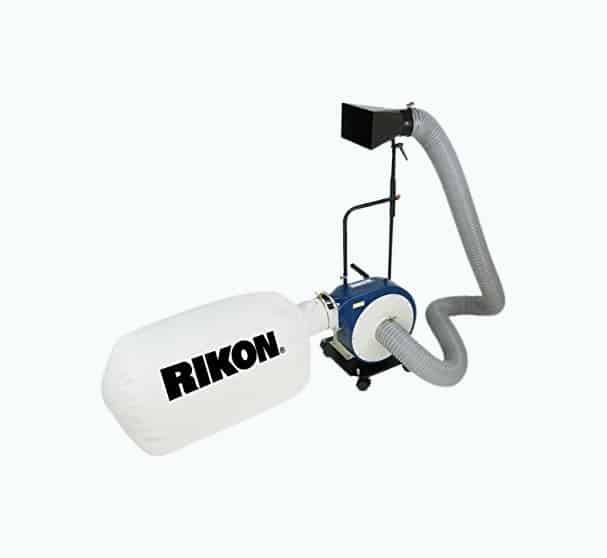
Rikon Portable Dust Collector
Best Portable Dust Collector
Not everyone needs a large, centrally-located dust collection system. Sometimes, a portable option is the best choice. If so, you’ll like this Rikon. It has a CFM rating of 660, so even though it is compact, it is no slouch.
It has large casters to maneuver around the shop floor, and the cloth collection bag stores particles up to 2.5 microns. So, while it won’t challenge the HEPA filters for the crown of most effective, for a compact collector, it does the job admirably.
You also get a wall-mounting bracket, so if you have a small shop and want this permanently fixed, you can. The adjustable hose is ideal for lathes, table saws, and drill presses.
What We Like
Portable
The large casters make this a maneuverable machine. It also has an adjustable hose, so you can adapt it to collect dust from lathes and drill presses as well as table saws.
Can Be Wall-Mounted
When you get bored of wheeling this dust collector around the shop floor, you can mount it to a wall and use it in a semi-permanent way.
Ideal for Small Shops and Home Use
Whether you have limited space or are looking for a dust collector for your home workshop or garage, this model fits that bill perfectly. It only weighs 54 pounds and measures 22.5 x 19.5 x 17 inches.
What We Don't Like
Limited Capacity
The dimensions of this dust collector limit its use to smaller tasks and lighter duties. Also, the filtration performance is not as good as a HEPA filter, at just 2.5 microns.
Product Specs
| Weight (pounds) | 54 |
| Dimensions (inches) | 22.5 x 19.5 x 17 |
| Cyclone action | No |
| CFM | 660 |
| Capacity | Not stated |
| Price | $$ |
| Warranty | 5-year |
Our Ratings
First-Hand Impression
Milescraft 1500 Contractor Saw Dust Collector
Best Dust Collector for Table Saws
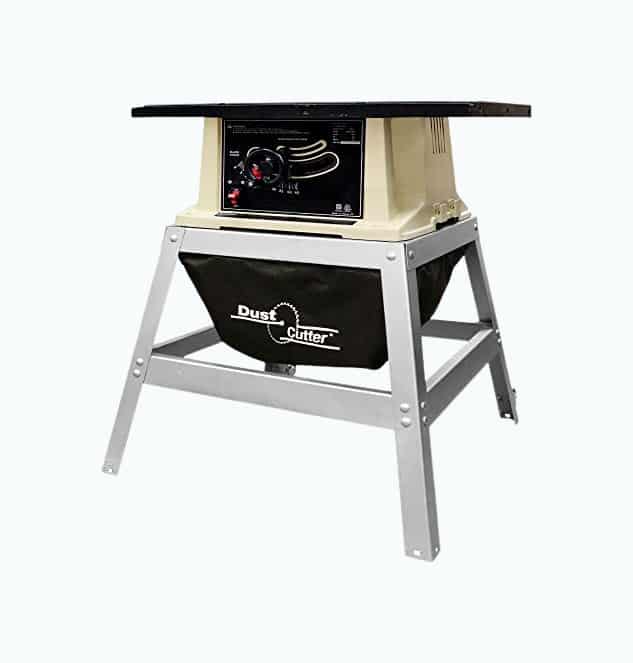
For table saws, the collection system you use is a little different. It sits below the table, drawing the dust downwards towards the extraction hose that carries it away to the canister. This Milescraft is not the entire system, just the bag that attaches to the table.
This DustCutter claims it can reduce dust waste by up to 90 percent, so it improves the air quality of your woodshop. You can use this collection system with either a vacuum attachment or a funnel mode that dumps the debris in a bucket located below the table.
The vacuum method is more efficient because it removes most hazardous waste. You could also use the collector on its own, where the debris collects in the bag. The collector fits most table saws with a width of 20 inches by 17 inches in depth.
This collection bag is super-cheap, making it affordable to most woodworkers.
What We Like
Almost Universal Use
This collection bag fits most table saw tables that measure 20 inches in width by 17 inches in depth.
3 Ways To Use It
Either collect the dust in the bag, use it as a funnel to drop waste into a bucket, or attach a vacuum hose to extract all the debris to a central canister.
Super-Cheap
It is one of the cheapest dust collection systems featured. That said, you do still need to invest in a shop vacuum or extraction machine if you want the most efficient debris removal.
What We Don't Like
Some Dust Escapes
This dust collector only proves to be 90 percent effective, so there is still a chance that you might inhale hazardous waste material.
Product Specs
| Weight (pounds) | 14.1 ounces |
| Dimensions (inches) | 12.5 x 7.6 x 2.75 |
| Cyclone action | No |
| CFM | Not applicable |
| Capacity | Infinite (depending on how you use it) |
| Price | $ |
| Warranty | 3-year |
Our Ratings
User Experience
Wen 3401 12-Gallon Dust Collector
Best Quiet Dust Collector
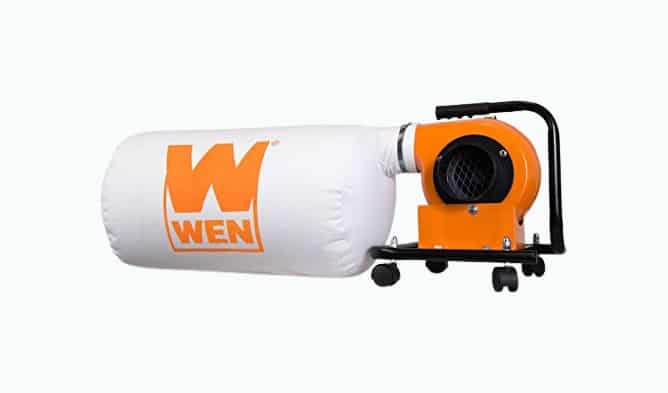
Dust collection systems are noisy, but this WEN is one of the quietest you can buy. It operates at 71 decibels, which is less noise than a standard vacuum cleaner. It generates an airflow of 660 CFM, thanks to the 5.7-amp motor.
The universal 4-inch dust port allows you to connect to your favorite shop tools, and 4 swivel casters make it easier to maneuver, and when you set it in place, you can lock the wheels to secure it.
You also get a wall-mounting bracket so that you can make it a permanent fixture of your workshop or garage. It’s also lightweight, weighing just 18.6 pounds. That said, you are limited because the collection bag only holds 12 gallons.
What We Like
71 Decibels
For a dust collection system, 71 decibels is pretty impressive. That’s quieter than a standard domestic vacuum cleaner.
Portable and Lightweight
This whole unit weighs just 18.6 pounds, making it one of the lightest dust collectors to feature. It’s one of the reasons why it is the perfect choice if you want mobility. It also has large, lockable casters.
Super-Cheap
You could save a fortune by purchasing this WEN dust collector, especially when you compare its price to some that make the list. This model is almost 16 times less in value than the Jet.
What We Don't Like
Limited Capability
Because it is a compact dust collector, it does have limitations. It isn’t the most powerful, and the collection bag only holds 12-gallons.
Product Specs
| Weight (pounds) | 18.6 |
| Dimensions (inches) | 12.25 x 12.5 x 14.25 |
| Cyclone action | No |
| CFM | 660 |
| Capacity | 12 gallons |
| Price | $$ |
| Warranty | 2-year limited |
Our Ratings
Personal Perspective
| Product | Best | Weight | Dimensions | Cyclone action | CFM | Capacity | Warranty |
|---|---|---|---|---|---|---|---|
| Dust Deputy Anti-Static Cyclone | Small Shops | 3 lbs | 14.5 x 9.5 x 9.5″ | Yes | 50 | Customizable | N/A |
| Bosch 9-Gallon Dust Extractor | Home | 28 lbs | 20.5 x 14.5 x 22.6″ | No | 150 | 9-gal. | 1-year |
| Powertec Wall Dust Collector | Wall-Mounted | 41 lbs | 19 x 18.5 x 16″ | No | 537 | N/A | 1-year |
| DeWALT 8-Gallon HEPA Dust Extractor | HEPA Filter | 27 lbs | 20 x 19 x 20″ | No | 130 | 8 gal. | 1-year limited |
| Jet JCDC-2 Cyclone Dust Collector | Cyclone | 235 lbs | 47.5 x 27.25 x 41″ | Yes | 938 | 30 gal. | 5-year |
| Dust Right Dust Separator Bucket | Dust Collector and Separator | N/A | 17 x 17 x 25.25″ | Yes | N/A | 10 gal. | 90 days |
| Shop Fox W1685 Dust Collector | Multi-Machine | 108 lb | 22.2 x 37 x 22.5″ | Yes | 1280 | 40 gal. | 2-year |
| Rikon Portable Dust Collector | Portable | 54 lbs | 22.5 x 19.5 x 17″ | No | 660 | N/A | 5-year |
| Milescraft Contractor Dust Collector | Table Saws | 14.1 oz | 12.5 x 7.6 x 2.75″ | No | N/A | Customizable | 3-year |
| Wen 3401 12-Gallon Dust Collector | Quiet | 18.6 lbs | 12.25 x 12.5 x 14.25″ | No | 660 | 12 gal. | 2-year limited |
How Dust Collectors Work?
Power tools like saws and sanders have an exhaust port at the rear of the device. Dust collectors are a storage system with a vacuum hose that attaches to the exhaust port and extracts the sawdust to a storage canister.
It removes all traces of the deadly particles at the source and stores them safely in one place, ready for disposal.
Types of Dust Collectors
There are two styles of dust collectors, and while both are effective at removing debris from the atmosphere, they do it in different ways.
Single-Stage Dust Collector
Debris gets drawn along a hose towards the impeller, which forces the dust into a collection bag or cylinder. The larger chips settle at the bottom, while lighter particles rise and get trapped in the filter.
Two-Stage Dust Collectors
Two-stage collectors use a separator canister that collects the majority of the dust while allowing tiny amounts of finer particles to trap in the filter, leaving the heavier debris to settle at the bottom of the canister.
They use the same impeller to draw the dust away from the tool, but the difference is most of the dust traps in the separator and not in the filter.
How To Choose the Best Saw Dust Collectors
Do you get a single-stage or a two-stage dust collector? And what are the key factors you should look for when buying a new model? Here are a few pointers.

Airflow
Airflow is measured as CFM, or cubic feet per minute, which rates your dust collector on how well it sucks the debris from your power tool into the collection bag. The rule of thumb is the higher the CFM number, the more powerful the dust collector.
Look for somewhere between 500 and 1,500 CFM as a good guide to an effective dust collector.

Noise
Dust collectors are noisy machines, and especially when they are running all day. The sound they make is measured in either decibels or sones.
A typical dust collector produces about 50 to 80 decibels, which ranges from the sound of a quiet conversation to a car journey at 60 MPH with the windows open. That’s the equivalent of 5 to 39 sones.

Dimensions
A lot of this depends on the amount of use the collector gets, the number of tools in the shop, and the space you have available. You can also get compact cyclone collectors that are ideal for the home garage.
Wall-mounted units are more compact, to save you space, or you could get a mobile collector that you can wheel to the workstation and hide it away when not in use.
If you run a commercial woodshop, you might want to invest in a stationary central collection system with maximum storage.

Single-Stage Vs. Two-Stage
Two-stage dust collectors are much better at filtering and storing the dust compared to single-stage machines. This is thanks to the addition of a separator that takes most of the bulk, protecting the filter.
Two-stage collectors are more efficient and better at removing dust.
Single-stage collectors are cheaper and less efficient, but they are a great budget option and great for home workshops and garages.

Cyclone Two-Stage
Cyclonic collectors have a tapered chamber that draws the heavier chips to the bottom of the canister more efficiently and an additional filter that doubles the protection. The primary benefit of a cyclone collector is most of the debris never reaches the filter, so it saves on replacement filter costs.

Portability
Not everyone wants a stationary dust collector. Sometimes you need a portable unit that runs on casters to make it easy to move around the workshop.

Particle Size
Most dust collectors can filter particles to 5 microns. This is important because the most dangerous pollutants are 10 microns or less, so these are the ones you want to get trapped in the filter. Some collectors can go one better and trap pollutants between 1 and 1.25 microns.
HEPA filters are the most effective, and they are typically found in shop vacuums. They can trap 99.97 percent of hazardous material to a size of 0.3 microns.

Price
You can spend between 30 or 40 dollars or upwards of a few thousand dollars when shopping for your new dust collector. At the cheaper end, you are more likely to get a small cyclone model with a limited capacity. These are better suited to the home environment.
At the other end of the scale, expect an industrial model that can collect vast amounts of dust and has a two-stage filtration and separation system.
FAQs

How Much Horsepower Does a Dust Collector Need?
Most single-stage dust collectors have motors that generate about 1 horsepower. Two-stage collectors need more power, so expect 2 horsepower motors.

How Much CFM Do I Need for a Dust Collector?
Most dust collectors have a CFM rating between 800 and 1,500 for the most powerful, industrial-strength models. However, a small, portable unit needs about 300 to 350 CFM to work effectively.

How Is Dust Collector Capacity Calculated?
There are three measurements used to rate your dust collector’s capacity: air volume, air-to-cloth ratio, and interstitial velocity, which is the speed at the molecules move in a direction of travel.

Is a Dust Collector Better Than a Shop Vacuum?
Saw dust collectors are different from shop vacuums because they have a higher capacity and better micron filtration. A shop vacuum is a powerful vacuum cleaner that can attach to individual power tools to extract dust. However, they are smaller and have a lower capacity.
When you empty the shop vacuum, dust escapes into the air, putting you at risk, whereas a dust collector is a sealed unit with a bag that keeps the dust in place.

Does a Dust Collector Need a Filter?
A filter is crucial to any dust collector when you want to keep your work area free of dust and other airborne particles. These collectors usually have HEPA filters and can trap even microscopic particles.
Workers in the area could be put at risk because the dust collector couldn’t do its job properly without a filter. In addition, it might cause dust to accumulate in the office and on the machines, which can harm the systems or diminish their effectiveness.

What Do Professionals Use for Dusting?
Many professionals use shop vacuums equipped with HEPA filters to remove sawdust. Air filtration devices can collect sawdust and other airborne particles, sometimes found in workshops.
These setups are useful because they assist in maintaining a hygienic environment and lessen dust accumulation on flat surfaces.
You can also use compressed air if you want to blow out the dust that’s located in hard-to-reach areas. I would advise against this method, as it can spread sawdust everywhere if you’re not careful.

Can a Furnace Blower Be Used as a Dust Collector?
While furnace blowers are great at quickly moving large volumes of air, they are not meant to generate the suction that would be necessary to remove debris/dust from the air. Instead, dust is collected by a dust collector engineered to provide strong airflow and suction.
Standard furnace blower filters are inadequate for collecting fine dust because of their simplicity. The best dust collectors will include efficient filters so that even the tiniest dust particles are kept from escaping into the air.
The steady roar of a furnace fan can be annoyingly distracting whenever you’re working in your garage. Noise reduction features on dust collectors make them better suited for usage in a workshop or other work area.

Which Dust Collector Is Quietest?
The WEN DC3401 will deliver a mere 71 dB of noise, making it the quietest dust collector I’ve recently encountered. That’s much less noisy than your average home vacuum. Powered by a 5.7-amp motor, it produces 660 CFM of airflow.
Thanks to the included wall-mounting bracket, you may make it a permanent part of your workshop. It weighs only 18.6 pounds, so it’s portable. It’s easy to move around because of its four swivel casters, which can be locked in place if needed.

What Is the Best Home Dust Collector?
The VAC090AH dust collector from Bosch is the best home dust collector because it’s made with reliable materials and by a reputable manufacturer.
Its HEPA filter can capture 99.97% of particles as small as 0.3 microns, meaning even the tiniest airborne contaminants are rendered harmless.
Portable and compact, this dust extraction equipment is ideal for use in the workshop or garage. Filter cleaning occurs every 15 seconds, which is helpful because it prevents clogging. This guarantees the highest possible suction and airflow.