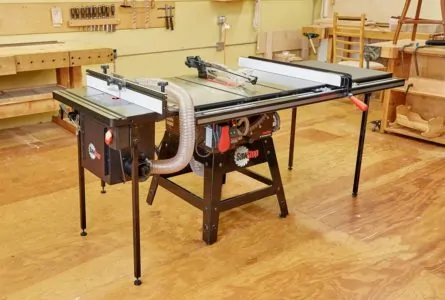
Cabinet saws are powerful, heavy-duty tools that serve as the workhorses of any professional or amateur woodshop. These stationary saws are ideal for cutting large sheets of material quickly, smoothly, and accurately.
The right cabinet saw will transform the way you work with wood. However, they are large, expensive tools, so it is important to make sure you choose one carefully.
To help you do that, we have reviewed seven of the best cabinet table saws that are currently available. We chose these saws for their cutting power, accuracy, capacity, and other important features such as dust extraction.
- Anti-kickback pawls
- Rapid blade change
- 50-inch rip fence
- 52-inch rip fence
- Dust collection port
- Instant blade stop for safety
- Poly-V belt for smooth operation
- Heavy gauge wire
- Large cut-off switch
- 4,300 RPM
- 5-horsepower
- Extendable table up to 40 inches
- 220-volt single-phase power
- Very smooth surface
- Adjustable cutting height and angle
- 31 inches long
- 32.5-inch rip capacity
- Easily moved on wheels
- Micro-adjusting miter gauge
- Quick-release blade guard
- Reasonably priced
Review Methodology: At Sensible Digs, we use a rigorous approach to assess and rank the best cabinet table saws. Our hands-on evaluations focus on key decision-making factors such as performance, design, and user experience. We compare different models, track their performance, and measure their qualities against a set of standards. Our experienced professionals provide a thorough analysis, backed by hard data and real-life testing. We share these findings, so you can understand what sets each product apart. Our reviews offer an in-depth look at each table saw, giving you the confidence to make an informed decision.
The Best Cabinet Table Saws of 2024
A high-quality cabinet saw will make a significant difference in how you work, so it is important to choose carefully. To help you do that, we have reviewed seven of the best cabinet table saws you can buy today. We chose these models for their speed and torque, size, capacity, and how effectively they remove sawdust.
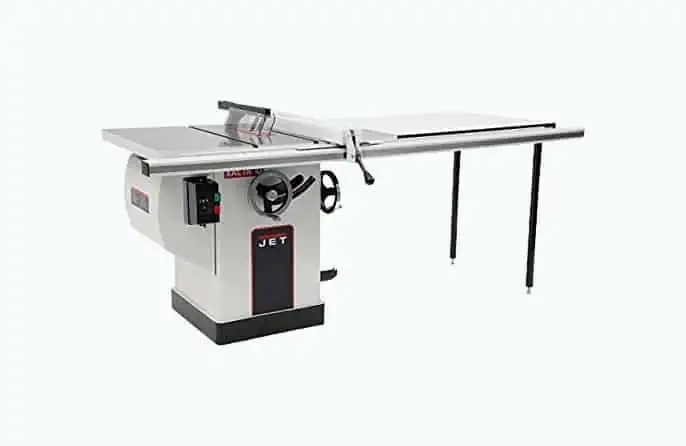
Jet 708675PK XACTASAW Deluxe Cabinet Table Saw
Best Deluxe Cabinet Table Saw
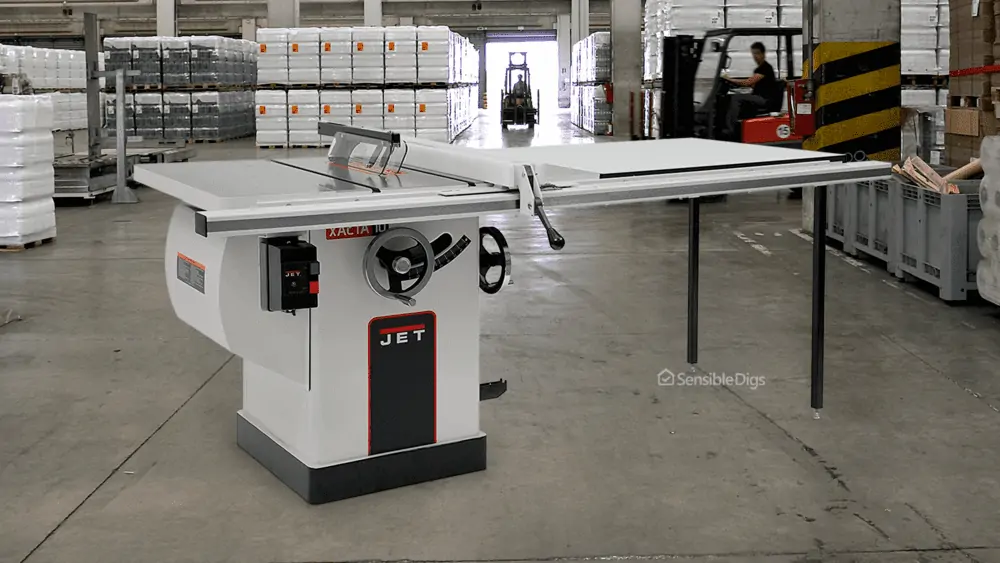
This Jet Deluxe cabinet table saw is designed to make cuts as smoothly and accurately as possible. It has a Poly-V belt drive system to reduce vibrations and noise during use. It utilizes its power efficiently, which is important when you are cutting hardwood or other dense materials.
The unit has a 4-inch dust collection port to keep your workspace clear and protect your lungs. Its table has a left-tilt design and the rip fence is 50 inches, allowing you to make substantial rip cuts. A riving knife helps prevent kickbacks, which is one of the main hazards when using a table saw.
What We Like
Safety Features
With a riving knife, anti-kickback pawls, and a blade guard, this Jet model is not only practical to use, but it also has many safety features to protect you from harm.
Rapid Blade Change
If you need to change your blade regularly, you might waste a lot of time when you could be making cuts. This model has a push-button arbor lock that enables you to change your blade quickly, so there will be far less downtime.
50-Inch Rip Fence
Table saws excel at making rip cuts, especially cabinet saws with their increased cutting power. A 50-inch rip fence gives you plenty of capacity for cutting large sheets of material.
What We Don't Like
Very Expensive
Jet calls this a deluxe table saw and it lives up to that billing. This also means it is very expensive, so it might not be a realistic option unless you are a professional woodworker.
Large Size
At 86 inches long, this is a truly substantial power tool. You will need a significant amount of floor space to accommodate and use it.
Product Specs
| Weight | 510 pounds |
| Dimensions (inches) | 86 x 36 x 38 |
| Table size (inches) | 29 x 42 + extension |
| Rip fence size (inches) | 50 |
| Motor | 3 HP |
| Blade size (inches) | 10 |
| Dust port size (inches) | 4 |
| Price | $$$ |
| Warranty | 5-years |
Our Ratings
User Experience
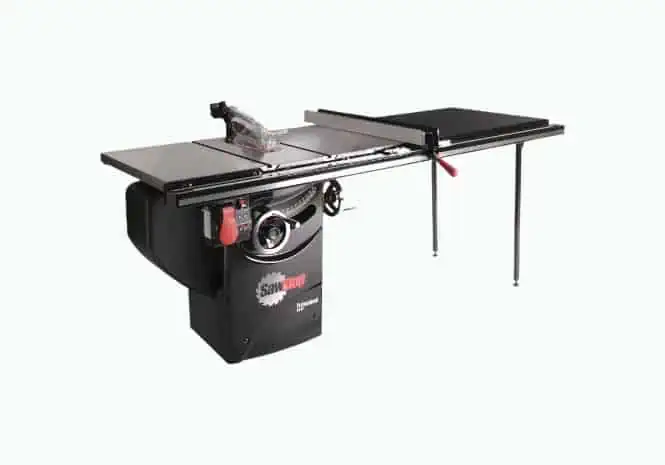
SawStop 10-Inch Professional Cabinet Saw
Best Overall Cabinet Table Saw
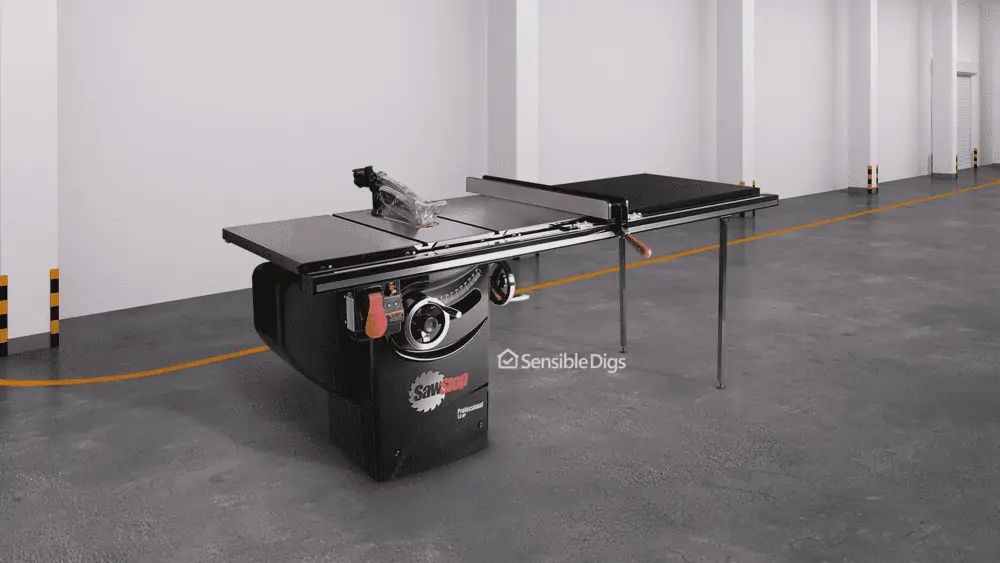
SawStop is an industry leader in cabinet table saws and this model lives up to that high reputation. Its patented safety system stops the blade in less than 5 milliseconds if your hand accidentally comes into contact with it.
The T-glide rip fence is 52 inches long so you can work on large-scale projects with this saw. Its dust collection system is among the best that are currently available and removes 99% of debris, keeping your workshop cleaner and safer.
What We Like
Built to Last
SawStop tools are built to last. Its trunnions are robust and have the thickest arbors of any 10-inch saw we have seen during our research. This saw should continue to work for decades if properly cared for.
52-Inch Rip Fence
The ability to make large rip cuts increases this saw’s versatility significantly and means it is suitable for professional work.
Dust Collection
The dust extraction system removes 99% of debris via a suction port and hose. It attaches to your shop vacuum to keep your workspace clean and safe.
Patented Safety System
If your skin comes into contact with this saw’s blade, the automatic safety system activates and stops it in just 5 milliseconds. The blade then lowers into the saw housing, which could be the difference between a minor and serious injury.
What We Don't Like
High Price
Cabinet saws are costly in general but this particular model is among the most expensive we have seen during our research.
Product Specs
| Weight | 449 pounds |
| Dimensions (inches) | 85.25 x 33 x 34 |
| Table size (inches) | 20 x 27 |
| Rip fence size (inches) | 52 |
| Motor | 3 HP |
| Blade size (inches) | 10 |
| Dust port size (inches) | 4 |
| Price | $$$$ |
| Warranty | 2-year |
Our Ratings
Personal Perspective
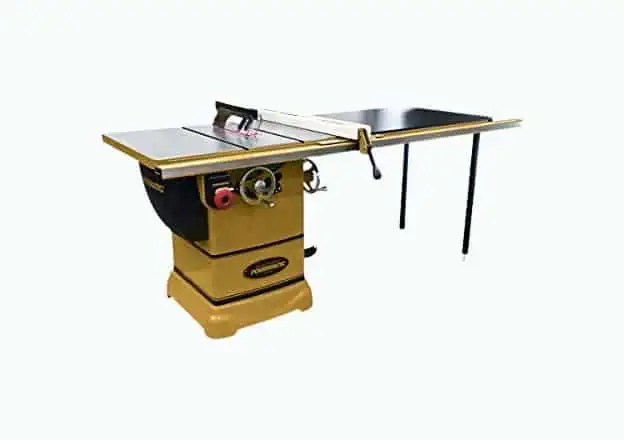
Powermatic PM1000 1791001K Table Saw
Best Value Cabinet Table Saw
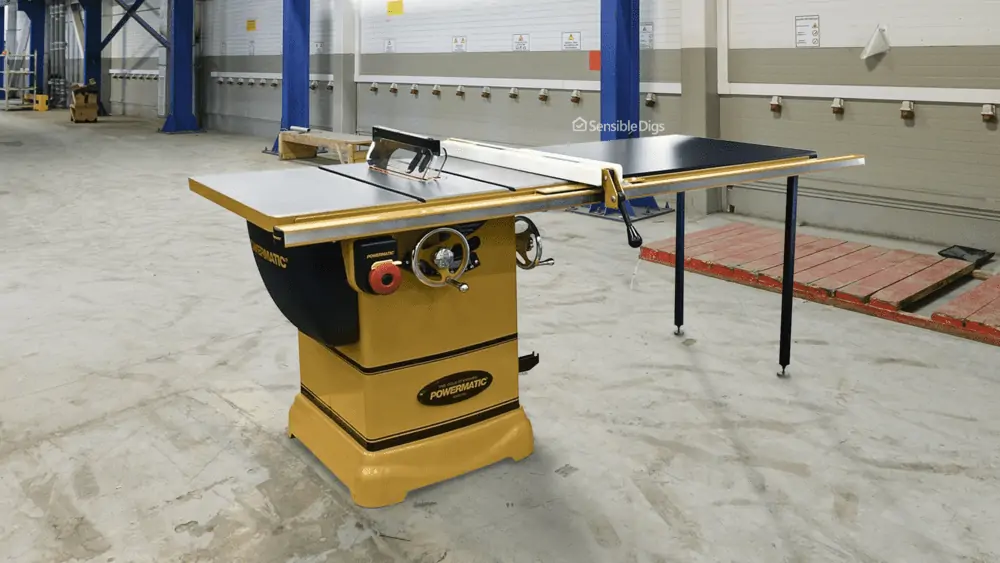
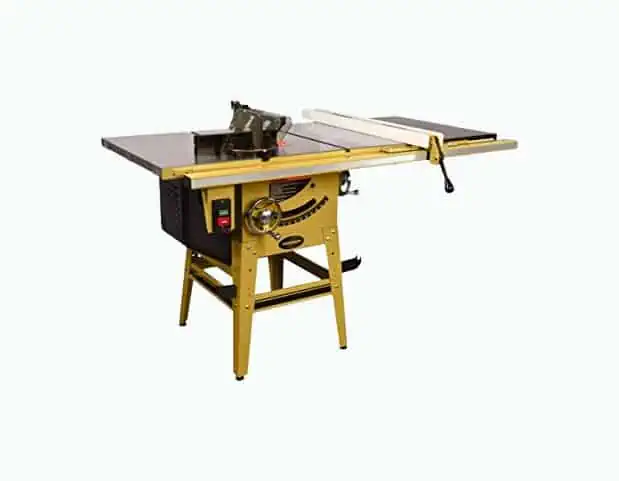
This Powermatic is not the cheapest cabinet saw we have seen but its special features mean it still offers good value for money. It has a 50-inch fence, enabling you to cut large sheets of material.
It has a Poly-V belt for smoother operation, a dust collection port to attach a shop vacuum, and a large bump switch, which can be used to cut the power immediately in an emergency. At 1.75 horsepower, this isn’t very powerful for a cabinet saw, but it should still cut through most materials with relative ease.
What We Like
Poly-V Belt
The Poly-V belt improves the saw’s efficiency while reducing the noise level and vibrations. This should also improve your cutting accuracy.
Voltage
This saw operates on 115 volts of electricity. The motor is wound with a heavier gauge wire so it can utilize a similar amount of power to a 240-volt motor.
Cut-Off Switch
The cut-off switch is very large and easy to reach. It is mounted just below the table, so you will be able to immediately shut off the saw by hitting the button with your knee.
What We Don't Like
Low Horsepower
Most of the saws we have looked at generate at least 3 horsepower but this model only has 1.75 HP. This will restrict the density of the material you can cut with it. It also means you will only be able to use a blade with a thin kerf.
Voltage Protection Switch
The voltage protection switch is designed to protect the saw but it can kick in and cut the motor under even light pressure. If you are mid-cut, these delays can be frustrating and could cause inaccuracies.
Product Specs
| Weight | 465 pounds |
| Dimensions (inches) | 36 x 27.5 x 63.75 |
| Table size (inches) | 20 x 27 |
| Rip fence size (inches) | 50 |
| Motor | 1.75 HP |
| Blade size (inches) | 10 |
| Dust port size (inches) | 4 |
| Price | $$$ |
| Warranty | 5-year |
Our Ratings
Community Feedback
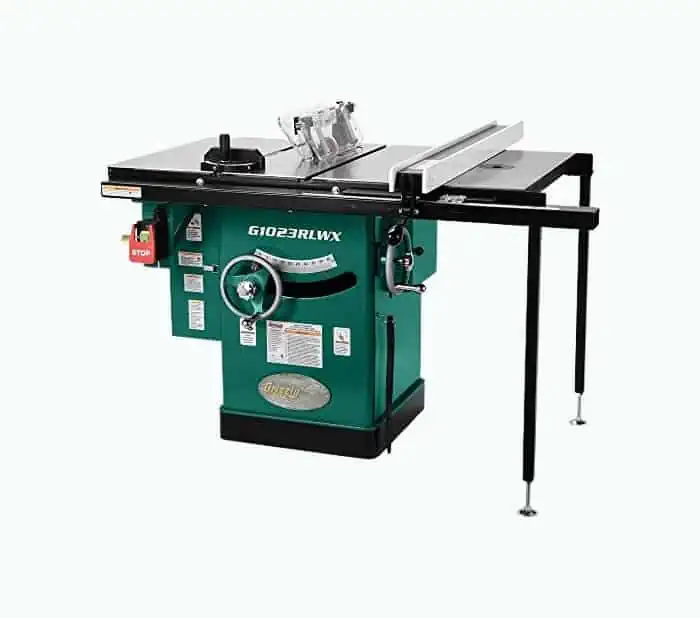
Grizzly Industrial G1023RLWX-10-Inch Table Saw
Best Professional Cabinet Table Saw
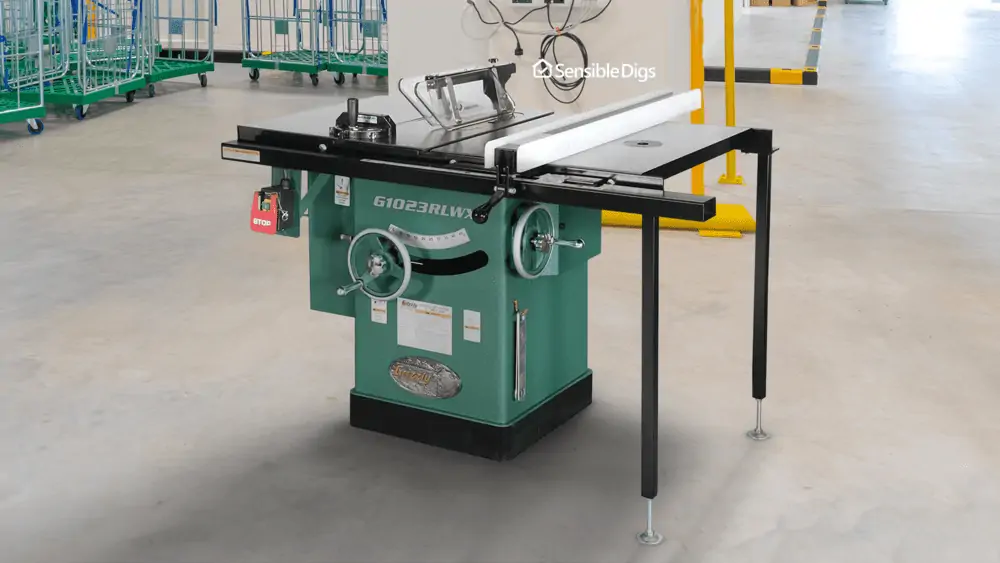
Cabinet table saws are generally designed for professional use but this Grizzly model is made more versatile by its extendable table. This can increase the size of the table from 27 inches to 40 inches, so you can work on larger projects without needing to permanently have a large tool set up in your workshop.
It has several excellent features including an easy-glide fence and triple V-belt drive system. Its magnetic switch has thermal overload protection, so you will be able to use it safely for extended periods.
What We Like
RPM
If you want to cut wood quickly, you will need a saw with plenty of cutting speed. At 4,300 RPM, this Grizzly saw will make short work of soft materials.
Horsepower
With a 5-horsepower motor, this saw is more than strong enough for professional use. Choosing it means you will never find yourself short of cutting power.
Extendable Table
The table can be extended from 27 inches to 40 inches, significantly increasing its capacity. This means you will have the flexibility to work on different sizes of material without permanently needing a large saw table.
What We Don't Like
Rip Capacity
This saw has a smaller rip capacity than some of the leading models we have looked at. This means that, despite its impressive power, it has a reduced ability to make rip cuts. It is better suited to bespoke furniture and cabinet makers than large sheet material.
Product Specs
| Weight | 623 pounds |
| Dimensions (inches) | 29.5 x 30.5 x 39.75 |
| Table size (inches) | 27 extending to 40 |
| Rip fence size (inches) | 32 |
| Motor | 5 HP |
| Blade size (inches) | 10 |
| Dust port size (inches) | 4 |
| Price | $$ |
| Warranty | 1-year |
Our Ratings
First-Hand Impression
Baileigh Table Saw (TS-1248P-52)
Best Heavy-Duty Cabinet Table Saw
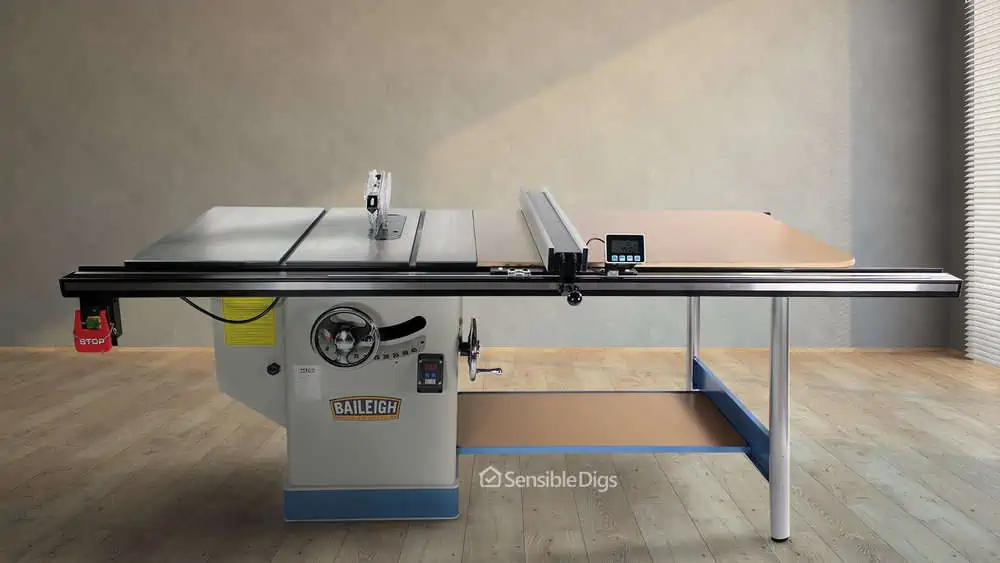
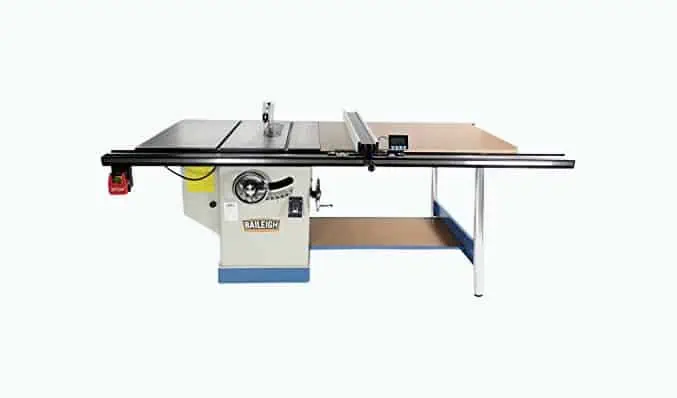
This Baileigh table saw has enough cutting power to slice through thousands of feet of board each day. Its durable all-steel build has a 52-inch right-side rip capacity that can accommodate large boards.
Its impressive cutting power is provided by a mighty 5-horsepower motor that spins at 3600 RPM. A vibration-reducing trunnion will make this saw more stable and help you cut more accurately, meaning it is suitable for professional use.
What We Like
Quality Table Design
The table itself is very smooth, so there won’t be any resistance when you slide wood across its surface. It is a perfectly even surface and won’t warp, even in very hot or cold climates. The criss-cross design at the bottom of the base ensures the entire unit will retain its shape. The surface is cast-iron and can be polished to keep its surface looking like new, even after prolonged use.
Easy Adjustment
This cabinet saw makes it easy to customize your cutting height and angle. A digital display for rip capacity means you will be able to cut accurate pieces each time.
It also has steel handwheels for precise adjustment of the blade’s height and miter angle. The rack and pinion mechanism allows you to move the blade up and down easily.
What We Don't Like
Short Warranty
Considering how expensive this saw is, its 12-month warranty is a little disappointing. Other high-end cabinet saws often have three or five-year warranties, which provide far more peace of mind.
Product Specs
| Weight | 700 pounds |
| Dimensions (inches) | 60 x 60 x 44 |
| Table size (inches) | 24.4 x 30.7 |
| Rip fence size (inches) | 52 |
| Motor | 5 HP |
| Blade size (inches) | 12 |
| Dust port size (inches) | 4 |
| Price | $$$$$ |
| Warranty | 1-year |
Our Ratings
User Experience
DeWALT DWE7491RS 10-Inch Table Saw
Best Cabinet Table Saw for Home Use
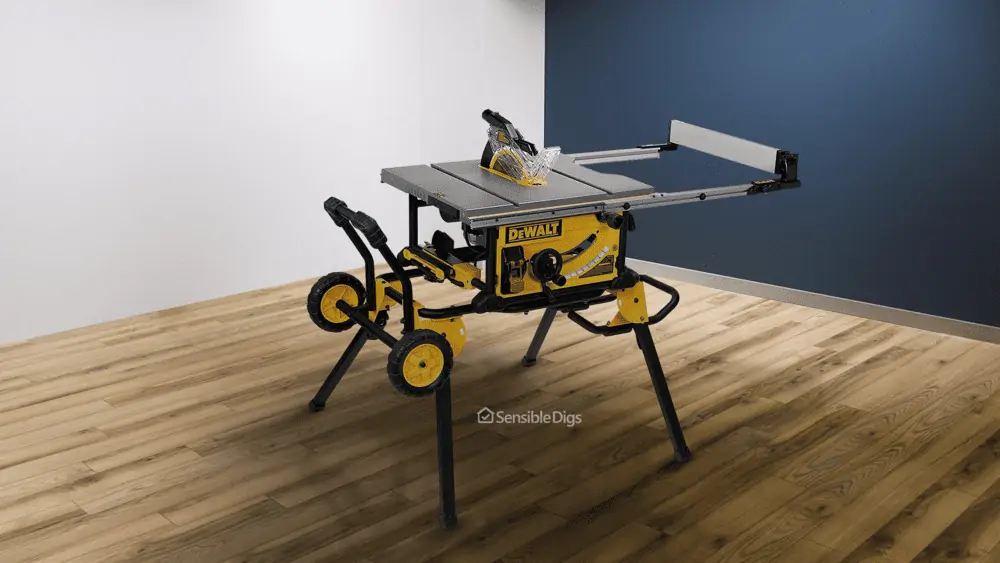
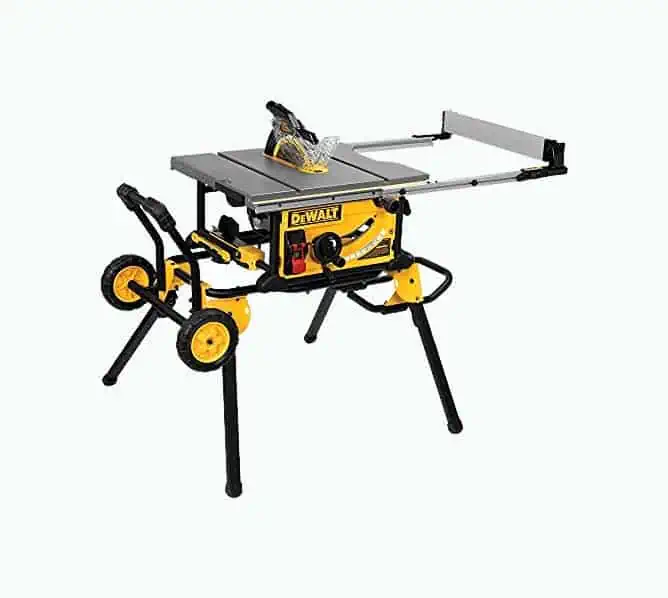
Unlike the larger cabinet saws we have looked at, this DeWALT table saw is relatively lightweight and easier to move. It also has a much smaller footprint, which makes it a great option for woodworking at home if you don’t have a big workshop.
Although this saw is small, it still cuts effectively. It has a 32.5-inch rip capacity and is powered by a 15-amp motor that will slice through thin sheets of material. It has a maximum cutting depth of 2.25 inches at a 45-degree angle, and 3.125 inches at 90 degrees.
What We Like
Smaller Footprint
This saw has a rolling stand that makes it easier to move while providing maximum support and stability. It also has a smaller footprint, making it an ideal choice for home workshops.
Rip Capacity
Despite its smaller size, it still has an impressive 32.5-inch rip capacity. If you are working on projects that require ripping lengths of plywood, this table saw will be up to the task.
Maneuverability
Unlike fixed cabinet table saws, this model has wheels that will allow you to reposition it with ease. This makes it suitable for working on job sites, or for simply rearranging your workshop if you don’t have much space.
Reasonable Price
Compared to larger, fixed cabinet table saws, this DeWALT model is reasonably affordable. This is even more pleasing because it doesn’t appear to have suffered any compromises to keep its price down.
What We Don't Like
Blade Vibration
Blade vibration is typically caused by a poorly engineered arbor and will affect the accuracy and smoothness of your cuts. Some users have also had issues where the arbor nut becomes loose, leading to the blade falling off.
Product Specs
| Weight | 110 pounds |
| Dimensions (inches) | 31 x 24.5 x 31 |
| Table size (inches) | 26.25 x 22 |
| Rip fence size (inches) | 32.5 |
| Motor | Not specified |
| Blade size (inches) | 10 |
| Dust port size (inches) | 2 |
| Price | $ |
| Warranty | 3 year limited |
Our Ratings
Personal Perspective
Powermatic 1791229K Table Saw
Best Budget Cabinet Table Saw
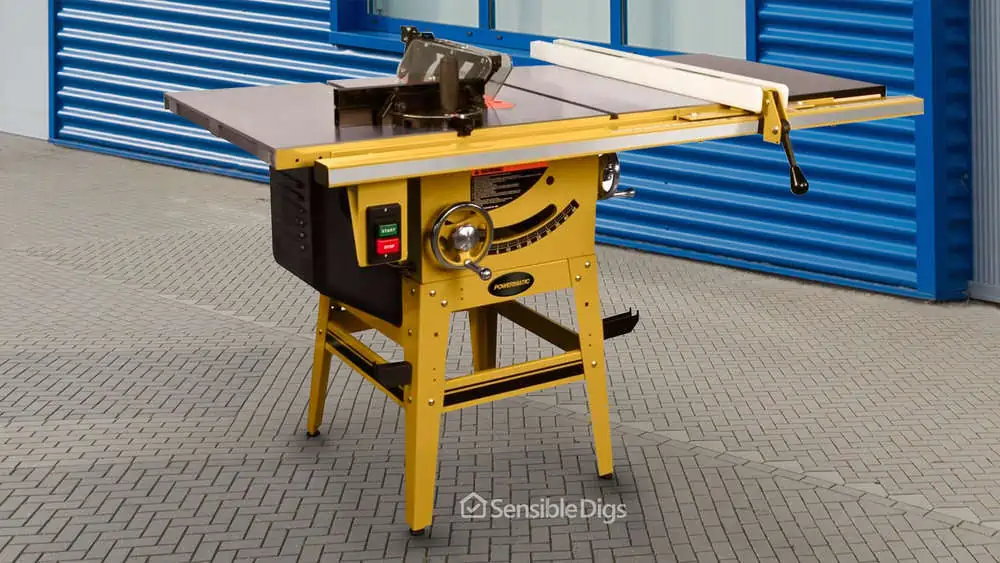
This Powermatic saw is a budget-friendly option, so its 1.75-horsepower motor won’t provide the same level of cutting ability. Even so, it is a good table saw that will allow you to cut thin sheets of material while spending less money.
It has a micro-adjusting miter gauge with an extension plate for increased cross-cutting capacity. It also has a quick-release blade guard and riving knife for toolless mounting and removal.
What We Like
Reasonable Price
This saw’s relatively low price is its main selling point. It isn’t cheap but, for a cabinet table saw, you will spend far less than if you buy a larger, more powerful unit.
Miter Gauge
The micro-adjusting miter gauge enables you to make super-accurate crosscuts. You can also use the extension to increase the size of your crosscuts.
What We Don't Like
Low Power
With a 1.75-horsepower motor, this is at the low end of cabinet saws. It will cut thin sheets of material but you might need to look elsewhere if you are buying a saw for professional use.
Build Quality Issues
With power tools, you usually get what you pay for. Powermatic has had to make some compromises with this saw’s build quality to keep it affordable.
Product Specs
| Weight | 367 pounds |
| Dimensions (inches) | 50 x 32 x 34 |
| Table size (inches) | Not stated |
| Rip fence size (inches) | 30 |
| Motor | 1.75 HP |
| Blade size (inches) | 10 |
| Dust port size (inches) | 4 |
| Price | $$ |
| Warranty | 5-year |
Our Ratings
Community Feedback
| Product | Best | Weight | Dimensions | Table size | Rip fence size | Motor | Blade size | Dust port size |
|---|---|---|---|---|---|---|---|---|
| Jet 708675PK XACTASAW Table Saw | Deluxe | 510 lbs | 86 x 36 x 38″ | 29 x 42″ | 50 | 3 HP | 10″ | 4″ |
| SawStop 10-Inch Pro Cabinet Saw | Overall | 449 lbs | 85.25 x 33 x 34″ | 20 x 27″ | 52 | 3 HP | 10″ | 4″ |
| Powermatic 1791001K Table Saw | Value For Money | 465 lbs | 36 x 27.5 x 63.75″ | 20 x 27″ | 50 | 1.75 HP | 10″ | 4″ |
| Grizzly Industrial G1023RLWX Table Saw | Professional | 623 lbs | 29.5 x 30.5 x 39.75″ | 27-40″ | 32 | 5 HP | 10″ | 4″ |
| Baileigh TS-1248P-52 | Heavy-Duty | 700 lbs | 60 x 60 x 44″ | 24.4 x 30.7″ | 52 | 5 HP | 12″ | 4″ |
| DeWALT DWE7491RS Table Saw | Home Use | 110 lbs | 31 x 24.5 x 31″ | 26.25 x 22″ | 32.5 | N/A | 10″ | 2″ |
| Powermatic 1791229K Table Saw | Budget Pick | 367 lbs | 50 x 32 x 34″ | N/A | 30 | 1.75 HP | 10″ | 4″ |
Choosing the Best Cabinet Table Saw
Table saws are very popular power tools, enabling their users to make smooth, precise cuts by moving the material through a fixed circular blade. Cabinet saws are elite table saws. They are large, sturdy, powerful, accurate, and reliable.
If you decide to buy one, you will have plenty of options to choose from but there are some key points that will help you narrow your search:

Cutting Power
A saw’s cutting power is determined by a combination of its motor strength and which blade you choose. However, without a powerful motor, you won’t be able to cut effectively, which blade you choose.
To cut pieces of wood that are 2 inches thick or less, a 1 to 2-horsepower motor should be sufficient. This is enough to tackle the majority of woodworking tasks. However, if you need to cut hardwood and other dense materials, you should consider a stronger 3-horsepower motor. This will ensure you have enough cutting power for any project.

Torque
Torque refers to the force with which something moves, rather than how quickly it moves. Cars are a good example of this; if an engine produces high horsepower but lacks torque, its wheels won’t turn quickly and that power will be wasted.
Torque essentially transfers energy to move an object, in this case, the saw’s blade. The harder the material, the more torque you will need to cut it effectively. Cabinet saws usually generate high torque, allowing them to cut harder materials at lower speeds.

Stability
Cabinet saws are designed to cut larger and heavier pieces of material than standard table saws. This means it is essential that they are stable to prevent the unit from tipping over if they have to carry an uneven distribution of weight.
Fortunately, cabinet saws units are usually very heavy, which helps them stay in place. How this weight is balanced is also important; a lighter saw that is well-balanced might have greater stability than a heavier unit that has less thought put into its design. Check user reviews to see if they mention a saw’s stability, whether it is in a positive or negative way.

Accuracy
A saw’s accuracy is heavily influenced by its power, torque, and stability. The more smoothly its blade spins, the more precise your cuts will be, however dense the material is.
There are some extra features that can improve a saw’s accuracy and overall performance. Anti-vibration belts reduce how much the blade shakes during use, which will make cuts more precise and make cutting quieter.

Safety
Table saws are among the most dangerous workshop power tools, due to their exposed blades and the fact you need to move material toward the blade. According to the Consumer Product Safety Commission (CPSC), more than 67,000 people are injured while using table saws annually (1). This includes more than 33,000 hospital visits.
It is critical that you use a table saw safely to minimize the risk of accidents. Make sure it has a large safety switch that is easy to reach and use in case of an emergency, as this could be the difference between a minor injury and a far more serious one.

Dust Collection
Cutting wood will inevitably release sawdust, potentially a very large amount if you need to cut a lot of wood. The Centers for Disease Control (CDC) classifies sawdust as a carcinogen, especially some types of man-made wood such as MDF, so it is important that you don’t inhale it.
You should always wear a mask but an effective dust collection system will keep your workshop cleaner and its air safer. Some models have a dust collection bag that hangs below the saw. This is less effective than an extraction system as they don’t suck dust out and fill up quickly.
Extraction ports are designed to connect a workshop vacuum to the saw and suck the sawdust away via a tube. This will remove the vast majority of sawdust, making it much safer to cut wood for longer.

Blade
Your saw should include a blade, which will vary in quality depending on the product you buy. However, it won’t be suitable for every project. You will have a seemingly endless list of saw blades to choose from to suit different tasks.
If you anticipate working with various materials and needing different blades, look for a saw that has a quick-change function. This will minimize delays when you switch blades for each task.

Size
Cabinet saws are robust units, and potentially much larger than you expect if you are used to working with standard table saws. Double-check your workshop measurements and consider where your saw will go, as you will need enough space to walk around it and maneuver the material you are cutting.

Price
If you are considering buying a new cabinet saw, you are likely someone who needs a table saw in a professional capacity or at least a serious woodworker who often needs to cut material precisely.
Cabinet table saws are expensive, potentially very expensive, so consider whether or not a model will make a significant difference to your workshop before buying it.
FAQs

Is It Worth Buying a Cabinet Table Saw?
Purchasing a cabinet table saw can be a great investment if you want accurate and precise cuts. The construction of these saws ensures they remain stable when making long rip cuts or even thin, delicate cuts.
For woodworking projects where the highest degree of accuracy is essential, cabinet table saws offer unmatched accuracy and durability.
However, since these saws are usually expensive and require lots of space to install and operate, it’s important to think about whether or not the cost and size are worth it for the intended project.
Before making a purchase, consider what types of projects you plan on using the saw for and ensure you get one with all the features you need.

What Should You Never Use a Cabinet Table Saw For?
Many cabinet table saws come with fences and blades that just can’t handle larger materials like beams or boards. Some models also lack the depth of cut adjustments, limiting the thicknesses they can work with.
While a cabinet table saw can provide many advantages for woodworking projects, it’s important to know what it can and cannot do to use it most effectively.

What Is the Difference Between a Contractor Saw and a Cabinet Saw?
Contractor and cabinet saws are two types of table saws commonly used for woodworking. The main difference between the two is size. Contractor saws are smaller than cabinet saws, making them more portable and easier to store in a workshop when not in use.
Cabinet saws are larger and more powerful, making them better suited for heavier-duty cutting, like long rip cuts. Additionally, contractor saws usually have fewer features than cabinet saws, such as a shrouded motor, dust collection ports, and larger rip capacity.
Ultimately, the type of saw you should purchase depends on the projects you plan on doing and your budget.