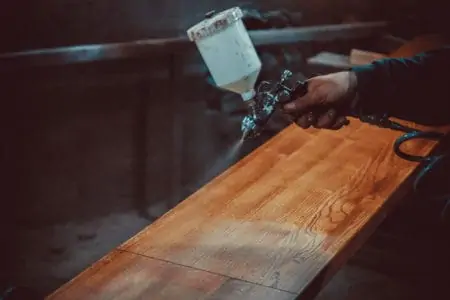
Few things transform a space like painting your kitchen cabinets. It can make a tired kitchen look new, but only if it’s done right. And you get the best results with a cabinet paint sprayer.
We examine 7 of the best paint sprayers for cabinets and rate them on performance, value, and usability.
- Takes paint directly from the tin
- Pumps paint without a thinner
- Adjustable pressure
- No-bleed gun and adjustable fan pattern
- 25-foot Hi-Flex hose
- Ergonomic handle for increased comfort
- Lightweight and affordable
- Sealed leak-free paint cup (paint at any angle)
- Adjustable fan to 11 inches maximum
- Perfect for low-pressure painting
- Easy to clean
- Additional tips and an adjustable flow switch
- Flow adjuster and pressure control dial
- Works with latex paints and stains
- 3 spray patterns
- Spare tips and flexliner bags
- VacuValve technology (spray in any direction)
- Can spray unthinned paint
- Sealed 1,200 ml paint cup
- Excellent price
- Complete kit
Review Methodology: At Sensible Digs, we take your painting needs seriously. Our hands-on experience and professional expertise allow us to evaluate products from a user’s perspective. We conduct thorough research, test, and review of each paint sprayer for cabinets, providing you with accurate data and facts. We assess performance, measure efficiency, and compare each product against industry benchmarks. Our analysis identifies key decision-making factors such as the design, ease of use, and durability. We track and score each product on these criteria, enabling us to recommend the best paint sprayer for your cabinet projects. Rest assured, our findings stem from first-hand experience and evidence, setting us apart in the realm of home improvement advice.
The Best Paint Sprayers for Cabinets of 2024
There are so many paint sprayers to choose from; it can be a challenge narrowing down the choices. We have scoured the internet to bring you the 7 top paint sprayers based on price, performance, and versatility.
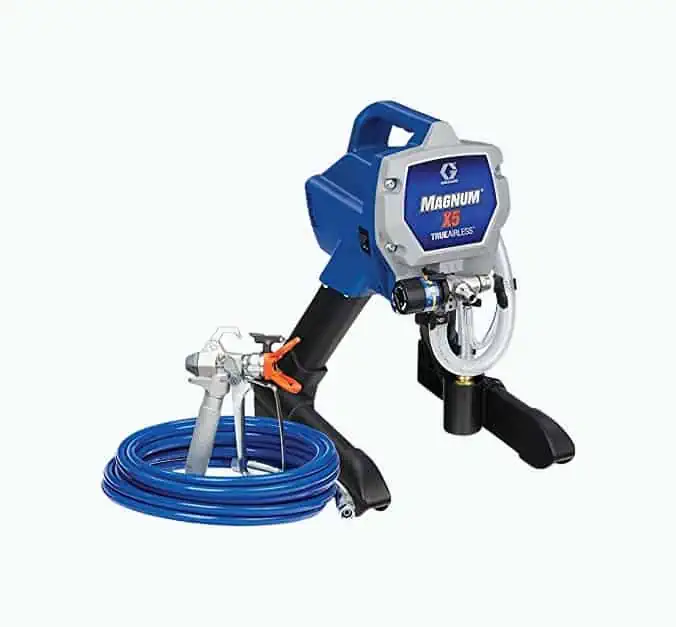
Graco Magnum 262800 X5 Stand Airless Paint Sprayer
Best Airless Paint Sprayer for Cabinets
This sprayer loves to work hard. Graco recommends spraying at least 125 gallons every year, so once you finish painting the kitchen cabinets, you can start on the fence and decking. It’s also easy to keep clean, thanks to a feature that allows you to connect it to the garden hose to flush it through.
You get adjustable pressure for better control and adaptability to different tasks and a powerful piston pump that lets you spray paint without thinners.
This model is equipped with a flexible hose that allows you to suck the paint straight from the can or pail, thanks to a powerful 0.27 GPM flow rate.
You can increase the sprayer’s reach with up to 75 feet of additional hose to maximize the reach, and it’s lightweight, compact, and gives you continuous runtime, thanks to the reversible 0.15-inch tip.
While this is not the most expensive paint sprayer you can buy, it is still costly. If you are looking for a sprayer for a one-off job, avoid this model. Plus, the largest recommended nozzle size is 0.15 inches.
Pros
- Takes the paint directly from the tin.
- A powerful piston pumps paint without a thinner.
- Adjustable pressure to cater to different tasks.
- Reversible nozzle for continuous spraying.
Cons
- The price will put some people off.
- You can’t use nozzles larger than 0.15 inches.
Product Specs
| Weight | 19 pounds |
| Dimensions | 14.5 x 12.75 x 19 inches |
| GPM | 0.27 |
| Power source | 110 V |
| Price | $$$$ |
| Warranty | 1-year |
Our Ratings
User Experience
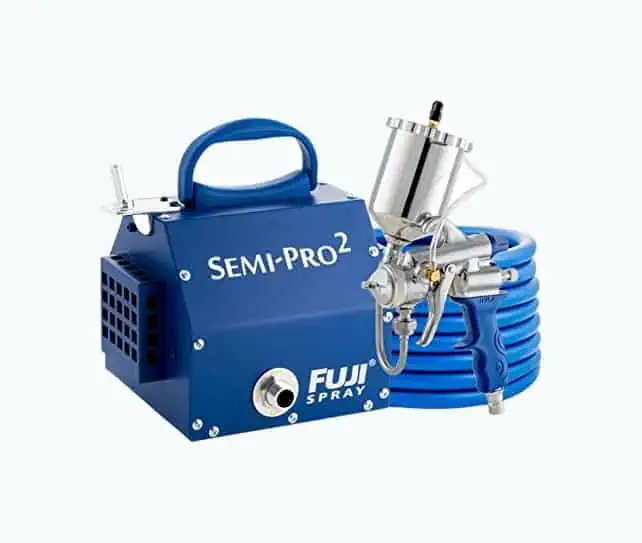
Fuji 2203G Semi-Pro 2 Gravity HVLP Spray System
Best Professional Paint Sprayer for Cabinets
The first thing to say about this Fuji paint sprayer is the cost. It might put casual users and DIY enthusiasts off. However, you do get a highly efficient spray gun with an unrivaled performance.
It has a no-bleed gun with an adjustable fan pattern for increased control, as well as a 400cc gravity cup. With better control of the fan, you get less wastage, which is always an advantage.
You can paint vertically, horizontally, and in circular motions, plus you can adjust 1-inch circular to 12-inch oval patterns easily.
While power is less important when painting your kitchen cabinets, it is useful when you want to tackle larger projects like fencing and decking. The 2-stage motor is 1,400 watts, and you get a 25-foot Hi-Flex hose.
Maintenance is a breeze thanks to stainless steel fluid passages to keep wear and tear to a minimum, especially when using solvent and waterborne paints. It also disassembles quickly for enhanced cleaning.
The ergonomically designed stay-cool handle reduces stress on your hands and wrists, and the guns are convertible from gravity-fed to bottom-fed to cater to different tasks.
The significant problem with this paint sprayer is the cost. It costs many times the price of other models. It’s also heavy, weighing over 25 pounds, so portability might be an issue.
Pros
- No-bleed gun and adjustable fan pattern.
- 25-foot Hi-Flex hose for extended reach.
- Stay-cool, ergonomic handle for increased comfort.
- Professional quality paint sprayer.
Cons
- Priced for professionals only.
- Weighs over 25 pounds, which might affect maneuverability.
Product Specs
| Weight | 25.1 pounds |
| Dimensions | 16 x 9.5 x 12.5 inches |
| GPM | HVLP system so not stated |
| Power | 120 V |
| Price | $$$$$ |
| Warranty | 2-year parts and labor |
Our Ratings
Personal Perspective
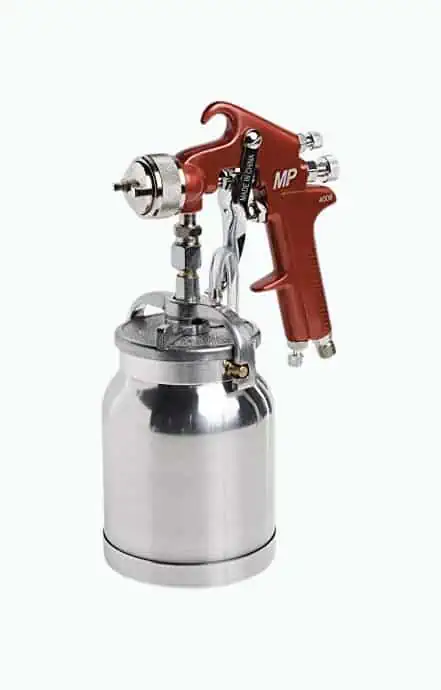
Astro Pneumatic 4008 Spray Gun and Cup
Best Pneumatic Paint Sprayer for Cabinets
The difference in price between this air-powered spray gun and the previous model is stark. You could buy this one several times over and still have spare change in your pocket.
This spray gun comes with an instruction manual for beginners, telling you how to set up the air supply, dial the adjustable fan size and flow rate, and a host of other useful things.
You can adjust the paint fan width to a maximum of 11 inches from an 8-inch distance, speeding up tasks, and thanks to the metal sealed paint cup, you can hold the gun at any angle without it leaking.
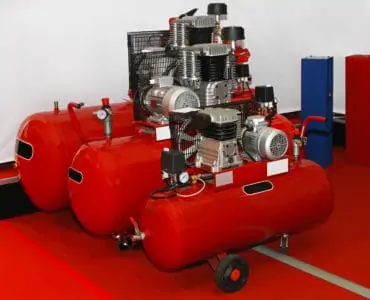
It’s time to state the obvious because this air tool requires compressed air for power. Any money you save purchasing this sprayer is wiped out with the cost of an air compressor unless you already own one. This one requires a 7 to 12 cubic feet per minute (CFM), 3 horsepower compressor.
Using this sprayer is noisy, thanks to the compressor, and you are also restricted because the air compressor anchors you, making everything less maneuverable.
Pros
- Lightweight and affordable.
- Sealed leak-free paint cup ensures painting at any angle.
- Adjustable fan to 11 inches maximum from an 8-inch distance.
- High-power gun, ideal for fences and decks.
Cons
- Noisy with the air compressor.
- Requires an air compressor at additional cost.
Product Specs
| Weight | 2.5 pounds |
| Dimensions | 12 x 7.25 x 4.25 inches |
| GPM | 30 |
| Power | 7 to 12 CFM |
| Price | $$ |
| Warranty | 1-year |
Our Ratings
Community Feedback
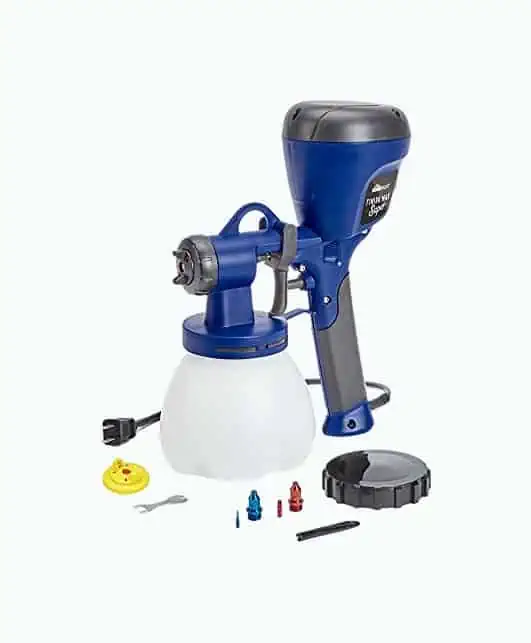
HomeRight C800971.A Super Finish HVLP Paint Sprayer
Best HVLP Paint Sprayer for Cabinets
This is a high-volume, low-pressure system, so it lends itself to smaller jobs like painting kitchen cabinets and table-tops, but you can still use it to respray fencing and other applications.
It comes with 3 different tips, a material flow controller, and round, horizontal and vertical spray patterns. As you might expect for an HVLP paint sprayer, it has a weaker motor with 450 watts of power, but that’s plenty for completing a kitchen cabinet respray. You also get between 20 and 50 GPM depending on the applications.
This model is easy to clean, depending on what type of paint you use. For water-based, all you need is soap and water and for oil-based paints, try mineral spirits. It’s also lightweight and easy to control.
The only negative with this paint sprayer is the reservoir size. At 39 fluid ounces, you will have to stop every couple of meters to refill the chamber. It also struggles to spray unthinned paints, thanks to the low pressure.
But the upside is it produces an accurate spray of paint, and you get a flat and streak-free finish, which is ideal for painting kitchen cabinets.
Pros
- Perfect for low-pressure painting like cabinets and furniture.
- Easy to clean using water or mineral spirits.
- Comes with additional tips and an adjustable flow switch.
- Lightweight and easy to control.
Cons
- Low wattage motor restricts application size.
- A small paint reservoir means constant refill interruptions.
Product Specs
| Weight | 3.3 pounds |
| Dimensions | 9.5 x 6 x 12.5 inches |
| GPM | 20 to 50 depending on application |
| Power | 120 V |
| Price | $$$ |
| Warranty | 2-year limited |
Our Ratings
First-Hand Impression
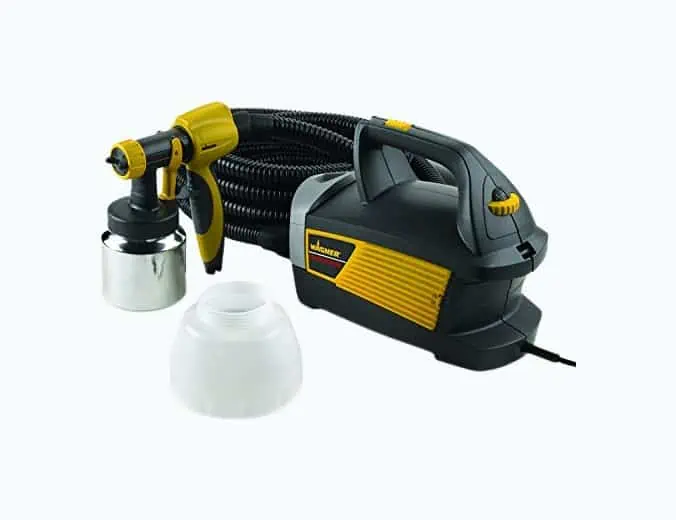
Wagner Spraytech 0518080 Control Paint Sprayer
Best Home Paint Sprayer for Cabinets
When you are painting kitchen cabinets, you need the neatest paint finish possible. That’s why HVLP spray guns are perfect for detailed work. This Wagner Spraytech uses high volume and low pressure to atomize paint, spreading fine particles to cover more evenly to give a smoother finish.
Choose customized settings for different applications using the flow adjuster and the pressure control dial to cater to various projects. It covers kitchen cabinets, furniture, table-tops, decks, and a host of other items.
You get the freedom to move unrestricted thanks to the 20-foot hose that attaches to the base. The powerful 2-stage turbine makes it possible to use this sprayer with latex paints and stains as long as thinner is used.
You get round, vertical, and horizontal spray patterns, and you can choose between a gravity-fed 1.5-quart cup and a metal 1-quart bottom-fed cup. The flow rate is 13 ounces per minute, which is less than some models, and you will spend quite a lot of time stopping to refill the cups.
Pros
- Flow adjuster and pressure control dial.
- Works with latex paints and stains with the right thinner.
- 3 spray patterns from horizontal, vertical, and round.
- 20-foot hose for longer reach.
Cons
- Small cup capacity means frequent refills.
- Slower flow rate at 13 ounces per minute.
Product Specs
| Weight | 11.18 pounds |
| Dimensions | 18.5 x 12 x 12 inches |
| GPM | 13 ounces per minute |
| Power | 110 V |
| Price | $$$ |
| Warranty | 1-year |
Our Ratings
User Experience
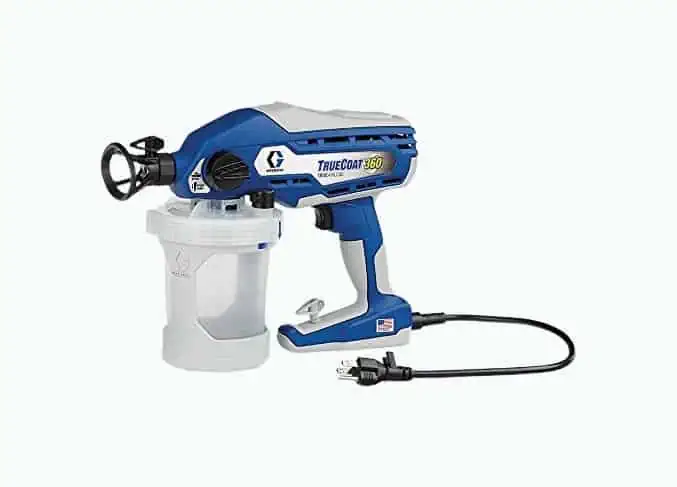
Graco 16Y385 TrueCoat 360 Paint Sprayer
Best Small Paint Sprayer for Cabinets
This Graco model has a reversible tip for continuous spraying. It stops the gun from becoming clogged with paint. The stainless steel piston enables you to spray unthinned paint, which means you can put thicker coats on your kitchen cabinets.
This model uses VacuValve technology to create an airtight system, which means you can spray in any direction, including upside down. It’s easy to load, control, and keep clean, and it gets the task done in one spray application, thanks to the 12 GPM flow rate.
The paint goes into a FlexLiner bag instead of a cup. You can swap between colors easily and even recycle when you are done. Graco recommends you spray a maximum of 25 gallons every year, which is enough to repaint your kitchen several times over.
You also get two 0.15-inch reversible tips, a 4-inch narrow and a 12-inch wider tip, plus two 32-oz FlexLiner bags.
Pros
- Comes with spare tips and FlexLiner bags.
- VacuValve technology enables you to spray in any direction.
- Stainless steel piston can spray unthinned paint.
- 12 GPM flow rate gets the job done faster.
Cons
- Uses bags rather than a dedicated cup.
Product Specs
| Weight | 3.5 pounds |
| Dimensions | 5.25 x 12.5 x 9.75 inches |
| GPM | 12 |
| Power | 120 V |
| Price | $$$ |
| Warranty | 1-year limited |
Our Ratings
Personal Perspective
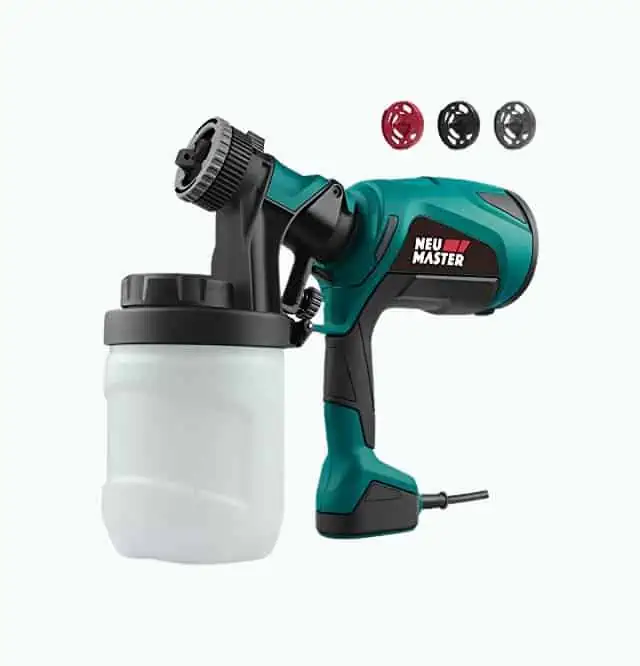
Neu Master NSG0070 Electric Spray Gun
Best Budget Paint Sprayer for Cabinets
This is the budget model, but that doesn’t mean it isn’t worthy of your attention. It is a high-volume low-pressure paint sprayer, so it throws a fine mist to give your kitchen cabinets the smoothest finish. It’s also easy to control, and overspray is kept to a minimum.
The sealed paint cup holds 1,200 ml, and it even has a cap to make refilling it a lot simpler than removing the entire reservoir. You get the usual horizontal, vertical, and circular spray patterns, plus you can adjust the paint flow for different applications.
It covers 64 square feet from one full paint cup; it has a 6-ft 6-inch power cable and an ergonomically designed soft-grip handle for reduced hand and wrist strain.
The motor is 500 watts, so it isn’t the most powerful sprayer, but when it comes to kitchen cabinets, that is a bonus because you want to substitute power for accuracy. You also need to thin the paint as it cannot spray paint straight out of the can.
Pros
- Sealed 1,200 ml paint cup with a refill cap.
- Excellent price compared to other models.
- Comes as a complete kit with spare nozzles and cleaning tools.
- Ergonomically designed soft-grip handle for reduced fatigue.
Cons
- Feels cheaply made to cut costs.
- The paint needs to be thinned to get it to spray.
Product Specs
| Weight | 4.22 pounds |
| Dimensions | 12.44 x 12.05 x 5.28 inches |
| GPM | 0.24 |
| Power | 120 V |
| Price | $ |
| Warranty | 2-year |
Our Ratings
Community Feedback
| Product | Best | Weight | Dimensions | GPM | Power source | Price | Warranty |
|---|---|---|---|---|---|---|---|
| Graco Magnum 262800 X5 Stand Airless Paint Sprayer | Best Airless | 19 lbs | 14.5″ x 12.75″ x 19″ | 0.27 | 110 V | $$$$ | 1-year |
| Fuji 2203G Semi-Pro 2 Gravity HVLP Spray System | Best Professional | 25.1 lbs | 16″ x 9.5″ x 12.5″ | HVLP system so not stated | 120 V | $$$$$ | 2-year parts & labor |
| Astro Pneumatic 4008 Spray Gun and Cup | Best Pneumatic | 2.5 lbs | 12″ x 7.25″ x 4.25″ | 30 | 7 – 12 CFM | $$ | 1-year |
| HomeRight C800971.A Super Finish HVLP Paint Sprayer | Best HVLP | 3.3 lbs | 9.5″ x 6″ x 12.5″ | 20 – 50 depending on application | 120 V | $$$ | 2-year limited |
| Wagner Spraytech 0518080 Control Paint Sprayer | Best Home | 11.18 lbs | 18.5″ x 12″ x 12″ | 13 ounces p/m | 110 V | $$$ | 1-year |
| Graco 16Y385 TrueCoat 360 Paint Sprayer | Best Small | 3.5 lbs | 5.25″ x 12.5″ x 9.75″ | 12 | 120 V | $$$ | 1-year limited |
| Neu Master NSG0070 Electric Spray Gun | Best Budget | 4.22 lbs | 12.44″ x 12.05″ x 5.28″ | 0.24 | 120 V | $ | 2-year |
Types of Paint Sprayer for Cabinets
Essentially there are 3 types of paint sprayer; airless, pneumatic, and high-volume low-pressure models, but what are the differences between them, and which is the best for painting kitchen cabinets?
Compressed Air (Pneumatic)
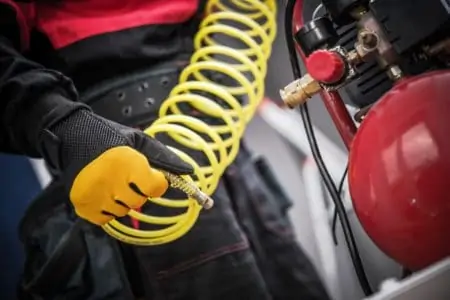
Pneumatic paint sprayers are the most commonly used variety. They get their power from an air compressor, which adds extra cost to your project if you don’t own one already. The spray gun attaches to the pressurized tank with a high-pressure hose, and when you depress the trigger, it releases air from the tank.
The beauty of these sprayers is they apply the paint in thin coats, enabling you to build up the layers for a neat finish. They are ideal for respraying kitchen cabinets. The key to getting the desired result is control. These paint sprayers are notorious for overspray, so attaching different nozzles reduces this considerably.
It can take a little practice, but once you master it, you’ll wonder why you didn’t use a paint sprayer before.
High-Volume Low-Pressure (HVLP)
HVLP sprayers are more affordable than most other varieties. They are also easier to control because they utilize a small turbine within the gun that compresses the air to apply the paint.
They are great tools for general paint repair tasks around the home but remember that because they are low output, they are best used for small and detailed painting jobs, like revamping your kitchen cabinets.
Because of the low output, there is minimal overspray, and the paint goes on in small amounts, making them easier to control. Some models struggle with thicker paint, so you might have to use a thinner to dilute the mixture.
HVLP spray guns don’t use nozzles but instead employ adjustable air caps to control flow, spray patterns, and the thickness of the layers. HVLP guns may not achieve the super smooth paint finish of compressed air sprayers, but they still produce impressive results.
Airless
Airless paint sprayers use a powerful electric motor to apply the color. They pump the paint at 3,000 PSI (pounds per square inch) along a hose and out of the tip to produce a fine mist. The advantage of these machines is the paint goes on in thicker layers, reducing the number of coats you need to apply.
You can adjust the pattern of the spray by changing the tips, just like air pressure sprayers. Thanks to the amount of power displayed by these sprayers, you get a lot of overspray, although some of this can be controlled by using different nozzles.
It makes this sprayer the perfect tool for large jobs like fence painting and decking. While these tools are not the ideal choice for kitchen cabinets, you can mitigate some inaccuracy with the spray by using a 311-size nozzle and allowing a 12-inch buffer between the sprayer and the cabinet.
How To Choose the Best Paint Sprayer for Cabinets
You’re about to start painting the kitchen cabinets, but what should you be considering when choosing the right spray gun? We run through some of the basics.

Tip Size
The size of the tip determines how the paint applies to the surface of the cabinet. Unlike airless models, conventional paint sprayers use interchangeable nozzles to achieve different results.
The tip size determines how much paint is applied and the pattern of the spray. The right tip can be the difference between a professional finish and a messy job. They also help to keep the paint from clogging the sprayer.
Tips are graded in three digits. The first number, multiplied by two, tells you how wide the spray is from a distance of 12 inches. The second number and third numbers determine the size of the nozzle hole to thousands of an inch.
A 425 tip will apply a fan of 8 inches from a 12-inch distance with a nozzle opening of 25 thousands of an inch.

Project Size
You should choose the type of gun to match the size of the project. If you are covering a lot of ground, like painting a fence or decking, you need a pressurized sprayer or an airless model. For smaller and more intricate work like painting kitchen cabinets, an HVLP gun should do the job just fine.
Choosing a gun that’s too powerful for the task means you get a messy work area, paint wastage, and an irregular finish.

Type of Power Source
Paint sprayers come in two main power sources; electric and compressed air. But which is the right one for your project? There are pros and cons to both.
Compressed air sprayers are easier to control, and you can adjust the release of air to fine-tune how the paint applies. Air sprayers are also easier to clean because the air pushes the paint through the supply lines, clearing the pipes as it moves. Electric models don’t have this advantage because when the reservoir empties, the pump stops, and the paint sits inside the spray gun.
The transfer rate for air sprayers outperforms electric pump models. Pneumatic sprayers transfer 90 percent of the paint on the surface of your project compared to 50 percent for electric pumps. This is important because it makes a difference in the amount of color you waste.

Power Capacity
The power your paint sprayer produces makes a significant difference to the amount of paint it delivers. High-powered sprayers coat surfaces more rapidly, so if you are painting a fence or a deck, it gets the job done faster.
Having too much power can also be a disadvantage when painting kitchen cabinets. Most electric paint sprayers are rated between 450 and 800 watts, and most pneumatic varieties operate between 26 and 29 PSI.

Adjustable Pressure
Having the ability to adjust the pressure on the sprayer makes it easier to get a smooth finish. Too much pressure and you get tails and fingers of paint, and too little pressure and you get excessive overspray and misting.
Adjustable pressure also helps you apply paint with different viscosity.

Reservoir Capacity
The amount of paint the cup holds determines how much downtime you have when you need to refill. Most HVLP guns hold 1-quart, while pneumatic versions typically hold 30 ounces.
Airless sprayers have the highest capacity because they pull the paint straight from the tin or the pail.
Tips for Paint Spraying Cabinets
Label Each Panel
Kitchen door panels look the same with all the door furniture removed, so labeling them as you remove them allows you to put them back in the same order.
Deep Clean
Okay, so this might not be a painting tip, but it is a wise move nonetheless. While the doors are removed and the cupboards cleared, get inside and give each cabinet a thorough clean with detergent.
Be Bold
Now you have the chance to get the kitchen you always dreamed about. Most people think kitchens should be white, but with all the colors at your disposal, tap into your wild side and choose something less obvious.
Paint Inside
If you have glass-fronted cabinet doors, remember to paint the wood inside the same color as the outside. Even if the glass is frosted, the difference in shades will shine through.
Go White
If you want the cleanest possible look, white or cream is pretty hard to beat. It is a classic look that opens up the kitchen space and reflects natural light. You could even opt for white worktops to complete the design.
FAQs

Is It Better to Spray or Brush Paint Kitchen Cabinets?
You get a smoother result with a paint sprayer, and it coats faster and dries quicker. The downside is overspray, and you have to apply the paint in thinner layers, which generally means more coats.
Brushing on the paint is better for detailed work, but it takes longer, and you risk brush lines, affecting the quality of the overall finish.

What Tip Should I Use to Spray Cabinets?
The best tip to use when spraying cabinets is a 311 size. It gives you a 6-inch fan, which is ideal for smaller projects and increased detail.

How Much Does It Cost to Paint a Kitchen Cabinet?
You should expect to pay between $350 to $1,050, depending on where you live and the demand in that area. A decorator in New York is likely to be more expensive than one in Connecticut.
The average cost comes in at around $700.