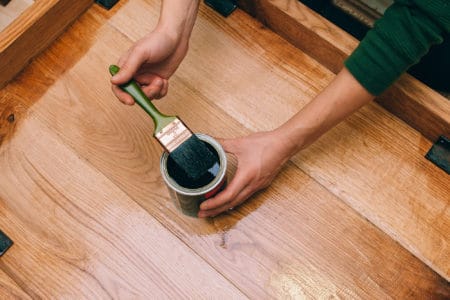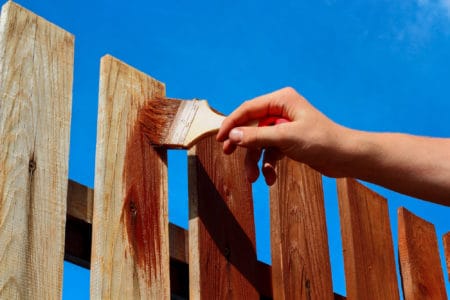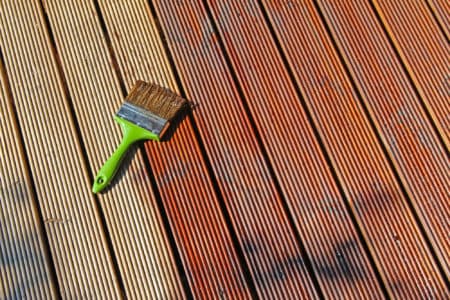
If you care about the quality of your wood grain, a semi-transparent deck stain is a perfect choice. It penetrates the wood, allowing the grain to shine through. Protecting your wooden decks is an ongoing process, but which type of stain is the best?
We spent hours reviewing the best semi-transparent deck stains, rating them on customer satisfaction, value for money, and ease of application to bring you our definitive list.
- Low VOC, so reduced health impact
- Trans-oxide pigments for increased UV protection
- One coat and your wooden deck is protected
- Ideal for boats
- Withstands salt water
- Works well on other fine woods
- Great price compared to other similar products
- 50 grams per liter VOC rating
- Stain and sealer in one
- Penetrates deep into pressure-treated wood
- Lasts up to 4 years on decks
- Withstands UV rays and repels mildew
- UV resistant
- Various color choices
- Better for the environment
- Easy to apply with spray nozzle
- No cleanup or mess
- It won’t fade or yellow with UV damage
- Trans-oxide pigments against UV rays
- Goes on with a brush, roller, or spray
- Penetrates deep into the wood
Review Methodology: At Sensible Digs, we know that finding the best semi-transparent deck stains can feel like a daunting task. Our team of experts meticulously analyzes, measures, and tests each product, using our hands-on experience and professional knowledge to provide unbiased, data-driven results. We evaluate each stain from a user’s perspective, assessing key criteria like durability, ease of application, color richness, and weather resistance. We then rank and compare them, explaining what sets our top picks apart from other stains in the market. Our findings are based on detailed research, offering first-hand evidence to help you make an informed decision. Trust in our rigorous review process and expert evaluations to guide you to the perfect semi-transparent deck stain for your needs.
The Best Semi-Transparent Deck Stains of 2024
Here are our top 7 semi-transparent deck stains, based on customer opinion, value, and ease of application.
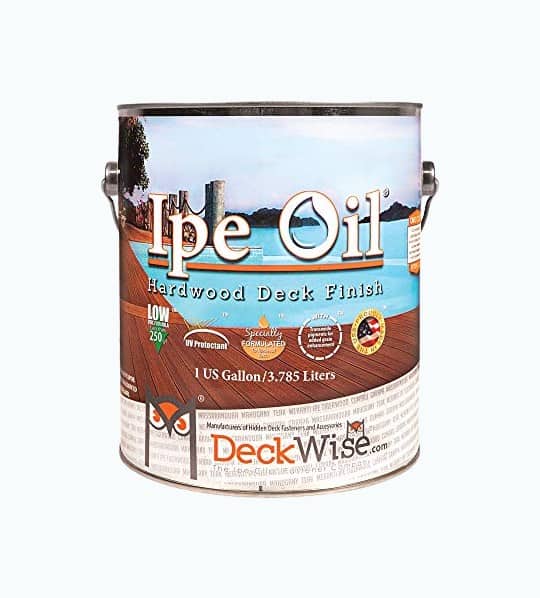
DeckWise Ipe Oil Hardwood Deck Stain
Best Oil-Based Semi-Transparent Deck Stain
The first thing to note is that you cannot buy this deck stain in California because it is oil-based and contains harmful chemicals.
However, it is excellent for all exterior hardwood and thermal wood surfaces like decks, fencing, and outdoor furniture. The trans-oxide pigments offer improved UV protection, helping to dissipate the light and absorb the hazardous UV radiation.
This is a low VOC product, minimizing odors and unhealthy side effects, plus it penetrates deep to stop mold and mildew growth. Because this is a one-coat stain, it is super convenient and gets the job done faster.
It comes in a 1-gallon can, giving up to 250 square feet of coverage, and you can brush, roll, and spray this solution on with an appropriate thinner.
Pros
- Low VOC, so it reduces the impact on your health.
- Includes trans-oxide pigments for increased UV protection.
- One coat and your wooden deck is protected.
- Can be sprayed, brushed, and rolled on.
Cons
- Not available in California and other states.
Product Specs
| Quantity | 1-gallon |
| Type | Oil-based |
| Coverage | 250 square feet |
| Number of coats | 1 |
| Drying time | 24 hours |
| Price | $$$ |
Our Ratings
User Experience
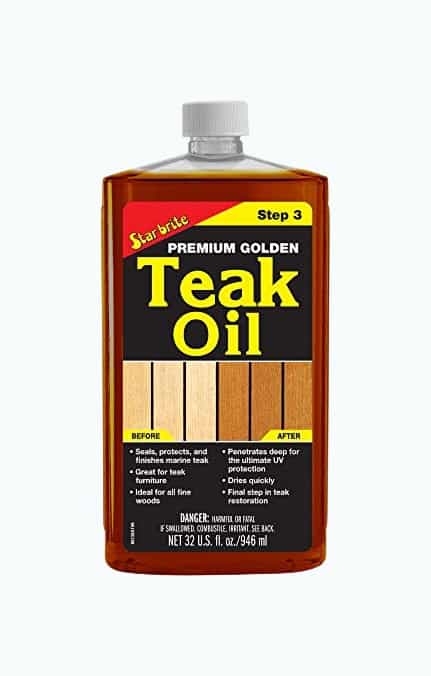
Star Brite Premium Teak Oil
Best Marine-Grade Semi-Transparent Deck Stain
If you own a boat, you will know the damage UV and weathering can do to your teak and other wooden decks. Saltwater is another factor to consider when on the oceans. It gets everywhere and has a caustic effect, rubbing the life out of your wood.
This product has Tung oil polymers to provide the maximum protection for teak and other woods. It also contains UV absorbers to deflect the harmful UV rays that fade and crack wooden surfaces after prolonged exposure.
This teak oil comes in a 32 fluid-ounce bottle, so it is a little on the small side for coverage. You get about 100 square feet. And because it’s a boat stain, you pay more for the privilege. You need 4 bottles of this stain to equal 1-gallon of the DeckWise Ipe, which means you will spend over $100.
However, you do get a lifespan that’s 4 to 6 times that of other teak oils. Just remember that when you apply this oil, it is not kind to marine life, and while the company states it dries fast, they don’t tell how long it actually takes.
Pros
- Repels harmful UV rays, which is ideal for boats.
- Withstands salt water, keeping your teak deck looking good.
- Works well on other fine woods.
- Lasts 4 to 6 times longer than comparable teak oils.
Cons
- Expensive compared to other products.
- Harmful to the marine environment.
Product Specs
| Quantity | 32 fluid ounces |
| Type | Oil-based |
| Coverage | 100 square feet |
| Number of coats | 1 |
| Drying time | Not stated |
| Price | $$$$$ |
Our Ratings
Personal Perspective
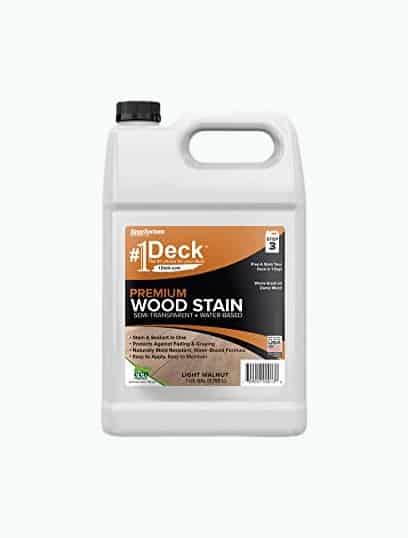
#1 Deck Premium Wood Stain and Sealer
Best Semi-Transparent Deck Stain and Sealer
If we had a budget category, this deck stain would be a great candidate. It costs a fraction of the marine-grade stain, and it even works on damp wood. It is a stain and sealer in one, so while it enhances your wood with a semi-transparent color, it also forms a protective seal on the surface of the wood.
This is a versatile product, and you can use it on almost any type of wood, including pressure-treated deck boards; plus, it has a low 50 grams per liter VOC rating because it is a water-based formula.
It’s also great for the planet because it cleans up with soap and water. It comes in 5 semi-transparent colors, and it dries to a matte finish.
The only downside is you get 100 square feet of coverage from a 1-gallon can, which is quite a lot less than other comparable products. When you compare that to the 32-ounce Star Brite, you get 4 times less coverage.
Pros
- Great price compared to other similar products.
- 50 grams per liter VOC rating, so better for your health.
- Stain and sealer in one, saving you time and money.
- Comes in 5 semi-transparent colors.
Cons
- You only get coverage of 100 square feet per gallon.
Product Specs
| Quantity | 1-gallon |
| Type | Water-based |
| Coverage | 100 square feet |
| Number of coats | 1 |
| Drying time | Not stated |
| Price | $$ |
Our Ratings
Community Feedback
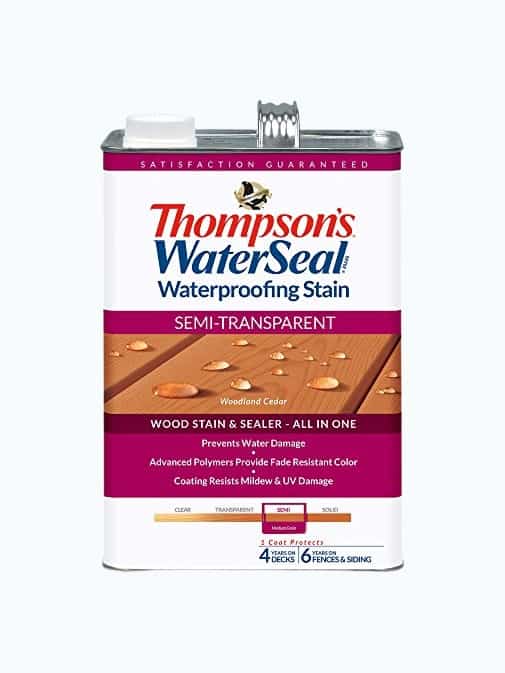
Thompson's Waterseal Semi-Transparent Wood Stain
Best Semi-Transparent Deck Stain for Pressure Treated Wood
We chose this Thompson’s Waterseal wood stain because it penetrates deep into the pressure-treated wood rather than forming a seal on the surface. Surface top coats don’t adhere well to pressure-treated wood because it is already impregnated with preserving chemicals.
So, if you combine the effects of the wood treatment and the 4 years of protection from this Thompson’s, it could keep your deck looking good for years.
You get advanced polymers that decrease fading and withstands UV damage, plus you can apply this stain to damp and dry wood. It even resists mold and mildew growth. But where this stain really excels is waterproofing. It exceeds the industry-standard ASTM D-4446 for waterproofing wood.
It only needs one coat to start protecting, and it lasts up to 6 years if you use it on fences and siding.
According to some customers, the only negative is the color dries with an orange hue, discoloring their woodwork.
Pros
- Penetrates deep into pressure-treated wood for increased protection.
- Lasts up to 4 years on decks without peeling.
- Withstands UV rays and repels mildew.
- Protects after just one coat to get the job done.
Cons
- Some say it dries a strange shade of orange.
Product Specs
| Quantity | 1-gallon |
| Type | Water-based |
| Coverage | Not stated |
| Number of coats | 1 |
| Drying time | 30 to 60 minutes |
| Price | $$ |
Our Ratings
First-Hand Impression
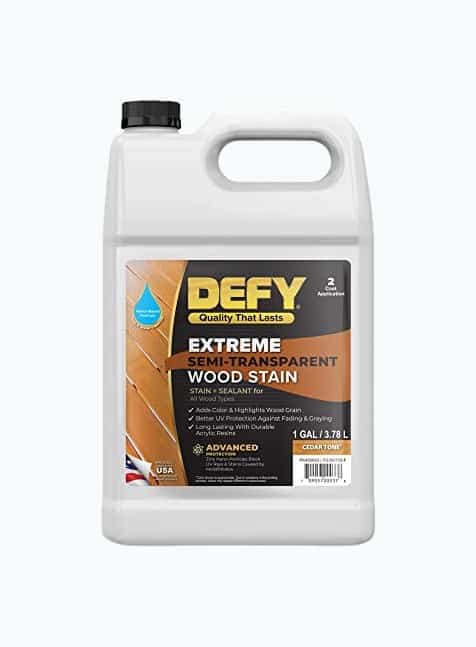
Defy Extreme Semi-Transparent Exterior Wood Stain
Best Water-Based Semi-Transparent Deck Stain
This Defy water-based semi-transparent deck sealer is a class act. It is UV resistant with its zinc nano particle technology, so you know it will last the season.
Water-based stains are kinder to the environment because they are low VOC and wash clean with soap and water. There are no solvents in the formula that leak into the ecosystem and poison the wildlife.
While this is a budget option, it does take a lot of prep work to get your deck ready to stain. You have to let the deck dry for 24 hours, then lightly sand and remove every trace of the sawdust before applying.
It works better on new and moderately weathered and unsealed woodwork rather than old faded decks. However, for the price, you could overlook that.
Pros
- UV-resistant.
- Various color choices.
- Better for the environment thanks to the water-based formula.
Cons
- Requires a lot of preparation work before applying.
- Works better on new and moderately weathered wood.
Product Specs
| Quantity | 1-gallon |
| Type | Water-based |
| Coverage | Not specified |
| Number of coats | 2 |
| Drying time | Not specified |
| Price | $$ |
Our Ratings
User Experience
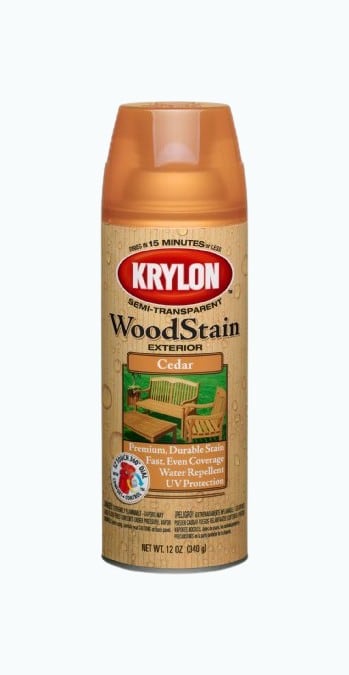
Krylon Exterior Semi-Transparent Wood Stain
Best Semi-Transparent Spray Deck Stain
Spray deck stain is the ultimate convenience. Pop off the lid, shake the can, and press the spray button. There is no cleanup or mess, and storage is easy.
This Krylon spray comes in 12-ounce cans, so you do substitute coverage for convenience, as you will only complete small jobs with this can size. It’s more of a touch-up remedy for your deck.
Where it excels is in UV protection. It won’t fade or yellow, and it coats in even layers thanks to the easy application.
Drying time is quick, and you also get maximum water resistance to keep your deck looking its best for the year. Because it is an oil-based stain, it soaks into the wood and protects from within.
However, it is worse for the environment compared to water-based products, and you get higher VOCs to deal with, which might irritate your nose and throat.
There’s also the price to worry about. It only costs a fraction of the price compared to other larger containers, but you will need many spray cans to complete a full deck fix-up. Plus, the spray applicator is less accurate than a brush, so you might get higher wastage and overspray.
Pros
- Easy to apply with the spray nozzle.
- No cleanup or mess and easy to store away.
- It won’t fade or yellow with UV damage.
- Protects the wood from within, thanks to deep penetration.
Cons
- The small can is better for touch-up tasks.
- Spraying is less accurate, causing higher wastage.
Product Specs
| Quantity | 12 ounces |
| Type | Oil-based |
| Coverage | Not stated |
| Number of coats | 2 |
| Drying time | 24 hours |
| Price | $$ |
Our Ratings
Personal Perspective
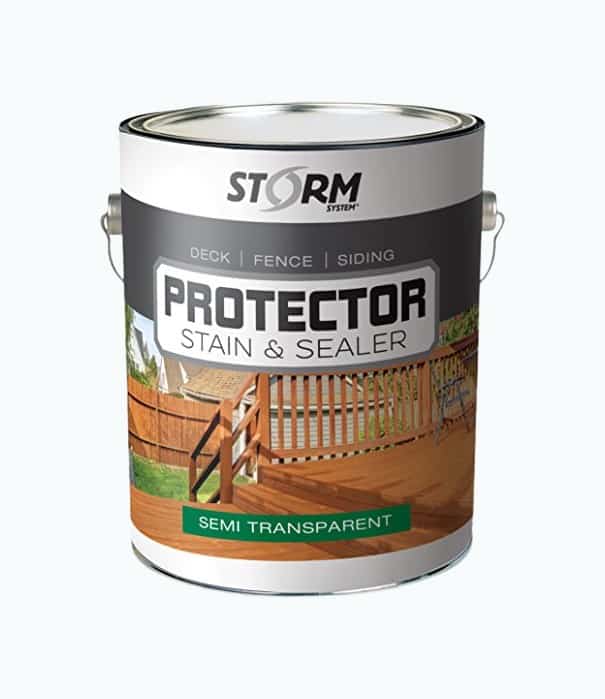
Storm System Penetrating Sealer and Stain
Best Semi-Transparent Deck Stain for Cedar
This Storm System deck stain is not only great for cedarwood, but it is also effective on mahogany, pine, redwood, and just about any other type of wood you can mention. It is oil-based and a stain and sealer in one.
It has a lap-free application, and you can put it on using a brush, roller, or sprayer if you dilute the formula with thinner. Because it penetrates deep into the wood, it is ideal for pressure-treated wood too. And it only takes 24 hours to dry between coats.
The UV protection comes from the trans-oxide pigments that deflect the sun and release the UV rays as heat. This 1-gallon can have a spread rate of 125 to 175 square feet on smooth surfaces and 100 to 150 square feet on porous surfaces.
Much like the KILZ, this stain takes a lot of prep work, including drying, sanding, treating the wood with one of their branded cleaners, and applying the stain.
Pros
- Trans-oxide pigments protect against harmful UV rays.
- Goes on with a brush, roller, or spray.
- Maximum 175 square feet of coverage on smooth surfaces.
- Penetrates deep into the wood to protect from within.
Cons
- Requires a lot of preparation work before applying the stain.
Product Specs
| Quantity | 1-gallon |
| Type | Oil-based |
| Coverage | 125 to 175 sq ft smooth and 100 to 150 sq ft porous |
| Number of coats | 2 |
| Drying time | 24 hours |
| Price | $$ |
Our Ratings
Community Feedback
| Product | Best | Quantity | Type | Coverage | Number of coats | Drying time | Price |
|---|---|---|---|---|---|---|---|
| DeckWise Ipe Oil | Best Oil-Based | 1-gallon | Oil-based | 250 square feet | 1 | 24 hours | $$$ |
| Star Brite Premium Oil | Best Marine-Grade | 32 fluid ounces | Oil-based | 100 square feet | 1 | Not stated | $$$$$ |
| #1 Deck Premium | Best Deck Stain and Sealer | 1-gallon | Water-based | 100 square feet | 1 | Not stated | $$ |
| Thompson’s Waterseal | Best for Pressure Treated Wood | 1-gallon | Water-based | Not stated | 1 | 30 – 60 minutes | $$ |
| Defy Extreme | Best Water-Based | 1-gallon | Water-based | N/A | 2 | N/A | $$ |
| Krylon Exterior | Best Spray | 12 ounces | Oil-based | Not stated | 2 | 24 hours | $$ |
| Storm System Sealer | Best for Cedar | 1-gallon | Oil-based | 125 – 175 sq ft smooth & 100 to 150 sq ft porous | 2 | 24 hours | $$ |
Transparent vs. Semi-Transparent vs. Solid Stain
Deciding which type of wood stain is the best comes down to aesthetics. Each has its merits but performs in different ways, with distinct color variations. Let’s take a closer look.
Transparent
Transparent deck stain has no color pigment, so when you paint it on, it dries without altering the look and feel of the wood. This is great if you have a brand new deck and want to preserve the natural wood grain, but less useful for older and faded decks.
If you have exotic woods like bamboo and fruitwood, a clear finish might be exactly what you want. Transparent stains have one unique quality: they contain trans-oxides, which is a clear pigment with excellent light distribution attributes.
It means that your deck is UV protected and shouldn’t fade or yellow.
Semi-Transparent
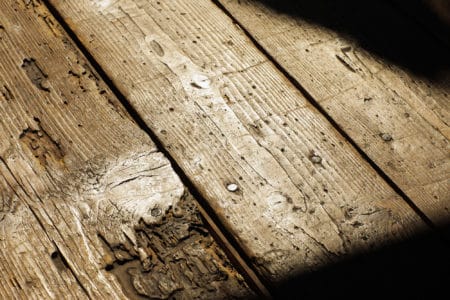
Think of all the benefits of transparent deck stain and then add in a slight color pigment that enhances the wood grain. It makes the grain really pop when you paint it on, so if you have older, faded wooden decking, a semi-transparent stain is the best choice.
If you own a boat and have teak decking that has faded in the sun, semi-transparent stains revive the appearance instantly and protect it against further punishment from the weather.
Plus, some wooden decks are just plain dull, especially lighter woods like pine, so adding two coats of semi-transparent stain really warms the look, softening it and making it sit in the space more comfortably. It looks less like a blot on the landscape, warming the overall appearance of your deck, giving it a golden hue.
Solid Stain
Solid stain is the best choice when you have battered decking that has seen better days, and you want to disguise imperfections. Solid does exactly what the name suggests. The advantage is you get hundreds of color choices, and you don’t have to rip out your old decking at the end of the season because it looks terrible.
A couple of solid stain coats, and you have a completely refreshed deck. You can even color match with other furniture or features in the garden. And when you get bored, you can have a complete deck makeover.
The other advantage of solid stain is it repels the effects of the sun’s UV rays. However, when it chips or starts to peel, you will notice it more than the other two options.
How To Choose the Best Semi-Transparent Deck Stain
So, what are the things you should look for when selecting your new semi-transparent deck stain? Is it the type or the finish? Maybe how you apply it makes a difference? Let’s take a look at the main points.

Water vs. Oil-Based
When choosing a deck stain, how it dries and how it changes the appearance of the wood make a big difference. That’s the fine margins between water and oil-based products.
Water-Based Stain
Water-based stain dries with a more resilient top coating on the surface of the wood. For this reason, it repels the sun’s harmful UV rays better, and water never gets the chance to make contact with the wood.
It applies easier, is generally thinner, so you can spray as well as brush it, and it dries to the touch in about 30 minutes. However, it’s not all sunshine and roses.
Preparing your deck takes longer with a water-based stain because you should remove all traces of the old paint before you start. Secondly, while it offers excellent UV and moisture protection, it also chips and peels easier, which means the sun and rain will eventually get through.
Oil-Based Stain
An oil-based wood stain is more penetrating. It soaks into the wood and protects from within. For this reason, if you live in an area of high rainfall, an oil-based product is probably the better choice.
It generally has a thicker consistency, so you might need to add a thinner to apply it with a sprayer. However, when you thin it, you need to add more coats to get the same results.
The other consideration with oil-based products is the harmful impact on the environment. You need to clean it with mineral spirits or thinners so the residue washes into the ecosystem. And then there are the odors and VOCs (volatile organic compounds) to consider.
VOCs can induce headaches, nausea, and sore eyes and throat, so while we accept that your deck is outside, if you ever use oil-based stains indoors, you need good ventilation.
Drying times are a lot longer too. Unlike water-based stains, you need to wait 4 to 6 hours for them to be touch-dry and 24 hours before you apply the second coat.

Coverage Is Key
The usual rule of thumb is the thicker the viscosity, the less coverage you get. However, a thicker stain also needs fewer coats, so it is a balancing act between coverage and the number of coats you need.
You should expect anywhere between 100 and 500 square feet, depending on the type of stain and the number of coats required.

Number of Coats
Oil-based deck stains are easier to apply when it comes to the number of coats required. Within the first one or two layers, your deck is protected. When you compare that to water-based products, which need multiple layers for optimum protection, you can see the advantage.

UV Resistance
The sun is probably the single biggest threat facing your deck. It fades, cracks, dries, and saps the goodness from your wood. If you have a transparent stain, it yellows, and clouds.
Some deck stains use trans-oxides, which are metal particles that dilute the effects of UV, deflecting and absorbing the harmful rays to release them as heat. This relieves the pressure on your deck and prolongs the protection the stain gives.
Where you live matters when it comes to choosing the best deck stain. If you live in a warm state like California, you might also struggle to buy some oil-based products because they are prohibited by law.

How Long Does It Last?
This is the bit that determines how many times you have to paint your deck. Some products last 3 to 5 years, while others need recoating annually. Water-based stains are more delicate than oil stains because the protection comes from a top layer on the surface of the wood.
This layer scratches, lifts, cracks, and peels, and that’s when you start to suffer the ravages of the weather.

Ease of Application
Getting your new deck stain down is another important consideration. Water-based stains are easier to apply because they are thinner. It means you can brush, roller or spray them on. Oil stains are thicker, so while you can brush them on, you will need a thinner to dilute the solution if you want to spray.
And then we have to consider the number of coats you will need. As we’ve said, water stains need multiple layers, unlike oil stains that require just one or two coats.

Mother Nature’s Friend?
Using oil-based stains is always going to harm the environment. It soaks into the ecosystem when you wash it, poisoning the rivers and wildlife. And then, you should consider the VOCs and the damage they cause.
It’s not uncommon to suffer from headaches, nausea, eye and throat pain when you inhale. Look for a stain with a 250 VOC or less if you want to minimize the health risks.
Water-based stains are more environmentally friendly because they use water as the main ingredient, which washes away with soap. It has minimal impact on the ecosystem, and they are also low or zero VOC.
How To Apply Semi-Transparent Deck Stain
The method of application varies between the types of stain. Water-based stains can be brushed or rollered on, although rollers are not designed to hold this type of product. The other method is spraying, using a pump-action garden sprayer.
This is the fastest way to get a layer down, but you will suffer from overspray as it is not the most accurate or precise.
Your options are less varied with oil stains. The best way is to brush it on, working with the grain to ensure all the gaps get filled. This method is time-consuming, especially if you are working against a weather window or you want the deck ready by a particular time.
You can spray oil stains, but you will need a thinner to dilute the mixture, increasing the number of coats you will need.
How Long Does Semi-Transparent Stain Last On Deck?
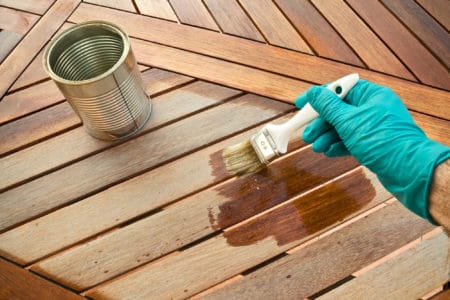
You should get 2 to 3 years of protection between new coats, although this is subject to the weather patterns where you live and the type of stain you use.