The ravages of the weather can fade your smart new deck. Wind, rain, and sun take their toll, and that’s when the wood starts to get damaged. Unfortunately, decks may look good, but they require constant maintenance.
We take a detailed look at the best deck paints to bring you our top 7 choices based on price, quality, and customer satisfaction.
- One coat is all it needs to protect your deck
- Low VOC and protects against mold and mildew
- UV resistant thanks to trans oxide pigments
- It is a stain and sealer combined for increased protection
- Leaves no streaks or runs and blends seamlessly
- It can be applied using a brush, roller, or spray
- Maximum 400 square feet coverage
- Can be recoated within 4 to 6 hours
- Multi-purpose paint covers wood, concrete, and walkways
- Ideal for poolside decking as it repels water
- Non-slip for better grip near the pool
- The acrylic-based formula is better for weathering
- Great for UV protection in sunnier climates
- Dries to the touch in 30 minutes
- Multi-use applications for wood, concrete, and masonry
- UV resistant and low-glare finish
- The non-skid surface makes it ideal for boats
- Applied via a brush or roller
- Trans oxide pigments protect against UV
- Great value for money per gallon
- Applies with a brush, roller, or paint sprayer
Review Methodology: At Sensible Digs, we take pride in our hands-on approach to analysis and assessment. Our professional team conducts meticulous research, uses data-backed evidence, and applies their own practical experience in evaluating the best deck paints available on the market. We dive into every detail, comparing products on key decision-making factors such as durability, coverage, drying time, and weather-resistance. Our reviews also measure the product’s performance, looking at criteria like longevity, finish quality, and ease of application. We even delve into design choices, discussing how they affect the user experience. Our evaluation results in a comprehensive score, ranking each deck paint against industry benchmarks. Whether you’re a professional or a DIY enthusiast, trust Sensible Digs to provide you with an accurate, in-depth review to help you make the best choice.
The Best Paint Decks 0f 2024
We spent hours focusing on different paints and manufacturers to boil down the hundreds of choices to our favorite 7 stains.
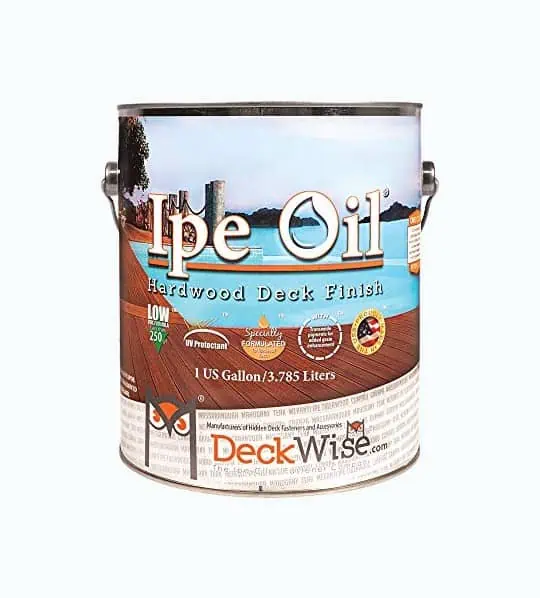
DeckWise Ipe Oil Hardwood Deck Stain
Best Oil-Based Deck Paint
As far as deck paint goes, this one is pretty pricey. That said, it is excellent at penetrating deep into the wood, thanks to its oil-based qualities.
It’s perfect for all exterior wooden surfaces, including decks, railings, and fences. Unlike some oil-based paints, you get UV protection, thanks to the trans oxide pigments in the formula. It protects against mold and mildew and has a 250 low VOC, so odors are kept to a minimum.
You can apply it in one coat, and it is guaranteed not to crack, bubble or peel. The color is a translucent natural wood finish, which enhances the pattern of your woodgrain. It is the wood stain to choose if you are protecting exotic hardwood.
The only downside is the trans oxide slightly yellows the color, and it is not available in California.
Pros
- One coat is all it needs to protect your deck.
- Low VOC and protects against mold and mildew.
- UV resistant thanks to trans oxide pigments.
- Perfect for protecting exotic hardwood.
Cons
- Trans oxide particles slightly discolor the stain.
- Not a budget option due to the costs.
Product Specs
| Size | 1 liter |
| Type | Oil-based |
| Coverage | 250 sq ft |
| Application | Brush, roller, spray |
| UV protection | Yes |
| Price | $$$ |
Our Ratings
User Experience
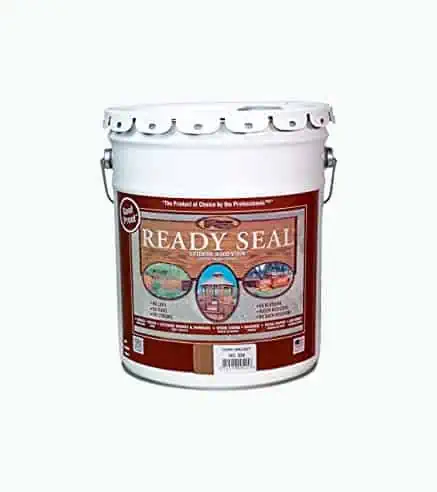
Ready Seal 525 Exterior Stain and Sealer
Best Deck Paint for Old Wood
When restoring old wood, you need a deck stain that is sympathetic to the patternation and the overall condition to protect it for future use. This combined stain and seal requires no primer. It can be applied using a sprayer, roller or brush.
The great news is once you apply the first coat, it dries and leaves a hardened seal on the surface of the wood to reduce water penetration.
It requires no back brushing, and it doesn’t run or leave streaks. This stain needs no wet-line application and blends seamlessly. You can apply it at any temperature, and you don’t need to dilute it when spraying.
It comes in a 5-gallon tub, so you get a lot of coverage on your deck, garden furniture, exterior door frames, and anything else wooden that is exposed to the elements.
The only downside is you must make sure the old wooden boards are completely stripped of oils, paints, and any other greasy surface. So, preparation is key to it soaking into the wood for added protection.
It’s also extremely expensive. Sure, it comes in large tubs, but the cost might put some people off.
Pros
- It is a stain and sealer combined for increased protection.
- Leaves no streaks or runs and blends seamlessly.
- It can be applied using a brush, roller, or spray.
- Comes in 5-gallon tubs.
Cons
- Expensive compared to other similar products.
- The wood requires lots of prep work before applying.
Product Specs
| Size | 5 gallons |
| Type | Oil-based |
| Coverage | 750 sq ft |
| Application | Brush, roller, spray |
| UV protection | No |
| Price | $$$$$ |
Our Ratings
Personal Perspective
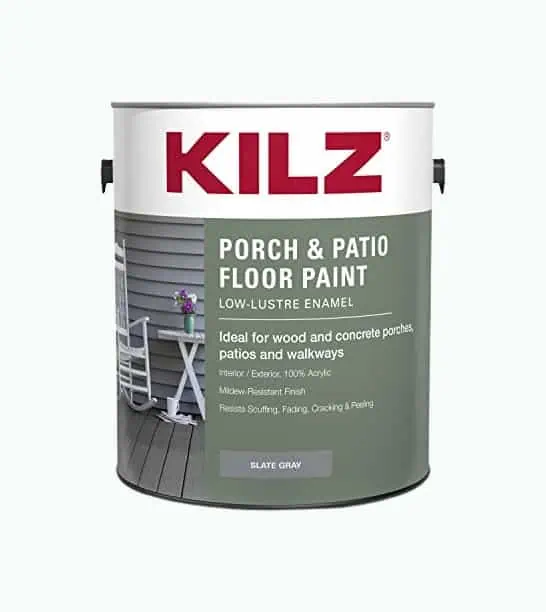
KILZ Interior/Exterior Enamel Floor Paint
Best Deck Paint With Primer
This acrylic paint requires no primer and goes straight down onto wood, concrete, porches, and patios. It really is a multi-purpose paint. It offers a low-luster enamel coating that endures even in extreme weather conditions.
You can apply it to original painted surfaces without too much fuss, and it adheres well. It touch-dries in 1 hour and is ready to be recoated within 4 to 6 hours.
It can be applied by brush, roller, and sprayer, and 1-gallon of this slate-gray paint covers 200 to 300 square feet on rough surfaces and 300 to 400 square feet on smooth surfaces. So, you get excellent coverage from such a small amount.
While you can paint patios and concrete with this paint, it isn’t suitable for driveways where it comes into contact with rubber tires. Plus, it may look like a cheap option, but it doesn’t look like the best value for money when comparing this 1-gallon tin with the 5-gallon Ready Seal.
Pros
- Maximum 400 square feet coverage.
- Can be recoated within 4 to 6 hours.
- Multi-purpose paint covers wood, concrete, and walkways.
- Applies using a brush, roller, or sprayer.
Cons
- Expensive compared to other similar products.
- Not suitable for use on driveways.
Product Specs
| Size | 1-gallon |
| Type | Acrylic-based |
| Coverage | 200 to 400 sq ft |
| Application | Brush, roller, sprayer |
| UV protection | No |
| Price | $$$$ |
Our Ratings
Community Feedback
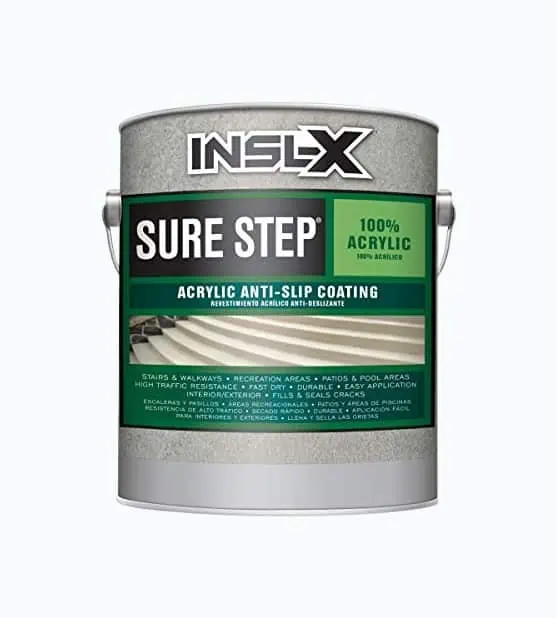
INSL-X SU031009A Sure-Step Acrylic Paint
Best Pool Deck Paint
When you are covering a pool deck, there are a few things you need to look for in your chosen paint. The first is it needs to be water-resistant, and the second is it should be non-slip.
This INSL deck paint is another acrylic-based variety, so it repels water better than standard water-based products. When you get splashes from the pool, having that kind of shielding from damage is essential.
It’s fast-drying, slip-resistant, and repels ponding water. It’s also ideal for walkways, patios, stairs, and concrete. It even fills cracks and seals for added protection.
The 1-gallon tin covers 80 to 120 square feet, and it takes 8 hours to cure between coats. It comes in 7 color options ranging from white to desert sand, and it is applied using a brush or roller.
This 1-gallon tin is expensive when comparing the scaled-up cost against the 5-gallon Ready Seal, and the coverage is a lot less than the 1-gallon KILZ interior and exterior paint. It also takes a lot of surface preparation before applying, which takes time.
Pros
- Ideal for poolside decking as it repels water.
- Non-slip for better grip near the pool.
- The acrylic-based formula is better for weathering.
- It covers concrete, patios, decks, and walkways.
Cons
- Expensive compared to other similar products.
- It only covers 120 sq ft per gallon.
- The surface requires a lot of preparation before applying.
Product Specs
| Size | 1-gallon |
| Type | Acrylic-based |
| Coverage | 120 sq ft |
| Application | Brush, roller |
| UV protection | Yes |
| Price | $$$$$ |
Our Ratings
First-Hand Impression
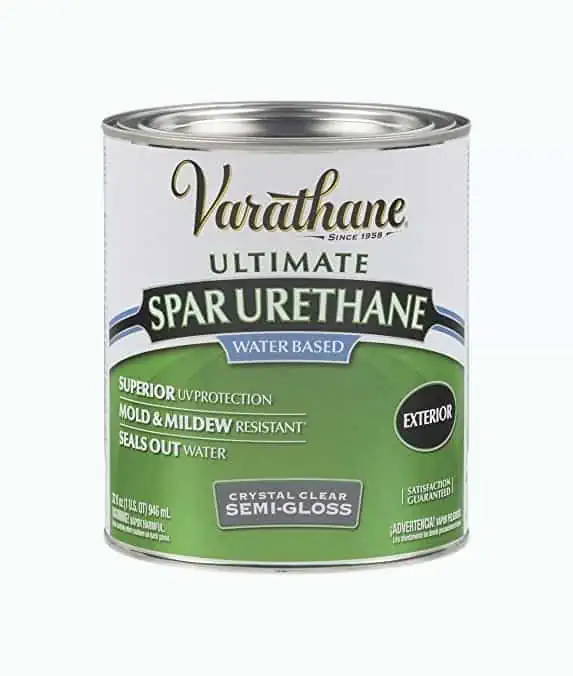
Rust-Oleum 250141H Ultimate Spar Urethane Wood Stain
Best Water-Based Deck Paint
Rust-Oleum is a well-known name, so it comes as no surprise that this Spar Urethane wood stain should feature in the review. It is suitable for outdoor wood surfaces like furniture, decking, fences, door frames, and windows.
It dries to the touch within 30 minutes and can be reapplied within 2 hours of the first coat drying. This 32 fluid-ounce tin covers approximately 87 square feet, and thanks to the water-based formula, it is UV resistant, making it the ideal paint for hot climates.
The topcoat repels mildew and moisture, and it doesn’t yellow with age, plus it dries crystal clear with a semi-gloss finish.
Unlike oil-based stains, which only need one coat to provide adequate protection, this water-based paint requires a maximum of 4 layers, which adds to the costs considerably. Plus, you will need lots of tins because the coverage is limited.
Pros
- Great for UV protection in sunnier climates.
- Dries to the touch in 30 minutes.
- Multi-use applications for wood, concrete, and masonry.
- Dries clear with a semi-gloss finish.
Cons
- Requires 4 layers rather than one.
- Limited coverage from 1-gallon tin.
Product Specs
| Size | 1-gallon |
| Type | Water-based |
| Coverage | 87 sq ft |
| Application | Brush, roller |
| UV protection | Yes |
| Price | $$$ |
Our Ratings
User Experience
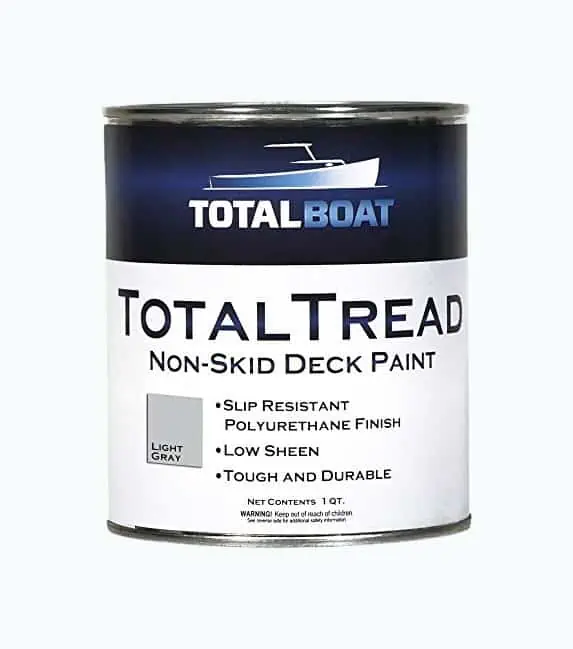
Total Boat Non-Skid Deck Paint
Best Boat Deck Paint
When you are on a boat in the middle of the water, the last thing you want is a slippery deck. This Total Boat Non-Skid paint is the ideal product to give your wood the protection it needs while at the same time keeping you safe from slipping.
This paint covers wood, fiberglass, aluminum, and metal surfaces, so it is multi-purpose. Out at sea, the sun is bright, so this paint has been designed as a low-glare coating, plus the polyurethane finish is UV resistant, so your deck won’t fade.
It goes on with a brush or roller, and you get a coverage of 300 square feet with each 1-gallon tin. You can increase the traction by applying a second coat, and each layer dries between 8 and 16 hours, depending on the temperature.
It comes in 4 colors: gray, light gray, beige and white, and it cleans easily and won’t fade or peel. The only downside is the cost. This is a 1-quart tin, so to get a gallon of this paint will cost you 3 times as much as other deck stains.
You also need to take care when applying this paint because it needs to be in the right weather conditions for it to adhere.
Pros
- UV resistant and low-glare finish.
- The non-skid surface makes it ideal for boats.
- Applied via a brush or roller.
- It covers wood, fiberglass, aluminum, and metal.
Cons
- Super-expensive and costs three times the amount of other paints.
- Needs careful preparation and the right weather conditions.
Product Specs
| Size | 1-quart |
| Type | Oil-based |
| Coverage | 300 sq ft |
| Application | Brush, roller |
| UV protection | Yes |
| Price | $$$$$ |
Our Ratings
Personal Perspective
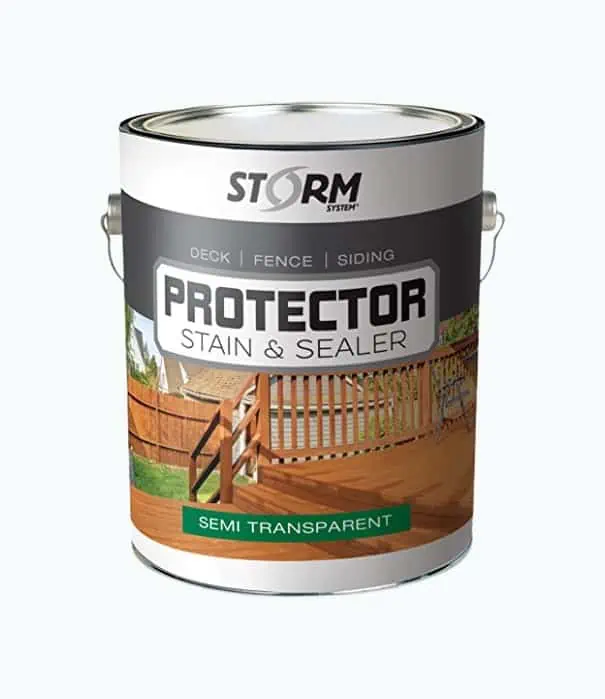
Storm System Penetrating Sealer and Stain Protector
Best Budget Deck Paint
If you are looking for a cheaper alternative for painting your deck, this Storm System Sealer and Stain is the perfect solution. It comes in 1-gallon tins, making it excellent value for money.
This is an oil-based stain designed to penetrate deep into the wood to protect it against water damage. It’s suitable for all wood varieties but is especially effective when used with mahogany, cedar, and redwood.
It applies with a brush, roller, and paint sprayer and provides a lap-free surface with supreme UV protection. You get between 100 to 175 square feet of coverage depending on the quality of the surface, which is less than comparable paints.
It also takes up to 24 hours to dry between coats, making it a slow process to restain your deck. The other thing to consider is the trans oxide pigments in the solution slightly discolors the overall finish of the stain.
Pros
- Trans oxide pigments protect against UV.
- Great value for money per gallon.
- Applies with a brush, roller, or paint sprayer.
- Covers most woods, including mahogany and cedar.
- The oil-based formula increases penetration into the wood.
Cons
- It takes 24 hours between coats to dry.
- Limited coverage per gallon.
- Trans oxides slightly discolor the finish.
Product Specs
| Size | 1-gallon |
| Type | Oil-based |
| Coverage | 100 to 175 sq ft |
| Application | Brush, roller, paint sprayer |
| UV protection | Yes |
| Price | $$ |
Our Ratings
Community Feedback
| Product | Best | Size | Type | Coverage | Application | UV protection | Price |
|---|---|---|---|---|---|---|---|
| DeckWise Ipe Oil Hardwood Deck Stain | Best Oil-Based | 1 liter | Oil-based | 250 sq ft | Brush, roller, spray | Yes | $$$ |
| Ready Seal 525 Exterior Stain and Sealer | Best for Old Wood | 5 gal. | Oil-based | 750 sq ft | Brush, roller, spray | No | $$$$$ |
| KILZ Interior/Exterior Enamel Floor Paint | Best With Primer | 1-gallon | Acrylic-based | 200 – 400 sq ft | Brush, roller, sprayer | No | $$$$ |
| INSL-X SU031009A Sure-Step Acrylic Paint | Best Pool Deck | 1-gallon | Acrylic-based | 120 sq ft | Brush, roller | Yes | $$$$$ |
| Rust-Oleum 250141H Ultimate Spar Urethane Wood Stain | Best Water-Based | 1-gallon | Water-based | 87 sq ft | Brush, roller | Yes | $$$ |
| Total Boat Non-Skid Deck Paint | Best Boat Deck | 1-quart | Oil-based | 300 sq ft | Brush, roller | Yes | $$$$$ |
| Storm System Penetrating Sealer and Stain Protector | Best Budget | 1-gallon | Oil-based | 100 – 175 sq ft | Brush, roller, paint sprayer | Yes | $$ |
How To Choose the Best Deck Paint
The time has come to give your deck a fresh coat of paint, but with so many types of wood paint, how do you choose? We run through the basics to help you decide.

Oil-Based
Oil-based deck stains offer better coverage and are easier to apply. It’s why they are a favorite of homeowners because they penetrate deeper into the wood to give you 1 to 2 years of peel-free coverage.
Oil stains don’t streak or go on patchy and only require one coat for that long-lasting protection. The only tool you need is a painting pad or a clean brush.
However, they contain volatile organic compounds (VOC), which is not good if you have kids and pets. Plus, they do have a strong odor.

Water-Based
Water-based stains are better for pets and kids because they don’t contain harmful chemicals, unlike oil variants packed with volatile organic compounds (VOCs). It also makes them safer for the environment. You don’t get as many odors, and they dry faster too.
Water variants also fend off mold and mildew, and you can get some brands that contain zinc particles to help eradicate UV damage. The other advantage of water-based deck paint is you get more flexibility when applying it to your deck.
You can spray it on, which gives a much more even coating, and it dries in 2 to 4 hours. The significant downside is you need to apply 2 or 3 layers to fully protect your wood because water-based paints don’t penetrate as deeply as oil variants.

Colors and Shades
Your deck paint needs to match your color scheme. The shade you choose will look odd if it stands out. Do you opt for semi-translucent paint or opaque? Transparent stains show off the wood grain but reveal imperfections in the surface, while solid colors cover the surface, concealing any blemishes, but they also hide the wood grain.
The good news is you have so many shades, tones, colors, and styles of covering to choose from, so you should find one to suit your tastes.

Wood Stain Functions
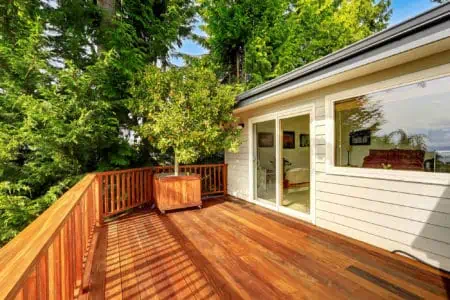
As we’ve discussed, oil-based paints penetrate the wood deeper, which means they are better at fending off the rain, but less able to resist the ravages of UV light. So, if you live in an area where rain is the predominant weather pattern, oil-based paints are a wise choice.
Water-based paints penetrate less effectively but provide a better layer to protect the surface of the wood. This stops water damage to a point, but because water-based paint chips and peels easier, it exposes weak spots that the rain takes advantage of.
However, when it comes to UV protection, water-based stains are far more effective. If you live in an area where sunshine is the most common weather trend, water-based paint is the better option.

Ease of Application
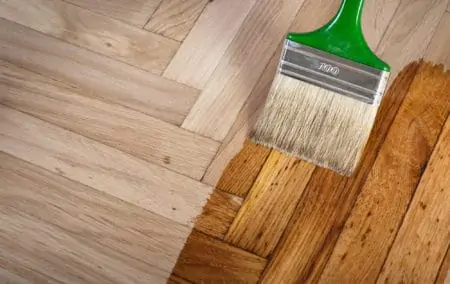
This comes down to personal preference. Some people like using a brush or paint pad to apply the wood stain, while others swear by a sprayer to get that even coat. A brush takes longer, but you can really work the paint into every inch of the surface.
Typically, you paint on oil-based stains and spray on water-based stains.
FAQs

How Long Should My Deck Paint Last?
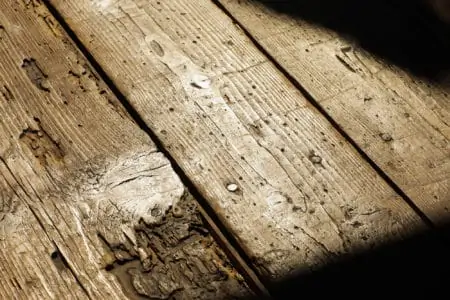

Is Paint or Stain Better for a Deck?
It depends on what look you are going for. Paint is typically solid and covers the wood, obscuring the grain. You get the advantage of choosing many color variations, and each time you paint your deck, you can change the color to suit your mood.
Stain tends to be semi-translucent, so it shows the grain pattern, enhancing the wooden elements of your deck. Deck stains tend to be oil-based and better at preserving the wood because they soak into the material rather than forming a waterproof barrier on the top of the deck like paint.

Should I Prime My Deck Before Painting?
Priming is only necessary if the paint you choose requires it. Most stains are oil-based and penetrate the wood. A primer would inhibit this process, weakening the protective qualities of the stain.
Some paints are acrylic-based and cover straight onto the wooden surface without a primer. Check the instructions on the back of the paint tin before proceeding.
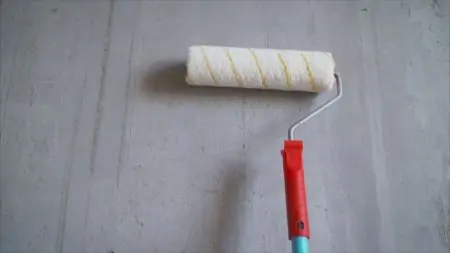

Can You Paint Over Existing Deck Paint?
You can with acrylic-based paint, but if you want the best quality finish, take the time to remove the old covering and sand the wood back to the natural grain. Water and oil-based stains don’t properly adhere to barriers like oil, wax, or grease.

Should I Choose Water or Oil-Based Finish for My Deck?
It depends on the climate where you live. High rain areas are harsher on the woodwork if you use water-based paint. While it protects, it only seals the surface, so when it chips or peels, the water gets in and rots the wood.
However, water-based paints are much more UV resistant because the same top layer seals the wood and prevents any sun damage.
Oil-based stains better tackle water damage because the stain penetrates deeper into the wood, providing better all-round protection. However, sunlight is a threat because oil-based stains don’t form a protective layer on the top of the wood.