When a paintbrush or roller won’t give you that super smooth finish, airless paint sprayers will revolutionize the way you apply paint. They speed up the process, give a professional-grade coating, and they are easy to master with a bit of practice. You can also use an airless paint sprayer indoors and out.
We bring you 7 of the best airless paint sprayers, judging them on price, quality, and application.
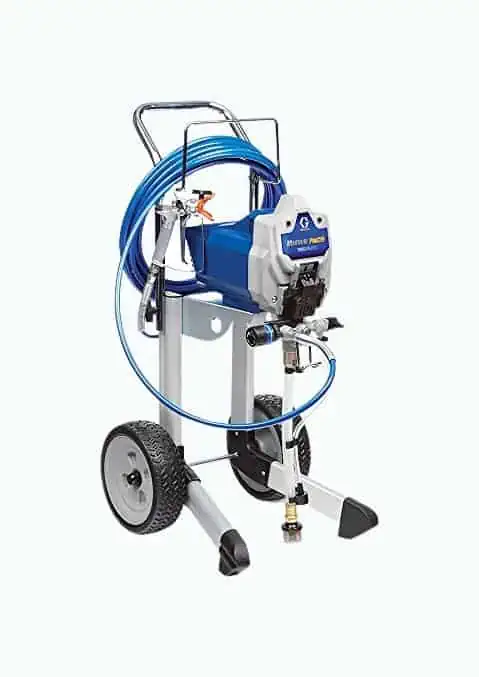
- 150-foot hose for extended reach
- Prox pump with instaclean filtration
- 500-gal. annual capacity
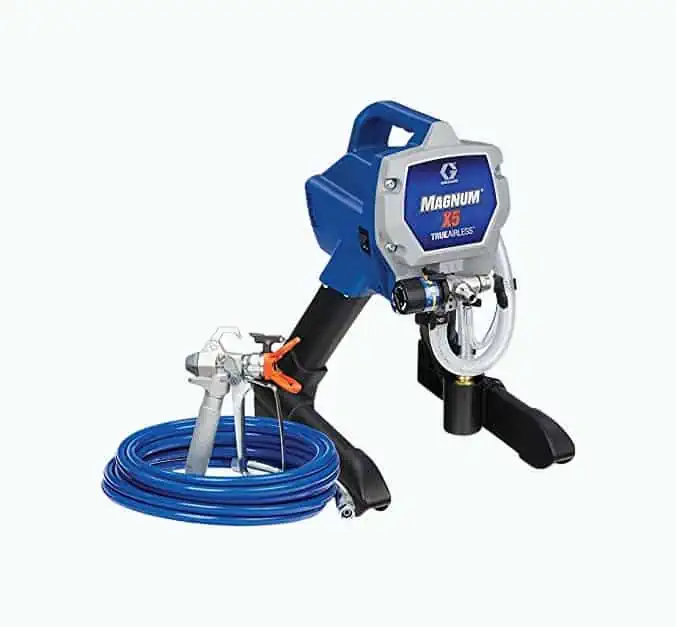
- Support up – 75 feet of hose
- Yearly maximum usage of 125 gal.
- 0.27 GPM flow rate
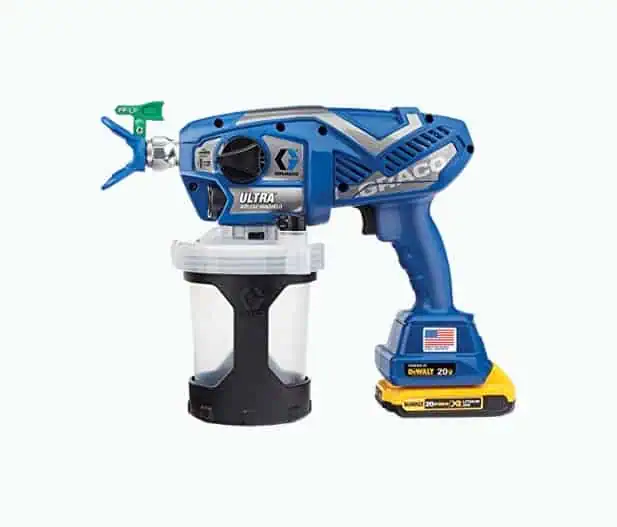
- Cordless technology gives you a go-anywhere tool
- Triax triple piston pump
- Maximum 2,000 PSI
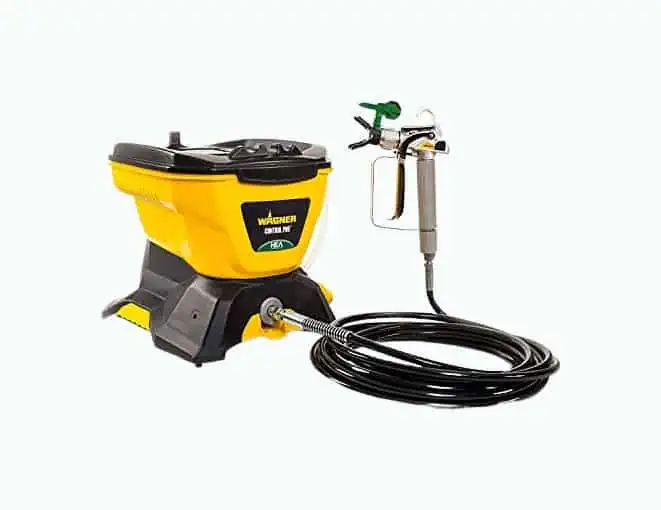
- 0.15-inch maximum tip size
- Works with water & oil-based paints
- 0.24 gal. p/m flow rate
- Delivers paint straight out of the can
- 0.33 gal. p/m flow rate
- 300 gals maximum yearly usage
- Comes with four separate tips
- Adjustable flow rate
- 700-watt motor
- Comes with four separate tips
- Three adjustable paint spray patterns
- 600-watt motor
Review Methodology: At Sensible Digs, we conduct thorough hands-on testing, research, and assessment of the best airless paint sprayers on the market. Our experienced professionals use a clear set of criteria to measure performance, compare features, and rank each product. We evaluate these sprayers from a user’s perspective, providing you with facts and evidence-based data. We identify key decision-making factors, such as ease of use, cleaning, coverage, and spray patterns, and rate each sprayer accordingly. Our in-depth reviews also detail the design choices of each product, and explain what sets them apart from their competitors. Our aim is to offer you a reliable guide and provide first-hand supporting evidence that will help you make an informed decision.
The Best Airless Paint Sprayers of 2024
We searched the internet for the best airless paint sprayers in each category and rated them on power, performance, and value for money. Here are our top 7 models.
Graco 17G180 Magnum ProX19 Cart Paint Sprayer
Best Professional Airless Paint Sprayer
The first thing you notice about this ProX19 paint sprayer is the 500-gallon annual capacity, which means that it is the best tool for professionals. It also has a reversible tip to help you clear blockages.
It comes with everything you need to get started straight out of the box. It has a 0.19-inch tip for better precision, a 150-foot hose for multi-story buildings, and a flow rate of 0.38 gallons per minute.
You get a ProXchange pump with InstaClean filtration, adjustable pressure for different tasks, and a flexible suction hose that fits straight into a paint can. The steel piston pump allows you to spray unthinned paint at high pressure, and it sits on a handy stand with two sturdy wheels for easier maneuverability.
It creates a maximum of 3,000 PSI (pounds per square inch), and it lays down paint 14 times faster than a brush and six times faster than a roller, so if you want the job done quicker, this is the tool to use.
This paint sprayer is not cheap. It is several times the price of some competitor models; however, it is not intended for domestic use. If you are a professional, you will pay for the best tools.
Pros
- 150-foot hose for extended reach.
- ProX pump with InstaClean filtration.
- 500-gallon annual capacity.
- Includes stand and wheels for better maneuverability.
Cons
- Very expensive compared to other models.
Product Specs
| Weight | 42 pounds |
| Dimensions (inches) | 20 x 17.2 x 37.2 |
| Annual capacity | 500 gallons |
| Gallons per minute | 0.38 |
| Price | $$$$$ |
Our Ratings
User Experience
Graco Magnum X5 Stand Airless Paint Sprayer
Best Airless Paint Sprayer for Cabinets
When it comes to spraying your indoor cabinets, having a spray gun with adjustable pressure is invaluable, especially if you want precision. Take a look at this second Graco to feature as we discover what makes it so special.
It has a stainless steel piston pump, a power flush adapter to connect to the garden hose for easy cleaning, and a flexible tube that inserts directly into the paint can. It is compact and lightweight and comes with a stand to make it easier to use.
You get a maximum yearly usage of 125 gallons, and you get a reversible tip to remove blockages easily. It supports a maximum hose size of 75 feet, and the TrueAirless spray tip reduces overspray while increasing your control.
On the downside, like the previous Graco model, this one is expensive, and it costs several times the price of similar spray guns. However, it does support tip sizes up to 0.15 inches, and it delivers a maximum flow rate of 0.27 gallons per minute.
Pros
- Support up to 75 feet of hose.
- Yearly maximum usage of 125 gallons.
- 0.27 GPM flow rate.
- Adjustable pressure for different projects.
Cons
- Costs several times the price of competitor models.
Product Specs
| Weight | 19.73 pounds |
| Dimensions (inches) | 14.5 x 12.75 x 19 |
| Annual capacity | 125 gallons |
| Gallons per minute | 0.27 |
| Price | $$$$ |
Our Ratings
Personal Perspective
Graco Ultra Cordless Airless Handheld Paint Sprayer
Best Cordless Airless Paint Sprayer
This is starting to sound like the Graco show, with this the third model to feature. This airless paint sprayer is cordless, so you can take it anywhere and still get the same faultless performance as the plugin models.
It is powered by a DeWALT Lithium-Ion battery and has a Triax triple piston pump, which delivers a perfect airless finish at any speed. This spray gun produces between 500 and 2,000 PSI, so you can swap from one project to the next.
The maximum tip size is 0.16 inches, and it works with unthinned paint; plus, you also get the same flippable spray nozzle that helps reduce blockages. This is the ultimate portable tool, but to get all this convenience costs big bucks.
If you want one of these paint sprayers, you will have to dig deep. It costs almost as much as the Pro version. The company also fails to publish the GPM, which is crucial when choosing a tool for specific tasks.
Pros
- Cordless technology gives you a go-anywhere tool.
- Triax triple piston pump.
- Maximum 2,000 PSI.
- Reversible tip for easy blockage removal.
Cons
- Eye-wateringly expensive.
- No published GPM specifications.
Product Specs
| Weight | 11.8 pounds |
| Dimensions (inches) | 17.5 x 12.8 x 6.8 |
| Annual capacity | Not stated |
| Gallons per minute | Not stated |
| Price | $$$$$ |
Our Ratings
Community Feedback
Wagner Control Pro130 Power Tank Airless Paint Sprayer
Best Airless Paint Sprayer for Cars
This Wagner airless paint sprayer puts paint down three times faster than a roller, and it has a 1.5-gallon hopper with a 25-foot hose. It also produces 55 percent less overspray to improve efficiency and paint wastage.
It also works well with water and oil-based paint products, although you need to buy the tips separately if you are using oil-based paints. The maximum tip size is 0.15 inches, and the GPM tops out at 0.24 gallons; plus, you also get a maximum of 1,400 PSI.
This paint sprayer is over half the price of the Graco models, so you save a serious amount of money, but on the downside, it lacks the performance of the Graco in many areas. It also has no adjustable pressure, so while it may be ideal for painting cars, you might struggle with other projects.
Pros
- 0.15-inch maximum tip size.
- Works with water and oil-based paints.
- 0.24 gallons per minute flow rate.
- Produces 55 percent less overspray.
Cons
- Lacks performance.
- No adjustable pressure.
Product Specs
| Weight | 11 pounds |
| Dimensions (inches) | 8 x 7 x 11 |
| Annual capacity | Not stated |
| Gallons per minute | 0.24 gallons |
| Price | $$$ |
Our Ratings
First-Hand Impression
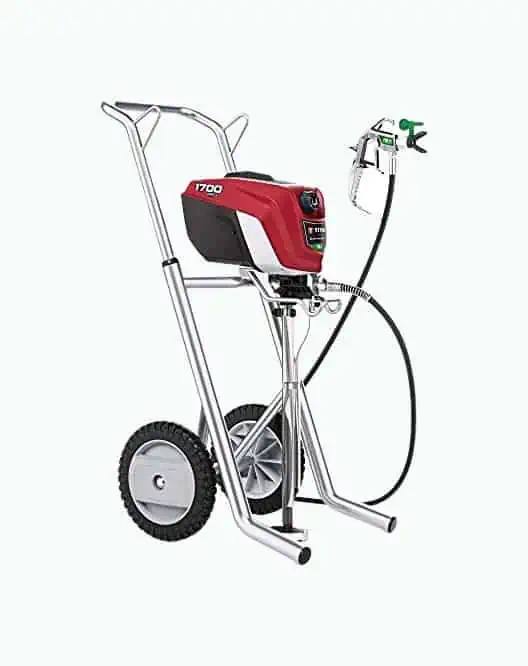
Titan ControlMax 1700 Pro With Cart Paint Sprayer
Best Portable Airless Paint Sprayers
If you want an airless paint sprayer that is easy to maneuver, look no further than this Titan. It comes mounted onto a handy cart with extra-large wheels and a handle. This model utilizes the same HEA technology to reduce overspray by up to 55 percent, and it delivers a softer spray, making it better for a variety of projects.
It comes with a 50-foot hose as standard, but it can support a hose up to 100 feet, and the variable speed pump produces 0.60 horsepower, so it delivers where it counts with unthinned paints and stains.
You get an impressive 0.33 gallons per minute flow rate, a maximum yearly usage of 300 gallons, and 1,500 PSI. The adjustable pressure is easy to manage, and the paint comes directly from the can.
This is a heavy unit, so while it is super-portable, it would be hell to shift without the stand and wheels. Plus, it surprisingly lacks power for such a big machine, compared to the similar Graco model.
However, it does cost a fraction of the Graco models, so this might be a great option if you are looking for a pro-grade paint sprayer on a budget.
Pros
- Delivers paint straight out of the can.
- 0.33 gallons per minute flow rate.
- 300 gallons maximum yearly usage.
- 50-foot long hose as standard.
Cons
- Lacks performance.
- Weighs a lot more than similar models.
Product Specs
| Weight | 37 pounds |
| Dimensions (inches) | 50 x 17 x 32 |
| Annual capacity | 300 gallons |
| Gallons per minute | 0.33 gallons |
| Price | $$$$ |
Our Ratings
User Experience
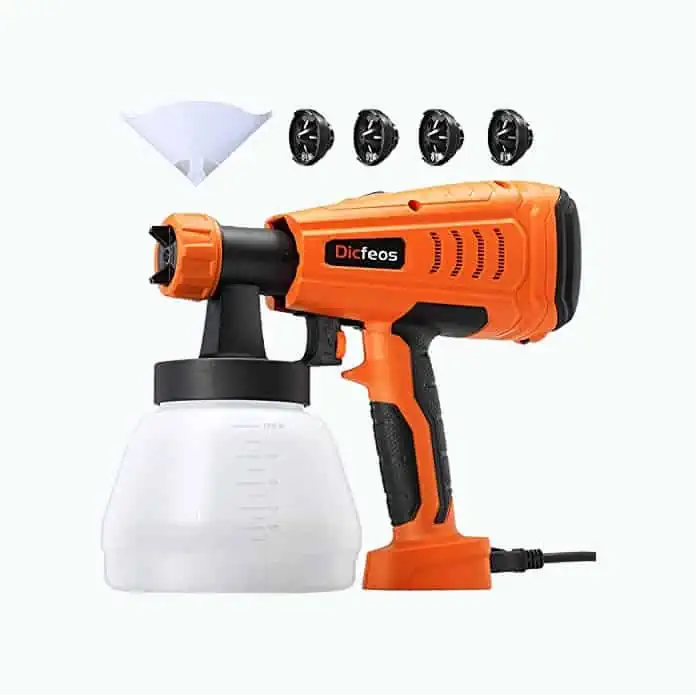
Dicfeos Paint Sprayer
Best Airless Paint Sprayer for Home Use
Strictly speaking, this Dicfeos model is a HVLP paint gun. It means that it delivers high output with lower pressure, making it the ideal tool for furniture and cabinets. It costs a fraction of the Graco models, which is why it is the perfect starter paint gun. So, what has it got?
It has a 700-watt motor that produces a flow rate of 1,200ml every minute and an adjustable knob to increase and decrease the flow rate as desired. You get four different nozzle sizes ranging from 1.3mm to 3mm, and a 6.6-feet power cord.
The incredible thing is that all this is available at a price so low, it almost feels like they are giving this paint gun away.
Because it’s a HVLP gun, it has a lower pressure rating, so you might struggle to paint your fences and outdoor decking, but it is an excellent tool for precision and accuracy.
Pros
- Comes with four separate tips.
- Adjustable flow rate.
- 700-watt motor.
- Delivers 1,200ml every minute.
Cons
- Not suitable for extensive projects.
Product Specs
| Weight | 3.58 pounds |
| Dimensions (inches) | 9.84 x 9.84 x 9.84 |
| Annual capacity | Not stated |
| Gallons per minute | 1,200 ml per minute |
| Price | $ |
Our Ratings
Personal Perspective
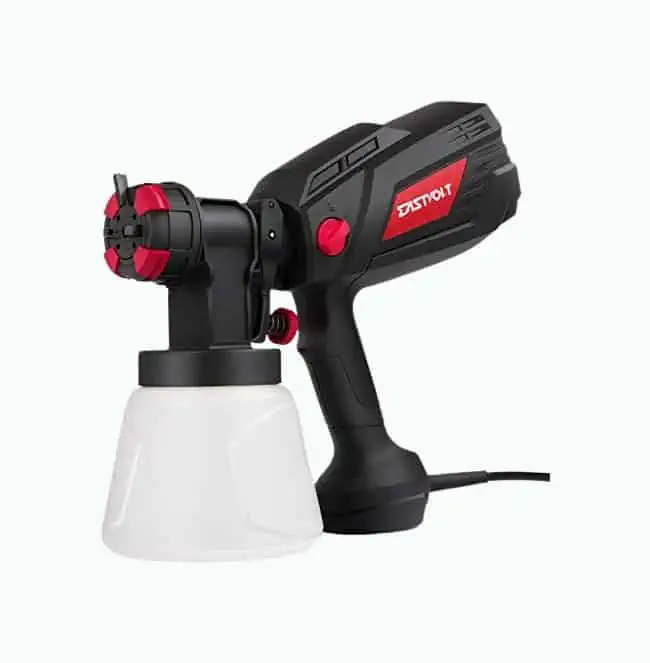
Eastvolt High Power Home Airless Paint Sprayer
Best Budget Airless Paint Sprayer
If you thought the Dicfeos model was cheap, this Eastvolt is even less expensive! This model has a 600-watt motor, producing 1,000ml every minute. Okay, so it isn’t going to win awards for performance, but it is excellent value for money.
You get a 6.6-feet power cord, a 1,000ml paint reservoir, and four nozzles with three adjustable paint spray patterns. This HVLP spray gun is ideal for indoor projects like painting furniture and cabinets.
This is the budget model, so it will never compare to the Graco paint sprayers, but if you are in the market for an affordable paint gun and don’t hold too many expectations, this one should suffice. It also feels cheaply made, so it isn’t going to last as long as other models.
Pros
- Comes with four separate tips.
- Three adjustable paint spray patterns.
- 600-watt motor.
- Delivers 1,000ml every minute.
Cons
- Not suitable for extensive projects.
- Feels cheaply made.
Product Specs
| Weight | 3.79 pounds |
| Dimensions (inches) | 13.8 x 5.7 x 11.61 |
| Annual capacity | Not stated |
| Gallons per minute | 1,000 ml per minute |
| Price | $ |
Our Ratings
Community Feedback
| Product | Best | Weight | Dimensions | Annual capacity | Gallons per minute | Price |
|---|---|---|---|---|---|---|
| Graco 17G180 Magnum ProX19 Cart Paint Sprayer | Best Professional | 42 lbs | 20″ x 17.2″ x 37.2″ | 500 gal. | 0.38 | $$$$$ |
| Graco Magnum X5 Stand Airless Paint Sprayer | Best for Cabinets | 19.73 lbs | 14.5″ x 12.75″ x 19″ | 125 gal. | 0.27 | $$$$ |
| Graco Ultra Cordless Airless Handheld Paint Sprayer | Best Cordless | 11.8 lbs | 17.5″ x 12.8″ x 6.8″ | Not stated | Not stated | $$$$$ |
| Wagner Control Pro130 Power Tank Airless Paint Sprayer | Best for Cars | 11 lbs | 8″ x 7″ x 11″ | Not stated | 0.24 gal. | $$$ |
| Titan ControlMax 1700 Pro With Cart Paint Sprayer | Best Portable | 37 lbs | 50″ x 17″ x 32″ | 300 gal. | 0.33 gal. | $$$$ |
| Dicfeos Paint Sprayer | Best for Home Use | 3.58 lbs | 9.84″ x 9.84″ x 9.84″ | Not stated | 1,200 ml p/m | $ |
| Eastvolt High Power Home Airless Paint Sprayer | Best Budget | 3.79 lbs | 13.8″ x 5.7″ x 11.61″ | Not stated | 1,000 ml p/m | $ |
How To Choose The Best Airless Paint Sprayer
With so many airless paint sprayers to choose from, it can be tricky to narrow down what is essential and what is not. We look at the crucial considerations you should be focussing on.

Adjustable Pressure
Having the ability to adjust the pressure makes it easier to control the sprayer for larger and more detailed tasks. Increase the pressure, and you can coat multiple walls in a faster timescale; decrease the pressure, and you can focus on detailed work like trims and baseboards.
Adjustability increases the sprayer’s versatility, but you will need to change the tips to accommodate the pressure change.

Tip Size
The tip size allows the user to swap between thicker and thinner viscosity paints. The wider the tip, the thicker the paint it can handle. Small tips are likely to clog more frequently, so they might restrict the types of tasks you can undertake.
Some airless paint sprayers come with a selection of different size tips, while others just come with the basics, so you will have to purchase them separately.

Cordless Vs. Corded
There are advantages to both types of airless sprayers. The cordless models allow you to go anywhere because you are not restricted to a power source. The corded versions are limited to a power socket, but there is no power lag, and you get continuous usage without worrying about recharging batteries.
Cordless air sprayers are slightly heavier because you have to factor in the additional weight of the battery, and they cost more, especially for replacement or spare cells.
There are also fewer cordless models available as the technology is still pretty new. If you want a cordless sprayer, you will need to dig a little deeper in your pockets because they are more expensive than their corded cousins.
Corded sprayers are slightly lighter to use, but you need an extension cord if you want to go further afield to work. The cable is also a trip hazard. Corded sprayers are still the firm favorite with users. As a result, more corded models are available, but the cordless versions are gaining popularity.
Cordless Pros
- Go-anywhere tool.
- Not restricted to a power outlet.
- More convenient to use.
Cordless Cons
- Weigh more due to the battery.
- Fewer cordless sprayers on the market.
- Require charging.
- Limited runtime.
Corded Pros
- Continuous runtime.
- More available models.
- No power dips.
- Cheaper than cordless models.
- Lighter than cordless models.
Corded Cons
- Restricted where you can use it.
- Needs a power outlet.
- Extension cables are a trip hazard.

Filters
The filter stops lumps and debris from clogging the nozzle and needs to be cleaned after every use. Luckily, most have filters pre-installed, but you do need to replace them when they wear out.
Filters come in varying sizes, but the general rule of thumb is the finer the filter, the more it will need cleaning. It does catch more debris and reduces clogging, but it also restricts the paint flow.
If you have the sprayer set on high output, it could damage the filter. A larger filter allows more paint flow, but it also lets more lumps and debris through, which could also clog the filter.

Flow Rate
The flow rate is measured in gallons per minute (GPM) and determines the amount of paint it can discharge in a given time frame. It also determines the size tip you can use because the tip flow rate must be less than the sprayer maximum flow rate, or the machine won’t work properly.
This isn’t usually an issue for DIY and home airless sprayers, but for commercial models, the tip size needs to match the machine’s output for a smooth layer of paint.

Hose Length
The length of the hose determines how far you can reach with the sprayer, so you should ensure the hose is long enough to give you the freedom to complete the task.
Some commercial models have hoses up to 100 feet long, although, for domestic tools, the hose length is more likely to be a lot shorter. As a rule of thumb, the longer the hose, the more power the device needs to generate to pressurize the sprayer.

Maximum Yearly Use
Most airless paint sprayers stipulate a maximum yearly gallon usage. For smaller, more domestic models, it could be as little as 50 gallons per year, and for commercial machines, it could be 500 gallons per year.
If you are undertaking a lot of painting, choose a model with a yearly total to match the workload.
How To Use An Airless Paint Sprayer
The first thing to remember about airless paint sprayers is they are dangerous tools. They pump out paint at over 3,000 PSI (pounds per square inch), so if you were to get your hands in the way of the nozzle, it is possible that the force of the sprayer could puncture your skin.
Paint sprayers are not complicated to use, although they take some practice to get comfortable with the way they handle. The best method is to practice on scrap cardboard before attempting the actual surface you intend to paint.
The following is a general guide for an airless paint sprayer that draws the paint directly from the can:
- Place the suction tube into the full paint can and insert the other end into the waste bucket.
- Set the sprayer to prime, and when you see the paint start to flow through the tube, place it into the paint can.
- Hold the sprayer over the waste bucket and ensure that the tip is removed. Squeeze the trigger, and paint should flow into the waste bucket.
- Lock the trigger, switch off the sprayer and set it back to prime.
- Now aim the gun into the waste bucket and pull the trigger to release pressure.
- Screw the guard and tip onto the spray gun.
- Perform a test run on a scrap of cardboard. Turn on the spray gun, and set it to spray.
- Hold the gun about 12 inches away from the wall surface and work in sweeping motions. Adjust the pressure as and when you need it. If the paint doesn’t cover evenly, the pressure is too low, and it is too high if you get excessive overspray.
- Each pass of the spray gun should overlap the previous pass by about half for the most even coating.
- Periodically, turn the gun off and stand back to check your progress.
FAQs

Do Airless Sprayers Use More Paint?
You will use, on average, about 40 percent more paint compared to a brush or roller. If you have a poor painting technique, overspray could increase that ratio to 50 percent wastage.
Are Airless or HVLP Sprayers Better?
It all comes down to the size of your project to determine which paint sprayer is better. If you are working across a large surface area, an airless sprayer is better because it forces large quantities of paint through the tiny nozzle to achieve the same atomization process and coat the wall.
If you are working on smaller projects or need more precision, a HVLP (high volume, low pressure) paint sprayer is better to use because it controls the paint better, and you get less wastage.

Do I Need To Thin Paint for Airless Sprayer?
Larger airless spray painters don’t need thinned paint, but it might be necessary to thin the paint for smaller models. If you are using oil-based products, you don’t need to add thinner.

How Long Do Airless Sprayers Last?
It depends on the amount of usage the sprayer gets. If you keep the sprayer serviced at least once or twice a year, you should get between three and five years of use before you need to start looking at a replacement machine.
Airless Is The Way To Go
There is little doubt that airless paint sprayers are excellent tools, especially when an ultra-smooth surface is your number one priority. They give a professional finish that brushes and rollers simply can’t match.
So, if your next DIY project calls for a level of precision unobtainable with a brush, invest in an airless paint sprayer, and you’ll never look back.