A dishwasher can make a significant difference in your daily life, enabling you to clean your plates, bowls, and glasses with minimal effort. However, your dishwasher could leave white marks on your belongings, even after multiple cleaning cycles.
If you are noticing stains and can’t see anything wrong with your dishwasher, they are probably being caused by hard water. Some detergents are designed specifically to prevent hard water stains, including products from some of the world’s leading brands.
To help you find the best detergent for hard water stains, we have reviewed five of the most popular products that are currently available. We chose these cleaners based on their type, scent, effectiveness, and eco-friendliness.
- Lemon scent
- Also suitable for soft water
- Powerful grease cutting
- Three-in-one tablets
- Quick dissolving
- Degreases & shines
- Velcro packaging seal
- Available scented or unscented
- Chemical-free
- Fragrance-free
- Eco-friendly packaging
- Natural ingredients
- Made in the USA
- All-in-one formula
- Ziploc-style bag
How Does Hard Water Affect Dishwashers?
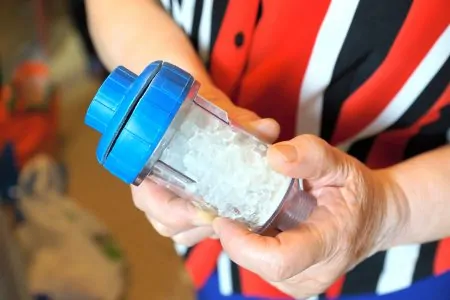
As water flows past rocks and soil, it can collect minerals, particularly if you live in a hard water area. The main culprits that cause hard water are calcium and magnesium (1).
The effect of these mineral deposits in your home is limescale buildup. This can be found on faucets, shower heads, and any plumbing appliances, You might also notice a thin layer on dishes or spots and marks on glassware (2).
How Do Dishwasher Detergents Help?
Dishwashing detergents are formulated to remove food remnants and grease from your dishes. They can also prevent calcium and magnesium from becoming attached to the items in your dishwasher, as well as protect the appliance’s inner workings (3). Using the right detergent should leave you with clean, spotless dishes.
Finding the Best Dishwasher Detergent for Hard Water
If you want to find a detergent that will negate the effects of hard water, there are some key points to consider.

Type of Detergent
Dishwasher detergents are available in three main forms:
- Gel detergents: Gel detergents resemble standard liquid detergents. They dissolve dirt and minerals quickly to clean your dishes.
- Powder detergents: Powder detergents will clean dishes effectively, but they do have some drawbacks. If you use too much, they could leave some residue, but too little might not clean properly. The powder can absorb moisture while stored, resulting in clumps. These clumps might not dissolve properly, impacting performance.
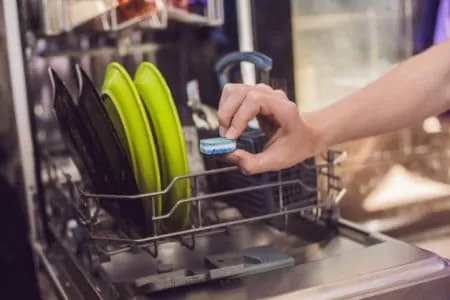
- Tablets or Pods: You won’t need to worry about measuring your cleaner, as tablets and pods are designed to contain an ideal amount of detergent. This makes them very easy to use but they are usually a more expensive option. You should also ensure your hands are dry when you handle them, or the moisture could start dissolving the tablet.

Cost
The packaging of most dishwasher detergents will display the number of tablets they contain or how many washes the volume of cleaner can provide. This should give you a clear sense of which cleaners are the most cost-effective.
Tablets are usually more expensive as an extra process is required to give them their shape, with this cost being transferred to the customer. You are paying for convenience and the knowledge that you will be using the right amount of detergent for your dishwasher.

Environmentally Friendly
It is important to be eco-friendly and an increasing number of manufacturers are working toward this goal. Choosing a product that doesn’t contain harmful chemicals means you won’t release them back into the environment.
You should also look for recycled and recyclable packaging to reduce your plastic waste.

Scent
Whether or not to choose a scented product is entirely a matter of personal preference. Some detergents smell like lemons or other fruits, while others are fragrance-free.
Scented detergents can help avoid your dishwasher smelling musty. They will also keep your crocket smelling fresh, which can refresh your kitchen.

Effective Cleaning
The best dishwashing detergents won’t require pre-washing or the addition of rinse aids. Read the packaging to discover what the manufacturer claims they can do. This is often a matter of trial and error as each dishwasher is different and what works for one might not work for another.
The Best Dishwasher Detergent for Hard Water of 2024
After examining numerous products, we have reviewed our top five to help you find the best dishwasher detergent for hard water. We chose these cleaners based on their eco-friendliness, value for money, how they are used, and, essentially, how well they remove hard water stains.
Cascade Platinum Plus Action Pacs
Best Overall Dishwasher Detergent for Hard Water
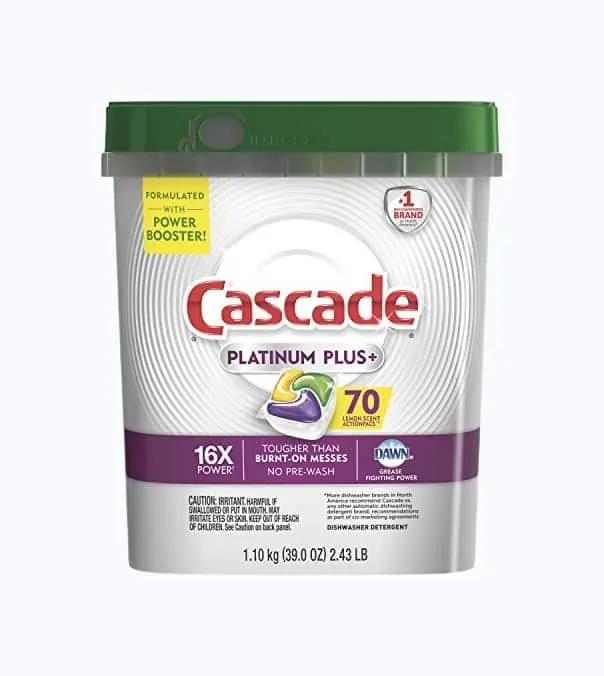
Cascade Action Pacs are made by Procter & Gamble, one of the largest manufacturers in America. These tabs contain powder, gel, and liquid, so you get the best of all worlds. They also contain the company’s proprietary grease-cutting formula, Dawn.
As a mark of its high quality, Dawn has been used to help clean up oil spills and pollution for over 40 years (4). If it is powerful enough to cut through the after-effects of an oil spill, it will be more than enough for your dishes.
You won’t need a pre-wash product or cycle, so you will be able to simply put your dishes into the dishwasher, add a tab, and turn it on. Not using a pre-wash will shorten how long your dishwasher is active, which should also reduce your energy bills.
Pros
- Power booster to remove stubborn food
- Suitable for hard or soft water
- Excellent grease cutting
Cons
- The lemon scent can leave an aftertaste on dishes
Product Specs
| Quantity | 70 tabs |
| Size | 6.8 x 5.5 x 7.2 inches |
| Weight | 2.8 pounds |
| Ingredients | Sodium Carbonate, Nonionic Surfactants, Enzymes |
| Type Of Detergent | Gel and powder tablets |
Our Ratings
User Experience
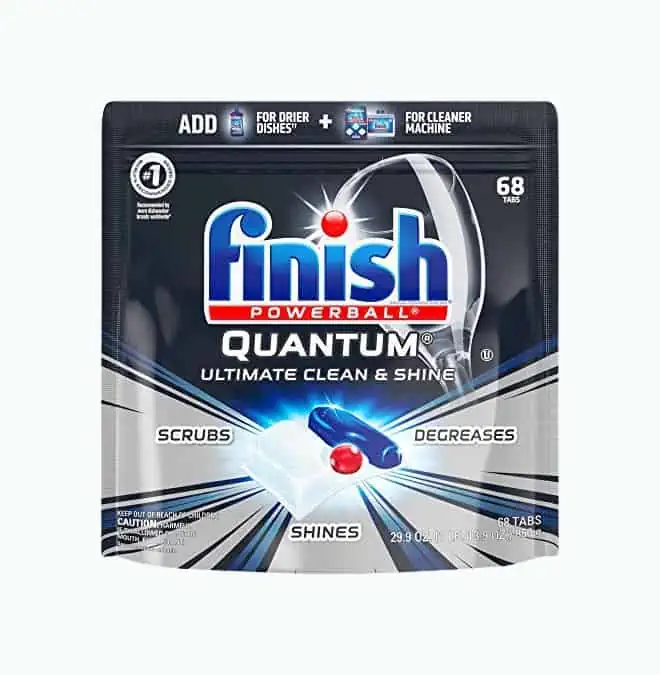
Finish Quantum Powerball Detergent
Best Large Pack Option
As one of the leading names in dishwasher detergents and cleaners, Finish’s Quantum Powerball is a natural choice for many homeowners. This pack weighs 1.87 pounds and contains enough tabs for 68 dishwasher cycles.
There are three chambers in these tabs that aim to remove dried-on food, as well as tea and coffee stains. It will also remove grease from your dishes and leave them sparkling without hard water residue.
The tabs are designed to dissolve quickly in your dishwasher without leaving any residue behind. This means all the cleaning power should reach wherever it is needed. The soap won’t be left in the soap dispenser or on your dishes.
Pros
- Three-in-one tablets
- Dissolve quickly
- Effective against grease
Cons
- Some users complain of a strong chemical smell
Product Specs
| Quantity | 68 tabs |
| Size | Not specified |
| Weight | 1.87 pounds |
| Ingredients | Not specified |
| Type Of Detergent | Powder, gel and liquid |
Our Ratings
Personal Perspective
Grab Green Natural Powder
Best Animal-Friendly Dishwasher Detergent
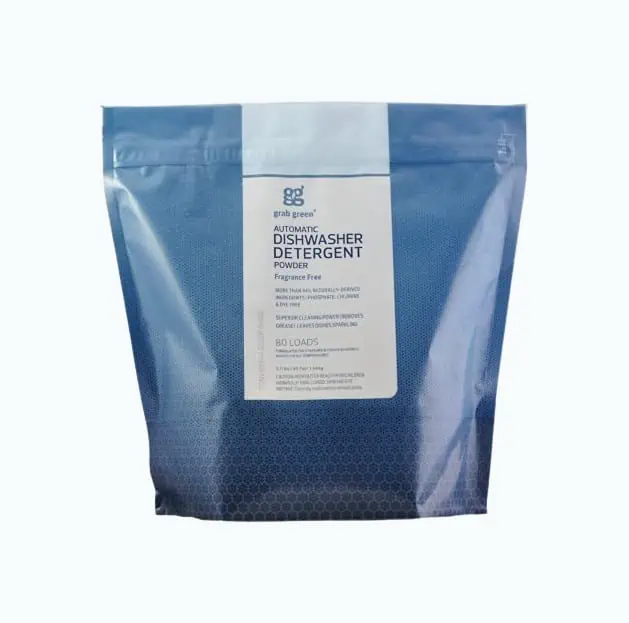
If you are looking for an eco-friendly, chemical-free dishwasher detergent, Grab Green is an excellent option. The company was founded in 2006 by Patricia Spencer and Michael Eddell — two parents who wanted a cleaning solution for their families.
Grab Green states that its dishwashing detergent is sold in responsible, biodegradable packaging and the cleaner is not tested on animals (5). The packaging also provides a full list of the various non-toxic, natural ingredients contained in this powder.
An excellent feature of this packaging is its Velcro closure. This helps prevent moisture from getting into the powder and creating clumps. As a result, it is easier to pour from the packet and into your dishwasher.
Pros
- Velcro seal packaging
- Fragrance-free, grapefruit, or cranberry options
- Chemical-free
Cons
- Might need to use more than the recommended amount in hard water areas.
Product Specs
| Quantity | 80 loads |
| Size | 9.5 x 4.5 x 10 inches |
| Weight | 3.17 pounds |
| Ingredients | Sodium derivatives and enzymes |
| Type Of Detergent | Powder |
Our Ratings
Community Feedback
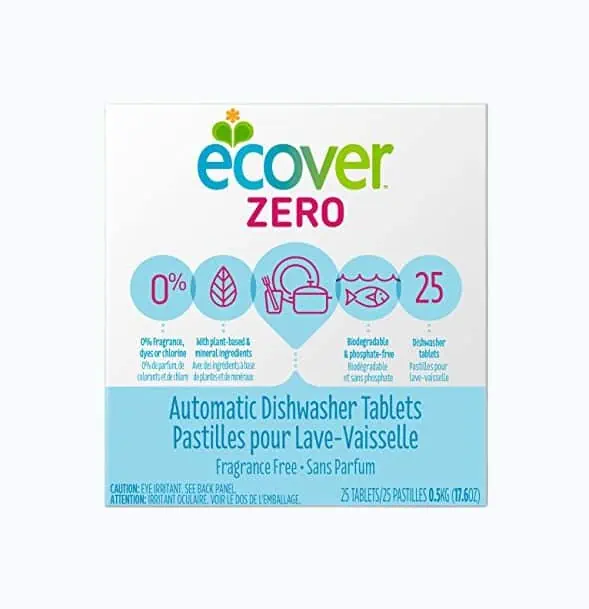
Ecover Automatic Dishwasher Soap Tablets
Individually Wrapped Tablets
Dishwasher tablets were designed to be easy to use but they are prone to sticking together if moisture gets into their packaging. Ecover has overcome this issue by wrapping each tablet in recyclable material, so you won’t need to worry about them becoming bonded.
The cleaner is completely fragrance-free, so it won’t leave an aftertaste or a strong smell in your kitchen.
Ecover is also committed to providing environmentally conscious products. The box is recyclable and the cleaner itself has renewable plant-based ingredients instead of chemicals, so you can be confident that it is eco-friendly.
Pros
- Fragrance-free
- Eco-friendly packaging
- Natural ingredients
Cons
- Pricey compared to other tablets
Product Specs
| Quantity | 25 tabs |
| Size | 5.4 x 2.5 x 5.7 inches |
| Weight | 1.1 pounds |
| Ingredients | Plant-based, minerals |
| Type Of Detergent | Powder tabs |
Our Ratings
First-Hand Impression
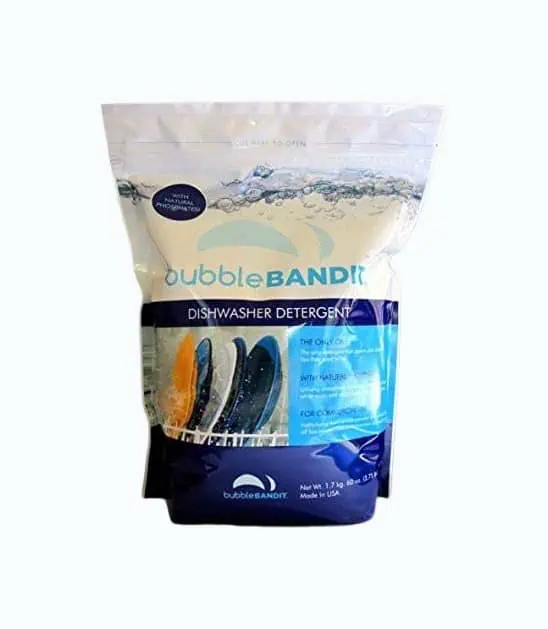
Bubble Bandit Detergent With Natural Phosphates
Best Phosphate Product
Dishwasher detergents that contain phosphates have been banned in many US states (6). They are believed to add to algae blooms after passing through wastewater treatment plants and returning to the environment (7).
Bubble Bandit’s dishwasher powder is advertised as meeting the permissible levels of natural phosphates, so it is powerful without being harmful.
The Ziploc-style bag contains enough powder for up to 60 washes and is an all-in-one solution. Bubble Bandit states you won’t need an additional rinse aid when you use this product, saving money. It has no added perfumes or dyes so it won’t make your kitchen smell.
Pros
- Made in the USA
- All-in-one formula
- Ziploc bag
Cons
- Despite being sold as fragrance-free, some users notice a strong smell
Product Specs
| Quantity | 60 washes |
| Size | 8 x 4 x 10 inches |
| Weight | 3.75 pounds |
| Ingredients | Natural phosphates |
| Type Of Detergent | Powder |
Our Ratings
User Experience
| Product | Best | Quantity | Size | Weight | Ingredients | Type |
|---|---|---|---|---|---|---|
| Cascade Platinum Plus Action | Overall Pick | 70 tabs | 6.8 x 5.5 x 7.2″ | 2.8 lbs | Sodium Carbonate, Nonionic Surfactants, Enzymes | Gel & powder tablets |
| Finish Quantum Powerball | Large Pack | 68 tabs | Not specified | 1.87 lbs | N/A | Powder, gel & liquid |
| Grab Green Natural Powder | Animal-Friendly | 80 loads | 9.5 x 4.5 x 10″ | 3.17 lbs | Sodium derivatives & enzymes | Powder |
| Ecover Automatic Dishwasher Tablets | Individual Tablets | 25 tabs | 5.4 x 2.5 x 5.7″ | 1.1 lbs | Plant-based, minerals | Powder tabs |
| Bubble Bandit Detergent | Phosphate Product | 60 washes | 8 x 4 x 10″ | 3.75 lbs | Natural phosphates | Powder |
FAQs

Does Hard Water Ruin Dishwashers?
The mineral content of hard water can have health benefits, but it can also damage hair and cause dry skin. It also has a negative impact on plumbing, including the inner workings of appliances.
This mineral content, usually calcium and magnesium, can be left on surfaces, where it hardens and accumulates over time. When this happens in pipes, it narrows them, making them work harder and increasing stress on their components.
If you live in a hard water area, you might also find that your standard detergent isn’t strong enough to remove the white marks left by minerals.
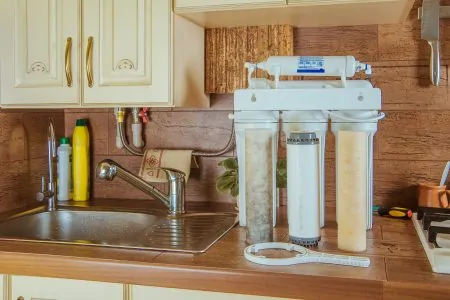
Some simple measures can help reduce the impact of hard water, including using phosphate-free detergents and maintaining your home’s filtration system if you have one. These small steps should extend the life of your dishwasher and prevent major issues with it in the short term.

How Long Do Dishwashers Last with Hard Water?
On average, a dishwasher will last about seven years if you have a hard water supply. Hard water is one of the main issues that affect a dishwasher’s lifespan. This includes corrosion and mineral deposits, which force the appliance to work harder.
It is estimated that a dishwasher will lose anywhere from 30% to 50% of its usual lifespan if it is installed in a hard water area. Aside from the long-term effects on your dishwasher, hard water can also leave spots and scale on your dishes.
If you live somewhere with hard water and use your dishwasher regularly, it is important to ensure it is well maintained so you can use it for as long as possible. You should also find a detergent that will clean your dishes properly and prevent marks, such as the ones on our list.

Can You Use Vinegar in a Dishwasher?
Vinegar is a reliable cleaner that is widely used in kitchens and bathrooms. As it is gently acidic, it removes dirt effectively without risking damage to the finish of faucets and other delicate surfaces. With this in mind, it is logical to think that it should be suitable for use in dishwashers.
Many people have successfully used vinegar as an alternative to regular dishwasher detergent. Its acidity means it is ideal for removing hard water stains, which are alkaline.
However, some experts advise against using too much vinegar in a dishwasher. It could do unseen damage to the appliance or leave a strong vinegar smell coming from the unit or your dishes even after the cycle ends.

Can I Put Baking Soda In My Dishwasher?
There are a few ways to use baking soda in your dishwasher. One option is to simply sprinkle some baking soda over the bottom of your machine and anywhere else with visible dirt or food stains. You can then run a normal cycle using hot water and heavy-duty dish soap.
If the inside of your dishwasher seems particularly dirty and you want to perform some maintenance, you can add several tablespoons of baking soda and then run a cycle with an empty dishwasher. This will help sanitize the machine’s interior and eliminate any lingering odors.

Will CLR Damage a Dishwasher?
CLR advises against using its cleaner in your dishwasher or washing machine. The product is rich in detergents that will cause excessive foam, which your dishwasher might struggle to get rid of before the cleaning cycle ends.

Which Is Better: Cascade Platinum or Finish Quantum?
Both Cascade and Finish have earned stellar reputations for their superior cleaning power, a wide selection of products, and user-friendliness.
Cascade claims its dishwashing detergent is North America’s most recommended. On the other hand, Finish is the most widely used and highly recommended dishwasher detergent brand around the world.
Each brand offers products that are designed specifically for use in dishwashers. If you aren’t sure which to choose, it is worth checking your dishwasher manufacturer’s website as they might have a list of recommended cleaners that will wash your dishes safely and effectively.