Shutter color for a yellow house comes down to one question: how much contrast do you want against the exact shade already on your siding? A soft butter yellow and a bright lemon pull in opposite directions.
Red shutters are the pairing most people picture, and they still work. Black, deep green, navy, gray, and natural wood all hold their own against yellow, and changing shutters resets the whole look of a facade for a fraction of what a repaint costs.
Below are 15 shutter colors that work with yellow siding, running from safe neutrals to bold statements, plus how to match one to your siding, your sun exposure, and your resale plans.
Key Takeaways
- Black shutters give bright yellow siding sharp contrast and read as the most timeless pairing.
- Earthy greens like sage, olive, and forest green tie a yellow house to the trees and shrubs around it.
- Blue sits opposite yellow on the modern color wheel, so navy and cerulean deliver built-in complementary contrast.
- White, gray, and natural wood are the safest resale picks, and light exterior surfaces reflect far more sunlight, so light shutters run cooler in full sun.
Best Shutter Colors for a Yellow House
Black, navy, forest green, sage, dark gray, wine, and natural wood are the shutter colors that pair most reliably with yellow siding. The 15 combinations below run from those safe classics out to bolder statements. Match the depth of the shutter to how bright your siding is; the louder the yellow, the more work a deep or neutral shutter has to do to balance it.
1. Black
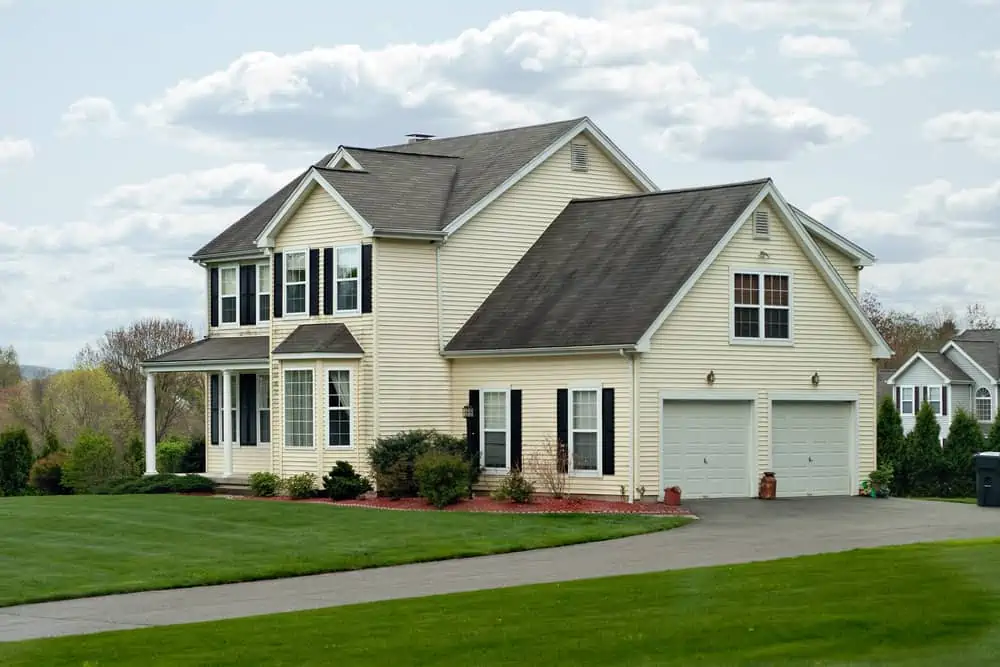
Black anchors a yellow facade. It makes bright siding read as deliberate instead of loud, and it sharpens the outline of every window it frames. Where white accents lighten a house, black accents add depth and define the architecture.
On a pale butter yellow, a softened black or near-black charcoal keeps the contrast from tipping into harsh.
2. Wine

Wine shutters give soft yellow siding a rich, traditional look without the shout of a primary red.
Deep red shades read warm against light siding and sit naturally on colonial and Victorian houses. Pick one if you want the classic yellow-and-red pairing turned down a notch.
3. Forest Green
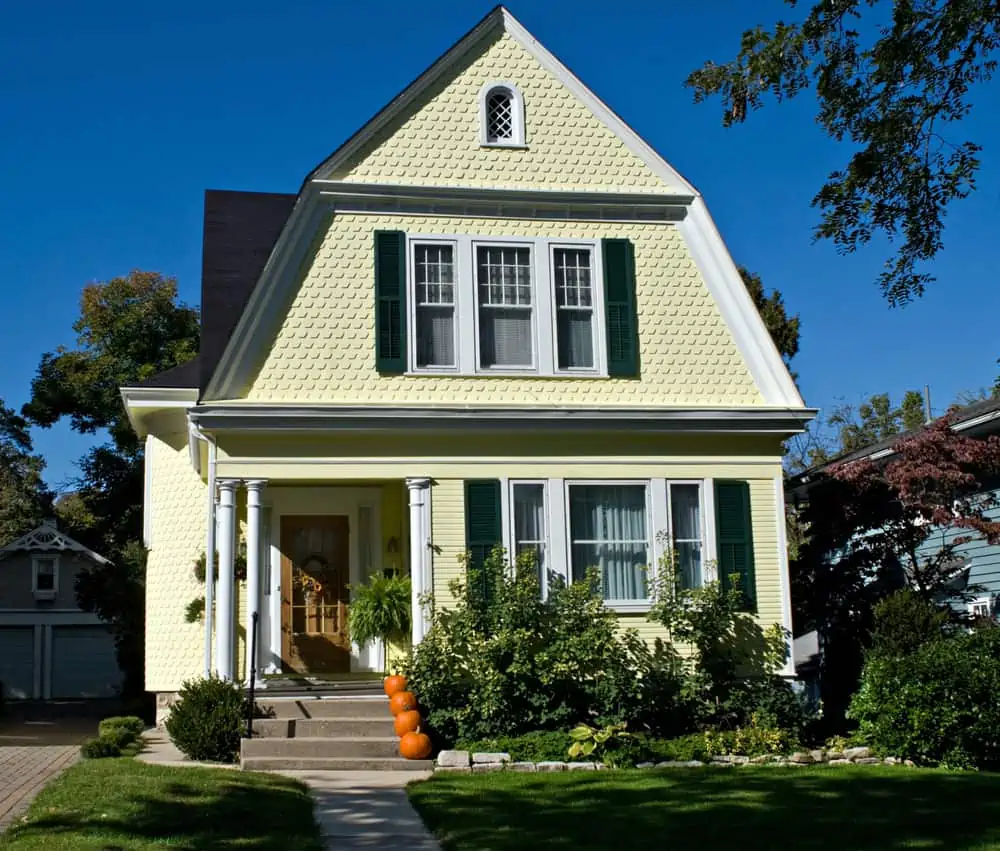
Green and yellow are the pairing nature already uses. Forest green keeps a yellow house grounded without falling back on a neutral, and it repeats the color of the mature trees and shrubs most yards already have. Try Forest Green by Benjamin Moore for a timeless finish.
4. Honey Stain
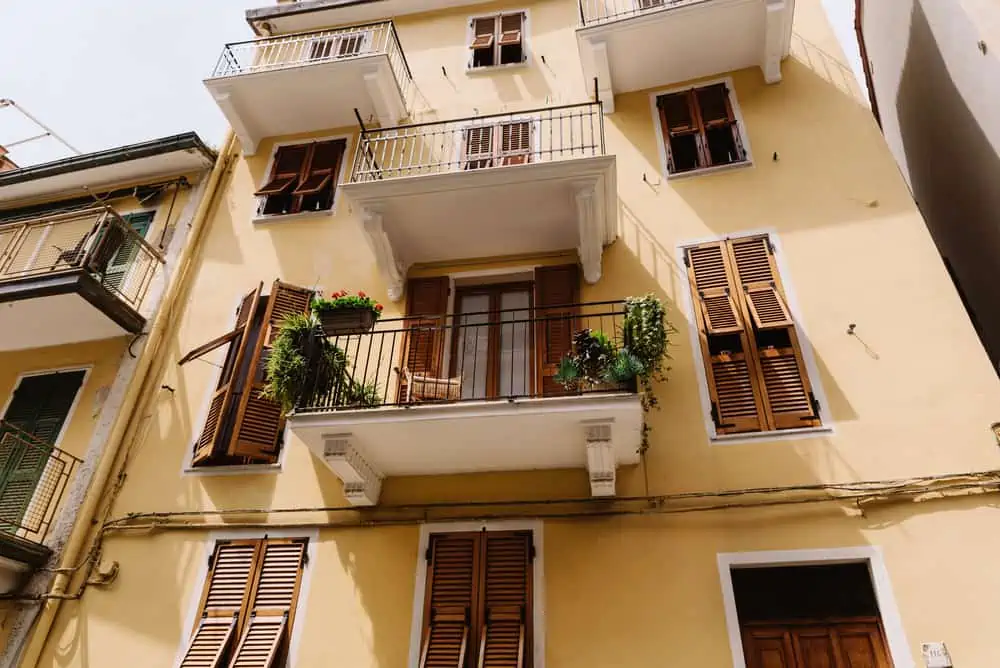
Natural wood is a real alternative to paint. A deep honey-brown stain brings grain and warmth that flat paint cannot, and the medium-dark tones sit comfortably between rustic farmhouse and modern craftsman.
Stain also shows everyday dust and pollen less than a bright white shutter does, which makes it an easy choice for a house under trees.
5. Cerulean Blue
Cerulean is a bright, cool blue that pulls the eye straight to the windows. Because blue sits opposite yellow on the modern color wheel, this pairing is complementary contrast at full strength, so it reads energetic rather than restful. Check out Cerulean by Behr if you want that cool, coastal pop.
6. Teal
Teal and mustard yellow make an artsy, curated pairing that neither color manages on its own.
Lighter yellows work with teal too, because the combination reads as sun and sea. That makes it a favorite on beachside homes and coastal cottages.
Design Tip
For a nautical vibe, skip the paint and opt for a teal-colored semi-transparent stain on wood shutters!
7. Olive
Olive green is the muted, earthy answer to forest green. It pairs easily with yellow because both colors carry warm undertones, so the two blend instead of competing. Use yellow as the base and olive as the accent when you want the house to settle into its surroundings rather than stand apart from them. I recommend Relentless Olive by Sherwin-Williams.
8. Dark Gray
If your siding is a bright lemon yellow, dark gray tones it down. As a neutral it grounds a loud color without the stark edge of pure black, which leaves the house looking contemporary and balanced. Reach for light gray on a muted or pale yellow, and charcoal when you want more punch against a saturated one.
9. Sage
Sage green is the softer cousin of the green family. Because it leans slightly cool and gray, it sets a gentle contrast against warm yellow siding instead of a hard one.
The house still stands out on the street without looking loud. Choose a light sage to keep the feel cottage-like and airy, like Behr’s Sage Green.
10. Navy
Navy gives you the seriousness of black with more personality. It creates a striking, classic contrast most often seen on colonial-style homes, and it works across almost every shade of yellow, from pale butter to deep gold. Navy also flatters white trim, so it is a safe pick on a house that already has plenty of white detailing.
11. Yellow (Tone-on-Tone)
Monochromatic schemes are underrated. If you do not want shutters interrupting the visual flow of the house, paint them a few steps darker or lighter than the siding. The result adds texture and shadow at the windows without introducing a new color, which suits a house with strong architectural detail that already carries the interest.
12. Baby Blue
Pastel blue shutters give a yellow house a charming, dollhouse look. The warm undertones in the siding play against the cool, fresh notes in the blue.
The pairing makes a statement without going dark or heavy, which is why it suits Victorians and bungalows so well.
13. Red
A yellow house with red shutters is an Americana classic. Both colors share warm, energetic undertones, and the result feels welcoming rather than formal.
Go for a primary red for a farmhouse look, or a darker brick red for something more historical and stately.
14. White
White is the low-risk choice. Like black, it is a neutral that suits any intensity of yellow, from pale butter to bright lemon. It makes the windows pop and leaves the facade looking crisp. If you may sell down the road, a neutral shutter over yellow siding keeps the home appealing to more buyers, which is part of why white stays so popular. The trade-off is upkeep: white shows mud splash and water spotting sooner than a mid-tone does.
15. Grass Green
Distinct from deep forest or muted olive, a standard grass green brings a lively punch. Yellow sun and green leaves are a pairing our eyes read constantly in nature, which is why the combination feels easy rather than jarring. PPG’s Green Gloss is a great choice for this energetic look.
Tips For Picking Shutters for a Yellow House
Yellow pairs with everything from pale neutrals to deep contrasts, so the job is narrowing 15 options down to the two or three worth sampling on your own wall. Start with the undertone of your siding, then weigh sun exposure, upkeep, and resale.
- Match the undertone: Warm mustard and gold yellows suit earthy greens, brown, and black; cooler lemon yellows carry gray, navy, and blue better.
- Balance the bold: If your siding is bright lemon, choose a dark or neutral shutter to ground it.
- Consider the vibe: Wine and navy feel refined and historical, while teal and bright red feel playful.
- Mind the sun: Dark exterior materials reflect only 5% to 20% of the sunlight that hits them, while light-colored ones reflect 55% to 90%, according to Department of Energy figures for roofing (1). The same physics applies at a window, so black or navy shutters on a south or west wall run hotter and need repainting sooner than white or sage.
- Play it safe: White or gray won’t clash with warm tones, making them excellent choices for HOA neighborhoods.
- Think about resale: Yellow siding narrows the buyer pool, so keeping the shutters neutral and saving any bold color for the front door keeps the home broadly appealing.
- Test samples: Tape paint chips to the siding and check them at different times of day, since sunlight shifts how both colors read.
FAQs
If you love yellow for your home exterior, here are a few more details to help you nail the design.
Mellow Yellow
New shutters are the fastest way to change the personality of a yellow house without repainting the whole exterior. Yellow and red is a classic for a reason, but it is one option out of many. Sage green, navy, or charcoal gray modernize the look, while white or black keep things safe for resale, and lighter shades hold their color longer on a sun-baked wall.
Match the shutter to your exact shade of yellow, tape a sample to the siding for a day, and check it in morning and evening light before you commit.