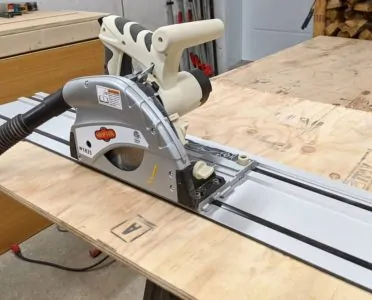
Power saws have transformed the way carpenters, builders, and DIYers work, allowing them to quickly make cuts that would have previously taken minutes or even hours. Track saws are one of the most helpful types, designed to make long, straight cuts without the need for a full-sized table saw.
These saws are multi-functional as they can also be used as plunge saws. Track saws are staples of modern woodshops and will make an excellent addition to your tool collection. However, it is important to choose carefully if you want it to cut quickly and accurately.
To help you find the right product, we have reviewed seven of the best track saws that are currently available. We chose these saws for their bevel capacity, dust collection, and whether they are corded or cordless.
- 2 ³⁄₁₆-inch cutting capacity
- Torque control
- Electronic speed control
- Guide rail precision
- Zero tearout cutting
- Spring-loaded riving knife
- Plunge mechanism for precise cuts
- 5,500-RPM brushless motor
- Integrated vacuum adaptor
- Can be used without a rail
- Value for money
- Continuous anti-kickback feature
- Dual-edged tracks
- Anti-kickback feature
- Straight plunge cutting
- Great price
- High-speed motor
- Ideal for plunge cuts & ripping
- 1,400-watt motor
- Quick blade change
- Dust extractor
Review Methodology: At Sensible Digs, we apply meticulous analysis and hands-on experience to bring you trustworthy reviews on the best track saws. We evaluate products from a user’s perspective, drawing on our professional expertise and quantitative data to give you an in-depth assessment. We compare performance, design choices, and key decision-making factors such as power, precision, and ease of use. Through rigorous tests and benchmarks, we identify what sets each track saw apart from its competitors. Our findings are based on solid evidence, ensuring you get the most reliable and relevant information to make your purchase decision.
The Best Track Saws of 2024
Not all track saws are created equal, and the precision and accuracy they require make it particularly important that you choose a high-quality model. To help you do that, we looked at numerous saws before choosing our top seven best track saws that you can buy today. These saws were chosen for their cutting power, bevel capacity, dust collection, and their energy source.
Makita SP6000J1 Plunge Saw
Best Track Saw for Woodworking
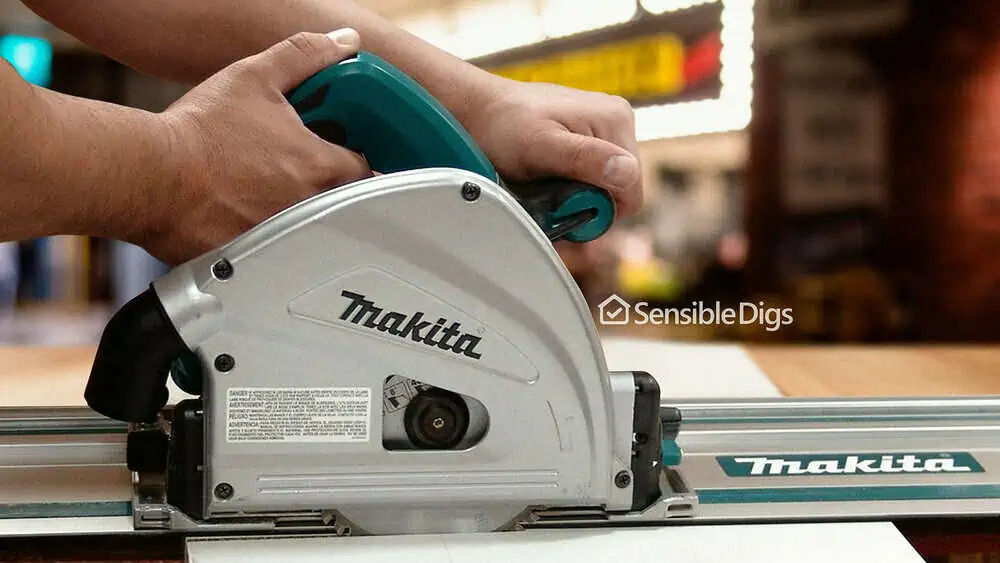
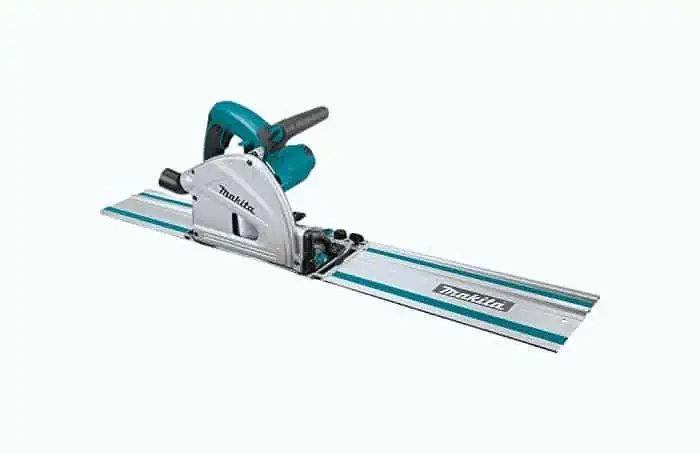
Makita is one of the world’s leading power tool brands, so it is no surprise that the company also produces excellent track saws. This model has electronic speed control that maintains its cutting speed while working with tough materials. It will continue to make accurate cuts without losing any power.
The blade is powered by a strong 12 amp motor that is capable of providing between 2,000 and 5,200 RPM. There is also a variable speed dial, so you can manually adjust the speed to suit the specific material you are cutting.
What We Like
Large Cutting Capacity
This saw cuts 2 ³⁄₁₆ inches at a 90-degree angle and 1 ⁹⁄₁₆ inches at 45 degrees. It has a larger cutting capacity than the majority of handheld track saws.
Torque Control
This Makita saw has a built-in torque control limiter to prevent burnout, which will keep it working properly for longer.
Electronic Speed Control
Electronic speed control automatically adjusts the blade speed depending on the material you are cutting. This means your cutting shouldn’t be significantly affected when cutting through tougher wood than usual.
What We Don't Like
Build Quality Issues
This saw’s track is prone to warping, and some reviews mention that the materials used to construct the saw seem to be of a lower quality than expected.
Product Specs
| Weight | 28 lbs |
| RPM | 5,200 |
| Blade size | 6-½” |
| Cord/Cordless | Corded |
| Guide rail | 55” |
| Warranty | 1-year |
Our Ratings
User Experience
Festool 575387 Plunge Cut Track Saw
Best Premium Track Saw
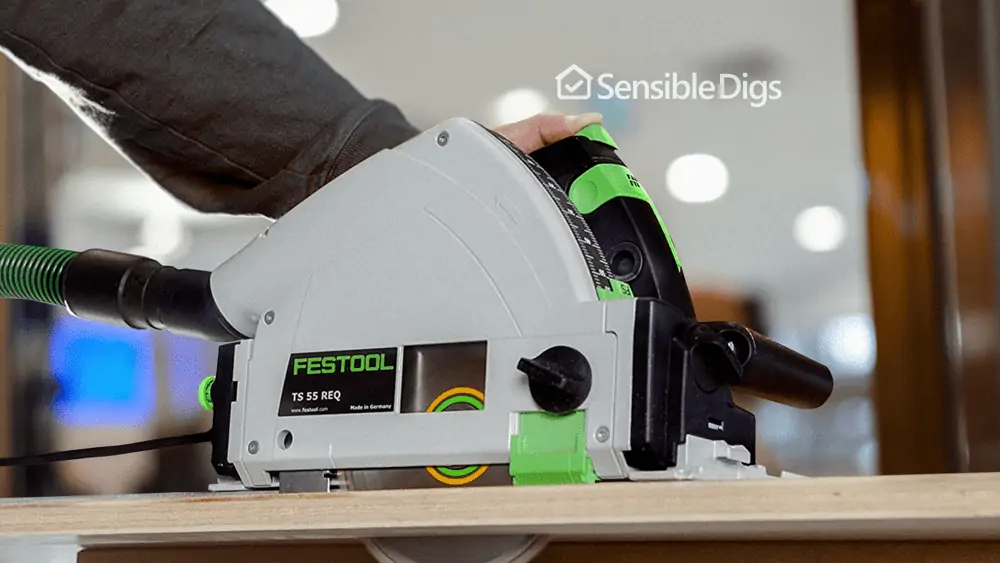
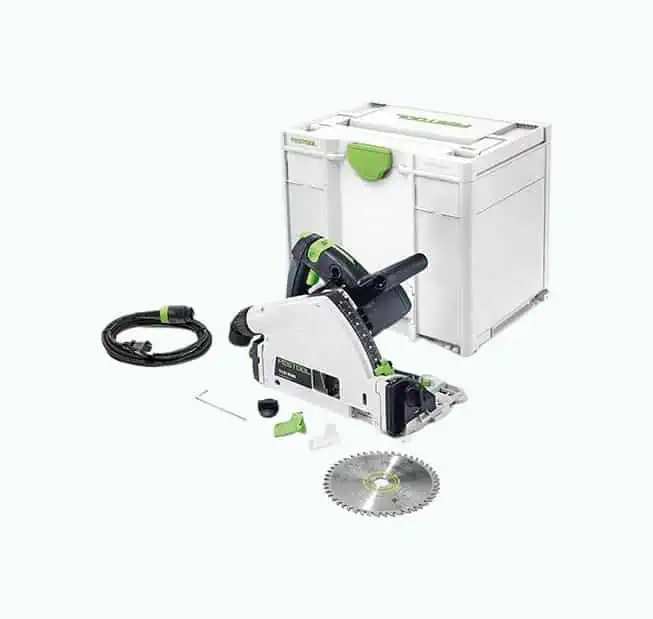
The Festool Plunge Cut track saw is ideal for passionate DIYers. It will make straight, splinter-free cuts thanks to its guide rails and spring-loaded riving knife.
You will be able to enjoy efficient, user-friendly cutting without noticeable tearing in the material. This Festool saw can accommodate nine different blade types, making it a very versatile model.
The spring-loaded riving knife holds the kerf open, reducing the risk of kickbacks and helping you cut cleanly and safely.
What We Like
Guide Rail Precision
This saw provides simple, straightforward cutting that is laser-straight and splinter-free. The cutting depth can be micro-adjusted to make precise cuts using the two cursor lines.
Zero Tearout Cutting
This saw will help you waste less material as it won’t damage the surrounding surface. The guide rail Splinterguard is integrated to ensure no tearing while making cuts.
Spring-Loaded Riving Knife
The spring-loaded riving knife ensures the kerf stays open and prevents the material from pressing against the blade after being cut apart. This minimizes kickbacks, making the saw much safer to use
What We Don't Like
Expensive
As a premium option, this is one of the more expensive saws we have reviewed. While it is an excellent saw, there are some cheaper models that will perform similarly, so you might be able to save some money by looking elsewhere.
Product Specs
| Weight | 7.69 pounds |
| RPM | Not specified |
| Blade size | Not specified |
| Cord/Cordless | Corded |
| Guide rail | 55” |
| Warranty | 3-year |
Our Ratings
Personal Perspective
Bosch ProFactor Track Saw Kit
Best Cordless Track Saw
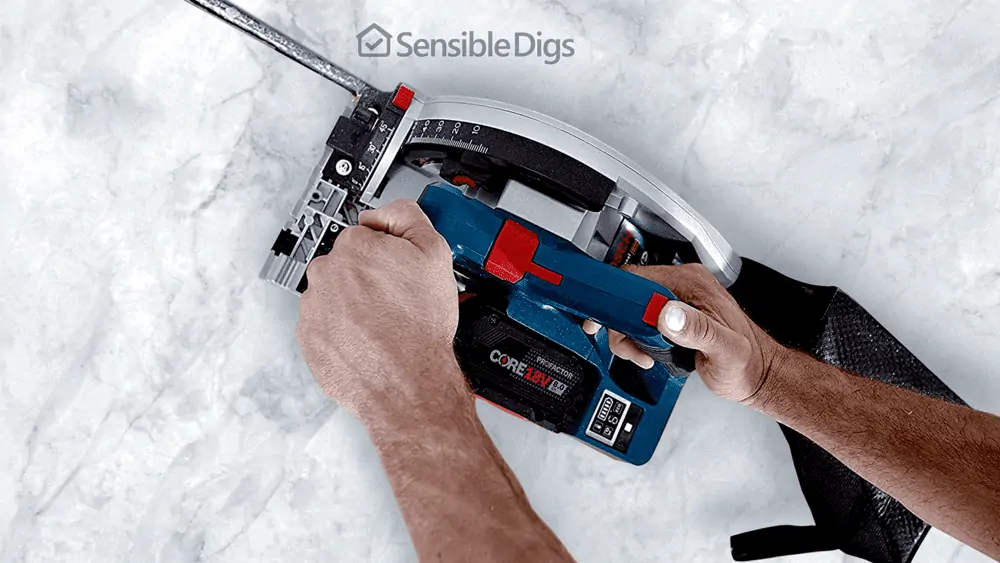
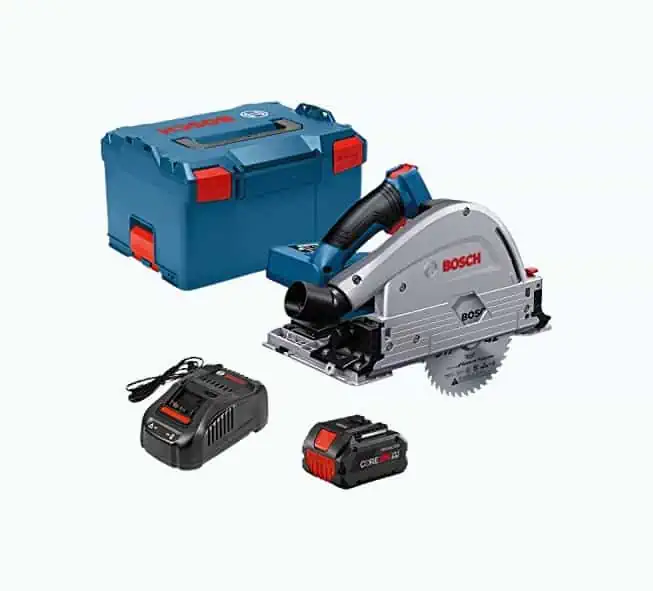
Bosch is a global leader in the power tool industry, and this cordless track saw kit is a great example of why that is the case. It uses an 8.0 Ah Profactor performance battery that can cut for 30% longer when used in eco mode.
This cordless design allows you to take the saw kit wherever you need to make cuts, without having to worry about there being an electrical outlet nearby. As long as you charge the battery beforehand, you will have absolute freedom.
If you are concerned about this saw’s cutting power due to being cordless, you don’t need to be. This saw delivers corded-level power in a cordless model.
What We Like
Plunge Mechanism for Precise Cuts
Users praise this saw’s plunge mechanism. It helps you make multiple precise cuts to the same depth. The front and back markers show you where the saw will cut into the material on either side of the base plate.
Powerful Brushless Motor
The powerful Biturbo brushless motor means you won’t need to worry about this saw being unable to cut through tough materials. It uses a drivetrain system to make the most of the 8.0 Ah power. You can even buy a separate 12.0 Ah battery if you want to make the saw more powerful than it already is.
Integrated Vacuum Adaptor
The integrated vacuum adapter can rotate 360 degrees for ease of use. This means the saw’s dust extraction won’t interfere with how it makes cuts.
What We Don't Like
Useful Accessories Sold Separately
If you want to use the single bevel pivot point, you will need to buy a track separately. You can also enhance the saw’s cutting power by buying a more powerful battery. This can be frustrating, given that the saw is already quite expensive.
Product Specs
| Weight | 12 pounds |
| RPM | 5,500 |
| Blade size | 5-½” |
| Cord/Cordless | Cordless |
| Guide rail | Sold separately |
| Warranty | 1-year |
Our Ratings
Community Feedback
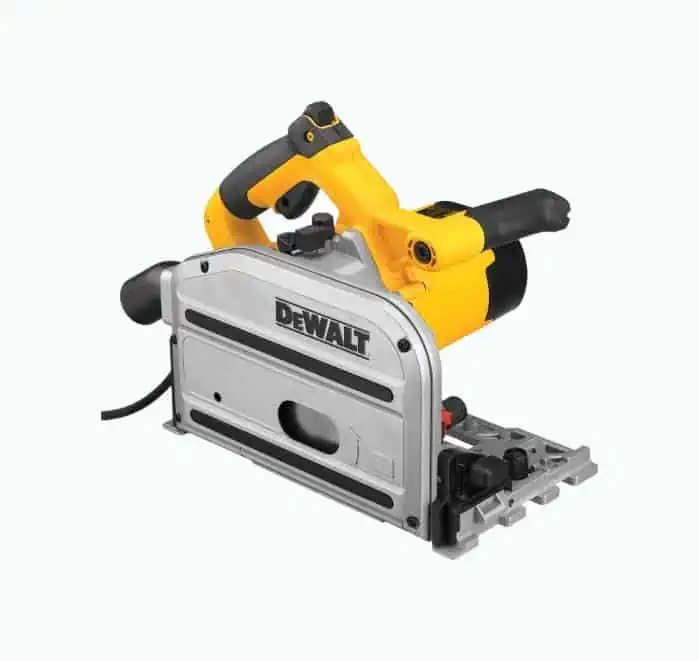
DeWALT DWS520K Track Saw Kit
Best Track Saw for the Money

This DeWALT track saw provides the high quality you expect from the brand but is also excellent value for money. You are unlikely to find a cheaper saw that can match this one’s cutting ability.
Its 6.5-inch blade has a maximum cutting depth of 2 ⅛ inches and a zero load speed of 4,000 RPM. At a weight of just 11.5 pounds, this saw is excellent for plunge cuts, trimming, gang cutting, and more.
The main downside of this saw is that the track needs to be purchased separately, but you can buy the Powertec 55” Track for a fraction of the cost of other branded tracks. This saw is still excellent value, even taking the cost of the track into account.
What We Like
Versatile
This versatile saw will make various cuts including bevel, trim, gang, plunge, and more. If used without the rail, you will have a powerful circular saw.
Value
This DeWALT saw is about half the price of some similar models. Although it doesn’t include a track, you can purchase a universal one for a little over $100, giving you a kit that will still provide excellent value for money.
Continuous Anti-Kickback
With the continuous anti-kickback control engaged, the saw will only move forwards, preventing it from causing injuries by being knocked back at you.
What We Don't Like
Track Not Included
This is an excellent value standalone saw but not a complete track saw solution. You will be able to buy a universal track for a relatively small amount, but the specific DeWALT track will increase your costs significantly.
Plastic Parts
The lock and blade plunge switch is made of plastic, which feels flimsy compared to some of the sturdier options on the market.
Product Specs
| Weight | 18.25 pounds |
| RPM | 4,000 |
| Blade size | 6-½” |
| Cord/Cordless | Cord |
| Guide rail | Sold separately |
| Warranty | 3-year limited |
Our Ratings
First-Hand Impression
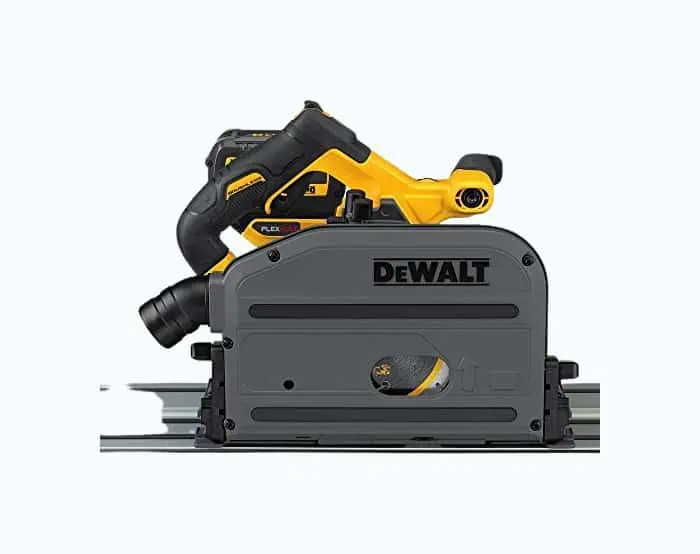
DeWALT FlexVolt Cordless TrackSaw Kit
Best Track Saw for Beginners
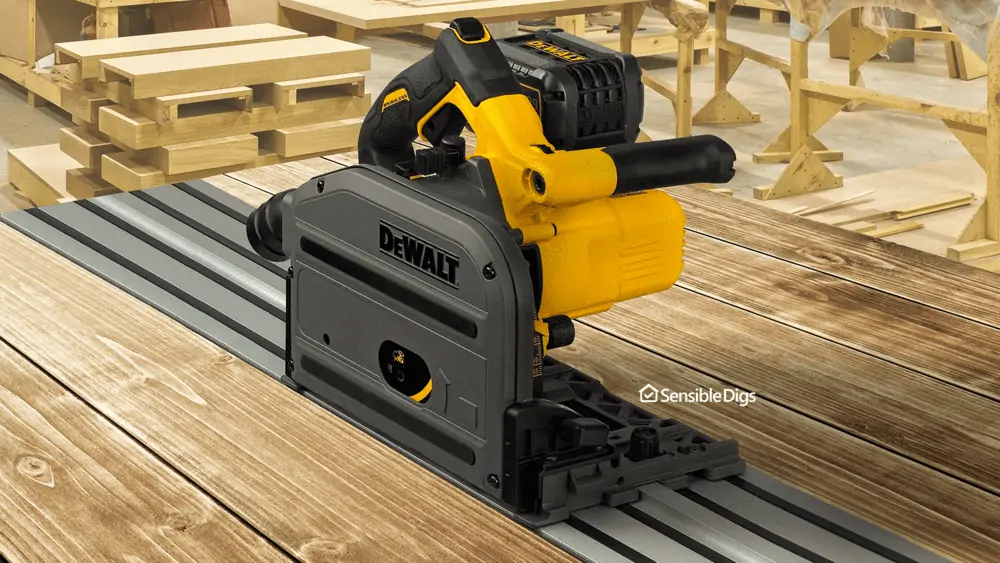
If you are looking to buy your first track saw, this is an excellent beginner-friendly option. Customer reviews praise its ease of use, but it is also very accurate. This is a zero-clearance track saw, with precision as a top priority.
As a cordless saw, you will have the freedom to go anywhere and won’t need to worry about a power cable getting in the way of your work. With dual-edged tracks, you will be able to cut in either direction without any loss in accuracy.
In terms of safety features, there is an anti-kickback mechanism that ensures the saw only moves in the direction you want it to go while cutting. This means the saw won’t be jolted back at you during use.
What We Like
Dual Edged Tracks
The saw’s dual-edged tracks mean you can make perfectly straight, accurate cuts in both directions.
Anti-Kickback Feature
This unit features a continuous anti-kickback mechanism, so you won’t have to worry about the saw being jerked back at you during use.
Straight Plunge Feature
Customers praise the straight plunge feature that provides a smooth, accurate cut. It also reduces the amount of dust that is released. This saw has a low-profile guard to reduce dust by 90%.
What We Don't Like
Track Not Included
The track is not included with the saw, so you will need to purchase it separately. This will increase the amount you spend but your cuts will also be far more accurate with a track.
Product Specs
| Weight | 12.5 pounds |
| RPM | 4,000 |
| Blade size | 6-½” |
| Cord/Cordless | Cordless |
| Guide rail | Sold separately |
| Warranty | 3-year limited |
Our Ratings
User Experience
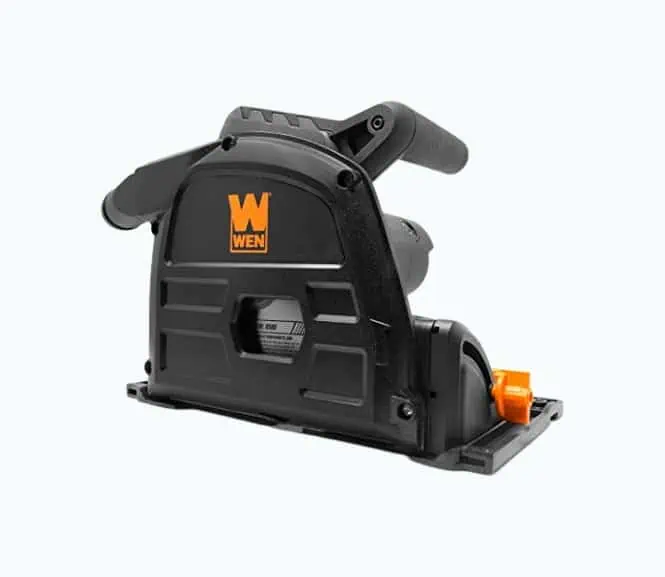
WEN CT1065 10-Amp Plunge Cut Track Saw
Best Budget Track Saw
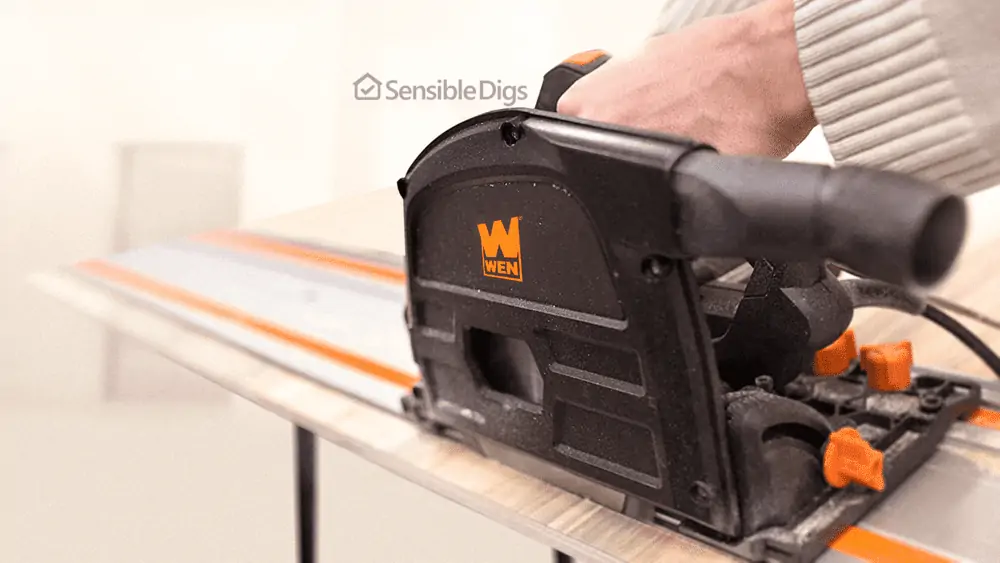
Even among budget-friendly saws, this WEN product stands out as being very affordable. It has a maximum cutting depth of 2 ⅓ inches, making it ideal for cutting large sheets of material.
The blade supplied with the saw is a 24-tooth carbide-tipped model, and it has a 20 mm arbor. This saw is ideal for plunge cuts and ripping. With enough of a track, you will be able to easily make 100-inch cuts.
For a budget option, this is a versatile, user-friendly track saw. It has a power cord, so you won’t need to worry about it running out of juice while cutting.
What We Like
Low Price
This saw earned its place on our list as it is very budget-friendly. It isn’t one of the most powerful saws on the market, but it will let you cut material without spending too much money.
High-Speed
The 10-amp motor in this saw is capable of spinning the blade at a maximum of 5,500 RPM. This is impressive, especially for a budget-friendly saw.
What We Don't Like
Build Quality
Budget tools mean compromises have to be made somewhere, which often means lower-quality materials. There is a lot of plastic used in this saw, so it will likely be less durable than the other saws on our list.
No Track
The lack of a track is no surprise given the low price of the saw, but it means you will need to buy one separately. As the saw is so cheap, you should still save money compared to buying most other saws.
Product Specs
| Weight | 13.58 pounds |
| RPM | 5,500 |
| Blade size | 6-½” |
| Cord/Cordless | Cord |
| Guide rail | Sold separately |
| Warranty | 2-years |
Our Ratings
Personal Perspective
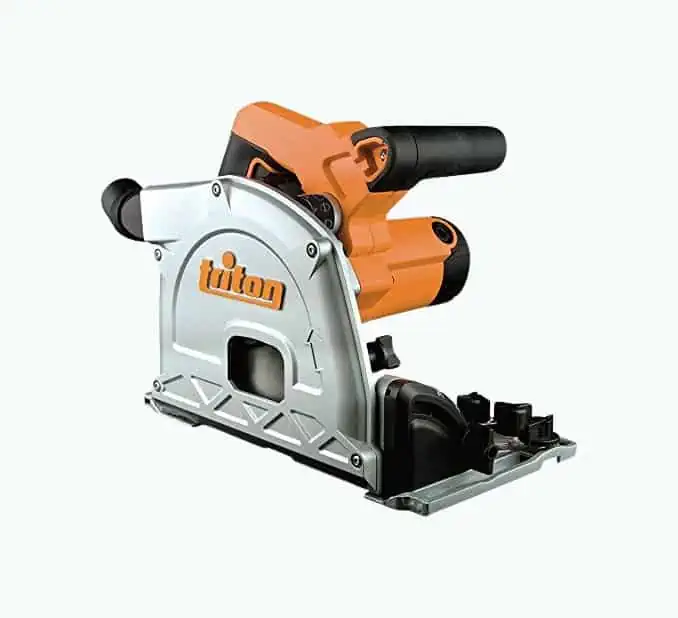
Triton TTS1400 Plunge Track Saw
Best Track Saw for Dust Collection
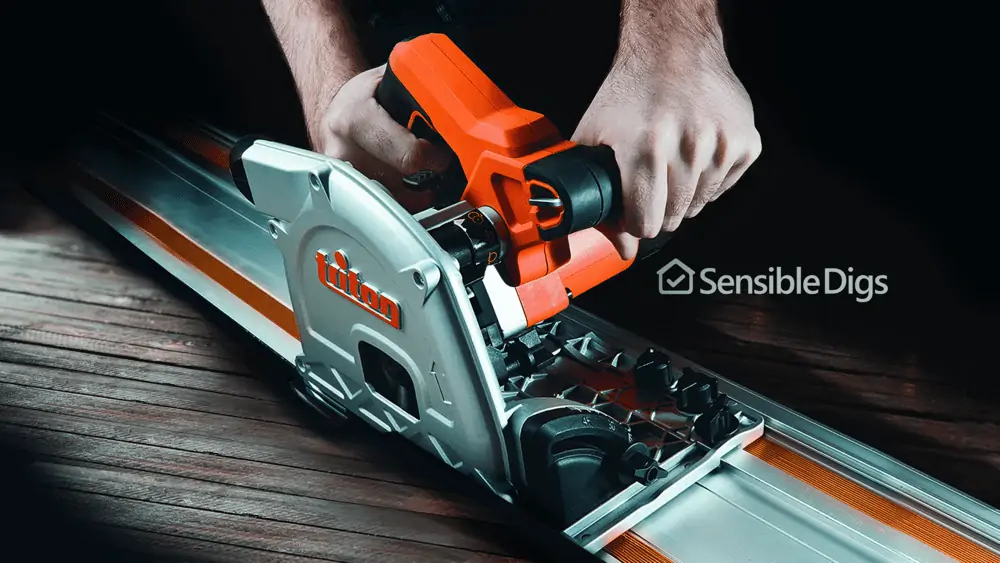
This Triton track saw packs a serious punch. It has a powerful 1,400-watt motor that generates 5,300 RPM. It also has a fast blade change feature and soft-grip handles for greater comfort and control. There is a plunge lock, variable speed control, and a soft-start mode.
This saw’s standout feature is its universal dust adaptor. It will remove the vast majority of sawdust created while sawing, keeping the air clearer and protecting your lungs.
It cuts relatively quietly for a track saw, generating 95 dB, which is the equivalent of a motorcycle engine running. This is in comparison to the 107 dB of some other models featured.
What We Like
1,400-Watt Motor
The 1,400-watt motor generates 5,300 RPM, so this saw is capable of ripping through all types of wood.
Quick Blade Change
Struggling to replace a blade can slow your work significantly, but this saw has a quick blade change feature. It has free plunge, scribe, and blade change modes.
Dust Extractor
This saw’s excellent dust extraction is the reason that it features on our list. It has a universal adaptor that will remove almost all the debris that is created while sawing.
What We Don't Like
No Track
Like many other track saws, this model is sold without a track. If you purchase this Triton saw, you will also need to purchase a track separately to make long, straight cuts.
Poor Packaging
Some customers have complained that the saw is packaged poorly, leading to it being damaged in transit. Others have said that the angle guide settings are inaccurate, affecting the quality of their work.
Product Specs
| Weight | 6.5 pounds |
| RPM | 5,300 |
| Blade size | 6-½” |
| Cord/Cordless | Cord |
| Guide rail | Sold separately |
| Warranty | 1-year limited |
Our Ratings
Community Feedback
| Product | Best | Weight | RPM | Blade size | Cord/Cordless | Guide rail | Warranty |
|---|---|---|---|---|---|---|---|
| Makita SP6000J1 Plunge Saw | Woodworking | 28 lbs | 5,200 | 6-½” | Corded | 55” | 1-year |
| Festool 575387 Plunge Cut | Premium Saw | 7.69 lbs | N/A | N/A | Corded | 55” | 3-year |
| Bosch ProFactor Track Saw Kit | Cordless Saw | 12 lbs | 5,500 | 5-½” | Cordless | Separate | 1-year |
| DeWALT DWS520K Track Saw Kit | For the Money | 18.25 lbs | 4,000 | 6-½” | Corded | Separate | 3-year limited |
| DeWALT FlexVolt Cordless | Beginners | 12.5 lbs | 4,000 | 6-½” | Cordless | Separate | 3-year limited |
| WEN CT1065 10-Amp Plunge Cut | Budget Pick | 13.58 lbs | 5,500 | 6-½” | Corded | Separate | 2-years |
| Triton TTS1400 Plunge Track Saw | Dust Collection | 6.5 lbs | 5,300 | 6-½” | Corded | Separate | 1-year limited |
What Is a Track Saw Used For?
Track saws get their name for the track they slide along, which enables a user to make accurate straight cuts with minimal effort. They are ideal for trimming doors and for cutting plywood and other large sheets of material.
Many professional carpenters and woodworkers use track saws as they are fast and accurate, as well as being relatively versatile. They will provide a much neater finish than marking a line by hand and cutting it manually using a handsaw.
Benefits of a Track Saw
Portable
Unlike large, stationary table saws, track saws are small and portable enough to be carried under one arm. This makes them ideal if you are a professional carpenter and need to work onsite.
Makes Long Cuts
Table saws have a limited capacity, meaning you won’t be able to cut very large pieces in one sweep. Circular saws are less accurate as you need to guide them by hand, which makes cutting long lines very difficult.
On the other hand, track saws can keep cutting as long as you have a track for it to follow. They are very accurate and provide a neat finish that requires minimal sanding after cutting.
No Clamps Needed
On most models, the tracks have non-slip rubber strips on the bottom. This means you can simply place them down on the material without them moving around, which is much quicker than using clamps. This means track saws are fast as well as accurate.
Dust Collection
Most track saws have a saw dust collection system, which gathers sawdust and keeps it inside a bag. Sawdust can be very harmful if inhaled, so this is an important safety feature on a tool that creates a large amount of debris.
Easy Setup
To set up a track saw, you simply place the track down, line it up with your marks on the board, and the edge will show you exactly where the cut will be made. This removes any guesswork and means that there will be no need to make test cuts.
Works in Tight Spaces
Unlike a table saw, which needs enough space for the material to be fed into the blade and emerge from the other side, a track saw only requires as much space as the size of the material itself. This is because a track saw moves, rather than the material itself moving.
Makes Neat Cuts
Track saws provide among the finest finishes of any power saw. In comparison to a table saw or circular saw, which usually leaves the material in need of some tidying up with sandpaper, a track saw should leave you with a smooth cut after the first sweep of the blade.
No Limit Miters
Table saw miters have limits that restrict the cuts you can make with them. There are no such limits with a track saw. The miter can be as long as you want at any angle. This will allow you to work quickly without compromising the accuracy of your cuts.
Multi-Purpose
A track saw can be used in place of a miter saw, a table saw, a circular saw, or a panel saw. This versatility is one of the main reasons that these saws have become so popular with professional carpenters and construction workers.
Safe to Use
As the saw is on a track and faces away from the user, there is minimal risk of accidents, especially with a non-slop track. This is much safer than the exposed blade of a table saw.
How to Choose the Best Track Saw
Track saws can change the way you work but only if you choose the right model, which isn’t always easy. Keep the following in mind and you should have a better chance of buying a saw that suits you

Speed
As they use circular blades, track saw speeds are measured in RPM (revolutions per minute). This will give you a sense of how quickly the saw will cut through materials. The higher the RPM, the better suited the saw will be to cut harder and denser material.
The average RPM of track saws is 2,000, but more powerful units can provide up to 5,000 RPM. Some high-end models have variable speed control, which allows you to adjust the speed to cut through different materials.

Torque
Cutting power isn’t only about speed; the torque is equally important. Torque is the force with which an object is turned, in this case, a circular blade. A supercar without torque wouldn’t go very far, as its powerful engine would be unable to effectively transfer its energy to its wheels. A saw with a high RPM but low torque will spin quickly but won’t be able to cut through tough materials.

Bevel Capacity
Basic track saws will cut the material at a 90-degree angle, but a saw with a bevel adjuster opens up a new world of angles and cuts. These saws are very versatile, making your investment even more worthwhile.

Power
The motor’s power will be the difference between cutting harder materials or being limited to softer ones. If you want to comfortably cut through most materials you are likely to encounter, look for at least a 9-amp motor.
Keep In Mind

Soft Start
Soft start saws build their RPM gradually instead of starting at maximum speed. This makes them far more user-friendly by reducing how much the saw vibrates, which also increases its longevity. A steadier saw will also improve your accuracy and reduce fatigue.

Corded or Cordless
Whether to choose a corded or cordless saw depends on your individual circumstances. Corded track saws won’t run out of power, so you won’t have to wait for the battery to charge before you can continue working. However, they do mean you will have to stay relatively near an electrical outlet, even with an extension cable.
In contrast, cordless track saws offer complete freedom, allowing you to work anywhere. However, you will still need a way to charge the saw’s battery and the cutting power will be reduced as the battery drains.

Durability
The best ways to get a sense of a saw’s durability are by looking at its warranty and reading customer reviews. A saw is unlikely to be protected by a long warranty if its manufacturer believes it will only have a short service life. Reading about the real-world experiences of users will also give you a much better idea of how a saw will perform and whether or not it has any durability issues.

Dust Collection
Dust collectors are an important part of track saws as the long lines you cut will create a lot of sawdust and other debris, which can be hazardous. MDF dust is particularly dangerous if inhaled, due to the chemicals used in its construction. An effective dust collector will suck in the vast majority of sawdust released during cutting, which will make the saw much safer to use.

Track Length
Track length varies from model to model but ideally, you should try to buy a saw with a track that can be extended. Just make sure the additional track is compatible with your saw’s guardrail so you can still cut smoothly.

Blade
Choose a track saw with a high-quality blade. As you will need to replace the blade at some point, you should also choose a model with an easy blade removal system. If the blade is difficult to replace, it could slow your work down significantly.
FAQs
Is a Track Saw Better Than a Table Saw?
Track saws and table saws are each more suitable for different tasks, so there isn’t a simple answer as to which is better.
A table saw is a great option if you have enough space and want to make faster bulk cuts. For example, if you are cutting the frame for an extension and need to cut a pile of wood, a table saw will be able to do this quickly, easily, and effectively.
Track saws have limitations as they won’t cut smaller pieces of wood as easily as table saws. They also lack the cutting depth of table saws, which means they aren’t suitable for thick pieces of material.
On the other hand, table saws have limits on the length of material they can accommodate. A track saw has no such limitations. You can use them to cut sheet material in any space and at any angle. They are quick to set up and use, whatever the surface area of the material you are cutting.

How Deep Can a Track Saw Cut?
The average maximum cutting depth of track saws is about two inches, so they won’t be suitable for cutting thicker materials. They are much better suited to thin sheets of material.

Track Saws vs. Circular Saws. What’s the Difference?
Track saws and circular saws have similar designs but there are subtle differences. A track saw has an enclosed blade, which makes dust collection much easier. A track saw is designed to move along a track to effectively cut straight lines.
This stability means track saws are better for making smooth cuts that require minimal sanding. They are well-suited to fine detail work such as trimming large sheet material. Track saws are designed for cutting sheets of wood, so you will struggle to cut small pieces with them.
Circular saws have exposed blades, so they are messier to operate. However, they are more versatile in that they can cut materials of different sizes and shapes, including small ones. They are also better for free-hand cutting, increasing their versatility.
Circular saws are lighter and more maneuverable but you will probably struggle to cut long straight lines as you will depend on your own hand movement. The quality of the cut is also inferior, meaning it requires more work such as sanding to achieve a smooth finish.

How to Use a Track Saw
1. Select the Wood
Track saws are capable of cutting hardwood and softwood, as well as plyboard and MDF.
2. Select Your Blade
The type of material determines the blade you should use. For general wood cutting, a blade with 14 teeth will suffice. However, if you are cutting melamine or plywood, which splinter easily, use a 48-tooth blade.
3. Set the Cutting Depth
Set the depth of the cut by adjusting your blade. Standard track saws can’t cut anything more than two inches thick, so you should only cut relatively thin sheet material to allow the blade to penetrate completely.
4. Set the Track
For anyone who had a model railway as a kid, this will feel familiar. Tracks usually come in several parts and need to be slotted together to achieve the desired length. Place the track on your workpiece and line it up where you want to make the cut.
5. Place Your Saw on the Track
Slide your saw onto the guard rail and line it up with the edge of the material. You are now ready to start cutting.
6. Power Up
You will need to release the plunge switch and the power trigger at the same time. This drops the blade from its housing and starts it turning. Slide the saw toward the stock, allowing the blade to reach its cutting speed as it makes the first incision.
7. Power Down
Allow the saw to move along the rail as you continue cutting. Apply gentle but consistent pressure and never force the saw to move faster than it should as this will affect the quality of the cut. When you reach the end of the cut, release the power trigger and allow the saw to come to a stop.

Are Track Saws Worth It?
A track saw makes perfectly straight cuts, even on curved or irregular surfaces, thanks to the fact that the blade is mounted on a track, which allows for greater control and precision.
A track saw is also much more portable than a table saw, making it perfect for tight spaces or for taking on the go. They also produce very little dust and debris.
All these factors make a track saw an invaluable tool for any serious woodworker. So if you’re looking to take your woodworking to the next level, investing in a track saw is a great place to start.

How Close Can a Track Saw Cut to a Wall?
The answer is that most track saws can cut within 5/8″ of an adjacent surface. This means they can make very tight cuts without damaging the surrounding area. This makes them ideal for cutting cabinetry, trim work, and other delicate projects.
A track saw is a specialized tool for precise, clean cuts. Because of this, it has several uses both in woodworking and construction. One common question is how close a track saw can be used to cut next to a wall or an adjacent surface.

Can You Cut Metal With a Track Saw?
While cutting metal with a track saw is possible, it’s not recommended unless you use a blade that is designed for cutting metal. These blades are often made of carbide or diamond. That makes them rougher and more suitable for cutting through harder materials.
You’ll need to use a coolant when cutting metal, as the heat generated by friction can cause the metal to warp. Finally, go slowly and use light pressure when cutting metal, as too much force can damage the saw blade.

What Is the Best Track Saw Brand?
Makita is a great brand name and its track saws are considered some of the best on the market. They’re durable, powerful, and easy to use, so they’re a great choice for professional and amateur DIY woodworkers.
You can get them in a few sizes and configurations and they come with a wide range of accessories, making them even more versatile.