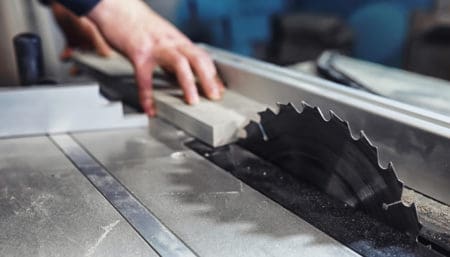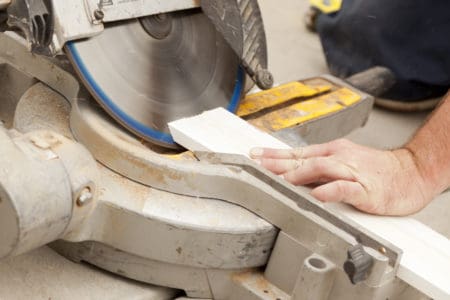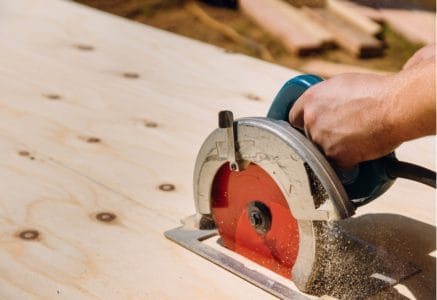
If you are a woodworker and need to cut pieces for items such as cabinets, baseboards, or picture frames, you will need to reliably cut 45 and 90-degree angles. While a skilled carpenter will be able to do this by hand, it will be quicker and easier with a miter saw.
Power miter saws have been in use since 1964 and are staples of any woodshop. As such, you will have numerous options to choose from, made by some of the biggest names in power tools today. The only drawback of this is that you might need some help to choose your ideal unit.
To help you find the right model, we have reviewed seven of the best miter saws that are currently available. We chose these saws for their cutting power, size, weight, and preset cutting angles.
- Dust collector
- Cutting capacity
- Cutline Blade Positioning System
- Dust bag
- 52-degree cutting range in each direction
- Includes necessary tools
- Safe bevel lock
- Suitable for crown moldings
- Axial glide system
- 15-amp, 4,600 RPM motor
- Nine positive stops
- 27.3 pounds
- LED shadow line for accuracy
- Common cut angles
- Cam miter lock knob
- Extension wings & clamp
- Arbor lock
- Electric brake
- Digital readout
- 12-inch blade
- Includes dual lighting
Review Methodology: At Sensible Digs, we use rigorous testing and hands-on experience to ensure we provide the most accurate and unbiased reviews of the best miter saws. Our professional team assesses each product, using a set of criteria to measure performance, design, and key decision-making factors. We then compare and rank products, providing clear, fact-based results. Our analysis includes an evaluation of the miter saw’s power, precision, ease of use, durability, and value for money. Moreover, we explain what sets our top choices apart from their competitors, backing our recommendations with first-hand evidence. Trust our reviews to guide you in making the best choice for your needs.
The Best Miter Saws of 2024
When looking for a new miter saw, you will have a wide range of saws to choose from, including some from the leading power tool brands in the world. To speed up your search, we have reviewed seven of the best miter saws that are currently available. We chose these saws for their cutting power, size, weight, and preset cutting angles.
DeWALT Sliding Compound 12-Inch Miter Saw
Best Sliding Compound Miter Saw
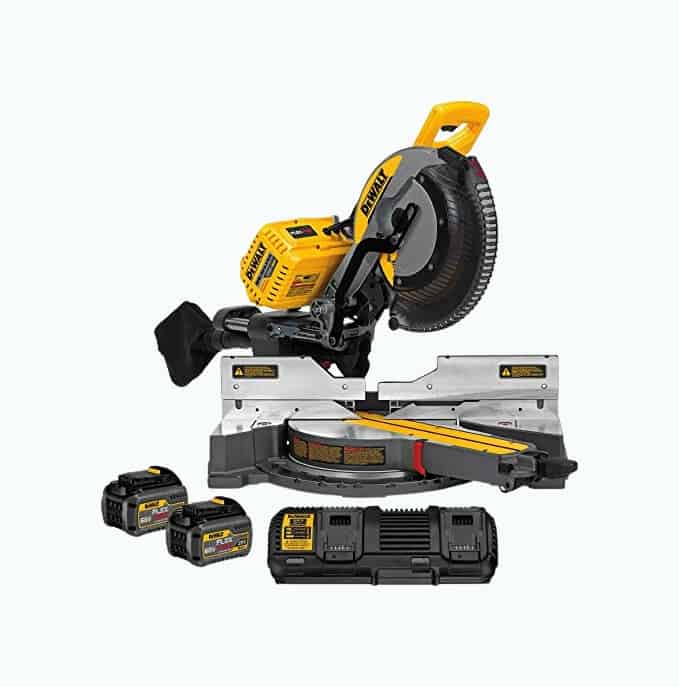
DeWALT is one of the leading tool brands in the world, having produced high-quality power tools for a century. As such, it is no surprise that this 12-inch sliding compound saw is an excellent product.
This 12-inch dual sliding compound saw has an impressive lumber-size capacity. It will be ideal if you need to cut very large boards.
Heavy-duty cutting is made easier by the saw’s powerful 120V brushless motor, which means it will make short work of even thick pieces of material.
What We Like
Dust Collector
The debris that is created when sawing can get in the way of your work and slow you down. More importantly, it can negatively impact your health, so it is important to wear a mask. Thankfully, DeWALT states that this unit’s highly efficient saw dust collection system will capture most of the debris it creates.
Large Capacity
This machine can be used for professional woodworking such as cross-cutting, vertical, and nested crown cutting. As it is cordless, it is also easy to move from one location to another.
It has an impressive maximum initial battery of 20 volts with a nominal voltage of 18 volts. Unless you need to cut tree trunks, this miter saw should be able to handle all of your timber requirements.
Accurate Cuts
This saw features DeWALT’s bespoke Cutline Blade Positioning System. This clearly indicates your shearing line, helping you make very accurate cuts.
What We Don't Like
No Laser
Some users have suggested that this miter saw would benefit from the inclusion of a laser guide. However, it is possible to purchase an optional overhead LED, which fulfills the same function by casting a shadow onto the piece you are cutting.
Most users are satisfied with the proprietary blade positioning system, so a laser would be a luxury more than a necessity.
Product Specs
| Type | Sliding Compound |
| Weight | 56 pounds |
| Motor | 3800 RPM |
| Cutting Diameter | 12-inch |
| Warranty | 3-year limited warranty |
Our Ratings
User Experience
Metabo HPT 10-Inch Miter Saw with Laser
Best Miter Saw for Beginners
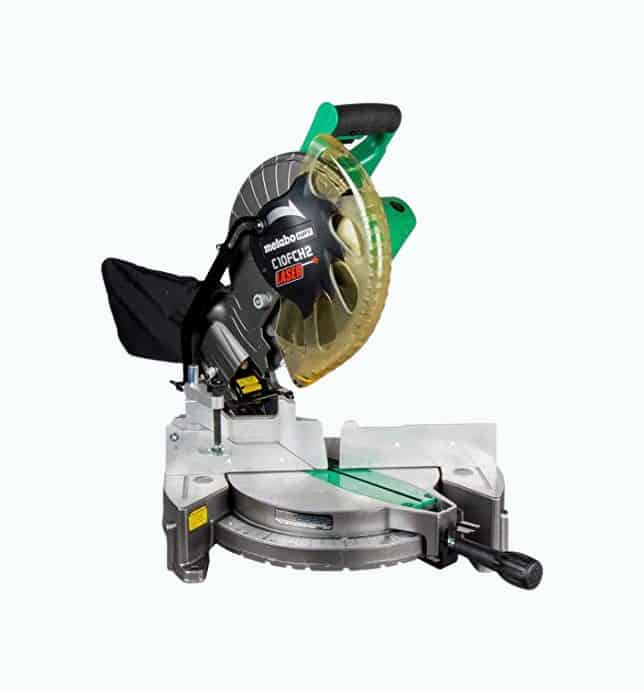
If you don’t have much experience, using miter saws can initially seem daunting. This unit from Metabo is beginner-friendly but still provides all the functionality you need from a powerful saw.
As it is a single-bevel compound saw, you won’t need to worry about adjusting numerous knobs and pins before each cut. It also has a laser marker, which means even the most inexperienced users should be able to make very accurate cuts almost effortlessly.
What We Like
Dust Bag
If you are new to using power tools, there is a good chance that you don’t own a dust extractor or workshop vacuum yet. Using a standard household vacuum on your miter saw is a surefire way to wreck it.
Thankfully, this unit includes a detachable dust bag. This will help you keep your workshop free from dust and allow you to easily dispose of the debris after use.
Expansive Cutting Range
Being user-friendly doesn’t mean you have to sacrifice versatility. The miter allows you to adjust your cutting angle to the left and right from 0 to 52 degrees. The bevel also tilts to the left to make angled cuts at up to 45 degrees.
It is easy to set your cutting angle with the saw’s positive stops by using your thumb.
Includes Tools
You won’t need an existing tool collection to adjust and maintain this saw. It includes both a 10-millimeter box wrench and a 4-millimeter hex bar. This will allow you to assemble it, adjust it, and replace its blades without needing to track down a specific tool.
What We Don't Like
Dim Laser
This saw’s guide laser is invaluable for inexperienced users or anyone else who wants extra accuracy. However, some users feel it is not powerful enough to be seen properly in brightly lit rooms.
Product Specs
| Type | Compound |
| Weight | 26.5 pounds |
| Motor | 5,000 RPM — 15-amp |
| Cutting Diameter | 10-inch |
| Warranty | One year |
Our Ratings
Personal Perspective
Bosch GCM12SD 12-Inch Dual-Bevel Sliding Miter Saw
Best Miter Saw for Crown Molding
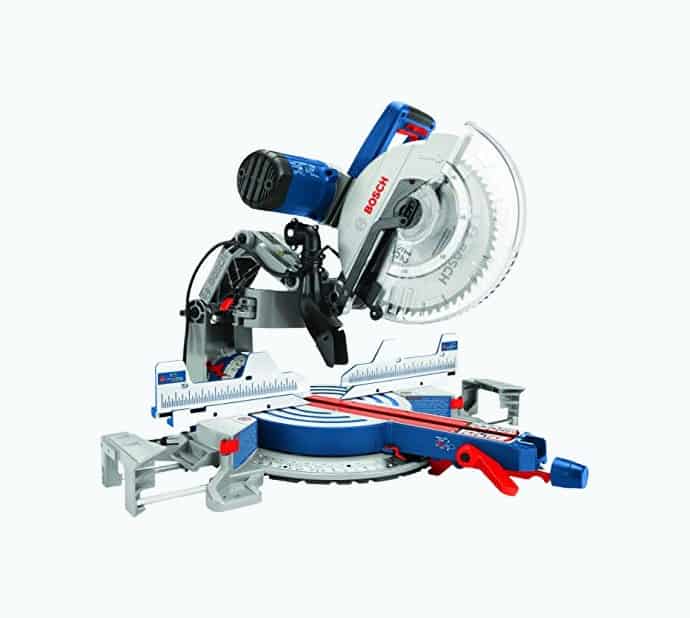
This Bosch saw was designed with an emphasis on cutting capacity, so it is one of the best miter saws we have seen for working on large crown moldings. Still, size isn’t everything and this heavy-duty dual-bevel saw also includes various safety and space-saving features.
These features include a front bevel lock and an axial glide system, which means the saw can be placed with its back against a wall without inhibiting your cuts.
What We Like
Suitable for Crown Moldings
Whether you need to cut crown moldings vertically or horizontally, this machine should be able to accommodate you. The sliding blade head can cover an extensive 14 inches horizontally. It also incorporates two extending supports that increase the length of its working area to 40 inches.
If you are cutting moldings or timber vertically, the high fences will allow you to cut to a depth of 6.5 inches.
Safe Bevel Lock
Some miter saws require you to reach behind the machine to lock the bevel, which can lead to accidents if the blade is accidentally activated. To prevent that from occurring, this machine has its bevel lock at the front, where it can be accessed safely.
Large Scales
Both the miter and bevel scales are large and easy to read, keeping mistakes to a minimum. This machine allows you to bevel at both 33.9 and 45 degrees for greater versatility.
Axial Glide System
This miter saw incorporates Bosch’s bespoke axial glide system. Instead of using horizontal bars for sliding, it has hinged arms that allow for greater movement. This means it requires 12 inches less space behind the machine, allowing you to place the rear of the saw against a wall if you want to.
What We Don't Like
Tall and Heavy
At 88.2 pounds, this unit won’t be easy to move, so it might be unsuitable for jobs where you need to work on-site. Also, despite having a small footprint, the axial glide system means this unit is taller than many of its competitors. This is something to keep in mind if you have a lot of shelves in your workshop.
Lacks Laser and Light
Considering this is a high-end miter saw, some users were surprised to find that it doesn’t feature a guide laser or illumination lights. These aren’t necessities but they would make it easier to cut accurately.
Product Specs
| Type | Dual Compound |
| Weight | 88.2 pounds |
| Motor | 3,800 RPM — 15-amp |
| Cutting Diameter | 12-inch |
| Warranty | One year |
Our Ratings
Community Feedback
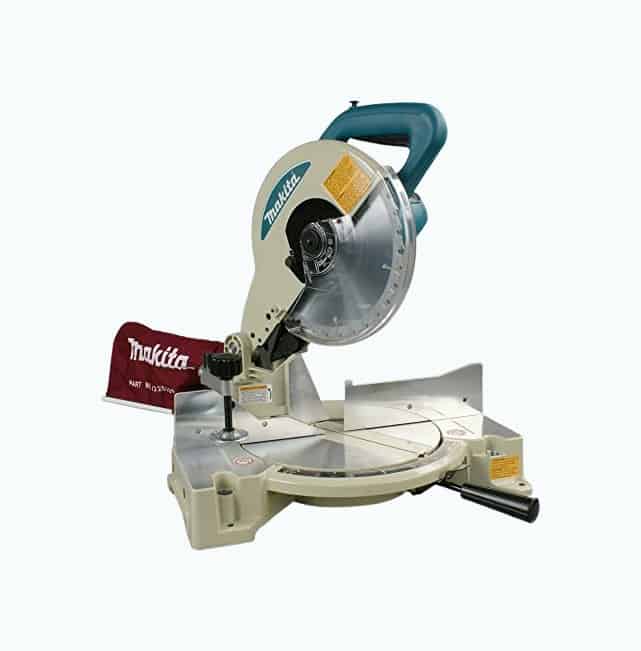
Makita 10-Inch Compound Miter Saw
Best Non-Sliding Miter Saw
If you are working in a limited amount of space, this Makita model is one of the best miter saws available. It is non-sliding but this shouldn’t be an issue unless you need to cut oversized materials. This also means it occupies far less space.
At just 27.3 pounds, this is also a lightweight machine. This will allow you to move it with relative ease, which means it can be stored when not in use, helping you save even more space.
Despite its small size and weight, this saw is still very powerful, with a 15-amp, 4,600 RPM motor. Helpful features such as a soft start will make the saw work more smoothly and keep it cutting properly for years.
What We Like
Powerful
A mighty 15-amp, 4,600 RPM motor powers the 10-inch blade. It has a soft start feature that increases its operating speed steadily, reducing the amount of stress on the unit. As it is a direct drive, there are no belts that will slip or need replacing, so this saw will require less maintenance in the long run.
When you need to replace the blade, the process is very straightforward. A shaft lock allows you to quickly remove and replace the cutting edge, saving time when you are working to a deadline.
Nine Positive Stops
This unit has nine positive miter stops including 0, 15, 22.5, 30, and 45 degrees to the left and right. This means you can utilize a wide range of cutting angles with very little effort.
As a single compound saw, it can also tilt 45 degrees to the left, allowing you to cut tight bevels.
Lightweight
The manufacturer has made the base out of aluminum, ensuring it is both rigid and lightweight. If you need to move the saw frequently, such as when working on-site, this model is an excellent option.
What We Don't Like
Lack of Bolt Holes
The ability to move this saw easily is one of its advantages, but its lack of bolt holes could be an issue if you want to install it somewhere permanently. It only has holes for bolt stabilization at the front and not the rear, so it might not be completely secure.
Product Specs
| Type | Dual Compound |
| Weight | 27.3 pounds |
| Motor | 4,600 RPM — 15-amp |
| Cutting Diameter | 12-inch |
| Warranty | One year |
Our Ratings
First-Hand Impression
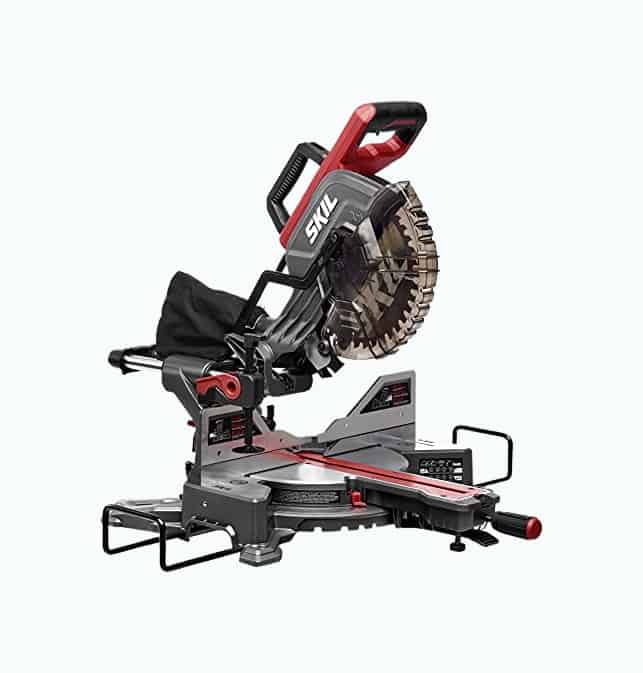
Skil 10-Inch Dual-Bevel Sliding Miter Saw
Best Dual Bevel Miter Saw
This is an excellent option if you are looking for a dual-bevel sliding miter saw. The bevel has four positive stop positions: from the left, 0°, 45°, and 48°; and from the right, 45°.
It is powered by a 15-amp motor that provides 4,800 RPM, so you will be able to enjoy a great deal of cutting power for years to come. There is an LED shadow line to ensure these cuts can be made very accurately.
The saw has a horizontal grip handle that is suitable for both left-handed and right-handed users, making it more user-friendly.
What We Like
LED Shadow Line for Accuracy
Laser guides are a common tool for cutting accurately with miter saws, but this one has an LED shadow line. This means it will provide better accuracy and precision than many of its competitors.
Common Cut Angles
You can cut up to 50° to the left and right with this miter saw’s 11 positive stops. This provides plenty of versatility to make all the cuts you could need during a woodworking project.
Cam Miter Lock Knob
The cam miter lock knob will help you make dozens of repeated cuts with 100% accuracy. It also allows for easy adjustments, as does the sliding fence. You will be able to cut 4.5-inch base molding vertically and 6.25-inch crown molding vertically.
Excellent Value for Money
Customer reviews praise this model for home use. It isn’t one of the more expensive models we have seen but provides plenty of quality for woodworking projects at home or on a small scale professionally.
What We Don't Like
Sharper Blade Required
The blade isn’t particularly sharp, so it might not be suitable if you want to make neat cuts or need to cut through tough materials.
Blade Is Too Tight
Some users found that the blade bolt was overtightened and very difficult to undo. This made it difficult to make adjustments or replace the blade.
Not Perfectly Accurate
Although this saw provides very accurate cuts, some users struggled to make square cuts. When they tightened the arm, it drifted slightly, resulting in their cuts being a few degrees off. This made it much harder for them to achieve a perfect square cut.
Product Specs
| Type | Dual-Bevel Sliding |
| Weight | 39.4 pounds |
| Motor | 4,800 RPM — 15-amp |
| Cutting Diameter | 10-inch |
| Warranty | 3-year limited |
Our Ratings
User Experience
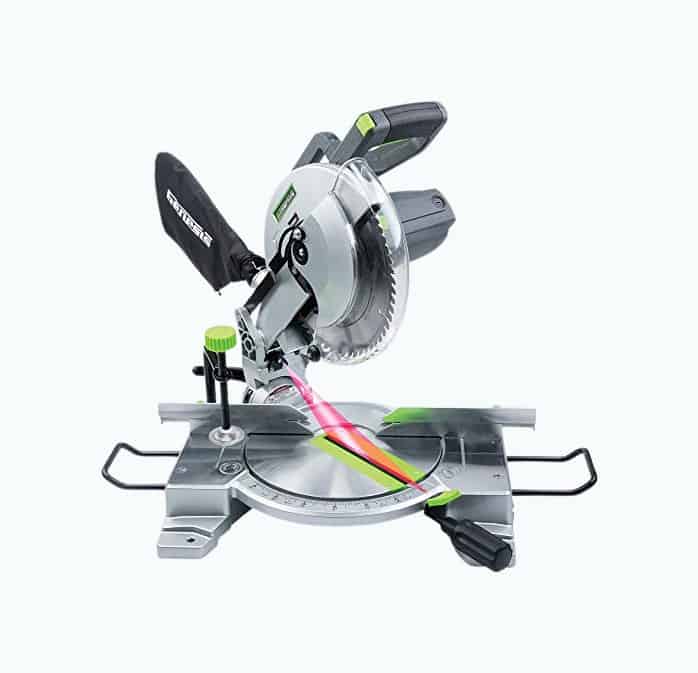
Genesis GMS1015LC Miter Saw with Laser Guide
Best Budget Miter Saw
If you are inexperienced, don’t cut wood frequently, or are simply shopping with a budget, this Genesis saw is well worth considering. This compound saw with a single bevel is very affordable, yet it features a powerful motor, laser guide system, and electric brake.
It also has extension wings to increase the size of your work area and accommodate larger materials. There are nine positive stop positions that will help you choose the right cutting angles quickly and easily.
The blade’s screw lock means you can replace it without needing extra tools. For jobs where you need to cut numerous pieces, the saw has an electric brake that stops the blade quickly, meaning there will be less time between each cut.
What We Like
Extension Wings and Clamp
If you need to cut longer pieces of material, this miter saw has the capacity to accommodate them. It has two wings that extend from either side of the aluminum base to increase your workspace.
With nine positive stops, you will be able to choose the correct cutting angle quickly and easily. You will also be able to secure these large pieces with the unit’s built-in securing clamp.
Arbor Lock
The blade’s convenient screw lock means you won’t require any special tools to replace your cutting edge.
Electric Brake
If you need to cut numerous pieces of wood, the electric brake could save a lot of time. It will stop the blade far more quickly than if it stopped naturally, which means less time between each cut.
What We Don't Like
Laser Is Battery-Powered
Despite being a corded machine, the guide laser requires two AAA batteries. This isn’t a big deal as they are included with the saw, but they will eventually need to be replaced.
Awkward Clamp Position
Some users complain that, when mitering at 45 degrees to the right, the securing clamp requires frequent adjustment to avoid interfering with the blade’s cutting action.
Product Specs
| Type | Dual Compound |
| Weight | 33 pounds |
| Motor | 4,200 RPM — 15-amp |
| Cutting Diameter | 10-inch |
| Warranty | Two years |
Our Ratings
Personal Perspective
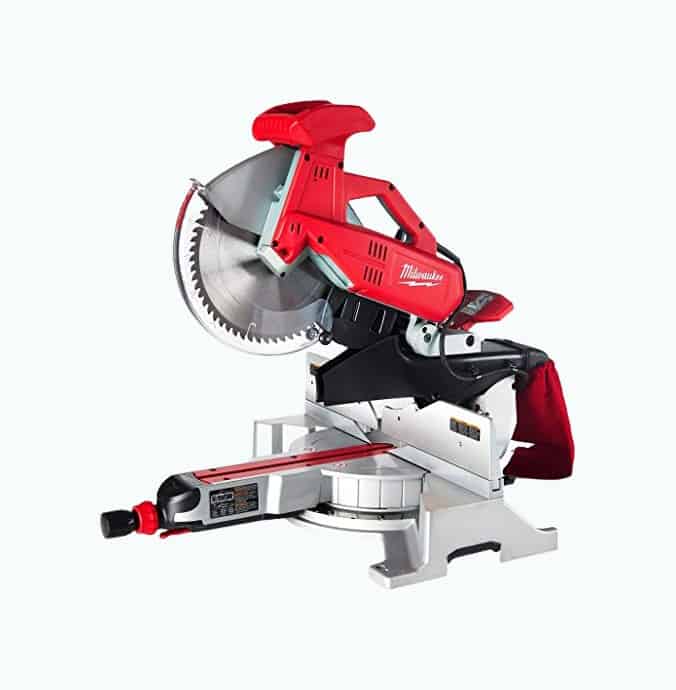
Milwaukee 6955-20 Sliding Dual Bevel Miter Saw
Best Miter Saw for Furniture Making
If you are looking for a miter saw to make furniture, you will usually have two main requirements: capacity and accuracy. This machine from Milwaukee ticks both of those boxes.
If you are cutting hardwood, you will also need your saw to be powerful. With a strong 3.3 horsepower motor, this saw should cut through even the toughest materials with relative ease.
What We Like
Digital Readout
When cutting parts for furniture, you will need to be extremely accurate. A table or chair with slight inaccuracies will rock back and forth when you use it.
This unit provides a “dial-in” function for your miters. The digital display shows your selected angle, providing accuracy up to 0.1 degrees.
Cuts Large Materials
As a sliding compound saw, this unit will be able to cut large pieces for furniture, such as legs and frames. Positive stops at 15, 22.5, 31.6 and 45 degrees mean you can quickly select the most common cutting angles.
The 12-inch blade mounted on a dual compound head makes jointing work easy. You will be able to repeatedly cut accurate bevels for any essential dovetails.
Includes Lighting
For greater accuracy, this miter saw features dual lights. They will illuminate the piece you are cutting and your cutline on both sides of the blade. This will not only increase your precision but also means you won’t need to buy and set up separate lighting.
What We Don't Like
Inadequate Dust Collector
Milwaukee claims that the dust channel and bag will collect 75% of wood debris. Some users found this to be overstated, so you might need a separate dust extractor if you are doing heavy-duty work.
Product Specs
| Type | Dual Compound |
| Weight | 78 pounds |
| Motor | 4,500 RPM — 15-amp |
| Cutting Diameter | 12-inch |
| Warranty | One-year |
Our Ratings
Community Feedback
| Product | Best | Type | Weight | Motor | Cutting Diameter | Warranty |
|---|---|---|---|---|---|---|
| DeWALT Sliding Compound Miter Saw | Sliding | Sliding Compound | 56 lbs | 3800 RPM | 12″ | 3-year limited warranty |
| Metabo HPT 10-Inch Miter Saw | Beginners | Compound | 26.5 lbs | 5,000 RPM — 15-amp | 10″ | 1 year |
| Bosch GCM12SD Sliding Dual-Bevel | Crown Molding | Dual Compound | 88.2 lbs | 3,800 RPM — 15-amp | 12″ | 1 year |
| Makita Compound Miter Saw | Non-Sliding | Dual Compound | 27.3 lbs | 4,600 RPM — 15-amp | 12″ | 1 year |
| Skil Dual-Bevel Miter Saw | Dual-Bevel | Dual-Bevel Sliding | 39.4 lbs | 4,800 RPM — 15-amp | 10″ | 3-year limited |
| Genesis GMS1015LC Miter Saw | Budget | Dual Compound | 33 lbs | 4,200 RPM — 15-amp | 10″ | 1 year |
| Milwaukee 6955-20 Sliding Dual Bevel | Furniture Making | Dual Compound | 78 lbs | 4,500 RPM — 15-amp | 12″ | 1 year |
What Is a Miter Saw?
A miter saw is used to make crosscuts against the grain, miter cuts (angled cuts), and bevels, usually in wood. The traditional form is a wooden or plastic miter box with 90 and 45-degree slits. You insert the material through the box, then cut it with a standard handsaw, guided by the angled slits in the box.
These miter boxes are still in use today, but generally only for small projects such as handmade wooden toys and picture frames. In professional woodworking, the term “miter saw” usually refers to a powered circular blade saw that is lowered onto the material to cut it at a set angle. This cutting motion is why they are sometimes called “drop saws”.
Remarkably, the earliest designs for this type of saw were created by British John Abraham Peer in 1905 (1). However, as Ed Niehaus was the first to patent and develop the powered version in 1964, he is generally credited as its inventor.
When you use a power miter saw, you place the material against the saw’s “fences”. By default, the blade is perpendicular to the fences, cutting at a 90-degree angle when it is lowered.
However, the standout feature of miter saws is that the blade can be moved to various angles — usually 45 degrees. This allows you to make precise angled cuts for bevelling picture frames, baseboards, and crown moldings. Importantly, once the saw is set up, you can cut numerous pieces quickly and accurately, which is excellent for large projects.
Types of Miter Saws
There are numerous miter saws to choose from, all of which can be sorted into one of three main categories:
Compound
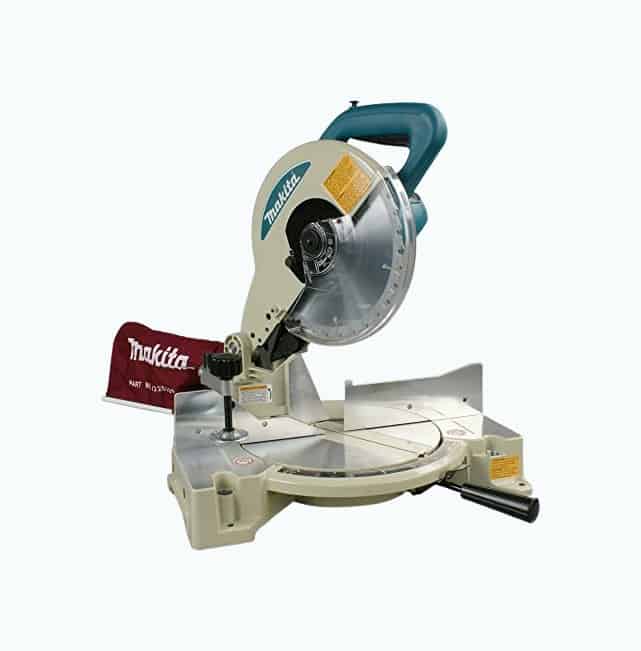
Compound miter saws are the most basic type. The circular blade can pivot, which means it doesn’t have to cut at the standard 90-degree angle. This allows you to easily make bevel cuts.
You can move the blade up to a maximum of 45 degrees. As they will only tilt in one direction, they are often referred to as single compound miter saws.
While the blade can pivot sideways, it cannot be moved back and forth. This limits its versatility by restricting the size of the material that you can cut. For example, a 10-inch saw will only be able to cut material that is 6 inches wide.
Pros
- Simple to use
- Affordable
- Ideal for beginners
Cons
- The cutting width is restricted
Sliding Compound
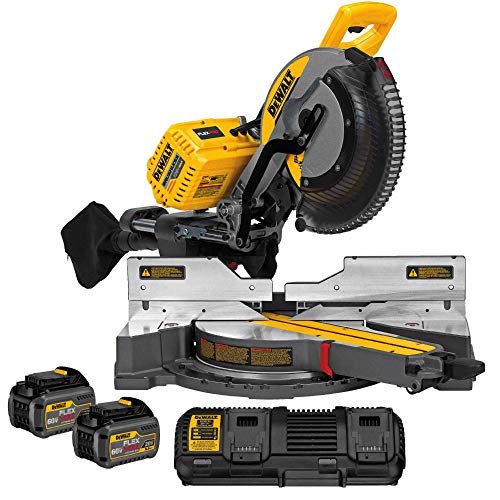
Sliding compound miter saws are very similar to standard compound saws. However, their different design means a sliding compound miter saw can accommodate wider pieces of material.
The blade arm is on rails, which means it can slide forward and backward. This greatly increases the cutting capacity, allowing you to work with much wider pieces of material.
Pros
- Can accommodate wide material
- Allows you to slide the blade across the wood instead of chopping it
- Ideal for furniture and vintage baseboards
Cons
- Heavier than standard compound saws
- Rails can limit your cutting angles
Dual Compound
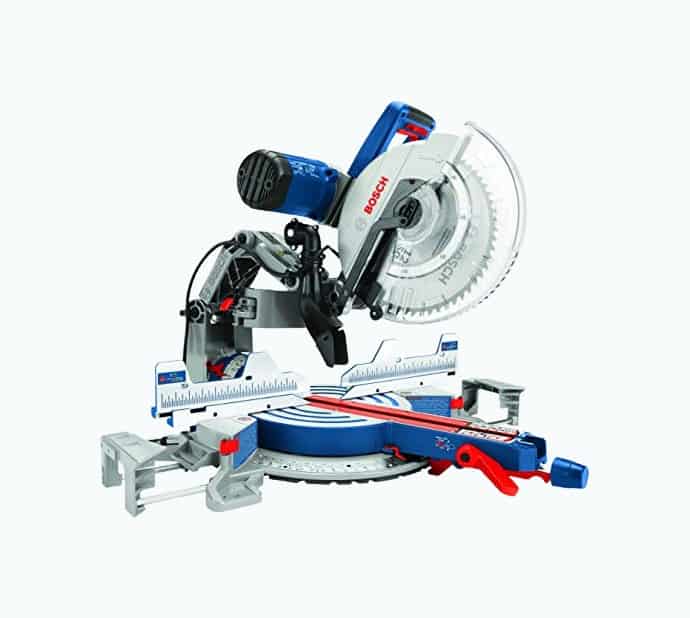
Also known as dual-bevel saws, dual compound saws allow you to angle the circular saw to the left or right.
They often feature sliding rails, though this isn’t always the case. These rails are particularly useful for completing decorative trim work or creating intricate bevels. This means you won’t need to flip the piece you are working on to cut a matching angle on the opposite side.
Pros
- Most versatile miter saw
- Ideal for intricate work
- Saves time
Cons
- Extra functionality comes at a cost
How to Choose the Best Miter Saw
There are many excellent miter saws to choose from, but which one to get will depend on your individual requirements. To narrow your search significantly, you should consider the following points before buying:

Size
Miter saws blades are typically either 10-inch or 12-inch, with 10-inch being the cheaper of the two.
In addition to being less expensive to buy, the smaller size of 10-inch units means they also require less energy to run at the same speed. This will help you keep your electricity bills down.
Unless you need to cut wood thicker than 4 inches, you are unlikely to need a 12-inch saw. However, they are better for larger-scale work thanks to the extra power of their motors. If you need to cut a lot of pieces of wood for projects such as decking, a 12-inch saw will be able to cope with the extra demand.

Compound or Sliding Compound
Some high-end homes contain elaborate crown moldings. Historical renovations or modern homes with a classic feel might also require large baseboards.
While it is possible to cut these on a standard compound saw, you will need to cut twice, turning the piece over halfway through. If you only need to do this occasionally, it won’t be a major issue. However, for larger projects or regular professional work, this will quickly become an inconvenience.
Sliding saws extend cuts to 12 to 16 inches; more than twice the width of a standard compound saw, which makes them far more versatile. In addition, as you can make a single cut instead of two, it will be easier to cut a smooth, straight edge.

Single or Double Bevel
If you are working on intricate bevels and edging, we recommend choosing a dual bevel saw. They allow you to tilt the head of the saw to the left or right. This will enable you to create complex joints and features that would otherwise require you to frequently turn over the piece of material you are working with.

Weight
If you intend to permanently place your miter saw in your garage or workshop, you probably won’t need to worry about its weight too much.
However, if you don’t have the space to set it up permanently or need to take it with you to work on-site, you will want your miter saw to be as portable as possible.
Features that make your saw more versatile or powerful, such as sliding rails, larger motors, or a 12-inch blade, will all increase the weight of the unit.
Positive Stops
Positive stops are preset points on the miter saw that allow you to quickly adjust it to some of the most popular cutting angles. This can significantly speed up your work, especially if you need to cut at angles other than the standard 45 or 90 degrees. Take the time to consider which angles you need, as the right positive stops could save you a great deal of time in the future.
How to Use a Miter Saw
Before you do anything else, you should read the saw’s manual. They can be difficult to get to grips with at times, and it can be tempting to simply plug in the saw and start cutting. However, taking the time to learn about your machine will help you achieve the best results and reduce the risk of injuries occurring.
After reading the manual, here are some general guidelines that can be used alongside it. When in doubt, trust your manual as it is written for your specific model.
Step By Step Guide to Using a Miter Saw
1. Safety First
Protective gear is essential. This means goggles, a dust mask, and ear defenders or earplugs. These will prevent debris from getting into your eyes and lungs.
Studies have shown that wood dust is a carcinogen and can also cause asthma, bronchitis, and reduced lung function (2) (3).
The average miter saw also emits sound above 100 decibels. The CDC advises that exposing yourself to this noise level for just 15 minutes could result in hearing damage (4).
Finally, ensure that all necessary guards — as shown in your instructions — are in the correct position to protect you while cutting.
2. Marking Up
Mark where you will cut the material with a carpenter’s pencil, drawing a line that extends across its entire width. Then, place it on your saw, tightly against the fence.
3. Adjust the Angle
If your cut requires an angle or bevel, adjust your machine’s levers and knobs until it is in the correct cutting position.
4. Lower the Blade
Lower the circular saw blade onto the material where you marked it, ensuring it touches the line. If it doesn’t, make small adjustments until it is accurate.
5. Secure the Material
Once you are confident that the blade has been properly aligned, secure the material in place.
At least half of the board’s length should be on the bench for stability. If the material is too long, you can use an additional bench or miter saw stand. While you can press down on the board to hold it (at a safe distance from the blade), a securing clamp is a much safer method.
6. SAB — Start, Allow, Bring
- Start the machine with the trigger — ensure it isn’t touching the material you are about to cut.
- Allow the blade to reach its required speed.
- Bring the saw blade down slowly until it reaches the material and cuts through it.
7. Release
Once you have cut through the material completely, release the trigger. Once the blade has stopped spinning completely, you can raise the saw away from the workpiece.
General Tips for Using Miter Saws
- Never lift the blade away from the workpiece while it is still spinning. Doing so could damage the edge you have just cut.
- Use a heavily-toothed blade — the more teeth, the cleaner the cut will be.
- Don’t force the saw through the material you are cutting; the blade should do the work for you. Be patient, and lower the blade at a steady pace.
FAQs

How to Unlock a Miter Saw
First, read the manufacturer’s instructions for your specific model. Most modern saws have a knob or pin to prevent the mechanical ankle from moving. This will usually be directly behind the blade, near the center of the saw’s base. By turning the knob or removing the pin, the head should unlock.

What Size Miter Saw Do You Need?
Miter saw blade sizes range from tiny 7.25-inch blades up to industrial 20-inch blades. However, the two most common blade sizes are 10 and 12 inches.
The right size will depend on your cutting requirements. A 10-inch blade will shear through materials up to 6 inches thick, which should make it enough for most molding and trim boards.
12-inch blades will cut larger sizes — up to 7.5 inches. This makes them useful for home projects such as hefty crown moldings. Typically, 12-inch machines have more powerful motors to help them cut through the extra material thickness.
While you can put a 10-inch blade on a 12-inch machine — as long as the arbor holes match — you won’t be able to put a 12-inch blade on a 10-inch machine.

What Is a Double-Bevel on a Miter Saw?
Double-bevel saws, sometimes called dual bevels, have a tilting head that you can angle to both the left and right sides. This enables you to bevel in either direction without having to turn the workpiece over, making these saws far more versatile and convenient.

What’s the Difference Between a Bevel Cut and a Miter Cut?
If you are making a square picture frame, you will need to cut the end of each length at 45 degrees to make a square or rectangular frame when you place it together. These cuts are miter cuts.
However, if you want this frame to have sloped sides — leading in toward the picture — you will need to make bevel cuts.
When using a miter saw, if the cutting blade is perfectly vertical, it is a miter. If the blade is angled to cut a slope, it is a bevel.

How Much Does a Good Miter Saw Cost?
In general, you can expect to pay anywhere from $100 to $500 for a good miter saw. The more expensive saws will typically have more powerful motors and longer cutting capacities, as well as more bells and whistles like dust collection systems and laser guides.
Of course, you don’t necessarily need to spend a fortune to get a good saw – plenty of great options are available at lower prices.

How Many Teeth Is Best for a Miter Saw Blade?
The proper number of teeth for a miter saw depends on what you’re using the blade for. You need a blade with at least 24 to 30 teeth to rip through the wood.
For cutting plywood, 80 to 90 teeth are a better option to avoid chipping. For MDF panels, you definitely need at least 60 teeth. If you want to cut through the plastic laminate, go for an 80-teeth crosscut blade.

How Often Should You Change the Blade on a Miter Saw?
The miter saw blade is the probably most important part of the tool, so ensure that it is always in good condition. A dull blade makes it hard to make clean cuts, but it can also be dangerous, as it is more likely to kick back or bind.
For this reason, change the blade on a miter saw as soon as it shows signs of wear. One way to tell that the blade is getting dull is if it starts to leave a rougher finish on the wood. Another sign is if the saw starts to produce dust instead of chips when cutting.
You also need a new blade if your current one is making slow cuts that require you to apply a lot of pressure on the wood pieces you’re cutting. Your saw will also start to make a lot of noise when the blade is dull.
High noises indicate that your motor is working harder than it should, leading to overheating. If you notice either of these problems, it is time to change the blade.

What Cut Should You Never Do on a Miter Saw?
A miter saw can be used for a ton of tasks, from trimming boards to cutting angles. However, some cuts should never be attempted on a miter saw. One such cut is solid timber along the grain.
This cut is extremely difficult to control and can easily result in the board binding or breaking. Freehand cuts are also best avoided on a miter saw. These cuts are unpredictable and dangerous, particularly if the piece of wood is large or awkwardly shaped.
So, when using a miter saw, it’s important to stick to straightforward cuts that can be easily controlled.

When Should I Replace My Miter Saw?
Over time, even the best-maintained power tools will show signs of wear and tear. If you’re a passionate do-it-yourselfer, then you know how important your miter saw is.
But how can you tell when it’s time to invest in a new saw? Here are a few signs it’s time to replace your miter saw.
First, take a look at the condition of the blade. If it’s dull or damaged, then it’s time for a new one.
Not only will a new blade make cuts more precise, but it will also be safer to use. Another sign that it’s time for a new miter saw is if the motor is beginning to overheat or bog down when making cuts.
This is a sure sign that the saw is working harder than it should and will eventually lead to more serious problems. Finally, if you’re simply not getting the results you want from your current saw, upgrade to a newer model with more features.

What Is the Best Mitre Saw on the Market?
The Makita LS1040 is one of the best miter saws you can get because it’s uncomplicated and practical. Plus, the Makita brand has been one of the best affordable power tools for years.
It’s perfect if you want a straightforward compound miter saw for finishing work, building projects, home improvement projects, DIY, etc. It’s also lightweight, so you can take it wherever you need to go with no problem.