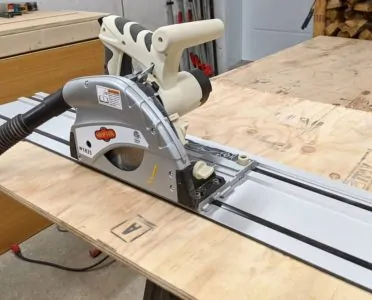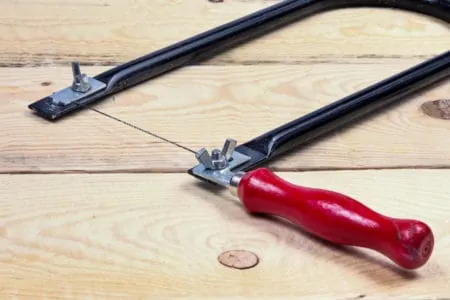
Circular saws are handheld, compact saws that use a spinning blade to cut materials. Their smaller size means they are easy to maneuver, making them more versatile than larger, stationary power saws.
A good circular saw will be lightweight and easy to transport. They are great for working in confined spaces and ideal for tasks that require quick, simple cutting solutions. However, not all circular saws are created equal, and you might need some help to find the right model.
To narrow your search, we have reviewed seven of the best compact circular saws that are currently available. We chose these saws based on whether they are corded or cordless, their cutting power and depth, and how easy they are to use.
- Cordless
- 3.5 pounds
- Dust blower
- Cuts most materials
- 7.5-amp motor
- Smooth cuts
- Adjustable cutting angle and depth
- One-handed operation
- Safety button
- Left-handed blade placement
- Ideal for wood
- Weighs just 5 pounds
- Adjustable cutting depth & angle
- Weighs 4.4 pounds
- Left-handed blade placement
- Ergonomic design
- Upper and lower blade guards
- Thick aluminum base
- Dust extraction
- Cuts most materials
- Laser guide
Review Methodology: At Sensible Digs, we understand your need for reliable, comprehensive analysis when it comes to selecting the best mini circular saws. Our experienced professionals conduct extensive research, hands-on tests, and thorough evaluations of each product’s performance. We measure, track, and compare key factors such as power, precision, design, and ease of use. We also shed light on the product’s unique features that set it apart from its competitors. This rigorous assessment allows us to rank products based on a well-defined standard, providing you with objective data and facts to guide your decision. We don’t just give scores; we share our first-hand findings and experience to help you understand the practical implications of each design choice. Trust in our reviews, for they are backed by evidence and rooted in professional experience.
The Best Compact Circular Saws of 2024
There are many compact saws to choose from, which means finding the best ones can take a lot of time and effort. To help you avoid that extra work, we have reviewed seven of the best compact circular saws on the market today, chosen for their size, weight, cutting power, and power source.
Makita SH02R1 CXT Lithium-Ion Cordless Circular Saw Kit
Best Overall Compact Circular Saw
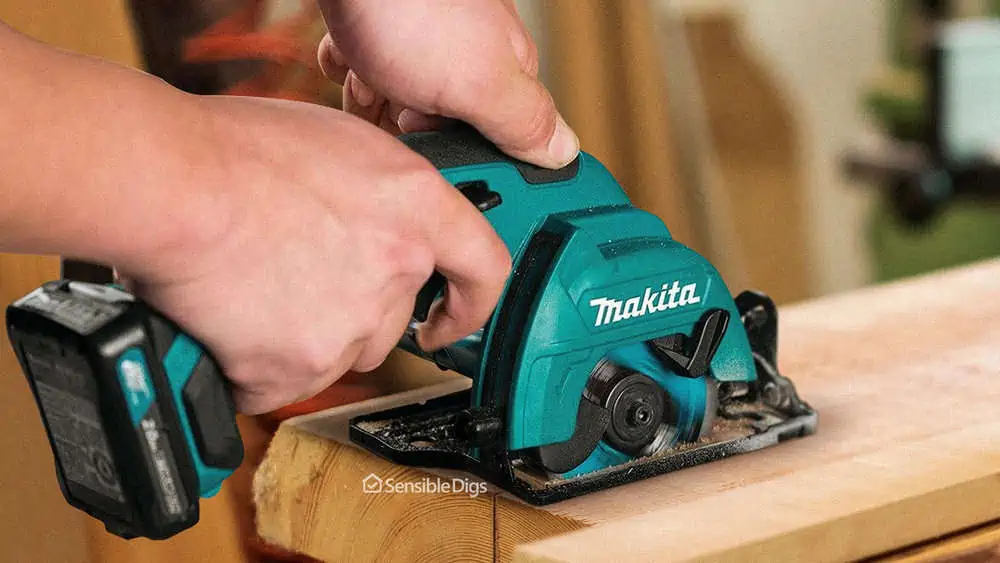
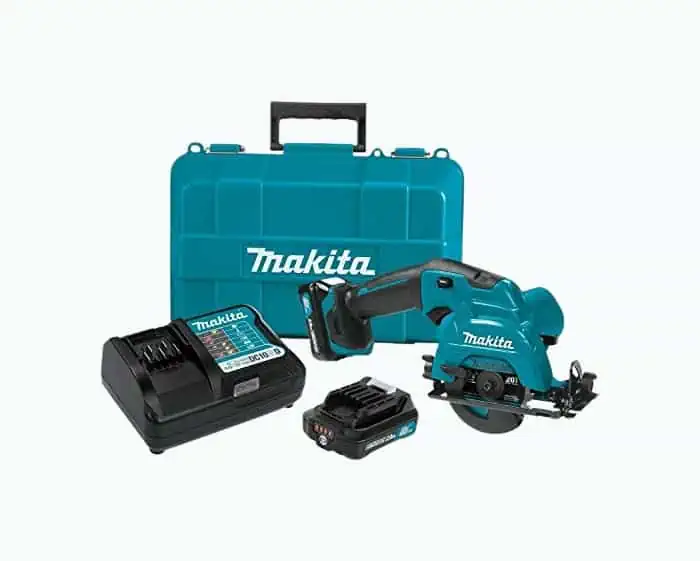
This complete Makita compact saw kit is cordless, which means you can use it anywhere. This freedom is enhanced by the sturdy carrying case that is included with the saw.
The saw’s energy is supplied by a lithium-ion battery that powers the motor and generates 1,500 RPM. This isn’t at the higher end when it comes to compact saws, but it means the saw is suitable for cutting precise angles.
It has an adjustable cutting depth of one inch when set at 90 degrees and 0.62 inches at 45 degrees. It also has a tilting base for bevel cuts, making it an excellent option for cutting more complicated angles.
What We Like
Cordless
Cordless saws provide the freedom to make cuts anywhere, without being restricted to a power outlet. This kit includes a battery and charger, so you will have everything you need.
Lightweight
This saw weighs just 3.5 pounds, making it very lightweight. You should be able to use it for prolonged periods without too much arm fatigue.
Dust Blower
The dust blower will keep the sawing line free from debris. This will help you make accurate cuts and directs the sawdust away from your face.
What We Don't Like
Low Power
At 1,500 RPM, this is not one of the more powerful compact saws on the market. It will limit you to cutting wood, sheet material, and drywall.
Product Specs
| RPM | 1,500 |
| Weight | 3.5 pounds |
| Cutting depth | 1-inch |
| Suitable for | MDF, plyboard, melamine, drywall |
| Price | $$ |
| Warranty | 3-year |
Our Ratings
User Experience
Dremel US40-04 Ultra Saw Tool Kit
Best Compact Circular Saw for Beginners
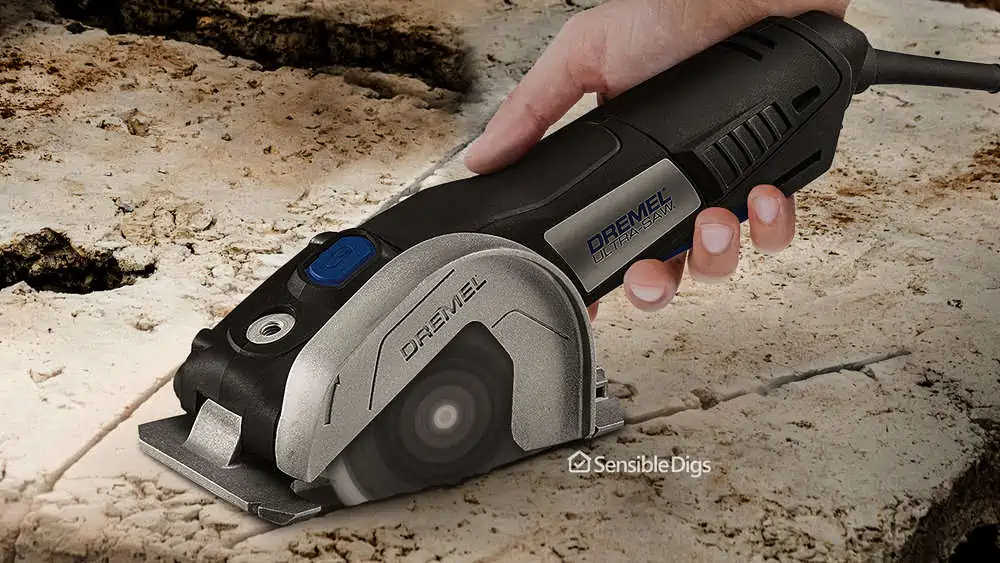
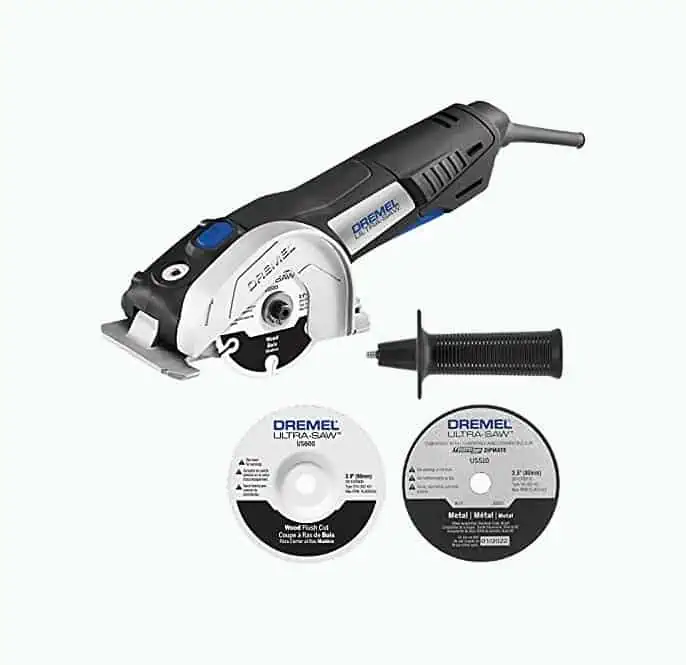
This compact circular Dremel Ultra Saw is a great option for beginners thanks to its size, weight, and versatility. Dremel is renowned for the versatility of its tools, so if you want a saw for various tasks, this one has you covered.
It has a powerful 7.5 amp motor and auxiliary handle. It is even more versatile thanks to its straight cut, plunge cut, and flush cut settings. These help it cover all bases if you need to a tool to make as many different cuts as possible.
This Dremel saw will cut hardwood, tiles, composite materials, laminate, drywall, and PVC, which is very impressive for a drill of its size.
What We Like
Cuts Most Materials
Buying specialist cutting tools for different materials will quickly become expensive. Thankfully, this Dremel could save you a lot of money by cutting those various materials with a single tool. It is one of the most versatile circular saws on the market.
Powerful Motor
The 7.5-amp motor produces 13,000 RPM. This is much higher than average for a compact saw and is the reason why this tool can cut through almost any material.
Precise
A clear line of sight and a quick blade change feature mean this Dremel can be used to make very accurate cuts. Its wheel technology helps it leave cuts with a smoother finish.
What We Don't Like
Expensive
Compared to some other compact circular saws, this Dremel is quite expensive. It is a multi-purpose tool rather than a specialist one, which means it is suitable for most tasks but doesn’t necessarily excel in them all.
Product Specs
| RPM | 13,000 |
| Weight | 4.62 pounds |
| Cutting depth | Not specified |
| Suitable for | Hardwood, plyboard, composites, laminate flooring, drywall, PVC, plastic |
| Price | $$ |
| Warranty | 2-year |
Our Ratings
Personal Perspective
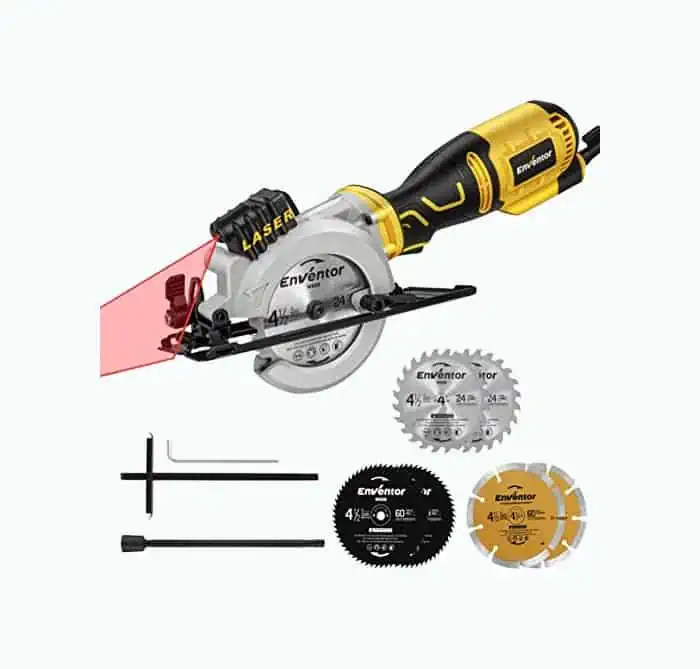
Enventor Mini Circular Saw
Best Compact Circular Saw for Construction
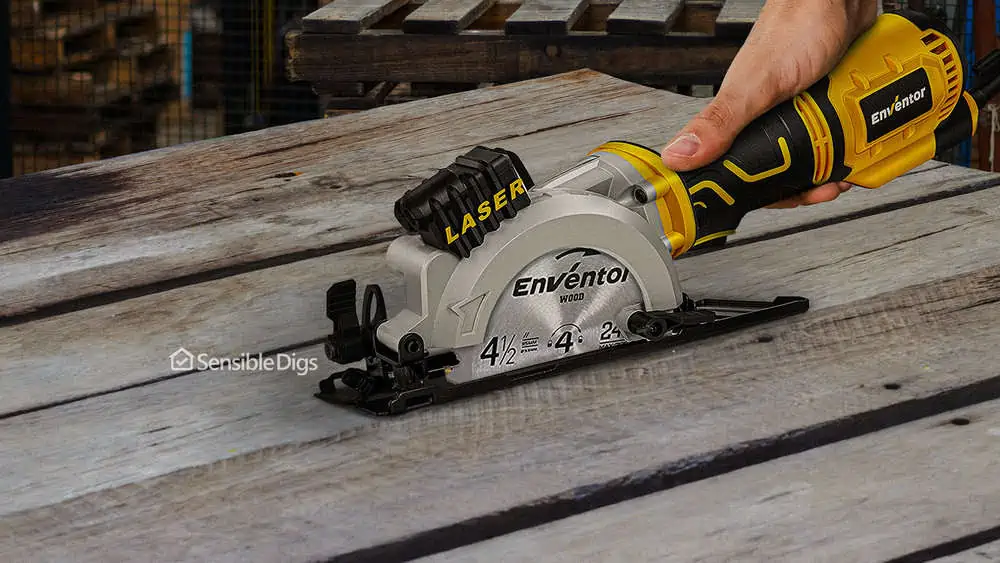
The Enventor compact circular saw might be exactly the tool you need if you are a construction worker. Not only is it compact and easy to take to job sites, but it also has multiple useful features and accessories.
It has a red laser guide to ensure precise and accurate cuts. It includes six blades for various materials, with two each of TCT blades, HSS blades, and diamond blades. These different blades will let you cut through wood, tiles, metal, and plastic.
This saw is suitable for prolonged use throughout the day thanks to its comfortable handle grip. It is also fully equipped with a safety trigger to protect you during use while providing precise control.
What We Like
Adjustable Cutting Angle and Depth
As well as being suitable for various materials, this saw also offers an adjustable cutting angle and depth. The cutting depth varies between 1 and 11/16th of an inch at 90 degrees and 1 and ⅛ of an inch at 45 degrees.
One-Handed Operation
This tool is designed to be suitable for one-handed operation. If you prefer to keep your other hand free to hold down materials and provide extra security, it is an ideal choice.
Safety Comes First
When taking any tool onto a construction site, it must fulfill certain safety requirements, which this saw does. It has a safety button activated by your thumb and a double protection switch, reducing the chance of any accidents occurring.
As it is also small and lightweight, there is less risk of dropping and breaking it or injuring yourself. The ergonomic handle makes it easier and safer to hold and control for long periods of time.
What We Don't Like
DIY Jobs
There are very few complaints about this circular saw, except some people feel it is more suitable for DIY projects than large-scale work. This isn’t a surprise given its relatively small size, and it still does a very good job of cutting soft materials.
Product Specs
| RPM | 3,500 |
| Weight | 8.05 pounds |
| Cutting depth | 1.68″ at 90° and 1.125″ at 45° |
| Suitable for | Wood, soft metal, tile, and plastic |
| Price | $ |
| Warranty | Not specified |
Our Ratings
Community Feedback
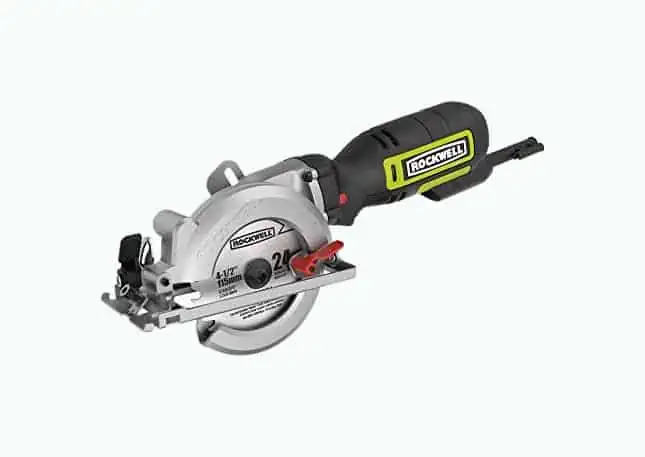
Rockwell RK3441K Compact Circular Saw
Best Compact Circular Saw for Woodworking
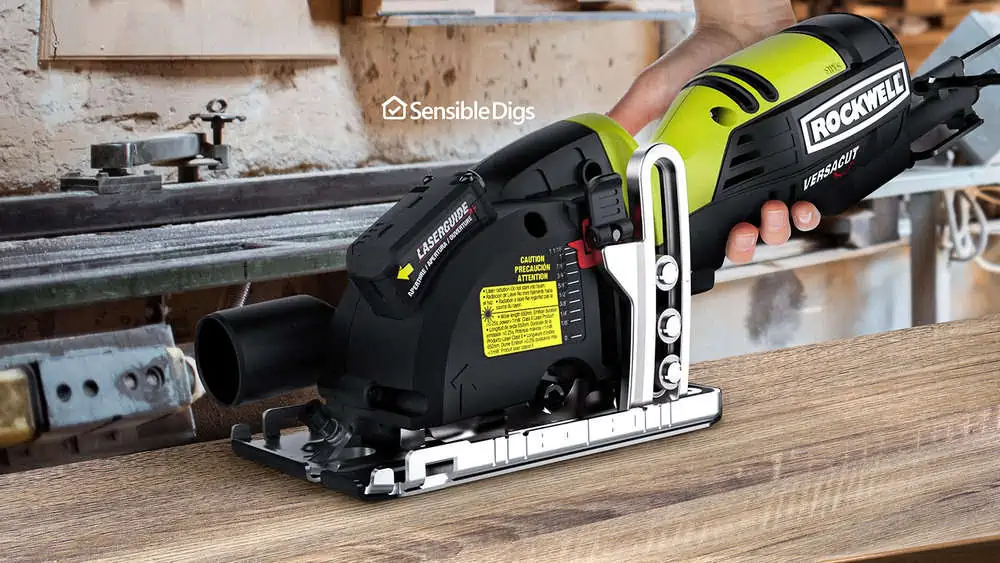
This Rockwell compact circular saw is lightweight at just 5 pounds, which is about half as heavy as some of its competitors. It has a left-handed blade design to ensure you have a clear view of the line you are cutting.
The saw is primarily designed to cut wood, which it will make short work of thanks to its 3,500 RPM motor. If you regularly need to cut wooden boards for furniture or other pieces, this saw will be very suitable.
This model has a maximum cutting depth of 1.69 inches, which is standard for a compact circular saw. The ergonomic handle makes it easy to maintain control, even when making awkward cuts high on a wall or ceiling.
What We Like
Left-Handed Blade
Having the blade mounted on the left-hand side provides clearer visibility and helps you maintain your line of sight. You should notice the benefits when cutting large boards and intricate angles for framing and other woodwork.
Ideal for Wood
This saw’s advertising states that it was “born to cut wood” and that is definitely where it excels. It will slice through 2 x 4 lumber with ease.
Lightweight
As this saw weighs just 5 pounds, it will place less of a strain on your hands and wrist while cutting. This means you should be able to take fewer breaks, helping you complete your work more quickly.
What We Don't Like
Wood Specialist
Being excellent at cutting wood could be both a pro and a con. The downside is that it this saw is unsuitable for harder materials such as concrete or metals.
Corded
This saw’s energy is provided via an electrical cord, so it doesn’t offer the same freedom as its cordless competitors. If you need to complete work away from an electrical outlet, you will need an extension cable to extend its reach.
Product Specs
| RPM | 3,500 |
| Weight | 5 pounds |
| Cutting depth | 2 inches |
| Suitable for | Hardwood, softwood, plastic, 2-inch lumber |
| Price | $ |
| Warranty | 3-year |
Our Ratings
First-Hand Impression
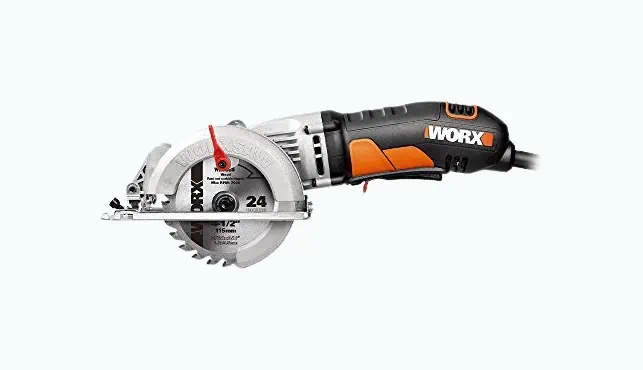
Worx WX429L Compact Circular Saw
Best Compact Circular Saw For Framing
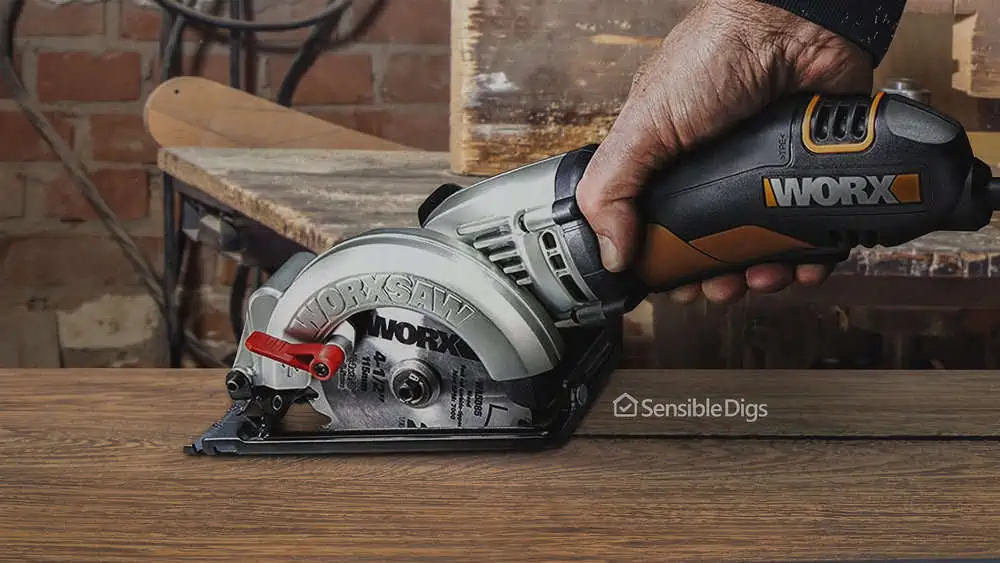
This Worx saw is one of the best compact woodworking saws we have seen. However, its adjustable parallel gauge and bevel adjuster mean this is our choice for best saw for framing.
These features will help you make precise cuts, even if you need to make them at unusual angles. They also provide easy adjustment, which will help you complete complex tasks with minimal fuss.
It has a maximum cutting depth of 2 inches, which means it can saw through 2 x 4 in a single sweep. If you need to make window or door frames, you can be confident that this compact saw won’t let you down.
What We Like
Adjustable Depth and Angles
A saw that can be easily adjusted to cut at different angles is invaluable for complicated woodworking jobs. This model helps you cut straight lines with its parallel guide, and can be adjusted to cut at a 45-degree angle.
Lightweight
This saw weighs just 4.4 pounds, which is very light, even for a compact saw. This means it will place far less strain on your hand and arm while you work. This also allows you to control the saw with one hand.
Blade on the Left
The majority of the US population is right-handed, so this left-handed blade will provide a clearer view of the cutting edge. This means it will be much easier to make accurate cuts.
What We Don't Like
Corded
The 10-foot power cord limits how far from an electrical outlet you can work. You can expand your range with an extension cable, but you won’t have the same level of freedom as a battery-operated cordless saw.
Small Projects
This applies to most compact circular saws, but this saw isn’t well suited to large-scale projects. If you are undertaking a heavy-duty task, you should consider a larger, more powerful alternative.
Product Specs
| RPM | 3,500 |
| Weight | 4.4 pounds |
| Cutting depth | 2 inches |
| Suitable for | Wood, metal, plastic, tiles |
| Price | $ |
| Warranty | 3-year |
Our Ratings
User Experience
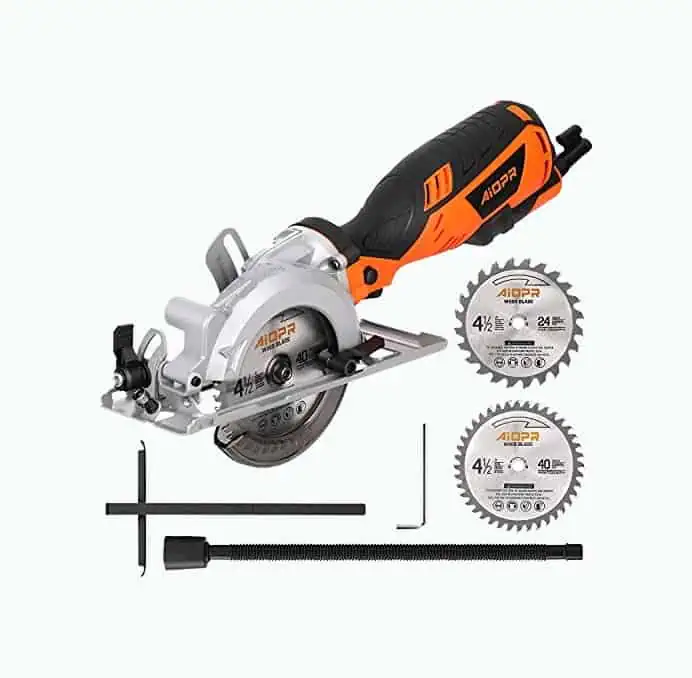
AIOPR Mini Circular Saw
Best Budget Circular Saw
You don’t need to spend a fortune to buy an effective mini circular saw. This AIOPR model is a budget-friendly option, but it still has plenty of power to cut various materials.
The impressive cutting power is thanks to its 696-watt motor and 766V blade. It can be used to cut various materials including plastic, PVC, and wood.
With an ergonomic, comfortable design, you will be able to use this saw to cut one-handed. This will leave your other hand free for tasks such as supporting yourself or holding the stock you are cutting.
What We Like
Ergonomic Design
This saw has a slim, ergonomic design that provides a secure grip to reduce hand fatigue. This ease of use is enhanced by the saw’s weight of just 7.06 pounds.
Added Safety Features
You will be able to work with confidence thanks to this saw’s excellent safety features. It has both lower and upper blade guard rails to ensure your hand stays away from the cutting edge.
Thick Aluminum Base
This saw has a thick aluminum base that will cope with the rigors of more demanding cutting tasks and provide excellent durability.
What We Don't Like
Motor Position
The handle is ergonomically designed, but the saw’s motor is also located there. Unless you have large hands, you might find this saw somewhat uncomfortable to use.
Product Specs
| RPM | 3,500 |
| Weight | 7.06 pounds |
| Cutting depth | 1.68 inches (90°) 1.125 inches (45°) |
| Suitable for | Wood, plastic, and PVC pipe |
| Price | $ |
| Warranty | Not specified |
Our Ratings
Personal Perspective
Rockwell RK3440K Ultra-Compact Versacut Saw
Best Compact Circular Saw For Dust Extraction
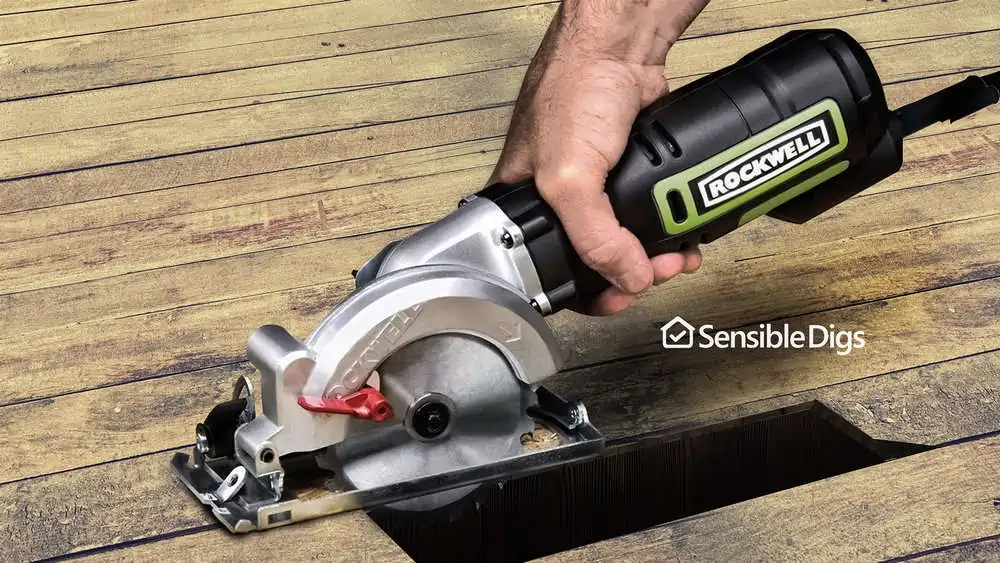
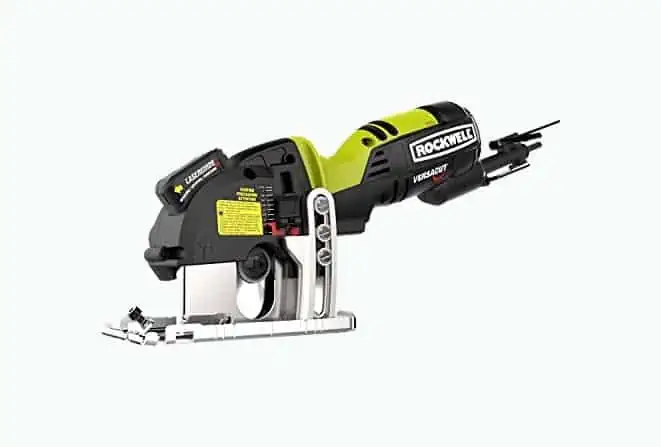
This Rockwell Versacut saw’s standout feature is its ability to extract dust. Excessive sawdust will make it harder to work, could enter your lungs, and, if nothing else, will simply make a mess.
This saw has a pipe that can be attached to your shop vacuum to safely remove all the debris with minimal effort. A major benefit of this is that it will clear the cutting line of waste material, allowing you to see what you are working on and cut more accurately.
It also has a built-in laser guide to increase your accuracy while cutting. It will cut tiles, wood, sheet metal, plastics, and flooring with ease.
What We Like
Dust Extraction
By being connected to your shop vacuum, this saw removes the vast majority of sawdust that is created during use. This will protect your lungs and greatly reduce the amount of cleaning you need to do after cutting.
Versatile
Despite its small size, this little saw is capable of cutting through metal, wood, plastics, composites, and even tiles.
Laser Guide
It is important to maintain a clear line of sight to cut material accurately. This saw has a laser guide that makes it much easier to make neat, precise cuts.
Great for Tight Spaces
The Versacut has a shallow nose, so the cutting edge is almost flush with the front. This means you can get close to walls and corners, providing greater maneuverability in tight spaces.
What We Don't Like
High Price
This Rockwell model costs considerably more than the brand’s other compact saws. This is likely due to its dust-extracting capabilities, which will make a significant difference to how you work.
Product Specs
| RPM | 3,500 |
| Weight | 4 pounds |
| Cutting depth | 1.69 inches |
| Suitable for | Wood, soft metals, plastic, tiles |
| Price | $$ |
| Warranty | 2-year limited |
Our Ratings
Community Feedback
| Product | Best | RPM | Weight | Cutting depth | Suitable for | Warranty |
|---|---|---|---|---|---|---|
| Makita Lithium-Ion Saw | Overall Choice | 1,500 | 3.5 lbs | 1″ | MDF, plyboard, melamine, drywall | 3-year |
| Dremel Ultra Saw Tool Kit | Beginners | 13,000 | 4.62 lbs | N/A” | Hardwood, plyboard, composites, laminate, drywall, PVC, plastic | 2-year |
| Enventor Circular Saw | Construction | 3,500 | 8.05 lbs | 1.68″ at 90°; 1.125″ at 45° | Wood, soft metal, tile, and plastic | N/A |
| Rockwell RK3441K Circular Saw | Woodworking | 3,500 | 5 lbs | 2″ | Hardwood, softwood, plastic, lumber | 3-year |
| Worx WX429L Circular Saw | Framing | 3,500 | 4.4 lbs | 2″ | Wood, metal, plastic, tiles | 3-year |
| AIOPR Mini | Budget Pick | 3,500 | 7.06 lbs | 1.68″at 90°; 1.125″ at 45° | Wood, plastic, & PVC pipe | N/A |
| Rockwell RK3440K Versacut | Dust Extraction | 3,500 | 4 lbs | 1.69″ | Wood, soft metals, plastic, tiles | 2-year limited |
Do I Need a Compact Circular Saw?
A standard circular saw provides greater cutting depth, has more power, and can do the majority of things that a compact circular saw can. However, there are still plenty of reasons that you might want a smaller model.
Compact circular saws might not have the same power as full-size saws, but they provide convenience and ease of use. If you have smaller woodworking tasks to complete, these saws will help you do them quickly and easily.
They can cut wood, metal, plastic, composites, and medium-density fiberboard (MDF). The only thing you need to keep in mind is that smaller saws have less cutting depth than larger units, so you won’t be able to cut thick pieces of material.
Take Note
How to Choose a Compact Circular Saw
With so many makes and models to choose from, it can feel like a struggle to find the right one. Here are some of the most important things to consider when shopping:

Corded vs. Cordless
If you want the freedom to go anywhere instead of having to stay close to a power supply, choose a cordless saw. They will greatly increase your versatility, especially if you are working somewhere without easy access to electricity.
Keep in mind that you will have a limited amount of cutting time before you need to recharge the battery. This means the saw will lose some of its cutting power as the battery fades. If it does drain halfway through a job, you will need to recharge it or have a spare ready.
Choosing a saw with a corded electrical supply means you won’t need to worry about it losing power. This is a positive, but having a battery doesn’t need to be a deal breaker. It simply requires some extra planning to ensure your battery is charged before you start a task.
For an endless power supply that will enable you to keep cutting throughout the day, choose a corded model. This means you can simply plug your saw in and start cutting. Just remember that you might need to pack an extension cable for any tasks that are too far from the electrical outlet.

Power
The amount of cutting power you need will depend on the material you are working with and how thick it is. Metals and denser materials such as hardwood will require a more powerful saw. Look at the specifications listed in the product description to get a sense of a saw’s cutting power. Most compact circular saws operate at around 3,500 RPM and have motors with between 4 and 5 amps.
Remember

Ease of Use
User-friendliness is one of the standout qualities of mini circular saws. They are light, maneuverable, easy to control, and very easy to set up. They have small handles that are usually ergonomically designed, enhancing your grip and making them comfortable to hold.
Small circular saws are great for sustained use as they don’t require as much strength in the hand or wrist, meaning they are less likely to lead to muscle fatigue during use.

Accuracy
Compact circular saws will help you cut more accurately as they provide a clearer line of sight. This is thanks to the handle being set behind the blade instead of to the side of it. It avoids the left-side or right-side handle issue that sometimes arises with conventional circular saws.
Some saws are also equipped with laser guides to enhance your accuracy when cutting. As these saws are lightweight, they will glide across the surface of the stock with minimal effort from the user.

Depth of Cut
Most compact circular saws have a maximum cutting depth of between one and two inches, which is considerably less than most of their larger cousins. However, if you are cutting smaller pieces or sheet material, this depth should still be up to the task.
Anything thicker will probably require a full-size circular saw. After all, they are called compact saws for a reason and they aren’t designed for heavy-duty tasks.
Versatility
The versatility of these saws is thanks to their being lightweight, small in size, and easily maneuverable. However, this comes at a cost, as these small saws are restricted in the size and depth of the material they can cut.
If you are working on a project that requires sawing that isn’t heavy-duty, a compact circular saw is a quick, effective option.
FAQs

How Deep Can a 7.25-Inch Circular Saw Cut?
You can cut to a maximum depth of 2.5 inches with a 7.25-inch circular saw blade. Compact circular saws usually have a blade diameter of about 4.5 inches, which reduces the maximum cut depth to 1.69 inches.
When Using a Circular Saw Is Good Side Up Or Down?
When cutting veneered plywood and thin sheet material, you should always try to cut with the best side facing down. Circular saws tend to splinter the wood on the side facing upwards, which will leave a neater finish on the underside.

Why Are Cordless Circular Saws Left-Handed?
The placement of the blade on the left of a circular saw is to maintain your line of sight and help you hold the material in place. About 85% of the United States population is right-handed or ambidextrous, so it makes sense to cater to right-handed users. With the blade on the left, you will be able to see your work more clearly and make more accurate cuts (1).

Can I Cut Concrete With My Circular Saw?
You can cut concrete using a circular saw, but you will need a powerful motor and a suitable blade. In the case of concrete, this means a diamond-coated blade that is made specifically for this purpose.
Diamond-coated blades have no teeth. However, they have abrasive diamond grit that scrapes away the surface of the concrete, creating a very smooth cutting line.

What Is the Best Circular Saw Blade Size?
The most popular blade size for circular saws is 7.25 inches. These blades have a cutting depth of about 2.25 inches and should be suitable for most materials you are likely to encounter. It is possible to buy saws with larger blades, but these will be more expensive.
Compact saws are much smaller, usually with a blade diameter of 4.5 inches, providing a maximum cut depth of 1.69 inches.

Can Mini Circular Saw Cut 2×4?
Yes, mini circular saws can cut 2×4. The size and power of the saw will determine how thick of a piece it can cut through.
A standard mini circular saw can cut through a piece that is up to two inches wide. If you need to cut through a thicker piece, you will need to purchase a more powerful mini-circular saw.

Is It Safe to Use a Circular Saw With One Hand?
Using a circular saw with one hand is safe, but using both is better.
The main safety concern when using a circular saw is kickback. Kickback can occur when the blade catches on something and is suddenly forced backward toward the operator. This can be very dangerous, and it’s important to know how to avoid it.
One way to reduce the risk of kickback is to clamp down workpieces before cutting them. This will help to keep the piece from moving around and prevent the blade from catching on anything.
Also, it’s always best to use both hands when operating a circular saw. This provides maximum control and helps to keep the saw from getting away from you. If you have to use the saw with one hand, keep a firm grip on it and be extra cautious.

What Is the Lightest Cordless Circular Saw?
Makita SH02R1 reigns supreme when it comes to the lightest cordless circular saws. Because this Makita saw kit does not require a cord, you can take it virtually anywhere. The lithium-ion battery provides electricity for the motor, which in turn creates 1,500 revolutions per minute (RPM).
Saws that do not require you to be tethered to a cord provide you the freedom to move around unrestricted.
This saw weighs just 3.5 pounds, which means that there is a significant reduction in hand fatigue. The dust blower ensures the line is free of particles at all times. It indicates that you will be able to cut with more precision. Additionally, it prevents sawdust from getting in your face.

What Is the Best Mini Circular Saw for the Money?
The AIOPR 76602 delivers awesome quality for its price, all packed up in a compact mini circular saw. Because of the ergonomic design, it can be used with just one hand without too much difficulty.
It also includes an ergonomic slim grip designed to reduce hand fatigue and weighs only 7.06 pounds. It’s got a lot of power because of the 696-watt motor and the 766V blade.