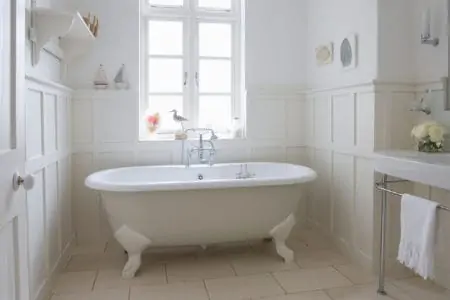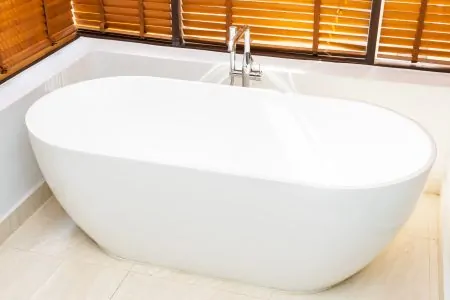
There are few things more satisfying than a warm bath after a long or difficult day. If you want to make the most of the space in your bathroom, an alcove bathtub is a perfect solution.
Alcove bathtubs are designed to fit into tight spaces, which means they are cozy and compact. There are now numerous different alcove styles and designs available, which can make it tricky to find your ideal model.
To help you choose, we have written five alcove bathtub reviews, with models we chose for their size, material, and ergonomic design. We have also shared the key things you need to keep in mind if you want to shop for an alcove bathtub of your own.
- Minimalist appearance
- Built-in back support & anti-slip
- Weighs just 60 pounds
- 72 inches long & 18.5 inches deep
- Arm & back support
- Three color options
- Compact but ergonomic
- ADA-compliant
- Elegant porcelain finishes
- Curved footprint
- Room for two adults
- Timeless appearance
- Hexagonal interior
- Strong anti-slip floor
- Enameled cast iron
Review Methodology: At Sensible Digs, we pride ourselves on providing accurate, hands-on product evaluations from a user’s perspective, backed by thorough research and data analysis. Our professional team uses strict benchmarks and criteria to measure and rank products, focusing on key decision-making factors such as design, performance, and unique features. When assessing the best alcove bathtubs, we check features like material quality, size, ease of installation, durability, comfort, and style. We compare these findings with the market standard, scoring each product accordingly. Through our extensive assessment, we’re able to identify what sets a bathtub apart from its competitors, providing you with first-hand evidence to help you make an informed decision.
The Best Alcove Bathtub Reviews of 2024
You have countless options if you want an alcove bathtub, which is why we wrote these reviews to help you narrow them down. Our research involved reading numerous customer reviews and professional opinions to ensure we could recommend the best alcove bathtubs available today.
American Standard Studio Bathtub
Best for Minimalism
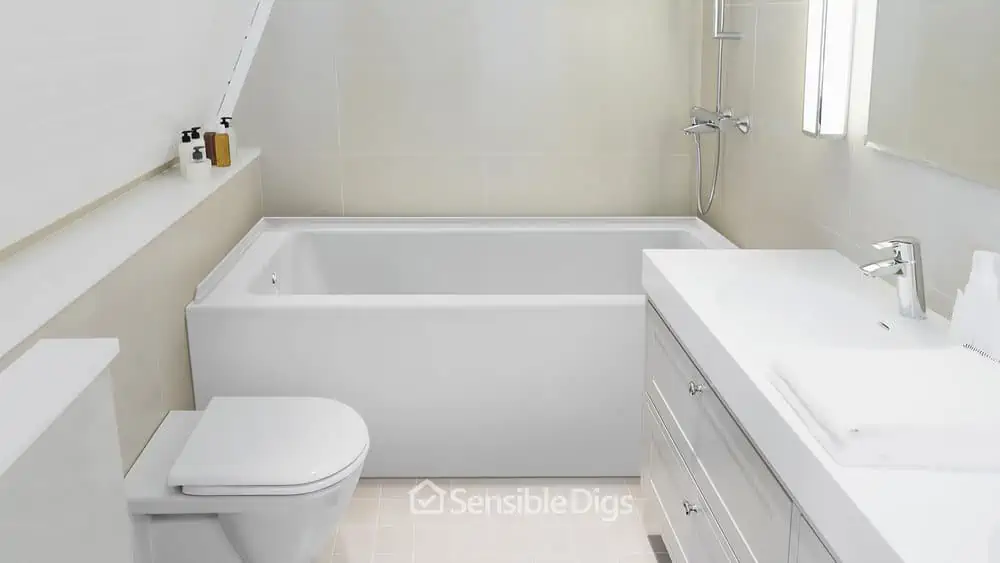
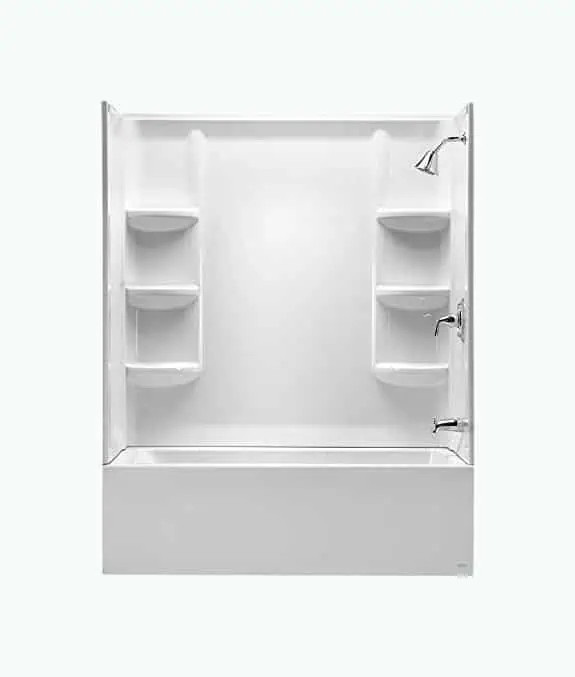
The American Standard Studio alcove bathtub has a minimalist design that allows it to blend into the majority of modern bathrooms. Its look is also simple enough that it won’t be too bold to place in relatively traditional bathrooms.
This model has an “Arctic” finish, named for its resemblance to fresh snow. Unlike warmer finishes, this unit’s cold white won’t clash with other colors, making it a highly versatile bathtub.
This versatility is enhanced by the tub’s standard length and width (60 by 32 inches), making the Studio a reliable candidate for various bathroom setups.
What We Like
Sleek Appearance
The Studio’s sleek, simple design makes it a great option for anyone who doesn’t care about additional features on their bathtub. Every part of the unit is the same neutral “Arctic” white, providing a sense of continuity in white bathrooms or a bold contrast in darker ones.
Decent Depth
Considering how compact this model’s footprint is, a 14-inch depth is decent. Many alcove tubs are as shallow as 12 inches.
Built-In Back Support and Anti-Slip
Minimalist design doesn’t mean a bathtub needs to be uncomfortable. The Studio features built-in lumbar support to ensure you can recline comfortably.
The tub’s floor is textured with an anti-slip grip, so you can stand up safely without needing to add an unsightly or potentially unhygienic bath mat.
Lightweight for Easy Installation
If you will be installing your bathtub alone, this unit’s light weight will make the task much easier. The Studio weighs just 60 pounds, which means it is far easier to maneuver.
What We Don't Like
High Step-Over
The main drawback of this bathtub is its 18-inch high step-over. If anyone in your household struggles to climb in and out of baths, the Studio might be too tall. There are other alcove tubs that will be easier to scale.
Product Specs
| Dimensions | 60 by 32 by 18 inches, 12 inches of depth |
| Material | High-gloss acrylic with fiberglass reinforcement |
| Drain Location | Right side |
| Available Colors | Arctic |
| Support Features | Lumbar support |
Our Ratings
User Experience
American Standard Evolution Bathtub
Best for Spacious Alcoves
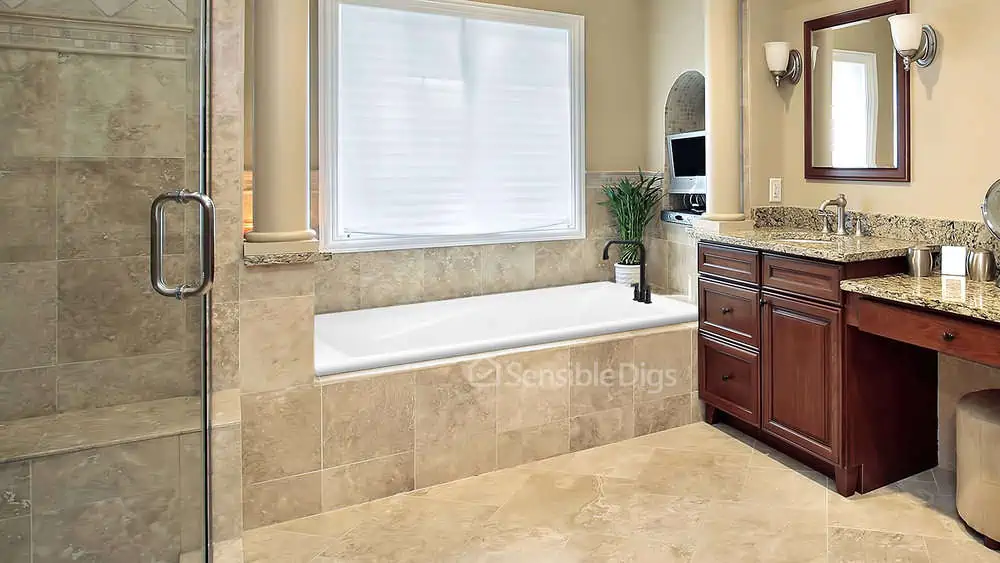
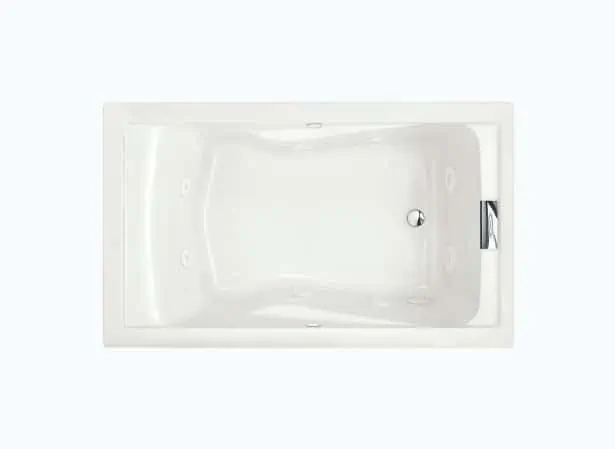
If your alcove is large enough for a bigger bathtub, the Evolution from American Standard is a great option. Its footprint is 72 inches long and 36 inches wide.
The larger size means this unit can provide a level of comfort that its smaller counterparts can’t. It features armrests and an incline to encourage comfortable posture while bathing, and its headrest is wide enough to hold a reasonably-sized bath pillow.
The larger size of the Evolution extends to its depth. At 18.5 inches deep, people of most sizes will be able to submerge themselves while relaxing comfortably in the bath.
What We Like
Extravagant Dimensions and Depth
The generous dimensions of this alcove tub make it ideal for larger bathrooms. The Evolution provides enough room for larger users and means most bathers will be able to spread out comfortably. At full capacity, the tub holds almost 112 gallons of water (1).
Arm and Back Support
Supportive sloped ends have been a common feature in bathtubs for decades, but armrests are rarer and encourage comfortable posture while relaxing. If you are somebody who likes to read during your baths, these armrests will be particularly useful.
Three Color Options
With three different tones to choose from, you can customize your Evolution tub to complement the rest of your bathroom. You can select Arctic White, White, or Linen (these range from paper-white to creamy-white).
What We Don't Like
Necessary Extras
To make full use of the Evolution’s depth, it is also necessary to also buy the Deep Soak Max Drain, which costs an extra $95. This means the price of the Evolution is somewhat misleading, but it is a good investment if you want an extra deep alcove soaking tub.
Product Specs
| Dimensions | 72 by 36 by 21.25 inches, 18.5 inches in depth |
| Material | Acrylic with fiberglass reinforcement |
| Drain Location | Information not provided |
| Colors | Arctic, White, Linen |
| Support Features | Armrests and backrest |
Our Ratings
Personal Perspective
American Standard Cambridge Bathtub
Best for Comfort
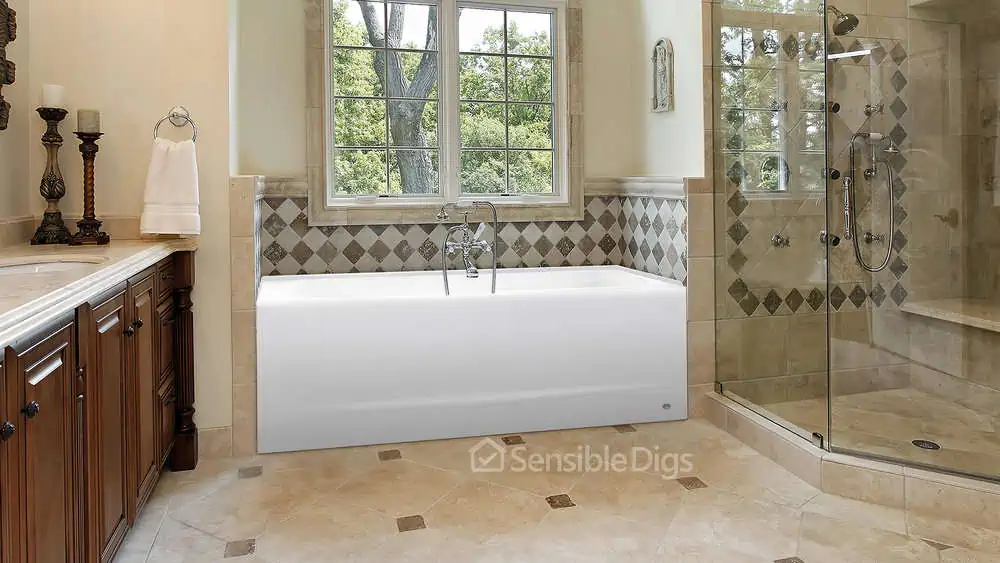
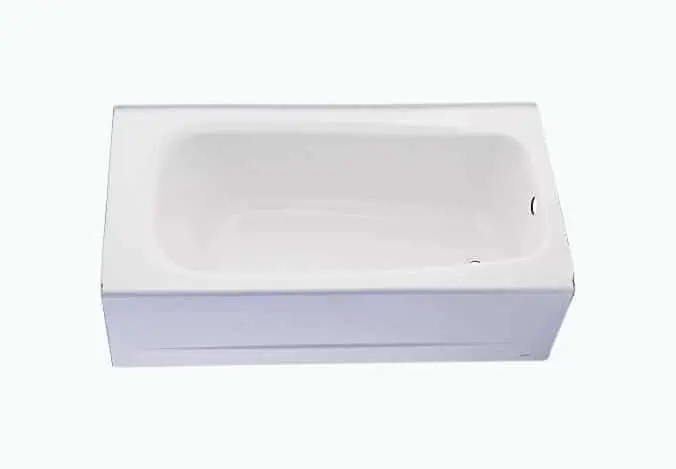
The American Standard Cambridge is a porcelain alcove bathtub that will appeal to homeowners with limited space — and anyone else who doesn’t want to compromise on comfort.
This product was designed to provide a close but comfortable fit. The internal shape of the bath is curved and inviting. The head end of the tub is inclined so you won’t have to sit upright. For a touch of extra comfort, there is a built-in, beveled headrest.
This bathtub is also accommodating for people with limited mobility. If you need to install a seat inside it, the Cambridge complies with the Americans with Disabilities Act (ADA).
What We Like
Space-Conscious but Comfortable
The standard length and width of the Cambridge are undoubtedly compact. At the same time, it isn’t spartan or plain.
If you prefer not to use separate bath accessories, the built-in comfort features will be ideal. The headrest and lumbar support mean you probably won’t need a bath pillow, and the textured floor means a bath mat is also unnecessary.
Meets ADA Standards
If someone in your household has limited mobility but is able to take baths, the Cambridge is a good option. As it is ADA-compliant, you can install a seat at the drain end of the tub for increased accessibility.
Four Color Options
You have four options when deciding on your tub’s finish — there are three classic shades of white and cream (Arctic, White, and Linen). Alternatively, there is a slightly darker hue in Bone. This warm, off-white color is more forgiving in terms of being kept perfectly clean than the lighter tones.
Looks More Expensive Than Its Cost
The glossy porcelain finish gives the Cambridge an upmarket look. In terms of visual appeal relative to budget, this bathtub punches far above its weight.
What We Don't Like
Might Be Too Shallow
With a 14-inch depth, the Cambridge might be too shallow for some bathers. Unsurprisingly, this will be more of an issue for larger users.
Product Specs
| Dimensions | 60 by 32 by 17.75 inches, depth 14 inches |
| Material | Americast with a glossy porcelain finish |
| Drain Location | Right side |
| Colors | Arctic, White, Bone, Linen |
| Support Features | Lumbar support and beveled headrest, ADA-compliant |
Our Ratings
Community Feedback
Kohler Expanse Curved Bathtub
Best Roomy Basin
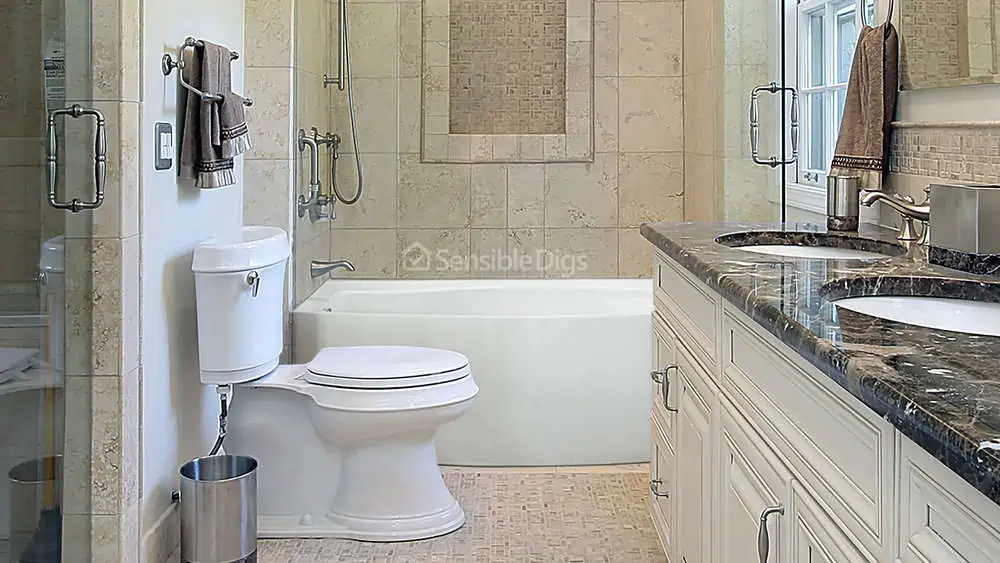
The size of a bathtub will always be limited by the space you have to work with, but it is even more frustrating when you are trying to fit one into a tight alcove.
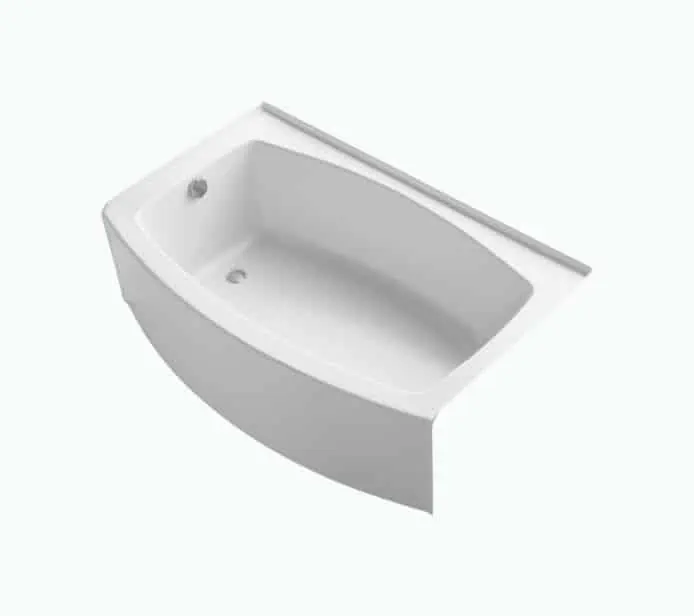
The Kohler Expanse was designed to minimize this problem. Its basic dimensions are standard (60 by 32 inches), allowing it to fit into most bathroom recesses. However, it provides extra space thanks to its curved footprint, which expands to 38 inches at the widest point.
If you want to share baths with a partner but only have limited space, the Expanse is a great option. It is also suitable for bathing small children together.
What We Like
Contemporary Look
The curved lines of the Expanse lend it a gentle, modern look in comparison to the more angular tubs that are widespread today. This makes it a great fit if you want to relax in your bathtub as well as clean yourself.
Great for Shared Baths
Family baths don’t need to feel cramped or crowded, even in an alcove. This bathtub will provide plenty of space to bathe small children together. You won’t have quite as much space if two adults decide to bathe together, but it should still be sufficient to enjoy a romantic bath with a partner.
Space to Spread Out
Even if you’re bathing alone, you will notice how much space this bathtub provides for an alcove model. Whether you are tall or simply want some extra room to spread out, the Expanse is a spacious bathing option.
What We Don't Like
Not Much Depth
Considering how this tub makes the most of your floor space, its depth is less impressive — below 13 inches. This should be enough to clean yourself, but it might not be enough for a relaxing soak.
Narrow Sides
If the sides of your current bathtub are covered with various bathroom products, the sides of the Expanse might be too narrow for you. The sloping sides and narrow rims aren’t designed for holding items.
You can overcome this by using a hanging caddy, but if you want a sleeker look then the Expanse could be unsuitable.
Product Specs
| Dimensions | 60 by 32 by 17 inches, 12 5/8th inches of depth. Width compensating for curved basin is 38 inches |
| Material | Acrylic |
| Drain Location | Left side |
| Colors | White, Biscuit, Almond |
| Support Features | None |
Our Ratings
First-Hand Impression
Kohler Villager Alcove Bathtub
Best for Accessibility
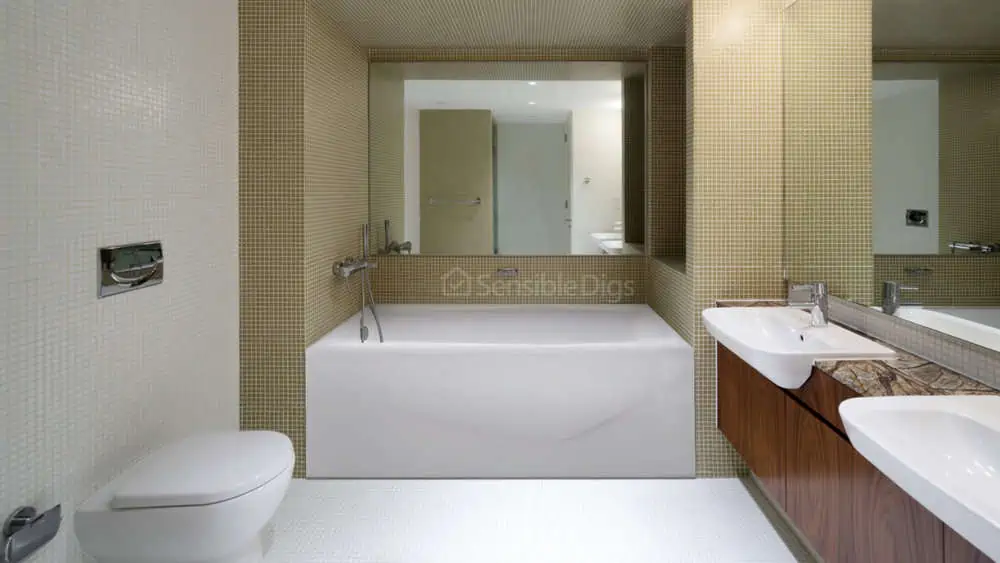
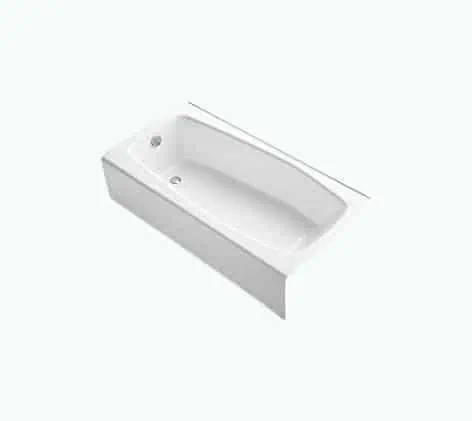
At first glance, the most distinctive thing about the “Villager” is its unique shape. Rather than being rounded or rectangular, it is hexagonal. This makes it a popular choice for bathers who want a characterful bathtub.
This tub is also a good option for people who struggle to climb in and out of bathtubs. Its low step-over height of 14 inches makes it relatively easy to lift your legs over the side.
There also won’t be any need to bend over to place or pick up a bath mat, as the Villager has a strong anti-slip floor.
What We Like
Unique Design
The hexagonal design of the Villager gives it a very unique appearance, even with countless bathtub models available today. This design is not only visually impressive; it also provides extra space for your shoulders and arms.
Low-Profile for Easier Access
For many people, the biggest obstacle to enjoying a relaxing bath is the process of climbing in and out of the tub. This bathtub has a step-over height of 14 inches, which is among the lowest you will see for a full-size tub, making it much easier to get in and out.
Strong Anti-Slip Floor
The floor of this tub is heavily textured to prevent slipping, so you won’t need to use a bath mat, which can be unsightly and unhygienic. This is particularly important if anyone in your household struggles to get in and out of the bath.
Quality Build
The Villager is made of sturdy, enameled cast iron. This tub will retain heat and resist scratches and dents. This also means you won’t need to worry as much about damaging it by using cleaning products (2).
What We Don't Like
Small Dimensions Overall
This tub is marketed as a single-person model, in contrast to some of the others on our list. If you are looking for a particularly spacious bath or one that will accommodate two people, you should look elsewhere. However, it is an excellent option for one person.
Product Specs
| Dimensions | 60 by 30.25 by 14 inches, 8 and 5/8 inches depth. |
| Material | Enameled cast iron. |
| Drain Location | Left or right. |
| Colors | White, Biscuit, Almond. |
| Support Features | Lumbar support. |
Our Ratings
User Experience
| Product | Best | Dimensions | Material | Drain Location | Available Colors |
|---|---|---|---|---|---|
| American Standard Studio | Minimalism | 60 x 32 x 18″, 12″ | High-gloss acrylic with fiberglass reinforcement | Right side | Arctic |
| American Standard Evolution | Spacious Alcoves | 72 x 36 x 21.25″, 18.5″ | Acrylic with fiberglass reinforcement | N/A | Arctic, White, Linen |
| American Standard Cambridge | Comfort | 60 x 32 x 17.75″, 14″ | Americast with a glossy porcelain finish | Right side | Arctic, White, Bone, Linen |
| Kohler Expanse Curved | Roomy Basin | 60 x 32 x 17″, 12 5/8″ | Acrylic | Left side | White, Biscuit, Almond |
| Kohler Villager Alcove | Accessibility | 60 x 30.25 x 14″, 8 5/8″ | Enameled cast iron | Left or right | White, Biscuit, Almond |
What are Alcove Bathtubs?
Alcove bathtubs are among the simplest types available today, and rarely have extra features such as a shower head. They are installed with three sides touching walls in a recessed area of your bathroom (3). This means they can fit into tight spaces and small bathrooms, unlike more spacious and spectacular freestanding bathtubs.
As they are relatively basic, homeowners with DIY experience can often install them without professional assistance.
They are not very expensive, making them a more budget-friendly option than jacuzzis or whirlpool types. Even so, any bathtub is an investment and a part of your home that is important to get right.
Features of the Best Alcove Bathtubs
When searching for a new bathtub, appearance is obviously an important aspect. However, there are also some other key things to keep in mind.

Measurements
Size is the most important part of any bathtub search, as you won’t be able to increase your available space without spending more money. Use a measuring tape to check the length, width, and depth of your current bathtub, or the alcove itself, then find a unit that will fit into that space.

Depth or capacity
Your available floor space will be a key part of how much water your bathtub can hold. The other determining factor is the depth of the bathtub itself. Even if you don’t have much floor space, a deeper bathtub means you will still be able to enjoy a relaxing soak in water that covers most of your body.

Step-over height
Deeper bathtubs seem like the obvious right option, given their increased capacity, but they aren’t without issues. If you struggle to climb in and out of the bath, increased unit height will make this even more challenging. If this applies to you, look for shorter step-over heights instead.

Drain position
Drain position is an important part of both the looks and function of your bathtub. A drain can be to the left, right, or center when facing the tub. You want a drain that will be easy to connect to your plumbing, will drain effectively, and ideally one that you won’t have to sit on while bathing.

Material and Color
Like any modern bathtub type, alcove tubs are available in a wide range of materials and finishes. The most popular colors range from white to calmer cream shades. The available materials include:
- Acrylic: The majority of modern bathtubs are made of acrylic or at least contain it. This lightweight plastic is easy to manufacture and its versatility means it is used for numerous industrial purposes (4).
- Fiberglass: Fiberglass is often used alongside acrylic and provides insulation, keeping your bath warmer for longer. Today, it is also used in cars, boats, shower curtains, and many other household items (5).
- Porcelain: For alcove bathtubs, porcelain is typically used to provide a beautiful smooth finish, rather than being the entire structure. It usually gives tubs a gleaming white finish as long as it is cleaned properly.
- Cast iron: Cast iron is a durable metal that is found in industrial construction more often than in alcove bathtubs (6). Even so, it is possible to find tubs that are made of it. As with traditional cast iron cookware, a cast iron alcove tub will effectively retain heat (7).

Internal Shape and Features
You can choose a tub that is internally rounded instead of rectangular. Some models also offer additional ergonomic features such as armrests and grab handles to provide extra support while bathing. If you are concerned about slipping but don’t want to use a bath mat, look for units with textured or non-slip floors.
How Do You Install an Alcove Bathtub?
The exact process to install an alcove bathtub differs from model to model. For a more detailed look at how to install them, check our guide on how to install a bathtub. However, there are some universal steps:
Ask A Professional
- Remove old tub: Shut off the water to your bathroom, or your entire house to be safer. The old tub will need to be removed from the room before you bring the new one in, especially if space is limited. Disconnecting your plumbing can cause floods, so you might need professional help here.
- Prepare the alcove: Remove any debris and prepare the area for your new bathtub to be installed.
- Install new tub: If your new tub includes an insert frame, install it first. Place the replacement model into the alcove and ensure that it is level and stable. Once you are satisfied, connect it to your drainage system.
- Finishing touches: Place any new tiles, caulk, and seal around your new tub as needed.
FAQs

What Sizes Do Alcove Bathtubs Come In?
60 inches long, 32 inches wide, and then 18 inches deep constitute the conventional tub dimensions for alcove fixtures.
The alcove tub is the most frequent kind of bathtub, and it is often a built-in tub shower combination encircled by three walls to save space in tiny bathrooms.
Small alcove bathtubs, which range from 48 to 55 inches, are available for installation in bathrooms with limited space.
Compared to a conventional alcove tub, a long alcove tub can be up to a whole foot longer, making it an ideal choice for larger bathrooms. In addition, long alcove tubs are also more expensive than standard alcove tubs.

What Material Is Best for Alcove Bathtubs?
If “best” means “most durable,” enameled cast iron is the best material for alcove bathtubs. Enamel-coated cast iron is one of the traditional bathtub materials, but it is also quite hefty. Molded iron enameled with porcelain makes up the tub’s construction.
Cast-iron bathtubs are more expensive, but they are an investment that will hold their value over time. The weight is the only noticeable detriment, and it is substantial.
The weight of a cast-iron tub can make installation rather challenging, and in certain cases, the floor will need to be reinforced structurally before the tub can be placed there.

Do You Tile Under an Alcove Bathtub?
Experts suggest that an alcove tub shouldn’t sit on top of tiles. They are designed to rest on the bathroom subfloor using mortar or foot support.
These tubs use a metal shim to level the tub to the same height as the tile, consequently allowing the latter to secure the tub’s front enclosure.
You can tile the area about an inch underneath your uncovered bathtub if the front of your tub is visible. This can finish off the look of your floor and make it possible for the tub to sit on the subfloor.
Additionally, it may make the task of replacing your tiles in the future less difficult. You may not want to refinish your bathtub when you conduct the next renovation on your bathroom.
However, if your tiles went quite a way down beneath your bathtub, you would be required to do that.

What Company Makes the Best Alcove Bathtubs?
American Standard makes the best alcove tubs. You can get their products without spending a fortune, and they come with durable constructions and elegant finishes.

What Is the Difference Between a Drop-in Tub and an Alcove Tub?
Drop-in tubs are usually easier to clean, while an alcove tub can protect the walls. However, there are more differences between these two than meets the eye.
There is a style of tub known as a drop-in bathtub that does not require you to position it against a wall.
Because only the top lip and the tub’s interior are visible, the tub has unfinished surfaces on all four sides.
After the bathtub has been installed into the frame, the exterior structure can have your desired finish, typically stone or tile. This provides a clean finish by concealing the tub’s walls and the plumbing underneath.
Alcove tubs are called that way based on their method of installation. They have three unfinished sides, and the fourth side has a tub apron finish. They are designed for installation in an alcove bathroom section so that the three unfinished sides are set against the walls.