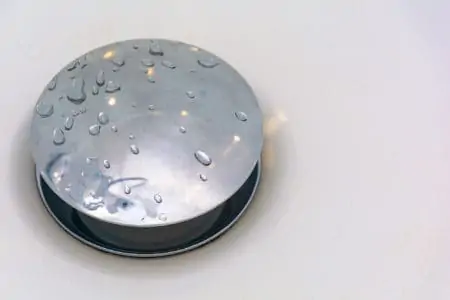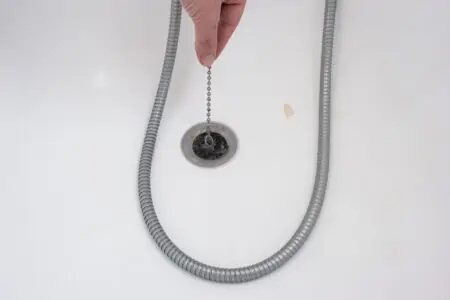
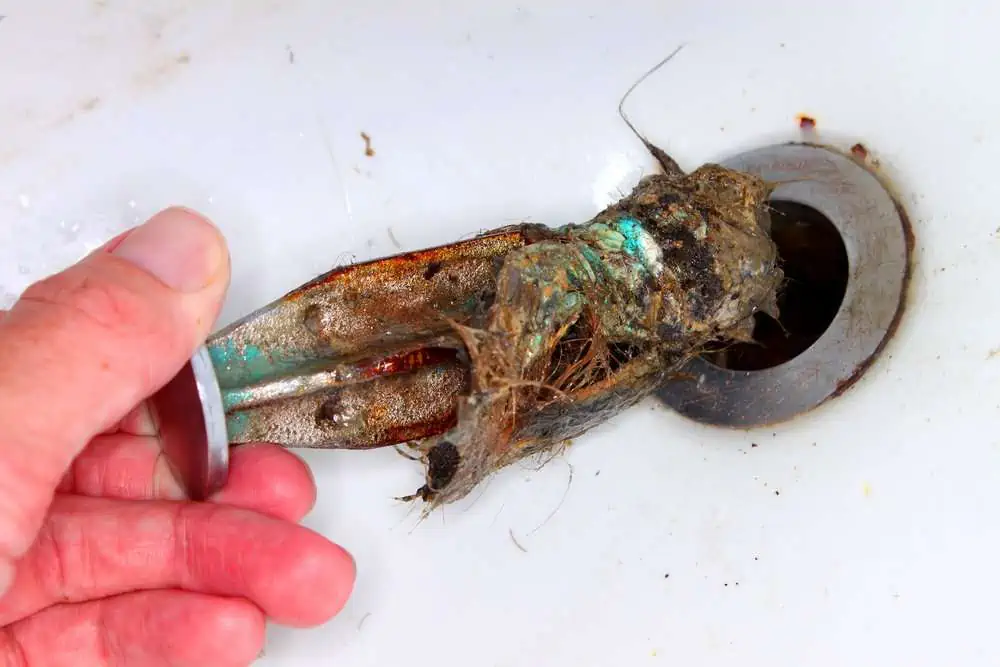
Drain stoppers can become clogged with soap scum, hair, and grime. When that happens, you will need to remove the plug to clean it or replace it.
We show you how to remove a bathtub drain stopper and the different types of drain stoppers available.
Key Takeaways
- Identify the type of drain stopper: Toe Touch, Push and Pull, Lift and Turn, Pop-Up, Flip-It, Presflo, or Plunger Style.
- Use appropriate tools such as a flathead screwdriver, Allen wrenches, or pliers to remove the stopper.
- For stubborn stoppers, try using white vinegar or WD-40 to loosen any buildup or corrosion.
- Consider replacing the old stopper with an easier-to-operate type, like a push-pull variety.
- Different Types of Bathtub Drain Stoppers
- How to Remove a Lift and Turn Stopper
- How to Remove a Toe Touch Stopper
- How to remove a Pop-Up Stopper
- How to Remove a Push-Pull Stopper
- How to Remove a Flip-It Stopper
- How to Remove a Presflo Stopper
- How to Remove a Plunger-Style Stopper
- How to Remove a Trip Lever Stopper
- Bathtub Drain Won’t Unscrew
- Final Thoughts
Different Types of Bathtub Drain Stoppers
Knowing how to remove a bathtub drain plug is handy, but not all drain stoppers are the same. With several styles available, how do you identify the one you have? Let’s take a look.
Toe Touch
This stopper operates when you press it with your toes. It works on a spring mechanism that lifts when pushed and closes when pressed a second time.
Push and Pull
A push and pull stopper has a knob in the center that engages when pushed or pulled. Pushing it closes the drain. Pulling it opens the stopper.
Lift and Turn
Lift and turn stoppers are similar in appearance to push and pull varieties. Lift the stopper in one direction, and it opens. Perform the same procedure in the opposite direction, and it closes.
Pop-Up
This system operates via a trip lever or a push rod attached to the faucet’s stem. Push it, and the plug opens. Pull it, and it closes.
Flip-It
A flip-it drain stopper flips one way to open and the other to close.
Presflo
This stopper utilizes an O-ring to make a seal. It rotates within the opening to open and close.
Plunger Style
This drain stopper operates with either a trip lever or a twisting mechanism. When you pull the lever, the drain opens; it closes when you push it. If you have the twist system, turning it one way opens the drain and closes the other way.
How to Remove a Lift and Turn Stopper
This is a simple stopper to remove and requires minimal tools.
What You’ll Need
- Flathead screwdriver.
- Allen wrenches.
- Place the stopper in the open position.
- Turn the stopper knob to reveal a set screw.
- Use an Allen wrench or flathead screwdriver to unscrew the set screw.
- You don’t need to remove the screw, just loosen it, and you can lift the stopper free.
- If you have a model without a screw, twist the knob until it unthreads.
- If it won’t unscrew and you can’t see a set screw, you may have one of two alternative models.
- For models with a set screw at the base of the stopper, open the plug and twist it to reveal the screw.
- If you still don’t see a screw, yours may be anchored by a pin mechanism.
- Lift the stopper and rotate it counterclockwise until the pin aligns with the slot. Now you can lift it out of the housing.
Top Tip
With the lift and turn stopper removed, swapping it for a push-pull variety might be an idea because they are easier to operate.
How to Remove a Toe Touch Stopper
Toe touch stoppers are convenient and easy to operate. They are also ideal for people with limited mobility because you don’t have to bend to operate the plug.
What You’ll Need
- Flathead screwdriver.
- Open the drain stopper.
- Twist the stopper counterclockwise while holding the shaft.
- Now remove the shaft cylinder by unscrewing it from the crossbar.
- Use the flathead screwdriver to unthread the shaft if there is a slot to accommodate a screwdriver.
How to remove a Pop-Up Stopper
Pop-up stoppers are one of the most common types. Many operate from a twist lever on the faceplate, while others push and pull.
What You’ll Need
- Bucket.
- Clean rags.
- Open the stopper.
- Some stoppers pull straight out of the assembly, while others require wiggling.
- Some pop-up stoppers have a rocker arm attached to the base. When you pull the plug up, you can see the arm.
- Place the rags under the stopper when you lift it to stop the metal arm from scratching the tub sides.
- Place a bucket under the drain assembly to catch any gunk that may dislodge when you lift it. You can also place the loose parts in the bucket to keep them safe.
How to Remove a Push-Pull Stopper
Push-pull drain stoppers are easy to operate and keep clean. Removing them requires minimal effort and a few tools.
What You’ll Need
- Clean rags.
- Flathead screwdriver.
- Pliers.
- You can remove this stopper without worrying about its position.
- Remove the stopper knob located on the top.
- Hold the stopper shaft and twist the knob counterclockwise.
- If the knob resists, place the rag on top and grip it with the pliers.
- The insert in the stopper shaft unscrews with a flathead screwdriver.
- Remove the strainer from the stopper.
How to Remove a Flip-It Stopper
You can remove a Flip-It stopper without tools, so you can get straight to work.
What You’ll Need
- Nothing.
- Zilch.
- Nada.
- This stopper is held in position by an O-ring.
- Grip the outer chrome body and twist it in either direction while applying upward pressure.
- The plug will lift out.
- You may have to wiggle it a little to free it.
How to Remove a Presflo Stopper
Presflo stoppers are held in place with an O-ring to create the seal. This system can be challenging to remove because you have to figure out the correct method.
What You’ll Need
- Small suction cup, like this Hanger Space Hook.
- Make sure the drain stopper is flat and level with the drain.
- Place the suction cup onto the top of the stopper and press down to create a seal.
- Pull the drain upward; it should come straight out of the assembly.
- You may need to wiggle it a little to get the positioning of the suction cup right.
Take Note
This drain type may want to rotate when you press down, so it will take a couple of attempts.
How to Remove a Plunger-Style Stopper
Most plunger-style stoppers are covered by a strainer plate and operate with a trip lever or a knob that twists on the face plate. The cover plate screws into the drain’s body and can be removed with a screwdriver.
What You’ll Need
- Screwdriver.
- Open the drain stopper.
- Pull out the old drain stopper and rocker arm.
- Remove the screws on the face plate and lift it free.
- Pull the entire assembly out to expose the arm and stopper.
- Remove them carefully without scratching the bathtub.
How to Remove a Trip Lever Stopper
As we’ve said, most trip lever stoppers have a lever on the face plate attached to the bath. When you flip the switch down, it opens the drain. Switch it upward, and the drain closes. The mechanism is concealed in the overflow pipe and operates with a rocker arm.
- Open the drain stopper by flipping the switch down.
- Remove the drain stopper and rocker arm.
- Take out the screws on the face plate, taking care not to drop it.
- Place the screws to one side for safekeeping.
- The overflow elbow should now be visible.
- Inside you will see the assembly, including the linkages for the rocker arm.
- Pull out the arm and stopper.
Bathtub Drain Won’t Unscrew
There is nothing worse than a stuck drain stopper in your sink, shower, or bathtub. If the stopper is broken, you will need to swap it for a new one.
So, if drain stopper removal is hampered, what do you do? You could always lay a rag on top of the stopper and grip it with pliers to twist it off.
Another method is to pour white vinegar down the drain to dislodge mineral deposits. If the stopper and assembly have corroded, white vinegar will clean the gunk, which might help unscrew the plug.
Also, WD-40 is an excellent product for freeing stuck stoppers. Not only is it a lubricant, but it is also a water displacer, so it cleans your stopper.
Top Tip
If you need added grip to twist off your drain stopper, try wearing rubber gloves, like these CleanBear Rubber Household Gloves. The rubber grips the stopper and helps when you twist it counterclockwise.
Final Thoughts
Knowing how to remove a bathtub stopper is a useful skill. It saves you money on plumber costs, and you can sort the issues straight away. As a homeowner, that has to be a win, win!
So, the next time someone calls you up and asks how to remove a tub drain stopper, you can be the hero of the hour and explain exactly how to do it.