A kitchen sink is one of the most important parts of any kitchen, allowing you to prepare ingredients and wash dishes, pots, and pans after cooking. Sinks are available in various materials and one of the most popular of these is stainless steel.
Stainless steel sinks are affordable, low maintenance, lightweight, and generally among the larger models on the market. Given their popularity, there are countless stainless steel kitchen sinks available today, which means it can be difficult to find exactly what you’re looking for.
To give you some inspiration, we have reviewed five of the best stainless steel kitchen sinks currently on the market. We chose these sinks based on their size, quality, installation type, and the number of bowls they have.
- 16-gauge stainless steel
- 10-inch deep bowl
- Multiple accessories
- UPC and cUPC certified
- Curved bottom for drainage
- Includes bottom grid
- Complete workstation
- Includes drying rack
- Four drainage grooves
- Differently sized bowls
- Includes grids and strainer
- Sturdy 16-gauge steel
- Noise-reducing pads
- Various hole configurations
- Equally-sized bowls
Review Methodology: At Sensible Digs, we conduct thorough analysis and hands-on testing of the best stainless steel sinks based on key criteria such as durability, design, and performance. Our professional team evaluates products from the user’s perspective, sharing quantitative measurements and data to benchmark each sink’s performance. We compare and rank each product, identifying what sets them apart from their competitors. Our criteria includes design choices and their effects on users, backed by first-hand evidence and experience. We aim to provide a comprehensive review that helps you make the best decision, taking into account factors like material quality, size, installation type, finish, and noise reduction capabilities. Trust our research, assessments, and findings to guide you in selecting the perfect stainless steel sink for your needs.
The Best Stainless Steel Kitchen Sinks of 2024
Choosing a kitchen sink is one of the most important decisions you will need to make when renovating the room. To help you with your search, we have reviewed five of the best stainless steel kitchen sinks that are currently available. This includes assessing the quality of their material, their size and shape, and how they should be installed.
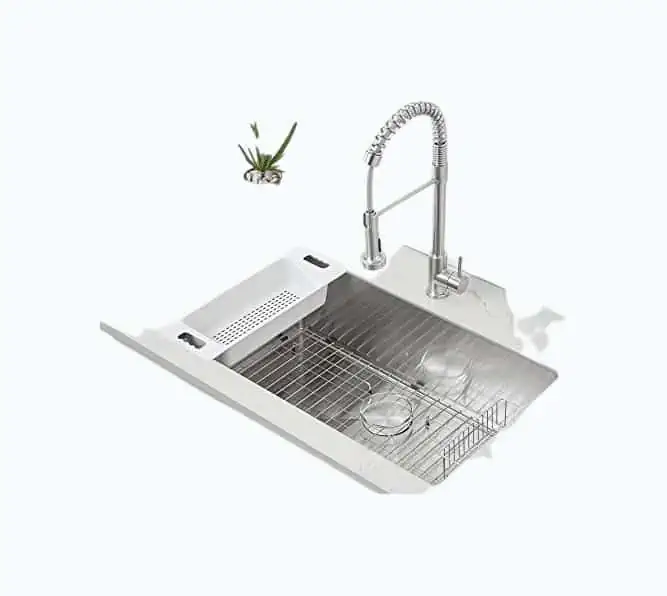
Zuhne Modena 32-Inch Single Bowl Undermount Stainless Steel Kitchen Sink
Most Popular Stainless Steel Kitchen Sink
If you want a stylish modern sink, the Zuhne Modena is an excellent example. It has a bold rectangular design and its 32-inch size means you will have plenty of space to clean even your largest pots and pans.
It is made of heavy-duty 16-gauge stainless steel, making it suitable for both residential and commercial use. Despite being a single-bowl sink, it includes multiple accessories designed to make it more versatile.
Zuhne has also incorporated noise-reducing technology. It should make about 2.5 times less noise than a standard stainless steel sink when water strikes it. The bottom of the sink is slightly curved to encourage water to drain quickly, which should reduce how much dirt and food waste becomes attached to its surface.
The Modena is UPC, cUPC, and IAPMO certified. It is even protected by a limited lifetime warranty, so you can be confident that it is a long-term investment.
What We Like
Heavy Duty Stainless Steel
This sink is made using top-quality 16-gauge 304-type stainless steel. Although it is designed primarily for residential use, it meets industrial and commercial standards.
As the steel is thick and of high quality, it is less likely to be dented or damaged by heavy cookware. In general, stainless steel can be susceptible to scratches, but this sink’s brushed finish means any that do appear will be far less obvious.
Deep Bowl
This sink is 10 inches deep, which will enable you to soak large pots and pans in it. This depth also means you shouldn’t have to worry about getting splashed whenever you run your faucet.
Versatile
This single bowl sink is far more versatile than most thanks to its accessories. It includes a bottom grid, a wall-mount caddy, and two colanders to soak and then rinse your food.
What We Don't Like
Drainage Could Be Better
Although the bottom of the sink has a slight slope, some users still feel that water drains slowly.
No Faucet Hole
As an under-mount model, you will need to install your faucet separately.
Product Specs
| Type of Installation | Undermount |
| Number of bowls | 1 |
| Stainless steel thickness | 16 |
| Drain location | Center top |
| Dimensions | 32 x 19 x 10 inches |
Our Ratings
User Experience
Ruvati RVM4136 Undermount Stainless Steel Kitchen Sink
Best Bar Stainless Steel Kitchen Sink
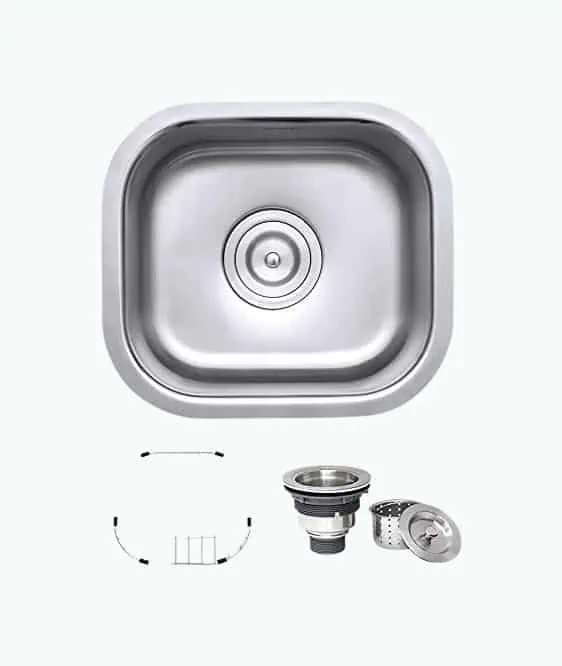
If you are happy with your current kitchen sink but want some extra space and versatility, this compact Ruvati model is a great option. At just 15 inches wide, it can be placed alongside your existing kitchen sink or installed elsewhere on an island.
Although it is small, this sink has some impressive characteristics. It has noise-reducing padding which means there will be less sound when you run your kitchen faucet. The brushed finish will help hide any scratches and it is easy to clean.
What We Like
Granted Certifications
This sink has both UPC and cUPC certifications. This means it meets US and Canadian plumbing and safety quality standards (1).
It also complies with both the American National Standard Institute — ANSI — and the Canadian Standards Association — CSA (2).
Efficient Drainage
The drain hole is located in the center of the sink for efficient drainage. The base is also curved to encourage water to flow down the drain. This prevents dirty water from lingering in the sink and leaving marks on it.
Various Sizes and Shapes
If the sink’s dimensions aren’t right for you, it is also available in other shapes and sizes. This can be helpful if you intend to use it as your primary sink, or if you want multiple sinks with a consistent style.
Included Grid
This sink includes a matching grid that can be placed on the bottom. This will protect the stainless steel surface from scratches when placing metal items such as cutlery and cooking pots into the sink.
What We Don't Like
Confusing Instructions
Some reviewers had trouble following the sink’s instruction manual. This meant it took them longer than expected to install it.
Product Specs
| Type of Installation | Undermount |
| Number of bowls | 1 |
| Stainless steel thickness | 16 |
| Drain location | Center |
| Dimensions | 13 x 15 x 7 inches |
Our Ratings
Personal Perspective
Ruvati 30-inch Workstation Ledge Undermount
Best Kitchen Sink for Cooking Hobbyists
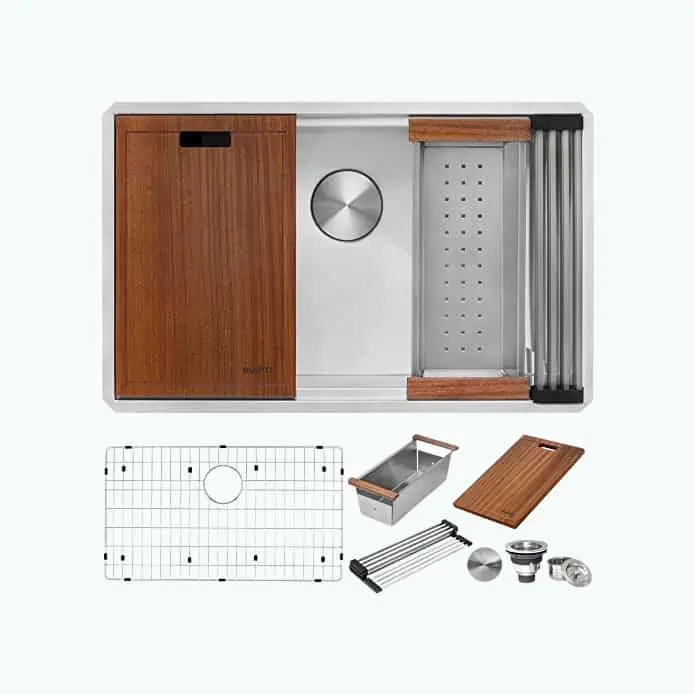
If you are a keen cook, a versatile and user-friendly sink can make a significant difference to your time spent in the kitchen. This Ruvati sink incorporates a workstation that will help you make the most of your available space.
Your purchase includes a fitted chopping board, colander, and other accessories. These slot perfectly into the sink to make sure your workstation is suitable for whichever task you need to complete.
As this sink can serve various roles in your kitchen, its durability is particularly important. Its T-304, 16-gauge stainless steel material has a brushed finish that will help hide any scratches that can occur with frequent use.
What We Like
Complete Workstation
Thanks to its accessories, this sink can provide an all in one food preparation station, saving countertop space. It includes a high-quality Sapele hardwood cutting board. This means your sink will be ideal for cleaning and chopping vegetables and other ingredients, but it also adds a touch of luxury.
There is also a 10-inch deep colander, a basket drainer, and a bottom grid to protect the sink’s surface.
Dish Drying Rack
The drying rack is part of the workstation but it deserves some extra attention. It enables you to dry items over the sink instead of on your countertop.
As it is made of silicone and stainless steel, it is easy to clean and shouldn’t corrode. You can even put it in a dishwasher to clean it thoroughly. When not in use, it is compact enough to be stored on a kitchen shelf or in a cabinet.
Excellent Drainage
It is easy to take drainage for granted but it is an important part of kitchen sinks. If pools of water are left in a sink, they can leave behind dirt and food residue when they dry. This model has four grooves that channel the water to the drain.
The drain’s central position encourages the flow of water. As it is at rear of the sink, it reduces the chance of water splashing out when you use it.
What We Don't Like
High Maintenance
This sink and its accessories are among the most visually appealing kitchen products we have seen. The only downside of this is more time spent cleaning. This is due to its large size and a smooth finish that makes water spots highly visible.
Product Specs
| Type of Installation | Undermount |
| Number of bowls | 1 |
| Stainless steel thickness | 16 |
| Drain location | Center top. |
| Dimensions | 30 x 19 x 10 inches |
Our Ratings
Community Feedback
Kraus KBU25 32 inch Undermount Double Bowl
Best Kitchen Sink with Dual Bowls
This is an excellent undermount dual sink from Kraus. It is made using very high quality stainless steel, protecting it from dents and scratches for greater durability.
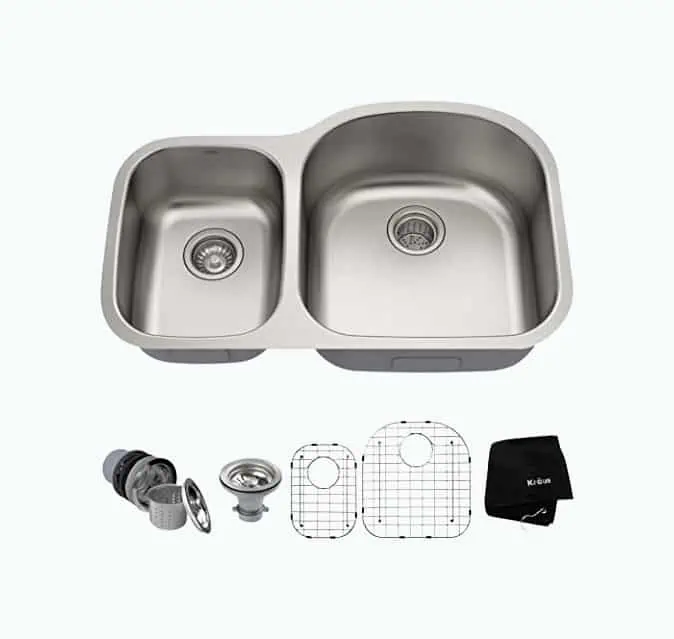
It features thick pads that cover 80% of the sink’s base to reduce noise when water hits it. One bowl is larger to make the sink more versatile, so you can leave large pots and pans to soak while rising items in the smaller one.
Your purchase includes bottom grids that will keep utensils and other items clear of the sink’s surface. This helps prevent scratching and ensures the drain is clear.
What We Like
Different Bowl Sizes
The left bowl is slightly smaller than the right. This means you can enjoy the versatility of having two bowls but can still soak large items such as cooking pots in the larger bowl.
Both bowls have flat bottoms that are suitable for glasses and other delicate kitchenware. Each bowl is nine inches deep, so there is plenty of space for your dishes.
Included Accessories
This sink includes two bottom grids and a basket strainer. As an added bonus, the manufacturer has also included a branded kitchen towel that matches the sink’s elegant modern style.
Sturdy Materials
This sink is made using the thickest stainless steel — 16 gauge — for maximum durability. Its high-quality T304 material will effectively withstand rust and high heat. You won’t have to worry about it becoming dull with daily use.
Condensation can be a significant problem, especially during the cold winter months. To combat this, Kraus has coated this sink with a protective layer that will prevent condensation from forming.
What We Don't Like
Poor Drainage
The flat bottom is perfect for keeping delicate items upright in your sink. However, it is less suitable for draining water. Reviewers say some of the liquid stays at the edges, away from the drain, which means it can leave dirt behind.
Product Specs
| Type of Installation | Undermount |
| Number of bowls | 2 |
| Stainless steel thickness | 16 |
| Drain location | Center top |
| Dimensions | 32.37 x 20. 5 x 9 inches |
Our Ratings
First-Hand Impression
Dayton D225193 Equal Double Bowl Top Mount
Most Budget-Friendly
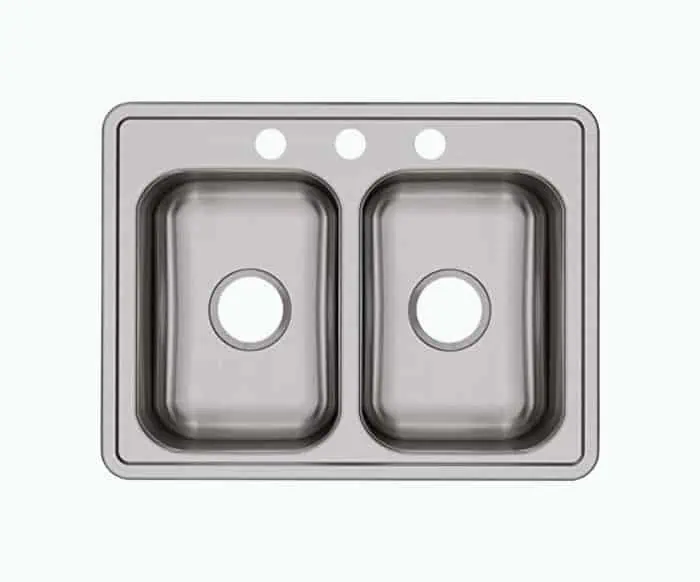
Dayton has produced a compact and budget-friendly, yet elegant double-bowl sink. Despite being smaller than most double sinks, its two equally sized compartments make the most of your available space.
This top-mount model is simple to install and use. It meets the regulations set by the Americans with Disabilities Act (ADA) to ensure it is user-friendly for as many people as possible (3).
In terms of setup and compatibility, the drain holes are located at the center of each bowl. They should fit any standard 3.5-inch drain.
What We Like
Noise-Reducing Pads
Thin stainless steel sinks can make a lot of noise when water hits them. This model is made using 22-gauge stainless steel, the thinnest that is used for sinks.
To reduce the sound that is generated, there are two pads under the sink that will absorb some of the noise.
Hole Configurations
This sink has three pre-drilled holes at the top. The center hole is usually used for a mixer faucet. The other two can accommodate a soap dispenser, filtered tap, or two faucets if you keep your hot and cold separate.
If you don’t want three holes, there are other variants with one or four holes. Whether you prefer to keep your sink simple or want various accessories within reach, there should be a configuration for you.
Easy Installation
This top-mount sink has been designed to make setup as easy as possible. It includes mounting clips inside the U-Channels for quick installation. Reviewers also praise how simple and informative the instructions are.
Dual Bowls
Despite being very budget friendly, you will still benefit from two bowls of 10 x 14 inches each. They also provide a reasonable depth of 6 ⅛ inches.
What We Don't Like
Low Gauge
Some users reported scratches sooner than expected. This isn’t a major surprise as this product is manufactured using the thinnest stainless steel available.
Product Specs
| Type of Installation | Top-mount |
| Number of bowls | 2 |
| Stainless steel thickness | 22 |
| Drain location | Center |
| Dimensions | 25 x 19 x 6.31 inches |
Our Ratings
User Experience
| Product | Best | Type | No. of bowls | Steel thickness | Drain location | Dimensions |
|---|---|---|---|---|---|---|
| Zuhne Modena Single Bowl Undermount | Popular Choice | Undermount | 1 | 16 | Center top | 32 x 19 x 10″ |
| Ruvati 13 | Bar Sink | Undermount | 1 | 16 | Center | 13 x 15 x 7″ |
| Ruvati Workstation Ledge Undermount | Cooking Hobbyists | Undermount | 1 | 16 | Center top | 30 x 19 x 10″ |
| Kraus KBU25 Undermount Double Bowl | Dual Bowls | Undermount | 2 | 16 | Center top | 32.37 x 20. 5 x 9″ |
| Dayton Equal Double Bowl Top Mount | Budget-Friendly | Top-mount | 2 | 22 | Center | 25 x 19 x 6.31″ |
Why Stainless Steel?
Stainless steel kitchen sinks have several advantages. They are very resistant to corrosion and can withstand high temperatures without becoming warped or damaged (4).
They are also lightweight, making them much easier to install than sinks made from heavier materials such as ceramics, copper, or stone.
Stainless steel is also less expensive than those luxury materials, with the price of sinks closely related to the quality of the steel used.
Many stainless steel sinks have two bowls, and their material means they can be very large without becoming too heavy or having to worry about cracks forming.
Important Features to Consider
There are countless stainless steel sinks, which means it can be difficult to know where to start looking when shopping for one. If you spend some time considering a few key features, it should narrow your search significantly.

Type of Installation
There are three main sink installation methods. Manufacturers design their sinks to be installed in a specific way, so make sure it is suitable for your kitchen before buying.
- Top-mount sinks: Also called drop-in sinks, these models are placed onto your countertop, overlapping it slightly. They are easy to install, especially if your counter already has a hole cut into it, but with the extra visible material, they can look slightly bulky above the countertop.
- Undermount sinks: In contrast to drop-in sinks, these sinks are installed beneath your countertop. They are more difficult to install, but they also provide a sleeker, seamless finish that is perfect for minimalist kitchen designs.
- Apron-type sinks: Also known as farmhouse sinks, the front of these sinks extends beyond the kitchen unit they are installed into. Although the majority are ceramic, it is possible to find some stainless steel ones.

Number of Bowls
The nature of stainless steel means it is easily reshaped, which is why it is used to make many dual-bowl sinks. You will need to think about whether you want the size and capacity of a single bowl or the versatility of a double bowl.
- Single bowl: These sinks have one large compartment, which means they can accommodate larger pots and pans. Single bowl sinks are available in various sizes and provide plenty of space, but they won’t allow you to multitask.
- Dual bowls: With two bowls, these sinks are perfect for multitasking. For example, you can soak a cooking pot on one side of the sink while cleaning vegetables in the other bowl. Unavoidably, this also means both bowls will be smaller than a single bowl. The majority of sinks compensate for this by having one larger bowl, often with a 60:40 or 70:30 ratio.
- Bar sinks: Bar sinks have one bowl. They are smaller than standard single-bowl sinks and are usually square or round. These sinks are often installed onto kitchen islands. They can also be used as a secondary sink next to a full-size single-bowl sink.

Stainless Steel Quality
The thickness of stainless steel is measured by gauge. The higher the number, the thinner the steel. 16-gauge steel is the thickest, and 22-gauge steel is the thinnest.
Thicker stainless steel is sturdier and more resistant to dents and impacts. Generally, a kitchen sink that is anywhere between 16 and 18-gauge stainless steel is ideal.
Another benefit of thicker stainless steel is that it will absorb more noise, so it will be quieter when you run your kitchen faucet.

Sink Dimensions
Before buying a kitchen sink, it is essential that you carefully measure wherever it is going. This is especially true if you previously had a sink that was not a standard size, such as a custom-made piece. Sinks are generally made in standard sizes but it is always better to be safe than sorry, as an ill-fitting sink can make installation more difficult or even impossible.

Number of Holes
Some sinks are sold pre-drilled with one, two, three, or even four circular holes. These holes are for your faucet and anything else that is attached to your sink. Top-mounted sinks with a wider rim are usually pre-drilled, as under-mount models will have faucets installed onto the countertop rather than the sink itself. If your sink has too many holes, they can be covered with faucet-hole caps.
FAQs

How Long Does a Stainless-Steel Sink Last?
In most cases, a stainless-steel sink should last between 5 and 15 years with proper care. However, depending on the sink’s quality, how much use it gets, and what cleaning products are used, it may eventually need to be replaced. Factors such as taps that leak or heavy scratches will wear down the metal faster than regular use and simple upkeep.

Why Does My Stainless-Steel Sink Scratch So Easily?
Many people are disappointed to discover that their stainless-steel sink scratches easily. While this may seem like an indication of poor quality or a defect in the material, several factors contribute to stainless steel’s tendency to scratch.
These can include harsh detergents and acids, chemicals used for cleaning or polishing, aluminum pans left in the sink overnight, and other everyday uses around the kitchen.
Understanding these factors can help you better care for your stainless-steel sink and reduce the risk of scratches.
In particular, using soft sponges and gentle cleansers, avoiding immersing aluminum pans in water overnight, and being more mindful when washing dishes can help keep your stainless steel looking its best.

Which Is Better: Granite Sink or Stainless Steel?
There’s really no easy answer to the question of which type of sink is better: granite or stainless steel. A granite sink can be an elegant and attractive addition to any kitchen, with its smooth surface and polished finish.
Its weight and durability also make it a practical choice for heavy use. But, stainless steel sinks offer so many advantages; they’re affordable, easy to clean, and resistant to corrosion.

What Is the Most Durable Stainless-Steel Sink?
Zuhne’s Modena Undermount Kitchen Sink is crafted from scratch-resistant natural brushed stainless. It features gently curved corners that are easy to clean. The extra deep basin is perfect for oversized pots and pans, while the sloped sink base drains and dries faster for quick cleanup.

Which Brand is Best for Stainless Steel Sinks?
Kraus’ stainless-steel sinks are made from 16TRU16 real 15-gauge, ultra thick, and easy to clean. It’s strong and can last a lifetime when cared for properly.
Kohler’s stainless-steel sinks are rust-resistant, very durable, and anti-stain.
It’s difficult to choose which of these brands is the best. They’re definitely similar, but Kraus has more variety in their products, and Kohler offers high-quality craftsmanship.