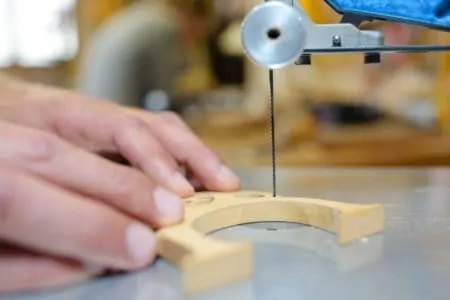
Scroll saws are popular tools that are ideal for precise or delicate cutting jobs. With the right blade, a scroll saw can cut metal, wood, plastics, and even jewelry.
There are many blades to choose from, which means you will be able to find one for almost any job. However, if you are new to using a scroll saw and haven’t bought blades for it before, you might need some help to make the right choice.
To help you choose, we have reviewed seven of the best scroll saw blades that are currently available. We selected these blades based on their teeth per inch, whether they are pinned or pinless, and how effectively they cut.
- High carbon steel
- Two or three times the standard lifespan
- Leading brand
- Milled blades
- Spiral design
- 5-pack
- 6-pack
- Skip teeth
- Ideal for beginners
- Pack of 18
- 10, 15 & 18.5 TPI blades
- American made
- 4-pack
- Cuts straight lines
- 20 TPI
- Designed for professionals
- 28, 11.5 & 9.5 TPI
- Premium grade steel
- 144-blade set
- Suitable for fine details
- 38 to 59 TPI
Review Methodology: At Sensible Digs, we prioritize thorough analysis and hands-on evaluations to provide you with the most accurate, fact-based assessments of the best scroll saw blades in the market. Our team of professionals uses key performance measures such as durability, cutting precision, and compatibility with various materials, to rank and compare these blades. Our criteria are derived from extensive research and experience, providing a benchmark standard for scroll saw blades. We delve into the design choices of each product and their potential impact on users, ensuring you make the most informed decision. We aim to share our findings in a clear, user-friendly manner, so you can understand what sets each blade apart from its competition. Trust us to guide you to the right blade for your specific needs.
The Best Scroll Saw Blades of 2024
You will have a wide range of different products to choose from, so we have reviewed seven of the best scroll saw blades on the market to help you find one that is suitable for your needs. These blades were chosen for how they are fitted, their tooth type, and how many teeth they have
Olson Saw PG49802 Precision Ground Scroll Saw Blade
Best Scroll Saw Blade for Hardwood
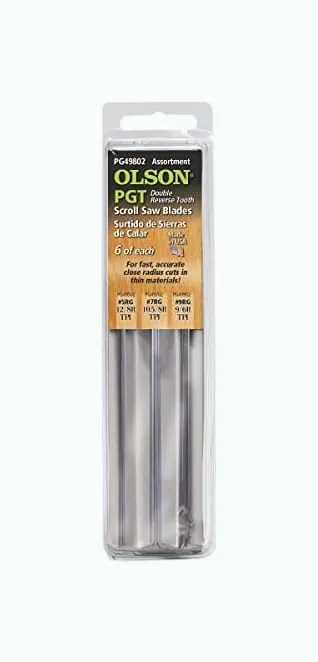
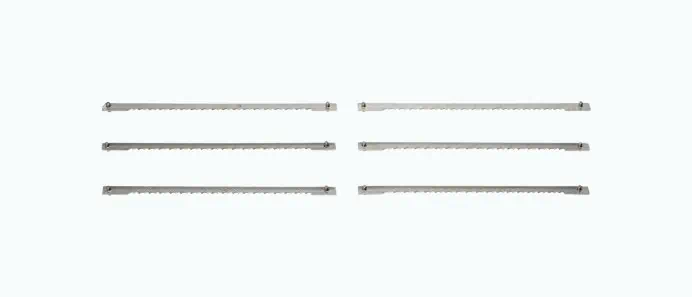
Olson Saw is one of the leading manufacturers of scroll saw blades. This double-tooth blade has reverse teeth to leave smooth, sharp edges at the top and bottom of the workpiece. This means you shouldn’t need to sand the edges to achieve professional-quality results.
The high-carbon steel teeth should last two or three times longer than standard blades, which is especially impressive given how reasonably priced these blades are. They will help you save money without any loss in performance.
This blade will cut through hardwood with ease, thanks to its high strength and carbon content. If you want to use it for other applications, it will cut through softwood and plastics and is suitable for use in creative work.
Pros
- High carbon steel
- Longer lifespan than standard blades
- Very affordable
- Trusted brand
Cons
- Only one blade per purchase
Product Specs
| Pack size | 1 |
| Material | Carbon steel |
| Dimensions (inches) | 3.5 x 8.5 x 1 |
| Weight | 0.81 ounces |
| Price | $ |
Our Ratings
User Experience
Flying Dutchman New Spiral Scroll Saw Blades
Best Pinless Scroll Saw Blade
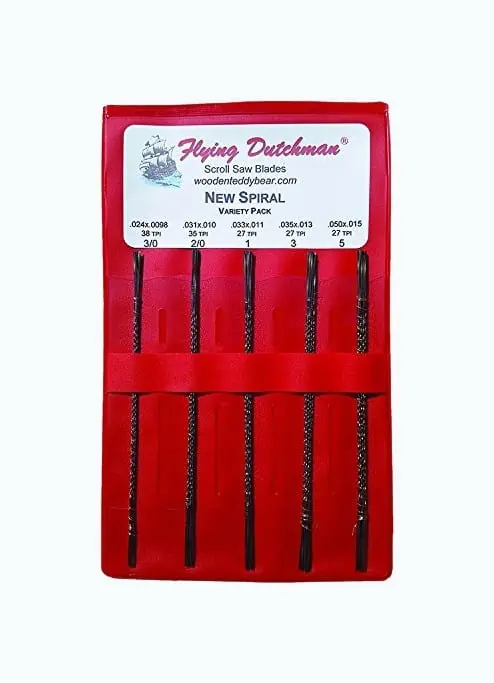
Flying Dutchman scroll saw blades are manufactured in Germany using high-grade hardened steel. These pinless blades are 5 inches long and have spiral teeth, meaning they can be used to cut in any direction.
Rather than having one row of teeth, these blades have teeth on both sides. The teeth wrap the shaft, creating a larger cutting surface and helping achieve a smoother finish when cutting.
These spiral blades are great for cutting tight angles and curves as they can be moved in any direction at any time. This is a 5-pack set that contains a 38 TPI blade, a 35 TPI blade, and three 27 TPI blades.
Flying Dutchman is a relatively small company that you might not have heard of. However, their products are designed and manufactured by enthusiasts to provide excellent performance. These versatile blades can slice through bone, wood, Corian, and acrylic workpieces, so they are excellent for artistic work.
Pros
- 5-pack
- Milled blades for added sharpness
- Spiral design
- Suitable for various materials
Cons
- Expensive
Product Specs
| Pack size | 60 |
| Material | High-grade steel |
| Dimensions (inches) | 9.02 x 5.98 x 0.2 |
| Weight | 4.8 ounces |
| Price | $$ |
Our Ratings
Personal Perspective
Olson Saw FR43001 Pin End Hobby Scroll Saw Blade
Best Scroll Saw Blade for Beginners
This Olson Saw blade is designed for hobbyists, making it an ideal choice for beginners. This isn’t to say it is of inferior quality, just that it is a good option when learning how to use a scroll saw.
It is sold as a 6-pack, so you will have plenty of spares if anything happens to your blade. These blades have 15 teeth per inch and are equipped with skip-style teeth that can cut through wood, plastic, and thin, soft metals. This versatility is another reason why these are great blades for learning.
At 3 inches, they are shorter than most other scroll saw blades, which will restrict the size of the stock you can work with. They are also affordable, which further enhances how beginner-friendly they are.
These are pinned blades, so they are thicker than pinless ones. You might struggle to cut smaller, more intricate designs with them.
Pros
- Great value
- Sold as a 6-pack
- Skip teeth
- Ideal for beginners
Cons
- Limited usefulness
- Thicker blades
Product Specs
| Pack size | 6 |
| Material | Steel |
| Dimensions (inches) | 1.5 x 8.5 x 1 |
| Weight | 0.3 ounces |
| Price | $ |
Our Ratings
Community Feedback
Olson Saw FR49501 Pinned Blade
Best Pinned Scroll Saw Blade
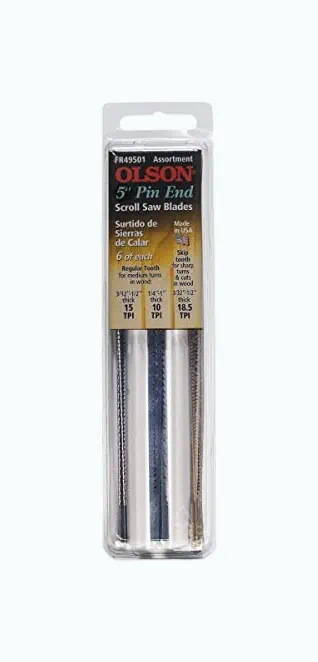
Olson Saw has been an industry leader in scroll saw blades for decades. If you regularly use a scroll saw, this pack contains 18 blades with TPI counts of 10, 15, and 18.5, so it will keep your saw cutting properly for a long time.
The 18.5 TPI blade has skip teeth for faster sawing and more effective debris removal. These pinned blades are 5 inches long and are compatible with a wide range of scroll saws.
As these blades are pinned, they are easy to replace when one breaks. They are also thicker, which makes them better suited for scroll saw work than intricate designs. This Olson Saw blade pack has sold more units than most of the other products on this list combined.
If you are looking for high-quality saw blades that won’t break the bank, this product is an excellent choice. Another positive is that these blades are made in the United States, so you can be confident that they are made using high-quality materials.
Pros
- Excellent value for money
- Sold as a pack of 18 blades
- 10, 15, and 18.5 TPI blades
- American made
Cons
- Pinned design
- Thicker blades
Product Specs
| Pack size | 18 |
| Material | Steel |
| Dimensions (inches) | 3.5 x 8.5 x 1 |
| Weight | 0.8 ounces |
| Price | $ |
Our Ratings
First-Hand Impression
Bosch SS5-20 5-Inch Scroll Saw Blade
Best Scroll Saw for Straight Cuts
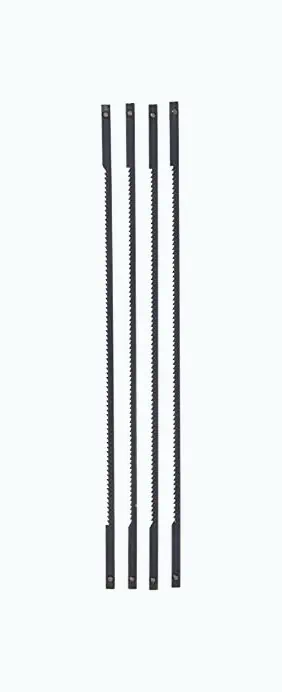
These Bosch pinned blades are made of high-grade steel and precision sharpened for maximum effectiveness. They are suitable for cutting intricate shapes but the extra thickness and 20 TPI mean they are also excellent for cutting straight lines.
Unlike spiral scroll saw blades that are slower and more difficult to control, these Bosch blades will make short work of various materials. They cut through hardwood, softwood, plastic, and non-ferrous metals. As the blades are pinned, it will be quick and easy to swap them.
Bosch is a household name in tools and produces high-quality saw blades. Even so, these blades are more affordable than many similar products from competing brands.
Pros
- Great price
- Sold as a 4-pack
- Cuts straight lines
- 20 TPI
Cons
- Pinned blades
- Thicker than pinless blades
Product Specs
| Pack size | 20 |
| Material | Steel |
| Dimensions (inches) | 0.13 x 1.81 x 9.88 |
| Weight | 0.7 ounces |
| Price | $ |
Our Ratings
User Experience
SKIL 80182 Plain End Scroll Saw Blades
Best Scroll Saw Blade for Fine Work
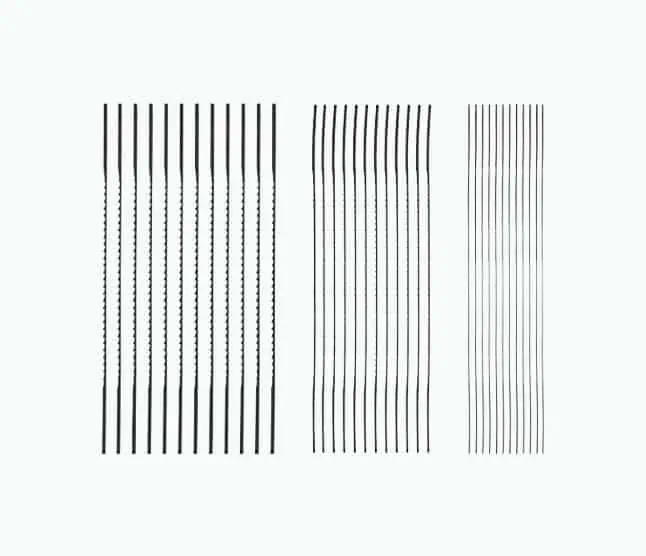
This SKIL plain end set of 36 scroll saw blades contains 12 blades with 28 TPI, 12 with 11.5 TPI, and 12 with 9.5 TPI. You will have plenty of versatility, so you can adjust it to suit whichever material you need to cut.
For harder materials such as metal, a 28 TPI will be best, but 11.5 or 9.5 will be better for cutting hardwood. These blades are premium-grade steel for longer cutting lives, and they fit most scroll saw brands.
SKIL is an American brand that is synonymous with high quality and value for money, and these blades live up to that reputation. Given that this pack contains 36 blades, you will be paying a very small amount for each one.
Pros
- Designed for professionals
- Sold as a 36-pack
- 28, 11.5, and 9.5 TPI blades
- Premium grade steel
Cons
- Prone to snapping
Product Specs
| Pack size | 36 |
| Material | Steel |
| Dimensions (inches) | 9.02 x 3.5 x 0.12 |
| Weight | 0.7 ounces |
| Price | $ |
Our Ratings
Personal Perspective
SE 144-Piece Jeweler’s Piercing Saw Blades
Best Scroll Saw Blade for Metal
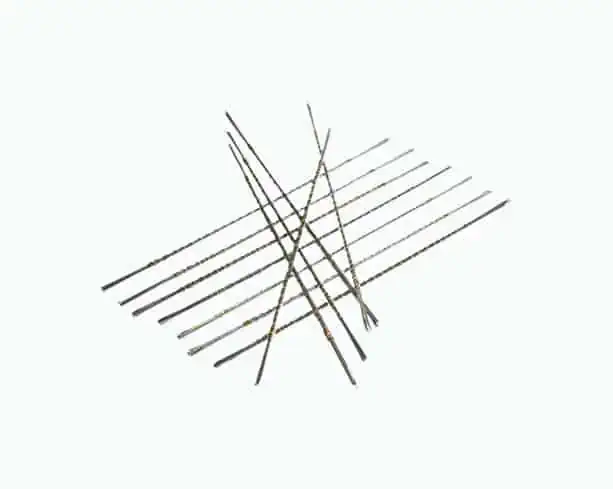
Unlike the other blades we have looked at, these ones are designed for use in a manual scroll saw rather than a powered one. This set contains 144 blades, so it offers incredible value for money. As these blades are designed primarily for the jewelry industry, they are excellent for slicing through metal.
Each blade has a high TPI count, helping you achieve the smoothest finish possible. They range from 38 to 59 TPI. They are also pinless and, when used in conjunction with a saw with an adjustable frame, if the blade snaps, you will still be able to use it.
The extreme value for money alone would make this blade set a good choice. More importantly, it has the precision and accuracy needed to work with precious metals, as mistakes could be very costly.
Pros
- 144-blade set
- Suitable for fine detail work
- High TPI count
- Excellent value for money
Cons
- Primarily for jewelry professionals
- Used in hand saws
- Specialist blade
Product Specs
| Pack size | 144 |
| Material | Steel |
| Dimensions (inches) | 15.8 x 9.5 x 14.9 |
| Weight | 0.8 ounces |
| Price | $ |
Our Ratings
Community Feedback
| Product | Best | Pack size | Material | Dimensions (inch) | Weight |
|---|---|---|---|---|---|
| Olson Saw PG49802 Precision Ground Blade | Hardwood | 1 | Carbon steel | 3.5 x 8.5 x 1 | 0.81 oz |
| Flying Dutchman New Spiral Blade | Pinless | 60 | High-grade steel | 9.02 x 5.98 x 0.2 | 4.8 oz |
| Olson Saw FR43001 Pin End Hobby Blade | Beginners | 6 | Steel | 1.5 x 8.5 x 1 | 0.3 oz |
| Olson Saw FR49501 Pinned Blade | Pinned | 18 | Steel | 3.5 x 8.5 x 1 | 0.8 oz |
| Bosch SS5-20 Scroll Saw Blade | Straight Cuts | 20 | Steel | 0.13 x 1.81 x 9.88 | 0.7 oz |
| SKIL 80182 Plain End Blade | Fine Work | 36 | Steel | 9.02 x 3.5 x 0.12 | 0.7 oz |
| SE 144-Piece Jeweler’s Piercing Blade | Metal | 144 | Steel | 15.8 x 9.5 x 14.9 | 0.8 oz |
Types of Scroll Saw Blades
There are two broad categories of scroll saw blades to choose from:
Pinned Blades
Pinned scroll saw blades are larger, wider, and better suited to making straight, simple cuts. They are less maneuverable than pinless blades due to their added thickness. They also require larger holes to be drilled if you want to make interior cuts.
Older scroll saws generally use pinned blades, with the pin adding to the blade’s overall thickness.
Pinned blades are easier to install as their pins slot into convenient holes in the saw. However, for interior cuts, you will need to thread the blade through the workpiece and then attach it to the saw. This can be tricky and time-consuming.
Pinless
Pinless scroll saw blades are lighter, thinner, and more maneuverable. They can be used to cut intricate curves and finer scrollwork. Jewelers prefer pinless blades for their ability to precisely cut tight angles.
Pinless blades are newer and take longer to install because the ends need to be clamped into place. Some saws have quick clamping systems to speed up the process, but they will usually still take longer to install than pinned blades.
How to Choose a Scroll Saw Blade
At a glance, scroll saw blades all look very similar, which can make it difficult to know which one to choose. However, there are some important things you can keep in mind that will help you find the right blade:
Teeth Per Inch
Teeth per inch, or TPI for short, tells you a blade’s tooth density, which has a significant influence on how it will cut different materials.
A blade with a higher TPI has more teeth, each of which is smaller. These blades remove less material with each pass but they also provide a smoother finish and better-quality curves. Blades with a higher tooth count tend to be thinner, which makes them more prone to snapping.
Thicker blades typically have fewer teeth, making them more durable and able to cope with the rigors of tougher cutting tasks. This also means they can cut more quickly. The downside of this is that faster cutting results in a rougher finish. Thicker blades are also less maneuverable, so they are best suited to straight cuts and other jobs that don’t require much finesse.
Blade Type
Standard Blades
Standard blades have teeth spaced an equal distance apart. These blades are typically for cutting metal, although it is possible to find them for wood or plastic. Standard blades are excellent for making straight cuts.
Skip-Tooth Blades
Skip-tooth blades are more beginner-friendly as they cut more slowly and generate less heat as a result. This may slow down your work but it means the saw will be easier to control. The tooth layout is similar to standard blades but there is a wider gap between the teeth, which means more debris can be removed.
Reverse Skip-Tooth Blades
This blade’s teeth follow the same pattern as skip-toothed blades except at the base of the blade. Here, they face the opposite direction, hence their name.
Reverse skip-tooth blades result in less tear-out, which is often an issue when cutting plywood.
Double-Tooth Blade
Double-tooth blades are similar to skip-tooth blades. However, every third tooth is skipped, so there are two teeth followed by a tooth-width gap. They are slower than standard and skip-tooth blades but are excellent for detailed cutting work.
Spiral Blades
On spiral blades, the teeth are in a spiral shape that wraps around the shaft. They give the user the ability to cut in any direction, making them ideal for cutting tight angles and turns. However, they are less accurate and more difficult to control, which means they have limited usefulness and require skill to use.
Crown-Tooth Blades
These blades have alternating teeth, with one tooth pointing upwards and the next one pointing down. It doesn’t matter which way the blade is mounted as it will cut in either direction.
The Best Scroll Saw Blade Brands
Blades are essential parts of any power saw, so it is no surprise that you can buy scroll saw blades from some of the leading names in tools. Rather than list them all, let’s focus on three of the best:

Bosch
Robert Bosch founded the “Workshop for Precision Mechanics and Electrical Engineering” in Stuttgart, Germany, in 1886. By 1901, Bosch had moved into automotive supplies and developed a reputation for constant innovation (1).
Today, Bosch has over 400,000 employees and an annual revenue of approximately $84 billion, making it one of the leading manufacturers in the world.
If you are looking for power tools or accessories, you are bound to come across Bosch products at some point. Their blades are of high quality and offer value for money.

Olson Saw
Olson Saw was founded in Brooklyn, New York, in 1918 by four members of the Olson family. Today, the company is one of the leading manufacturers of blades for band saws and scroll saws in the United States. It supplies blades to leading power tool brands including Makita, DeWALT, Delta, and many others (2).

SKIL
SKIL is a household American brand. Edmond Michel invented the first electric circular saw in 1924 and formed the Skilsaw Incorporated Company with his business partner, Joseph Sullivan. In the century since, SKIL has become so synonymous with circular saws that they are now commonly referred to as Skilsaws (3).
FAQs

How to Install Scroll Saw Blades
- Unplug the scroll saw
- Release the blade tension
- Remove or loosen the blade mounts
- Remove the old blade
- Insert the new blade
- Tighten or replace the blade mounts
- Re-tension the blade
- Plug in the saw
- Perform a test cut
Why Should I Change My Scroll Saw Blade?
Like any saw blade, scroll saw blades will dull over time, steadily increasing the resistance against the stock you are cutting. This reduces the performance of your scroll saw and will negatively impact the quality of your finish. Dull blades also force your machine to work harder, increasing the stress on it.
Ironically, blunt blades are often more dangerous. You might need to apply more pressure, which could end up snapping the blade. This might also put you off balance, which can lead to accidents.
Dull blades also cause more friction as the blade will be in contact with the stock for longer. This could result in your machine burning out or, worse, starting a fire.

Why Do My Scroll Saw Blades Keep Breaking?
There are several possible reasons why your blade might keep snapping. The blade tension might be too high, which will place extra pressure on the blade and eventually break it. Alternatively, the wheel diameters of your scroll saw might be too small for the blade.
Another potential cause is that the blade is rubbing against the wheel flange. You could be feeding the stock too quickly, bending and ultimately snapping the blade. There are various reasons why a scroll saw blade might suddenly snap.

How Tight Should Scroll Saw Blades Be?
Each scroll saw has a different system for tensioning its blade, which should be explained in the operating manual. Experienced woodworkers often use their ears to check that their blades are tightened properly.
Give the blade a pluck or flick and it should make a clear musical note. If it does, your blade is tensioned properly and ready to be used. If you don’t hear it, you should keep tightening the blade and checking. As soon as you hear a note, you have achieved the right tension.

Which Way Do the Blades Go on a Scroll Saw?
The teeth need to be facing forward and toward the stock, as it approaches. They should also face down toward the table. If you install the blade upside down, all the saw will do is lift the stock when the blade moves up and slam it back down on the table.

How Long Do Scroll Saw Blades Last?
Scroll saw blades have a variety of shapes and sizes with different cutting abilities, but typically have a lifespan of about 15 to 45 minutes. To maximize the life of your scroll saw blade, be sure to tension it accurately to prevent breaking or slipping.
Also, avoid over-tightening the blade as this can cause it to heat up and wear more quickly. Use a suitable blade for the material you are cutting, and never force the saw – take breaks if needed! With proper care and maintenance, your scroll saw blades should last for many projects.

How Do You Stop a Scroll Saw Blade From Wandering?
Keeping a scroll saw blade from wandering is a common problem among woodworkers. Several factors can affect the accuracy of your cuts and make it difficult to keep your blade on the line.
To start, make sure you have a sharp blade and adequate tension on the blade. Use a miter guide or fence when making straight cuts to ensure accuracy.
When cutting curves, go slow and be patient as this is more difficult. With practice and patience, you will eventually master the art of keeping your scroll saw blades from wandering!

What Is the Thickest Wood You Can Cut with a Scroll Saw?
Scroll saws are a great tool for making intricate cuts and designs in wood. However, the type of wood and thickness you can safely cut with a scroll saw depends on the blade being used.
Generally speaking, scroll saw blades equipped with 4-8 teeth per inch (TPI) are best for cutting thin woods up to 1″ thick, while blades with 10-14 TPI are better suited for cutting hardwoods up to 2″ thick.
When selecting a blade, be sure it is suitable for the material you want to cut and the project design you plan to make. With the right blade and some practice, you can create amazing pieces with your scroll saw!

What Is a Number 7 Scroll Saw Blade?
The number 7 scroll saw blade is common for scroll sawing. The size refers to the length (7 inches) and diameter (5/8 inches).
They’re designed with a high-speed steel blade and a high tooth count that enables it to cut intricate shapes and curves in thin materials like wood, laminate, plastic, and composites.
Since they’re made of soft metal, they can be resharpened over and over.