Our Top Picks
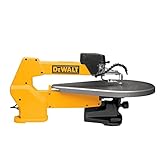
- 1.3-amp motor
- Dual parallel-link arm
- Arm can be lifted easily
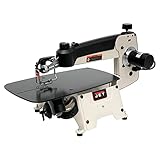
- Tilting arm keeps table flat
- 2-in-1 blade clamp
- 18-inch throat

- 22-inch throat depth
- 27 x 13-inch table
- Dual-bevel upper arm

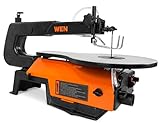
- Flip-open side panel
- Pinned, pinless and spiral blades
- Cast iron base

- Keyless blade change
- LED work light
- Pin and plain-end blades

- Near-silent motor
- Weighs just 5.29 pounds
- Automatic blade tension
Our Review Criteria: Vibration control decides cut quality on a scroll saw, so it topped our scoring. We also compared blade-change ease, throat depth and table capacity, bevel range, and which blade types each saw accepts. Manufacturer specs were weighed against independent reviews and owner feedback rather than marketing copy, with extra weight on warranty length, build materials, and certifications such as CSA. We verify every recommended saw is currently in production, and when a model is discontinued we replace it with the closest current equivalent.
A scroll saw is the tool you reach for when a band saw is too clumsy and a coping saw is too slow. It handles the tight curves, inside cuts, and delicate fretwork behind wooden toys, puzzles, and marquetry.
The catch is that throat depth, arm design, and blade-change systems vary a lot from one machine to the next, and the wrong pick fights you on every project.
This guide walks through 7 scroll saws worth your bench space and shows how to choose one, judging each on vibration control, blade clamping, cutting capacity, and how easy it is to actually run.
What Is a Scroll Saw Used For?
A scroll saw cuts intricate shapes, interior cutouts, and tight curves that other saws simply cannot handle, using a very fine, vertical reciprocating blade. Because the blade is so thin, it removes very little material, known as the kerf. This precision makes it the go-to tool for:
- Intarsia and Marquetry: Fitting different wood species together so the joints disappear.
- Fretwork: Creating lacy, detailed patterns in wood or thin metal.
- Sign Making: Cutting precise lettering and logos.
How Does a Scroll Saw Work?
The blade is suspended between two arms, one above the table and one below. The motor moves these arms up and down, driving the blade through the material. You slide your wood across the flat table and into the blade, rotating the workpiece to follow your pattern lines. Unlike a band saw, the blade creates an up-and-down stroke rather than a continuous loop.
How to Choose the Best Scroll Saw
Buying a scroll saw is an investment in your craft. You want a machine that runs smoothly; vibration is the enemy of precision. Before you buy, consider these critical features.
Here are the main factors to look for:
Product Reviews
We rank these saws on vibration control, blade-change ease, cutting capacity, and value, and we check that every pick is still in production before it makes the list. When a model is discontinued, we swap in the current equivalent so you are not chasing a saw nobody sells. Whether you are outfitting a pro shop or a garage corner, there is a model here for you.
DeWALT DW788 Scroll Saw
Best Overall Scroll Saw
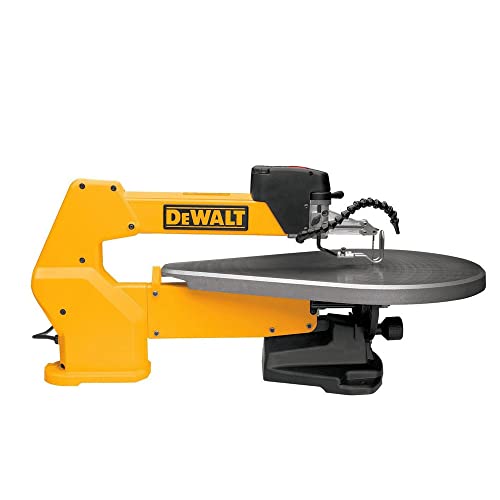
The DeWALT DW788 sits comfortably as the gold standard for serious scrollers. It is widely favored by professionals because of its double parallel-link arm design. This unique setup dramatically reduces vibration and noise, keeping the blade perpendicular to the work surface for extremely accurate cuts.
Unlike many competitors that bury the controls on the side, DeWALT puts the power switch and variable speed knob on the upper arm, so you adjust speed mid-cut without taking your eyes off the line. The arm lifts cleanly for interior cuts. With a 20-inch throat and a cast iron table, the DW788 is built for both precision and a long working life, which is why it stays on so many pro benches.
What We Like
User-Centric Design
The most frustrating part of scrolling is often the setup. DeWALT solves this with a tool-free blade clamp and a lifting upper arm. You can thread the blade through a workpiece for inside cuts in seconds. The control placement on the front arm is brilliant; you never have to fumble around the side of the machine while the blade is moving.
Whisper Quiet Operation
Vibration is the enemy of detail. The parallel-link arm minimizes the movement of the pivot points. Combined with the heavy cast-iron table, the saw barely hums. This stability allows you to follow pencil lines with surgical precision without the workpiece “chattering” on the table.
Professional Capacity
The 20-inch throat depth gives you plenty of room to maneuver large projects. It handles material up to 2 inches thick, meaning you can stack-cut multiple veneers or work with thicker hardwoods easily. The variable speed (400-1,750 SPM) lets you dial in the perfect rate for everything from plastic to oak.
What We Don't Like
Stand Sold Separately
This unit is heavy and requires a sturdy base. Unfortunately, the stand and light are often sold as accessories rather than included in the base box, which adds to the overall cost.
Product Specs
| Item Weight | 56 pounds |
|---|---|
| Dimensions | 29.5 x 19.5 x 12.1 inches |
| Included Components | Hex wrench, blades |
| Throat Length | 20 inches |
| Warranty | 3-year limited warranty |
JET JWSS-18B Scroll Saw
Most Unique Design
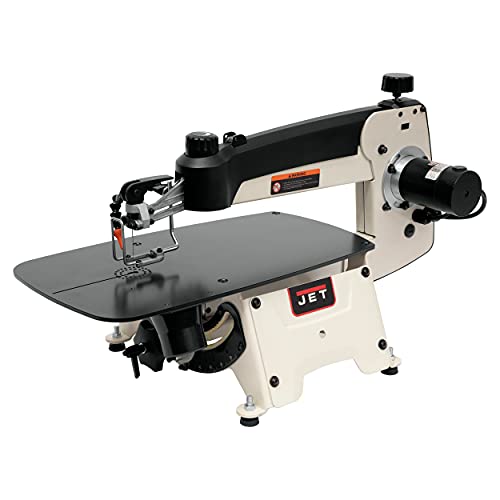
The JET JWSS-18B solves the bevel-cut problem the same way the old Excalibur did, but it is a saw you can actually buy. Instead of tilting the table and letting your workpiece slide downhill, the JET tilts the upper arm and keeps the table dead flat. For marquetry, intarsia, and any angled inside cut, that flat reference surface is the difference between a clean line and a fight with gravity.
This is a premium machine aimed at intermediate and advanced scrollers. Between the 18-inch throat, the thick steel table, and a blade system designed to speed up the most repetitive part of the job, it earns its place as the most distinctive design on the list.
What We Like
Tilting Arm, Flat Table
The arm tilts 45 degrees right and 30 degrees left (a full 45 with the dust port removed) while the worktable stays level. Keeping the wood flat instead of on a slope gives you steadier control and more accurate bevels, which is the whole reason scrollers seek out this design.
2-in-1 Blade Change
The upper mechanism clamps and tensions the blade in a single step, the lower toolless holder is removable, and the table is slotted for the blade. Together they cut the time and fumbling of a normal blade swap, and the spring-loaded arm lifts 10 inches and stays up until you pull it down.
Stable Steel Table
The precision-ground steel table measures 11-5/8 by 21 inches and adds mass that helps damp vibration, so the saw stays planted on long cuts. With 18 inches of throat and 2-inch cutting capacity, it handles larger panels than the 16-inch field.
What We Don't Like
A Premium Investment
This sits well above the budget and mid-range saws here, so it is hard to justify for occasional crafts. Pulling the dust port to reach the full left tilt is also a minor step you have to remember before angled cuts.
Product Specs
| Table Size | 11-5/8 x 21-1/4 inches, ground steel |
|---|---|
| Speed Range | 400 to 1,500 SPM |
| Arm Tilt | 45 degrees right, 30 degrees left |
| Throat Length | 18 inches |
| Cutting Capacity | 2 inches thick |
Bucktool 22-Inch Scroll Saw
Best for Large Projects
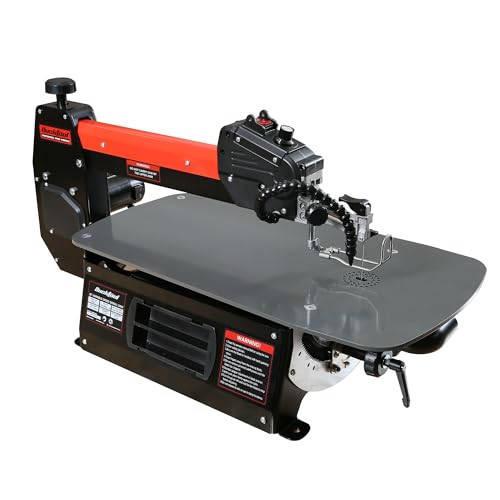
Throat depth decides the largest piece you can spin a full turn, and at 22 inches the Bucktool has the most of any saw here. Pair that with a 27-by-13-inch cast aluminum table and you can rotate big panels, wall art, and large fretwork patterns that would jam against the back column of a 16-inch machine. If your projects keep outgrowing your saw, this is the slot you want.
It is aimed at hobbyists and intermediate woodworkers rather than all-day professional shops, but reviewers report it stays accurate without blade wobble or motor strain through regular use. The 1.3-amp motor runs 360 to 1,550 RPM, and CSA certification is a reassuring sign for a value-brand tool.
What We Like
Biggest Capacity on the List
The 22-inch throat and oversized 27-by-13-inch table give you room most saws can’t, so large workpieces rotate freely instead of catching on the frame. For signs, clocks, and big intarsia panels, that extra reach is the whole point.
Dual-Bevel Arm and Lock-Up
The upper arm bevels 0 to 30 degrees left and 0 to 45 degrees right for angled cuts, and it locks in the raised position so you can thread blades for interior cuts with both hands free. That lock-up feature is usually reserved for pricier saws.
Broad Blade Compatibility
It ships with 5-inch pinless blades and a pinless holder, and it accepts a wide range of TPI counts plus spiral blades. That flexibility lets you match the blade to the job, from rough cuts to fine fretwork, as your skills grow.
What We Don't Like
Not Built for Pro-Level Duty
This is a capable hobby and intermediate saw, not a machine meant for continuous all-day production. Its large footprint also needs more bench space than the compact 16-inch models, so measure before you buy.
Product Specs
| Motor | 1.3 amp, 360 to 1,550 RPM |
|---|---|
| Table Size | 27 x 13 inches, cast aluminum |
| Arm Bevel | 30 degrees left, 45 degrees right |
| Throat Length | 22 inches |
| Certification | CSA certified |
WEN 3923 Scroll Saw
Best Budget Scroll Saw
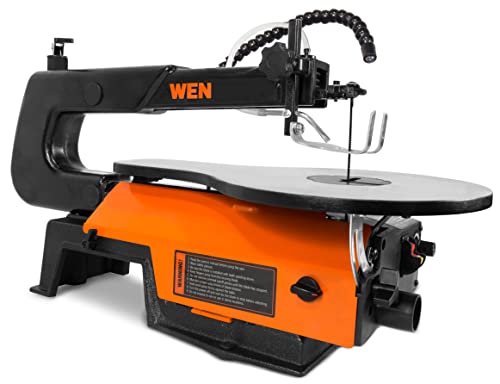
The WEN 3923 is the current version of WEN’s long-running budget line, and it is the saw to beat if you want to spend the least without buying a toy. The change that matters most over older WEN models is a side panel that flips open, so you reach the lower blade clamp from the front instead of fishing for it under the table. For a beginner threading a blade through a pilot hole for the first time, that one design choice removes most of the early frustration.
It is not as refined as the DeWALT, and you will feel that at higher speeds. But it covers the fundamentals a first scroll saw needs: 550 to 1,600 SPM variable speed, a cast iron base, a work light, and a dust blower. For light fretwork, ornaments, and learning the craft, it is a sensible place to start.
What We Like
Front-Access Blade Changes
The flip-open side panel is the reason to pick this over a no-name bargain saw. You change the lower blade from the front rather than reaching blindly beneath the table, which makes interior cuts far less fiddly. A thumb-screw adapter handles pinned, pinless, and spiral blades, so you can move up to finer fretwork blades as your skills grow.
Cast Iron Base on a Budget
A cast iron base is unusual at this price, and it does real work, adding enough mass to settle the saw once you bolt it to a bench. The 16-by-10-inch table bevels up to 45 degrees for angled cuts, and the 16-inch throat clears most hobby projects.
Everything a Beginner Needs Included
You get a flexible work light, an air pump to clear dust off your line, a shop-vac dust port, a foot-lock clamp, and three starter blades in the box. The variable speed knob (550 to 1,600 SPM) lets you slow down for plastics and speed up for hardwood.
What We Don't Like
Vibration and a Wobbly Light
It is still a light machine, so it vibrates noticeably near top speed unless it is firmly mounted, and several owners note the work light shakes enough to be distracting. Plan on bolting it down, and treat the light as a bonus rather than a precision aid.
Product Specs
| Item Weight | 24 pounds |
|---|---|
| Table Size | 16 x 10 inches |
| Speed Range | 550 to 1,600 SPM |
| Throat Length | 16 inches |
| Warranty | 2-year manufacturer’s warranty |
SKIL SS9503 Scroll Saw
Most User-Friendly

If you want the least fuss between opening the box and making your first cut, the SKIL SS9503 is the easiest 16-inch saw here to live with. It leans on small conveniences that add up: a keyless blade clamp, on-tool blade storage, a foot-pedal switch, and an LED that comes on during the safety stage before the blade moves, so you can position the light over the line first.
It is an entry-level machine, not a workshop anchor, but it accepts both pin-end and plain-end blades, which gives a beginner room to grow into finer work. For a first scroll saw or a low-frequency hobby saw, the thoughtful controls are worth the modest step up from the cheapest models.
What We Like
Keyless Blade Changes and On-Tool Storage
The keyless clamp lets you swap blades without hunting for a hex key, and the spare-blade holder built into the body keeps your next blade an arm’s reach away. For the constant blade swaps that interior fretwork demands, that saves real time.
Light and Blower Where You Need Them
The LED activates before the motor spins, so you light the cut line before anything moves, and a fixed blower opposite the light keeps dust off the line through different material thicknesses. Both help you stay on the pencil mark, which is most of the battle on detail work.
Roomier Table and Blade Flexibility
The 16-by-10-inch table is larger than many compact entry saws, giving your workpiece more support, and it tilts 0 to 45 degrees for bevels. Accepting both pin-end and plain-end blades means you are not locked into coarse blades as your projects get finer.
What We Don't Like
Light Enough to Need Mounting
Reviewers note it could stand to be heavier; at entry-level weight it benefits from being clamped or bolted down to keep vibration in check during longer cuts. It is built for hobby use, not all-day production runs.
Product Specs
| Motor | 1.2 amp |
|---|---|
| Table Size | 16 x 10 inches, tilts 0 to 45 degrees |
| Blade Types | Pin-end and plain-end |
| Throat Length | 16 inches |
| Warranty | 5-year limited warranty |
Dremel MS20-01 Moto-Saw
Best Beginner Scroll Saw
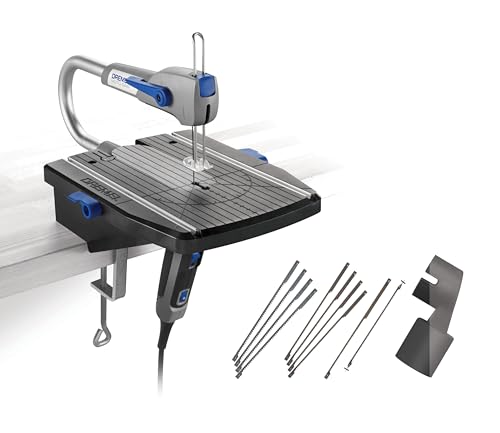
The Dremel Moto-Saw is a hybrid tool that bridges the gap between a scroll saw and a coping saw. It is incredibly compact, lightweight, and can clamp directly onto a kitchen table or workbench. It can even detach from its base to be used as a handheld motorized coping saw.
This isn’t a heavy-duty machine for thick hardwoods; it is a craft tool designed for light hobby work, model making, and thin materials. If you have limited space and only cut thin wood or plastic, this portable unit is a clever solution.
What We Like
Ultimate Portability
Most scroll saws are heavy anchors. The Moto-Saw is featherlight. You can set it up in seconds, clamp it to a table, do your cutting, and pack it away in a drawer when you’re done. It is perfect for apartments or small craft rooms.
2-in-1 Functionality
The ability to detach the saw from the base is unique. This allows you to bring the tool to the workpiece, which is handy for scroll cutting on fixed objects or materials that are too large to put on a small table.
Beginner-Friendly Setup
It uses proprietary pinned blades that are very easy to snap in and out. The auto-tensioning feature removes the guesswork, ensuring the blade is always tight enough to cut.
What We Don't Like
Proprietary Blades
You generally have to use Dremel’s specific blades, which limits your options. It also struggles with wood thicker than 3/4 inch, so keep your projects small.
Product Specs
| Item Weight | 5.29 pounds |
|---|---|
| Dimensions | 18.5 x 14.5 x 4.8 inches |
| Included Components | Scroll saw |
| Throat Length | 10-½ inches |
| Warranty | Not available |
WEN 3922 Scroll Saw
Best for Stability

The WEN 3922 wins this slot for one reason: a cast iron base on an affordable 16-inch saw. That mass is what keeps a scroll saw planted, and it is the single biggest factor in clean cuts, since vibration is what blurs your line. Bolt this one to a bench and it stays put far better than the plastic-bodied saws in its price class.
It is a close sibling of our budget pick, sharing the flip-open side panel for front-access blade changes, but the heavier base is what sets it apart. If you value a steady cut over portability and do not need a huge throat, it is a sensible, stable workhorse.
What We Like
Cast Iron Steadiness
The cast iron base gives the 3922 a planted feel that budget saws lack, soaking up vibration so the workpiece does not chatter on the table. Once it is secured to a bench, you get cleaner lines on fine detail work.
Front-Access Blade Changes
A side panel flips open so you reach the lower blade clamp from the front rather than under the table, and a thumb-screw adapter handles pinned, pinless, and spiral blades. That makes interior cuts and blade swaps far less of a chore.
Complete Out of the Box
It bevels up to 45 degrees on a 16-by-10-inch table, runs 550 to 1,600 SPM, and includes an air pump, a dust port, a foot-lock clamp, and three blades. There is little to buy before your first project.
What We Don't Like
Heavier and Still Needs Mounting
The cast iron base adds weight, which is the point, but it makes the saw less portable. And like most light-to-mid saws, it cuts best when bolted down rather than left free-standing on a bench.
Product Specs
| Base | Cast iron |
|---|---|
| Table Size | 16 x 10 inches, bevels to 45 degrees |
| Speed Range | 550 to 1,600 SPM |
| Throat Length | 16 inches |
| Warranty | 2-year manufacturer’s warranty |
| Product | Best | Weight | Dimensions | Throat Length | Warranty |
|---|---|---|---|---|---|
| DeWALT DW788 Scroll Saw | Overall Choice | 56 lbs | 29.5 x 19.5 x 12.1″ | 20″ | 3-year limited |
| JET JWSS-18B Scroll Saw | Unique Design | 54 lbs | 30.75 x 15.75 x 17.375″ | 18″ | 2-year limited |
| Bucktool 22-Inch Scroll Saw | Large Projects | 72 lbs | 27 x 13″ table | 22″ | N/A |
| WEN 3923 Scroll Saw | Budget Pick | 24 lbs | 16 x 10″ table | 16″ | 2-year |
| SKIL SS9503 Scroll Saw | User-Friendly | N/A | 16 x 10″ table | 16″ | 5-year limited |
| Dremel MS20-01 Moto-Saw | Beginner | 5.29 lbs | 18.5 x 14.5 x 4.8″ | 10-½” | N/A |
| WEN 3922 Scroll Saw | Stability | N/A | 16 x 10″ table | 16″ | 2-year |
How to Use a Scroll Saw Safely
Getting started is easy, but safety comes first. Follow these steps for a smooth cut:
- Draw your pattern: Use a pencil or stick a printed pattern directly onto the wood.
- Safety gear up: Always wear safety glasses and a dust mask. No loose clothing or jewelry.
- Secure the blade: Ensure the teeth are pointing down. The blade should be tight; it should make a high-pitched “ping” when plucked.
- Set the speed: Start slower for hard materials or intricate curves, faster for softwoods.
- Check the hold-down: Lower the foot so it rests lightly on the wood to prevent the piece from chattering.
- Feed gently: Let the saw do the work. Guide the wood with both hands, rotating securely around your fingers.
- Turn off and clean: Remove the blade to release tension when you are finished for the day.
According to the CPSC, power saws, including table saws, band saws, and jigsaws, accounted for an estimated 64,100 emergency department visits in 2001 (1), which is why the checklist above is worth running through every time you sit down at the saw. OSHA’s machine guarding standard for scroll saws requires the blade to stay guarded above and below the table, and any hand-held or detachable model needs a constant-pressure control once its blade runs longer than 1/4 inch (2).
Scroll Saw FAQs
In Conclusion
The right scroll saw comes down to how you cut. For all-around precision and low vibration, the DeWALT DW788 is the saw to beat; on a budget, the WEN 3923 covers the basics; and if you cut large panels, the Bucktool’s 22-inch throat gives you room the 16-inch field cannot. Whatever you pick, weigh arm type and vibration control first, since those decide cut quality, and keep a stock of blades on hand.