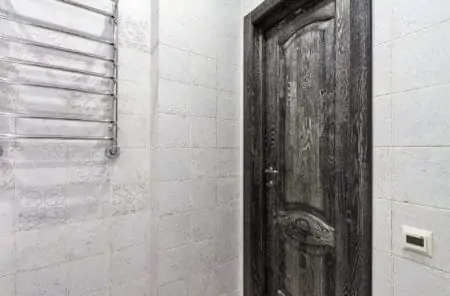
If you have kids, facing a locked bathroom door with them on inside and you outside has probably happened at some point. When it does, you panic, trying to figure out a way of unlocking the bathroom door.
Panic over! We show you how to unlock a bathroom door without a key and explain a little bit about the types of locks out there.
Key Takeaways
- Types of bathroom door locks: turn-button privacy lock, privacy push-pin lock, and privacy bolt with a lever.
- Unlocking methods: use a credit card, paperclip, eyeglass screwdriver, or butter knife to unlock the door.
- Alternative methods: bobby pin, metal coat hanger, lock picking set, or cord can also be used to unlock the door.
- Be cautious: if using force or drilling to unlock the door, keep in mind the potential damage to the lock and door.
Types of Bathroom Door Locks
In the USA, there are 3 types of bathroom door locks:
Turn-Button Privacy Lock
Once the door is shut, the turn-button lock has a small knob on the handle that you can turn to lock it from the inside. These are less common on bathroom doors and are typically found in bedrooms.
However, they are still used on bathroom doors for extra privacy.
Privacy Push-Pin Lock
Once the door shuts, push the button on the door knob, and the lock activates. To release the lock, simply turn the handle, and it releases. These are more common on bathroom doors.
Privacy Bolt With a Lever
It works like a deadbolt, giving the advantage of being able to lock the door without a key.
14 Ways To Unlock a Locked Bathroom Door
Without further ado, let’s get into the methods that are effective for unlocking a locked bathroom door.
1. Credit Card
While credit cards are an effective method for latch bolts, lever, and spring locks, they don’t work with deadbolts. Don’t use your important cards like driver’s licenses or actual credit cards in case you damage them.
Select a card that has flexibility with a certain amount of tensile strength. A library card or store discount card is the ideal choice.
Slide the card between the door and the frame, then gently try to bend the card back to force the bolt away from the door. Giving the door a gentle push might help to release the lock.
2. Paperclip
Paperclips are excellent for unlocking bathroom doors. You’ve probably seen them do it in the movies many times, but how does it work in reality?
The trick is shaping the paperclip so it releases the lock mechanism. For the best results, grab 2 paperclips and bend one and straighten out the other.
Insert the bent one into the lock and slide the straight one underneath and start to wiggle them both until they trigger the mechanism and the door unlocks. This method takes a little practice.
3. Eye-Glass Screwdriver
Doors with privacy handles have a tiny hole on the end of the doorknob. Grab a small flat-head screwdriver like one you use to tighten your glasses and insert it into the hole, as far as it will go.
Now twist and turn the screwdriver until you hear a particular click and the door is open.
4. Butter Knife
A butter knife is more than just a tool for spreading butter; it also unlocks internal doors. Insert the end of the blade into the key lock and twist it. As the lock clicks open, turn the handle, and the door will swing free.
Don’t try this with a sharp knife because you may end up cutting your fingers.
5. Bobby Pin
You might need a little patience when attempting this method, but it will yield results in the end. Grab two bobby pins and bend the first one, so the two ends are separated and form an L-shape.
Insert the first bobby pin into the lock by about a centimeter and bend it, so the main shaft of the pin is flush with the lock face. This is the part you will use to increase the tension on the lock.
Separate the second bobby pin into another L-shape and with the wavy side, Insert it into the lock while using the other pin to add pressure. Most locks have 5 or 6 pins, so feel for them inside the lock.
As you push down with the first pin and feel for the pins with the second pin, you should hear a click. Continue lifting up and down to release the remaining pins.
6. Metal Coat Hanger
If you have a latch bolt lock, a wire coat hanger is an excellent tool to use. First, straighten out the coat hanger by unwinding the hook end and pulling it apart. Next, bend the coat hanger, so you have a hook on the end.
Now place the hook between the wall and the edge of the door, wrapping it around the latch bolt. Use your free hand to rotate the doorknob while pulling with the coat hanger. This method only works if the door jamb isn’t blocking the gap between the wall and the door.
7. Lock Picking Set
This procedure involves a little know-how and patience. Use an Alan wrench, inserting the shorter end into the lock. Try to turn the lock slightly while maintaining firm pressure. Now lift the Alan key and move it in circular motions, and the pins in the lock should release.
8. Cord
If you have a small window above the bathroom door, a length of cord is an effective way to get the door unlocked without a key.
Tie a slip not and lower the cord down over the doorknob. Pull it tight and move from side to side to unlock the door.
9. Foot
This technique requires a bit of brute strength. Kick the spot just above the door handle as this is the weakest point of the door. Use the flat of your foot and give it a good kick. If the first attempt fails, try again until you succeed.
This only works if the door opens in the direction of the force, so there is no point kicking a door that opens towards you.
10. Remove the Door Handle
Undo the screws that hold the door handle in place to reveal the inner workings of the lock. Grab a flat-head screwdriver and insert it into the lock, giving it a gentle turn until the lock clicks open.
11. Remove the Hinges
This method needs a bit of brute force. Place the tip of a flat-head screwdriver on the top of the pin that holds the hinges in place. Give it a sharp whack, and the pin should start to move. Repeat this process on all the hinges until the pins are free and you can lift the door from its hinges.
12. Bump the Lock
Grab a spare key (it doesn’t have to fit the lock) and insert it partially into the key slot. Grab a hammer and give the end of the key a sharp whack, and it should activate the pins to unlock the door.
You may need to perform this task several times, but it is one of the easiest ways of gaining entry without resorting to damaging the door.
13.Drill
Drilling the lock is always a last resort because it destroys the lock mechanism by drilling out the pins. Start with the smallest drill bit, inserted into the key slot. Then scale up the bits. Now insert a flat-head screwdriver and twist the lock, and it should open.
You will need to keep the lock lubricated and make sure you have a replacement lock because your old one is rendered useless.
14. Break the Lock
If you don’t care what state your door is in once you’ve gained entry, this method will work. Grab a hammer and start whacking the handle. Do this several times, moving the handle up and down with the force from your blows.
Eventually, the lock will break, and you can open the door, or the mechanism will fail, releasing the lock.
How To Open a Locked Bathroom Door From the Inside
Sometimes, it is possible to lock yourself inside the bathroom. Maybe the lock is jammed, and no matter how hard you try, it won’t shift? So, what do you do?
1. Remain Calm
If you panic, you might start to hyperventilate, which brings its own challenges. Plus, you cannot think straight when you begin to panic.
2. Call Out for Help
If you are not alone in the house or you are stuck in a public restroom, calling out for help is an excellent way to draw attention to your plight. Alerting someone else is the quickest way to success.
If you cannot call out or your voice is not strong enough, grab an object and start banging. If nothing is to hand, start kicking the door.
3. Look for Alternative Escape Routes
Many domestic bathrooms have a small window. If it is safe to do so, climb out the window and go and get help. Only attempt this if you live in a bungalow or the bathroom is on the ground floor.
You will be risking certain injury if the window is on the first floor.
It’s Not Like in the Movies
Picking locks in Hollywood films is simple, but in reality, getting a door unlocked without the key is pretty hard, and you need an element of luck. Wherever possible, try and preserve the lock by using picking techniques designed to release the pins, but when all else fails, you need brute force.
If you break the lock, remember that you will have the added expense of sourcing a replacement.