Hot water recirculation pumps make your standard water heater more efficient by assisting it in delivering hot water, ultimately helping you save money.
Once you have decided to buy a recirculation pump, you might still find it difficult to choose from the various pumps that are currently available.
To help you decide, we have created this list of the best hot water recirculating pump reviews and ranked the pumps by durability, flow rate, noise generated, price, and other features.
- Built-in timer & aquastat
- Flow rate of up to 9 gal/min
- 25 Watt pump
- Pre-programmed timer
- 15.5 gal/min flow rate
- Corrosion-resistant pump
- No vibrations
- Installation requires no piping
- Includes mounting screws and adapters
- Includes temperature sensor
- Auto-closure device
- Resistant to scale build-up
- Flow rate up to 10 gal/min
- Powerful enough to supply a large building
- Manufacturer also offers a matching timer
Review Methodology: At Sensible Digs, we provide you with a comprehensive analysis of the best hot water recirculation pumps on the market, based on thorough assessments, comparisons, and hands-on experience. Our team of professionals evaluates each product using criteria such as performance, efficiency, installation ease, and durability. We measure and rank pumps according to their features and capabilities, taking into consideration key decision-making factors like energy consumption, noise level, and maintenance requirements. Our data-driven approach and first-hand evidence allow us to share insightful findings and recommendations, helping you make an informed decision on the ideal hot water recirculation pump for your needs.
The Best Hot Water Recirculation Pumps of 2024
Here are our picks of the best hot water recirculation pumps on the market today.
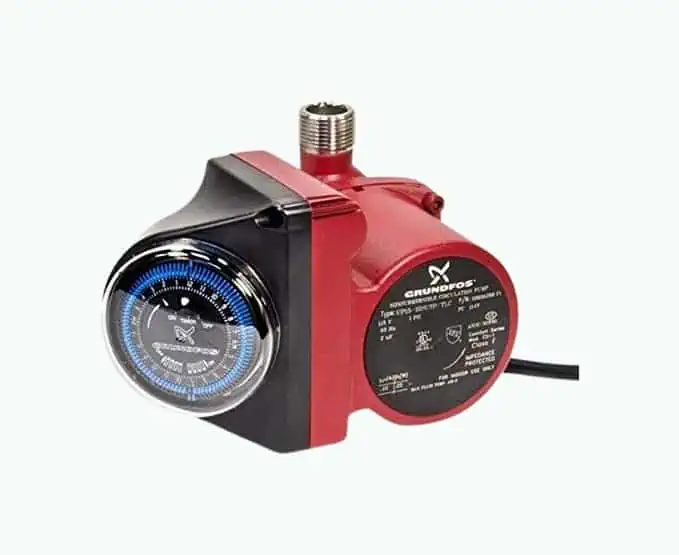
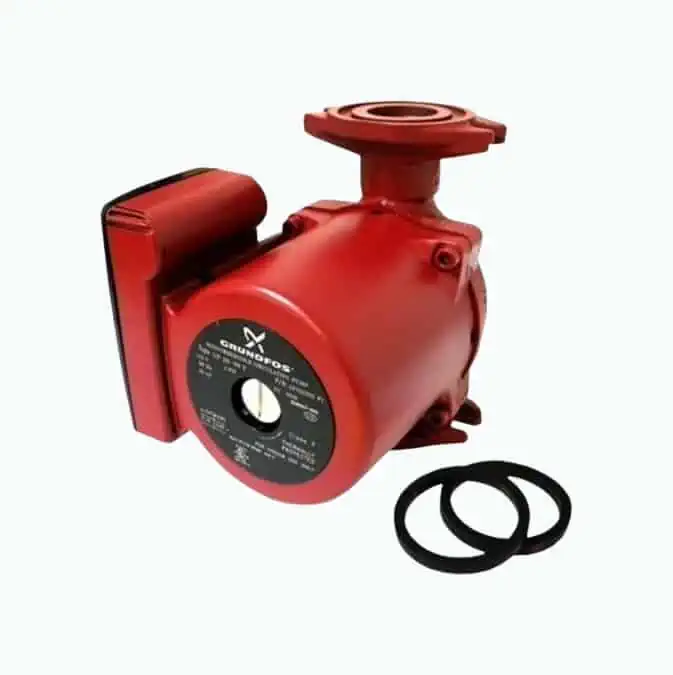
Grundfos GRU-595916 Recirculation Pump
Best Automatic Pump
An all-automatic pump means that, once it’s been programmed, you won’t have to worry about turning it on or off. This pump has a built-in timer as well as an aquastat. The aquastat controls the pump based on the water temperature.
With a water flow rate of 0 to 9 gallons per minute, this pump will deliver hot water quickly. It is also compatible with a tankless water heater.
The pump only uses 25 watts of power, which is less than most light bulbs. It also includes a two-year warranty for additional peace of mind.
The pump itself is constructed using stainless steel, bronze, and aluminum. It is a powerful pump that should serve you for years to come.
The motor is very quiet, so you won’t need to worry about it bothering you or your neighbors.
What We Like
Features a Timer and Aquastat
The timer and aquastat are included with the top models. They help you save even more energy by only activating the pump when it’s needed.
Good Water Flow Rate
The pump has a strong flow rate of 9 GPM. It should work with any type of heater — regular or tankless.
Energy Saving
Not only will the timer and aquastat save energy, but the pump itself doesn’t require much energy. It only needs 25 watts of power, about the same as an energy-saving light bulb.
Durable Material
Most parts of the pump are made of stainless steel. As the pump is exposed to water, it’s essential that the material can withstand moisture. Stainless steel won’t rust, so you won’t need to worry about corrosion or water contamination.
What We Don't Like
Might Heat Cold Water in Mixer Taps
The pump could work a little too well. Some users mentioned that they have to wait a while for cold water but this only affects people who use a mixer tap faucet.
Product Specs
| Weight | 6.85 pounds |
| Dimensions | 10 x 10 x 10 inches |
| Material | Stainless steel, aluminum, bronze |
| Voltage | 115 volts |
Our Ratings
User Experience
Grundfos SuperBrute Recirculation Pump
Best Budget
This recirculation pump features a pre-programmed timer that saves energy. It also has temperature sensors, so the pump will automatically switch on to maintain the temperature level whenever it drops too far.
The pump is strong and durable, made of bronze, stainless steel, and aluminum. One of the best things about this pump is that it prevents any corrosive effects from your water (1).
The pump is self-sufficient and doesn’t require any maintenance. It has a good flow range of 0 to 15.5 gallons per minute, making it suitable for conventional and tankless heaters.
The automatic nature of the pump means it’s highly efficient, so you can enjoy excellent energy-saving. It also only needs 25 watts of power to function.
Once set, you won’t need to worry about turning it off in the morning before heading out. You can also be confident that there will be hot water waiting when you come home.
The pump is virtually silent while operating, only producing minor sounds. This is nothing that will bother anyone.
What We Like
Fully Automatic
The timer and temperature regulators save energy as the pump only turns on when it’s needed. It also ensures you always have hot water when you need it as it sends unused water back for reheating.
Durable Material
Stainless steel is a material you should look for if you want a durable pump. The rotor and impeller are also made of strong plastic, which contains graphite fibers.
Provides Clean Water
The pump prevents any harmful metals from leaking into your clean water. Corrosive water can do a lot of damage, not only to your plumbing but also to your health. It can cause annoying stains on clothing and put a metal taste in your drinking water.
Could Work with a Tankless Heater
Recirculating pumps won’t always work with tankless heaters because they require a stronger flow of water. However, this pump can circulate 155 gallons per minute, making it capable of working with a tankless unit.
What We Don't Like
Cast Iron Housing
While cast iron is highly durable, some users feared that it would give their water a rusty tint. However, only a few people reported such issues, and most agreed it was due to using old water heaters.
Product Specs
| Weight | 6.7 pounds |
| Dimensions | 5.2 x 4.2 x 6.5 inches |
| Material | Cast iron, stainless steel, bronze, aluminum |
| Voltage | 115 volts |
Our Ratings
Personal Perspective
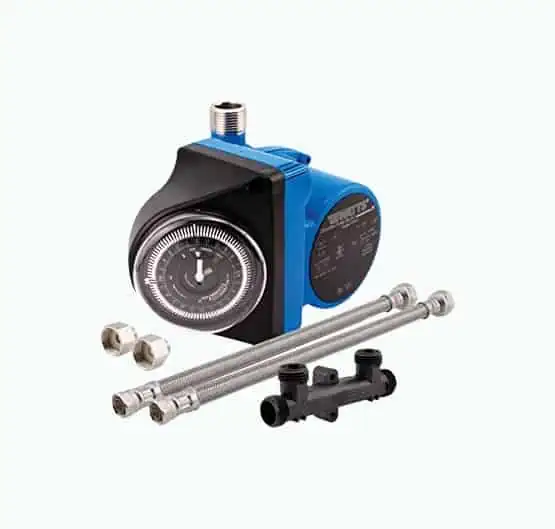
Watts Premier Instant Hot Water Recirculating Pump
Best for Easy Installation
Being able to install a new feature in your home with your own hands can feel liberating. This Watts circulation pump is very easy to install and it shouldn’t take long, even for people with minimal experience.
This easy installation is possible because it doesn’t require any extra piping. All you need to do is fit it to the top of your water heater. One negative is that it won’t work with a tankless water heater.
This is more than just a pump; it’s a full-on recirculating kit. It includes:
- Two adapters with rubber washers.
- Valve mounting screws.
- 10-foot electric cord.
- 2 inches by 12 inches of supply lines.
This pump also features a timer to help you save more water and energy. The 24-hour timer will enable you to set the desired working hours to fit your needs.
The pump is very quiet, despite how powerful it is. You won’t feel any vibrations through the floor as it works. It also includes a one-year warranty and is maintenance-free.
The pump is made from cast aluminum, a strong and durable material, as well as being lightweight.
What We Like
24-Hour Timer
The 24-hour timer allows you to specify exactly when the pump should be activated. You can set it to shut off when the house is usually empty and restart before it is needed again. Managing the pump effectively can save a lot of energy and water and reduce your utility bills.
Easy Installation
The pump needs to be mounted on the top of the water heater. You then need to install the sensor valve under the faucet furthest from the heater. The installation doesn’t require any piping, which makes it far more simple.
Comes as a Kit
Everything you need to install the pump is included in the kit. Many buyers were impressed with how easy it was to install.
Very Quiet
You won’t need to hand out earplugs to your neighbors just yet. This pump is near-silent when it’s active and it won’t produce any annoying vibrations.
What We Don't Like
Won’t Work with a Tankless Heater
Unfortunately, if you have a tankless water heater, this pump won’t be suitable. A few customers stated that they mistakenly bought this pump thinking it would work with their tankless heater, so don’t make the same mistake.
Product Specs
| Weight | 6.4 pounds |
| Dimensions | 6.2 x 6 x 5 inches |
| Material | Cast aluminum |
| Voltage | 120 volts |
Our Ratings
Community Feedback
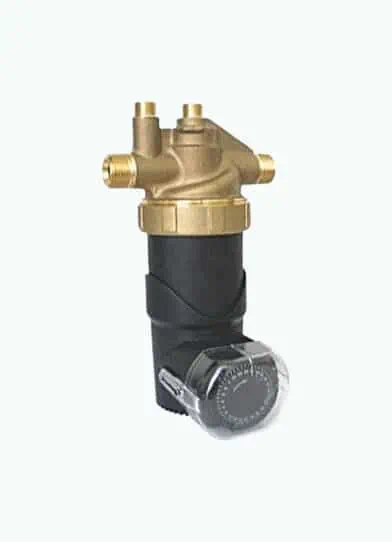
Laing Autocirc Recirculation Pump
Best Recirculation Pump for Families
This pump features a 24-hour timer to ensure your family will have enough hot water when it’s needed most. The pump is also fitted with a temperature sensor which automatically starts the pump whenever the temperature drops to 85 degrees Fahrenheit.
The temperature sensor also works at the other extreme. Whenever the temperature exceeds 95 degrees Fahrenheit, the pump automatically shuts off. This ensures your hot water stays at an ideal temperature.
There’s also a smart auto-closure device within the system. Whenever the thermostat turns off the pump, the device prevents hot and cold water from mixing in the pipes.
This pump is made even more appealing by its low energy consumption. It requires just 14 watts of power, which is less than a lightbulb.
The manufacturer claims the pump could save the average family (four people) as much as 17,000 gallons of water annually. The pump is also maintenance-free and resistant to scale build-up.
What We Like
24-Hour Timer
The 24-hour timer allows you to set the pump to operate only when needed. A timer is an essential part of a good recirculating pump. While making them more environmentally friendly, they also help you save on water and energy bills.
Thermostat
The thermostat automatically shuts the pump off whenever the temperature exceeds 95 degrees Fahrenheit. It also makes it turn on when the temperature drops below 85 degrees Fahrenheit.
Auto-Closure Device
A common problem with recirculation pumps is that hot and cold water become mixed. This pump has a closure device that keeps the hot and cold water apart. However, you could still encounter lukewarm water when the cold tap is first opened.
Resistant to Scale Build-Up
Scale build-up is very common in water heaters and pipes. This can be particularly problematic if you have hard water, which has high mineral content.
This scale is an accumulation of minerals such as calcium and magnesium. It can be difficult to get rid of and could potentially ruin your piping system.
What We Don't Like
Customers Had Problems When Installing the Pump
Although the installation should be straightforward, some customers reported a common problem. The pump requires an outlet beneath a sink, which is difficult for some people.
Product Specs
| Weight | 2.99 pounds |
| Dimensions | 0.1 x 5 x 7.5 inches |
| Material | N/A |
| Voltage | 115 volts |
Our Ratings
First-Hand Impression
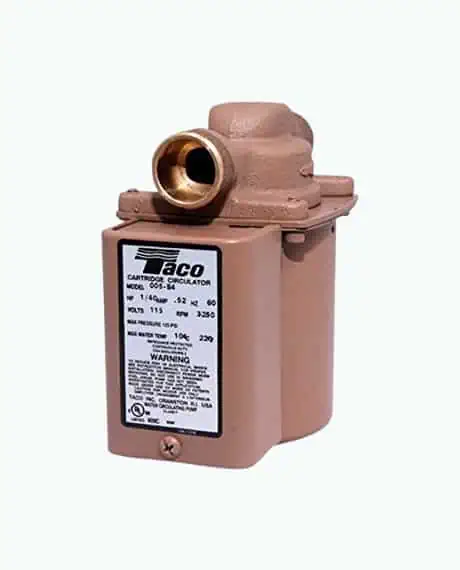
Taco Bronze Circulator Pump
Best Always On Pump
This pump offers a very reliable motor, making it one of the most popular among plumbers. It may not be the best-looking pump but it is strong and quiet, so you won’t notice it as it works.
The pump is set apart by its unique cartridge design that holds all the moving parts. The best thing about the cartridge design is that it’s completely replaceable.
If anything breaks or stops working properly, you can simply replace it as you would a printer’s ink cartridge. This makes servicing remarkably easy.
The flow range of the pump is 0 to 10 gallons per minute. It should work well with any type of water heater. The pump has a minimum fluid temperature of 40 degrees Fahrenheit and a maximum of 220 degrees Fahrenheit.
A downside of this pump is that it doesn’t have a timer, thermostat, or aquastat. When you turn it on, it will stay on until you shut it off again. This is a situation where a remote control would be useful.
However, it’s a reliable pump that is great for larger houses and families with high demands for hot water. You can easily fit a timer if one is needed.
What We Like
Strong, Reliable Motor
The pump has a powerful motor. It’s strong enough to supply water throughout a large building and it’s also a go-to pump for plumbers.
Great Design
The cartridge design allows you to remove moving parts of the pump if needed. This is also less expensive than the complete pump, so it’s simple and less expensive to replace if needed.
Quiet Motor
The quiet motor means there’s no intrusive noise or vibrations when it’s in operation. This is ideal if you live near others and noise could be an issue.
Can Be Fitted with Timer
If you want to make the pump automatic, it can be fitted with a timer. The manufacturer has designed a timer to suit this particular pump.
What We Don't Like
Runs a Bit Hot
Customers have noticed the pump runs a bit hot if it has been working for a long time. As it doesn’t have an automatic off-switch, it constantly runs until you turn it off. As a result, it tends to get hot to the touch.
Product Specs
| Weight | 4.55 pounds |
| Dimensions | 5 x 4 x 7 inches |
| Material | Cast iron, bronze |
| Voltage | 115 volts |
Our Ratings
User Experience
| Product | Award | Weight | Dimensions | Material | Voltage |
|---|---|---|---|---|---|
| Grundfos Comfort | Automatic Pump | 6.85 lbs | 10″ x 10″ x 10″ | Stainless steel, aluminum, bronze | 115 V |
| Grundfos SuperBrute | Budget Pick | 6.7 lbs | 5.2″ x 4.2″ x 6.5″ | Cast iron, stainless steel, bronze, aluminum | 115 V |
| Watts Hot Water | Easy Installation | 6.4 lbs | 6.2″ x 6″ x 5″ | Cast aluminum | 120 V |
| Laing Autocirc | Families | 2.99 lbs | 0.1″ x 5″ x 7.5″ | N/A | 115 V |
| Taco Bronze | Always On Pump | 4.55 lba | 5″ x 4″ x 7″ | Cast iron, bronze | 115 V |
What Is a Hot Water Recirculation Pump?
It’s possible to waste a lot of water as we leave a tap running and wait for hot water to arrive. That water waste is bad for the environment and places unnecessary strain on our bank accounts. A hot water recirculation pump ensures that warm water travels from a heater to the faucet more quickly.
The pump also returns unused water to the heater to be kept hot and ready for use. This further saves the water that would otherwise be wasted as we wait to clean the dishes or for our shower to get warm (2).
A recirculation pump will provide you with hot water far more quickly. Multiple types of pumps are available, with different sizes, functions, and features such as timers.
Types of Recirculation Pumps
There are three main types of recirculation pumps.
Time Activated Pump
A time-activated pump can be programmed to turn off automatically when it isn’t needed. It achieves this by using a timer, which you can adjust to ensure you have a rapid hot water supply when you need it most.
This can be highly beneficial for anyone who regularly spends the same hours away from their home. For example, if you work standard office hours, you could program the pump to turn off at 9 am and restart at 3 pm during the week, so it would always be active when you’re at home.
Pros
- Set a Schedule: You can set the timer so the pump will only be active when you’re at home. It should usually be set to switch on an hour or so before anyone comes home to ensure your hot water is ready for you.
- Energy-efficient: As the programmable pump will be inactive throughout the day, you will save energy.
Cons
- Unpredictable Schedules: This isn’t an issue with the pump itself but a time-activated pump probably won’t be suitable for somebody who works in shifts at various times of the day or with an unpredictable schedule. They are far better suited to people with a regular routine.
Always-on Pump
This type of pump is the least expensive but probably also the least efficient as it stays active unless you turn it off manually. This was one of the first types of recirculation pumps and has largely been replaced by more efficient automatic pumps.
Pros
- Reduces water waste: As the pump is always active, you won’t need to wait for hot water to arrive.
- Maintenance-free: Most always-on pumps are maintenance-free. Once they are set up, you’re good to go.
Cons
- Prone to corrosion: As water constantly flows through the pump, rust and corrosion become more likely. Always-on pumps are unlikely to last as long because they are constantly working and become worn out sooner.
Temperature Activated Pump
A temperature-activated pump monitors the water in your home’s system, then keeps it within set temperature limits. When the temperature drops below a certain level, the pump will activate to keep the water hot.
If the water temperature exceeds a set level, the pump will automatically shut off to save energy. This type of recirculation pump is very popular. It saves the most energy of the three types as it only turns on when needed.
Pros
- Turns on automatically: When the water temperature in the system drops below a specific point, the pump turns on automatically. It pumps the cold water back to the heater to be reheated.
- Turns off automatically: To save energy, the pump automatically shuts off if the water temperature exceeds a set level.
- You won’t get burned: As the pump shuts off automatically when the temperature is too high, there is no risk of boiling water coming from a faucet.
Cons
- Hot and cold get mixed: A common complaint with this type of pump is that it can take longer for cold water to reach a faucet. However, this depends on the manufacturer and specific model.
Things to Consider (Buying Guide)
Before you choose a recirculation pump, there are a few things you should consider.

Durability
When buying a pump, you should choose one that will last. A recirculation pump will be called upon frequently, with most people requiring a steady hot water supply.
The first thing to consider is the durability of the material the pump is made from. This needs to be strong and resistant to rust and other damage (3).
Stainless steel is the best choice when it comes to material. Although it can be a little more pricey, its durability will pay for itself in the long run.

Size and Flow Rate
You don’t need to go out and buy the largest, most powerful pump unless you have reason to. Consider the flow rate of the pump; a good flow rate will provide you with strong water pressure.
Type of Water Heater
How the pump works depends on the type of water heater you have. Recirculation pumps tend to work the best with regular tank heaters as these store hot water and supply it constantly.
Keep In Mind

Type and Features
You know the different types of recirculation pumps but which one should you choose?
Having a timer on your pump can be beneficial as it is customizable and only activates when specified. Still, this doesn’t mean you have to buy a time-activated pump. You might prefer the idea of a temperature-activated pump.
To enjoy the best of both worlds, you can buy an aftermarket timer and fit it to your pump. Just double-check that the pump you purchase can be fitted with a timer before buying.

Noise Level
Pumps can be rather loud, which can quickly become a nuisance. You should check the noise levels of any pump you’re considering before you buy it.
As well as being annoying for you, this noise could also disturb your neighbors. The good news is that most modern pumps — including all of our selections — are almost silent and vibrationless.
FAQs

Is a Recirculation Pump Worth It?
The more people there are living in your home, the more useful a recirculation pump will become. If more than four people are regularly waiting for cold water to be flushed out of the system, you could be wasting more than $50 each year, so a pump will pay for itself within a few years.

How Long Does a Hot Water Recirculation Pump Last?
This depends on how often your pump is active and how much water passes through it. A pump that is active constantly will understandably not last as long as one on a timer. Generally, a good pump should last at least a decade, by which time it will have paid for itself more than twice over.

How Much Does it Cost to Install a Hot Water Recirculation Pump?
In most cases, installing a pump is simple and you will be able to do it yourself, so the majority of the money you spend will be on the pump itself. On average, a pump costs about $200, and you shouldn’t need to spend much more than that. If you do call on a plumber, the cost will be significantly higher.

Will a Hot Water Recirculating Pump Keep Pipes From Freezing?
Yes, using a hot water recirculating pump prevents the water inside the pumps from freezing. Pumps for recirculating hot water maintain the flow of hot water through your plumbing system and bring it back to the water heater.
As the water on the hot water side of the pump cools down, a sensor valve on the pump turns on, forcing the water to be pushed back toward the water heater. The valve will auto shut off when the temperature in the hot water line reaches 98 degrees Fahrenheit.

How Much Does It Cost to Run a Recirculation Pump?
The costs to run a recirculation pump depend on how many feet of plumbing you have throughout the house and how much electricity costs where you live.
A pump that operates at 25 watts would require around 200 kWh of electricity over a year. The cost of electricity in the US and Canada is between $0.13 and $0.17 per kWh. That will cost you between $26 and $34 annually, so factor that into your budget.

Where Should a Recirculating Pump be Installed?
A hot water recirculating pump should be installed under your water heater’s hot water discharge line. Make sure that you have a properly grounded power outlet nearby because you are going to have to plug in the recirculating pump for it to work.