When you want to make a hole in tough material, the obvious option is to use a drill. However, if you need to make a large hole, a standard drill bit is unlikely to be big enough.
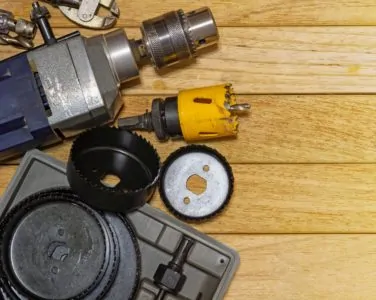
In these situations, it is a good idea to invest in a hole saw kit. These kits will fit onto your standard power drill and enable you to cut large, neat holes that can accommodate pipes, cables, or whatever else you need.
There are many products to choose from, which is why we have reviewed seven of the best hole saw kits that are currently available. We chose these kits for their sizes, the type of teeth they have, and their manufacturing quality.
- Ice hardened for durability
- Bi-metal teeth
- Positive rake
- Carbide-tipped
- Cobalt steel pilot drill
- 6-piece set
- Diamond grit
- 15-piece set
- Cuts through glass
- 35% more durable than similar hole saws
- Bi-metal
- 8-piece set
- 17-piece set
- Quick change system
- Varied size selection
- Precision teeth
- Carbon steel
- 5-piece set
- Good size range
- Precision cutting
- Ideal for woodworking
Review Methodology: At Sensible Digs, we believe in providing you with thorough, hands-on evaluations and evidence-based assessments of the best hole saw kits available. Our professional team uses precise measurements and stringent criteria to track and compare the performance of each product. We delve into key decision-making factors such as the design, functionality, and durability of the kits. Our research and analysis are based on real-life user experience and data, highlighting what sets each product apart from its competitors. We rank and review each kit, providing you with reliable, factual findings to help you make an informed decision. We also breakdown the results of our rigorous tests, offering insight into the potential impact of each product’s design choices on the user. Trust our expertise and let us guide you to the best hole saw kit that fits your needs.
The Best Hole Saw Kits of 2024
With so many hole saw kits to choose from, narrowing them down to the best options was challenging. However, after a lot of research, we have reviewed seven of the best hole saw kits that are currently available, chosen for their teeth per inch and how they are arranged, and the materials they are suitable for cutting.
Milwaukee 49-22-4285 All Purpose Hole Saw Kit
Best All-Purpose Hole Saw Kit
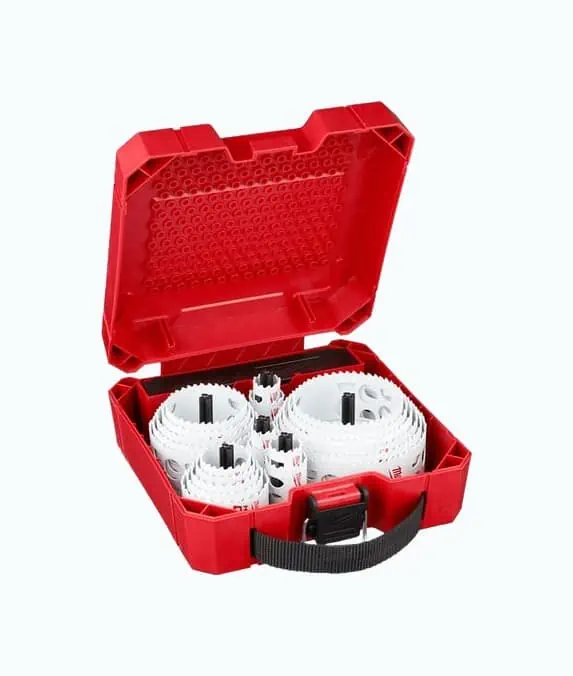
Milwaukee is one of the most respected names in tools in the United States, and this hole saw kit lives up to that reputation. It has bi-metal teeth with a positive rake for faster, more efficient cutting.
This is a 28-piece kit, so it should have the right size for the majority of holes you will need to drill. This Milwaukee set contains hole saws that range from a small size of 0.75 inches up to the largest size of 4.75 inches. It also includes three arbors and three drill bits.
The blades have been ice treated to make them 50% more durable, and the gullets are deeper to scoop out the debris more effectively. The only downside of this kit is its price, which might be too much for beginner DIYers. For professionals, however, it will make an excellent addition to your tool collection.
Pros
- 28-piece kit
- Ice hardened for durability
- Bi-metal teeth
- Positive rake
Cons
- Might be too expensive
Product Specs
| Material | Bi-metal |
| Suitable for | All-purpose |
| Number of pieces | 28 |
| Weight | 14.62 pounds |
| Price | $$$ |
Our Ratings
User Experience
Greenlee Carbide Cutter 6-Piece Hole Saw Kit
Best Hole Saw Kit for Metal
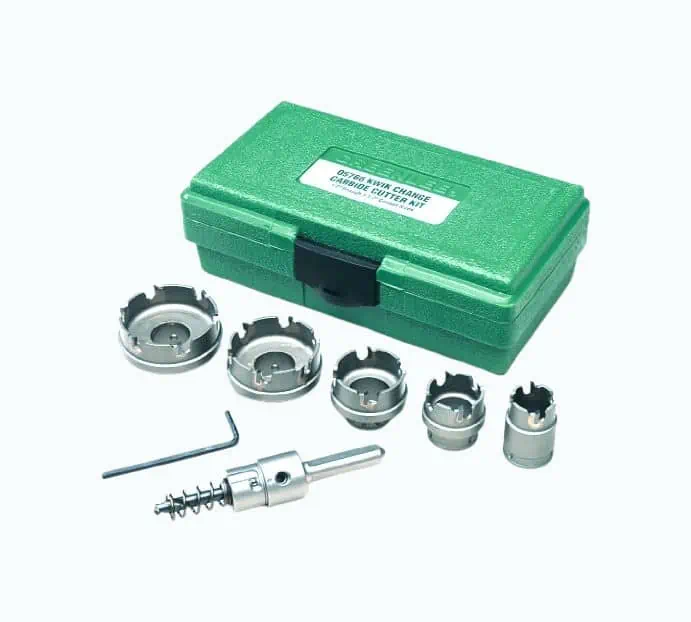
If you want a hole saw set that is suitable for cutting through metal, this kit is a great option. It contains six pieces, including five cutter heads ranging in size from 0.87 inches to 2 inches. There is also a spring-loaded pilot drill to make it easier to remove the slug.
This kit is made of steel with carbide-tipped teeth for optimal performance, with a cobalt steel pilot drill. It also includes a quick-change auger for when you need to swap to a differently-sized cutter head.
The price is the only reason that you might want to look elsewhere, especially considering that this kit only contains six pieces. However, it is a specialist set that is ideal for drilling holes in metal, so it might be worth the extra cost.
Pros
- Carbide-tipped
- Cobalt steel pilot drill
- 6-piece set
- Perfect for drilling through metal
Cons
- Expensive
- Limited size range
Product Specs
| Material | Cobalt steel, carbide-tipped teeth |
| Suitable for | Metal, all-purpose |
| Number of pieces | 6 |
| Weight | 1.3 pounds |
| Price | $$$ |
Our Ratings
Personal Perspective
3 Otters Hole Saw Set
Best Hole Saw Kit for Glass
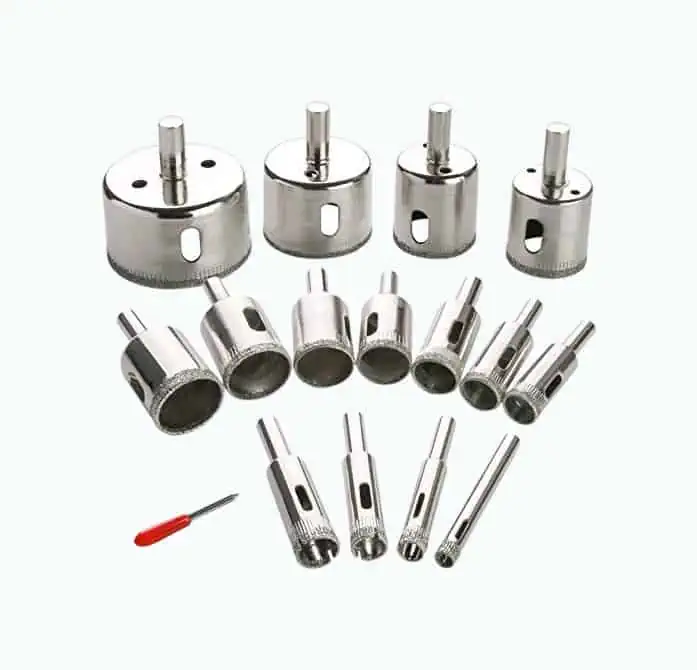
The 3 Otters set is nickel-plated. These blades will cut through tiles, glass, ceramics, jars, and even granite. If you are tackling delicate tasks such as fitting work surfaces in the kitchen or bathroom, these hole cutters will be ideal.
This is a 15-piece set, with sizes ranging from 0.24 inches to 2 inches. The drill bits are made of carbon steel, which is then coated in nickel to preserve the material and increase its lifespan.
The diamond coating cuts differently from standard hole saws. Diamond grit scrapes tiny particles from the surface of the material, resulting in a smoother, more precise finish. This gradual cutting process will allow you to cut holes in even the most fragile materials.
Pros
- High quality
- 15-piece set
- Can cut through glass safely
- Durable
Cons
- Specialist tool
Product Specs
| Material | Nickel-plated |
| Suitable for | Glass, ceramics, granite, tiles |
| Number of pieces | 15 |
| Weight | 13 ounces |
| Price | $ |
Our Ratings
Community Feedback
DeWALT Standard Electrician’s Hole Saw Kit
Best Hole Saw Kit for Electricians
It is probably no surprise to find DeWALT on this list, as one of the leading tool brands in the world. This set is designed specifically for use in the electrical industry.
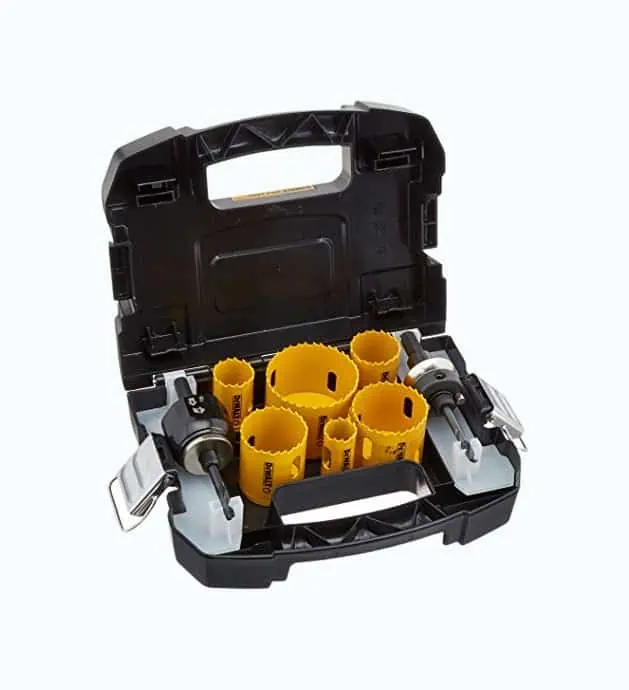
This is an eight-piece set, containing six hole saws and two quick-change mandrels. The material is bi-metal, which is hardwearing and should last up to 35% longer than some industry-leading blades and up to 200 times longer than standard hole saws.
This provides a hole saw kit that will cut through wood, the metal used in electrical boxes, and almost any other surface material you can think of. It will be ideal when rewiring a house and cutting holes through various surfaces, helping you complete your work quickly, especially with the quick-change pilot drills.
Pros
- 35% more durable than competitors
- Bi-metal
- 8-piece set
- 3-year warranty
Cons
- Build quality issues
Product Specs
| Material | Bi-metal |
| Suitable for | Electricians, metal, wood, drywall |
| Number of pieces | 8 |
| Weight | 3.25 pounds |
| Price | $$ |
Our Ratings
First-Hand Impression
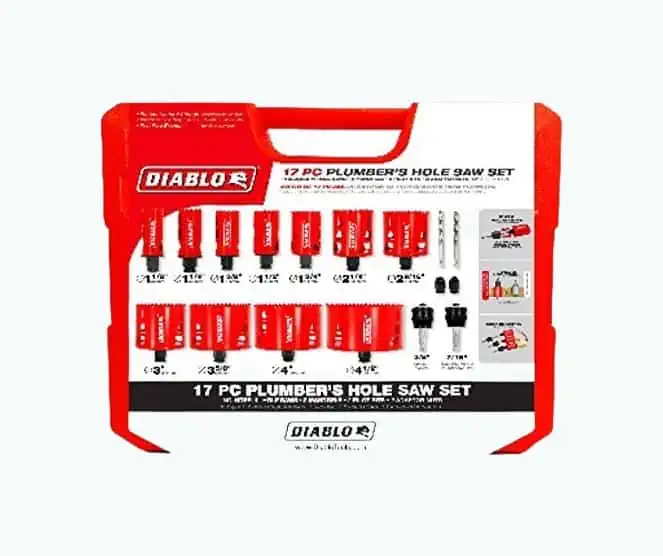
Freud DHS17SPL Bi-Metal Plumbing Set
Best Hole Saw Kit for Plumbers
This Freud Diablo hole saw set has a variable tooth design that makes boring through materials quicker and easier. The blades are made from bi-metal, an alloy that is more robust than carbon steel, so it will be suitable if you need to drill holes to plumb in a sink or toilet.
This 17-piece set offers a great deal of variety, ranging from 1-inch to 4.5-inch saws, so it has the scope to drill holes for larger-diameter pipes. These blades also have a snap-lock plus system that enables you to quickly swap them with each other.
The arbor will fit all Diablo hole saws, so you won’t need to buy additional arbors when you want to use a larger hole saw. They also have a fast plug ejection system that enables you to safely remove the piece you have cut out without needing another tool such as a screwdriver.
Pros
- 17-piece set
- Quick change system
- One arbor fits the entire range
- Large size range
- Fast plug ejection system
- Bi-metal
Cons
- Quite expensive
Product Specs
| Material | Bi-metal |
| Suitable for | Plumbers, wood, metal, drywall |
| Number of pieces | 17 |
| Weight | 2.39 pounds |
| Price | $$$ |
Our Ratings
User Experience
Sungator 5-Piece Hole Saw Set
Best Hole Saw Kit for Fiberglass
If you are cutting through fiberglass, you need a hole saw with precision teeth to make a neat cut. You won’t need the most robust hole saw, as fiberglass is a relatively soft material.
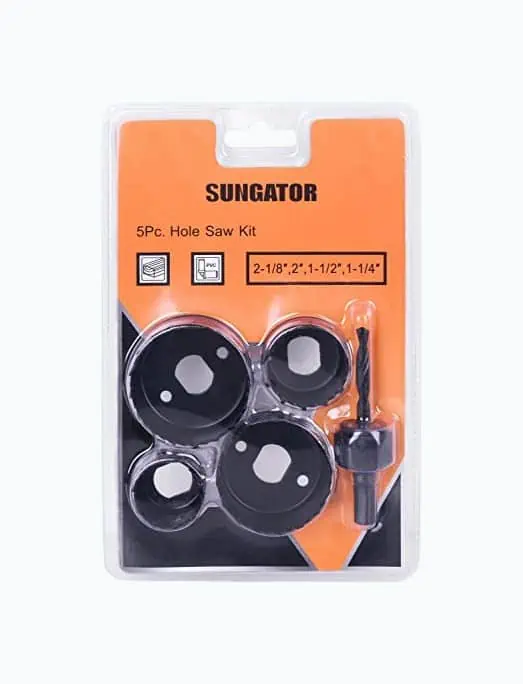
This Sungator hole saw kit contains five pieces, with sizes ranging from 1.25 inches to 2.13 inches. It has a maximum cutting depth of one inch. The set is made of heat-treated carbon steel, so it might not be the toughest material but should still get the job done.
In addition to receiving numerous positive user reviews, this set is also very affordable, costing about a tenth of some of the more expensive kits we have looked at. If you are concerned that carbon steel may be too soft for some cutting tasks, at least these blades will be much cheaper to replace than most of their rivals.
Pros
- Very reasonable price
- Precision teeth
- Carbon steel
- 5-piece set
Cons
- Only suitable for softer materials
- Hard to remove waste material
- Build quality issues
Product Specs
| Material | Carbon steel |
| Suitable for | Fiberglass, softwood, PVC |
| Number of pieces | 5 |
| Weight | 8 ounces |
| Price | $ |
Our Ratings
Personal Perspective
EONLION 16-Piece Hole Saw Kit
Best Hole Saw Kit for Wood
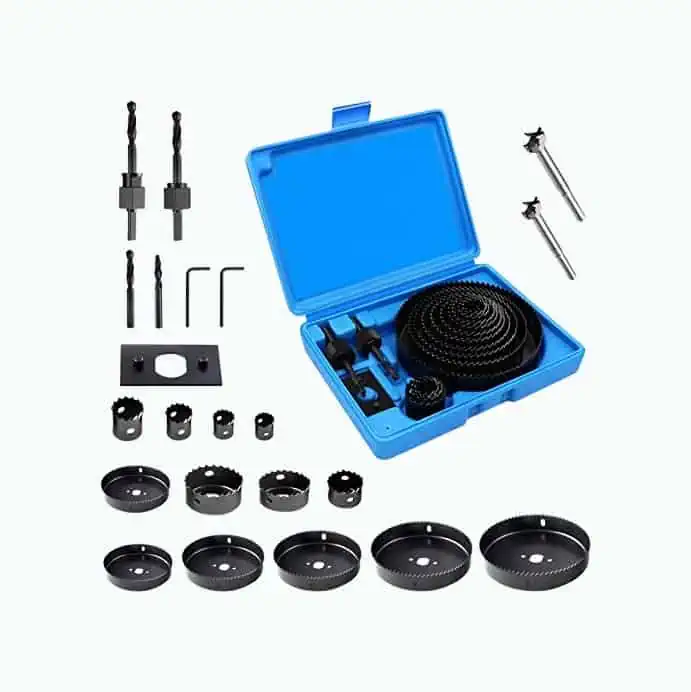
This EONLION 16-piece kit is made using heat-treated carbon steel, so it is suitable for cutting wood, drywall, sheet plywood, and plastics.
The blades vary in size from 0.75 inches to 5 inches, one of the widest ranges we have seen in a hole saw kit. The teeth are designed to cut accurately and leave a very smooth edge, making them ideal for cutting through doors to fit handles.
These saw blades are not suitable for cutting metal or harder surfaces. However, if you are cutting wood, they give you the flexibility to scale up the sizes and the cutting prowess to tackle any project. This hole saw kit is the ideal choice for cabinet and bespoke wooden furniture makers.
Pros
- Good size range.
- Precision cutting.
- Great price.
- Ideal for woodworking.
Cons
- Carbon steel
- Only suitable for cutting softer materials
Product Specs
| Material | Carbon steel |
| Suitable for | Wood, plywood, fiberglass, PVC |
| Number of pieces | 16 |
| Weight | 2.2 pounds |
| Price | $ |
Our Ratings
Community Feedback
| Product | Best | Material | Suitable for | No. of pieces | Weight |
|---|---|---|---|---|---|
| Milwaukee 49-22-4285 Hole Saw Kit | All-Purpose | Bi-metal | All-purpose | 28 | 14.62 lbs |
| Greenlee Carbide Cutter Hole Saw Kit | Metal | Cobalt steel, carbide-tipped teeth | Metal, all-purpose | 6 | 1.3 lbs |
| 3 Otters Holes Saws | Glass | Nickel-plated | Glass, ceramics, granite, tiles | 15 | 13 oz |
| DeWALT Electrician’s Hole Saw Kit | Electricians | Bi-metal | Electricians, metal, wood, drywall | 8 | 3.25 lbs |
| Freud DHS17SPL Bi-Metal Plumbing Set | Plumbers | Bi-metal | Plumbers, wood, metal, drywall | 17 | 2.39 lbs |
| Sungator 5-Piece Hole Saw Set | Fiberglass | Carbon steel | Fiberglass, softwood, PVC | 5 | 8 oz |
| EONLION 16-Piece Hole Saw Kit | Wood | Carbon steel | Wood, plywood, fiberglass, PVC | 16 | 2.2 lbs |
What Are Hole Saw Kits?
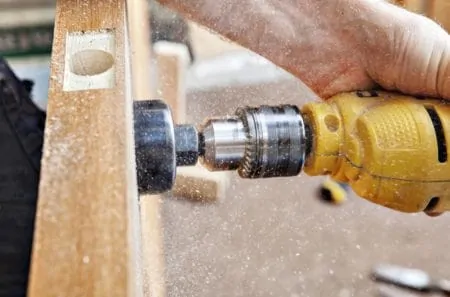
A hole saw kit has a cylindrical blade that can cut perfectly round holes in various materials. Plumbers, electricians, and other professional contractors often use them as they are ideal for making holes to accommodate cables and pipework, and for general tasks such as drilling through walls, floors, and ceilings.
They allow the user to create holes with a much wider diameter than a standard drill bit, but they are still attached to a handheld drill. They also usually have a pilot drill in the center to prevent the hole saw from moving side to side while cutting.
What to Look for in a Hole Saw Kit
There are numerous hole saw kits available, so it is very helpful to know what you are looking for. Let’s take a quick look at some of the most important things to keep in mind when choosing a hole saw kit.

Materials
It is essential to think about materials, both the material the saw blade is made of and the material you will be cutting into.
If you are drilling wood, fiberglass, or plastics, a steel hole saw should be sufficient. This doesn’t mean cobalt hole saws are ineffective at cutting these materials, but you would be wasting money buying a hole saw designed for tougher materials.
Cobalt hole saws are tough enough for dense materials such as steel and aluminum. This added strength is thanks to the cobalt-steel alloy and its ability to withstand heat. Heat is one of the main reasons why drills and saws dull over time, so a heat-resistant material will be far more durable.
Carbide-tipped hole saws stay sharp for the longest time, while tungsten or titanium-tipped hole saws make the best all-around hole cutters. These are the most often used materials in high-quality hole saw kits.

Sizes
If you usually only drill holes of the same size, such as for fitting ceiling lights, you are unlikely to need a large selection of hole saws. This also means you could spend your money on one hole cutter of very high quality, rather than getting a large set of lower quality.
However, if you are cutting many different size holes, such as for plumbing work, it is worth investing in a hole saw kit. It will give you much greater freedom and save you a lot of time while fitting pipework of various sizes.

Drill Bit
Drill bits are available in various shapes and sizes. The longer the bit, the more effective it will be at anchoring the hole saw to the material. Shorter drill bits provide more stability and rigidity, which means they are better suited to harder materials.
Remember

Teeth
The cutting power of these hole saws is dictated by the number of teeth they have, the gullet depth, and how the teeth are angled. The rake angle describes the angle of the cutting surface relative to the material.
A positive rake slopes away from the cutting edge on the inner side, while negative rakes slope away from the outer side.
Deeper gullets remove material more efficiently and scoop debris away from the stock, while the number of teeth will influence how neat the sides of the hole are. Having more teeth should create a neater hole, including in harder materials, but it also means you will cut more slowly.
Hole saws with fewer teeth are better suited to lumber and other materials that require a less precise edge as they will rip rather than make a smooth cut.

Warranty
The prices and durability of hole saw kits vary greatly, which is reflected in the many different warranties you will see. Well-known brands such as DeWALT and Milwaukee offer a 3-year warranty and a lifetime guarantee, respectively.
In comparison, some cheaper brands offer a 12-month warranty at most. Warranties are usually a reliable indicator of how long manufacturers expect their products to last, so the longer the better.
Who Makes the Best Hole Saw Kits?
You will probably recognize most of these brand names, even if you aren’t a passionate DIYer or a professional.

DeWALT
DeWALT is a household name in DIY in America and around the world, thanks to the high quality of its products. The company was started in 1923 by Raymond E. DeWalt when he invented the first radial arm saw to increase productivity at a sawmill (1).
It has since grown into one of the most internationally recognized tool brands in the world.

Bosch
In 1886, Robert Bosch founded the catchily-named “Workshop for Precision Mechanics and Electrical Engineering” in Stuttgart, Germany. In 1901, Bosch moved into automotive supplies and developed a reputation for innovation (2).
It now has over 400,000 employees and has a revenue of approximately 78.5 billion euros.

Milwaukee
Milwaukee is another all-American brand with a great pedigree. In 1918, Henry Ford was looking for someone to produce a portable power drill to use on his production lines. He approached A.H. Peterson, and the rest is history (3).
Milwaukee is now a major manufacturer, building over 500 models of tools and over 3,500 accessories.

Greenlee
In 1862, Pennsylvanian brothers Ralph and Robert Greenlee started making barrels just as the oil industry began in that great state. Demand skyrocketed, and the Greenlee brothers increased production to meet demand (4).
Their move into power tools came in 1874 when they invented the hollow chisel mortiser. This tool revolutionized the process of making mortise and tenon joints for the woodworking industry.
How to Use a Hole Saw
1. Choose a Hole Saw
It is important to choose a hole saw that is both the correct size and suitable for cutting the material you are working on. If the hole you create is too small, it can be difficult to enlarge it accurately as the pilot drill will have nowhere to grip.
Quick Tip
2. Prepare a Pilot Hole
Insert the pilot bit into the drill chuck and make sure it is straight and secure. It might seem strange to make a pilot hole when the hole saw also has a pilot drill in the center. However, the larger size of the hole saw will make it difficult to get a clear view of the hole while drilling. By making a pilot hole beforehand, there will be far less guesswork involved.
3. Put on Protective Equipment
Whenever you work with power tools, it is important to protect yourself. When sawing holes, particles are released into the air and you could potentially inhale them. Make sure you wear an N95 face mask, as this will filter 95% of contaminants out of the air as you breathe it in.
Make sure you also wear safety goggles, as you never know what debris might be kicked up while cutting.
4. Drill the Pilot Hole
Place the drill bit on the spot where you want the pilot hole to go. Make sure the drill is level so the hole is properly aligned. Press the trigger gently to allow the bit to turn slowly until it bites into the material. You can then increase your speed gradually until the drill penetrates deeper into the material.
When you have reached your desired depth, pull the drill back out. Remove the pilot bit and clean away any debris.
5. Insert the Hole Saw Into the Drill
Insert the arbor into the drill and tighten it either by hand or using a chuck key. Check that the hole saw is secure by seeing if there is any movement in the chuck. Also, check that the hole saw is straight. It will be too late once you have drilled the hole and discovered that it is off-center or at an angle.
6. Line the Hole Saw up to the Pilot Hole
Insert the pilot drill at the center of the hole saw into your predrilled hole. When you are satisfied that the hole saw is straight, press the trigger on the drill and apply some pressure as the bit turns slowly.
The hole saw’s teeth should make contact with the surface of the material evenly. If you are drilling through metal, you should consider adding some drilling oil or lubricant to reduce friction and protect your blade.
7. Increase the Speed
As the hole saw starts to bite into the material, gradually increase the speed. When you have drilled about halfway, stop the drill and remove the hole saw to free any trapped debris. This will help you maintain a clear line of sight and reduces heat buildup, which is one of the main reasons that teeth go dull.
8. Complete the Hole
For a smoother finish, it is recommended that you complete the hole from the other side using the same techniques. This is something professionals do and it shouldn’t be too complicated thanks to your pilot hole, so you could consider it if you are confident in your abilities.
However, if you are inexperienced or lack confidence, don’t attempt it because the holes might not align, which will result in an off-center gap. In this case, continue drilling from where you started until the hole saw cuts through to the other side of the material.
FAQs

Do You Need a Special Drill for a Hole Saw?
You can use a regular brad point drill bit. This type of drill bit is designed for use with wood, giving you a clean, smooth hole.
But, when using a brad point drill bit with a hole saw make sure the bit is the same size as the hole saw.
Start by drilling a small pilot hole. This’ll help to prevent the brad point drill bit from slipping. Take your time and drill slowly to avoid splintering the wood.

What Are the Most Popular Hole Saw Sizes?
Popular hole saw sizes range from 3/4″ to 2-1/2″. The larger the hole saw, the more wood or metal it can remove. But, the smaller the hole saw, the less power it will require to cut through the material.
- A 3/4″ hole saw is used for smaller projects like drilling holes for cabinet handles and stuff.
- A 1-1/2″ hole saw is typically for larger projects, like cutting through thick boards or pipes.
- A 2-1/2″ hole saw will be best for most home improvement projects.

How Do You Sharpen a Bit on a Hole Saw?
To sharpen a bit on a hole saw, you are going to need a universal sharpener. There are other ways to sharpen it, but this method is the most effective.
Notice there is a drill end on the video grip of your universal sharpener. That’s where the hole saw goes. Secure it into the fitting and use the sharpener’s key to secure the pole saw in place. Be careful with overtightening, as it can damage the mechanism.
The next step is to loosen the rotating head of the grip, so go on to that. Put the hole saw in it in such a way that its teeth will be in contact with the sharpener’s blade in a gentle but firm manner. Make certain that the hole saw is firmly fastened against the sharpener blade by using the screw knob.
Since hole saws are circular, sharpening them requires circular motions as well. Use a marker to identify the teeth that you’ve already sharpened to make the process faster. Connect the universal sharpener to a shop vac to avoid getting metal shavings all over the place.
Turn the sharpener on and move the saw so that it touches the sharpening blade in short sessions of two to three seconds. Pull the saw back and rotate it to sharpen a new set of teeth. Repeat the process until you reach the original marking, indicating you made a full rotation.

What Is a Diamond Hole Saw?
A diamond hole saw is a type of saw blade specifically designed for drilling holes in hard materials like stone, ceramic, and glass. The blades of a diamond hole saw are coated with industrial-grade diamonds, allowing them to cut through even the toughest materials.
Because they are so durable, diamond hole saws are often used for making large holes, such as those needed for installing plumbing or electrical lines.
While they are more expensive than traditional drill bits, diamond hole saws can save time and effort when drilling through tough materials.

What’s Better: a Spade Bit or a Hole Saw?
When it comes to drilling holes, there are two main types of bits that are commonly used: spade bits and hole saws. Here’s a side-by-side comparison of spade bits and hole saws to help you make an informed decision:
Spade bits are designed for drilling relatively large holes in soft materials like wood. They have a wide, flat cutting edge that helps to keep the hole size consistent.
Spade bits are typically quicker and easier to use than hole saws, but they can cause more tear-out on the edges of the hole. They are less likely to snag and bind than hole saws.
Hole saws are designed for drilling smaller holes in harder materials like metal and ceramic tiles. They have a sharp, serrated cutting edge that helps to keep the hole size consistent.
These saws typically take longer to use than spade bits, but they produce cleaner holes with less tear-out. Hole saws are more likely to snag and bind than spade bits, which can damage both the bit and the material being drilled.
Each type of bit has its unique advantages and disadvantages. When choosing a bit for a particular project, it’s important to consider the material being drilled, the size of the hole, and the level of precision required.