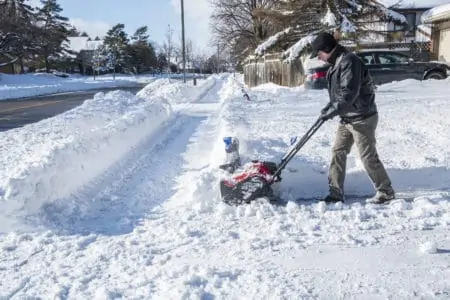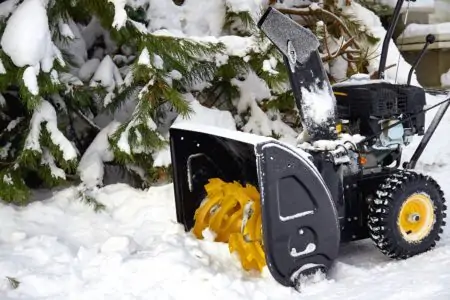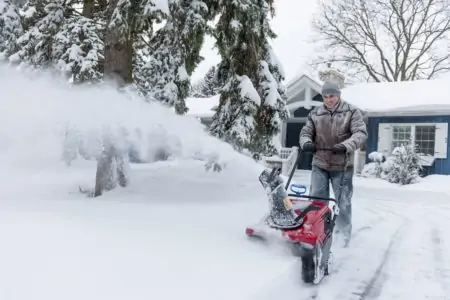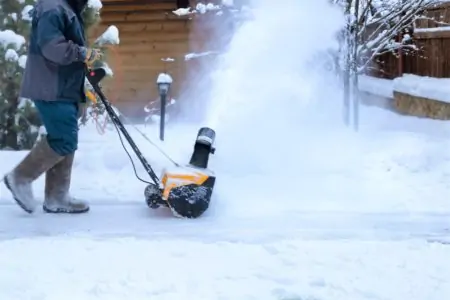
Clearing snow with a shovel is back-breaking work. The solution is an electric snow blower. We rate the best electric snow blowers on price, efficiency, capacity, and power to help you clear snow from your yard the easy way.
Here are the 5 best electric snow blowers that money can buy.
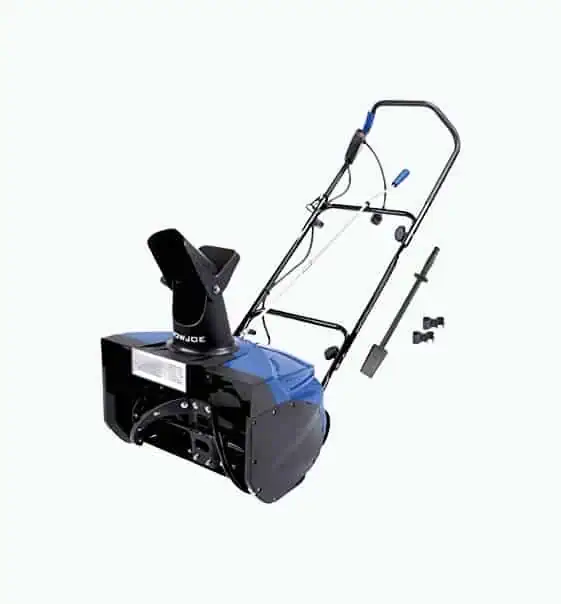
- 18-inch plowing width
- 15-Amp motor
- Maintenance-free
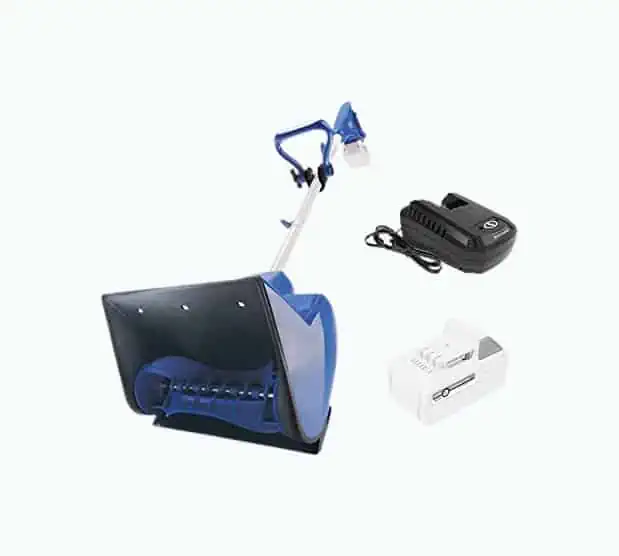
- Lightweight at 12 lbs
- 400-Watt motor
- 27 mins of runtime
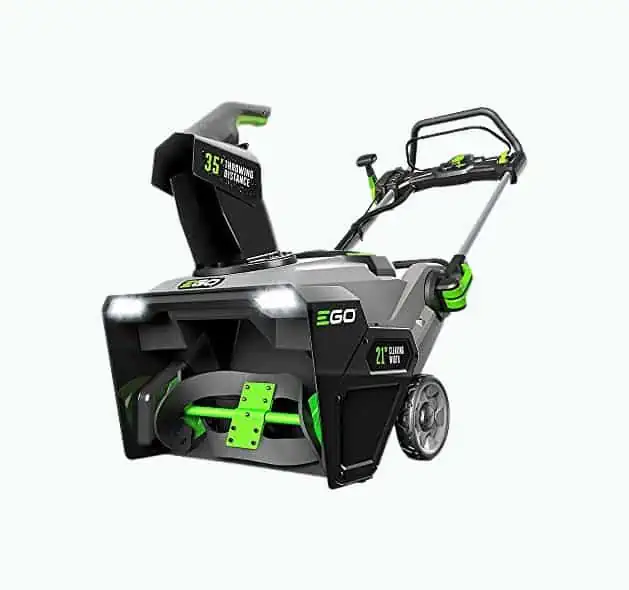
- 21-inch plowing path
- Variable speed control
- Has LED headlight
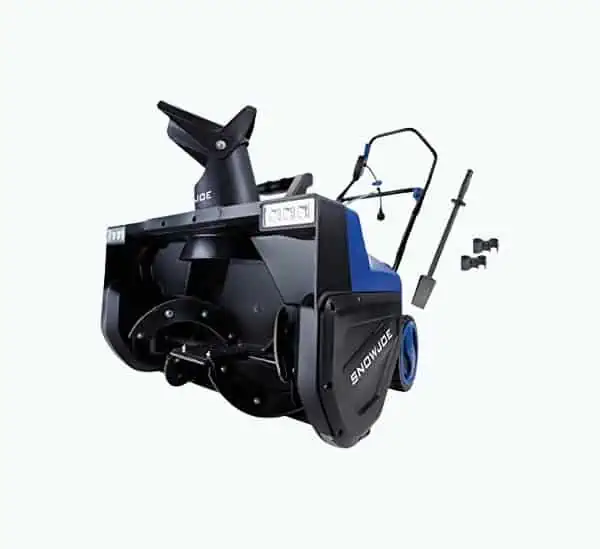
- 22-inch plowing path
- Powerful 15-Amp motor
- Remove 840 lbs snow/min
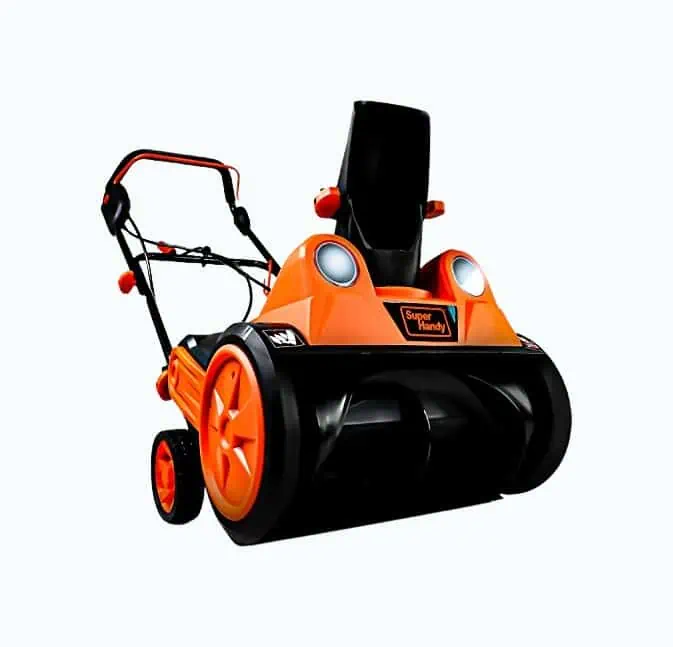
- 18-inch plowing clearance
- No tune ups needed
- Highly adjustable
Review Methodology: At Sensible Digs, we take pride in our comprehensive evaluation process. Our professional team employs thorough research, hands-on testing, and rigorous data analysis to assess and rank the best electric snow blowers on the market. We compare various models based on criteria such as power, performance, ease of use, design, and user experience. Our findings are backed by quantitative measurements and evidence, allowing us to provide an objective review. We consider key decision-making factors, such as snow clearing capacity, speed, and durability, and offer a benchmark for consumers to make the best choice. Trust in our experience and expertise to guide you to the ideal product for your needs.
The Best Electric Snow Blowers of 2024
Here is a selection of 5 excellent electric snow blowers.
Snow Joe SJ623E Single-Stage Snow Blower
Best Corded Electric Snow Blower
This Snow Joe hits the mark in so many ways. First, it is maintenance-free, requiring no gas, oil or tune-ups to keep it in perfect working order. So it scores well for convenience.
Second, it has a 15-amp motor with a steel auger, capable of shifting 720 pounds of snow per minute, which makes a considerable difference to the time it takes to clear your driveway. The plowing width is 18 inches, and the maximum depth is 10 inches.
The directional 180-degree chute throws the snow 25 ft, so keeping it away from your yard is a breeze, and you even get a headlight to keep you working as the light fades.
What We Like
Super-Convenient
When you compare this Snow Joe to gas snow blowers, you see why electric models are so convenient. It requires zero oil, gas, and tune-ups. It is the perfect machine for those non-mechanically minded.
Clearing Capabilities
With an 18-inch plowing width and a 10-inch depth, this Snow Joe delivers. It can sweep away 720 pounds of snow every minute, which is impressive.
Fantastic Price
Electric snow blowers win on price. Not all are as cheap as this model, but it certainly gives gas-powered machines a run for their money. This is about a tenth of the price of some top-end gas models.
What We Don't Like
Requires an Electrical Socket
The power cord will hamper your ability to travel with this blower. Unless you have an outside electrical socket, you might want to get this model only if you have a smaller yard. You could use an extension lead, but only to a maximum length of 100 feet.
Product Specs
| Weight (pounds) | 34 |
| Dimensions (inches) | 45 x 19 x 26 |
| Plowing clearance (inches) | 18 |
| Plowing depth (inches) | 10 |
| Voltage/amps | 15 amps |
| Throwing distance (feet) | 25 |
| Pounds of snow per minute | 720 |
| Price | $$ |
Our Ratings
User Experience
Snow Joe 24V-SS11-XR Cordless Snow Blower
Best Lightweight Electric Snow Blower
This is turning into the Snow Joe show. This compact and cordless model is the second of three to feature in the review. It is super-lightweight, weighing just 12 pounds, making it the ideal tool if you lack upper body strength.
It comes with a 400-watt motor, an 11-inch plowing width, and a 7-inch depth capability. It can throw the snow up to 20 feet, so while it isn’t the most powerful snow blower, it is the perfect tool for small yards and driveways.
This model can clear 2,025 pounds of snow per 27-minute battery runtime, so it falls well short of other models, but you would only buy this if you were either budget-conscious, dealing with light snowfall, or have a small yard.
What We Like
Weighs 12 Pounds
At just 12 pounds, you would have to go some way to better this for weight. It is the perfect tool for older people with reduced upper body strength. You could carry this blower with one hand.
Cordless Convenience
The battery gives you 27 minutes of runtime, so if you have a small yard or want to clear a specific area of the yard where there is no power socket, this is the perfect tool.
Battery and Charger Included
This model comes with a 5.0 Ah lithium-ion battery and charger, saving you money in the long run. You’d be surprised how many cordless snow blowers are sold without batteries and chargers.
What We Don't Like
Small Plowing Clearance
This snow blower is only ever going to suit the smallest yards. The plowing clearance is only 11 inches, which is half of the measurement of the featured larger model.
Relatively Expensive
Considering this is such a small and limited snow blower, it actually costs more than the 18-inch model we featured at the start of this review. Unless you need something this size, save your money and buy the other model.
Product Specs
| Weight (pounds) | 12 |
| Dimensions (inches) | 55.1 x 11.8 x 8.7 |
| Plowing clearance (inches) | 11 |
| Plowing depth (inches) | 7 |
| Voltage/amps | 24 volts |
| Throwing distance (feet) | 20 |
| Pounds of snow per minute | 2,025 pounds per charge |
| Price | $$$ |
Our Ratings
Personal Perspective
EGO Power+ SNT2100 Snow Blower
Best Cordless Electric Snow Blower
For a cordless snow blower, this model is a beast. It throws the snow over 35 feet, has a 21-inch plowing path, and can handle depths up to 13 inches. It has a high-efficiency brushless motor, so you get superior runtime and energy usage, as well as it being virtually maintenance-free.
It requires no oil, tuning, or gasoline. The only downside is this snow blower is sold minus the battery and charger, which adds a considerable amount to your overall spend. But it does have a push-button start and an LED headlight.
You also get variable speed to improve control, as well as allowing you to tackle different thicknesses of snow.
What We Like
21-Inch Plowing Path
The 21-inch plowing path means it is faster at removing snow from your yard. It also means you can tackle heavier snowfall with this machine. It also clears to a depth of 13 inches.
Variable Speed Control
Not all snow blowers have this feature. You can slow or speed up the snow blower to cater to different surfaces and thicknesses of snow.
Brushless Motor
Brushless motors are the latest technology to improve the performance of your cordless power tool. They are virtually maintenance-free and increase the runtime of your lithium-ion cells.
What We Don't Like
Battery and Charger Separate
Selling a cordless tool without the batteries or a charger is a bit like selling a car without an engine. You need the battery and charger, so why charge the added cost, unless it is a cynical ploy to charge you more money.
Very Pricey
Considering the battery and charger are separate, this is a hefty price to pay for a cordless snow blower. It significantly ramps up the costs.
Product Specs
| Weight (pounds) | 51 |
| Dimensions (inches) | 45 x 25 x 32 |
| Plowing clearance (inches) | 21 |
| Plowing depth (inches) | 13 |
| Voltage/amps | 56 volts |
| Throwing distance (feet) | 35 |
| Pounds of snow per minute | Not stated |
| Price | $$$$ |
Our Ratings
Community Feedback
Snow Joe SJ627E 22-Inch Snow Blower
Best Electric Snow Blower for Heavy Snow
Typically, electric snow blowers are not the best tools for clearing heavy snow, but this Snow Joe bucks that trend. It has a 22-inch plowing path and a maximum depth of 13 inches, so even if you get a foot of snow, this tool can help.
It has a 15-amp motor, which shifts 25 tons of snow per hour, so it is no slouch. That’s the equivalent of 840 pounds every minute! This is thanks to the steel auger that reaches speeds of 3,000 RPM.
You also get an LED headlight and an adjustable 180-degree chute. For such an impressive machine, you’d expect it to weigh a ton, but somehow Snow Joe has managed to pack all this performance into a 34.8-pound design.
What We Like
22-Inch Plowing Path
When you have a larger plot, clearing significant snowfall requires a snow blower with a 22-inch plowing path. It shifts more snow, speeding up the process.
Powerful 15-Amp Motor
The 15-amp motor powers this snow blower to remove 840 pounds of snow a minute. That equates to 25 tons every hour. That is a significant amount of snow.
Lightweight and Powerful
How Snow Joe manages to pack all this power into such a lightweight snow blower is surprising. It weighs just 34.8 pounds, which is significantly less than some models featured.
What We Don't Like
Limited by the Cord
The length of the power cord limits you, so all that extra clearance capability might be wasted unless you use an extension cable or have additional outside sockets in the yard.
Product Specs
| Weight (pounds) | 34.8 |
| Dimensions (inches) | 23.4 x 22 x 26 |
| Plowing clearance (inches) | 22 |
| Plowing depth (inches) | 13 |
| Voltage/amps | 15 amps |
| Throwing distance (feet) | 25 |
| Pounds of snow per minute | 840 |
| Price | $$$ |
Our Ratings
First-Hand Impression
SuperHandy Electric Snow Thrower Walk-Behind Blower
Best Budget Electric Snow Blower
As the budget option, expectations might be slightly lower for this snow blower. While it is the cheapest on the list, it is also the weakest in the performance stakes.
It has a 18-inch plowing clearance and can tackle a light dusting of snow to a maximum of 10 inches. The motor is rated at 15 amps and the polypropylene auger blades are abrasion resistant. The faster the auger rotates, the better the rate of snow collection.
It comes with two LED headlights and is crafted with ergonomic handle. The downside is the 25-foot power cable that severely hampers the distances you can travel with this snow blower.
What We Like
Super-Cheap
If you have the smallest of yards and want to spend as little as possible, try this SuperHandy. It won’t win any awards for performance, but it should give you enough power to clear away light snow.
No Tune Ups Needed
One of the reasons why people opt to have electric snow blowers is to get rid of the maintenance like those required from gas powered units.
Highly Adjustable
The throw angle and throw direction can be modified when needed. By simply turning the chute crank found under the handle bar, you can modify the direction of the discharge chute by 180 degrees.
What We Don't Like
25-Foot Cord
It only has a 25-foot power cable, so you need an extension lead to increase the reach or limit yourself to small space clearance only.
Product Specs
| Weight (pounds) | 30.4 |
| Dimensions (inches) | 22.58 x 18.65 x 17.38 |
| Plowing clearance (inches) | 18 |
| Plowing depth (inches) | 10 |
| Voltage/amps | 15 amps |
| Throwing distance (feet) | 25 |
| Pounds of snow per minute | 720 |
| Price | $ |
Our Ratings
User Experience
| Product | Best | Weight | Dimensions | Plowing clearance | Plowing depth | Volts/Amps | Throwing distance | Throw rate |
|---|---|---|---|---|---|---|---|---|
| Snow Joe Single-Stage Snow Blower | Corded | 34 lbs | 45 x 19 x 26″ | 18″ | 10″ | 15 A | 25′ | 720 lbs/m |
| Snow Joe SS11-XR Snow Blower | Lightweight | 12 lbs | 55.1 x 11.8 x 8.7″ | 11″ | 7″ | 24V | 20′ | 2,025 lbs/m |
| EGO Power+ Snow Blower | Cordless | 51 lbs | 45 x 25 x 32″ | 21″ | 13″ | 56V | 35′ | N/A |
| Snow Joe SJ627E Snow Blower | Heavy Snow | 34.8 lbs | 23.4 x 22 x 26″ | 22″ | 13″ | 15 A | 25′ | 840 lbs/m |
| SuperHandy Walk-Behind Blower | Budget Pick | 30.4 lbs | 22.58 x 18.65 x 17.38″ | 18″ | 10″ | 15 A | 25′ | 720 lbs/m |
Why Do I Need an Electric Snow Blower?
The alternative to an electric snow blower is a snow shovel. However, it will take forever to clear the driveway of the white stuff and place enormous pressure on your back and arms.
Electric snow blowers remove all the hassle. They are clean, convenient, require minimal maintenance, and above all, practical. Most modern electric snow blowers can throw up to 700 pounds of snow per minute. That’s pretty impressive!
The other great thing about electric snow blowers is they are cheaper than gas ones. And if you live in a built-up area or have close neighbors, an electric variety is much quieter than a gas-powered one.
Pros
- Electric snow blowers are easy to master and set up.
- They are ideal for clearing snow depths of 6 to 12 inches.
- They can throw snow up to 25 feet away, keeping your drive clear.
- Relatively affordable compared to gas snow blowers.
- Make light work of snow clearance, meaning you can ditch the shovel.
- Starts immediately on cold days without a pull-start.
Cons
- More expensive than using a snow shovel.
- They are limited to where they can reach because of the cord.
- Require a nearby electrical supply to plug into.
- Most models are not as powerful as gas-powered snow blowers.
- Cordless blowers have a limited charge time, restricting their runtime.

Types of Electric Snow Blowers
As we have mentioned, there are two types of electric snow blowers. You can get a corded version or a battery-operated model. So, what are the differences?
Cordless/Battery
Cordless snow blowers are the nearest thing to rival gas-powered machines. Thanks to the latest lithium-ion cell technology, they can go anywhere, provided you have somewhere to charge the battery.
Most cordless snow blowers throw the snow about 20 to 25 feet, have a depth range of 6 to 12 inches, and a plowing width of 12 to 22 inches.
Some models come with brushless motors. Traditional motors have brushes that wear out and increase your maintenance costs. These negative factors no longer exist with this new type of engine.
Plus, you get a more efficient performance and extended runtime of the lithium-ion battery. Brushless motors also last longer.
The biggest drawback with a battery-powered snow blower is that lithium-ion batteries hold a limited charge, typically giving you 30 to 40 minutes runtime at best. So, while you are free from power cords, you are still limited by the battery’s charge cycle.
Plus, lithium-ion batteries lose their potency in extremely cold conditions because freezing temperatures hamper the chemical reaction needed to create energy. At minus 40 degrees, some batteries can actually freeze.
Corded/Plug-In
As the name suggests, these types of snow blowers need an electrical supply and a nearby plug socket to operate. The upside is they never lose power or experience performance dip like the cordless models when the battery loses charge.
The other advantage is you don’t have to worry about keeping a battery charged. Simply take the snow blower out of the box, plug it in, and once you’ve read the instruction manual, you are ready to go.
You get the same performance levels from a plug-in as you would from a cordless snow blower, so the reason for buying one over the other comes down to the question of go-anywhere versus continuous runtime.
Another glaring disadvantage with a plug-in snow blower is the cord itself. While you are busy crisscrossing your driveway, you need to know where the trailing lead is to avoid severing it.
Take Note
How To Choose the Best Electric Snow Blowers
Getting to the bare bones of what makes an electric snow blower the best is tricky, but there are some basics you should keep in mind.

Motor Power
Corded models are rated in amperage. The typical range is between 10 and 15 amps, with the higher amperage being the more powerful motor.
For cordless machines, voltage is the king when it comes to power. You typically get the option of 40 and 60 volts, with the higher voltage being the more potent.

Plowing Width
The plowing width is the amount the blower cuts through the snow in one sweep. The wider the measurement, the more efficient the blower is at clearing the snow. Most electric snow blowers have a plowing width of between 12 and 22 inches, which is ample for sweeping small to medium yards.
Compare this to gas varieties, with 22 to 30-inch clearances, and you can see why electric models are better suited to smaller spaces.

Plowing Depth
The auger height determines the plowing depth of your snow blower. Most electric models have a depth range of 6 to 12 inches, although the lower end of the scale is more common.
The depth capabilities of your snow blower tell you whether it can handle the sort of snowfall you regularly get in your area. If you typically suffer from 2 feet of snow, an electrical snow blower is going to struggle.

Clearing Capacity
Knowing how much snow your blower shifts is crucial. You can measure it in pounds per minute or tons per hour. It tells you how much snow your given model clears in a specific period.
Expect to get a machine that can easily move 700 pounds of snow every minute. That should be enough to tackle the average size yard.

Throwing Capacity
Another key measurement of your snow blower’s success is how far it throws the snow. This is important because you need to make sure you aren’t dumping all that shifted snow back onto the surface you’ve just cleared.
Most electric snow blower’s have a distance capacity of between 20 and 30 feet.
Auger Type
The size and number of blades your auger has improves performance. The auger is the working head of your machine, and it rotates to scoop the snow into the blower.
Most augers are constructed from steel, so they are hard-wearing, but some have plastic elements, which weakens them. If it has 4 or more blades, it scoops snow faster and gets the job done quicker.
The RPM (revolutions per minute) of the auger helps to improve its efficiency. Most augers rotate at between 2,000 and 2,500 RPM.

Maneuverability and Weight
Electric snow blowers are single-stage machines with an auger that makes contact with the ground surface. It helps to propel the blower forwards, reducing strain on your back and arms.
Electric snow blowers are lighter than gas-powered ones. You can expect your blower to weigh between 40 and 60 pounds. Gas models can weigh as much as 200 pounds.

Better for Your Pocket
Electric snow blowers are a budget-friendly option compared to gas varieties. Gasoline models can cost upwards of $1,000 or $2,000. Electric snow blowers range from less than $100 to about $600.
It still sounds like a lot of money, but you can pick up an electrical snow blower for a quarter of the price of a gas model. So, in that sense, it is better for your pocket.

Other Features
The types of features you find on your snow blower depend a lot on your budget. But what if money was no object? What are the best features to have?
Headlight
Look for a headlight, so you can keep working as the light fades. It extends your clearing schedule, especially if you are battling to dig out the car before commuting to work.
Brushless Motor
Brushless motors increase the runtime of your cordless snow blower and improve its efficiency. You also get a more reliable engine compared to brushed varieties, with minimal maintenance requirements.
Multi-Directional Chutes
Multi-directional chutes are also handy to have. You can direct the snow spray in whichever direction you want. Get a chute that adjusts with the push of a button rather than a cumbersome lever you have to stop and pull with each change of direction.
Variable Speed
Variable-speed enables you to switch up and down the rate of your snow blower to tackle different snow depths and surfaces. It means you can clear decking and then move onto grass or concrete.
Electric Snow Blowers FAQs

Are Electric Snow Blowers Quiet?
Electric snow blowers are quieter when compared to their gas-powered counterparts. Whether corded or powered by batteries, these snow blowers will always be quieter than the roaring engine found on gas blowers.
They offer many other advantages, too, such as efficient power use, the fact that you don’t need fuel to operate them, and they are more eco-friendly because they don’t release toxic fumes.

What Is a 2-Stage Electric Snow Blower?
There is no such thing as 2-stage electric snow blowers, as they are only available in single-stage models. If you want to purchase a 2-stage snow blower, you have to choose a gas-powered model.
A 2-stage snow blower adds an extra step in the snow removal process, making it more efficient when dealing with ice or frozen snow.
For comparison, a single-stage blower will simply pick up the snow on the ground and throw it out of the equipped chute. 2-stage blowers pull the snow from the ground and pass it through an impeller that helps break up larger chunks before throwing them out the chute.
They also send the snow at a greater distance (up to 60 inches, compared to 36 inches for single-stage blowers).
The auger on a two-stage snow blower is typically made of metal, unlike the rubber tips of 1-stage models. That’s because the auger of a 2-stage blower doesn’t touch the ground.

Do Electric Snow Blowers Have to Stay Plugged In?
Electric snow blowers only have to stay plugged in if you’re using a corded model. These draw power from the nearest power outlet to “fuel” the motor and allow it to do its job.
If you want an electric snow blower that isn’t so reliant on power outlets the entire time, you should opt for a battery-powered model.
These work just like a smartphone: you plug them in to allow the battery to charge. Once the battery is full, you can use the blower for whatever runtime the battery can provide.
With most battery-powered blowers, you can get about one hour of battery juice before requiring a recharge. You can go as far away from a power outlet as you need to when you’re not using a corded snow blower.

Can I Leave an Electric Snow Blower Outside?
Leaving an electric snow blower outside isn’t ideal, but it is possible if you take proper precautions. First, leaving a snow blower directly on the cold ground is a bad idea.
You should find an elevated place for it. You can stack a few wooden palettes and store the snow blower on top of them. It’s also good to cover the snowblower with a waterproof tarp.
However, your garage or shed is the best place for a snow blower. If you don’t have either, try to find a place shielded from snow and rain.
Leaving an electric snow blower outdoors may decrease its lifespan. This, of course, depends on the typical weather conditions in your area.

Is a Gas or Electric Snow Blower Better?
This is a difficult comparison because the two products offer different advantages (and downsides), so making the right choice is personal.
Electric snow blowers are great if you care about the environment. Gas-powered blowers are known for their toxic emissions, and we can’t neglect the current pollution state of our planet.
Some argue that electric snow blowers are a poor choice because they need to be plugged to function. This is partially true, as electric blowers use battery power to work. When the battery is empty, plug it in for a recharge, and you’re good to go.
Electric snow blowers are also quieter compared to their gas counterparts, but they don’t require you to have gas at home all the time to fuel them. On the other hand, electricity is available in most people’s homes.
So far, it would seem that gas-powered blowers are a terrible idea, but they are very powerful and a great choice if you have freezing winters where you live.
Because gas-powered units are available in two-stage designs (a luxury that electric blowers don’t offer), they can break up large chunks of frozen snow and ice and throw them away further away from the chute.
You will never trip over the power cord with gas snow blowers, and they are highly durable. Their augers alone are made from rugged metal. They are louder than electrical units, and they need regular maintenance.

Which Brand of Electric Snow Blower Is Best?
Snow Joe is the best brand of electric snow blowers. Their products are made from quality materials, and the brand has a lot of experience making these tools.
Their products are equipped with powerful motors (at least when you compare them with the average electric snow blower), good warranty coverage, and great batteries for some of their models.