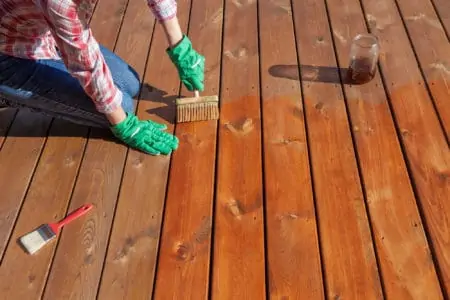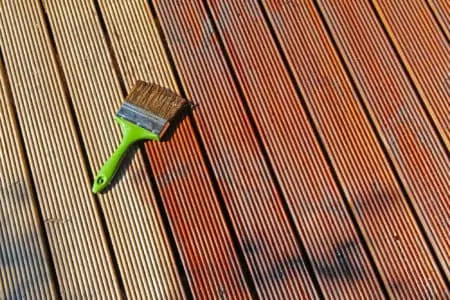
Weatherproofing your deck is crucial if you want it to last the distance. Protecting your wood keeps it looking its best and stops mold and mildew from growing and the wood rotting away.
You can buy deck treatments that care for the wood, but which one is the best? We review 7 of the best deck sealers, judging them for performance, weather resistance, and value.
- Comes in 5-gallon tubs for increased coverage
- It applies straight to the wood without a primer
- Applies with a brush, roller, or sprayer
- It contains a UV blocker to give added protection
- Dries crystal clear with a semi-gloss finish
- Forms a protective barrier against rain and moisture
- Ideal for exotic woods like teak and mahogany
- Contains iron oxide for increased UV protection
- Dries flat and translucent
- Low odor protects eyes and throat from irritants
- Superior UV protection
- Dries to the touch in 30 minutes
- Plant, animal, and marine life-friendly
- Low VOC, so safe and better for the environment
- Penetrates deep into the wood like an oil-based sealant
- Comes in 5 color choices
- Stain and sealant in one to save time and money
- Suitable for almost every type of wood
- Great 150 to 400 square-foot coverage
- Oil-based, so it penetrates deep into the wood
- 3-year deck and 4-year fence protection
Review Methodology: At Sensible Digs, we put our extensive experience to work, meticulously researching and hands-on testing the best deck sealers on the market. We analyze their performance, measure their durability, and compare them against a set criteria and benchmarks. Our in-depth reviews provide clear, fact-based evidence on each product’s unique features and effectiveness, helping you make an informed decision. From assessing water resistance to evaluating how design choices affect user experience, we ensure that our recommendations stand up to real-life use. Trust in our professional, objective evaluation for your deck sealing needs.
The Best Deck Sealers of 2024
With so many products to choose from, we have narrowed our selection to the best 7 sealers based on weatherproofing, type, and value for money.
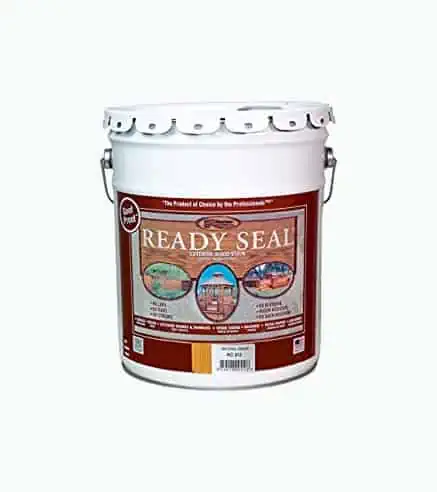
Ready Seal 512 5-Gallon Natural Cedar Exterior Sealer
Best Deck Sealer for Cedar
This sealer is ideal for cedarwood decks. It requires no primer, saving you precious preparation time, and it can be applied using a brush, sprayer, or roller.
This sealer is easy to apply and requires no back brushing, and is guaranteed never to leave lines, runs or streaks. You don’t even need to worry about the wet-line application because it will self-blend, and it can go on in most temperatures within the acceptable range.
You don’t have to dilute or thin it, and when you need to lay down another layer, you don’t need to sand.
The only thing to watch for is when you initially coat your deck; the color is very dark. Don’t panic. It takes 14 days for the true color to appear, so you need a little patience. Between coats, you also need to wait 48 to 72 hours for the sealer to cure.
This cedar deck sealer comes in 5-gallon tubs, so you should have enough to last you well into the new season when the deck needs restaining.
Pros
- Comes in 5-gallon tubs for increased coverage.
- It applies straight to the wood without a primer.
- Applies with a brush, roller, or sprayer.
- Guaranteed never to leave streaks or runs.
Cons
- It takes 48 to 72 hours to dry between coats.
- 5 gallons might be too much for smaller jobs.
Product Specs
| Size | 5 gallons |
| Type | Oil |
| Coverage | 900 sq ft plus |
| Drying time | 48 to 72 hours |
| Price | $$$ |
Our Ratings
User Experience
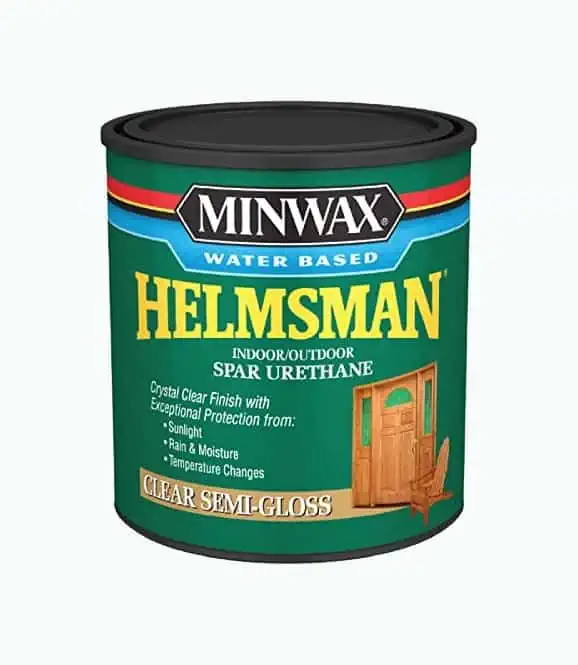
Minwax Water-Based Helmsman Spar Urethane
Best Water-Based Deck Sealer
This Helmsman sealer contains a UV blocker that blocks the graying effects of the sun. It also forms a protective barrier against moisture and rain.
It dries crystal clear, ideal for light-colored wood and surfaces where you want to highlight the grain pattern. You can use this sealer indoors and out, on window and door frames, kitchen countertops, and garden furniture.
This one comes in 1-quart tins, so it could be costly to cover the entire surface if you have a large deck area. It’s water-based, so it has a low VOC and won’t irritate your eyes and nasal passages.
This product has a semi-gloss finish, and you can buy it in gloss, regular, and satin.
Pros
- It contains a UV blocker to give added protection.
- Dries crystal clear with a semi-gloss finish.
- Forms a protective barrier against rain and moisture.
- It comes in 1-quart tins, which is ideal for small jobs.
Cons
- It could be costly if you are covering a large deck.
Product Specs
| Size | 1-quart |
| Type | Water |
| Coverage | Not stated |
| Drying time | 4 hours |
| Price | $$ |
Our Ratings
Personal Perspective
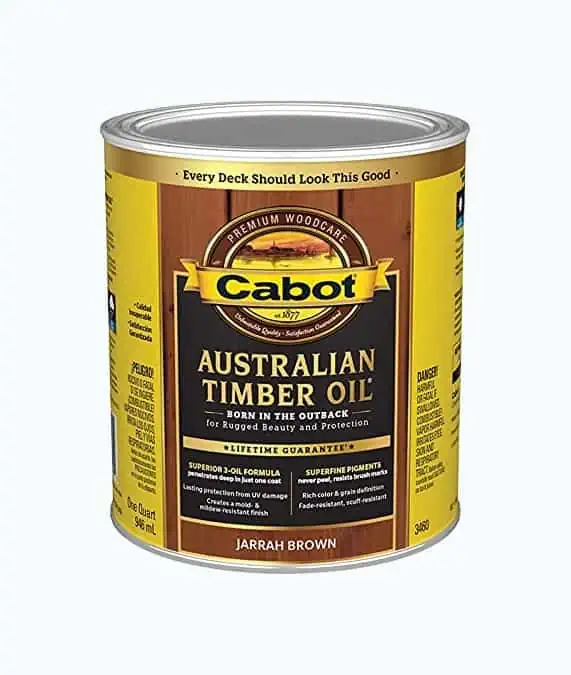
Cabot Australian Timber Oil Stain
Best Oil-Based Deck Sealer
This translucent treatment is the perfect candidate if you have an exotic wood deck, like teak or mahogany. It penetrates deep into the wood to protect from within while enhancing the grain patina.
The formula contains iron oxide pigments to increase UV protection, which is important if you live in an area with a lot of sunshine. It dries to a flat, translucent finish, and you get approximately 400 to 600 square feet of coverage for smooth surfaces and 250 to 350 square feet for rough surfaces.
It contains linseed oil for penetration, long-oil alkyds for increased durability, and pure South American Tung oil for color. It comes in a 1-quart tin, so if you have a large deck area, you might find this sealer is too expensive.
Perhaps it’s better for smaller projects.
Pros
- Ideal for exotic woods like teak and mahogany.
- Contains iron oxide for increased UV protection.
- Dries flat and translucent.
- A 1-quart bottle is perfect for small projects.
Cons
- It could be costly if you are covering a large deck.
Product Specs
| Size | 1-quart |
| Type | Oil |
| Coverage | 400 to 600 square feet |
| Drying time | 24 hours |
| Price | $$ |
Our Ratings
Community Feedback
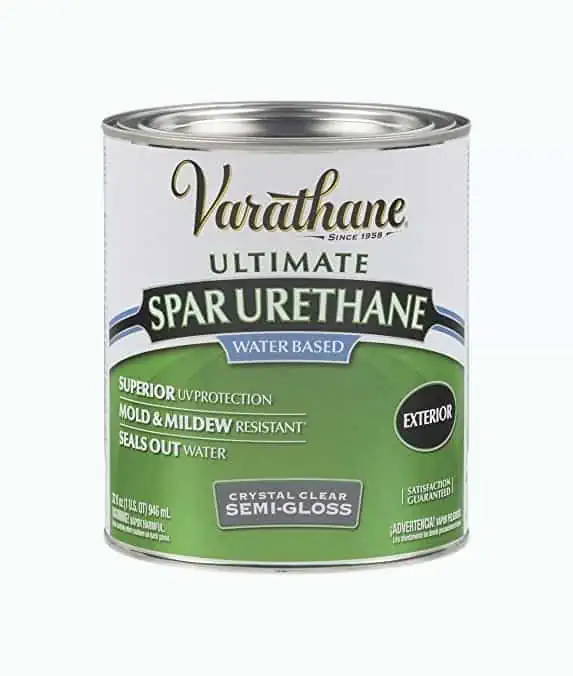
Rust-Oleum 250141H Ultimate Spar Urethane Deck Sealer
Best UV Protection Deck Sealer
Rust-Oleum is a well-known and trusted brand in the US. This is a water-based poly protector that has enhanced UV protection to stop your deck from fading and cracking.
This is a low-odor sealant that cleans up with soap and water. The first coat dries to the touch within 30 minutes, and you can recoat within 2 hours. It covers up to 87 square feet, so you don’t get the same quantities as other products, but it is ideal for small projects.
When the topcoat cures, it seals the wood, protecting it from UV rays. It won’t fade or yellow and stops mold and mildew from forming.
You can get gloss, semi-gloss, and satin finishes, and it applies with a brush, roller, or sprayer. The big downside is the recommended 4 coats. For such a small tin, you will seriously ramp up your costs if you want to achieve the highest levels of protection.
Pros
- Low odor protects eyes and throat from irritants.
- Superior UV protection.
- Dries to the touch in 30 minutes.
- A 1-quart bottle is perfect for small projects.
Cons
- It could be costly if you are covering a large deck.
- Requires 4 coats, which limits your coverage.
- It only covers 87 square feet, which is less than the competition.
Product Specs
| Size | 1-quart |
| Type | Water |
| Coverage | 87 square feet |
| Drying time | 2 hours |
| Price | $$ |
Our Ratings
First-Hand Impression
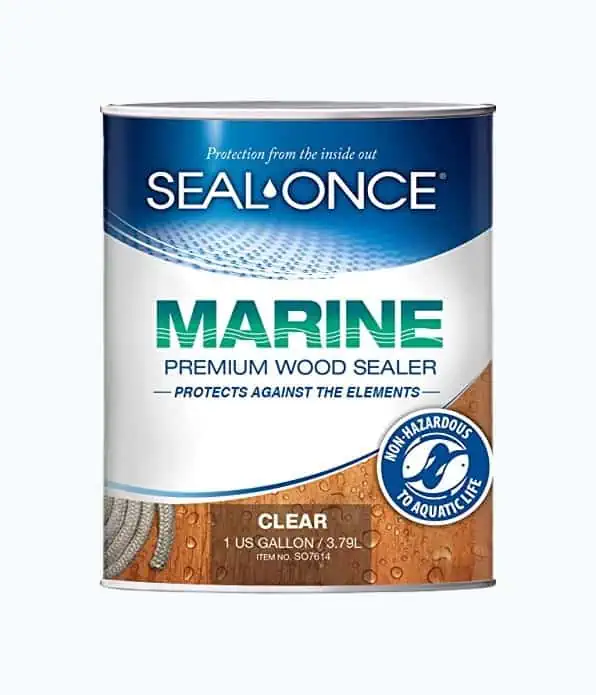
Seal-Once Marine 1-Gallon Penetrating Wood Sealer
Best Deck Sealer for Treated Wood
If you have treated wood, you need a product that will preserve and protect. This Marine-grade sealant is ideal. It utilizes nanotechnology to penetrate to a cellular level. It performs like an oil-based sealant but without harmful chemicals.
This product is low-VOC, pet and child-safe, and non-harmful to marine life. It has been specially formulated to perform in and around saltwater, so it’s ideal for staining and protecting wooden decks and docks.
You get 9 color choices, ranging from natural and coastal to black. Unfortunately, this sealant is sold in 1-gallon tins, so at the current price, it is double the amount of the 5-gallon Ready Seal, making it an expensive option.
On the plus side, the company is so confident this product performs, they guarantee the vertical elements of your woodwork are protected for up to 10 years.
Pros
- Plant, animal, and marine life-friendly.
- Low VOC, so safe and better for the environment.
- Penetrates deep into the wood like an oil-based sealant.
- Ideal for boat decks and docks.
- 10-year protection on all vertical surfaces.
Cons
- At the current per-gallon price, this is an expensive option.
Product Specs
| Size | 1-gallon |
| Type | Water |
| Coverage | 250 to 350 sq ft |
| Drying time | 1 hour |
| Price | $$$$ |
Our Ratings
User Experience
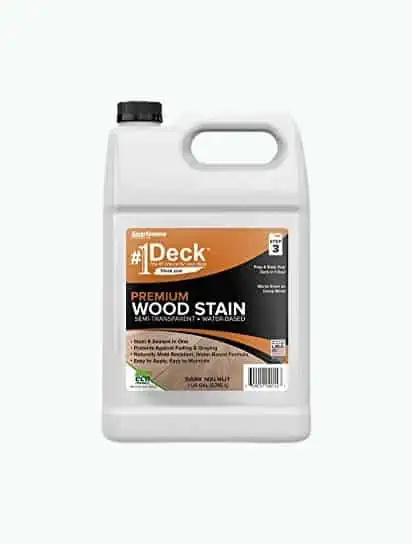
#1 Deck Premium Semi-Transparent Wood Stain
Best Deck Sealer for Old Decks
Older decks need superior protection, and this #1 Deck Wood Stain does an excellent job of reviving and safeguarding your woodwork. You can use it on almost every type of wood, including hard and softwood.
It prevents staining and fading from UV light, making it ideal for tired deck boards. It comes in 5 different colors that dry flat to enhance your wood grain.
This is a stain and sealant in one, and because it’s low-VOC, it produces minimal odors and is safe for the environment. And the cleanup is so simple. Soap and water will get your brush, roller, or sprayer clean.
It even works on damp wood so that you can minimize the waiting time between cleaning and staining. This sealant comes in 1-gallon containers, so if you have a significant deck, you might need some spare bottles.
The coverage is pretty small, at just 150 square feet, so you will need more than one bottle to cover larger decks.
Pros
- Comes in 5 color choices.
- Stain and sealant in one to save time and money.
- Suitable for almost every type of wood.
- Works on damp wood, speeding up cleaning and staining.
Cons
- It comes in a 1-gallon container, so it’s better for small projects.
- Limited coverage means you’ll need extra bottles.
Product Specs
| Size | 1-gallon |
| Type | Water |
| Coverage | 150 sq ft |
| Drying time | 1 hour |
| Price | $$$ |
Our Ratings
Personal Perspective
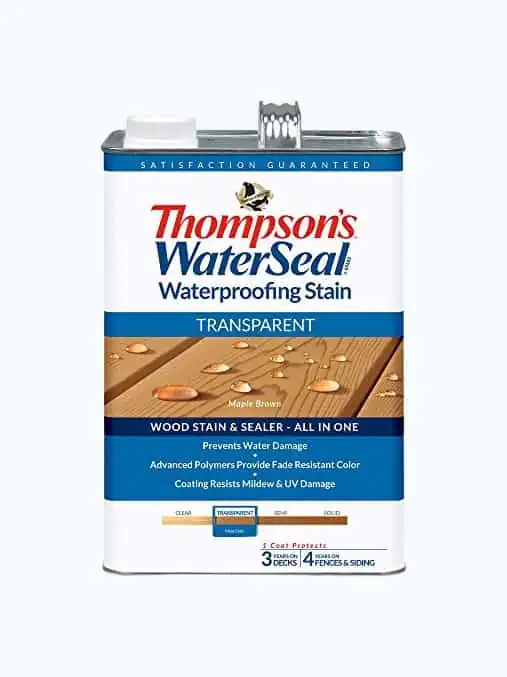
Thomsons Waterseal Transparent Waterproofing Stain
Best Deck Sealer for Waterproofing
This Thomsons is oil-based, so it penetrates deep into the wood, protecting against water damage. It’s a stain and sealant in one, so you get the best of both worlds.
You can apply it with a brush, roller, and sprayer, and the polymers in the formula repel water better than most comparable products. It works to protect fences, decks, outdoor furniture, and all other exterior wood.
You can get this sealant in 5 color options, from acorn brown to harvest gold. Thomsons claim it protects decks for 3 years and fences and wooden sidings for up to 4 years, and they recommend after one coat only, and your woodwork is resistant to moisture.
You get between 150 and 400 square feet of coverage per gallon, and depending on the quality of the wooden surface, a 1-gallon tin goes a long way.
On the downside, some customers have questioned the delivery service because their can arrived dented and damaged.
Pros
- Great 150 to 400 square-foot coverage.
- Oil-based, so it penetrates deep into the wood.
- 3-year deck and 4-year fence protection.
- 5 color options to choose from.
Cons
- Comes as a 1-gallon tin, so better for small projects.
- Some customers reported delivery issues.
Product Specs
| Size | 1-gallon |
| Type | Oil |
| Coverage | 150 to 400 sq ft |
| Drying time | 1 hour |
| Price | $$$ |
Our Ratings
Community Feedback
| Product | Best | Size | Type | Coverage | Drying time | Price |
|---|---|---|---|---|---|---|
| Ready Seal 512 5-Gallon Natural Cedar Exterior Sealer | Best for Cedar | 5 gal. | Oil | 900 sq ft plus | 48 – 72 hours | $$$ |
| Minwax Water-Based Helmsman Spar Urethane | Best Water-Based | 1-quart | Water | Not stated | 4 hours | $$ |
| Cabot Australian Timber Oil Stain | Best Oil-Based | 1-quart | Oil | 400 – 600 sq ft | 24 hours | $$ |
| Rust-Oleum 250141H Ultimate Spar Urethane Deck Sealer | Best UV Protection | 1-quart | Water | 87 sq ft | 2 hours | $$ |
| Seal-Once Marine 1-Gallon Penetrating Wood Sealer | Best for Treated Wood | 1-gallon | Water | 250 – 350 sq ft | 1 hour | $$$$ |
| #1 Deck Premium Semi-Transparent Wood Stain | Best for Old Decks | 1-gallon | Water | 150 sq ft | 1 hour | $$$ |
| Thomsons Waterseal Transparent Waterproofing Stain | Best for Waterproofing | 1-gallon | Oil | 150 – 400 sq ft | 1 hour | $$$ |
How To Choose the Best Deck Sealer
What are the important factors that help you decide which deck sealer is right for you? We focus on the crucial features.

Oil-Based vs. Water-Based
Oil-based deck sealers penetrate deeper into the wood to protect the entire board rather than just the surface. They are the best choice if you live in an area of high rainfall. Because the sealer absorbs into the wood, it is more robust because there is no top layer to chip or crack.
Oil-based deck sealers can be applied with a sprayer or a brush, so you get many application choices. It also goes on easier.
Water-based deck stain is better if you live in areas with a high concentration of sunshine. UV fades the wood and causes it to dry and crack. Because a water-based deck sealer creates a protective layer on the top of the wood, it stops the UV from penetrating the wood.
Water-based sealers can be applied using a brush, roller, or sprayer, so they are easy to use, and because they form a top layer, it spreads easier. The downside is it also chips and cracks more readily, which is bad if it rains and water gets into the wood.

Ease of Application
Water-based sealers are easier to apply and more forgiving if the wooden surface is less than perfect. However, it is still advisable to remove old paint and staining before applying the sealer.
Oil sealers require a little more preparation work before you can paint the deck. Wax or old stains can inhibit the sealer from penetrating the wood. Also, you need to make sure the deck is totally dry because it causes the oil sealer to bubble, which stops it from soaking in.
Oil-based sealers typically go on with a brush, although you can get some sealers that are compatible with sprayers.

Environmental Concerns
Oil-based sealers are more harmful to the environment because they emit VOCs (volatile organic compounds) that irritate your eyes and throat. Water-based versions give off far fewer odors, making them more user-friendly.

Ease of Cleaning
If you want a deck sealer that’s easy to clean, water-based versions wash off with soap and water. Oil varieties require thinner and mineral spirits to get your brush clean.

UV Protection
The sun damages wood by drying it out, causing it to crack and warp. Typically, water-based sealers offer better UV protection than oil-based stains because they form a protective layer on the surface of the wood so the sun can’t get through.

Number of Coats
Most deck sealers require two coats to give you the best protection against the elements. You can buy products that offer full protection after one coat, but that’s the exception rather than the rule. Getting a one-coat sealer is a time-saver.
The number of coats you need to apply also depends on the surface of the deck. If there are ridges for extra grip, it will take more effort and more sealer to get a complete covering.

Drying Time
Once the sealer is on, how long does each layer take to dry?
Water-based sealers typically dry in about 1 to 3 hours if the temperature is between 60 and 90 degrees Fahrenheit. The humidity level should be 50 or lower.
You can apply a second coat within a few hours, but you should wait up to 24 hours for the sealer to cure. You can then place heavy furniture on the deck.
Oil-based sealers take on average 4 to 12 hours between layers, but it is advisable to wait 24 hours before applying a second coat. You can buy sealers with fast-drying additives that speed up the drying time, but you should wait 72 hours for the sealer to cure before walking on the deck.
How To Apply Deck Sealer
First, you should ensure the wood’s surface is prepared, which means sanding rough surfaces. Then, apply the deck sealer in thin layers if you are using a brush or roller, working on 3 boards width at a time.
If you are color matching to cover a larger area, it might be an idea to mix a couple of tins to get a consistent color. Sometimes batches vary slightly, and it will show when the sealer dries.
You should thin the paint using either water or mineral spirits for sprayers, depending on whether you are using oil or water-based sealers. You should work in vertical lines, moving up and down the deck boards, holding the sprayer a minimum of 12 inches from the surface.
For larger decks, choose the nozzle with a minimum of 10 to 12-inch fan so that you get a speedy result.
FAQs

How Often Should You Seal Your Deck?
You should seal your deck every year to keep it in tip-top condition, but you could probably get away with it every other year if you do the job right and give it a thorough coating. A lot depends on the harshness of the weather in your area.
UV and prolonged rainfall will eventually take their toll on the deck.

Is It Better to Stain or Seal a Deck?
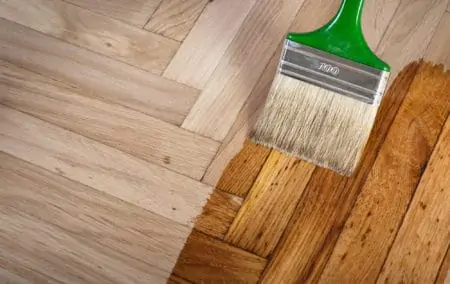
It comes down to preference. Staining a deck penetrates deeper into the wood, protecting from within. Staining lasts longer and is easier to reapply.
Sealing the deck gives 100 percent UV and water protection because it creates a sealed layer that sits on top of the wood. However, it chips and flakes easily, opening up weak spots for water and UV light to penetrate.

What Is the Best Way To Put Sealer on a Deck?
You can apply sealer in 3 ways: paint it on, use a roller or paint pad, or use a sprayer. The sprayer is the quickest method, although you will get overspray, and it can be messy. The most precise way is to use a paintbrush, although this takes longer.

Should You Seal Underside of a Deck?
It’s not necessary to seal the underside of the deck. The primary reason for protecting the wood is to stop rain and UV light from rotting, drying, and fading the wood. The underside does not see these elements and so remains protected.