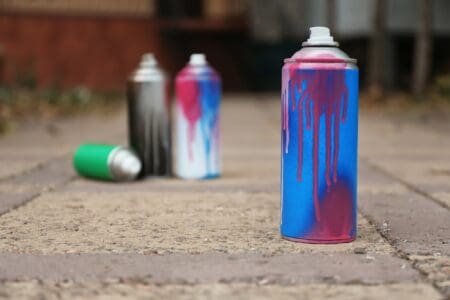
Have your kids finished spray painting their school project and left bright reminders behind? Or perhaps your DIY project is the culprit behind the spray paint on the driveway.
Whatever the cause, you’ll want to get rid of that spilled paint without damaging the concrete. We’ll show you how to get spray paint off the driveway using different products and methods.
Key Takeaways
- Act fast to remove spray paint from concrete driveways using soap and water, graffiti remover, or paint thinner.
- For stubborn spray paint, try using a pressure washer, sandblaster, or angle grinder with caution.
- Avoid using vinegar and bleach on concrete as they can cause damage or unwanted stains.
- Always wear protective gear and follow safety precautions when using chemicals or power tools during the removal process.
Does Spray Paint Wash Off?
You can wash spray paint off the driveway, be it latex or acrylic. How easy or difficult the process depends on how long the paint has been sitting there.
Because it is porous, cement takes on paint quite well. Therefore, you will have a better chance of removing the paint if you attend to it as quickly as possible.
How to Get Spray Paint Off the Driveway
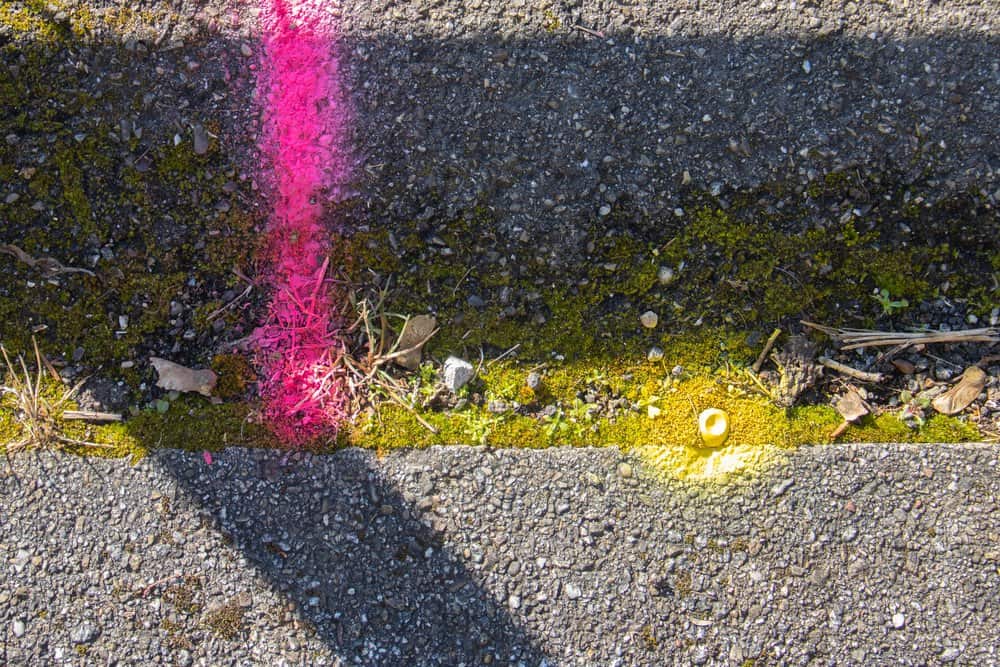
There are a few ways you can do it.
What You’ll Need
- Water.
- Soap.
- Graffiti remover.
- Paint thinner.
- TSP.
- Pressure washer.
- Garden hose.
- Hard-bristle scrub brush.
- Angle grinder.
- Sandblaster.
- Protective gear.
- Dry rags.
With Soap and Water
Did you know you can remove spray paint from the driveway with household items? Dish soap and water is surprisingly effective in removing spray paint off a driveway.
It works exceptionally well for concrete driveways if you act swiftly and have the necessary knowledge.
- Clean the driveway using a broom or a shop-vac.
- Take a firm bristle scrub brush and a bucket of soapy water and start scrubbing the area.
- Rinse the area you’ve finished scrubbing and use a cloth to pat it dry.
- Repeat the scrubbing process as needed until all the paint comes out.
With Graffiti Remover
Graffiti removers, like this Graffiti Solutions Elephant Snot, explicitly designed for porous surfaces, are one of the most effective methods for removing spray paint from the surface.
- Apply the solution to the painted area using a roller or brush.
- Allow it to sit on the surface for a minimum of 15 minutes, but longer in colder temperatures.
- Grab a stiff bristle brush and begin scrubbing in circular motions to agitate the paint.
- Use a power washer as the final step to remove the paint and clean the surface.
With Paint Thinner
Paint thinners remove paint from various surfaces, including concrete, by “thinning” or otherwise breaking down the paint. Because it is a solvent, paint thinner can dissolve various substances, including the paint itself.
- Sweep the surface, or wipe it down with a damp cloth, to remove any excess dirt.
- As paint thinners vary, ensure you follow the application directions listed on the label to apply it to the driveway.
- Wipe or scrub the paint until it is gone, making sure to start with a clean part of the cloth each time.
Important
If your driveway is in an enclosed area, or you’re using this method in a garage, be sure it’s well ventilated.
With TSP
When it comes to removing stains from spray paint, trisodium phosphate (TSP) is the product of choice. It works quite well as a solution to remove spray paint from your concrete driveway.
- Combine one gallon of hot water with a quarter cup of TSP.
- Use a firm scrub brush with non-metal bristles to scrub the paint off.
- Apply additional TSP mixture to the painted area and allow it to soak for 20 to 30 minutes.
- Repeat the scrubbing process, adding more of the TSP mixture if necessary.
- Rinse the concrete surface with warm water.
Take Note
Always use protective gear to prevent TSP from irritating your skin, eyes, and airways.
With Asphalt Sealer
This product, also known as blacktop sealer, applies a layer of protection over the top of the asphalt pavements on your property.
Consider it the equivalent of sunscreen for asphalt. The pavement is shielded from the destructive effects of the sun’s ultraviolet (UV) rays and kept from cracking by applying one or two coats of asphalt driveway sealer.
However, people have learned that you can use asphalt sealer to cover paint problems, such as graffiti. This is because it’s a thick, tar-like sealer with a solid black color. Basically, black paint.
- Sweep your driveway of major dirt and rocks.
- Pour some sealer onto one corner of the driveway and use a large squeegee to spread it around. Continue doing this for the whole driveway, working backward.
- Let it dry for at least 24 hours.
By Pressure Washing
If you have tried scrubbing and paint remover on your paint, and it still won’t budge, you are dealing with some extremely strong spray paint.
Utilizing a pressure washer to scrub the paint out of every nook and cranny of your concrete is the most effective course of action. To accomplish this:
- If you don’t already have a power washer and don’t want to invest in one, you can rent one from the hardware store as a cheaper alternative.
- Connect the power washer to your garden hose.
- Adjust the pressure to 3,000 PSI.
- Before you get the spray wand too close to the concrete, give it a test spray at a farther distance first.
- Always maintain a distance of at least 12 to 18 inches from the concrete when using your spray nozzle.
- Use the power washer at an angle to remove the paint off the concrete surface.
By Sandblasting
Using a sandblaster to remove spray paint requires experience because it can chip away at multiple layers of concrete if done incorrectly. Blasting the concrete too much might alter its appearance and damage its surface.
Think About Safety
Make sure you wear gloves, glasses, and thicker clothing. This will protect you from rock shards and harmful dust.
- Put the protective gear on.
- Turn on the sandblaster a few feet away from the stained area.
- Move closer to the area and spray the paint as you get closer.
- As you focus on the region that has been spray painted, quickly move the nozzle used for sandblasting back and forth.
- Continue carrying out these steps until all the paint has been removed.
- Use the wet/dry vac to collect the ensuing dust from the concrete.
- You can further enhance its cleanliness by using a pressure washer on it.
By Angle Grinding
Keep In Mind
The top layer of concrete will be removed along with the paint if you choose to use this procedure.
- When working with an angle grinder, you must safeguard your eyes, ears, and hands by donning protective gear.
- Install a specialist paint stripping wheel onto the angle grinder.
- Place the angle grinder so the flat part of the wheel will come into contact with the concrete.
- To remove surplus paint from the concrete, ensure your angle grinder is running before carefully bringing it into touch with the surface.
- Take your time and be careful while you work. Immediately stop using the angle grinder if it looks like the concrete is taking damage.
FAQs

Will Vinegar Remove Spray Paint from Concrete?
Many people advise against applying vinegar on concrete, especially on a concrete garage floor that has been sealed. If not properly diluted, the acid could remove the seal coating.

Will Bleach Remove Spray Paint from Concrete?
Bleach should never be used to remove paint from concrete, as the concrete will likely end up with bleach stains. Applying a paint stripper or TSP may keep your concrete’s color and appearance intact.
In the End
Having spray paint on the driveway is a nuisance, and, for people who want a clean-looking yard, it’s simply a no-go. But now that you know how to remove spray paint from the driveway, it’s time to get to business!