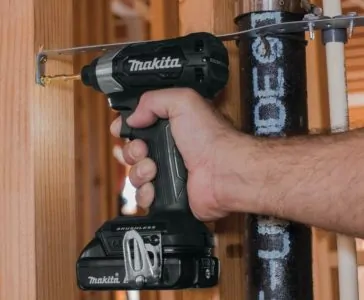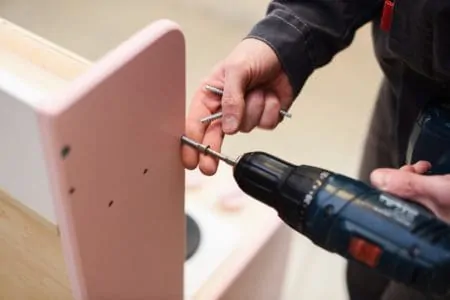
Screw guns are specialist tools designed to drive screws into materials quickly and easily. They make it possible to install drywall and decking far more quickly, making these tools invaluable for professionals.
The right screw gun will drive screws with precision and countersink them to sit level with the surface for a neater finish. However, if you have never bought one before, you might need some tips on how to find a model that is suitable for your needs.
To help you make the right choice, we have reviewed seven of the best screw guns that are currently available. We chose these tools for their torque, speed, whether they are corded or cordless, and any extra features such as automatic screw loading.
- Brushless motor
- Extreme protection technology
- All-metal gears
- Multi-purpose
- 30-piece accessory set
- Interchangeable battery
- Less than 7 inches long
- Weighs just 1.4 pounds
- 20 clutch settings
- 4,400 RPM
- Brushless motor
- Ergonomic design
- Universal chuck
- 530-inch pounds of torque
- Battery & charger included
- Auto-feed magazine
- 2,500 RPM
- 1,000-screw magazines
- Depth stop
- American-made
- All-steel gears
Review Methodology: At Sensible Digs, we undertake intense research and hands-on testing to provide an in-depth analysis of the best screw guns on the market. By comparing product performance, design, and key decision-making factors, we rank and review each screw gun based on a set of defined criteria. Our professional experience and the quantitative data we gather help us evaluate each product from a user’s perspective. This process allows us to identify standout features and explain what sets a certain screw gun apart from its competitors. By providing these facts, we help you make an informed purchasing decision, ensuring you find a screw gun that perfectly suits your needs. We believe in transparency and honesty, using our findings and evidence to recommend the best screw guns available. Trust our assessment and make a sensible choice with Sensible Digs.
The Best Screw Guns of 2024
If you need to insert multiple screws quickly, a screw gun will be the ideal tool. To help you choose, we have reviewed seven of the best screw guns you can buy today, chosen for their power, whether they are corded or battery-powered, and extra features such as automatic screw loading.
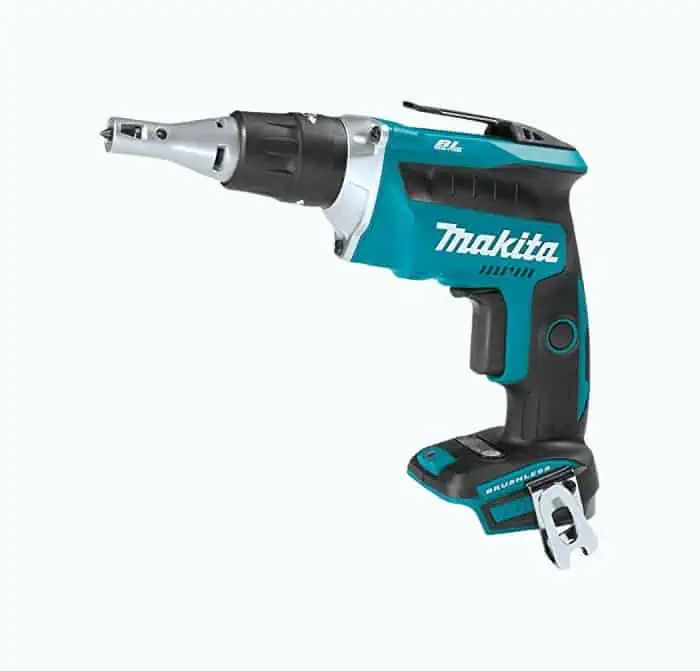
Makita XSF032Z LXT Cordless Screw Gun
Best Cordless Screw Gun
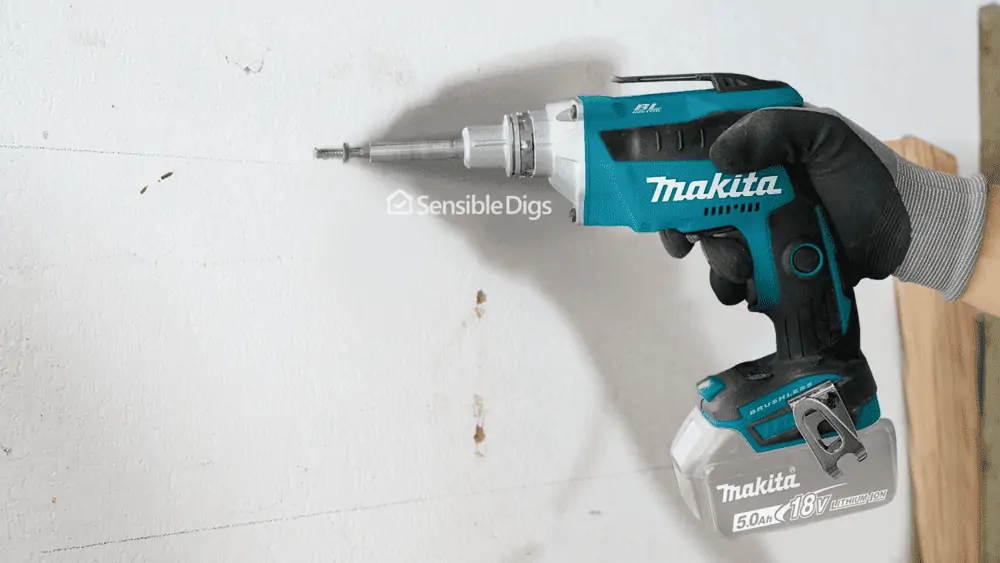
This Makita cordless screw gun has received many positive user reviews and will enable you to drive in numerous screws quickly, wherever you need them. It has an 18V brushless motor that helps you work for longer between charges.
The tool’s nose is adjustable, so you can choose your desired screw depth and avoid overtightening. A battery power gauge displays the current charge level and there is a lock-on feature for continuous use.
What We Like
Brushless Motor
Brushless motors are more efficient and require less maintenance. They also last longer between charges, increasing the efficiency of your screw gun.
Extreme Protection Technology
Makita has designed this screw gun with Extreme Protection Technology (XPT) to protect it against dust and moisture. This means it is well-equipped to cope with the rigors of a professional job site.
All Metal Gears
The tool’s gears are all metal, as is the housing, which means it can cope with the toughest screwing jobs. The quality of these components also provides more efficient power delivery.
What We Don't Like
Separate Battery and Charger
Makita sells this screw gun without a battery or charger, so you will need to buy them separately. These essential components aren’t cheap and could double the amount of money you spend.
Product Specs
| Weight | 3 pounds |
| Dimensions (inches) | 10 x 5 x 6 |
| Batteries included | No |
| RPM | 4,000 |
| Brushless motor | Yes |
| Price | $$$ |
| Warranty | 3-year |
Our Ratings
User Experience
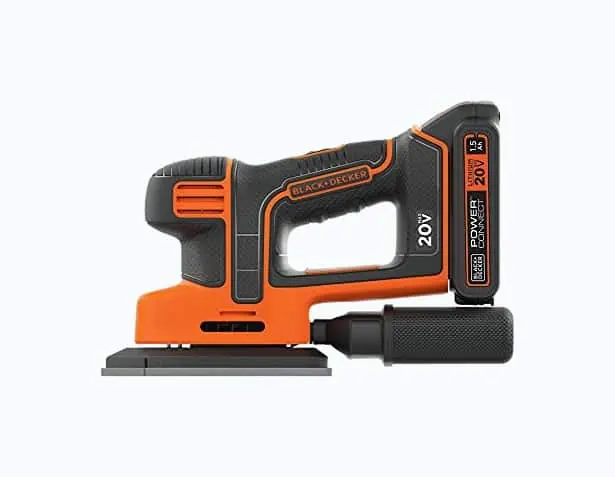
Black and Decker 20V Max Drill/Driver
Best Budget Screw Gun
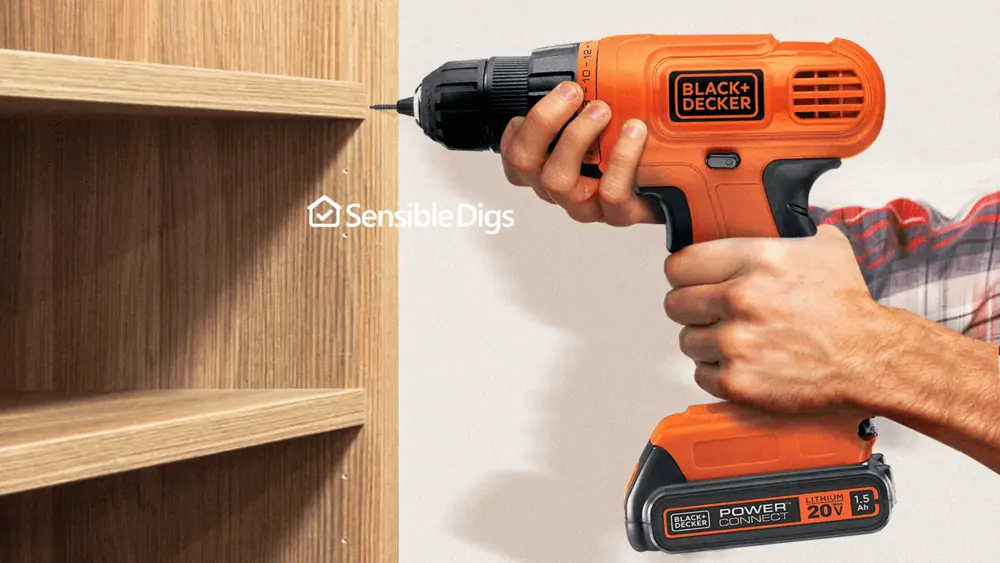
This is a drill/driver rather than a specialist screw gun but it is very effective at driving screws into wood, drywall, and metal. For a versatile tool from a famous brand, it is remarkably affordable with no loss of quality.
This driver has a 20V motor that spins the chuck at up to 750 RPM. There are 24 clutch positions to adjust the tool’s torque and avoid burning out the motor, which is important when driving screws straight into hard materials. This product also includes a 30-piece accessory set, which contains every screwdriver bit you are likely to need.
What We Like
Low Cost
This versatile Black+Decker drill/driver is considerably cheaper than many specialist screw guns. It also includes a battery, unlike some of its competitors.
Multi-Use
If you don’t need to drive screws frequently, this tool can also drill holes and perform many other roles. You simply need to fit a different attachment into the universal chuck and you will be ready to start working.
Accessory Set
The 30-piece accessory set provides various bit types that will enable you to drive different screws, drill holes, and secure other fittings.
Interchangeable Battery
This tool’s lithium-ion battery is interchangeable with other cordless Black+Decker tools, so it is a good option if you already own one.
What We Don't Like
Low Torque
The main weakness of this drill/driver is its torque. It is suitable for wooden batons and drywall but it will struggle to penetrate anything harder. You will need to look elsewhere if you want a heavy-duty tool.
Short Battery Life
Once charged, Black+Decker claims the battery will retain its charge for up to 18 months. This is impressive but the battery life is very short during use, so you should expect a significant amount of downtime on large-scale jobs.
Product Specs
| Weight | 4.25 pounds |
| Dimensions (inches) | 8.9 x 4 x 7.75 |
| Batteries included | Yes |
| RPM | 750 |
| Brushless motor | No |
| Price | $ |
| Warranty | 2-year limited |
Our Ratings
Personal Perspective
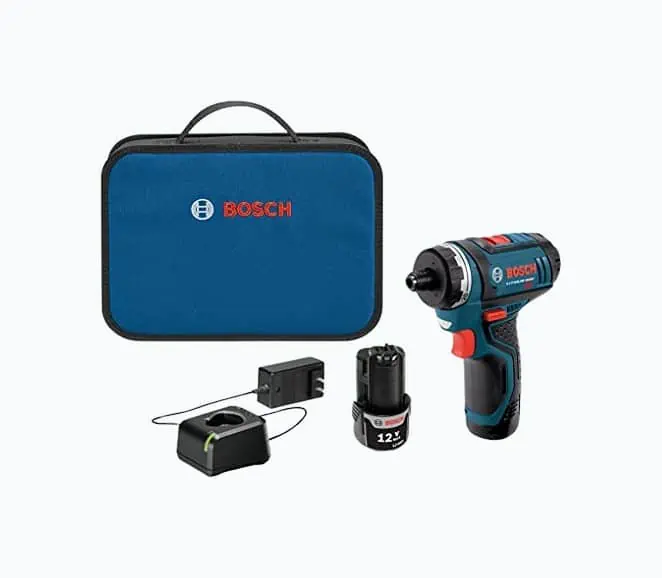
Bosch PS21-2A 12V Max Pocket Driver
Best Lightweight Screw Gun
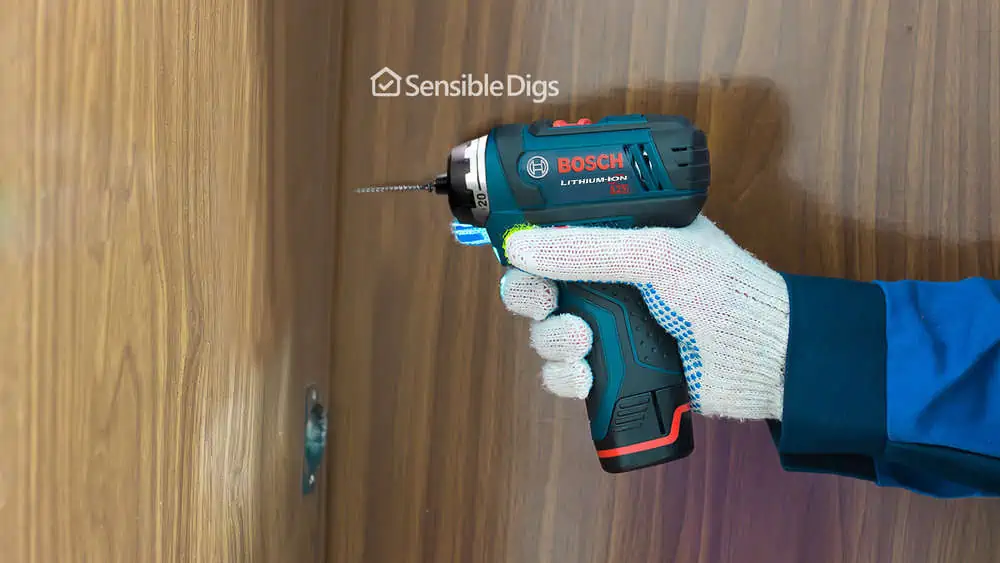
If you want a lightweight tool that you can use for extended periods without your arm getting tired, this Bosch Pocket Driver is a great choice. At just 1.4 pounds, Bosch has managed to squeeze an impressively powerful driver into a pocket-size package.
It generates 265 in.lb of torque and spins at a maximum of 1,300 RPM. Your purchase includes a 2-amp hour battery, with a charger that can refill it in just half an hour. At less than 7 inches long, you will be able to fit this tool into tight spaces, yet it also has the power to tackle larger projects such as drywall and metal framing.
What We Like
Compact Size
This is a very small tool, less than 7 inches long. Bosch calls it the Pocket Driver for a reason.
Lightweight
Weighing just 1.4 pounds, this lightweight tool shouldn’t cause hand and wrist fatigue. It will allow you to keep working for longer, which is important for time-consuming jobs such as fitting drywall and decking.
20 Clutch Settings
There are 20 different clutch settings to suit various tasks and materials. When the maximum torque is reached, the clutch disengages the motor to prevent it from stripping the screw or damaging the motor.
What We Don't Like
Build Quality Issues
Bosch appears to have made some compromises to make this driver as affordable as possible. There are reports of its light failing and, in some cases, the motor itself breaking down.
Hexagonal Shank
This driver only accepts hex-shaped attachments, so it doesn’t have a universal chuck. This means you will have a smaller selection of attachments to choose from but you won’t need to worry about them slipping during use.
Product Specs
| Weight | 1.4 pounds |
| Dimensions (inches) | 5.6 x 6.5 x 2.5 |
| Batteries included | Yes (2) |
| RPM | 1,300 |
| Brushless motor | No |
| Price | $$ |
| Warranty | 1-year |
Our Ratings
Community Feedback
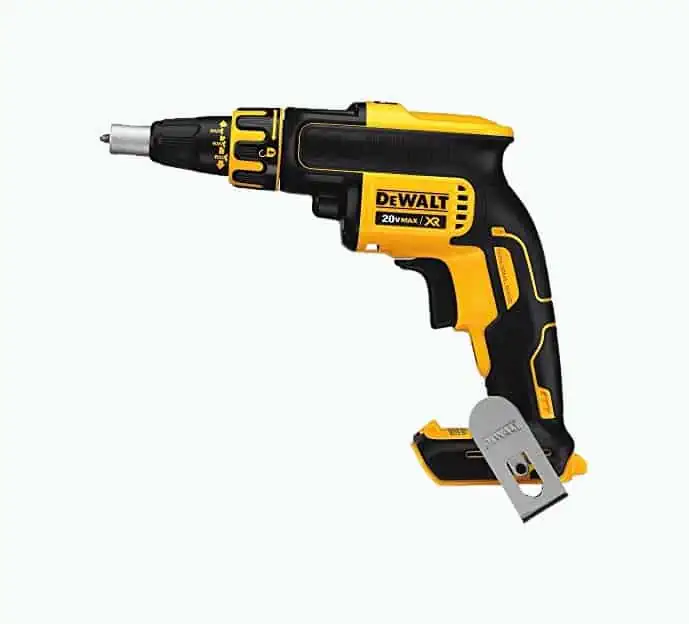
DeWALT 20V Max XR Screw Gun
Best Screw Gun for Metal Framing
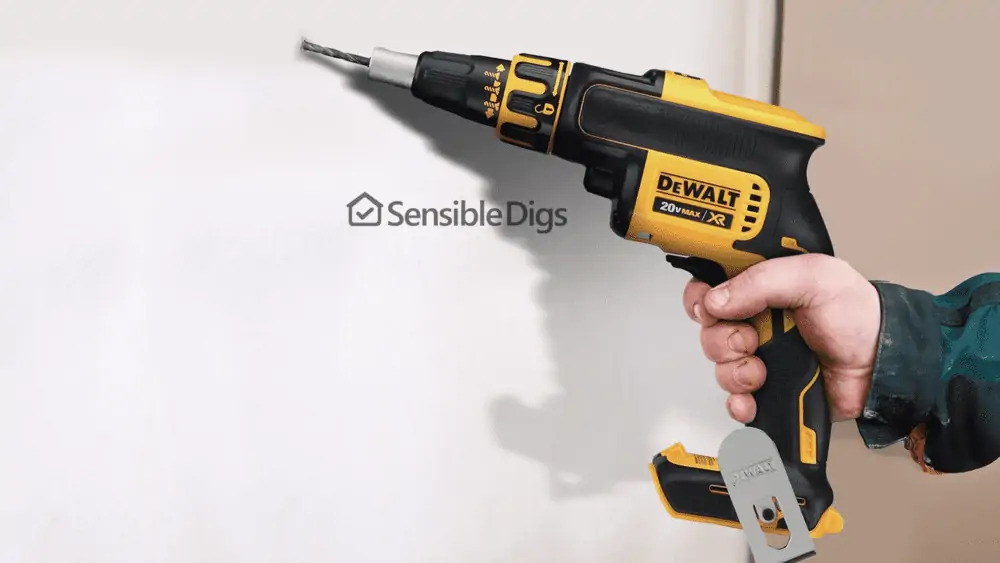
This battery-powered DeWALT screw gun is unusual in that it is more powerful than the company’s corded version. Despite being designed primarily for drywall, the 4,400 RPM it generates will provide enough torque to fix metal framing.
Your purchase includes an optional collated magazine that will enable you to insert numerous screws without reloading manually. A brushless motor uses the battery more efficiently so you can work for longer. This tool is well-balanced and ergonomic, has a lockable nose cone, and you can set your desired screw depth.
What We Like
4,400 RPM
Unusually, this cordless screw gun is more powerful than its corded equivalent. It generates 4,400 RPM, making it a tool suitable for fixing metal frames.
Brushless Motor
Brushless motors operate more smoothly, are more efficient, and require less maintenance. Their improved efficiency will also increase the run time of your battery.
Ergonomic Design
This tool is designed to be comfortable to hold, which is important on large-scale jobs where you might need to use it for prolonged periods.
What We Don't Like
Battery and Charger Not Included
As with many current DeWALT products, this tool does not include a battery or charger. Their batteries are interchangeable, so this won’t be a major issue if you already have one that will fit. If not, it will cost a significant amount to buy one.
Product Specs
| Weight | 2.7 pounds |
| Dimensions (inches) | 8.25 x 3 x 11.13 |
| Batteries included | No |
| RPM | 4,400 |
| Brushless motor | Yes |
| Price | $$$ |
| Warranty | 3-year limited |
Our Ratings
First-Hand Impression
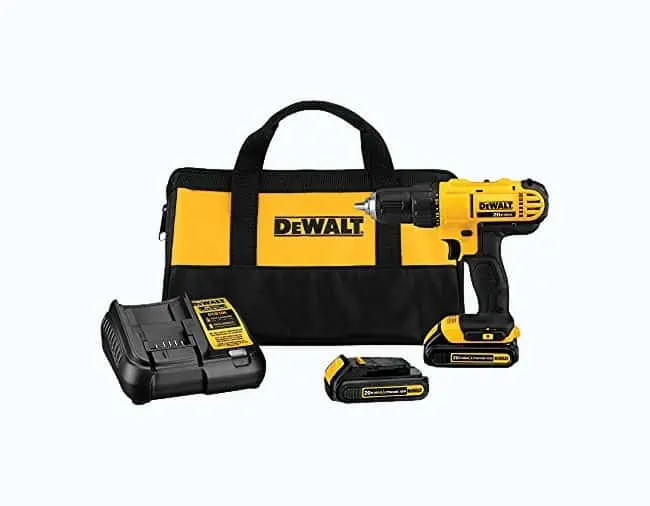
DeWALT 20V Max Cordless Drill/Driver Kit
Best All-Purpose Screw Gun
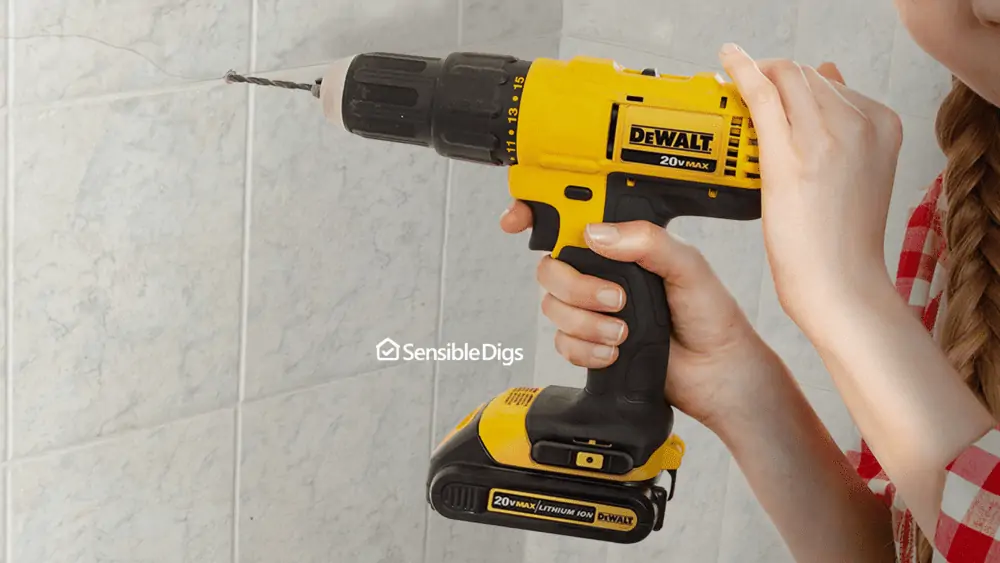
This DeWALT drill/driver kit includes a battery and charger. It delivers a maximum of 1,500 RPM, and its high-performance motor generates 300 unit watts of power. This makes it a versatile tool that is ideal for tasks such as fitting drywall and metal framing.
If you want a tool that will drive screws effectively but can also be adapted to various other tasks with the right attachments, this DeWALT drill/driver set is a great choice.
What We Like
Adaptability
Thanks to its universal chuck, this drill/driver is very versatile. It will drive screws, drill holes, and secure fixings.
Torque
The motor generates 530-inch pounds of torque. This gives it enough power to erect metal frames and perform other heavy-duty tasks.
Battery and Charger Included
Many top power tool brands now sell their batteries and chargers separately from their tools, including DeWALT. However, they have included both with this set, so you won’t need to worry about an additional expense.
What We Don't Like
Weak Battery
This set includes a 1.3 amp-hour battery, so you won’t be able to use it for very long without recharging it. There are also issues with its reliability, so it might be worth upgrading to a better DeWALT battery despite the additional cost.
Product Specs
| Weight | 3.64 pounds |
| Dimensions (inches) | 13.88 x 9.88 x 4.25 |
| Batteries included | Yes |
| RPM | 1,500 |
| Brushless motor | No |
| Price | $$ |
| Warranty | 3-year limited |
Our Ratings
User Experience
Senco DS232-AC Auto-Feed Screw Gun
Best Auto-Feed Screw Gun
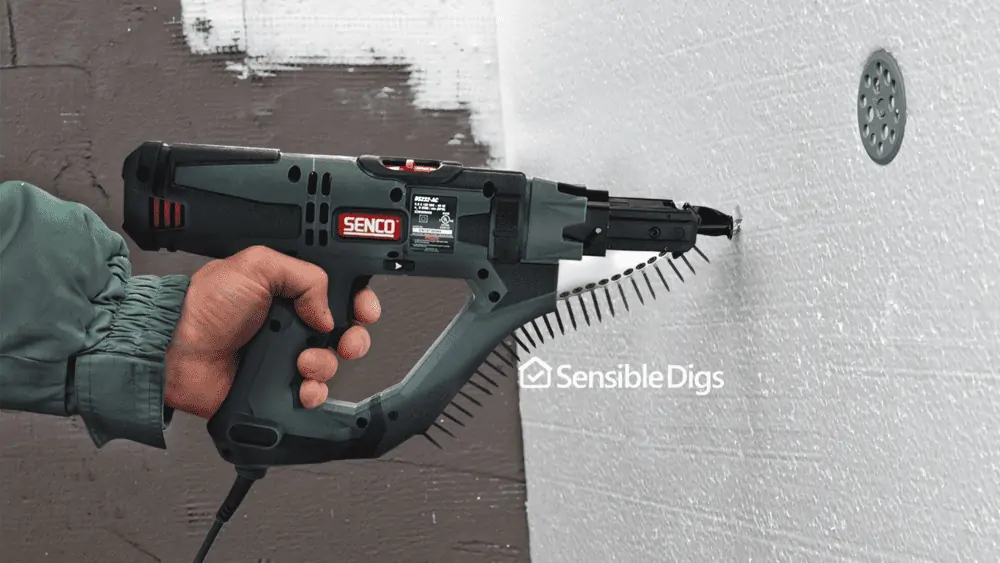
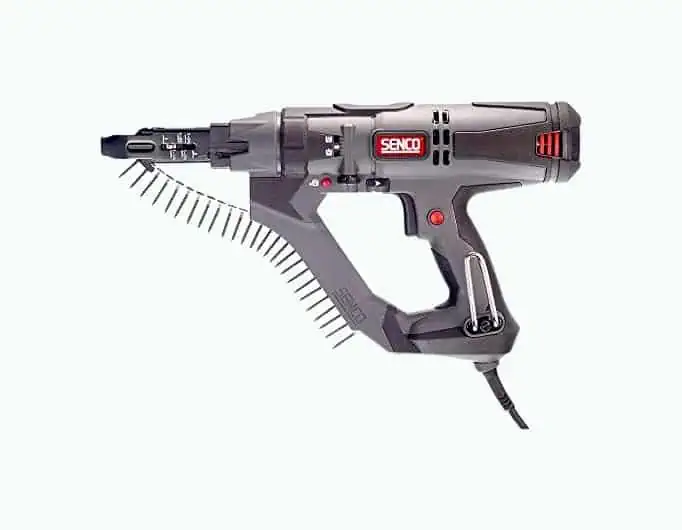
This Senco screw gun will help you install drywall quickly and easily by automatically feeding the screws. This means a job that might have taken hours can now be completed in mere minutes. You won’t need to worry about frequently reloading the tool as each clip holds 1,000 screws, so it will be a while before you run out.
It has a variable trigger with a lock and a reverse function. The motor generates 2,500 RPM and the tool includes 2 drive bits and a case. Senco may not be a household name on the level of DeWALT or Makita, but this is still an excellent auto-feed screw gun.
What We Like
Auto-Feed Magazine
The auto-feed screw clip holds 1,000 screws, so you will be able to work far more efficiently. Drywall screws should be placed every 12 inches, so a single clip should be more than enough to drywall an entire home.
2,500 RPM
2,500 RPM is plenty of speed to tackle standard tasks such as installing drywalls and fixing metal frames.
Variable-Speed Trigger
It is important to find the right balance of speed and precision, which is made easier by this screw gun’s variable speed trigger. This feels very responsive and makes the tool more intuitive to use.
What We Don't Like
Weight
This screw gun is relatively heavy, weighing just under 6 pounds. This shouldn’t be an issue for small jobs but it could lead to hand and wrist fatigue if you are working on an entire house.
Product Specs
| Weight | 5.6 pounds |
| Dimensions (inches) | 16.38 x 3.38 x 9.5 |
| Batteries included | No |
| RPM | 2,500 |
| Brushless motor | No |
| Price | $$$ |
| Warranty | Not specified |
Our Ratings
Personal Perspective
DeWALT 6.0-Amp Drywall Screw Gun
Best Screw Gun for Drywall
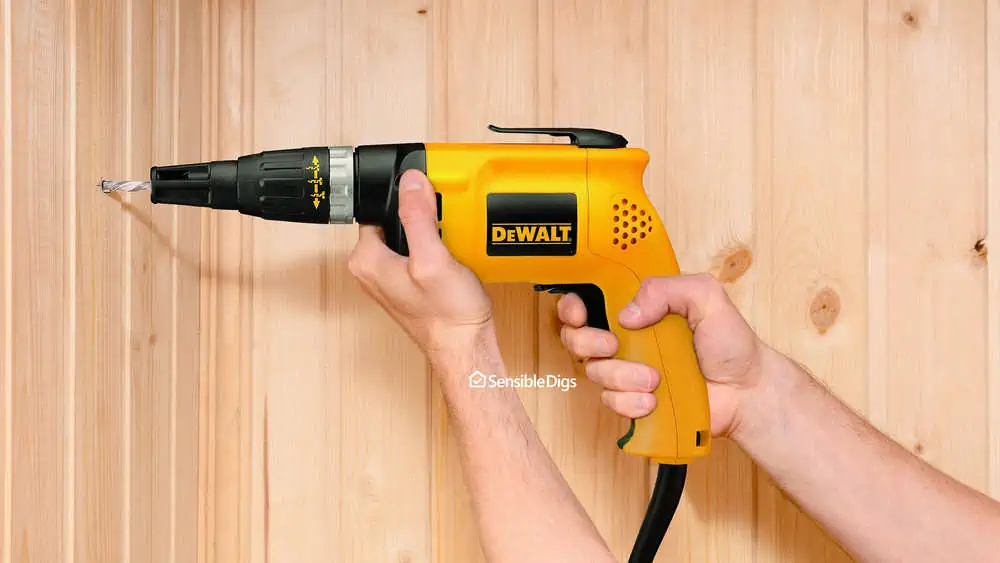
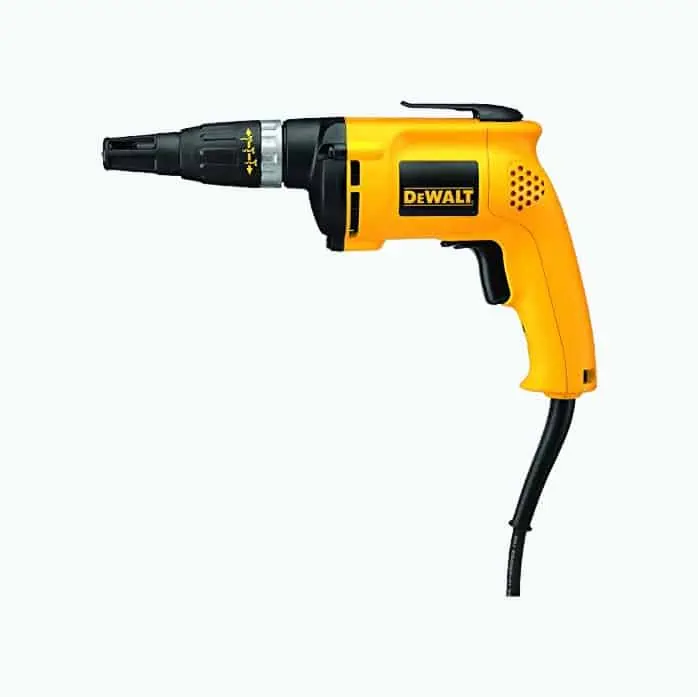
This DeWALT screw gun is corded, so you will be able to work without worrying about losing power. You can set its nose depth to ensure every screw is driven to the correct depth. It also has heat-treated steel gears, resulting in a heavy-duty screw gun that can cope with the demands of large-scale screwing jobs.
It has a high-speed transmission. It is also lightweight, ergonomic, and has a rubber trigger, so it is comfortable enough to use all day without causing hand or wrist fatigue.
What We Like
Easy to Use
You can simply set the depth, load a screw and press the trigger to drive it. You won’t need to worry about driving it too deep and damaging your drywall.
American-Made
Today, it is hard to find power tools that are still made in the United States, so it is refreshing that DeWALT designs and manufactures its tools in America.
Value for Money
This screw gun is competitively priced, partly due to not being battery-powered.
All Steel Gears
The gears are heat-treated steel to improve their durability and strength. Gears are often the first parts of screw guns to break, so this model is very tough.
What We Don't Like
Power Cord
The power cord will keep this screw gun running all day but it will also restrict your range. It can also present a trip hazard if you work on a job site alongside other people.
Product Specs
| Weight | 2.9 pounds |
| Dimensions (inches) | 12 x 10.25 x 3 |
| Batteries included | Corded |
| RPM | 5,300 |
| Brushless motor | No |
| Price | $ |
| Warranty | 3-year limited |
Our Ratings
Community Feedback
| Product | Best | Weight | Dimensions | Batteries included | RPM | Brushless motor | Warranty |
|---|---|---|---|---|---|---|---|
| Makita XSF032Z LXT Cordless Screw Gun | Cordless | 3 lbs | 10 x 5 x 6″ | No | 4,000 | Yes | 3-year |
| Black + Decker 20V Max Drill/Driver | Budget | 4.25 lbs | 8.9 x 4 x 7.75″ | Yes | 750 | No | 2-year limited |
| Bosch PS21-2A 12V Max Pocket Driver | Lightweight | 1.4 lbs | 5.6 x 6.5 x 2.5″ | Yes | 1,300 | No | 1-year |
| DeWALT 20V Max XR Screw Gun | Metal Framing | 2.7 lbs | 8.25 x 3 x 11.13″ | No | 4,400 | Yes | 3-year limited |
| DeWALT Cordless Drill/Driver Kit | All-Purpose | 3.64 lbs | 13.88 x 9.88 x 4.25″ | Yes | 1,500 | No | 3-year limited |
| Senco DS232-AC Auto-Feed Screw Gun | Auto-Feed | 5.6 lbs | 16.38 x 3.38 x 9.5″ | No | 2,500 | No | N/A |
| DeWALT 6.0-Amp Drywall Screw Gun | Drywall | 2.9 lbs | 12 x 10.25 x 3″ | No | 5,300 | No | 3-year limited |
Benefits of a Screw Gun
The most obvious benefit of a screw gun is how quickly it inserts screws. It will do this almost instantly, as opposed to the several seconds it takes to do it by hand. If you are only inserting one or two screws, this might not matter, but it will quickly add up if you need to place numerous screws.
Tasks such as fitting drywall or decking usually require dozens of screws, which will be very time-consuming if done manually, or even with an electric screwdriver. You might also need to countersink the material if you want a smooth surface, which means you will spend even more time on the job.
Drywall is fragile and susceptible to cracking, especially if you overtighten your screws. A screw gun allows you to select how far the screw is driven in, avoiding any guesswork.
Some screw guns also have attachments that automatically feed the screws into the tool, much like a nail gun. These clips or magazines will speed up your work significantly, as you won’t need to insert the screws into the driver by hand.
Screw Gun Vs. Drill
Comparing a screw gun and a drill is natural, given that they can both be used to insert screws. Essentially, this is a question of whether you want a versatile tool or one that excels in a specific role.
Screw guns are designed for a single purpose: driving screws. Unlike a drill, they don’t have a chuck that accommodates various attachments but instead have a “nose” with a cross-head or Philips screwdriver tip. They also offer adjustable depth, disengaging the motor when they reach the specified depth to prevent overtightening.
Screw guns can have clips or magazines that contain hundreds of screws and feed them into the tool. This makes them much faster than using a power drill, where you will need to place each screw by hand before tightening it. This makes screw guns the go-to tool for fitting drywall and decking screws, which would otherwise take hours.
Drill drivers are multi-purpose tools that can adapt to many different tasks with the right attachments. They make holes, drive screws, and can even have a hammer action to penetrate hard materials such as concrete. Drills have extra torque to help them achieve these tasks.
Universal drills have 3-toothed chucks that can accept almost any attachment. Drills insert screws effectively but the downside is that each screw must be loaded manually, and you can’t set a screw depth. This means you could end up driving screws too deep and damaging drywall.
Here is a quick look at the main talking points of each type:
Screw Gun
- Depth setting feature
- Permanent “nose” instead of a chuck
- Fixed driver bit
- Low torque
- Single-use
- Specialist tool
- Automatically feeds screws from a clip or magazine
Drill
- Universal chuck
- Accepts most attachments
- High torque
- Drives, drills, and hammer drills
- Screws must be placed manually
- No depth setting
How to Choose the Best Screw Gun

Motor
Ensuring you have the right motor is perhaps the most important part of choosing any power tool. The motor determines a screw gun’s torque and speed. You should consider the material you are likely to work with to help you choose a suitable screw gun.
Drywall and other soft materials require less torque but greater accuracy, whereas fitting decking or flooring will need brute force.
Collated or Single Screws
Some screw guns allow you to attach a clip that feeds each screw automatically, similar to the magazine of a gun. This will make your work much quicker, inserting several screws in the time it would otherwise take you to insert a couple.
Unless you are working on a large-scale project that requires numerous screws to be installed quickly, it might be best to simply use a tool with a single screw action. They are lighter and more maneuverable, as you won’t need to carry as many screws.
Corded Vs. Cordless
Both corded and cordless screw guns have advantages and disadvantages. Cordless screw guns can be used anywhere, which makes them ideal for large projects where a power cord could be an obstacle. The main drawbacks are that you will need to remember to charge the battery and that the battery will add a significant amount of weight.
In contrast, corded screw guns are usually more powerful and can be used indefinitely, at the cost of having a limited range. You can extend your reach with an extension cord but this could be a trip hazard, especially if you are working alongside other people.
Corded
Pros
- More powerful
- Lighter
- Cheaper
- Can run indefinitely
- More eco-friendly
Cons
- Limited range
- Less maneuverable
- Requires an electrical outlet
- The power cord is a trip hazard
Cordless
Pros
- Can be used anywhere
- Versatile
- More suitable for job sites
- No power cord
- Modern batteries charge quickly
Cons
- More expensive
- Heavier
- Limited runtime
- Slightly less powerful

Brushed Vs. Brushless Motor
Brushed motors have metal brushes that are usually the first components to wear out, which means they require more maintenance than brushless models. They are also less efficient, which means a cordless screw gun with a brushed motor will likely have a shorter battery life. However, they are also cheaper.
Brushless motors are far more efficient and require less maintenance. They have a longer lifespan and their efficiency means a battery could last as much as 50% longer before it needs to be recharged. Brushless motors cost more but they are also more advanced and far more reliable.
Brushed Motor
Pros
- Cheaper
- Worse efficiency matters less with a corded screw gun
Cons
- Requires more maintenance
- Less efficient
- Battery drains more quickly
Brushless Motor
Pros
- More efficient
- Require less maintenance
- Better for cordless screw guns
- The battery will last longer
Cons
- More expensive
How to Use a Screw Gun
When using any power tool, it is important to take the necessary safety precautions. Before proceeding, make sure you have goggles and a face mask to protect your eyes and lungs against dust and debris.
1. Set Up the Screw Gun
If you want the screws to be flush in the drywall, you will need to set the driver bit to sit proud of the nose by 1mm. This ensures that once the correct depth is reached, the clutch will disengage the motor and prevent overtightening.
2. Check the Depth
To check that you have set the correct depth, drive a screw into an unwanted piece of drywall. If the screw sits flush and you don’t damage the drywall, you are ready to start.
3. Brace the Drywall
Ensure that the drywall is in the correct position and won’t move when you start driving screws. It is worth asking someone to hold it in place, at least until you have inserted the first couple of screws.
4. Load the Screw
If you don’t have an automatic screw feed, place a screw onto the driver bit. Most bits are magnetic so the screw shouldn’t fall off. Hold the driver so the screw will go straight into the drywall.
5. Drive the Screw
Press the trigger and gently push the screw against the surface of the drywall until it bites into the material. At this point, the screw will feed itself in. When you have reached the set depth, the clutch will disengage the motor to prevent it from going any deeper.
Top Tip
FAQs
How Deep Should Drywall Screws Go?
Drywall screws should penetrate to a depth of between 0.625 inches to 0.75 inches. The screw should be at least 0.25 inches from the edge of the drywall. This will ensure that the drywall doesn’t crack or become create stress points that might crack later.
How Many Screws Should You Place in Drywall?
Drywall screws should be placed every 12 inches. If you are fitting a 48-inch-wide sheet of drywall, this means you will have 5 screws on each side: 2 in the corners and 3 in the middle.

Do I Need a Pilot Hole for Drywall Screws?
If you use specialist drywall screws, which are threaded all the way to their heads and have straight bodies, you won’t need to drill pilot holes.
Other screws are conical and wider at the head-end than the tip. Their threads don’t run along the entire length of their shafts. If you only have this type of screw, you should consider drilling pilot holes.
Top Tip

Are Screw Guns Worth It?
Screw guns are a great investment for any toolbox. They make driving screws much quicker and easier than a drill or manual screwdriver, saving time and energy.
Screw guns also reduce the risk of damaging the surface or over-tightening the screws due to their adjustable torque settings.
They come in cordless models for added convenience and are typically more affordable than drills. In conclusion, screw guns are worth it for any DIY enthusiast or professional carpenter.

Can Screw Guns Remove Screws?
Screw guns are designed to drive screws but can also remove them. Simply set the screw gun to reverse and it will work in reverse – removing the screws efficiently without damaging them or the surface around them.
Some screw guns have variable speed settings that allow maximum control when taking out screws.
It is important to be careful when using a screw gun for removing screws, however, as too much pressure can damage the head of the screw or strip out the threading.

What Is a Tek Screw Gun?
A tek screw gun is a special tool to secure and fasten screws into materials. Unlike a standard screw gun, the tek screw’s tip quickly and powerfully drives the screws at an angle, resulting in a tight and secure hold.
Tek screw guns are commonly used for building applications such as installing drywall, trim, or flooring. They help create strong connections without needing extra nails or glue.
They also come in cordless models, which can be even more convenient when working in hard-to-reach places.

What Can I Use If I Don’t Have a Screw Gun?
If you don’t have a screw gun, plenty of other tools can help you do the job. A cordless drill is great for driving screws into materials, though it may not be as efficient for large projects.
A manual screwdriver or scissor-style bit driver will work just fine when installed in a drill if you’re working on smaller projects.
For even more control over the process, an electric screwdriver with adjustable speed settings and a clutch to prevent overtightening can help drive screws faster and more securely.
For precision jobs, an impact driver offers powerful torque for driving larger screws into tougher material.

Who Makes the Best Collated Screw Gun?
DEWALT is the world leader in high-performance collated screw guns. Their products are designed with comfort in mind, featuring ergonomic handles, LED lights for visibility in dark spaces, and variable speed triggers that make it easier to find the perfect torque setting for each job.
Their collated screw guns also come with various collation options, including angle-adjustable nosepieces that allow you to secure screws at an optimal angle and depth.