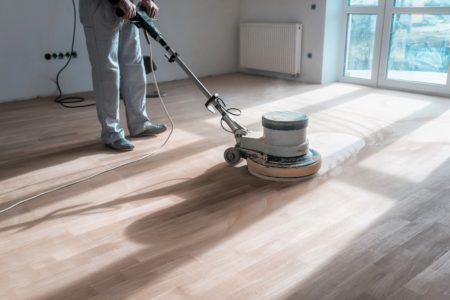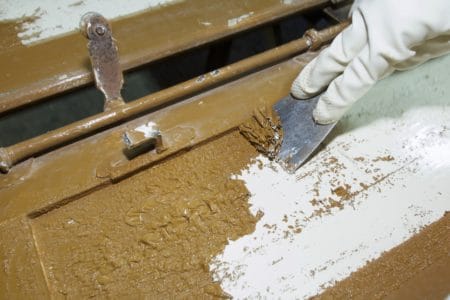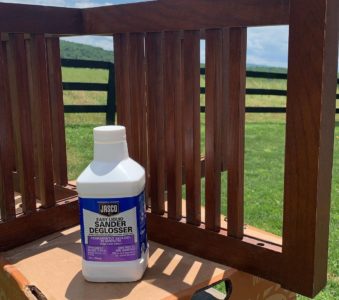
Sometimes you need options when removing or dulling paintwork on wood and metal. There is always an awkward spot where sandpaper won’t reach, and that’s when you should deploy a liquid sander deglosser.
We bring you our take on the best liquid sander deglosser to give you the information you need.
- Water-based
- Eco-friendly ingredients
- Low-odor formula
- Phosphate-free formula
- Biodegradable solution
- Works on trim & metal
- Great coverage
- Super-concentrated
- Quick-drying formula
- Cleans almost any surface
- Odor-free
- Comes as a paste
- Methylene chloride-free
- Fast-acting formula
- Removes multiple layers
Review Methodology: At Sensible Digs, we evaluate products from a user’s perspective based on our professional experience and hands-on testing. We utilize rigorous criteria and benchmarks to measure the performance of liquid sander deglossers. Our assessment includes a detailed analysis and comparison of each product, identifying what sets them apart and scoring them on key decision-making factors such as efficiency, ease of use, and overall effectiveness. We provide factual evidence, sharing our findings from firsthand use to help you make informed decisions. Trust our research and reviews as we guide you towards the best liquid sander deglosser for your needs.
The Best Liquid Sander Deglossers of 2024
With such a vast array of liquid sander deglossers to choose from, which is the right one for you?
Here’s our take on the 5 best liquid sander deglossers available.
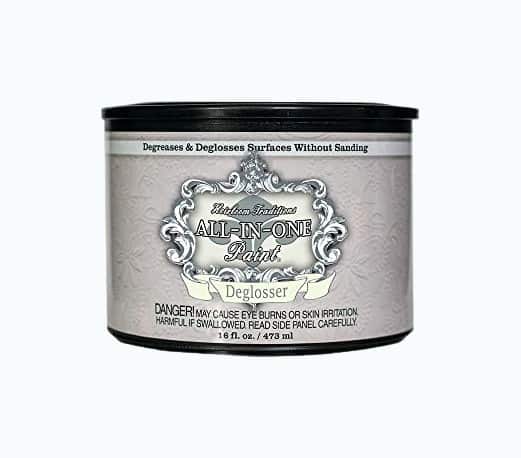
Heirloom Traditions All-In-One Paint Deglosser
Best Liquid Sander Deglosser for Cabinets
This all-in-one paint deglosser is water-based, so it doesn’t use noxious chemicals to achieve the best results. It could have been our choice for the eco-friendly deglosser, thanks to the non-flammable ingredients.
You can apply this solution indoors and outside because it is a low-odor formula, and it requires no water rinsing after treatment. This 16 oz bottle is still harmful if it makes skin contact, so keep it away from children.
The makers recommend that one 16 oz tin will cover an 8 ft x 10 ft kitchen’s worth of cabinets.
Pros
- Water-based.
- Eco-friendly.
- Great coverage.
- Ideal for cabinets.
Cons
- Still harmful to skin.
Product Specs
| Size | 16 oz |
| Phosphate-free | Yes |
| Formula | Water-based |
| Best for | Cabinets, indoor and outdoor surfaces |
| Price | $ |
Our Ratings
User Experience
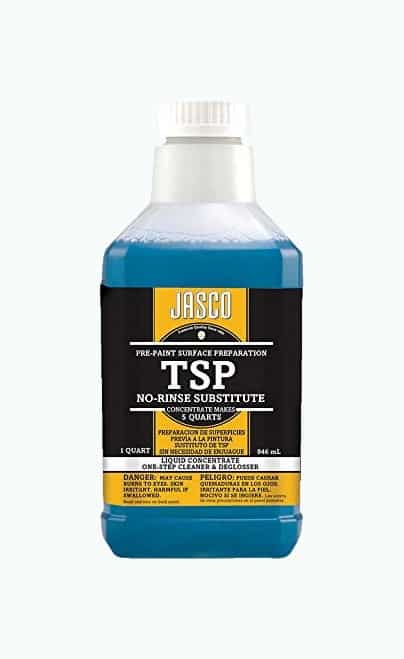
Klean-Strip Jasco No-Rinse Cleaner
Best Liquid Sander Deglosser for Trim
When you are preparing trim, having a no-rinse cleaner is a real bonus. It uses a trisodium phosphate substitute, which is excellent at bonding oil-based paint as well as removing grease, grime, mildew, and food stains on treated and untreated wooden surfaces.
Once you’ve treated the trim, it also works well on flooring and other surfaces. The solution is biodegradable and contains no phosphates, and it can even clean vinyl. It won’t harm glass or tiles, and it is kind to aluminum and chrome.
This also makes it the perfect no-rinse cleaner for working on restoring your car’s paintwork.
Pros
- Phosphate-free.
- Biodegradable.
- Great coverage.
- Works on trim and metal.
Cons
- Still harmful to skin.
- Expensive.
Product Specs
| Size | 16 oz |
| Phosphate-free | Yes |
| Formula | Water-based |
| Best for | Cabinets, indoor and outdoor surfaces |
| Price | $$ |
Our Ratings
Personal Perspective
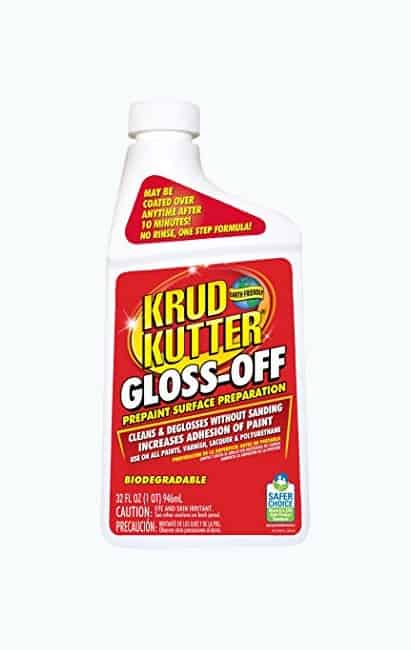
Krud Kutter GO32 Gloss-Off Pre-paint Preparation
Best Liquid Sander Deglosser for Metal
This Krud Kutter is the perfect pre-paint preparation when restoring old and faded paintwork on metal. It dries in just 10 minutes, leaving you with more time for the painting process. It is phosphate-free and contains non-toxic, biodegradable ingredients.
This deglosser comes as a concentrate, so this 32 fl oz bottle should be enough to get decent coverage. The formula is specially formulated to help new paint bond to the old layer, giving it a better chance of adhering.
It removes dirt, grease, paint, smoke stains, food stains, crayons, heel marks, and even old wallpaper paste. This means that when you have finished preparing your car’s bodywork, you can get started on the old cabinet doors in the house.
Pros
- Phosphate-free.
- Biodegradable.
- Great coverage.
- Super-concentrated.
Cons
- Harmful to skin.
Product Specs
| Size | 32 fl oz |
| Phosphate-free | Yes |
| Formula | Water-based |
| Best for | Metal, cabinets, indoor and outdoor surfaces |
| Price | $ |
Our Ratings
Community Feedback
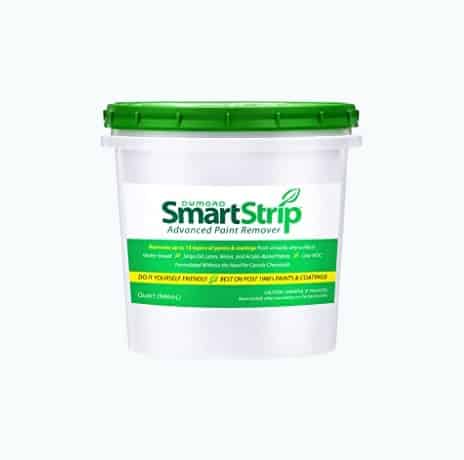
Dumond Chemicals Smart Strip Advanced Paint Remover
Best Eco-Friendly Liquid Sander Deglosser
This advanced paint remover is not only eco-friendly, thanks to its water-based solution, it is also versatile. It cleans and removes dirt and grime from wood, metal, concrete, glass, decking, masonry, moldings, and even bathroom tiles.
This is a paste, so you can smooth it on using a brush or a roller, and it stays wet until removed. There is no methylene chloride or carcinogenic ingredients to worry about, and it is entirely safe for the substrate and the environment.
You can use this formula indoors and outdoors thanks to its odor-free properties, and it removes up to 15 layers of paint.
Pros
- Phosphate-free.
- Biodegradable.
- Cleans almost any surface.
- Odor-free.
Cons
- Requires between 3 and 24 hours.
Product Specs
| Size | 32 fl oz |
| Phosphate-free | Yes |
| Formula | Water-based, biodegradable |
| Best for | Metal, wood, concrete, tiles, glass, masonry |
| Price | $$ |
Our Ratings
First-Hand Impression
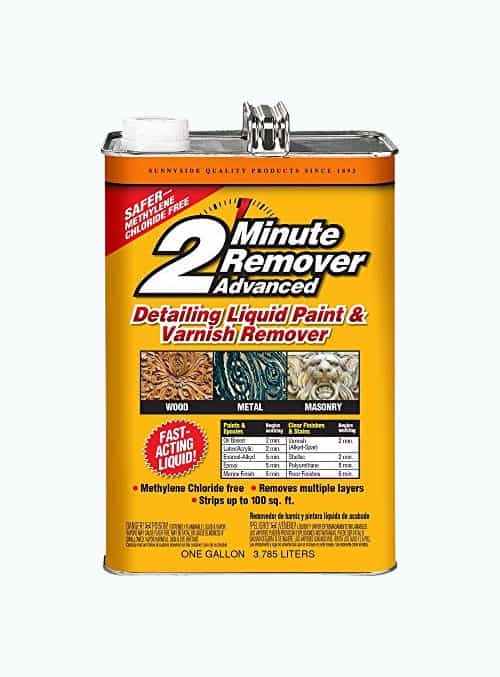
2 Minute Remover Advanced Liquid Paint Remover
Best Liquid Sander Deglosser for Laminate
If you are looking for a fast-acting paint remover, this product does it in just 2 minutes. It is effective on wood, laminate, metal, and even concrete, although the application times vary between materials.
The formula is methylene chloride-free and removes multiple layers, with a 1-gallon bottle covering up to 100 square feet. Once applied, it acts quickly but never damages the wood or metal.
Pros
- Methylene chloride-free.
- Fast-acting.
- Works on wood, metal, and concrete.
- 100-square feet coverage.
Cons
- Not water-based.
- Bad for the environment.
Product Specs
| Size | 1-gallon |
| Phosphate-free | No |
| Formula | Solvent-based |
| Best for | Metal, wood, concrete, masonry |
| Price | $$ |
Our Ratings
User Experience
| Product | Best | Size | Phosphate-free | Formula | Best for |
|---|---|---|---|---|---|
| All-In-One Paint Deglosser | Cabinets | 16 oz | Yes | Water-based | Cabinets, indoor & outdoor surfaces |
| Klean-Strip Jasco No-Rinse Cleaner | Trim | 16 oz | Yes | Water-based | Cabinets, indoor & outdoor surfaces |
| Krud Kutter Pre-paint Preparation | Metal | 32 fl oz | Yes | Water-based | Metal, cabinets, indoor & outdoor surfaces |
| Dumond Chemicals Smart Remover | Eco-Friendly | 32 fl oz | Yes | Water-based, biodegradable | Metal, wood, concrete, tiles, glass, masonry |
| 2 Minute Liquid Paint Remover | Laminate | 1-gal | No | Solvent-based | Metal, wood, concrete, masonry |
What Is a Liquid Sander Deglosser?
Liquid sander deglosser is a solvent or water-based fluid that removes layers in the same way that sandpaper does when applied to paint on metal and wood. When applied liberally and regularly wiped down with a cloth, it has the same abrasive qualities.
The advantage of using a solvent-solution is that it involves less physical work, unlike traditional sandpaper, where you need to work up a sweat to get the job done. The other advantage is that unlike ordinary sandpaper, which removes physical layers from the wood grain, a liquid deglosser dissolves the paint or varnish layers to achieve the same results.
Does Liquid Sander Deglosser Really Work?
Liquid sander deglossers do work, but it is more effective in small patches and areas that are hard to reach. When liberal coats are applied, it successfully dissolves layers of paint and gloss varnish to reveal the natural grain of the wood beneath.
It’s also a great product to use when restoring car bodywork, where there are many awkward shapes and hidden spaces that need treatment.
Is Liquid Deglosser as Good as Sanding?
When comparing sandpaper to liquid deglosser, it all boils down to what you want to achieve. Liquid deglossers cannot smooth surfaces like sandpaper, so if you are working on something with pitted or rough surfaces, it will only remove the gloss layers of paint and varnish.
You would need sandpaper to create that smooth finish and remove the blemishes on the surface of your material. The best way to look at it is deglosser works hand in hand with sandpaper to revitalize old and worn surfaces on wood and metal.
How To Choose the Best Liquid Sander Deglosser
There are a few things to bear in mind when choosing the best liquid sander deglosser. Different chemical compounds create hazards, while others may be safer but are they less effective?
Here are a few pointers.

Water-Based Is Best
Water-based deglossers are safer because they don’t contain hazardous chemicals. This reduces the amount of exposure to noxious fumes, and it means you can use them indoors and outdoors.
Also, if you have pets and small children, a water-based liquid deglosser is a safer bet.

Look at the Reviews
This links back to the quality of well-known brands because many sell on popular online sites, and those sites publish customer reviews. Check them out to see what praise they get for their products.
Equally, you want to take heed of the negative reviews to get a balanced picture.

Look for the Best Brands
By purchasing the best brands and names you can trust, you ensure that the deglosser is tried and tested and does what it says on the packaging. Cheaper products are less expensive to produce, so they may compromise the quality to cut corners.

Go for a Biodegradable Formula
With much focus on protecting the planet, do you want to add to the pollution by flushing more hazardous chemicals into the mix? Try and do your bit by selecting biodegradable solutions that simply wash away without harming wildlife.
Many water-based deglossers contain natural ingredients like citrus fruit. You can check the list of ingredients on the packaging before you buy.
How To Use a Liquid Sander Deglosser
Before we start, you need to take stock of the safety precautions required before applying the deglosser.
Here’s what you will need:
- Safety goggles to avoid splashes.
- Safety gloves to protect against the solution making contact with your skin.
- An N95 face mask to reduce instances of noxious fume inhalation.
Here are the best hints and tips on how to use liquid sander deglosser.
1. Clean the Surface
Before applying the liquid deglosser, always ensure that the surface of the wood or metal is clean. Use warm water and mild soap.
2. Cover the Surface
Liquid deglosser works over a period, so once applied, you have to wait while it reacts. Cover the surface with a poly sheet while the chemical reaction occurs.
3. Get the Technique Right
When applying the formula, always work towards the wood grain. You can use a lint-free cloth or a paintbrush to cover the surface.
4. Prepare the Surface
Wipe away the excess solution from the surface, and then apply a wood conditioner before layering the first coat of paint or stain. Wait until it dries before moving to the next stage.
5. Apply the Desired Finish
Now that you have allowed the wood conditioner to dry, you can start coating the material in your chosen finish. If you are working with wood, always work with the grain.
Liquid Sander Deglosser FAQs

How Long Does It Take for Deglosser to Work?
Most deglossers need about 30 minutes to work their magic onto the painted surface. Unlike putting in the elbow grease and rubbing your painted surfaces with sandpaper, using a deglosser is as easy as applying it and wiping it.

How Long Does Liquid Deglosser Take to Dry?
The time it takes for liquid deglosser to dry depends on working conditions. If you apply the deglosser on a small kitchen cabinet you moved outdoors, the open-air ventilation and the tiny surface of the cabinet will cause it to dry fast.
It takes longer for the product to dry when applied to a massive wardrobe that’s still in your bedroom.
Manufacturers typically add this information to the label. The product’s instructions should tell you just how long you should leave the deglosser to dry.

How Do You Know If Deglosser Is Working?
It should work if you follow the manufacturer’s instructions for applying and letting the deglosser dry. I suggest inspecting the surface when the deglosser is fully dry. If you are unhappy with the sheen of your surface, you can repeat the process to get the desired results.
To avoid any potential mishaps, choose a deglosser from a reputed brand. Heirloom Traditions and Klean-Strip Jasco should do an excellent job.

Can You Use Deglosser on Kitchen Cabinets?
You can use deglosser on kitchen cabinets, especially if you can’t take them down and would have to sand them in those hard-to-reach places.
The biggest benefit of using a deglosser on your kitchen cabinets is that you can work it into the nooks and crannies of your cabinets. You’ll definitely find it harder to get the same results when sanding the kitchen cabinet mounted on the wall.

Does Sander Deglosser Work on Polyurethane?
Some sander deglossers work on polyurethane, but always check the label before buying to ensure you’re not wasting money. Aside from polyurethane, these products can also work with enamel, stain, lacquer, and varnish.

Do You Need to Prime After a Deglosser?
Using a deglosser typically eliminates the need to use a primer. However, this isn’t always the case.
You can use primer after a deglosser when the new coat of paint you want to apply is lighter than the original coat. That means if you have a black nightstand and want to paint it white, it’s best to use primer after deglossing.
Another situation that calls for a primer is painting on wood with red undertones or previously-stained wood.
One great example is mahogany. This wood has a lot of red undertones that are likely to bleed through the paint finish. One coat of primer should help solve this problem.
Liquid Gold
If you have a DIY task that involves removing layers of old paint or deglossing aged varnish, then a liquid sander deglosser is the thing to use. It helps to lift multiple layers, and once wiped clean, you are ready to start with the repaint.
The only thing to bear in mind is that the chemicals used to manufacture these liquid strippers are dangerous and can lead to eye and throat problems if the fumes are inhaled, so act safely with the correct PPE.