Your driveway needs just as much care and attention as the other parts of your home. The weather, footfall, and traffic can have a detrimental effect, and it starts to crumble, crack and lift.
The best driveway sealers stop this from happening because they seal the surface and repel water and UV rays to keep it looking good for longer.
We review our 7 favorite driveway sealers, rating them on price, ease of application, and coverage.
- 175 square feet of coverage from 1 gal.
- Dot approved and used
- Reduces water penetration by 95%
- 250 sqft of coverage per 1-gallon
- Brush, roll, or spray it on
- Water-based, with low VOCs
- Water-based & kind to the environment
- 300 sqft of coverage per 1-gallon
- Great purchase price
- 150 sqft of coverage per 1-gallon
- 100% breathable
- Water-based and low VOC
- Maximum of 500 sqft per 5 gallons
- Dries to the touch in 4 hours
- Repairs cracks as well as seals
- 500 sqft of coverage per gallon
- Takes just 24 hours to dry before use
- Resistant to water, chemicals, and UV
- Fills cracks up to 1-inch wide
- Easy to apply and requires no special tools
- Stays flexible in hot and cold weather
Review Methodology: At Sensible Digs, we pride ourselves on providing you with a comprehensive, hands-on analysis of the best driveway sealers. Our professional team conducts rigorous tests, comparing performance, durability, ease of application, and drying time to derive a benchmark standard. Our evaluations are based on real-life experience and data-driven research, giving us the ability to rank products based on key decision-making factors. We delve into design choices, their impact on users, and what sets each product apart from the competition. Our findings are supported by first-hand evidence, ensuring you can confidently select the best sealer for your driveway.
The Best Driveway Sealers of 2024
Knowing which driveway sealer is the right one can be a challenge. We spent hours researching the internet to bring you our favorite 7 driveway sealers.
Foundation Armor Silane Concrete Sealer
Best Water-Based Driveway Sealer
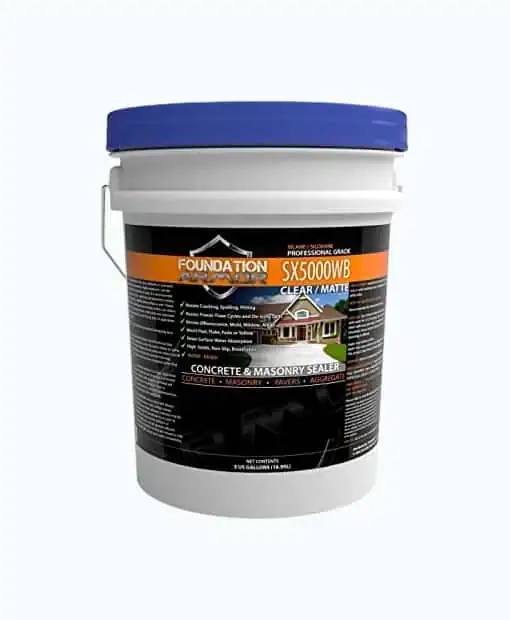
This Foundation Armor is a water-based sealer, but unlike other versions that form a top layer on the concrete, this one penetrates deep under the surface to protect from within. It comes in a 5-gallon tub, so you should have plenty to get the task done.
Because it is water-based, it is low in VOCs (volatile organic compounds), which are bad for the environment and your health, and it is also low in odor.
It applies with either a roller, brush, or sprayer, and even the Department of Transport (DoT) approves and uses this concrete sealer on several roads and bridges in many states.
You get 175 square feet of coverage from 1-gallon, so with 5 gallons at your disposal, that’s a lot of driveways. Foundation Armor recommends 2 coats and waiting 24 hours while the sealer dries. They also state that it reduces water absorption by up to 95 percent, and once down, this sealer will last between 7 and 10 years.
On the downside, this is not a cheap driveway sealer, costing many times more than other products. Still, you do get 5 gallons, and it is DoT approved.
Pros
- 175 square feet of coverage from 1 gallon.
- DoT approved and used.
- Reduces water penetration by 95 percent.
- Water-based, so better for the environment.
Cons
- Very expensive to buy.
Product Specs
| Quantity | 5 gallons |
| Coverage | 175 square feet per 1-gallon |
| Drying time | 24 hours |
| Type | water-based |
| Price | $$$$$ |
Our Ratings
User Experience
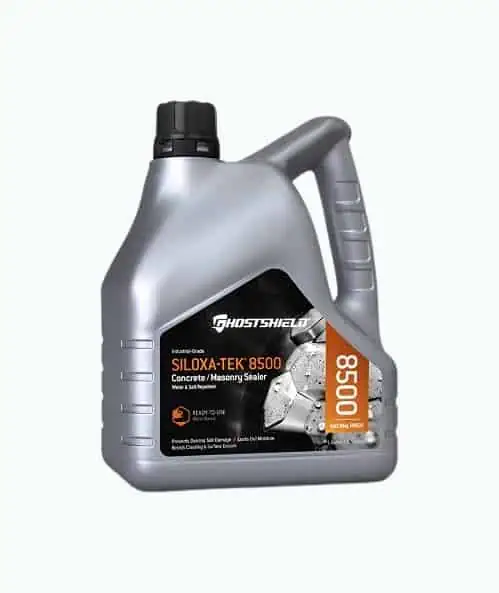
Siloxa-Tek Ready-To-Use Penetrating Concrete Sealer
Best Driveway Sealer for Concrete
This is an industrial-grade water-based sealer. It reduces water penetration because it soaks into the fabric of the concrete. It also repels deicing salts and other liquids like gasoline and oil.
Once applied, it resists cracking, spalling, pitting, and freeze-thaw damage. You get 250 square feet per gallon, so the coverage is better, and because it is water-based, it is low in VOCs, better for the environment, and has a low odor to avoid headaches and nausea.
This product is also approved by the DoT, and while it is considerably cheaper than the Foundation Armor, you need to keep in mind that this is only a 1-gallon tub. When you scale up the price on a like-for-like basis, the costs are pretty similar.
You can spray, brush or roll it on and it should be dry within 4 to 6 hours, although you do have to use 2 coats, and ideally, you should wait 24 hours before use.
Pros
- 250 square feet of coverage per 1-gallon.
- Brush, roll, or spray it on.
- Water-based, so low VOCs and kinder to the environment.
- Dries in 4 to 6 hours.
Cons
- Only a 1-gallon tub.
Product Specs
| Quantity | 1-gallon |
| Coverage | 250 square feet per 1-gallon |
| Drying time | 4 to 6 hours |
| Type | water-based |
| Price | $$ |
Our Ratings
Personal Perspective
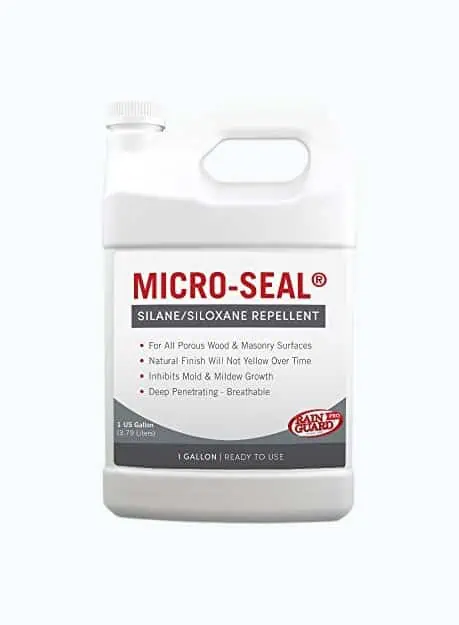
Rain Guard CR-0356 Clear Water-Based Concrete Sealer
Best Mold Inhibiting Driveway Sealer
Mold and mildew are real problems in areas of high rainfall. Mold stains your driveway black, while mildew leaves a milky-colored powder. This Rain Guard is another water-based sealer that seals horizontal and vertical surfaces using a hydrophobic coating.
When you’ve finished protecting your driveway, it works on wood and other masonry surfaces. The makers claim it repels 100 percent of water, and that helps control mold growth.
This sealer takes just 60 minutes to dry before you can walk on it, but you need to wait another 7 days before using your driveway to park your car. It is low VOC, has some graffiti protection with 2 coats, and is guaranteed to not yellow or leave a sheen on the surface of your concrete.
The product is ready to use straight out of the container and doesn’t need any thinners to spray it on. You also get 300 square feet of coverage, which is the best so far.
It’s even a great price, costing a fraction of other sealers. The only negative is some of the customer comments claim it doesn’t repel water as well as other oil products.
Pros
- Water-based and kind to the environment.
- 300 square feet of coverage per 1-gallon.
- Great purchase price.
- Prevents mold and mildew growth.
Cons
- Not as effective as oil-based sealers.
- Takes 7 days to cure fully.
Product Specs
| Quantity | 1-gallon |
| Coverage | 300 square feet per 1-gallon |
| Drying time | 7 days |
| Type | water-based |
| Price | $ |
Our Ratings
Community Feedback
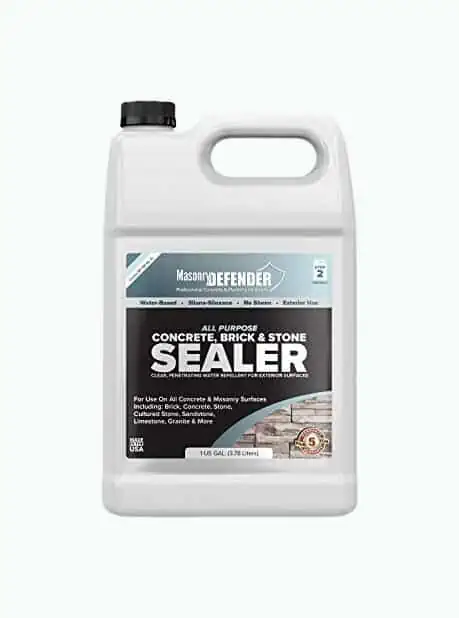
Masonry Defender All-Purpose Concrete and Masonry Sealer
Best Driveway Sealer for New Driveway
Your new driveway needs the best protection from the word go, so applying 2 coats of this all-purpose sealer will give it the best chance possible. It’s water-based, so it is low VOC and odor, plus it is kinder to the environment. It also cleans up with soap and water.
And it works on most surfaces like brick, concrete, and stone, and it is 100 percent breathable, so it doesn’t trap in moisture, which causes mold and mildew.
It has a no-sheen finish, which preserves the color of the driveway, and you get 150 square feet of coverage, although this drops depending on the porosity and smoothness of the surface.
Drying takes about 6 hours, but you should leave it to cure for 24 hours before driving your car onto the driveway. One negative: the 5-year warranty only covers vertical surfaces.
Pros
- 150 square feet of coverage per 1-gallon.
- 100 percent breathable.
- Water-based and low VOC.
- Suitable for most surfaces.
Cons
- 5-year warranty only covers vertical services.
Product Specs
| Quantity | 1-gallon |
| Coverage | 150 square feet per 1-gallon |
| Drying time | 24 hours |
| Type | water-based |
| Price | $$ |
Our Ratings
First-Hand Impression
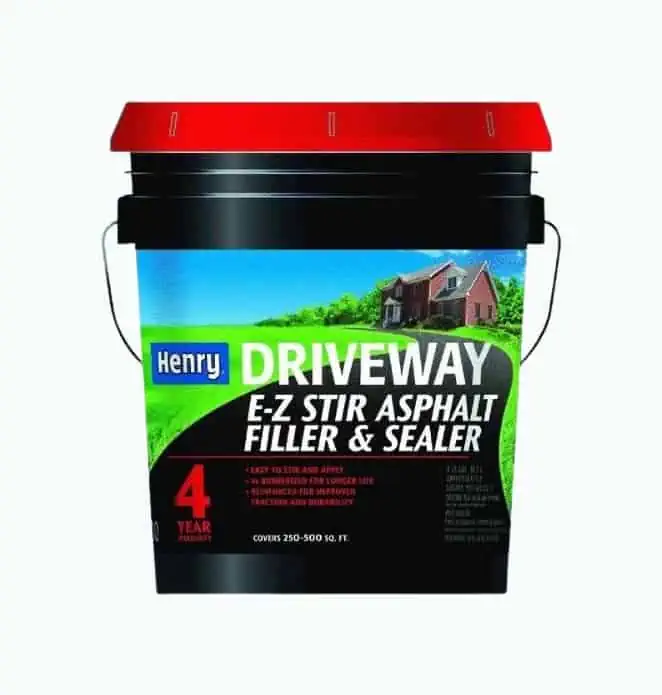
E-Z Stir Driveway Asphalt Sealer
Best Driveway Sealer for Asphalt
This E-Z driveway sealer also doubles up as a filler, so it can repair as well as protect. It has 4 times the rubber content, so it has a longer life and makes your asphalt driveway more resilient to traffic and the harmful effects of the rain and sun.
It covers 250 to 500 square feet per 5 gallons, depending on the surface quality, and it is also the ideal product to use on blacktop pavements and pathways.
Once applied, it dries to the touch in just 4 hours and takes 48 hours to cure before you can park your car on the driveway. It is also guaranteed for 4 years. The only downside is it lacks the flexibility that other sealers have because you can only use it on asphalt.
Also, you are limited to brushing or using a roller when applying this sealer. It is too thick to be sprayed, so that might slow you down.
Pros
- Maximum of 500 square feet coverage per 5 gallons.
- Dries to the touch in 4 hours.
- Repairs cracks as well as seals.
- 4 times the rubber content for longer life.
Cons
- Only works on asphalt driveways.
Product Specs
| Quantity | 5-gallon |
| Coverage | 500 square feet per 5 gallons |
| Drying time | 48 hours |
| Type | Oil-based |
| Price | $$ |
Our Ratings
User Experience
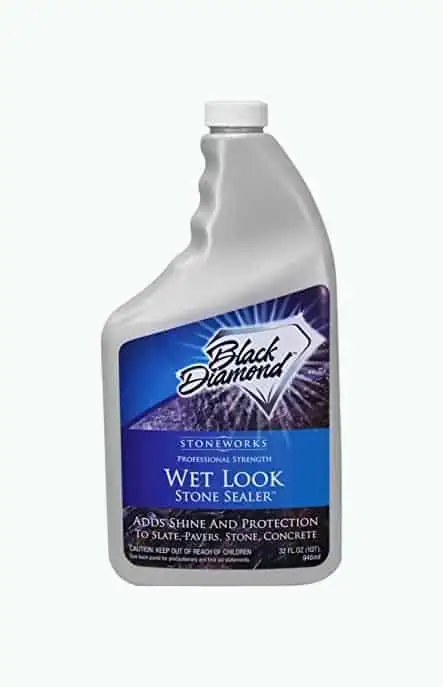
Black Diamond Stoneworks Wet-Look Concrete and Stone Sealer
Best High Gloss Driveway Sealer
When you want that wet look high sheen, you can’t go wrong with this Black Diamond sealer. It applies with either a brush, roller, or sprayer, and it coats concrete, pavers, slate, and a host of other surfaces.
Once it dries, it is completely clear, and it resists chemicals, as well as water and UV rays, and wear and tear. You can use this product on exterior and interior projects like garage floors, and depending on the surface quality, it covers a maximum of 500 square feet.
One downside is you cannot use this product on granite or marble. However, thanks to the 30-minute drying time between coats, you can get the job done faster. Once the second coat is down, you should wait 24 hours before attempting to use your driveway.
The other negative is the cost. It is super expensive for a 1-gallon container.
Pros
- 500 square feet of coverage per gallon.
- Takes just 24 hours to dry before use.
- Resistant to water, chemicals, and UV.
- Spray, roll, or brush it on.
Cons
- Not suitable for marble and granite.
- Super-expensive for 1-gallon.
Product Specs
| Quantity | 1-gallon |
| Coverage | 500 square feet per 1-gallon |
| Drying time | 24 hours |
| Type | Water-based |
| Price | $$$$ |
Our Ratings
Personal Perspective
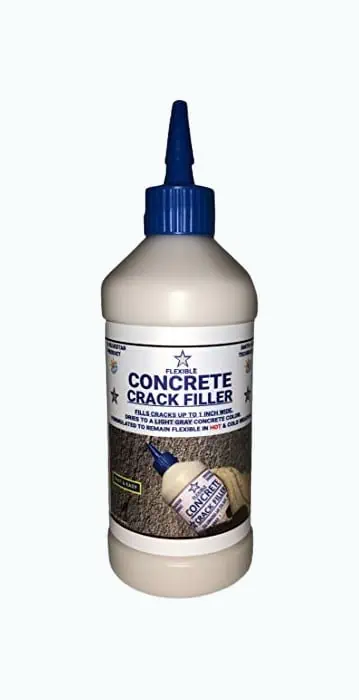
Bluestar Flexible Concrete Crack Filler
Best Driveway Sealer for Cracks
When you need to make repairs to your driveway, you should consider a crack and sealer like this Bluestar. It fills gaps up to 1-inch wide, and it comes in light and dark gray, so you can try and color-match it with your concrete.
Once the hole is filled, it seals so that water and other debris cannot penetrate, and when the sun comes out, it stays flexible for changes in weather conditions. The obvious downside is it is limited to smaller projects because it only comes in 16-ounce bottles.
The good news is it is easy to apply, dries quickly, and is paintable to help blend in the cracks, so they are no longer visible.
Pros
- Fills cracks up to 1-inch wide.
- Easy to apply and requires no special tools.
- Stays flexible in hot and cold weather.
- Seals the crack to protect it against water.
Cons
- Only suitable for smaller projects.
Product Specs
| Quantity | 16 ounces |
| Coverage | Not applicable |
| Drying time | 24 hours |
| Type | Not stated |
| Price | $ |
Our Ratings
Community Feedback
| Product | Best | Quantity | Coverage | Drying time | Type | Price |
|---|---|---|---|---|---|---|
| Foundation Armor Silane Concrete Sealer | Best Water-Based | 5 gal. | 175 square feet per 1-gallon | 24 hours | Water-based | $$$$$ |
| Siloxa-Tek Ready-To-Use Penetrating Concrete Sealer | Best for Concrete | 1-gallon | 250 square feet per 1-gallon | 4 – 6 hours | Water-based | $$ |
| Rain Guard CR-0356 Clear Water-Based Concrete Sealer | Best Mold Inhibiting | 1-gallon | 300 square feet per 1-gallon | 7 days | Water-based | $ |
| Masonry Defender All-Purpose Concrete and Masonry Sealer | Best for New Driveway | 1-gallon | 150 square feet per 1-gallon | 24 hours | Water-based | $$ |
| E-Z Stir Driveway Asphalt Sealer | Best for Asphalt | 5-gallon | 500 square feet per 5 gal. | 48 hours | Oil-based | $$ |
| Black Diamond Stoneworks Wet-Look Concrete and Stone Sealer | Best High Gloss | 1-gallon | 500 square feet per 1-gallon | 24 hours | Water-based | $$$$ |
| Bluestar Flexible Concrete Crack Filler | Best for Cracks | 16 ounces | Not applicable | 24 hours | Not stated | $ |
Types of Driveway Sealer
We need to understand a bit more about the types of concrete sealers, what they do and what makes them different.
Oil-Based
Oil-based sealers are more durable than water-based products, thanks to their main ingredients of petroleum or grease. It penetrates deeper under the surface of your driveway and does an excellent job of repelling the damaging effects of the weather.
The downside with oil-based sealers is they give off a strong odor that can take a few days to fade. They also contain VOCs (volatile organic compounds), which are very damaging to the planet.
They are also a health risk because they induce headaches, nausea, along with sore eyes and throat.
Coal Tar
Coal tar offers the most resilience because it contains additives like sand, polymers, coal tar, or clay. It gives it a flexible coating that sticks.
Coal tar copes with your driveway because it is derived from bituminous coal, which is used on roads, parking lots, and playgrounds. Coal tar sealers are excellent at resisting gasoline, diesel, and other fluids secreted by vehicles.
It also handles the damaging effects of the sun, and if you like a budget option, coal tar sealer ticks that box too. However, because this product is made from coal, it is damaging to the environment.
It also contains VOCs, so it has the same harmful effect on the environment and even contributes to the thinning of the ozone layer.
Acrylic
Acrylic sealers cost a bit more than other sealers. They are considered to be one of the best products because it comes in many different finishes from matte to high-gloss and you can get it in almost any color.
Because they are acrylic-based, they contain fewer VOCs, which is better for the environment and your health. They resist gasoline, oil, sunlight, water, and even antifreeze.
Asphalt Sealers
Asphalt sealers are one of the most popular products for sealing driveways in the USA. They are slightly more expensive compared to coal tar, but they have fewer odors and VOCs.
They also prevent oxidation, and you don’t get skin irritations. There are downsides because they are less effective at repelling gasoline, oil, water, and sunlight, so you might get reduced protection. Asphalt sealers probably need replacing every 3 years or so.
Crack Filler
Crack filler comes in two varieties: heated and cold pour. Heated crack filler contains rubberized asphalt and bonds to the surface, sealing the gap, while cold pour filler goes straight into the crack without needing heat to bond.
Epoxy
Epoxy comes in clear or colored varieties and dries rock hard, protecting your driveway from water, oil, gasoline, and sunlight. It is more durable than an acrylic sealer and should be on the top of your shopping list if you don’t require a penetrating sealer.
However, epoxy forms a hard shell, so if any moisture gets trapped beneath, it doesn’t breathe, so the water cannot evaporate.
How To Choose the Best Driveway Sealer
What are the main factors to keep in mind when choosing a driveway sealer? Just what should be at the top of your wish list? Let’s take a look.

Cure and Seal
Cure and seal products allow the concrete to set more gradually, which helps it retain moisture. As a result, it dries much harder, giving a more durable surface.
They should be applied just as the newly laid concrete is hard enough to bear weight. It also replaces the need to wet the concrete driveway every day so that it dries properly, giving you about 3 years of service.
The downside is these products aid the curing process rather than protecting the driveway against staining and cracking.

Penetrating Sealers
Penetrating sealers are the most commonly used products and should not be applied before the concrete has fully cured for about 28 days. A single layer lasts between 5 to 10 years, depending on the weather conditions in your area.
Penetrating sealers are more eco-friendly as many are water-based; plus, they repel oil, water, and UV rays to prevent cracking. These sealers can be painted, rolled, and sprayed on to get a faster and smoother finish.

Mold Inhibitors
Look for a sealer with a mold-resistant formula. Remember that your driveway copes with a lot of moisture, so mold is always a threat. Mold leaves dark stains, while mildew is more powdery, and both can leave lasting damage to your concrete surfaces.
Before you apply this product, you must remove all traces of the old sealer first using a bleaching agent and a scrubbing brush.

Types of Finish
Whether you prefer matte or high-gloss for that “wet look” is a matter of choice, but remember that the type of finish will either enhance your surfaces or highlight the stains that exist, so remember to remove staining first.

Ease of Application
How the sealer applies makes a difference. Most can be applied using a simple garden sprayer, but other formulas require a thinner if you want to spray it on. Spraying is the quickest method, and you get an ultra-smooth finish. Painting takes a bit more skill to ensure there are no brush marks.
When you coat new concrete, you could end up with overlap lines if you don’t cover the entire surface, so the speed of execution matters too.
How to Apply Sealer to a Driveway
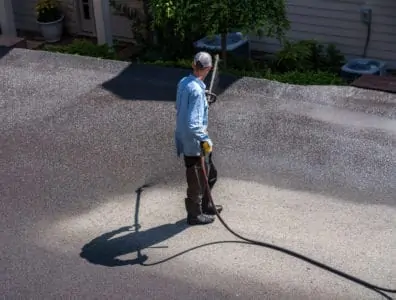
Most sealers are thin enough that they can be applied using a pump sprayer. Some can be brushed, rolled, and squeegeed on. You can even use a large broom to spread the sealer over your driveway.
FAQs

What Happens if You Don’t Seal Your Driveway?
You run the risk of having to replace your concrete driveway every 5 or so years. It will deteriorate, crack, and lift with the damaging effects of sunlight and rainwater.

How Long Should I Stay off My Driveway After It Is Sealed?
You should avoid making any contact with your sealed driveway for a minimum of 48 hours. You can walk on it within 24 hours, but to be on the safe side, allow 2 days before parking your car on the driveway.

How Often Should I Seal the Driveway?
To keep your driveway in the best condition, you should reseal it every 4 or 5 years. That may vary depending on your surface type and local weather conditions.

Which Is Better Oil or Water-Based Driveway Sealer?
It depends on what protection you want. Oil-based sealers penetrate deep into the concrete and so protect from within. They do an excellent job of repelling rainwater and UV, thanks to the grease or petroleum-based formula.
Water-based sealers are excellent at forming a protective top layer that stops moisture and UV from getting through; however, that top layer chips, scuffs, and scratches to reveal gaps in your protection. For this reason, water-based sealers need more TLC and re-coating more frequently.

Is It Better to Spray or Brush Driveway Sealer?
Spraying is generally accepted as the best way because you should coat the entire surface in one go, and a sprayer allows this because it is faster. Also, if you brush on the sealer, you risk overlap lines as it dries in different stages.