During most car accidents, the bumper is one of the first things to suffer damage. Which then begs the question: how much does it cost to repaint a bumper?
This can be a costly operation, and not everyone knows how to estimate the costs. So, we’re breaking down the implication of bumper paint cost for cheap and premium paint, as well as DIY painting.
How Much Does It Cost To Paint A Bumper?
The average cost for painting a bumper, whether metal or plastic, with a premium service, is between $500 and $600 if you choose a single color.
Key Takeaways
- Costs for bumper paint jobs: Economy ($200-$300), Premium ($500-$600), and DIY (less than $100).
- Factors influencing price: Extent of damage, age of vehicle, type of vehicle, and quality of paint.
- DIY painting can be inexpensive, but may result in color mismatch or uneven paint job.
- Insurance may cover bumper damage, but it depends on the extent of damage and your deductible.
How Much Does It Cost to Paint a Bumper?
Let’s take a look at bumper painting costs broken down by method.
| Paint Job | Estimated Cost |
| Economy Paint Job | $200 – $300 |
| Premium Paint Job | $500 – $600 |
| DIY Paint Job | <$100 |
Economy Paint Job Estimate
A budget paint job for the front or rear of your vehicle (without the need for major repair) hangs between $200 and $300. You have to keep in mind that economy-level paint jobs frequently mismatch the color of the paint.
Take Note
A lower-quality paint option fades faster than the rest of your vehicle because it lacks UV protection and saturated pigment.
Additionally, lower-quality paint jobs peel and scratch more easily than premium options. Sometimes, economy-level paint jobs omit the second clear coat application to save money.
So, you may save a little money on the paint job now. But there is a good possibility you will be dissatisfied with it in the long term.
Premium Paint Job Estimate
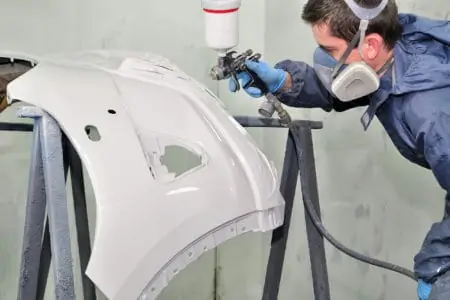
In most circumstances, you’re considerably better off having your bumper painted by a highly regarded professional body shop. This is because of their experience, and they usually warranty the work.
Conduct a check of their Google business page and do not rely solely on testimonials on their website. This will help ensure that the color matches the previous paint job. Plus, make sure that the paint has a little extra protection and is properly prepared.
A good tip is to always check out what reviews and past customers have to say. Most shops that offer a premium service will have a website or social media. Take a moment and check them out.
The average cost for painting a bumper, whether metal or plastic, with a premium service, is between $500 and $600 if you choose a single color.
Keep In Mind
The price can easily exceed $1,000 if you require multi-stage paints or various hues.
DIY Paint Job Estimate
There are a few advantages and drawbacks to painting your car bumper by yourself, with the low cost of the process being the thing that attracts people the most. If you decide to do this yourself, the entire paint job could end up costing around $100 or less.
However, color matching could be a problem, and you could end up with a less satisfactory result.
Additional Bumper Painting Costs
Several different factors will influence the price you end up paying with your bumper paint. We’ll list them below.
Extent of Damage
One of the first things that will determine the cost of your paint job is the extent of the bumper damage. If you need to refinish a car bumper, chances are you also have some additional damage.
Labor expenses increase when the vehicle sustains more damage and are also dependent on the vehicle itself.
Age of Vehicle
However, today’s bumpers are a more integral element of a vehicle’s body and design. Bumpers frequently incorporate or connect to airbag sensors and lights as well as backup cameras and sensors for various warning systems.
Additional enhancements can increase the expense of painting the bumper.
Type of Vehicle
Repairing foreign cars can be significantly more expensive than repairing a local vehicle with widely available parts.
Quality of Paint
The difference in paint quality will determine the end price of the paint job. For example, a basic paint job (basic black, white, red, or blue) will be inexpensive. While adding a metallic or pearlesque finish will add at least $500 to the overall quote.
The Process of Repainting a Bumper
Different professional companies will undergo slightly different processes to repaint a bumper. But the outline is pretty much the same across all situations:
- Remove the bumper.
- Remove all bumper stickers.
- Use soap and degreaser to clean the bumper.
- Wet sand tough bumper areas (wet sanding is sanding with a damp surface).
- Using a microfiber towel, wipe the bumper clean.
- Apply a base coat.
- Wet sand flaws and wipe them clean with a microfiber cloth.
- Repaint and repeat the process, as it’s likely going to take about three coats of paint. Ensure that you allow enough drying time between coats.
- Apply two coats of clear coat.
- Allow at least six hours for drying before reattaching the bumper.
Can I Paint My Bumper Myself?
Yes, you can, but you have to understand that this procedure will have advantages and drawbacks, such as:
Pros
- Very inexpensive compared to other painting methods.
- You won’t have to stay several days without your car.
Cons
- You might not get the right color.
- The paint job might be uneven.
Does Insurance Cover Bumper Damage?
It is generally suggested that you notify your insurance carrier of any damage to your vehicle. But you may elect to forgo filing an insurance claim for bumper damage. Especially if you prefer to pay for repairs using your own money.
If the bumper damage is modest and the repair cost is less than your auto insurance deductible, filing a claim may be unnecessary. If your deductible is modest, filing a claim may be advantageous, even for small repairs.
It comes down to the extent of the damage and the cost of your comprehensive or collision insurance deductible.
If you accidentally cracked or scratched your bumper in a single-car collision, you may wish to pay for repairs out of pocket rather than submitting a claim. This is particularly true if the cost of repairing your bumper is less than your deductible.
Tips For Reducing Cost of a Bumper Paint Job
If you want to save some money, you can paint your car bumper yourself. But keep in mind that it will take some elbow grease. And you’re likely to produce a level of work comparable to an economy paint job.
If you don’t know how to color match your automobile, you’re going to end up with various hues of the same color.
Don’t Go with the First Repair Shop
You can obtain quotations from a few repair businesses. While it may be tempting to choose the cheapest choice, keep in mind that it does not always imply the best service.
Remove the Bumper Yourself
Not only will this save you money with your paint job, but it also decreases the time it takes for your car to be ready. You don’t want to be left for too many days without your car, do you?
FAQs

When Does a Bumper Need to Be Replaced?
If multiple repairs are required on your bumper, it may be more cost-effective to replace it altogether. Other signs that it might be best to replace the bumper include large dents, cracks, and deep scratches that cannot be pressed out.

Does Repainting Your Car Decrease Its Value?
If you repaint your old car, you can increase its trade-in value. Simply ensure that the investment will be worthwhile. If the car is in poor condition, repainting it could turn out to cost you more money, which you may not be able to recoup when reselling your car.

Will Maaco Paint Just a Bumper?
Maaco can replace unsafe automobile and truck bumpers and repair faulty ones, matching the bumper paint color perfectly. However, you could end up wasting money by painting the bumper alone.
This is because companies often have a minimum cost. So, painting a bumper can sometimes be the same cost as a new basic paint job. Also, keep in mind that you’ll have a new-looking bumper on an old-looking car.

How Much Does It Cost to Color Match a Bumper?
Chain auto body shops such as Maaco charge between $50 and $100 for labor. So, if materials cost $50 plus two hours of labor, you could pay about $150 to have your bumper painted.

How Long Does Painting a Bumper Take?
Front bumper repairs are rather basic and can be completed in as little as three hours. However, new paintwork and the drying process of the paint can take up to three days.

How Much Paint Do I Need to Paint a Car Bumper?
Four cans should do for a standard car bumper. It will provide three layers of new paint, leaving the bumper appearing brand new. Keep in mind that larger vehicles will require more paint to cover the surface area.
Bottom Line
For those of you wondering how much does it cost to paint a bumper, things are pretty simple. While there are ways to reduce the costs, it might not always be the right choice. You could end up with a lousy paint job and have a car that looks less than optimal.