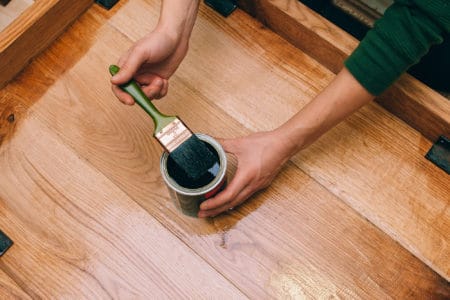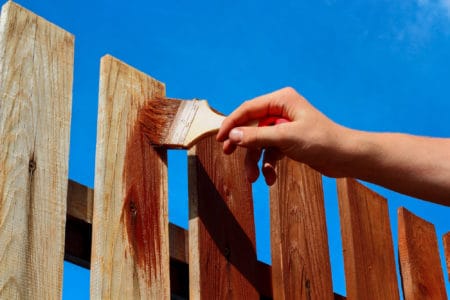
Chalk paint is nothing like standard paint. It is ideal for giving your furniture that “upcycled” look, and it shows off the brush strokes and the imperfections on the wooden surface. It’s the reason why you need a specific type of brush.
But which is the best paint brush for chalk paint? We bring you our top 5 and show you why the type of brush you use matters, plus how to choose the right brush for your project.
- Set of 6 for all applications
- Supplied with a round wax brush – protects the chalk paint
- Reduced bristle loss
- 100% natural bristles
- Birchwood handle
- Ideal for furniture
- Twice-boiled natural boar hairs
- Low-shred bristles with epoxy glue
- Lightweight & ergonomically designed
- Ergonomic handle is lightweight
- No-shed bristles
- Suitable for all paint types
- Ergonomic handle is lightweight
- 100% boar’s hair bristles
- Suitable for all paint types
Review Methodology: At Sensible Digs, we provide an in-depth analysis of the best paint brushes for chalk based on rigorous testing and hands-on experiences. We rank and compare brushes using data from performance measures and user evaluations. Our professional team digs into key factors, such as bristle quality, handle design, and paint distribution, to help you make informed decisions. We assess each product’s unique features, design choices, and their impact on user experience. Our findings are supported by factual evidence and real-world results. Trust us to deliver reliable reviews to guide your selection process.
The Best Paint Brushes for Chalk of 2024
We look in detail at chalk paint brushes, rating them on their price, bristle type, and suitability to the task. Here are our top 5 chalk paint brushes.
Diyartz Chalk and Wax Paint Brush Set
Best Brush Set for Chalk Paint
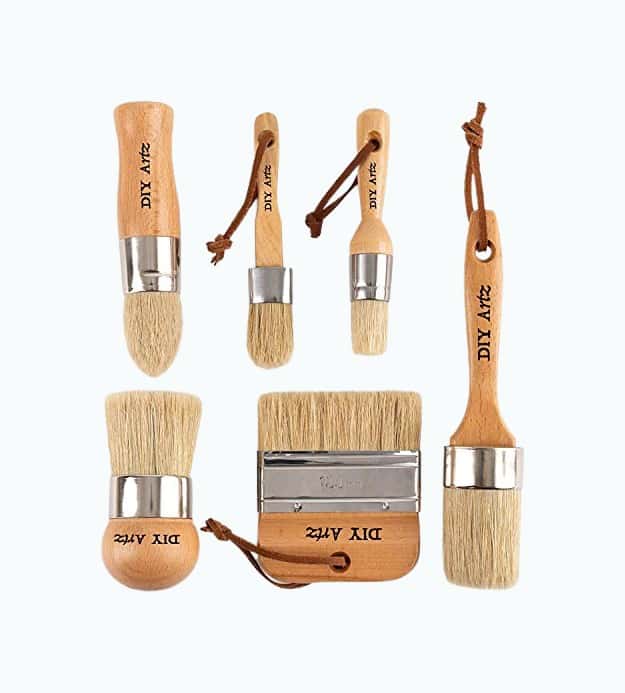
When you like to tackle many different projects, and need a range of brushes to complete the job, this Diyartz 6-brush set could be a great option. The bristles are 100 percent natural boar hairs, and the handles are ergonomically designed for comfort, grip, and control.
The set of 6 includes 2-inch and 4-inch brushes with different styles of handles, as well as a 2-inch flat brush. The handles are made from wood, and the bristles are so densely packed that shedding is kept to a minimum.
You also get a wax brush to protect your new chalk surfaces. The beauty of using a set of brushes is that you can switch from intricate projects to larger tasks like painting doors and walls without needing to buy a new set of brushes.
The downside is if you don’t need all these extra brushes, the extra money you would pay for this set is wasted. Plus, even though these are low-shred brushes, they still leave bristles on the painted surface.
Pros
- Comes as a set of 6 for all applications.
- Supplied with a round wax brush to protect the chalk paint.
- Reduced bristle loss.
- Ergonomically designed handles for added comfort.
Cons
- Unless you need 6 brushes, why pay the extra money?
- Low-shred, but they still lose bristles.
Product Specs
| Weight | 1.21 pounds |
| Brush size | 2 inches to 4 inches |
| Brush shape | Round and flat |
| Type | Natural |
| Bristles | Boar hair |
| Cost | $$$$ |
Our Ratings
User Experience
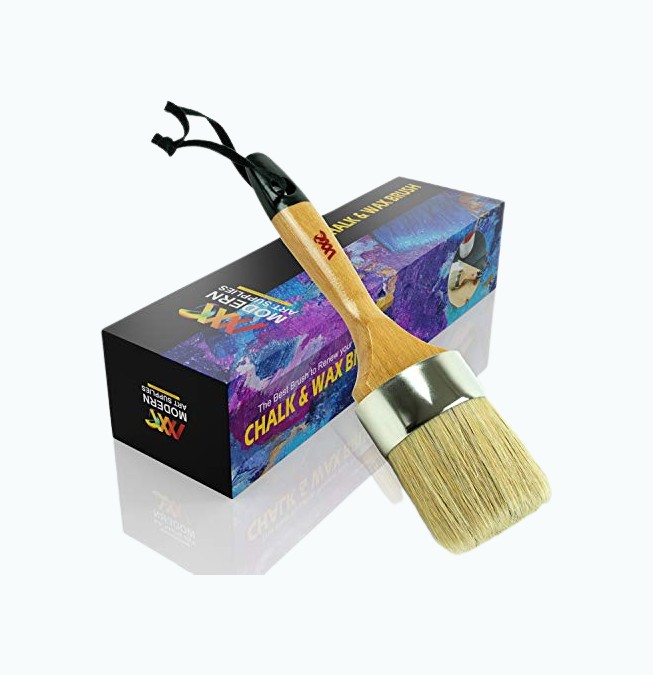
Modern Art Supplies Chalk Wax Paint Brush
Best Natural Brush for Chalk Paint
This is a 2-in1 chalk and wax paint brush. So when you finish applying the paint, you can add a layer of wax for protection. It works with all brands and is compatible with all styles of furniture.
The bristles are 100 percent natural, and the handle is made from durable and lightweight birchwood. It also has a nickel-plated ferrule. Round brushes are easier to control and give better precision and spread.
The only downside is while it is suitable for painting furniture, it isn’t much use on flat or larger projects. Also, because the bristles are natural, you will get shredding, so you need to watch for stray hairs on your wooden surfaces.
Pros
- 100 percent natural bristles.
- Birchwood handle.
- Ideal for furniture.
- Premium quality brushes.
Cons
- Not suitable for larger or flat projects.
- Natural bristles shred.
Product Specs
| Weight | 5.6 ounces |
| Brush size | 2.5 inches |
| Brush shape | Round |
| Type | Natural |
| Bristles | Pure boar bristles |
| Cost | $ |
Our Ratings
Personal Perspective
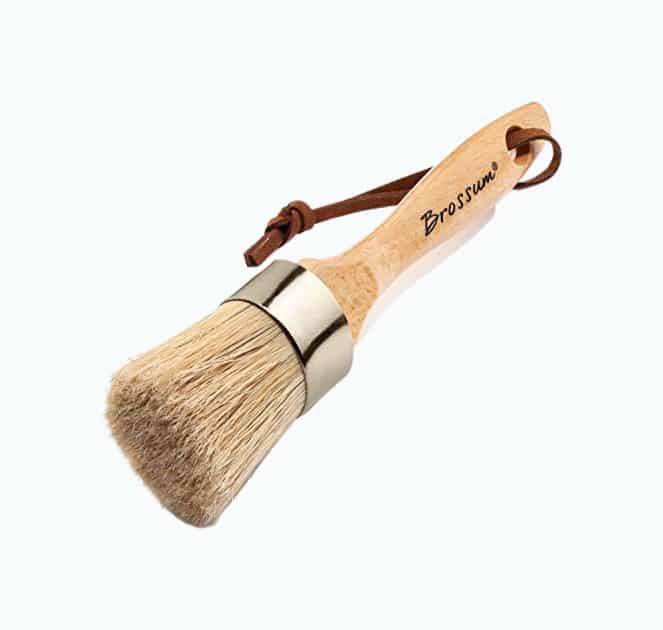
Brossum Large 2-in-1 Round Chalk and Wax Brush
Best Chalk Paint Brush for Cabinets
Like the previous brush, this is a 2-in-1 chalk paint and wax paint brush. This model has 100 percent natural bristles of twice-boiler boar hair. It is also a low-shed brush, guaranteed for maximum hair retention, thanks to the high-grade epoxy glue that holds the bristles.
It has an ergonomically designed handle that keeps you painting for hours. It’s also lightweight, at just 2.39 ounces, so it reduces strain on your wrists and hands.
This all adds up to a premium round brush that loves irregular surfaces, like the type seen on your cabinets.
Like the New Renaissance brush, this 2-inch round model is better suited to smaller and medium projects. However, it is great value for money. While the company claims it is a low-shred brush, it isn’t a no-shred brush, so expect stray bristles to make their way onto your painted surfaces.
Pros
- Twice-boiled natural boar hairs.
- Low-shred bristles with epoxy glue.
- Lightweight and ergonomically designed.
- Great price compared to some brushes.
Cons
- Not suitable for larger or flat projects.
- Shredding will still occur.
Product Specs
| Weight | 2.39 ounces |
| Brush size | 2 inches |
| Brush shape | Round |
| Type | Natural |
| Bristles | Boar hair |
| Cost | $ |
Our Ratings
Community Feedback
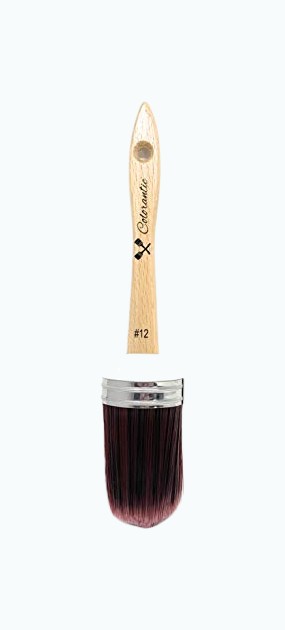
Colorantic Professional Round Chalk Brush for Furniture
Best Synthetic Brush for Chalk Paint
This is our first synthetic brush to feature, so compared to all-natural bristles, this one shouldn’t shed. This brush works for chalk, latex, and all other types of paints.
The brush shape is oval with a 2-inch width and a 10-inch length. While the brushes may not replicate the feel and quality of a natural fiber brush, it does lay the paint down super-smooth, and you get a decent amount of spread.
The wooden handle is lightweight and ergonomically designed to reduce strain on your hands and wrists, which is ideal for more substantial projects.
The only downside is you don’t get the same quality of finish that you get with natural brushes, which might affect the overall outcome of your project. It’s also not as versatile when you tackle intricate painting jobs such as chairs and ornate table legs because it is more of a flat brush shape.
Pros
- Ergonomic handle is lightweight.
- No-shed bristles.
- Suitable for all paint types.
- Super-smooth finish.
Cons
- Not as refined as a natural brush.
- Not as great at intricate painting jobs.
Product Specs
| Weight | 3.17 ounces |
| Brush size | 2 inches |
| Brush shape | Oval |
| Type | Synthetic |
| Bristles | Nylon or polyester |
| Cost | $$$ |
Our Ratings
First-Hand Impression
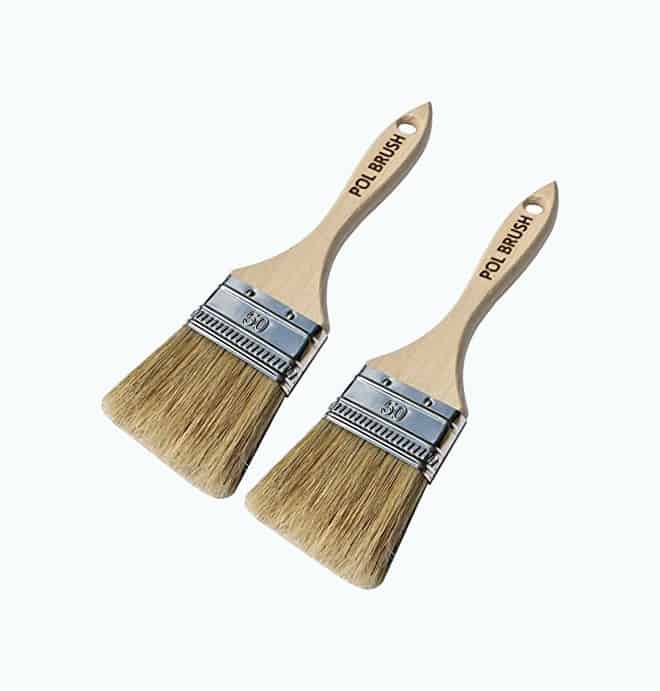
Pol Brush European Chalk Paint Brushes
Best Flat Brush for Chalk Paint
Flat brushes are the perfect tool to use when working on large or flat projects where it’s more about how smoothly and fast the paint goes on rather than intricate detail.
You can use this double pack of 2-inch brushes with any paint type, even watercolor, and varnish.
The bristles are 100 percent natural, and because these brushes are made to European standards, they are also environmentally friendly. The handles are ergonomically designed from lightweight yet durable wood, and thanks to the shape of the boar’s hair bristles, the paint spreads more evenly.
The other plus is the price. This set costs half the price of the Brossum brush, and you get 2 in for the bargain. The downside with natural bristles is they shed, and according to some customers, this brush sheds a lot.
Pros
- Ergonomic handle is lightweight.
- 100 percent boar’s hair bristles.
- Suitable for all paint types.
- Perfect for large and flat projects.
Cons
- Sheds a lot of bristles.
Product Specs
| Weight | 1.6 ounces |
| Brush size | 2 inches |
| Brush shape | Flat |
| Type | Natural |
| Bristles | Boar’s hair |
| Cost | $ |
Our Ratings
User Experience
| Product | Best | Weight | Brush size | Brush shape | Type | Bristles | Cost |
|---|---|---|---|---|---|---|---|
| Diyartz Chalk and Wax Paint Brush Set | Best Brush Set | 19.36 oz | 2″ – 4″ | Round & flat | Natural | Boar hair | $$$$ |
| Modern Art Supplies Paint Brush | Best Natural | 5.6 oz | 2.5″ | Round | Natural | Boar hair | $ |
| Brossum Large 2-in-1 Round Chalk and Wax Brush | Best for Cabinets | 2.39 oz | 2″ | Round | Natural | Boar hair | $ |
| Colorantic Professional Round Chalk Brush for Furniture | Best Synthetic | 3.17 oz | 2″ | Oval | Synthetic | Nylon or polyester | $$$ |
| Pol Brush European Chalk Paint Brushes | Best Flat | 1.6 oz | 2″ | Flat | Natural | Boar’s hair | $ |
What Brushes Do I Need for Chalk Paint?
Chalk paint covers differently from standard paint. It dries with a matte or flat finish and shows up every brushstroke. Upcyclers and furniture designers love chalk paint because it gives a distressed look, making furniture look old and well-loved.
It was first developed by the brand Annie Sloan to help you create that” French-chic farmhouse” look inside your home.
Chalk paint is often used in conjunction with a wax seal to protect the surface of your woodwork. The type of brush you choose determines the quality of the overall finish.
Whatsmore, chalk paint is very adhesive, thanks to its thicker formula, so you need a brush that can cope; plus, it reduces the need for hours of sanding and priming because it coats so well.
Types of Chalk Paint Brushes
So, now we know what chalk paint is good for and why the brush you choose matters; let’s look at the different types of brushes.
Synthetic Bristle Brushes
Synthetic bristles create a smooth finish on every kind of surface. The bristles are made from nylon or polyester or a nylon/polyester mix, and they differ from other brushes that use animal or hog hair bristles.
Synthetic brushes are less likely to shed bristles, which is important when creating a flawless finish.
Natural Bristle Brushes
Natural brushes are made from hog hair, goat hair, and other animal hairs. They are excellent if you want to feel every brush stroke and create a super-smooth finish, but there is a word of caution: natural bristles shed, so you might lose a few, which means you have to stop and lift them from the surface of your project before the paint dries.
This happens because the natural hairs are so fine, while they spread the paint evenly, when you use chalk paint, the added viscosity of the formula causes them to shed.
Round Brushes
Round brushes are the more commonly used type because they give you greater control of the brush and the paint. Painting furniture and other wooden surfaces require skill, and a round brush gives you that accuracy.
Round brushes come in both natural and synthetic bristles, so you still have all the advantages and disadvantages of both types of brushes.
How To Choose the Best Chalk Paint Brush
So, what should be at the top of your shopping list when you choose your new chalk paint brush? What are the deciding factors?

Flat vs. Round
As we’ve already discussed, flat brushes give you a nice even spread of paint over a wider brushing channel, so if you are working on a flat piece of furniture like a tabletop, a flat brush gets the job done faster and with a smoother finish. You can load the paint on the brush and work in long strokes.
A round brush is better for working on more awkward furniture shapes, like chairs and table legs. The grip and balance of these brushes give you more multidirectional control. They are also great for getting into the nooks and crannies.

Bristle Type
Synthetic bristles are more reliable and harder-wearing. They shed less and give a nice smooth finish, which is ideal for matte chalk paint. Natural bristles spread the paint better, scoop the paint better and release the paint in a way that lets you feel the way it is going down.
However, natural hairs shed, so you will need to be vigilant for stray bristles that could dry on the surface of your woodwork and spoil the finish.

Cost
Synthetic brushes are a better value option because they are cheaper to produce. All the materials are manufactured as opposed to animal-hair brushes, where you need a supply of natural materials.
For this reason, natural brushes are more expensive.

Brush Width
Most paint brushes come in standard sizes ranging from 1-inch to 5-inches. Try to match the brush width to the project because the broader the paint brush, the more paint it holds and spreads. A wider, flat brush works best for walls and flat surfaces, while a tapered or round brush is better for areas where a little more accuracy is needed.
So, if you are cutting in around a door frame, for example, a round or tapered brush gives you the precision you need.
FAQs

Can You Use a Foam Brush for Chalk Paint?
You can use a foam brush to apply chalk paint. It soaks up the color, spreads evenly, and leaves a smooth finish. However, keep an eye out for bubbles because when they dry, they burst, leaving your painted surface mottled and uneven.

How Do You Get Rid of Brush Strokes in Chalk Paint?
There are a couple of techniques to get rid of brush strokes. The first is to use 120-grit sandpaper and lightly rub the marks out. The second is to slightly thin the paint with a small amount of water, and the third is to put down a line of paint and then dip your brush in water and run it along the freshly painted line.

How Do You Get a Smooth Finish With Chalk Paint?
The easiest way to get a smooth finish is to use a flat brush; plus, when the paint dries, grab a sheet of 600-grit sandpaper to buff the surface lightly. You could also apply clear wax after the chalk paint dries.

Can I Roll On Chalk Paint?
Yes, you can roll on chalk paint. It is an excellent way to cover walls and larger surfaces.