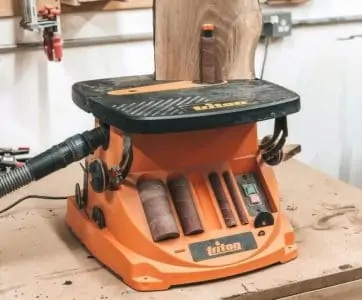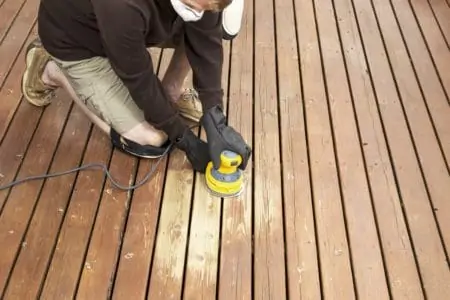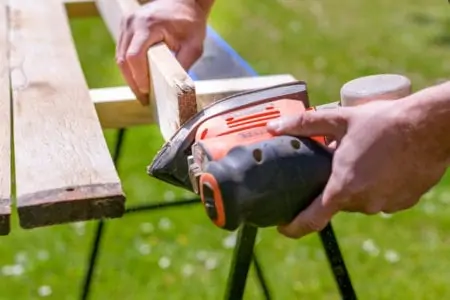
When working with wood, you need a variety of different tools to achieve the best results. Some devices are better for heavier tasks, while some give a more refined finish. Take the detail sander, for example.
When you need that extra refinement, what tool could be better? We give you our take on the 7 best detail sanders.
- Multi-use tool
- Powerful 3-Amp motor
- Maximum of 22,000 OPM
- 4-amp motor
- Maximum of 20,000 OPM
- Includes 5 different attachments
- 3-position ergonomic handle
- Detail finger attachment
- Micro-filtered dust collection
- Generates 13,500 OPM
- Has a velcro sanding pad
- Ergonomic handle grip
- 2-position grip control
- 12,000 OPM
- 1.5 Ah battery included
- 13,500 OPM
- Superior dust extraction
- Low vibration design
- Variable speed trigger
- 4 tools in 1
- Comes in 19-piece set
Review Methodology: At Sensible Digs, we believe in providing you with an in-depth analysis of the best detail sanders on the market. Our experienced professionals test, measure, and rank each product based on key criteria such as performance, design, and user experience. We don’t just review products, we provide you with hands-on evidence to help you make an informed decision. From assessing the benchmark of each detail sander to comparing their unique features, and tracking their results, we ensure our recommendations stand up to scrutiny. Our goal is to help you understand what sets each product apart, so you can choose the detail sander that best suits your needs.
The Best Detail Sanders of 2024
Here are the 7 best detail sanders we could find.
DeWALT Oscillating Sander Tool Kit
Best Detail Sander for Tight Spaces
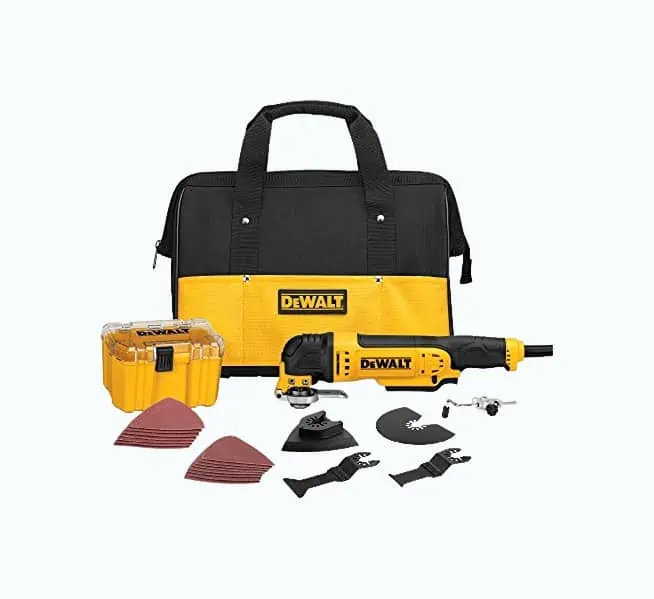
Strictly speaking, this is a multi-tool, but it comes with a detail sander attachment, among others. We chose it as the best to reach tight spaces thanks to the shape and design. It has an elongated body, which gives you a greater reach.
The powerful 3-amp motor creates a maximum of 22,000 orbits per minute (OPM). It also has a quick-change accessory system, dual grip with a variable speed trigger, a 10 ft power cord, and an LED light for those dark, hidden spaces.
It comes with a 29-piece accessory set, including spare sanding discs and a carry case. And when you finish sanding, you can cut metal, wood, and other materials.
What We Like
So Many Tools in One
This is an all-in-one tool. It cuts, shaves, sands, and all without using tools to change the attachments. Thanks to its versatility, it really is the only tool you need for detail work.
Quality Brand
DeWALT is one of the largest manufacturers of power tools in the world. It is a respected brand, loved across the globe by professionals and amateurs alike.
Ideal for Tight Spaces
Thanks to a long, thin body and an LED light, this is the perfect detail sander to reach the tightest spots. Need to reach into a cupboard? No problem. Need to sand awkward corners? No problem.
What We Don't Like
Not Cheap
If you are looking for a budget detail sander, look elsewhere. This multi-tool is expensive. On the plus side, you do get many tools in one.
Product Specs
| Weight (pounds) | 12 ounces |
| Dimensions (inches) | 17.25 x 5 x 9.75 |
| Amps | 3 |
| Speed | 22,000 OPM |
| Accessories | 29-piece kit including a carry case |
| Price | $$$ |
| Warranty | 3-year limited |
Our Ratings
User Experience
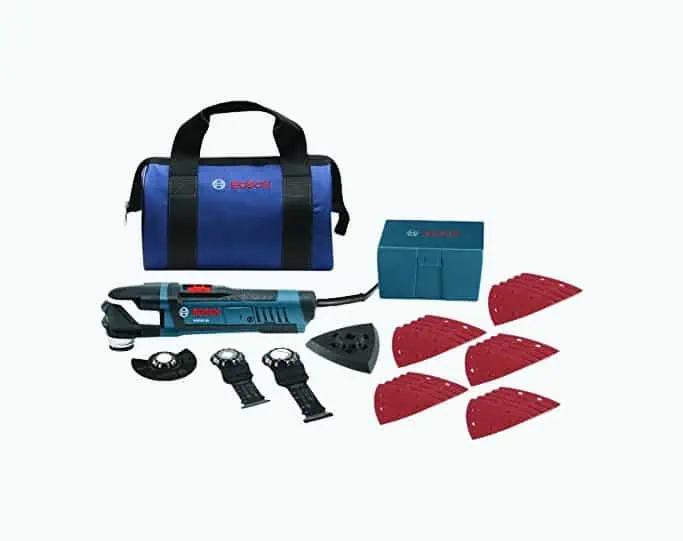
Bosch StarlockPlus Oscillating Multi-Tool
Best Detail Sander for Window Frames
If you are looking for a light and compact detail sander, ideal for window frames, this could be the one. It has a 4-amp motor that generates a maximum of 20,000 OPM. It is another multi-tool, but that is an advantage because you need versatility when sanding window frames.
It has variable speed, flexible positioning with better control, and a no-tool snap-on system for easy attachment changes. They snap on like a snow ski and give better torque transfer and control.
Like the DeWALT, it has an LED light for better detail, and you also get a carry case. It also comes with 5 detachable heads for various tasks other than sanding, plus 25 sanding pads.
What We Like
4-Amp Motor
The 4-amp motor generates between 8,000 and 20,000 OPM, plus it produces higher torque, which increases the size of the tasks you can undertake.
5 Different Attachments
When you have finished sanding, you can swap to use a plunge blade, a segment blade, an oscillating multi-tool, and an extra-clean plunge blade. What it all adds up to is versatility.
What We Don't Like
Short Power Lead
Unlike the DeWALT multi-tool, this one only has a 4 ft power cord. It means you are restricted unless you buy an extension cable, which is inconvenient and increases your costs.
Very Expensive
This is not the cheapest option available. If you want a dedicated detail sander, you can get one a lot less expensive than this Bosch multi-tool. However, you would be missing out on all of the other functions this tool performs.
Product Specs
| Weight (pounds) | 3.3 |
| Dimensions (inches) | 11 x 2.5 x 3.75 |
| Amps | 4 |
| Speed | 20,000 OPM |
| Accessories | 32-piece set including carry case |
| Price | $$$$ |
| Warranty | 1-year |
Our Ratings
Personal Perspective
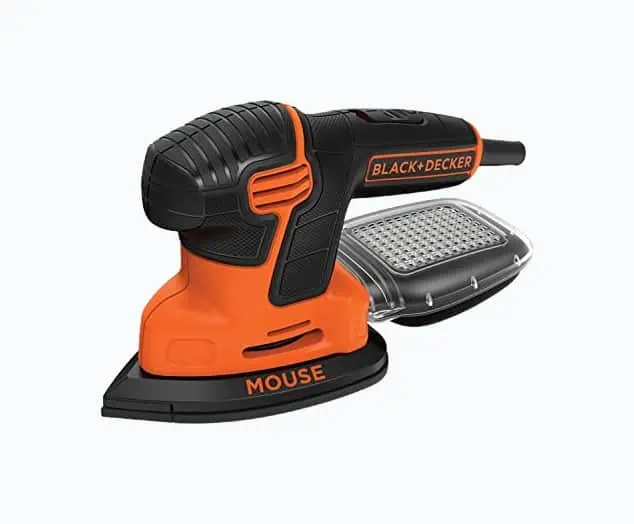
Black and Decker Mouse Detail Sander
Best Mouse Detail Sander
Suppose compact is your thing, this Black and Decker ticks that box. It has a 3-position ergonomic handle, it fits into tight spaces, comes with a finger attachment and a sanding pad, plus the 1.2-amp motor produces 14,000 orbits per minute.
The finger attachment makes getting into the smallest spots a breeze, and the high-performance micro-filtered dust collection keeps your lungs and face free from hazardous dust.
The other plus point with this detail sander is the price. It costs a fraction of the other multi-tools, making it the ideal beginner tool for learning the craft.
What We Like
Fantastic Value for Money
This mouse sander almost won the budget award. How Black and Decker produce a detail sander for so little is beyond us. It costs a fraction of other similar models.
Detail Finger Attachment
This mouse sander gets into the tightest spots, thanks to its design. The finger attachment can reach spaces others can’t. This is the ideal tool for the most detailed sanding.
Lightweight and Compact
Hand and wrist fatigue can slow you down. The fact that this tool is so compact and lightweight makes it more comfortable for prolonged use. This is great if you have a large project that requires more stamina to complete.
What We Don't Like
Weak 1.2-Amp Motor
It is not the most powerful detail sander available. It only has a 1.2-amp motor, which produces 14,000 OPM. This might be a factor when you choose a new sander as it may not meet requirements.
Product Specs
| Weight (pounds) | 2.4 |
| Dimensions (inches) | 10.25 x 4.63 x 5.44 |
| Amps | 1.2 |
| Speed | 14,000 OPM |
| Accessories | Detail finger attachment plus spare sanding sheets |
| Price | $ |
| Warranty | 2-year limited |
Our Ratings
Community Feedback
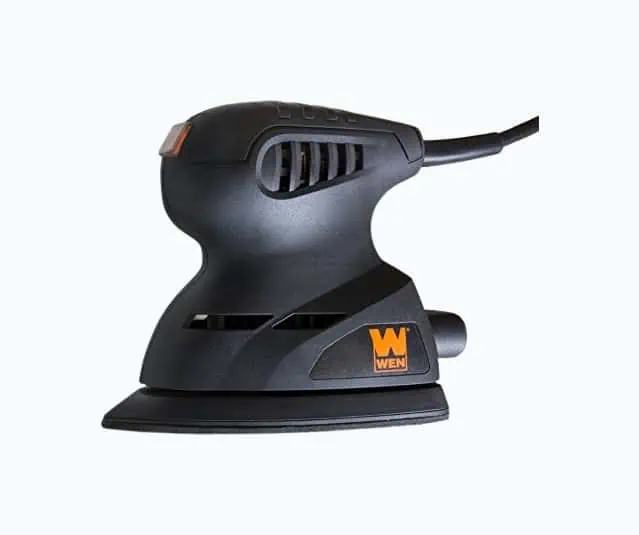
WEN 6301 Electric Detailing Palm Sander
Best Budget Detail Sander
It seemed pretty hard to find a detail sander to beat the Black and Decker on price, but this WEN does it. It has a 1-amp motor that generates 13,500 OPM, a Velcro sanding pad to make sanding pad changes easier, and a dust collection port.
The lightweight and compact design means it weighs just 2 pounds, and the ergonomic handle reduces stress on your hands and wrists. The angled tip also makes it easier to reach the tightest corners.
This is a budget sander, so it isn’t going to produce the highest performance compared to others, but it is a good buy for the price. It also makes it the ideal tool for beginners and those looking for a sander to use occasionally.
What We Like
Budget Price
For the money, this model is pretty hard to beat. It costs even less than the Black and Decker, making it one of the cheapest detail sanders available.
Lightweight and Compact
If you want a compact sander, this is the one. It measures 3.75 x 5.25 x 6 inches, making it one of the smallest detail sanders available. It only weighs 2.5 pounds, so hand and wrist fatigue could be a thing of the past.
Ergonomic Grip
If you couple the device’s size and weight with the ergonomic grip, you get a sander with maximum comfort and control.
What We Don't Like
Weak Motor
Don’t expect too much from this detail sander. It only has a 1-amp motor, making it the weakest model to feature. That said, it is the budget option, so we have to be a little generous here.
Product Specs
| Weight (pounds) | 2.5 |
| Dimensions (inches) | 3.75 x 5.25 x 6 |
| Amps | 1 |
| Speed | 13,500 OPM |
| Accessories | N/A |
| Price | $ |
| Warranty | 1-year |
Our Ratings
First-Hand Impression
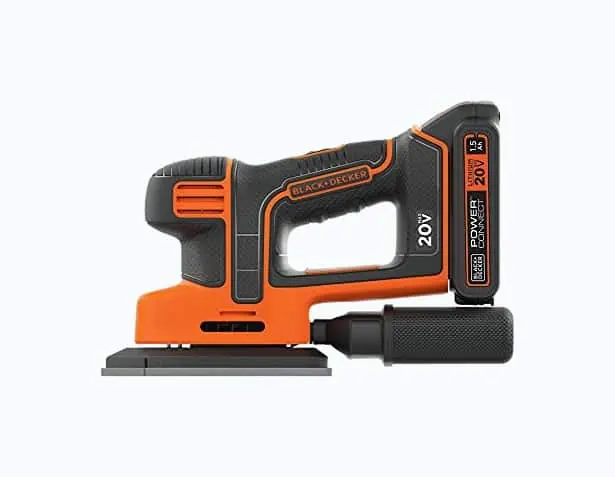
Black and Decker 20V Max Detail Sander
Best Cordless Detail Sander
Now we move into the realms of cordless detail sanders. This Black and Decker is one of the most popular available, thanks mostly to the price. It costs less than a lot of corded models.
It has a maximum 20-volt lithium-ion battery, a detail finger attachment for extra-fine intricacy, plus a 2-position grip that allows for ultimate comfort and control. This sander is compact, even for a cordless model, and the power bank delivers 12,000 OPM.
The obvious advantage of this sander is it can go anywhere. Unlike corded models, you are free to set up and work anywhere.
What We Like
Battery Included
Unlike other models that cost a lot more, you get a 1.5 Ah battery included in the deal. It means you can get started straight out of the box.
Amazing Price
Once again, Black and Decker pull off a great price for their power tool. It costs less than most corded models, and yet you get the device plus the battery! This is ideal for beginners and the occasional user.
Dust Collector
The dust collection port keeps you safe from the hazardous material created by detail sanding. Rather than a bag, Black and Decker have opted for a solid container that detaches easily for emptying.
What We Don't Like
Cheaply Made
This detail sander is best suited to home and hobby use rather than in professional circles. The components are cheap, hence the low price-tag.
Product Specs
| Weight (pound) | 2.59 |
| Dimensions (inches) | 4 x 10 x 9 |
| Amps | 20 Volts (Cordless) |
| Speed | 12,000 OPM |
| Accessories | Detail finger attachment and spare sanding pads |
| Price | $$ |
| Warranty | 2-year limited |
Our Ratings
User Experience
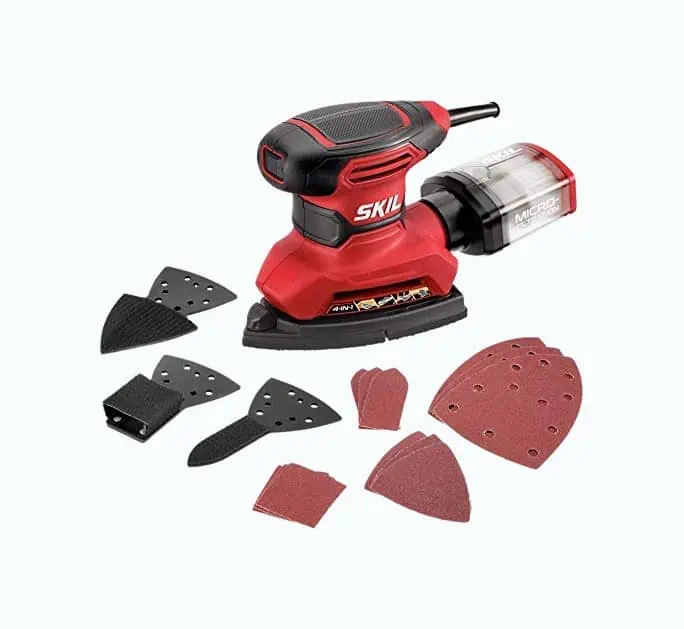
Skil SR232301 Multi-Function Detail Sander
Best Detail Sander With Dust Extraction
When it comes to dust extraction, you cannot be too cautious. A detail sander with either a dust collection chamber or a 1.25-inch exhaust port to attach a dry vacuum extraction system is a must.
The 1.2-amp motor produces 13,500 orbits per minute, while counterweight balance reduces vibration and hand fatigue. It also has a soft rubber grip and an ergonomic handle to aid comfort.
This sander comes with an additional 3 attachments to increase the level of detail and versatility, plus, the dust collection chamber has micro-filtration to capture the smallest particles.
What We Like
Superior Dust Extraction
You can either collect the dust in a transparent chamber to empty when it’s full or attach a vacuum to extract the dust into a central canister, away from the work environment.
Great Price
This Skildetail sander is fantastic value for money. It cost a lot less than other similar sanders, making it a great investment for beginners.
Low Vibration
Through ergonomic design and careful counterbalancing, this detail sander offers low vibration. It means you can keep working for longer without hand and wrist fatigue. Plus, it increases your work rate and reduces noise.
What We Don't Like
Weak 1.2-Amp Motor
At only 1.2 amps, this model has one of the weakest motors of any on the list. It will limit you to smaller and lighter tasks in the main and could cause the sander to overheat if worked too hard.
Product Specs
| Weight (pounds) | 2.6 |
| Dimensions (inches) | 7.87 x 3.98 x 5.63 |
| Amps | 1.2 |
| Speed | 13,500 OPM |
| Accessories | 3 attachments and spare sanding pads |
| Price | $$ |
| Warranty | 5-year limited |
Our Ratings
Personal Perspective
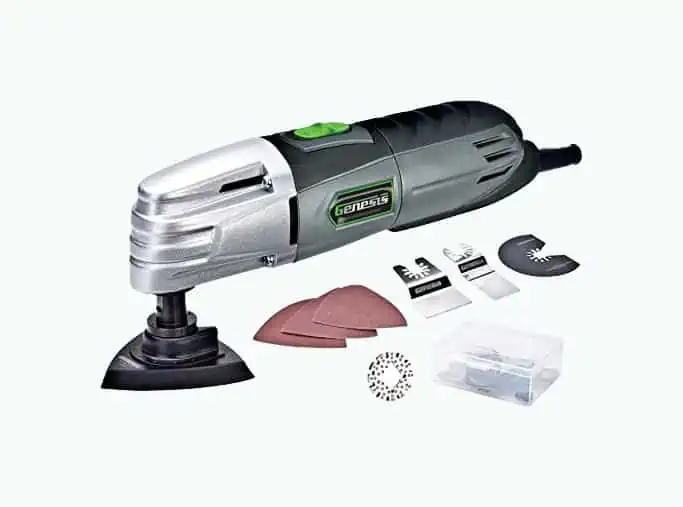
Genesis GMT15A 1.5-Amp Multi-Purpose Oscillating Tool
Best Detail Sander for Furniture
This Genesis kit is another multi-tool set. The difference between this one and the Bosch and DeWALT models is the price. This one will set you back less than 5 times the price, and you still get a 19-piece set in the bargain.
It has a 1.5-amp motor, producing 21,000 OPM, while the interchangeable attachments allow you to sand, scrape, cut, and grind. It is more than just a detail sander. It is a home renovation kit in one.
So, what else has it got? It has die-cast gear housing for added robustness, a variable speed trigger, which is perfect for different materials, and a tool-free quick-change facility.
What We Like
Variable Speed
When you need to change from hardwood to softwood, or swap from metal to plastic, a variable speed trigger gives you the freedom to do it with ease. The speed adjusts from 15,000 to 21,000 OPM.
Amazing Price
For a 19-piece multi-tool set, the retail price seems way too cheap. You can pick this up for less than some detail sanders, yet you get 3 additional attachments and spare sanding pads.
4 Tools in 1
Whether you are cutting, scraping, sanding or grinding, this tool does it all. And thanks to a tool-less system, the heads snap into position using a 6-pin flange design.
What We Don't Like
Limited Power
Unlike the 3-amp motor in the DeWALT and the 4-amp motor in the Bosch, this Genesis will struggle to keep up. It may be a multi-tool, but it might limit you to smaller tasks because it lacks the necessary power.
Product Specs
| Weight (pounds) | 2.75 |
| Dimensions (inches) | 12.7 x 5.2 x 4.6 |
| Amps | 1.5 |
| Speed | 21,000 |
| Accessories | 19-piece set includes 3 attachments and spare sanding pads |
| Price | $ |
| Warranty | 2-year |
Our Ratings
Community Feedback
| Product | Best | Weight | Dimensions | Amps | Speed | Warranty |
|---|---|---|---|---|---|---|
| DeWALT Oscillating Sander Tool Kit | Tight Spaces | 12 oz | 17.25 x 5 x 9.75″ | 3 | 22,000 OPM | 3-year limited |
| Bosch StarlockPlus Oscillating Multi-Tool | Window Frames | 3 lbs | 11 x 2.5 x 3.75″ | 4 | 20,000 OPM | 1-year |
| Black and Decker Mouse Detail Sander | Mouse Sander | 2 lbs | 10.25 x 4.63 x 5.44″ | 1 | 14,000 OPM | 2-year limited |
| WEN Electric Detailing Palm Sander | Budget Pick | 3 lbs | 3.75 x 5.25 x 6″ | 1 | 13,500 OPM | 1-year |
| Black + Decker Detail Sander | Cordless | 3 lbs | 4 x 10 x 9″ | N/A | 12,000 OPM | 2-year limited |
| Skil Multi-Function Detail Sander | Dust Extraction | 2.6 lbs | 7.87 x 3.98 x 5.63″ | 1.2 | 13,500 OPM | 5-year limited |
| Genesis Multi-Purpose Oscillating Tool | Furniture | 3 lbs | 12.7 x 5.2 x 4.6″ | 2 | 21,000 OPM | 2-year |
What Are Detail Sanders?
Detail sanders are tools that allow carpenters and woodworkers to get the smoothest detail when finishing projects in wood. Unlike belt sanders and orbital sanders, which are better at removing large amounts of surface material, a detail sander is more delicate.
So, if you want a surface that is super-smooth and tactile to the touch, reach for a detail sander.
What Are the Benefits?
You can achieve polished results with a detail sander, where no other sander comes close. If you are creating bespoke furniture, a detail sander gives you that depth of quality.
Also, when cabinet making or constructing a hand-built kitchen, a detail sander allows you to access the tightest corners without compromising the quality. You could perform these tasks by hand, but a detail sander lets you work faster and smarter.
It also means you can create super-flat results on cabinets and tabletops without any hollowing out of the surface. Plus, you can change the sandpaper with minimum fuss as you work towards the finest grade of finish.
Above all, it has to be easy to use. When you compare a detail sander with a sanding block, the detail sander wins hands down in the convenience stakes. It is small, easy to operate, and able to reach spots other sanders can’t.
Without a detail sander, results would be slower and more laborious.
Most detail sanders have some form of dust collection system. It looks much like a vacuum bag, where the dust collects until it is ready for disposal. Some even have a clear canister you can monitor as it fills.
Removing dust is crucial if you want to avoid inhaling dangerous pollutants that could result in lung damage further down the line.
While most sanders will perform the tasks you need admirably, there is only one power tool that gets you into the tightest spots. Thanks to its unique triangular sanding pad, you can get close to corners and edges without too much fuss.
Advantages of a Detail Sander
- Achieve polished results.
- Lightweight and portable.
- Dust collection.
- Easy to use.
- Speeds up results.
What Are Detail Sanders Used For?
As the name suggests, detail sanders are excellent hand-held tools for achieving the highest level of detail in a project. It might be that you are smoothing a corner between two joints, and you want to hide visible marks. A detail sander does this.
Thanks to its triangular-shaped sanding pad, it gets into tight spots that might otherwise require the use of a sanding block. Sanding blocks are slower and need manual force to remove the surface material.
A detail sander does this task more efficiently than other sanders.
How To Choose the Best Detail Sander
There are many reasons to choose a detail sander, some of which we have highlighted already, but what are the most important things to consider.

Intended Task
Choose your sander based on need. Some sanders are better at performing different tasks. It might be that you want a sander to complete more significant projects, in which case, choose an orbital or palm sander.
Detail sanders are better for reaching tight spots and corners. They are also the best tool for detailed and super-smooth finishes.
The type of surface you have is another reason to choose a detail sander. Softwoods and lighter materials work best with detail sanders, whereas some hardwoods and firmer materials may require a more robust tool.

How Heavy?
Consider the weight of the sander, especially if you think prolonged use is needed. The heavier the tool, the more likely you will suffer hand and wrist fatigue. This could hamper your progress, especially if you are working in a commercial capacity.

Corded or Cordless
If you work away from home, often without a power supply, you might want to consider a cordless detail sander. It means you can be completely mobile, which is great if you travel to work on a construction site.
The disadvantage with cordless is the constant need to charge the batteries. It can be outweighed by the convenience of no power cord, but it is still a consideration. The answer is to buy a spare battery and always keep one charged.
Cordless sanders are more expensive, especially when you factor in the additional battery. If you don’t need a battery-operated sander, the answer is to save a few dollars and buy a corded model.
Corded detail sanders have their limitations because you need to plug them in, restricting their reach unless you have an extension cord.
However, they have one distinct advantage in that they never lose power or performance. Also, you are not reliant on keeping batteries charged.

Ergonomic Handles
Power tools need to be comfortable to use, and so ergonomic handles are crucial if you want to carry out tasks for longer periods. Balance is also another consideration because it allows you to better grip and control the detail sander.

Special Features
Look for oscillating motion if you want to increase productivity. Oscillation is when the pad rotates around an off-set axis, which creates additional sideways movement.
Another feature to consider is variable speed control. Having the ability to raise or lower the rate the sander works at is crucial if you want flexibility and versatility. This allows you to change materials easily.

Dust Extraction
Removing harmful dust is vital if you want to avoid breathing in hazardous particles. Most have a dust collection bag, but some larger sanders allow you to connect a central vacuum to remove dust from the environment safely.
Each method has pros and cons. Bags allow you to be more mobile because you aren’t shackled to a central vacuum hose. However, vacuum collection systems remove almost all the workplace dust, making it safer.

What’s the Price?
Almost everything boils down to price. Some detail sanders can cost as little as $20, while others exceed $200. The price you pay depends on your budget, coupled with what you expect the tool to do.
If you are a beginner, you might prefer to start modestly and choose a detail sander with a more budget-friendly price-tag. It is unlikely to be the same for professionals and experienced woodworkers interested in performance and reliability.
If you undertake smaller tasks, it might be better to err on the side of caution and get a cheaper model, but if you are using the sander all the time, go for the more expensive one.
Detail Sanders FAQs

Is a Detail Sander Worth It?
The detail sander is your best friend whenever you have to sand corners or spots that are difficult to access. Detail sanders have a small “head” in the shape of a vibrating triangle to which you can attach sandpaper.
Those who work with furniture, particularly elaborately carved furniture, will find that detail sanders are an extremely helpful tool to have. However, you must make judicious use of the instrument at your disposal.
Remember that a details sander will take away a small amount of material at a time, so you need to be patient and meticulous.

Will a Detail Sander Remove Paint?
Detail sanders are good for removing paint. They are sometimes the only sanding tool capable of effectively removing paint from carved or other types of textured surfaces, and they operate well in confined places.
Exercise caution and keep the sander moving to avoid damaging the piece’s intricate details.
Can You Use a Detail Sander for Furniture?
You can and should use a detail sander for making or reconditioning furniture. These sanders are accurate and easy to work with, whether you have to tackle narrow spaces or weird angles.
If you work with furniture, consider investing in a detail sander with attachments to handle intricate carvings on your furniture pieces.

What Is a Mouse Detail Sander Used For?
A mouse detail sander is your go-to tool for furniture finishes. It has an ergonomic and compact shape and looks like a mini clothing iron. Not only does it get in challenging spots, but you also won’t feel fatigued as fast when you use it (compared to larger and bulkier sanders).
This handy little tool can sand rough surfaces and smooth out minor irregularities on wood. Because of the distinctive form of the handle, you can grab it and use it just like a computer mouse. The point located at the front of the triangle base can easily access the restricted area.

What Is the Best Detail Sander?
The BLACK+DECKER BDEMS600 is the best detail sander for great value and outstanding performance.
Its 1.2-amp motor provides adequate power to complete any project quickly and efficiently, while its lightweight and compact design makes it easy to use in even the tightest of spaces.
Plus, it has a helpful detail finger attachment that allows you to sand hard-to-reach areas without worrying about over-sanding larger surfaces. Not only does this great detail sander give you great value for your money, but it also helps you achieve great results.
The Devil Is in the Detail
Detail sanders do what they say on the box. They provide super-neat finishes to get the best possible results for your project. Thanks to their shape and size, they are well-suited to working in tight locations, sanding edges and corners with ease.
If you are serious about woodwork, get a detail sander, and you won’t look back.