Scrubbed the toilet and used that new deodorant that smells like the ocean but still asking yourself, “Why does my toilet smell?”
If you’re facing this situation, know that there are many reasons why foul and weird odors could be coming from your toilet to cause it to stink. We examine them in-depth to see why your toilet smells like a sewer.
Key Takeaways
- Clogged Drain: A blocked drain can cause sewer gas to fill the air, creating a foul smell. Use a plunger or drain snake to clear the clog.
- Damaged Toilet Seal: A broken wax seal between the toilet and floor can allow odors to seep into the bathroom. Replace the seal to fix the issue.
- Vent Pipe Problem: A clogged vent pipe can trap sewer gas and cause a bad smell. Unclog the vent pipe, or call a plumber for help.
- Bacteria and Mold: Bacteria and mold growth in the toilet can cause unpleasant odors. Clean the toilet tank and under the rim with bleach or white vinegar to eliminate the smell.
How Does a Toilet Work?
If you’re asking, “why is my toilet smelling” it’s time to get acquainted with the terminology. A toilet consists of several different parts, all of which are very important in the grand scheme of things.
Flange
A flange is a circular bracket made of metal or plastic that is installed below the toilet bowl and directly above the sewer pipe that protrudes from the floor. It is fastened to the floor using screws or bolts for a secure attachment, while T-bolts secure the toilet to the flange.
Wax Seal
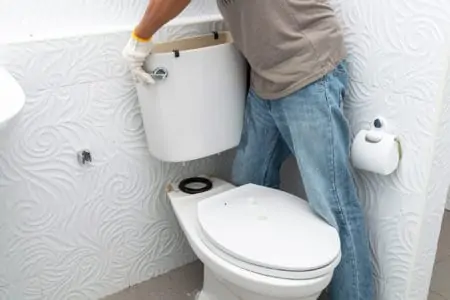
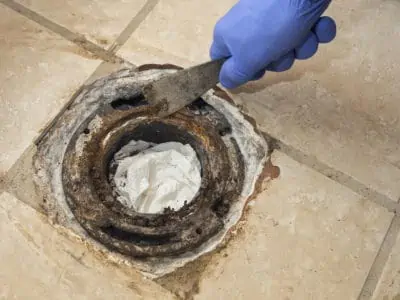
A wax seal, also known as a wax ring, is located between the toilet and the flange. It creates a seal between the sewer and the toilet, preventing odors from leaking through. If the wax seal is old or damaged, you will need to remove the entire toilet to replace it.
Float
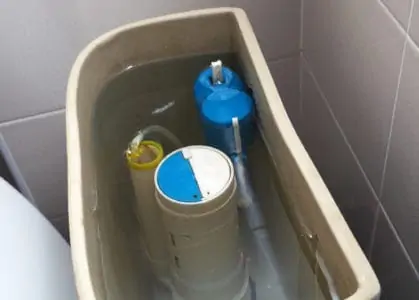
The float is found inside the toilet tank. It is an aluminum or plastic ball that floats on top of toilet tank water. Its primary role is to regulate toilet tank water levels.
Chain
The toilet chain is a small chain that connects the flapper and the lever. After depressing the toilet lever, it pulls the toilet chain, which lifts the flapper. Because they are subjected to frequent use, they are also one of the first toilet components to break.
Flapper
The rubber stopper positioned on the inside base of the toilet tank is known as the flapper. This part of the toilet rises and closes so that water can flow into the bowl. The chain connects the toilet lever to the flapper, allowing the lever to control its movement.
After the tank is drained, the flapper will return to its original position and plug the opening at its base.
Refill Tube
When the toilet is being refilled, water is slowly poured into the toilet bowl through a flexible plastic tube called the refill tube, which is located in the middle of the toilet tank.
To prevent sewer gasses from filling the bathroom, toilets are required to have some water at the bowl’s base at all times.
Why Does My Toilet Smell?
There’s a list of reasons that could be causing it.
Clogged Drain
The Problem
A clogged drain is often the most common cause of a sour-smelling toilet. It’s usually pretty simple to know if this is the problem because it takes longer for the water to drain. If there isn’t adequate water in the tank, sewer gasses are released back into the bathroom.
How to Fix It
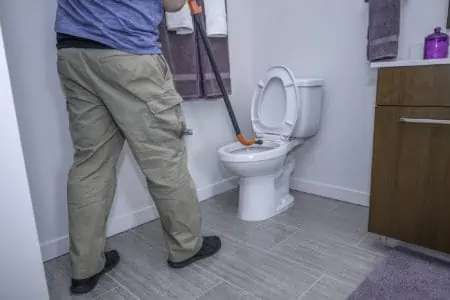
If you think you might be dealing with a clogged drain, you need to flush your toilet with caution because it can result in an overflow. Plunging the toilet or using a drain snake are both good approaches. If the first one doesn’t work, try the second.
Damaged Toilet Seal
The Problem
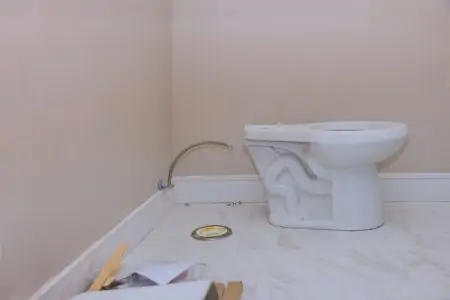
If your toilet smells of urine despite cleaning, you could be dealing with a wax seal problem. The wax seal blocks the gap between the floor and the toilet’s base. If this ring breaks, it can cause nasty odors to seep into the bathroom.
How to Fix It
If you’re not comfortable doing it yourself, call a plumber and have them replace the seal altogether. But, wax seals are inexpensive and can be found at any hardware store.
Simply remove your toilet, scrape out the old seal, and insert the new one. Put your toilet back in place, and voila!
Vent Pipe Problem
The Problem
If your toilet smells bad, it could be due to the vent pipe, even if it’s not leaking. The vent pipe is connected to your toilet drain and leads to the roof. Its role is to ventilate and remove sewer gas from the toilet.
Sometimes, the vent pipe can get clogged (by dust and debris coming from the outside), and sewer gas is trapped, resulting in a nasty toilet smell.
How to Fix It
You have to unclog the vent pipe. You’ll need to go up on the roof and will likely need a drain snake for this operation. If you’re not comfortable enough to do that, we suggest calling a plumber.
Bacteria in Toilet
The Problem
This occurs because bacteria can grow in toilets even when the toilet tank is clean. Consider the feeder pipes connected to the toilet and how they’re filled with microorganisms. They can all smell and shouldn’t linger in the toilet for too long.
How to Fix It
Clean your toilet tank by pouring a cup of bleach into the overflow pipe. Let the bleach work its magic for a few minutes, disinfect the pipe, and then flush the toilet.
The water in the tank (now combined with bleach) will go into the toilet bowl. Leave it for a few hours and flush again.
Mold in Toilet
The Problem
It could be mold growth if you smell a musty stench even after cleaning the toilet. That’s because toilet mold usually grows under the rim, a spot that’s difficult to reach without the proper toilet cleaning tools and one that people often neglect to clean properly.
How to Fix It
Safety Concern
If you’re dealing with toilet mold, make sure to wear a breathing mask and gloves while cleaning it.
Get an old toothbrush or other brush that can get under the rim to scrub the area. You can use either white vinegar or bleach to clean this space but never combine both because they’re too toxic.
Dry P-Trap
The Problem
If sewer smells are coming from the toilet, they could be from the P-trap. When you haven’t used the bathroom in a long time, the water in the P-trap evaporates.
This water acts as a barrier between your bathroom and the sewer system gasses. So bad smells are more noticeable when there’s no water there.
How to Fix It
Just run some water to allow the P-trap to be filled again and reactivate its odor-blocking property.
Low Water Tank Level
The Problem
If the toilet’s tank doesn’t fill with water at an acceptable level for flushing, waste might not go down the drain. That makes it likelier for the toilet to clog, which leads us back to the drain clog issues, leading to bad toilet smells. If the toilet smells like poop, this could be the first indicator.
How to Fix It
Sometimes, the solution is as simple as adjusting the float. For rubber ball floats, you have to adjust the arm by moving it upwards. For float adjustment screws, turn them clockwise to allow water into the tank.
Flapper Problem
The Problem
A flapper with a chain that is too short will allow water to seep out of the tank, reducing the amount of water required for the toilet to be flushed effectively. A weak flush will continue to cause more clogs in the toilet.
How to Fix It
You can adjust the flapper’s chain by unhooking it and re-hooking it to a hole that is closer to your flush lever. Check that the chain has just a little bit of slack in it so that the flapper will open all the way when the toilet is flushed.
Full Septic Tank
The Problem
When the septic tank is full, the bacteria inside the septic tank start to die off. This causes foul smells in the toilet.
How to Fix It
If you have a full septic tank, you have to call in a special waste removal vehicle. They use a large pressurized vacuum to extract all the waste into a special tank.
Sewer Backup
The Problem
If your toilet smells like a sewer, it could be the actual sewer. When sewage or dirty water, also known as wastewater, backs up into the toilet or the drain, it’s called a sewer backup.
Typically, it happens when anything obstructs the flow of wastewater via the sewage line and causes it to become restricted.
How to Fix It
There are several solutions for a sewer backup problem. You can use a plunger or buy some smelly toilet remedy, such as a liquid drain cleaner. If these solutions don’t work, you might have to call in a plumber.
When to Call a Plumber
While you can fix some of the problems yourself, you might have to call in a plumber in these situations:
- When you don’t have the time or the expertise to solve the problem.
- If you’ve tried everything and you’re still not sure what’s causing that bad toilet smell.
- If you don’t have the proper tools and equipment to solve the situation.
- If your toilet wax seal is broken and you’re not comfortable changing it yourself.
- If you have to unclog the exhaust vent.
- For procedures too unsafe to be done by someone who is not a professional.
FAQs

Is a Sewage Smell in a Toilet Dangerous?
The most prevalent component of sewage gas is hydrogen sulfide. According to the findings of recent studies, hydrogen sulfide is known to be harmful to the oxygen systems that are found in the human body.
When inhaled in large quantities, it may result in unpleasant sensations, damage to internal organs, or even death. If your toilet smells like sewage, solve the problem immediately.

Why Does My Shower Water Smell?
It’s probably not your shower water that smells; it’s the actual drain. These smells occur because of bacteria growth that accumulates on the walls of the drain. The bacteria can produce a gas (sulfur) that has an odor similar to that of sewage.

Why Does My Toilet Smell Like Urine Even After I Clean It?
A leaky wax seal is the likely cause of a continual urine smell in many instances. You can use an odor eliminator, but it would just be masking the problem.
The Verdict
So, now you know why your toilet smells like a sewer; it’s time to get rid of that stench. If you’re feeling overwhelmed by potential repairs or you don’t have the expertise or the tools to fix some of these issues, you should call in a professional plumber.