You may not think about your car’s rims on a daily basis, but you know just how eye-catching it is when a car’s rims are damaged. They are simply a part of your car that will always stand out. So you definitely don’t want them looking scratched or worn out.
But a curb can surprise even the best drivers. So how much does it cost to paint rims?
Wheel painting costs can be broken down into many aspects, including whether you pay a professional to do the job or decide to take it on yourself. So let’s get down to the nitty-gritty.
Key Takeaways
- DIY rim painting costs between $40 and $100, depending on the materials used.
- Professional rim painting services can range from $500 to $1,000 for all four rims.
- Plasti-Dip, spray paint, and truck bed liner are common DIY methods for painting rims.
- Consider factors such as material, labor, and desired finish when determining the cost of painting rims.
Wheel Painting Cost Breakdown
Painting your wheels/rims is about more than just the paint. You need to consider the following points.
Material
As far as materials are concerned, you are either going to need rhino liner spray, Plasti-Dip, or a combination of primer, base coat, and clear coat.
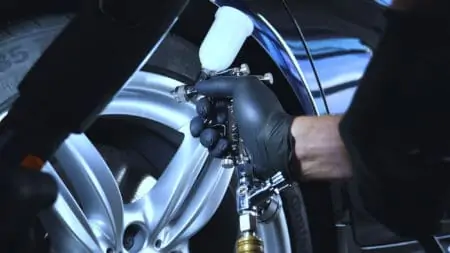
The cost of painting rims on your own is determined by the type and quality of primers and paints used. For instance, you might purchase six or more cans of spray paint and place index cards between the wheels and the rims to quickly get the paint job done.
Or, you could prepare the surfaces more thoroughly, taping the surfaces and taking your time. With this approach, you could probably paint four wheels using three to four spray paint cans.
Labor
Most people who decide to paint car rims themselves finish the job in roughly four hours. In comparison, a professional rim painting service should be able to paint a set of rims within a couple of hours.
This can vary depending on whether the wheels need to be fixed or not.
How Much Does Rim Painting Cost?
There are a few things to consider when painting your rims. Let’s take a look at all the options.
DIY Rim Painting Cost
Here’s how to calculate the average cost per square foot if you opt to paint yourself, using 16-inch tires as an example:
- Each 16-inch tire is the equivalent of 1.3963 square feet.
- 1.3963 multiplied by four tires equals 5.5853 square feet.
- If you use Rust-oleum liner spray, you are going to need about four cans. As each can costs $24, the total cost of paint will be $96.
- $96 divided by 5.5852 square feet works out to $17.18 per square foot.
Professional Rim Painting Service Cost
Professional rim painting services are a must-have if you don’t have the time, patience, or the necessary space to tackle this project on your own.
Calculating the costs of such a job is very simple: multiply the cost per wheel provided by the service you want to employ by four and divide the total by 5.5852. (This is the figure for 16-inch wheels).
For example, let’s say a professional rim painting service from a franchise like Maaco costs $140 for one wheel. That comes to a total of $560 for all four wheels. Divide that number by 5.5852, and you get a cost of $100.26 per square foot.
Painting Rims Yourself vs. Pros
One of the significant factors when answering, “how much does it cost to paint rims?” is related to the costs of DIY projects vs. turning to professionals.
There is a notable difference in cost between DIY and professional rim painting.
| Cost Type | $ Per Square Foot | Total Cost for Four Rims |
| DIY Cost | $17.94 | $40 – $100 |
| Professional Cost | $107.43 | $500 – $1,000 |
Average Cost for Different Ways to Paint Rims
Let’s take a look at all the different ways you can paint your rims and their potential costs.
Cost to Plasti-Dip Rims
The amount of Plasti-Dip necessary to coat the rims varies according to the wheel’s diameter and the number of coatings applied.
Most of the time, all it takes is a spray can per wheel applied using a spray gun. Plasti-Dip should cost less than $75, depending on your area.
Cost to Spray Paint Rims
As is the case with most do-it-yourself jobs, it is often less expensive than hiring a professional. The average cost of a DIY rim paint job is between $30 and $100. However, this is contingent upon the quantity and quality of the materials used.
On average, professional rates for painting your alloy wheels or powder coating your entire set of alloy wheels range between $200 and $500.
Important Tip
It is strongly advised that you obtain estimates from various expert painters to guarantee that you receive the most competitive and reasonable price for a high-quality paint job.
Cost to Use Truck Bed Liner to Paint Rims
This is an easy-to-use rubberized coating that you spray like spray paint. One 32-ounce can of truck bed liner is a fraction of the price of Plasti-Dip. So if you get two $27 cans of product that can cover 35 square feet each, you will have more than enough.
Cost to Powder Coat Rims
The cost of powder coating wheels varies according to the depth and size of the rims, as well as whether you hire someone to coat them or do it yourself.
If you hire a powder coating company to do this for you, you should budget between $250 and $520. This is for a base coat on all four rims ranging in size from 13 to 26 inches.
You should expect to pay an additional 50 percent for a base coat with a candy or transparent finish, or if you want to add a clear topcoat. If you mail your rims in to be coated, you will also be responsible for the cost of shipping both ways.
How Much Does It Cost to Paint Rims Black?
Gloss Black
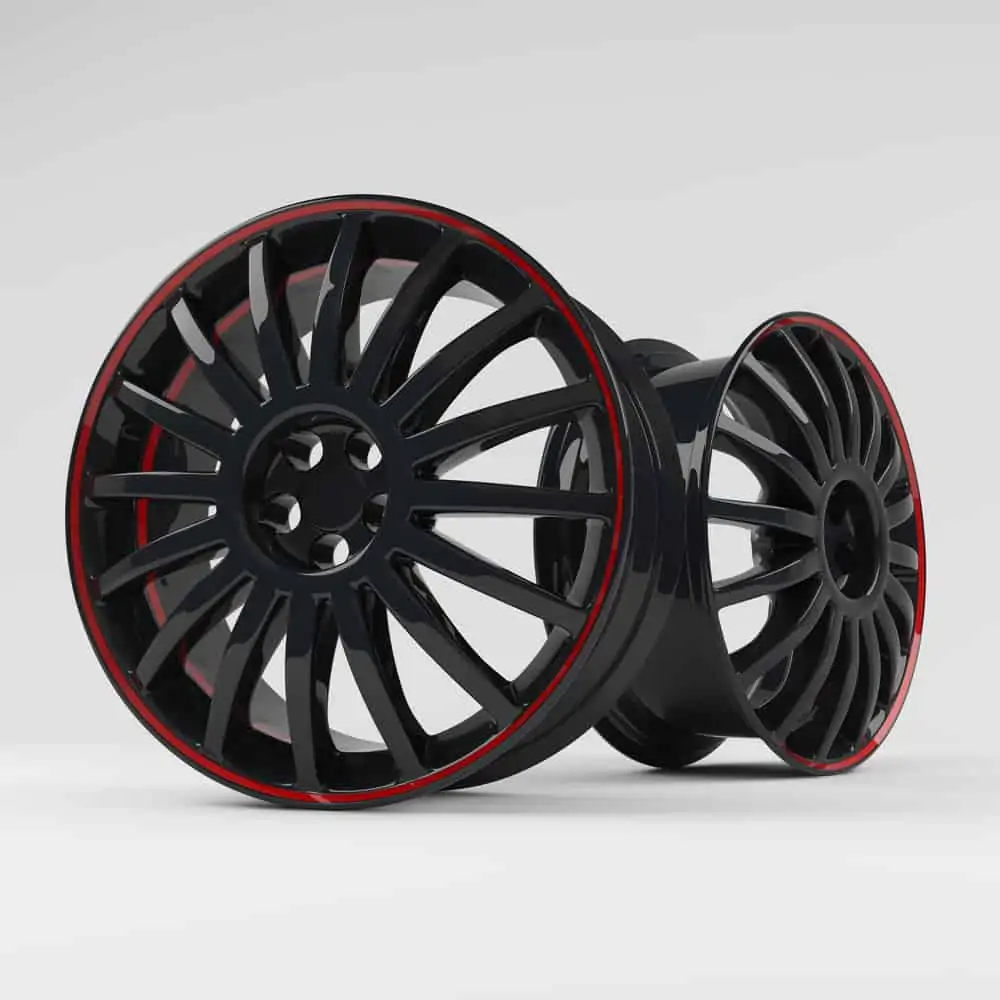
You can make your rims shine in a beautiful glossy black finish. Just know that the paint for such a job will generally cost about $15 per tire, for a total of $60 for all four. Assuming you need four spray paint cans to get the job done.
Matte Black
If you’re looking for that gorgeous matte black finish for your rims, it will cost you between $50 to $75 for each wheel.
Powder Coating
Powder coating is a complicated process done by professionals as a finishing layer to your vehicle. It is added to the paint and mixed with resins and lacquers, helping protect it and prolong the life of the paint job.
The price of powder coating can significantly vary based on where you’re getting the job done. Different companies, such as Maaco, use different powder coating additives to the paint.
I wouldn’t recommend trying to do this yourself, either. Powder coating is normally performed in a specialized facility by professionals.
Due to the complexity of this work, you should expect to pay a reasonable fee for these services. The precise cost of powder coating services varies according to the cost of suppliers.
However, one might anticipate paying between $350 and $700 to powder coat all four wheels of a car.
You can try a DIY approach if you’re confident in your ability. Just purchase some high-performance wheel paint.
FAQ

What Kind of Paint to Use on Car Rims?
You’ll need spray paint specially formulated for car wheels, as well as a clear coat finish to prevent you from having to repaint in the future.
Choose Wisely
The material that the wheel is constructed from can affect the overall finish. Ensure that you select the appropriate finish for magnesium, aluminum, or steel wheels. This also applies to rims and calipers.

Can You Paint Alloy Wheels?
Yes, it is possible to paint alloy wheels. In fact, this is an excellent technique to conceal minor damage such as a scratch or just to modify the look. They can be painted entirely in one color or enhanced with a two-tone pattern.

How Many Cans of Plasti-Dip to Paint Rims
On average, you are going to need about four cans of Plasti-Dip to paint the rims of your vehicle.

How to Paint Rims Without Taking Them Off
Without taking the rims off, place some paper or newspaper between the rims and the wheels of the car. This is to make sure you don’t accidentally spray the tires.

How to Sand Rims for Paint
In order to prepare the rim surface for painting, you can either clean them using a scrub pad or sand them using 320-grit sandpaper.

How Long Does It Take to Paint Rims?
The process for painting your own rims will typically take between three and four hours.
The Bottom Line
Hopefully, you now have an in-depth understanding of wheel painting costs, and we’ve answered the question, “how much does it cost to paint rims?” aptly.
Keep in mind that the quality of the paint used will always influence the end price, which is always significantly lower if you decide to paint your own rims.