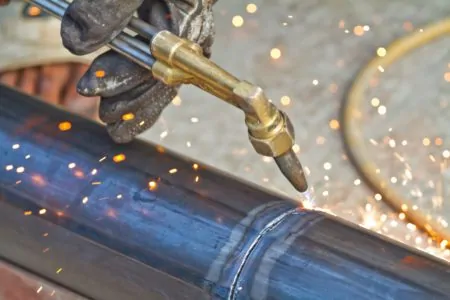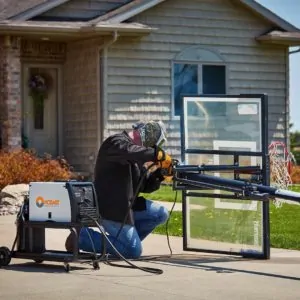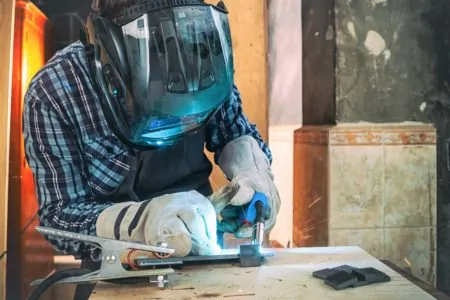
Welding shirts keep you safe. They provide you with peace of mind that should any sparks get through the protective layer of your welding jacket and leather gloves, you will come to no harm.
We examine the 7 best welding shirts to give you the lowdown on how they perform and if they are worth the investment.
- ASTM F1506 standard
- Button-down pockets
- 100 % cotton denim
- Machine washable
- Two chest pockets
- Cotton/twill blend

- Classic style
- Has two chest pockets
- Nomex FR thread on seams
- 100% cotton
- Sleeve vents for airflow
- Generous size range
- Ideal for taller people
- Lightweight fabric
- Fit-to-size
- Moisture wick material
- Vented panels
- Adds a layer of protection
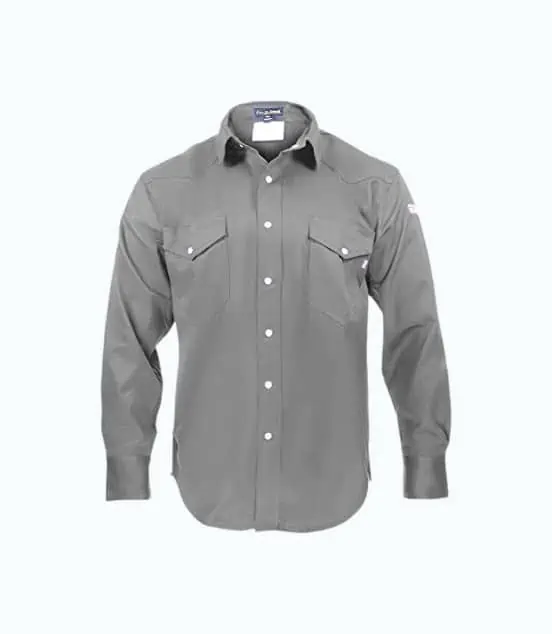
- Has back pleats
- Mercerized for anti-shrinkage
- Weighs 7 ounces
Review Methodology: At Sensible Digs, we take a hands-on approach to product reviews, providing you with clear, evidence-based assessments to guide your decisions. Our professional team conducts thorough research, performs rigorous tests, and employs strict criteria when evaluating welding shirts. We compare and rank each product, tracking their performance and design choices to identify what sets them apart. Our analysis considers key factors such as durability, heat resistance, and comfort. With our expertise, we offer a comprehensive review that highlights the best welding shirts, backed by factual data and first-hand experience.
The Best Welding Shirts of 2024
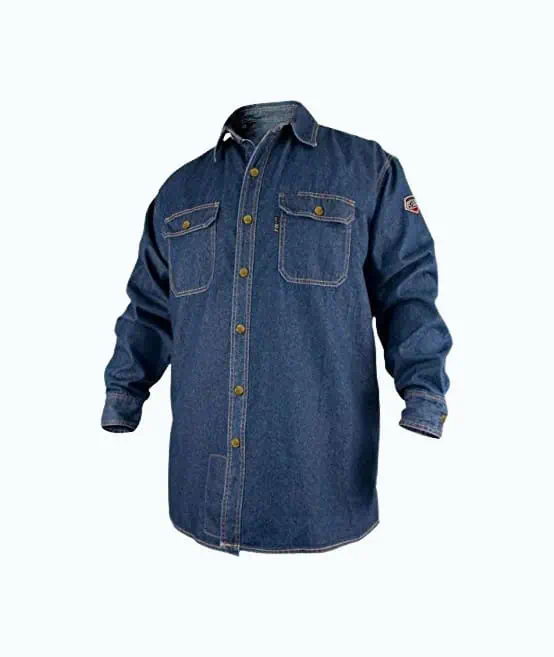
Revco Black Stallion FR Denim Shirt
Best Flame-Resistant Welding Shirt
This western-style denim shirt is guaranteed to retain flame-resistant qualities well after 25 washes, which is a requirement of the American Society for Testing and Materials (ASTM) F1506 standard.
It weighs 8 ounces, so it is heavy-duty, but it is roomy. You’ll probably need a size smaller than you usually get, thanks to the generous proportions of this garment. The 100 percent cotton denim is second only to 100 percent wool for flame retarded capabilities.
It has chest pockets with sturdy button-down flaps, and it has a slot for your pencil. The FR labels are clearly marked on the pocket and the left sleeve. The only downside to this shirt is it lacks recognition from the National Fire Protection Agency.
Pros
- ASTM F1506 standard.
- Western-style.
- Button-down pockets.
- Pencil slot.
- 100 percent cotton denim.
Cons
- Not NFPA recognized.
Product Specs
| Weight (ounces) | 8 |
| Sizes | Small to 4XL |
| Material | 100 percent cotton denim |
| Dimensions (inches) | 6 x 1 x 1 |
| Button-down pockets | Yes |
| Certified | ASTM F1506 limited washes |
Our Ratings
User Experience
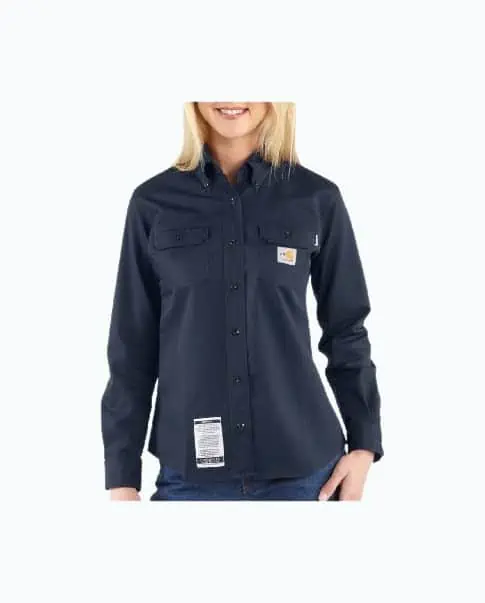
Carhartt Flame-Resistant Women’s Twill Shirt
Best Welding Shirt for Women
Thanks to the twill and cotton blend on this women’s welding shirt, it is lighter. At just 7 ounces, it protects you from electrical arcs and flash fires without compromising on comfort. It is designed for maximum fit without being too restrictive.
It has a button-down collar, two chest pockets secured with melamine buttons, and triple stitching along the main seam for durability and increased stiffness to ensure these areas lay flat against the skin. This is crucial as sparks can lodge in folds and wrinkles.
The only minus point is the shirt is on the short side, with the tails working loose easily when tucked in.
Pros
- Machine washable.
- Two chest pockets.
- Comes in khaki and navy.
- Cotton/twill blend.
Cons
- Shorter length.
- A little baggy on the midriff.
Product Specs
| Weight (ounces) | 7 |
| Sizes | XS to 4XL |
| Material | 88 percent cotton, 12 percent FR nylon twill |
| Dimensions (inches) | 12.8 x 11.2 x 1.4 |
| Button-down pockets | Yes |
| Certified | NFPA 70e, NFPA 2112 |
Our Ratings
Personal Perspective
Wrangler Riggs FR Workwear
Best Durable Welding Shirt
This shirt is a favorite with tradespeople because it is durable and has style. It is also a comfortable garment, which is crucial if you are wearing it every day for hours. The styling is classic and roomy. Unlike other western-style work shirts that are oversized, this Wrangler is 100 percent cotton, so it will shrink in size.
This shirt is designed to self-extinguish any sparks to prevent or reduce personal injury. There are several colors to choose from, including gray, dark green, khaki and denim.
It has two chest pockets, one with a pencil slot, and three-snap cuffs that don’t allow for any size adjustments. There are also safety orange ID labels for enhanced visibility.
Pros
- Classic styling.
- Two chest pockets.
- Pencil slot.
- Pure cotton mix.
- Nomex FR thread on seams.
Cons
- Non-adjustable cuffs.
- Expensive.
Product Specs
| Weight (ounces) | 7.5 |
| Sizes | Med to 4XL |
| Material | 100 percent cotton |
| Dimensions (inches) | 11.3 x 9.9 x 2.4 |
| Button-down pockets | Yes |
| Certified | NFPA 70e, NFPA 2112, ASTM F1506, CAT 2 compliant |
Our Ratings
Community Feedback
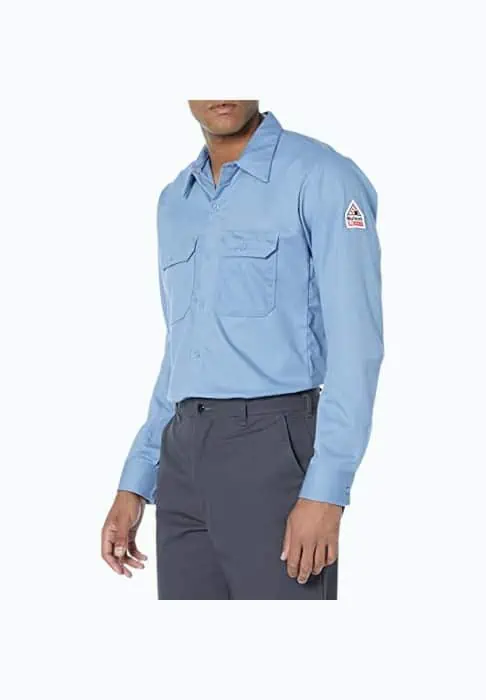
Bulwark Flame-Resistant Work Shirt with Sleeve Vents
Best Welding Shirt for Summer
This shirt exceeds the standards of the HRC1 and the Arc Rating ATPX 7.7 calories per cm squared. This flame-resistant work shirt weighs 7 ounces and has a two-piece lined collar, 7 button enclosures, and sleeve vents to allow increased airflow around the arms and body.
In the summer, welding can seem unbearably hot, so any added benefit to keep cool is welcome. It’s made from 100 percent cotton that can be washed again and again. The cuffs are non-adjustable and tight-fitting to stop any sparks from getting through.
Overall, this shirt is built for comfort and safety, with sizes ranging from small to 5XL.
Pros
- Twin chest pockets.
- 100 percent cotton.
- Sleeve vents for airflow.
- Generous size range.
Cons
- Lacks style.
Product Specs
| Weight (ounces) | 7 |
| Sizes | Small to 5XL |
| Material | 100 percent cotton |
| Dimensions (inches) | 13.6 x 12 x 1.7 |
| Button-down pockets | Yes |
| Certified | HRC1, NFPA 2112 |
Our Ratings
First-Hand Impression
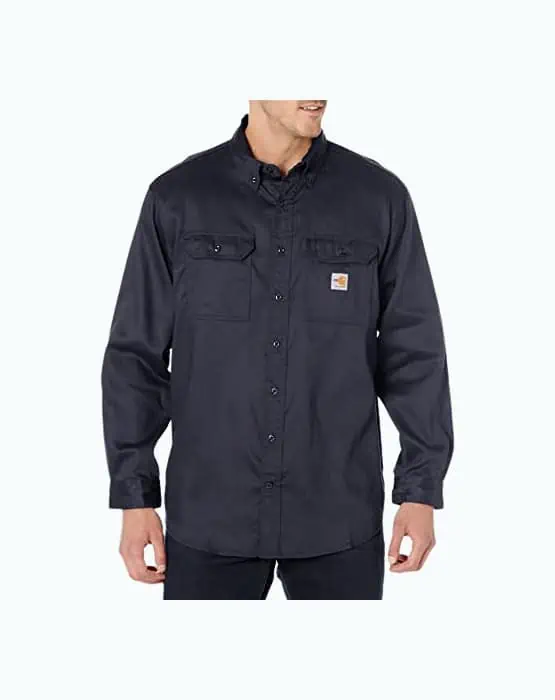
Carhartt Men’s Flame-Resistant Twill Shirt
Best Lightweight Welding Shirt
This Carhartt shirt is lighter than most FR shirts because it uses a mix of 88 percent cotton and 12 percent nylon flame-resistant twill. It weighs just 6 ounces, making it the lightest shirt to make the review. Weight is vital because the more substantial the material, the more the shirt sits heavy and increases your body temperature.
It is still NFPA 70E, NFPA 2112/CAT 2 compliant, so you know it will protect you when it counts. Carhartt sizings mean the shirts are a true fit-to-size rather than oversizing the shirt, so you have to get the next size down.
This is one of the best welding shirts for tall people with the length and sleeves running 2 inches longer than standard shirts. However, Carhartt ensures their size range suits everybody with small to 4XL available to buy.
Pros
- Ideal for taller people.
- Lightweight.
- Fit-to-size.
- Good size range.
Cons
- Tricky to iron smooth.
- Wrinkles could trap sparks.
Product Specs
| Weight (ounces) | 6 |
| Sizes | Small to 4XL |
| Material | 88 percent cotton, 12 percent nylon twill |
| Dimensions (inches) | 14.8 x 14.3 x 2.1 |
| Button-down pockets | Yes |
| Certified | NFPA 70E, NFPA 211, CAT 2 |
Our Ratings
User Experience
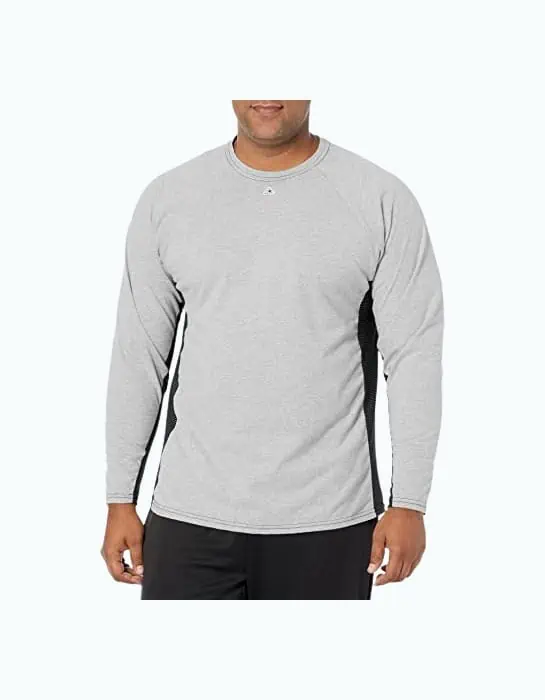
Bulwark Flame Resistant Base Layer Shirt
Best Base Layer Welding Shirt
This base shirt offers an extra protective layer beneath your welding jacket and shirt. It is constructed of 90 percent cotton and 10 percent polyester and meets the safety standard of CAT1 and Arc Rating ATPV 6.4 calories/cm.
It weighs just 5.5 ounces and has a mesh underarm and side seam gusset, as well as hemmed sleeves. The moisture wick material keeps you dry in hot conditions, and the sizes range from small to 5XL.
There is a Bulwark FR compliance triangle centered on the neck to let others know you are wearing an FR garment. The advantage of an underlayer is that you get maximum comfort levels from the welding shirt, and it helps to dissipate sweat thanks to the moisture-resistant material and the vented panels.
Pros
- Moisture wick material.
- Vented panels.
- Adds a layer of protection.
- Increases comfort.
Cons
- Added expense.
- Not great quality.
Product Specs
| Weight (ounces) | 5.5 |
| Sizes | Small to 5XL |
| Material | 90 percent cotton, 10 percent polyester |
| Dimensions (inches) | 13 x 9.6 x 1 |
| Button-down pockets | No |
| Certified | CAT 1 Arc Rating ATPV 6.4 cal/cm2 |
Our Ratings
Personal Perspective
Just In Trend Flame Resistant Work Shirt
Most Comfortable Welding Shirt
Just In Trend places a lot of emphasis on comfort, producing a generous design of shirt that doesn’t restrict your movement thanks to the back pleats. These shirts come in 7 colors and sizes ranging from small to 3XL.
The material is an 88 percent cotton and 12 percent nylon twill mix to provide a lightweight and durable garment. It has two breast pockets and a pen slot, as well as pearl snap buttons and western styling.
This shirt is NFPA 2112 compliant and conforms to ASTM F1506 and HRC 2 (ATPV of 12 Cal/ cm2).
Pros
- Back pleats.
- Western-style.
- Mercerized for anti-shrinkage.
- Weighs 7 ounces.
Cons
- Quality issues.
Product Specs
| Weight (ounces) | 7 |
| Sizes | Small to 3XL |
| Material | 88 percent cotton, 12 nylon twill |
| Dimensions (inches) | 11 x 0.2 x 8 |
| Button-down pockets | Yes |
| Certified | NFPA 2112, ASTM F1506, HRC 2 (ATPV of 12 Cal / cm2) |
Our Ratings
Community Feedback
| Product | Best | Weight | Sizes | Material | Dimensions | Certifications |
|---|---|---|---|---|---|---|
| Revco Black Stallion FR Shirt | Flame-Resistant | 8 oz | Small to 4XL | 100% cotton denim | 6 x 1 x 1″ | ASTM F1506 |
| Carhartt FR Twill Shirt | Women | 7 oz | XS to 4XL | 88% cotton, 12% FR nylon twill | 12.8 x 11.2 x 1.4″ | NFPA 70e, NFPA 2112 |
| Wrangler Riggs FR Shirt | Durable | 8 oz | Med to 4XL | 100% cotton | 11.3 x 9.9 x 2.4″ | NFPA 70e, NFPA 2112, ASTM F1506, CAT 2 |
| Bulwark FR Work Shirt | Summer | 7 oz | Small to 5XL | 100% cotton | 13.6 x 12 x 1.7″ | HRC1, NFPA 2112 |
| Carhartt Men’s FR Twill Shirt | Lightweight | 6 oz | Small to 4XL | 88% cotton, 12% nylon twill | 14.8 x 14.3 x 2.1″ | NFPA 70E, NFPA 211, CAT 2 |
| Bulwark FR Base Layer Shirt | Base Layer | 6 oz | Small to 5XL | 90% cotton, 10% polyester | 13 x 9.6 x 1″ | CAT 1 Arc Rating ATPV 6.4 cal/cm2 |
| Just In Trend FR Work Shirt | Comfortable | 7 oz | Small to 3XL | 88% cotton, 12 nylon twill | 11 x 0.2 x 8″ | NFPA 2112, ASTM F1506, HRC 2 |
Why Do Welders Wear Special Welding Shirts?
Welding shirts provide supplemental protection if any sparks or spatter make it past your primary layers of protective clothing, such as your welding jacket, welding gloves and other safety equipment.
The last thing a welder wants is for a spark to land and become a flame. That spells disaster. Welding shirts are an integral part of a welder’s flame retardant (FR) clothing.
What Are Welding Shirts Made Of?
Welding shirts are made of 100 percent twill or denim. Wool is the best FR material, but it is expensive and unbearably warm to wear, especially in the summer months. Also, some people are allergic to pure wool.
Avoid synthetic materials like nylon, rayon and polyester. These materials are combustible and can melt to your skin.
The most common material is a mix of 90 percent cotton with a blend of treated, fire retardant polyester. Welding shirts can be heavy, weighing as much as 6 to 8 ounces per square yard of material. Heavy materials resist burning better.
How To Choose the Best Welding Shirt
Welding shirts are there for protection, but it is also a piece of clothing and should feel comfortable to wear. We look at the simple basics of how to choose the best welding shirt.

High Collar
A tall collar protects the base of your neck and stops sparks from traveling behind the shirt. Make sure the collar is snug to the skin and always button it up. Wearing the shirt open-necked defeats the purpose.
Comfort-Fit
Comfort should be at the top of your priority list. You will be wearing this shirt for hours on end every day, so make sure it fits and feels like an average shirt. Don’t get one that is loose-fitting or one that restricts movement.
Baggy shirts create folds that can trap spatter and sparks.
It should fit like a regular shirt.
Top Tip

Comfortable Material
Choose a material that feels comfortable against your skin. Pure wool is the best retardant but is not a great choice in warmer climates. Wool makes you sweat. Plus, some people get rashes from fibers that are too coarse in the wool. This is called textile dermatitis.
Polyester and other synthetic fibers are flammable unless treated with a flame retardant. Typically, most welder shirts are a mix of cotton and treated polyester or nylon twill.

Easy To Care For
Welding shirts should be like regular shirts. They should be easy to wash and simple to press. The only thing you should do is avoid products that could reduce the flame-retardant qualities of the garment.
- Liquid chlorine bleach.
- Peroxide.
- Fat-based natural soaps.
- Fabric softener.
- Detergent with fabric softener.
- Bug spray with DEET.
- Starch.
These all reduce the protection your shirt gives you against flames. You should also wash your shirt in small loads to reduce the friction with other materials.
Quick Note

Pockets or Not?
Pockets are handy but are they necessary? Sure, you can store your cell phone or a pencil, but they also create another area where sparks can sit. If you do get one with pockets, make sure it has button-down flaps to stop sparks from getting inside.

Keeps Odors at Bay
Anti-odor features are important because work shirts can get smelly. Look for a shirt that, when washed, smells as fresh as new. Some shirts are stained and soiled even when washed several times.
Wicks Moisture Away
Avoiding moisture absorbing into the shirt material will keep you feeling comfortable throughout the day. Heat is prevalent for welders, whether it is the nature of the work or the temperature on hot summer days.

Sleeve Vents
Sleeve vents allow for air to circulate, which is a welcome relief in the warmer months. Not all shirts have this feature, but it is one to consider when shopping for a new shirt.
How To Wash Welding Shirts
You should always try and wash FR clothing separately in a washing machine. It reduces the instances of wear and tear and possible fiber damage with other types of material. Set your machine to a cotton wash. If you don’t have a cotton setting, a regular wash will do.
The water temperature should not exceed 60 degrees Celsius, and you should use standard detergent, avoiding any of the ingredients listed above. Don’t use soap that contains animal fats and avoid chlorine and fabric softener.
Top Tip
Welding Shirts FAQs

Why Do Welders Starch Their Shirts?
Starch stiffens the shirt and reduces the instances of wrinkling. It also creates a smooth coating that might repel any sparks and spatter and minimize the possibility of them trapping in the folds of the material.
Manufacturers do not recommend using starch because it compromises the shirt’s FR qualities, putting you at more risk.
Are Fire Resistant Shirts Good for Welding?
Yes, they are. They provide supplemental protection, adding a secondary layer to stop sparks and spatter from making contact with your skin. Long sleeves also protect your skin from radiation damage.

Is Denim Good for Welding?
Denim is an excellent material for welding because it has a high-cotton value, is dense and quells sparks, stopping them from becoming flames. You should only use the best quality denim and avoid any synthetic fiber mixes like elastic that might demean the garment’s FR values.

What Clothes To Wear for Welding?
Most welders wear work boots with reinforced toe caps, a welding helmet, a welding jacket made from a non-flammable material like leather, a welding shirt, leather welding gloves, and chaps or welding pants made from either leather or heavy cotton.

Can You Weld in a Long Sleeve Shirt?
Welding in a long sleeve shirt it’s highly recommended as long as you also have a welding jacket on top. The long sleeves are designed to provide full coverage for your arms, keeping you more protected compared to short sleeves.
However, not all long sleeve shirts are suitable for welding. You need to choose a special long-sleeve welding shirt made from flame-resistant materials that can also offer some breathability.
The last feature is crucial because you will likely wear a leather jacket on top of the shirt, and the insulation levels might cause heat discomfort.

Should You Tuck Your Shirt in While Welding?
You should always tuck in your shirt during welding, as you should have as little skin exposed as possible.
Not only does tucking in your shirt protect your skin from potential welding hazards associated with flying sparks, but it also prevents that extra material from getting caught in your welding equipment.

Can You Weld In a 100% Cotton Shirt?
Sure, you can definitely weld in a 100% cotton shirt as long as the material’s been treated and is flame-resistant.
Actually, the most common welding shirts are made from cotton and denim because they’re comfortable and breathable, which is what you want for work equipment.
Try to avoid shirts made with a cotton blend, though, because the synthetic materials used to make them can melt in high temperatures.

Can You Weld in a Carhartt Shirt?
You can weld in a Carhartt shirt as long as it’s made from flame-resistant materials and provided you also wear a suitable welding jacket on top. This brand is known for making quality workwear but make sure to look for products labeled as being flame-resistant.

What Shirt is Best for Welding?
Wrangler Riggs Workwear shirt is regarded as one of the best shirts for welding. It’s one of the most durable products in its category and is made entirely from comfortable and breathable cotton fabric.
The two chest pockets might prove helpful for holding bits and parts needed during welding, although they might be difficult to access if you’re wearing a welding jacket on top (as you should).
Flame-resistant and with quality seams, this shirt doesn’t have adjustable cuffs, which may be a downside for some welders. Overall, it is still a high-quality product sold in many colors.
Let’s Hear It for the Welding Shirt
Welding is dangerous, but it doesn’t mean you can’t keep safe. And safety should always be the number one priority. That’s where welding shirts come in. They add an extra layer of protection just in case a spark slips through your welding jacket.
But welding shirts need to be more than a last line of defense. They need to look good and feel comfortable as part of the deal. If they were uncomfortable, you’d never wear one.