The kitchen is the hub of any home, and many people invest so much effort into choosing the appliances and cabinets. But how many spare a thought for kitchen curtain ideas? Your kitchen window treatment is just as important because it frames the room and provides the finishing touches.
We run through the types of kitchen window curtains and explain the difference in styles to help you decide which is best for your home.
Key Takeaways
- Choose from Café Curtains, Valance Curtains, Shades Curtains, Sheer Curtains, or Floor-Length Curtain Panels for your kitchen window treatment.
- Consider the desired amount of privacy, light control, and style when selecting curtains for your kitchen.
- Explore additional kitchen window treatment ideas like Venetian Blinds, White Shutters, Neutral Shades, or Bold Printed Fabric for a unique touch.
- Get creative with your kitchen window treatment and don’t be afraid to mix and match styles to create a personalized look that suits your taste.
The kitchen is the hub of any home, and many people invest so much effort into choosing the appliances and cabinets. But how many spare a thought for kitchen curtain ideas? Your kitchen window treatment is just as important because it frames the room and provides the finishing touches.
We run through the types of kitchen window curtains and explain the difference in styles to help you decide which is best for your home.
Types of Kitchen Window Curtains
With so many designs available, knowing each type and styling is crucial to making the right choice for your kitchen. Whether you want that country-chic or an ultra-modern space, we have a curtain to suit your tastes.
Café Curtains
Café curtains are among the most common styles of kitchen window finishes. They grew in popularity when homeowners copied roadside café curtain designs to cover their windows. The most popular fabrics include linen, polyester, and sheer.
These curtains were typically hung from rods mounted in the center of the window to cover the lower part from scrutiny while still allowing sunshine to flood the room.
Full-Window Café Curtains
A full-size window curtain typically measures 45 inches in length and is hung from a rail at the top of the window to provide complete coverage. Unlike the half-window curtain, this design offers better privacy for homeowners.
Half-Window Café Curtain
As you’ve probably guessed, the half-window design mounts on a pole in the center of the window. The advantage is that you get as much daylight into the room and keep the privacy to screen the kitchen from prying eyes at ground level.
Most kitchen windows sit above the kitchen sink to give you an interesting view while you wash up, and that’s when the half-curtain comes into its own. The disadvantage is you don’t get as much screening as a full-size curtain, although you can add a matching valance to combat this.
Valance Curtains
The popularity of valance curtains owes much to the Victorians, although the roots go much further back in history to the renaissance era.
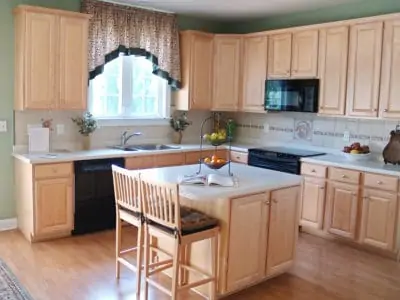
They differ from café curtains because the short length of gathered material hangs from the top of the window rather than halfway down. Valance curtains are perfect for smaller kitchens that need light to flood into the room and increase perceptions of space.
Valance curtains offer minimal privacy on their own, but paired with a café curtain, they give a traditional country look with all the screening you need.
Balloon Valance
Balloon valances are distinctive thanks to their puffed appearance with a gathered hem at the top to create a cloud-like design. Paired with café curtains, they increase the privacy factor while maintaining that traditional styling.
The most common fabrics for balloon valances are polyester or cotton because they are lightweight and easy to work with.
Swag Valance
Swag valances are more elaborate and offer a little more window coverage because they hang lower. The design consists of large pleats of material tied at equal points along the curtain rod to create sweeping loops with two side tails that frame the window on either side.
Swag valances are more luxurious and turn the window over the sink into a statement piece, reminiscent of colonial homes. If you want an example of swag valances, check out the oval office in the White House.
Box Pleats Valance
Imagine swag valances with straight edges at the base of the curtain, and you have the basic box pleat design. It hangs from the top of the window and gathers along the length of the material, but it lacks the drama of sweeping curls, following a more linear design instead.
A box pleat covers a third of the window, so it won’t give you much privacy; however, combined with a half-window curtain, it looks very elegant. Box pleat valances come in many varieties, including inverted box pleats, accordion pleats, sun-ray, and wave pleats.
Shades Curtains
Shades curtains differ from valances because they are made from heavier, insulating material like polyethylene. They share many attributes of window blinds in that they have a pull-string that raises and lowers them.
Shades curtains offer excellent privacy because the fabric panels obscure the view indoors, and they are excellent at keeping the cold out. If you have a large kitchen window, shades curtains are the best choice.
Roman Shades
Roman shades can trace their history back to 70 and 80 AD when citizens would drape a wet cloth over their windows to trap dirt and dust caused by the construction of the Colosseum in Rome. They were also effective at keeping the heat at bay.
The design consists of panels of heavy material with wooden rods inserted at spaced intervals and a pull-cord. They hang from the top of the window and raise and lower as desired. You can obscure the entire window for privacy or opt for a valance-type look with the shade half raised.
Bamboo Shades
Bamboo shades offer a slightly exotic feel for your kitchen window. They are made from 100 percent natural bamboo, so they are good for the environment because no dye is used in the construction.
They don’t block out the light as well as other shades, but they are stylish. The only disadvantage of bamboo shades is they easily damage because sunlight causes them to become brittle.
Pull-Down Shades
Pull-down shades are easy to install and offer complete privacy without blocking all the light from the room. They usually consist of easy-to-clean fabric and a simple rod and cord-pull system.
You can choose to have the shade in one of three positions: fully down, half raised, or raised, so you get options on the amount of light flooding the kitchen and the levels of privacy.
Sheer Curtains
Sheer curtains are lightweight and semi-translucent, so while they offer some privacy, they also allow light into the room. The advantage is that sheer curtains fit almost any window because they hang loose, unlike other shade styles designed to maximize privacy and minimize light pollution.
Sheer material can trace its origins back to 3,000 BC when knitted lace and net were used as a window covering in warmer climates to keep insects and dust out but light flooding in.
However, thanks to soft colors and delicate fabrics, they enhance the styling in your kitchen, and they are also easy to install. Unfortunately, sheers curtains lack insulating qualities, making them better for warmer climates and small kitchen windows.
Floor-Length Curtain Panels
Floor-length panel curtains are the ideal choice for large kitchen windows and for covering the kitchen entrance. They are also excellent at blocking light and drafts when you have doors leading directly from the kitchen to the outside.
You can get floor-length panels in sizes ranging from 63 to 144 inches, and they offer a luxurious feel to any room. Typically made from heavier material, they block the sun and provide complete privacy from the outside world.
To add a touch of elegance, you could measure the kitchen drapes, so you get slight billowing at the base.
Something To Remember
If you let the curtains touch the floor, they will need more regular cleaning.
You could also add a tie-back to allow the curtains to drape, elevating a plain material panel into a stylish window statement.
Kitchen Window Treatment Ideas
Since we’ve explained many different kitchen window curtains, you might think we’ve covered all your choices. If you think we’ve run out of options, think again. It’s time to explore more kitchen window ideas to fire up your creative juices.
Venetian Blinds
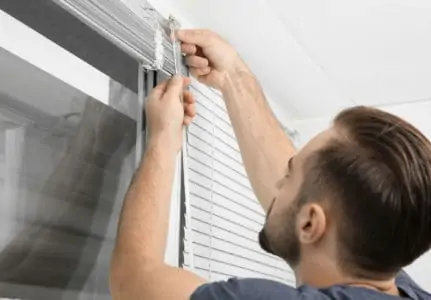
Venetian blinds give your kitchen a modern, minimalist style. They may lack the cozy feel of valances and café-style curtains, but they offer complete privacy and block out light. When the blinds are open, you can angle them slightly to get a view out and maximize light, but the outside world cannot see in.
They come in various materials, from aluminum and wood to plastic, and they are easy to install, operate, and clean. Compared to other kitchen window finishes, they are expensive, but they should last for a very long time once in place.
Floor-Length Sheers
Floor-length sheers offer all the classic and elegant styling of kitchen drapes but still allow the light to flood in. Floor-length sheers are ideal for open-plan spaces where the kitchen and dining area merge. They throw light into dark spaces while protecting the view from prying eyes.
Take Note
These are not the best nighttime curtain option because they backlight your kitchen, highlighting everything to the outside world.
You might want to look at full-length curtain panels coupled with floor-length sheers as a classic combination for day and nighttime use.
White Shutters
White shutters bridge modern and elegant styling, with a twist on a traditional look. You get the same privacy protection as blinds, but shutters make more of a design statement. You can let the light bathe your kitchen and when the time comes, shut out the world.
Keep In Mind
Shutters are bespoke, with each one made to measure, making this a costly option.
Neutral Shades
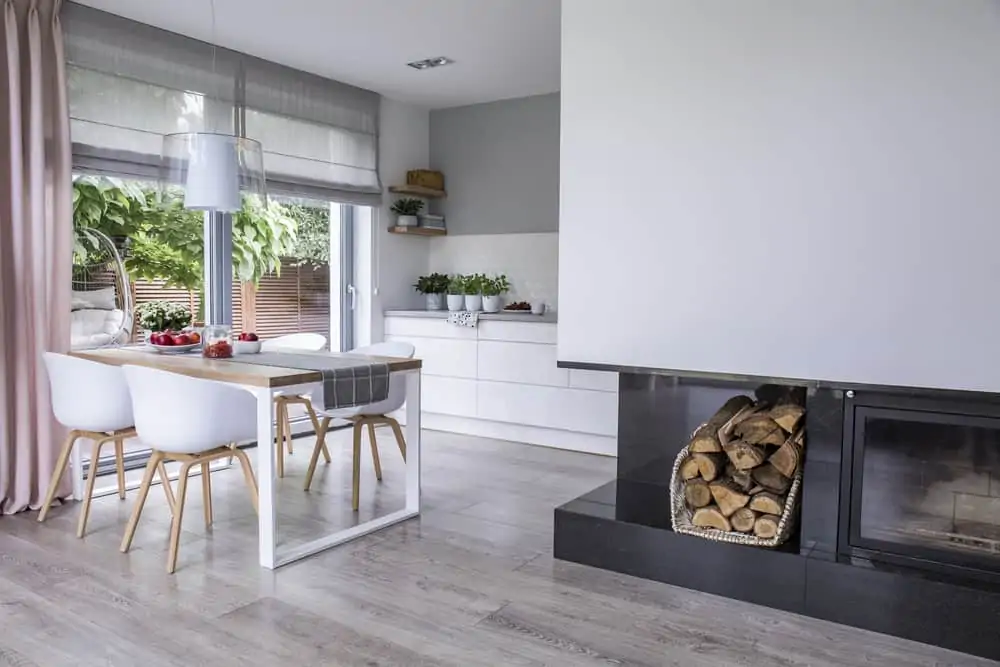
Choosing neutral shades allows the window to glow with warm light while keeping maximum privacy. If you uniform the shading between two or three shared spaces, it can give cohesion and make your room look larger than it is.
Matching the same colors in the kitchen and dining area allows the light to spread throughout the room. It also establishes a sense of visual flow while still screening the outside world.
Bold Printed Fabric
Sometimes your kitchen needs a splash of color. White is ageless but can feel a little cold and formal. Adding bold curtain patterns helps add a splash of creativity in an otherwise sterile environment and makes a statement of your windows.
It also adds a fun element to the room, giving you the chance to share your personality with your visitors.
Woven Shades
When you feel it’s time to dial down the brightness and create mood lighting using the natural sunlight, soft woven fabrics in muted shades do just that. They screen out the world but let just enough natural light through to create a sense of coziness and warmth.
Top Tip
The only downside is that on dull days, it can feel like you are living in a darkened space with the lights turned off.
Maybe choose woven fabrics for accent windows with the brightest aspect and mix and match different curtain fabrics for other windows.
Half Curtains With Hooks
This is a modern take on the valance and involves hanging a piece of fabric across the top half of the window on hooks. It is simple to install and looks elegant yet trendy.
You can choose bold fabric prints or something a bit more alternative like sackcloth to add a shabby-chic feel to your kitchen window. This approach feels less formal than a valance and more contemporary than traditional shades.
The only disadvantage is it does little for privacy and blocking out light. However, when combined with a shade or café curtain, it could be the ideal mix of country style meets urban.
Industrial Look
If you have a bespoke kitchen that doesn’t conform to traditional styling, maybe something industrial will frame your window and enhance the space? Metal shutters, rust colors, or anything that smacks of industrialization is a good fit, especially if you have a loft-style apartment with the styling to match.
It can be something as simple as exposed copper pipes that double as curtain rods to bare brick and salvaged materials for the window covering. You can have a lot of fun with this style brief because there are no rules. Anything could be a perfect match.
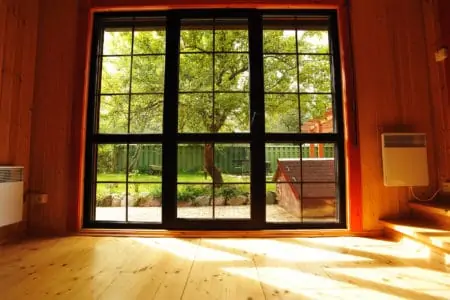
Bare Windows
Sometimes the window frames themselves are the star of the show, so why cover them up. If you live in an old building, the windows will be a vital part of the building’s decorative character.
Also, if you live in a remote area, where the only neighbors are the local wildlife, you may not need that much privacy. Plus, a starry sky makes the best backdrop for your kitchen window, so why block it out?
Get Creative
Whether you prefer clean lines and white kitchen units, or you like to mix and match and let the style grow more organically when it comes to kitchen window curtains, the sky’s the limit.
There are no rules, only creative restrictions imposed by conformity. Shake off the shackles and let your creativity run wild. Dressing your kitchen window could be the finishing touch your new kitchen needs to elevate it from a great space to an extraordinary one.
Go and have some fun.