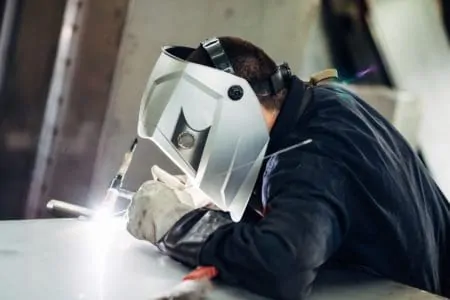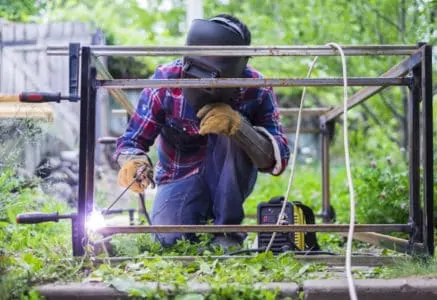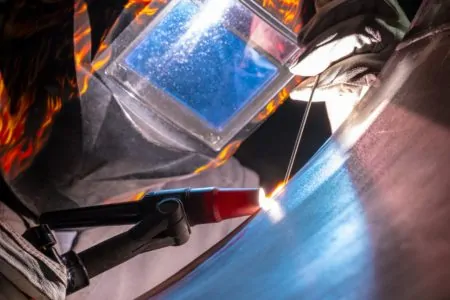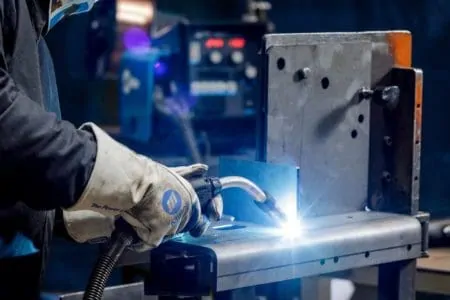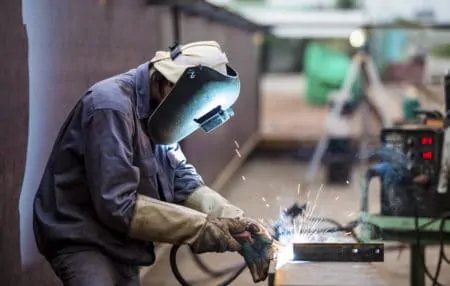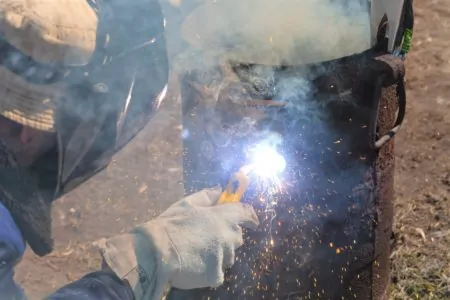
There are three primary ways to weld metal, namely, TIG, MIG and stick. Stick is the cheapest method and the easiest to get set up, but just how effective is it? We look at stick welding and examine the pros and cons, as well as how difficult it is to master.
Join us as we rundown the 7 best stick welders available to buy.
- Lightweight
- Easy start technology
- Inverter technology
- Pulse width modulation
- 60 percent duty cycle
- Multiple metal applications
- Lightweight inverter technology
- Great value for money
- Simple controls
- Hot start & anti-stick
- Only weighs 77 pounds
- Easy dial control
- Compact & light
- Hot start technology
- Stainless steel construction
- Plasma capabilities
- Affordable price
- 0.50-inch cutting depth
- Ideal for the farm
- AC/DC capabilities
- Reliable brand reputation
Review Methodology: At Sensible Digs, our professional team conducts thorough analysis and hands-on tests to provide you with the most comprehensive stick welder reviews. We measure and compare each product’s performance based on specific criteria, such as power, weight, ease of use, and value for money. Our evaluations are backed by data and experience, giving you the confidence to make an informed decision. We assess the design choices of each welder and their effects on user experience. We carefully rank and score each product, providing a clear benchmark for quality. Our findings are based on facts and evidence, underpinned by our commitment to helping you find the best stick welder for your needs.
The Best Stick Welders of 2024
Stick welders come in all price ranges and specifications, so picking the best of the bunch was a tricky task. Here is our guide to the 7 best stick welders.
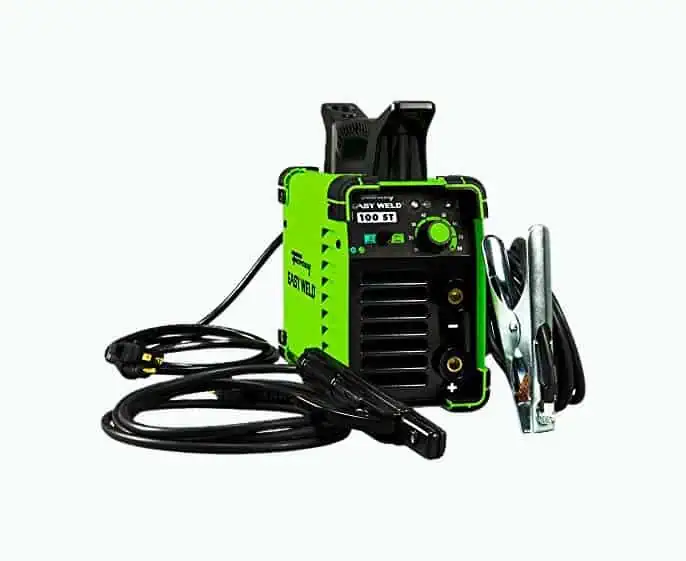
Forney Easy Weld 298 Arc Welder
Best 110-Volt Stick Welder
This 110-volt welder has an inverter power system that generates a 90-amp output with 120 volts. Inverters are more efficient than transformers, so they increase the efficiency of your welder, save you money, and manage the current and temperature better.
This stick welder is also TIG capable, so long as you buy the correct attachments and torch. This welder includes an 8 ft electrode holder and ground clamp, along with a flowmeter and a chipping hammer to remove any spatter.
It has a duty cycle of 30 percent at 80 amps, and it weighs just 9.65 pounds, making it one of the lightest stick welders on the market. It also means it is highly portable.
What We Like
Lightweight
This welder is so light, you can transport it with one hand. It is small and packs away in the trunk of your car easily enough so you can cart it to the next job.
Perfect Home and Hobbyist Tool
Because it has a domestic power rating and is so compact, it is the ideal welder for home and hobbyist use. And once you are done, it packs away neatly in the smallest space until it is needed again.
Easy Start Technology
Striking an arc is never a problem with this device. It has an easy start feature, which makes it a contender for the beginner award.
Inverter Technology
Inverters are lighter and more efficient than transformers. They are better at managing the heat and current, making them perfect if you want an efficient and accurate welder that is easier to control.
What We Don't Like
Less Robust
Inverters may be more efficient, but they are far less robust compared to transformers. Transformers take a lot more punishment and are better suited to heavy-duty work.
Separate TIG Welding Accessories
If you want to switch to TIG welding, you will need to spend extra dollars buying the attachments like the TIG torch and the ground clamp. These are expenses you need to consider when you purchase this unit.
Product Specs
| Weight (pounds) | 9.65 |
| Dimensions (inches) | 12 x 5.5 x 10.5 |
| Voltage | 120 |
| Amps | 90 |
| Duty cycle % | 30 |
| Accessories | Hammer, electrode holder |
| Multi-process | TIG, stick |
| Price | $$ |
| Warranty | 1-year |
Our Ratings
User Experience
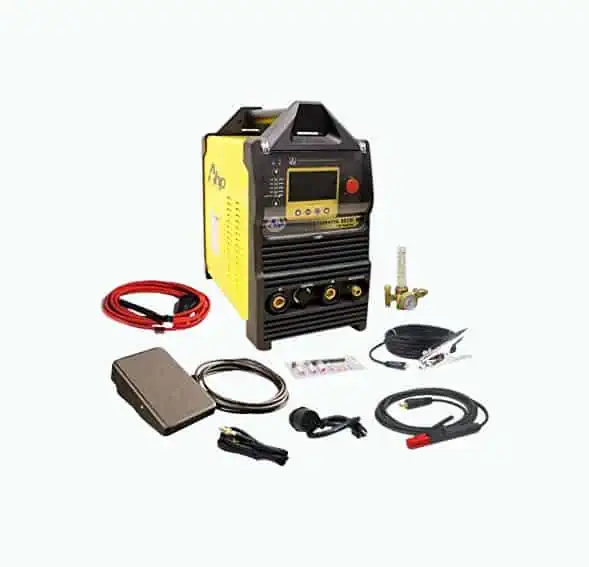
AHP Alpha TIG 200X AC/DC Stick Welder
Best AC/DC Stick Welder
This welder uses inverter technology, but it also incorporates pulse width modulation, ensuring the maximum amount of power load without dissipating any wasted power. It all adds up to greater control with minimum efficiency loss.
This Alpha welds stainless steel and aluminum, as well as thinner materials, which increase your repertoire of skills and adds to your versatility. It will weld 0.25-inch aluminum and 0.375-inch mild steel.
It features a high-frequency hot start function to get the arc going right away, and it has a 60 percent duty cycle at 200 amps. It means that for every 10 minutes, this welder will keep running for 6 minutes between stoppages.
What We Like
Pulse Width Modulation
This welder has one of the most reliable and longest-lasting power sources in its class, and it is all down to the PWM technology, along with the inverter. It makes this welder a class-leader for efficiency. It also enables the user to switch effortlessly between 110 and 220 volts.
60 Percent Duty Cycle
This welder also has one of the best duty cycles of any welder out there, at 60 percent. It keeps you working for longer, getting the job done, instead of standing around waiting for the welder to cool down.
Upgraded Model
This is the 2018 upgraded model, which sees an improvement to the welding torch, along with the 200Hz pulse frequency.
Multiple Metal Applications
It is a versatile machine, allowing you to weld aluminum, stainless and mild steel, copper and iron. It is one of the biggest features and why this welder stays in demand with professionals and experienced users alike.
What We Don't Like
Very Expensive
Whichever way you look at it, this is an expensive tool. It costs way more than some on the list, and you have to ask if the price is justified, especially when you can buy multiples of some models for the price of one of these.
Product Specs
| Weight (pounds) | 69 |
| Dimensions (inches) | 19 x 23 x 12 |
| Voltage | 120/220 |
| Amps | 200 |
| Duty cycle % | 60 |
| Accessories | TIG torch, foot pedal |
| Multi-process | TIG, stick |
| Price | $$$ |
| Warranty | 3-year |
Our Ratings
Personal Perspective
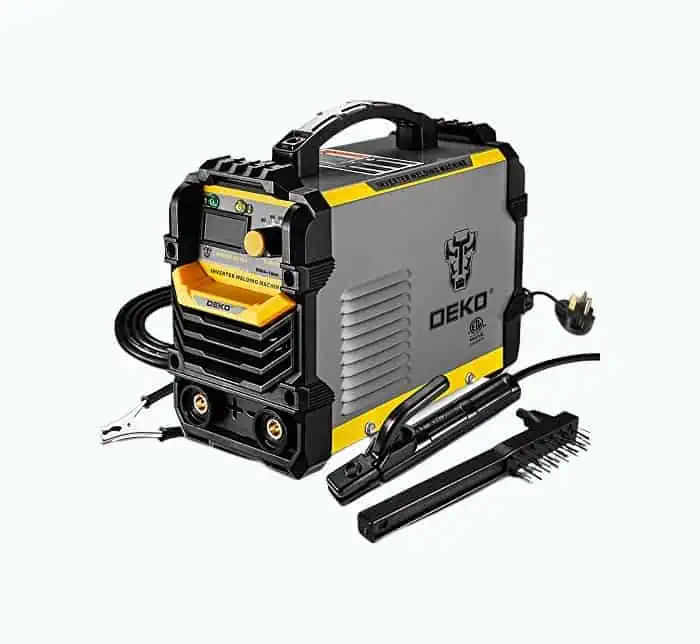
DEKOPRO 110/220V MMA Welder
Best Budget Stick Welder
Okay, if you want a lightweight welder, get one with inverter technology. Inverters enable you to regulate the arc’s quality, but they are more efficient and precise than heavy-duty transformers. However, they don’t have the same capacity handling load that transformers do, so it might limit your workload.
This stick welder is suitable for welding mild steel, stainless steel, aluminum, and other non-ferrous materials. It is a go-anywhere welder, weighing just 12.1 pounds. It makes it the ideal welder if you are looking to take your skills on the road.
The package comes with a stick torch, power adaptor, wire brush and earth clamp.
What We Like
Lightweight Inverter Technology
The inverter replaces heavier and less efficient transformers as a means of controlling the accuracy of the arc. Also, inverters are lighter and more advanced, so they can deal with adjustments more rapidly.
Great Price
For a starter welder, this is an excellent price. It isn’t going to rival the premium models, but it will set you on course for learning to weld and be a reliable machine for several years.
Simple Controls
With an on/off switch, a current dial, and a current meter, this welder is simple to use and control. This is ideal if you are learning the ropes and want to keep things as simple as possible.
What We Don't Like
Build Quality Issues
When things are this cheap, the quality of the parts will be reduced compared to higher-end models. Less expensive components feature heavily, reducing the operating lifespan of this welder.
Rods Stick at 110V
Everyone reports that this welder works well at 220 volts, but at 110 volts, the rod tends to stick, making it almost impossible to get a great weld line and joint.
Product Specs
| Weight (pounds) | 12.1 |
| Dimensions (inches) | 16.1 x 11.4 x 6.3 |
| Voltage | 110/220 |
| Amps | 160 |
| Duty cycle | 60 percent |
| Accessories | Wire brush |
| Multi-process | Stick |
| Price | $ |
| Warranty | 1-year |
Our Ratings
Community Feedback
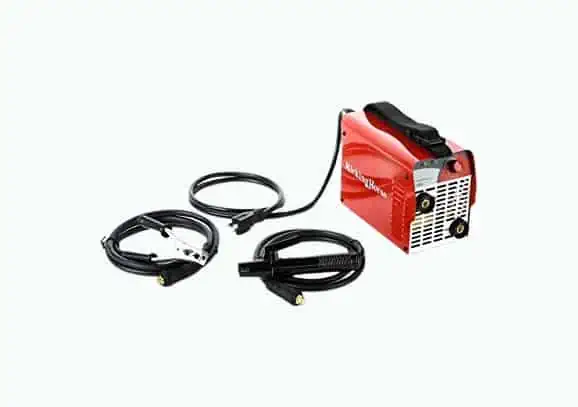
KickingHorse A100Arc Stick Welder
Best Beginner Stick Welder
This is a lightweight welder, best suited to smaller tasks like repairs around the home and garage. It is rated at 100 amps and has a duty cycle of 30 percent, meaning you can run for 3 minutes out of every 10 minutes between rests.
It has overload and overheat sensors that offer complete protection for the novice welder, and it even has an easy-strike arc start. For beginners, this is a must. The inverter technology ensures that this welder runs at 80 percent efficiency and saves you up to 25 percent on your energy usage.
This really is the best welder for beginners to learn the craft, thanks to a host of safety and convenience features that you would expect to find in a bulkier welder aimed at the professional end of the market.
What We Like
Hot Start and Anti-Stick
The hot start makes it easier to strike an arc and maintain it, while the anti-stick feature provides a boost of current to stop the electrode from sticking on the base metal.
Only Weighs 7.7 Pounds
It weighs a paltry 7.7 pounds, so, with the shoulder strap, carting this around should be a breeze. And because it is compact, packing it away for storage or transportation should be easy too.
Simple Controls
Nothing puts off novices more than overcomplicated devices. It benefits from the easiest controls, with just one dial to control everything. It is the perfect beginner’s choice for the first welder.
What We Don't Like
Lacks Power
It scores big as a welder for beginners, but this welder is all but a light-duty starter machine. It wouldn’t cut it in the hands of a professional, and you run the risk of outgrowing this unit pretty quickly.
Made in China
It says this is a Canadian product, but all the indications point to this being constructed in China with Chinese parts to save on costs. It doesn’t matter too much, but don’t pretend to be what you are not.
Product Specs
| Weight (pounds) | 7.7 |
| Dimensions (inches) | 9 x 4.7 x 6.7 |
| Voltage | 120 |
| Amps | 100 |
| Duty cycle | 30 percent |
| Accessories | N/A |
| Multi-process | Stick |
| Price | $ |
| Warranty | 1-year |
Our Ratings
First-Hand Impression
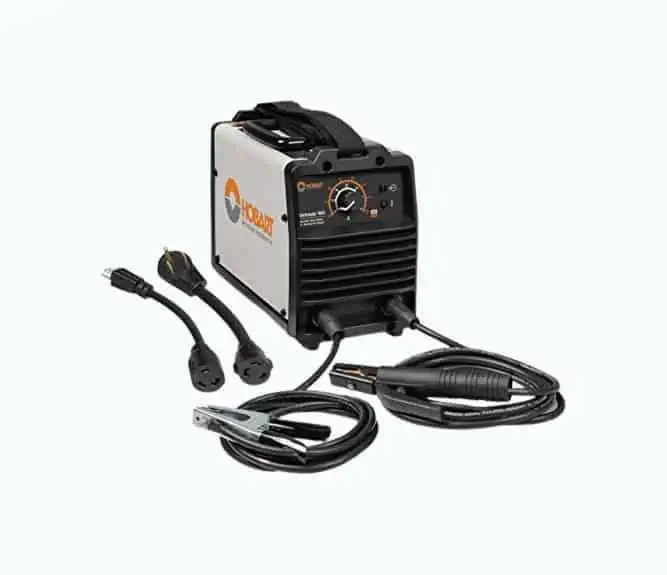
Hobart 500570 Stickmate 160i
Best Compact Stick Welder
This Hobart Stickmate is a rugged welder. It’s easy to transport and store away, and it weighs less than 20 pounds. When you need to set up quickly, Hobart has you covered with their hot start technology.
It has a maximum output of 160 amps, and works seamlessly with 120 and 240-volt systems with a multi-voltage adaptor. This is a small device but it is the perfect tool for taking to the job-site or making repairs around the farm or ranch.
This welder also scores well on the duty cycle, coming in at 30 percent.
What We Like
Compact and Light
It weighs 15 pounds, making it one of the lightest welders on the market. Thanks to its compact dimensions, it is easy to transport and store away when done.
Hot Start Technology
Hot start gives you an instant boost of energy to make starting the arc easier. It means you can get to work straight away and should the arc go out, it restarts without any fuss.
Stainless Steel Construction
If you want a welder fit for the rigors of the construction site, this is the one. It is constructed from stainless steel to protect the welder from damage.
What We Don't Like
Mid-Priced
Hobart machines are never cheap. This one is mid-priced to appeal to experienced welders and novices alike.
Product Specs
| Weight (pounds) | 15 |
| Dimensions (inches) | 13.38 x 7.13 x 10.5 |
| Voltage | 120/240 |
| Amps | 160 |
| Duty cycle | 30 percent |
| Accessories | MVP |
| Multi-process | Stick |
| Price | $$ |
| Warranty | 5-year |
Our Ratings
User Experience
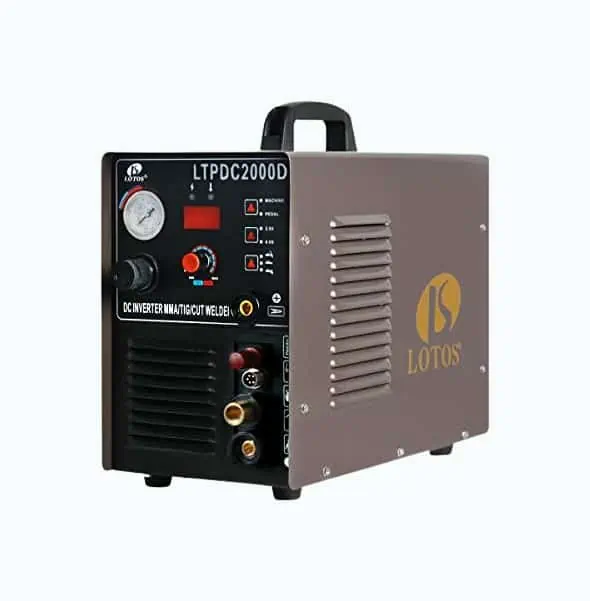
Lotos Non-Touch Pilot Arc Plasma Cutter
Best Stick Welder With Plasma Cutter
This is the first outing on the list for Lotos. This is a 3-in-1 welding machine with plasma cutting capabilities, making it the best all-rounder. When you need versatility to carry out repairs on the spot, this is the tool to use. It TIG welds and stick welds, but it doesn’t MIG weld.
The plasma cutter torch cuts through painted, rusted, and uneven surfaces, producing minimal slag in the process. It uses non-hazardous compressed air to easily slice through stainless steel, alloy steel, mild steel, copper and aluminum.
It is a dual voltage machine with a hot strike arc feature that creates an easier arc, making it more stable.
What We Like
Plasma Capabilities
Using a plasma cutter to slice through metal makes life easier. It also means that you can switch the cutter into a welding machine and get straight to work when you need to join the two pieces.
Affordable Price
Compared to some models, this welder with plasma capabilities is relatively affordable. You could spend double this and still only get a welding machine without the plasma feature.
0.50-Inch Cutting Depth
This plasma cutter is capable of cutting through steel up to half an inch thick. It makes light work of aluminum and other metals too.
What We Don't Like
No MIG Capability
While it is a multi-purpose welder, it can only TIG and stick weld. There is no MIG feature, so it isn’t going to appeal to novices who want to learn the easiest form of welding. You will need some experience of TIG and stick welding to get the most out of this machine.
Product Specs
| Weight (pounds) | 42.35 |
| Dimensions (inches) | 17 x 8 x 12.5 |
| Voltage | 220 |
| Amps | 200 |
| Duty cycle | 40 percent |
| Accessories | TIG torch, plasma torch |
| Multi-process | Stick, TIG, plasma cutter |
| Price | $$ |
| Warranty | 1-year |
Our Ratings
Personal Perspective
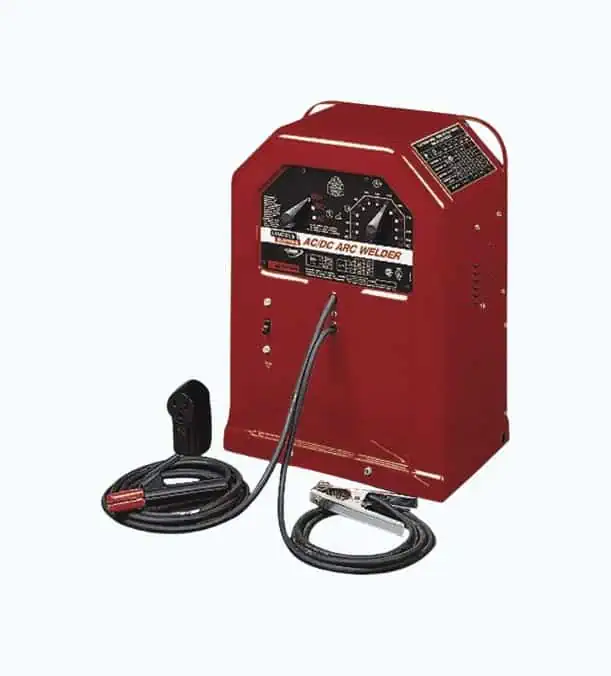
Lincoln Electric Stick Welder 225AC/125DC
Best Stick Welder for Farm Use
Lincoln Electric is a well-known brand, and this stick welder is a real lifesaver around the ranch or farm. It is an AC/ DC machine, so it has better control and less spatter on DC but less penetration, while the AC increases the penetration, but produces a messier weld.
The amps range from 40 to 225, which gives you scope to step up the kind of tasks, making it versatile for heavy machinery and sheet metal like sidings and shed roofs. It welds carbon steel, mild steel, stainless steel, alloys and even cast iron.
It is generator-friendly, although it would require a 50-amp breaker, but it does mean that carting it to the repair is possible, keeping your farm machinery in full working order.
What We Like
Ideal for the Farm
Every farmer knows that keeping machinery in good working order is crucial for the smooth running of the farm. This welder gives you that ability, with multiple uses and capabilities.
AC/DC Capabilities
While it is likely that the DC setting will be the most commonly used, there may be instances where you need the AC for deeper penetration. Just bear in mind that the neatness of the weld will suffer.
Great Brand Name
When you want a reliable welder, you often start with a brand name. Lincoln Electric are well known and produce quality welders that last the distance. This model is no exception.
What We Don't Like
Not the Cheap Option
If you want a cheap welder, look elsewhere. This Lincoln Electric is a lot of money. You get a quality device, but you sure as hell pay for the privilege. This model is almost 6 times the value of the budget model.
Super-Heavy
This is a heavy item! It weighs 117 pounds, almost double the heaviest to feature so far in the review. It means that while it is portable, you might be better loading this into the back of a flatbed truck to take it to where it’s needed on the farm.
Shipping Control Issues
It seems that whoever is sending these welders out of the factory is not checking the condition as they leave. Or, they are getting damaged in transit. Either way, too many are turning up damaged or non-functioning.
Product Specs
| Weight (pounds) | 117 |
| Dimensions (inches) | 18.8 x 15.10 x 14.5 |
| Voltage | 125/225 |
| Amps | 225 |
| Duty cycle | 20 percent |
| Accessories | N/A |
| Multi-process | Stick, TIG, plasma cutter |
| Price | $$$ |
| Warranty | 3-year |
Our Ratings
Community Feedback
| Product | Best | Weight | Dimensions | Voltage | Amps | Duty cycle | Multi-process | Warranty |
|---|---|---|---|---|---|---|---|---|
| Forney Easy Weld Arc Welder | 110-Volt | 10 lbs | 12 x 5.5 x 10.5″ | 120 | 90 | 30% | TIG, stick | 1-year |
| AHP Alpha TIG Stick Welder | AC/DC | 69 lbs | 19 x 23 x 12″ | 120/220 | 200 | 60% | TIG, stick | 3-year |
| DEKOPRO 110/220V MMA Welder | Budget Pick | 12.1 lbs | 16.1 x 11.4 x 6.3″ | 110/220 | 160 | 60% | Stick | 1-year |
| KickingHorse A100Arc Stick Welder | Beginner | 8 lbs | 9 x 4.7 x 6.7″ | 120 | 100 | 30% | Stick | 1-year |
| Hobart 500570 Stickmate 160i | Compact | 15 lbs | 13.38 x 7.13 x 10.5″ | 120/240 | 160 | 30% | Stick | 5-year |
| Lotos Non-Touch Pilot Arc Cutter | Plasma Cutter | 42.35 lbs | 17 x 8 x 12.5″ | 220 | 200 | 40% | Stick, TIG, plasma cutter | 1-year |
| Lincoln Electric Stick Welder | Farm Use | 117 lbs | 18.8 x 15.10 x 14.5″ | 125/225 | 225 | 20% | Stick, TIG, plasma cutter | 3-year |
What Is Stick Welding?
Stick welding, sometimes referred to as Shielded Metal Arc Welding, is the most widely used arc welding process. It uses an electrode made of solid metal, unsurprisingly known as a stick, which is coated in metal powders and compounds to help them bind.
An electric current, either AC or DC, is used to create an arc that melts the base metals and joins them together. The coating around the electrode gives off a gas that stops the weld from contaminating, ensuring the best tensile strength.
Pros and Cons of Stick Welding
As with all welding techniques, there are good and bad points that need to be considered.
Pros
- Cheaper to set-up.
- Lower operating costs.
- No shielding gas is required.
- Weld in almost all conditions.
- Ideal for outdoor use.
- Versatile.
- Makes clean welds.
Cons
- Requires skill and experience.
- Not suitable for thin metals.
- Leaves slag.
- Slow compared to other methods.
- Not suitable for reactive metals.
- Rods need frequent changing.
Is Stick Welding the Easiest Welding Technique?
While it may be a commonly used method, stick welding is far from easy to master. Striking and maintaining a stable arc is challenging, and there is also a lot of spatter to contend with. The spatter needs to be chipped off once cooled, so if you are looking for the neatest weld, stick may not provide it.
Stick welding also produces a lot of smoke, and controlling the heat of the weld is tricky. This makes managing the pool of molten metal more formidable to the beginner. The good news is once you have mastered how to strike and maintain an arc, it gets a lot easier. And with everything, practice makes perfect.
Do You Push or Pull With a Stick Welder?
You always pull the electrode when using a stick or flux-core wire. The simple way to remember the process is to recite this mantra: “if it creates slag, you drag”. The only time you ever push when welding is using the MIG technique, where inert shielding gas is employed to protect the integrity of the weld.
How To Choose the Best Stick Welder
There are some features and benefits you should be on the lookout for when sizing up a new stick welder. Here are some basics.

Changing the Electrodes
Stick welding is effective on most metals, but unlike MIG and TIG methods, you need to swap the stick to match the material when you change metals. This requires skill and takes time. Choose a welder that allows you to change the stick without making the task too complicated. Time is money, and you don’t want to waste any time unnecessarily.

Current Type
Typically, you get 3 options when it comes to current; AC, DC, or both. The most common type of stick welding is DC, which is used in most commercial and construction applications because the arc is more stable and easier to control.
Many starter welders have the AC option, but it is harder to start the arc and challenging to control. Within DC, you also have DC positive and DC negative. DC positive offers less deposition and higher penetration values, while DC negative is the opposite.
Thickness of the Material
If you intend to weld thicker material, something stick welding is very good at, choose a welder with higher amperage. The bigger the current, the deeper the penetration, making the welder better suited to thicker applications.
Inverter or Not?
Inverters are the new kid on the block when it comes to technology. Older welders use transformers to regulate the heat and current, but modern welders increasingly turn to inverters to perform this task.
Inverters are more efficient, saving you energy costs and give you better control over the machine. However, inverters are also less robust than transformers, making the welder more delicate in construction-site situations. Also, if the technology is more digital than analog, you are more likely to experience expensive repairs that require the services of an expert rather than a DIY fix.

The Duty Cycle
Whenever you read articles about welders, you hear the term “duty cycle.” The duty cycle is measured in bursts of 10 minutes and demonstrates how long your welder machine will run for between rests to cool down. So, if you see a welder with a 30 percent duty cycle, it means that the welder will run for 3 minutes and you will need 7 minutes to let it cool down before you can safely use it again.
The higher the duty cycle, the more efficient the machine and the longer you keep working instead of standing around between cycles waiting for the welder to cool down.
Typically, machines with higher welding currents heat up faster and take longer to cool down, which shortens your usage time.
Easy Controls
This is important, especially if you are a beginner. The switches and dials should be large enough to operate them with your welding gloves, easy to view to avoid the wrong settings, and simple to understand.
Luckily, stick welding is a straightforward method that requires little control adjustment, which is why most stick welders have an amperage control and a display to tell you the settings. Other than the AC or DC button, there is little else on the panel to confuse you.

Multi-Purpose Welder
Maybe you fancy switching between welding styles. A multi-process welder allows you to do this, swapping from stick welding to the MIG technique. Some even have TIG capabilities and plasma cutters.
The aim is to give you as many welding options to add to your versatility and save you money on buying separate units for different welding styles.

Portability
Portability is one thing that most welding units share. They are suitcase-size machines with large handles, and they weigh between 20 and 50 pounds, on average. Inverter welders are generally lighter and easier to maneuver, thanks to their circuitry and non-reliance on heavy-duty transformers.

Safety Features
Welding is dangerous, so any welding machine that helps make it less so is useful. Look for duty cycle indicators to warn you when you are in danger of overheating the welder. Also, features like thermal overload protections can help with this as it shuts the welder off if it gets too hot and won’t start the device again unless it has cooled sufficiently to resume safely.

The Price
You always get what you pay for, so if you want an all-singing and dancing welder, be prepared to dig deep. Welders aren’t cheap items, so getting the most for your dollars is crucial.
Decide if you are using it as a home-based welder or if you want a commercial-grade machine? Maybe you want the best of both worlds and are looking for one with dual voltage?
FAQs

Are Stick Welders Any Good?
Stick welders are popular welding tools because they are inexpensive and easy to use. Stick is an efficient method for welding most joints and alloys, and it can be used indoors, outdoors, or in regions with drafts without compromising their effectiveness.
In addition to being the most cost-effective method, it offers the potential to build a connection even on rusted or unclean metals successfully.

Is Stick Welding the Strongest Weld?
Stick welding isn’t necessarily the strongest form, though it can produce strong welds depending on how well it’s executed.
TIG welding is generally considered the strongest because it produces a high-quality weld with good penetration and minimal distortion.
MIG welding is also solid due to its precise arc control and thinner weld beads.

Is Stick Welding Stronger Than TIG?
The stick welding technique has been used for eons, but its output isn’t as reliable as the TIG welding process.
TIG-produced welds have a cleaner end result than you get with stick welding, but they’re also stronger and of higher quality. Unlike stick welding, TIG needs a separate tungsten electrode and a few extra tools.

What Is the Best Stick Welder?
The Forney Easy Weld 298 is a legendary multi-process machine with a 120-volt input and 90-amp output. It’s one of the best stick welders on the market.
This welder is super lightweight, and its TIG capability lets you do projects no other standard welding machine can.
Also, it has an easy-to-use design that allows newbies and experts to get the most out of their machines without giving up quality or results.
Stick Is the Best
There is no denying that stick welders are among the most versatile and much-loved welding machines. They work outdoors, tackle heavy-duty projects and make the ideal on-the-spot repair tool.
If you want a robust welder that produces high-tensile welds without too much fuss, this is the route to go. Just remember, there will be slag, and you will need to clean the welds.