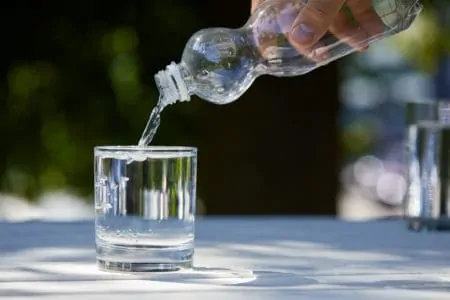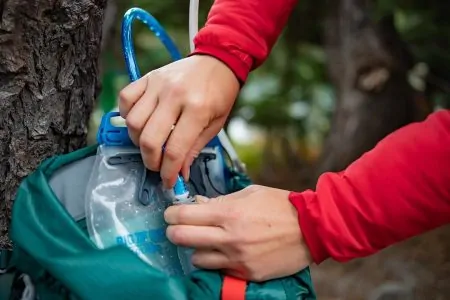
We are fortunate that so many of us now have easy access to clean, healthy water. However, we won’t always have a clean water source available. When camping or on a road trip, you might need to get water anywhere you can find it.
You can safely stay hydrated wherever you go by acquiring a portable water filter, which is a compact, versatile unit. However, with numerous types and models available, you might need some help finding your ideal product.
In this article, we will explain how portable filters work and the different types that are available. We will then share our top portable water purifier reviews, which we chose based on their effectiveness, capacity, size, and durability.
- Meets NSF & EPA standards
- Large 4 L capacity
- Filters 99.99% of pathogens
- Each filter lasts up to 4,000 L
- Recyclable plastic
- Filters microplastics
- FDA-compliant
- Triple level filtration
- Filters up to 1,500 liters
- Three-stage filtration
- Flow rate of 29 mL/min
- Filters lead
- Weighs 0.1 lbs
- Filters microplastics
- Includes cleaning kit
- 0.1 micron pore size
- Four-stage filter system
- Lightweight at 2 ounces
- Made from recyclable plastic
- Filters bacteria, parasites, chemicals
- Dishwasher-safe bottle
Review Methodology: At Sensible Digs, we believe in thorough analysis and hands-on experience to provide you with the best insights. Our professionals conduct detailed assessments, comparing a variety of portable water filters based on essential criteria like performance, design, and user experience. We focus on what sets each product apart from its competitors, from filtration speed to overall durability and portability. Our reviews are backed by quantitative data and first-hand evidence, ensuring you get accurate and reliable information. Whether you’re a backpacker, a survivalist, or just preparing for emergencies, trust us to help you find the best portable water filter for your needs.
The Best Portable Water Filter Reviews of 2024
You now know more about portable filters, so it’s time for our portable water filter reviews. We chose these products based on their effectiveness, size, capacity, and ease of use to ensure you have a varied list of portable filters to choose from.
Platypus GravityWorks Water Filter System
Highest Capacity Portable Water Filter
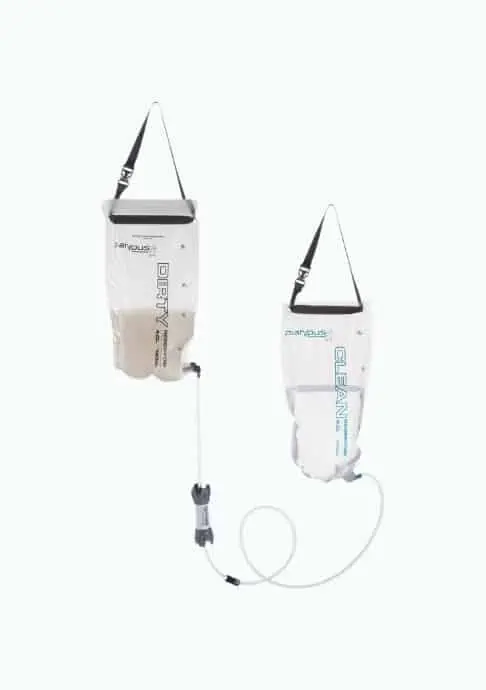
This portable Platypus water filter stands out because of its generous 4-liter capacity. It can filter up to 1.75 liters per minute, which means you can fill a storage sack in less than five minutes.
This model meets NSF and EPA quality standards and removes almost 100% of pathogens.
Operation is easy. You only need to pour water into it, close the lid, and leave it to work. This system has two 4-liter reservoirs and a hollow fiber microfilter. You also receive a shutoff clamp, storage sack, and all necessary components.
What We Like
It Works Fast
In an emergency, speed is everything. At 1.75 liters per minute, this is one fast filter. You won’t have to wait long for clean water, so you know you can depend on this filter when you need it most.
This is a gravity water filter, so you will spend some time setting it up. Its speed compensates for that setup time, providing filtered water far more quickly than most models.
Large Capacity
Technically, this system has an 8-liter total capacity. Four for dirty water, and four for clean. That’s a lot of water — significantly more than you can carry in a bottle.
You never know when you will need extra water, so consider this filter if you want to keep some at the ready. Despite its capacity, it is still compact, so you won’t sacrifice space in your luggage or backpack.
Filters Pathogens
Filtering pathogens is essential if you visit high-risk areas. The filters are tested to meet NSF standards and remove 99.99% of bacteria and protozoa from your water. Pathogens that this system can remove include E.coli, salmonella, cholera, and many others.
What We Don't Like
It’s Fragile
Some customers who praise this filter also say that it is flimsy and comes apart relatively easily. The problem mainly affects the dirty water bag, which tears along the straps.
After complaining to the manufacturer, these users received replacements. This suggests that the issue affected a bad batch rather than being caused by a design flaw.
Filling Is Tricky
Pouring water into this system is easy, but filling it entirely is a different story. Some users say it is challenging to fill up. This isn’t a very common complaint, but it is something to keep in mind if you need to filter a lot of water.
Product Specs
| Capacity | 2 x 4 liters |
| Filtration rate | 1.75 liters per minute |
| Weight | 0.6 pounds |
| Dimensions | 3.25 inches by 9.5 inches |
| Filter type | Hollow fiber |
| Features/accessories | All necessary components, storage bag, shutoff clamp |
Our Ratings
User Experience
LifeStraw Personal Water Filter
Most Durable Portable Water Filter
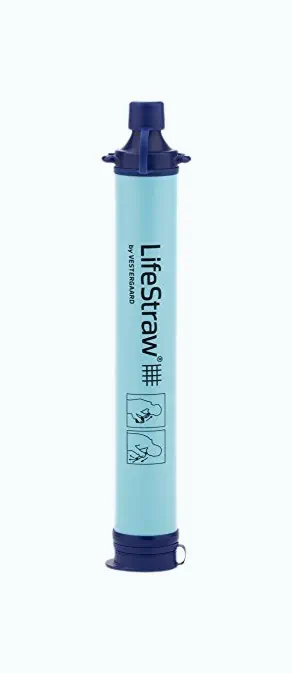
If you are without treated water for a while, you won’t want to waste time on maintaining your personal water filter. The LifeStraw filter is made to last, setting it apart from other straw filters. You will be able to filter a very impressive 4,000 liters of water before replacing the filter.
Made from eco-friendly BPA-free recyclable plastic, it uses a hollow fiber microfilter. The straw also includes a mouthpiece cap, bottom cap, and carry strap.
The straw filters 99.99% of bacteria, parasites, and microplastics. It is a great choice if you are heading to heavily polluted zones.
What We Like
Long Life
LifeStraw estimates that this filter will last up to five years if used correctly. You will save a great deal of time and money as it will require fewer replacements. This is particularly impressive as it can filter up to 4,000 liters of water — far more than its competitors.
Good Cause
For every purchase, LifeStraw donates a year’s supply of clean water to a child in need.
These filters are environmentally friendly as they are made from recyclable plastic. It is a survival tool and a travel aid while also being kind to the planet.
Filters Plastic
One rare advantage is that this straw filters microplastics. This is unusual, even among portable water filters. It also filters almost 100% of bacteria and parasites.
What We Don't Like
It’s Tiring
Users praise this filter’s effectiveness, but some say it is hard work to draw water through it. Sipping requires physical effort and might be uncomfortable if you have never used a straw filter before. Some reviewers recommend this straw for emergencies rather than everyday filtration.
Limitations
The straw has a long lifespan and is an overall excellent filter, but it falls short in some areas. It doesn’t fit into water bottles easily, and there is no way to attach it to water bags or reservoirs.
Product Specs
| Capacity | Up to 4,000 liters |
| Filtration rate | Not applicable/instant |
| Weight | 0.10 pounds |
| Dimensions | 1.2 inches by 9 inches |
| Filter type | Hollow fiber microfilter |
| Features/accessories | Mouthpiece cap, bottom cap, detachable lanyard |
Our Ratings
Personal Perspective
Etekcity Water Filter Straw
Best Filtration
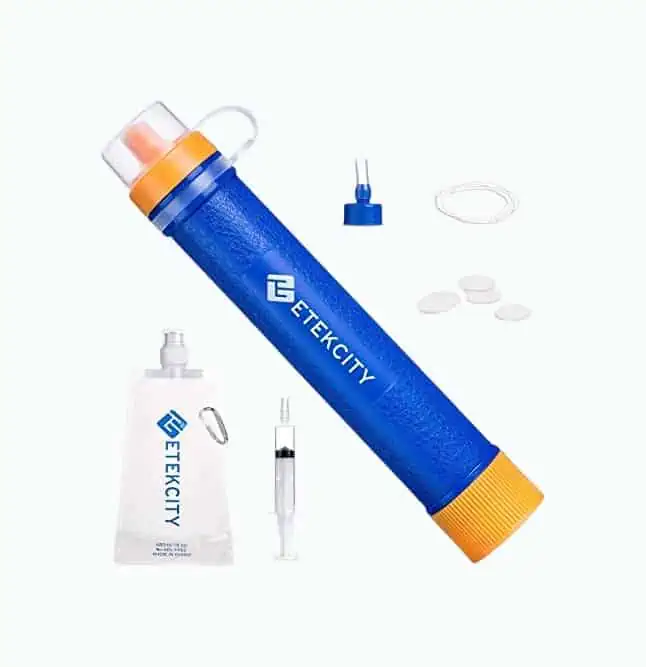
We didn’t expect to find a compact water filter straw with the same filtration power as larger units. This straw uses three-stage filtration for greater efficiency and safety. It is also FDA compliant.
You can use it for up to 1,500 liters of safe water. It uses a hollow fiber membrane and a carbon filter to remove 99.99% of microbes, heavy metals, and chemicals.
Designed to attach to hydration reservoirs, you can use this straw with almost anything. It includes a water pouch, pre-filter, backwash device, and an extension tube.
What We Like
Long-Lasting
Each filter cleans as many as 1,500 liters before it needs replacing. This is an effective, convenient tool to take on extended trips, as maintenance shouldn’t be required. A backwash device is included for easier cleaning and to prevent clogs.
Triple Level Filtration
Why use one filter when you can have the power of three? This straw has a pre-filter, a hollow fiber filter, and a carbon filter. It combines the best of all three worlds for extra-effective filtration.
This is more important in high-risk areas where the extra layers of protection provide peace of mind.
Filters Almost Everything
There is very little that this straw can’t deal with. It filters out heavy metals, chlorine, volatile organic compounds (VOCs), debris, and pathogens. You will be protected against numerous bacteria and contaminants, and your water will be healthier as a result.
What We Don't Like
Difficult Suction
According to some buyers, sucking water through this straw is hard work. They were pleased with its effectiveness and noticed visible changes to their water quality, but still felt drinking through the straw was tiring.
Most users are still very satisfied with this filter, but it’s worth keeping in mind, particularly if you have breathing difficulties.
Hard to Fill
Some customers complained that filling the included water bag can be difficult. This won’t be an issue if you are drinking water directly via the straw, which can be done without the bag.
Product Specs
| Capacity | Up to 1,500 liters |
| Filtration rate | Not applicable/instant |
| Weight | 0.1 pound |
| Dimensions | 1.2 inches by 6.2 inches |
| Filter type | Triple-stage; pre-filter, hollow fiber, activated carbon |
| Features/accessories | Pre-filter, foldable water bag, extension tube, backwash device, manual included |
Our Ratings
Community Feedback
Survivor Filter Pro Water Filter
Best for High-Risk Zones
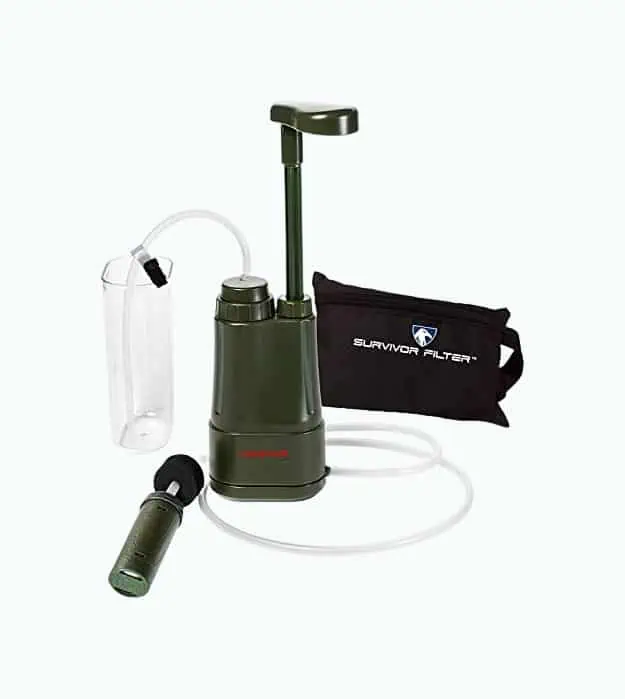
You might have noticed that some of our favorites don’t filter viruses. This pump does, so it is an excellent choice if you travel to areas with a high exposure risk. The filter also tackles bacteria and heavy metals, so it is a well-rounded option.
Its materials are similar to those used in car manufacturing and Apollo space missions, so you can be confident that it is durable. The three-stage filtration works at a rate of 29 milliliters per minute. You can drink the water directly, pump it into a tumbler, or attach it to a hydration pack.
This Survivor product also includes a drinking cup, travel bag, user manual, and all necessary components and tubes.
What We Like
Filters Viruses
Most pumps can’t handle viruses or are limited in the contaminants they can filter out. This model removes heavy metals (including lead), bacteria, and viruses from your supply.
It’s Durable
If the materials are good enough for car manufacturers and astronauts, this filter is certainly built to last. In addition to its durability, it is also BPA-free and weighs less than a pound.
We were startled by this filter’s 100,000-liter lifespan. It goes without saying that this product will last a long time and is worth choosing for its durability alone.
Filters Lead
Lead is a highly dangerous contaminant and one that is difficult to filter out of water. Not all filtration systems are capable of removing it, so we are very pleased that this one does.
In addition to lead, it also purifies your water of most other contaminants and is one of the most thorough filters we have seen.
What We Don't Like
More Costly
Compared to filter straws, this filtration system isn’t cheap. Still, its price is not unreasonable when you consider how effective it is. The sophisticated filters and high-grade material contribute to the cost, so this isn’t a budget option.
Relatively Slow
You won’t have to wait a long time for this pump to work, but its filtration rate is relatively slow compared to some of the other products on our list.
The straws we chose are quicker as they filter water immediately as you drink it. In this case, you have to manually pump the filter and the filtering process itself is quite slow.
Product Specs
| Capacity | Up to 100,000 liters |
| Filtration rate | 29 milliliters per minute |
| Weight | 0.1 pound |
| Dimensions | 1.2 inches by 6.2 inches |
| Filter type | Triple-stage; pre-filter, hollow fiber, activated carbon |
| Features/accessories | All necessary components and tubes, drinking cup, travel bag, user manual included |
Our Ratings
First-Hand Impression
Sawyer Water Filtration System
Best Portable Water Filter for Leisure Travel
If you want a portable filter for hobbies and activities, this filtration system will serve you well. Customers praise its convenience and say it is efficient and easy to use.
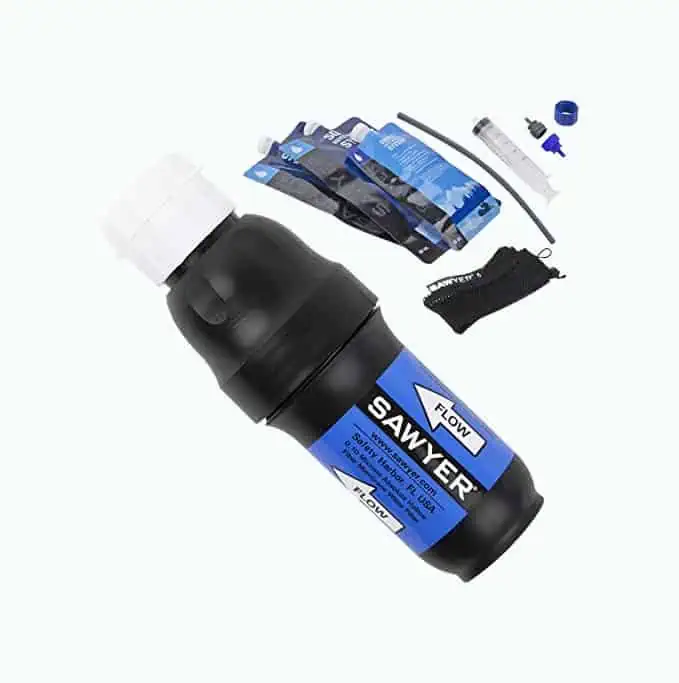
It only weighs 0.1 pounds and the caps are designed for easy placement and removal. A hollow fiber filter combats pathogens, removing 99.99% of bacteria and protozoa. This system also removes 100% of microplastics from your water.
Extras include a cleaning plunger and coupling, as well as a storage bag.
What We Like
Great Functionality
Buyers praise the ease of use of this filtration system, paying particular attention to its simplicity. Anything that makes it easier to access filtered water is positive and this is one of the most user-friendly models we have seen.
Filters Microplastics
If you are camping, hiking, or spending a few days off-grid, this filter will be more than sufficient. It removes almost 100% of bacteria and protozoa, and it clears all microplastics from your water. It is perfect for anyone who wants to travel off the beaten path while ensuring they still have a safe water supply.
Excellent Accessories
This product includes some of the best extras we have seen with a portable filter. Rather than focusing on extra bladders or straps, Sawyer included storage bags and cleaning gear. This makes maintenance easier and improves the overall durability of the filter. It could even eliminate the need for premature replacements.
What We Don't Like
Limited Filtration
Some customers mention problems with sediment and this filter won’t remove heavy metals, viruses, or chemicals from your water.
For this reason, we recommend only using this filter for camping and other outdoor activities, as it probably isn’t effective enough for use in high-risk zones.
Product Specs
| Capacity | 2.0 liters |
| Filtration rate | Unspecified |
| Weight | 0.1 pounds |
| Dimensions | 9.5 inches by 4 inches by 3.5 inches |
| Filter type | MINI hollow fiber membrane |
| Features/accessories | All necessary components and tubes, cleaning plunger, cleaning coupling, storage bag |
Our Ratings
User Experience
Membrane Solutions Personal Water Filter Straw
Best Portable Water Filter for Sediment
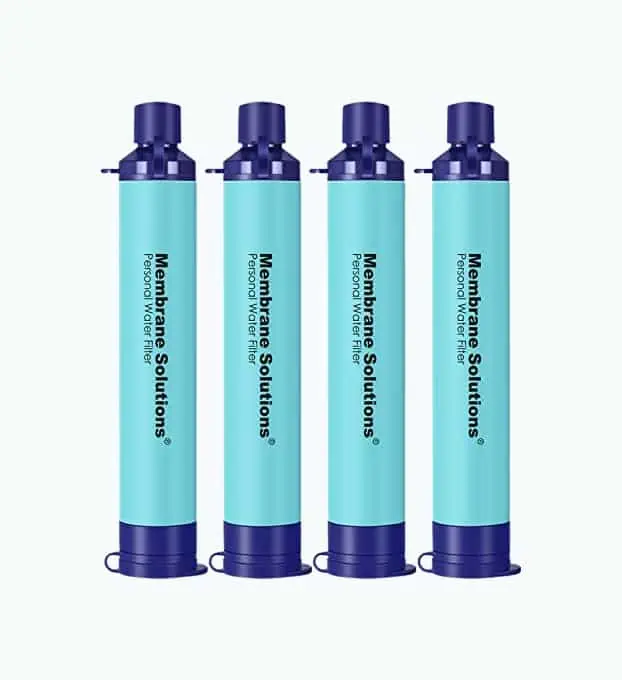
This well-rounded filter can help you out in tough situations. The activated carbon four-stage purification system is effective against pollution, odor, chlorine, organic chemicals, and debris larger than 0.1 microns. It is a great piece of kit to have in case of an emergency and offers good value for money.
This system meets EPA standards, is built using food-grade plastic, and is BPA-free. You can filter up to 1,500 liters per filter, and it provides a 450 mL per minute flow rate to ensure you receive water quickly.
What We Like
Cleans Sediment
The four-stage filtration system manages pollutants such as pollen, bacteria, algae, chlorine, and organic chemicals. The activated carbon filter (third stage) and hollow fiber ultrafiltration membranes (fourth stage) improve the taste and appearance of your water. This is an excellent filter for both recreation and emergencies.
Value for Money
Compared to some other portable water purification systems, this one is affordable without compromising on efficiency. It is a high-quality, effective product that won’t break the bank. We recommend it if you want a powerful water filter pump on a budget.
Lightweight Companion
Weighing less than a pound, this filter can be taken hiking or camping. Despite its small size and low weight, it doesn’t compromise on quality with its four-stage portable water filtration system.
What We Don't Like
Won’t Filter Viruses
The filter does a great job of filtering bacteria, but it won’t be able to remove viruses. This filtration system should be used for domestic adventures rather than overseas visits to high-risk areas.
Product Specs
| Capacity | Up to 1,500 liters per filter |
| Filtration rate | 450 milliliters per minute |
| Weight | 0.125 pounds |
| Dimensions | 6.7 inches by 1 inch |
| Filter type | 4-stage filtration UF membrane; coarse filter screen, medical-grade PP cotton, activated carbon, hollow fiber ultrafiltration membranes |
| Features/accessories | High flow rate and compact size |
Our Ratings
Personal Perspective
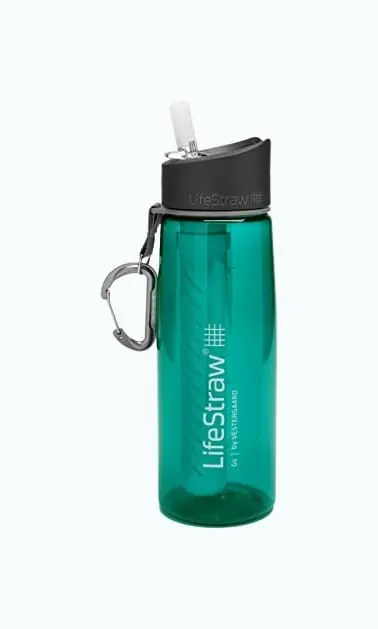
LifeStraw Go Water Filter Bottle
Best for Daily Use
Are you looking for a filter that you can take anywhere you go? If so, this LifeStraw filter bottle could be the perfect solution. It filters out bacteria, parasites, chlorine, and other harmful chemicals such as pesticides.
It is designed to improve the taste, smell, and appearance of your water. The bottle is BPA-free and, as usual from LifeStraw, it is made of recyclable plastic. If you remove the filter, it is also dishwasher safe.
LifeStraw gives back by donating water to a child in need every time somebody buys a bottle.
What We Like
Filters Chemicals
This is a great filter for emergencies, but it is also excellent for everyday use. It filters chlorine and other chemicals such as pesticides and herbicides from your supply. You can use it to clean your tap water, so you always have healthy water available.
Easy Maintenance
Ultimately, this is still a water bottle, so maintenance is straightforward. Simply rinse it as you would any other bottle, or put it in your dishwasher (after removing the filter) if you want to save time. It’s made from BPA-free plastic, so it is reusable and will last you a long time.
Better Water
As it filters out chlorine and other chemical treatments, your water will taste and smell much better. If you want to stay hydrated without installing a large or expensive filtration unit, this is an excellent budget-friendly option.
What We Don't Like
Regular Maintenance Needed
If you use this bottle regularly, take extra care to maintain it. The filters need to be replaced frequently, and you will need to clean the bottle after every use. Remember, the bottle is dishwasher safe, so this shouldn’t be a problem if you have one.
Sipping Is Hard
Drinking water from this filter bottle isn’t as easy as it would be from an ordinary bottle, so you will need to expend some extra energy. For many people, this won’t be a problem, but it can be particularly difficult for people with breathing difficulties.
Product Specs
| Capacity | 0.6 liters |
| Filtration rate | Not applicable/instant |
| Weight | 0.49 pounds (filter included) |
| Dimensions | 9.25 inches by 3.14 inches |
| Filter type | Two-stage hollow fiber and carbon |
| Features/accessories | Filters, cap, silicone mouthpiece, carabiner |
Our Ratings
Community Feedback
| Product | Best | Capacity | Filtration rate | Weight | Dimensions | Filter type |
|---|---|---|---|---|---|---|
| Platypus GravityWorks | Capacity | 2 x 4 L | 1.75 L/min | 0.6 lbs | 3.25″ x 9.5″ | Hollow fiber |
| LifeStraw Personal Filter | Durability | 4,000 L | Instant | 0.10 lbs | 1.2″ x 9″ | Hollow fiber microfilter |
| Etekcity Water Filter Straw | Filtration | 1,500 L | Instant | 0.1 pound | 1.2″ x 6.2″ | Triple-stage; pre-filter, hollow fiber, activated carbon |
| Survivor Filter Pro Filter | For High-Risk Zones | 100,000 L | 29 mL/min | 0.1 pound | 1.2″ x 6.2″ | Triple-stage; pre-filter, hollow fiber, activated carbon |
| Sawyer Filtration System | For Leisure Travel | 2 L | N/A | 0.1 lbs | 9.5″ x 4″ x 3.5″ | MINI hollow fiber membrane |
| Membrane Solutions Water Filter | For Sediment | 1,500 L | 450 mL/min | 0.125 lbs | 6.7″ x 1.0″ | 4-stage filtration; coarse filter screen, medical-grade PP cotton, activated carbon, hollow fiber ultrafiltration |
| LifeStraw Go Filter Bottle | For Daily Use | 0.6 L | N/A | 0.49 lbs | 9.25″ x 3.14″ | Two-stage hollow fiber and carbon |
How Portable Water Filters Work
If you watch a lot of reality TV, you might have seen people learning how to survive in the wilderness using every available resource. Some scenarios involve drinking very unpleasant fluids, which is probably something you want to avoid on a long camping trip.
Portable water filters are designed for situations where you don’t have access to a treated water source. Whether you’re camping, hiking or your water supply has been interrupted, a portable filter is an important tool that could be the difference between life and death.
The Science of Water Filters
There are various ways to purify water but they each operate on the same principle: any molecules that don’t belong in pure water are contaminants. If contaminants can find their way into your water, they can also be forced out (1).
In this context, water purification is the process of chemically treating water to kill and remove pathogens and toxins, making it safe for consumption (2). Filters are generally — but not always — barriers added to plumbing, vessels, or dispensers that only clean water molecules can pass through.
Filtration usually follows purification because it can also remove the chemicals used during water treatment (3).
Water filters come in many shapes and sizes. Reverse osmosis filters push water back and forth through a membrane that traps contaminants. Activated carbon filters absorb impurities and only allow clean water through.
Whatever the engineering, the result is the same — cleaner water that is also safer to drink. Water filters can remove all sorts of impurities from chemical toxins to dirt and germs.
Types of Portable Water Filters
Much like stationary water filters, there are various types of portable water filters. All of them will provide you with cleaner water, but some types might be more suitable depending on their capacity, size, and user-friendliness.
Water bottle filters are the most convenient filters for travelers. All you need to do is add water and the bottle will take care of the rest. They are reusable, affordable, and designed for everyday use.
The majority of these bottles use either fiber or activated carbon filters. Some use suction to pull water through the filter, while others absorb and trap contaminants. Carbon filters are the preferred option as they remove more pollutants.
Bottle filters are not perfect, however, and many models are unable to filter out certain chemicals. Most are ineffective at tackling fluoride, nitrates, and cadmium.
Pros
- Easy to carry and use
- Can be used daily
- Filters pathogens and heavy metals
Cons
- Limited chemical filtering
- Maintenance required
Water Filter Straw
These function the same way as an ordinary straw: you simply place it in the water and sip. However, a water filter straw is larger and heavier to accommodate its filtration system. This means sipping will require a little more energy.
Water filter straws are very effective at trapping pathogens and debris. They also remove unpleasant tastes and odors from your water. These filters are very versatile, as you can use them with various drinking vessels and filter water immediately as you drink.
The main drawback is that they clog easily, which means they require frequent maintenance.
Pros
- No need to add water
- Affordable
- Improves the taste and smell of water
- Highly effective
Cons
- High maintenance
- Limited at filtering heavy metals and chlorine
Gravity Filters
A gravity filter is simpler but less convenient than other portable devices. It has two containers, one above the other, with a filter between them. Water is added to the top container, then drips down through the filter and into the bottom container, where it is dispensed.
Different systems use various types of filters, with ceramic and activated carbon among the most popular. They are both highly effective at removing the majority of contaminants.
Gravity filters are useful if you are camping or staying somewhere off-grid, but you need to set them up and give them time to work. They also occupy more space than other portable filters.
Pros
- Durable
- Filters most contaminants
- Some maintenance is necessary
Cons
- Must be assembled
- Less compact than other portable filters
Water Filter Pumps
Pump filters — as they are sometimes known — aren’t much bigger than filter bottles or straws. They are small and light enough to fit inside your bag or backpack and require little effort to use. A tube is inserted into a water source, pumped through a filter, and then consumed via a tube-like straw.
Common water filter pumps use either fiber or ceramic filters. Neither type is able to remove all pathogens that might be in your water, so some manufacturers add an activated carbon filter.
These filters are highly effective and convenient, but keep in mind that you will need to pump water through them manually.
Pros
- Affordable
- Compact enough to fit in a backpack
- Can be used in any water source
Cons
- Manual pumping required
- Fiber and ceramic filters aren’t as effective as carbon
Other Portable Water Purification
We recommend the above four types as they are the most effective, easiest to use, and most portable. Some less popular alternatives include:
- Chemical purification: Chemical tablets can be added to water to treat it as needed. This is an effective solution but introduces some chemicals that you might be uncomfortable drinking.
- UV filters: These are bottle-like containers with a battery-operated light. Although they are very effective against biological contamination, they need to be charged before use.
- Backpack filters: Backpack water filters are effective for disaster relief, but aren’t available from retailers and are difficult to acquire. As the objective is to have easy access to clean water, this isn’t a practical everyday solution.
Things to Consider (Buying Guide)
There are countless portable water filters available today, so it’s important to try to narrow down your search. Ask yourself the following questions to get a better idea of which filter type is right for you:
What Will You Use It For?
Where you intend to use your filter is very important because it determines what you will need to filter. If you’re out in the wilderness, bacteria and sediment will probably be your main threats. If you’re traveling abroad in populated areas, viruses are a likelier threat.
Ensure that any filter you choose is capable of removing the relevant pollutants from your water supply.
Fact

How Long Do You Need It For?
The capacity of your portable filter is also very important. If you are only going to spend a few days away from home, a filter that requires regular maintenance won’t be a problem. If you anticipate a long or unpredictable trip, it’s better to choose a filter that won’t require much maintenance during the duration.
For extended trips, gravity filters are recommended. They are the most durable type and will need far fewer replacements than other popular portable filters.
What Size and Speed?
If you travel light, you won’t want a cumbersome filter. Our recommendations are all lightweight and intended to fit in your backpack, luggage, or even an emergency kit.
The only exception is the gravity filter. They aren’t heavy but they have multiple components you will need to keep track of. If you lose any components, you won’t be able to use your filter.
Also, consider how quickly you will need clean water. During an emergency, straws or pumps will be better. Bottle filters allow you to carry filtered water with you.

Can You Operate It Easily?
Is your filter going to help you or hinder you? Gravity filters are very effective but require assembling. They aren’t the right choice if you need clean water as quickly as possible.
Despite their maintenance demands, straw filters are probably the best choice in difficult situations. One drawback is that you need to sip on them, and you can’t transport filtered water using one. Bottle filters are great if you want to carry water with you.
Before You Buy a Portable Water Filter
Portable water filters are inexpensive and are an important tool, whether for survival or simply for camping. There are no real drawbacks to getting one, especially if you are currently planning a trip or travel regularly.
Even so, there are some things that portable filters can’t help with. Understand their limits before you try to use one in the wrong situation.
- They aren’t armor: If you are traveling to a high-risk area, remember that these filters won’t protect you against bugs or airborne pathogens. Make sure you get the necessary vaccines before you travel. Some countries won’t allow you entry if you don’t (4).
- You still need to bathe: Portable water filters are compact, but this can also work against you. You will need to make alternative plans to clean yourself, as these devices won’t provide enough water for a thorough wash.
- Different water composition: Whichever filter you use and however effective it is, the water will likely taste different from what you’re used to. Many factors influence how water tastes. Don’t be surprised if the filtered water you drink in other countries tastes differently from how you expect (5).
Quick Tip
FAQs

Is It Worth Getting a Portable Water Filter?
Portable water filters are worth it if you spend a lot of time in nature. Toxic contaminants can be removed from the water using a portable water purifier, which can also improve the taste of wastewater.
This portable, practical and convenient filtration equipment allows it to filter water while traveling.
These portable gadgets have an inbuilt filtration mechanism that can remove impurities from water, such as dirt, sediment, and germs.
This makes them ideal for use in survival situations, as well as for camping and traveling. It may purify contaminated water into water suitable for drinking in just a few simple steps.

Are Portable Water Filters Safe?
Portable water filters are safe to use and can cleanse some water contaminants. There are varying dangers associated with each location. A bit of research should help you figure out the different kinds of toxins about which you need to be concerned.
This will assist you in selecting the water filter or treatment system that is appropriate to bring along with you.

Can Portable Water Filters Remove Viruses?
No water filter can remove viruses. For that, you would need a water purifier. Bringing a water filter with you on a trip to a less developed country, which typically has inadequate water treatment and sanitation infrastructure, is the most prudent course of action.
Suppose you see that people aren’t following proper hygiene near water sources such as popular lakes. In that case, you might also consider purchasing a purifier in your home’s backcountry.
The norovirus and hepatitis A are viruses frequently found in water supplies and can spread through water.
After adequately filtering the water to remove protozoa, bacteria, and any particles like dirt, you can protect yourself from viruses by adding a purifying agent to the water. This step is necessary if you own a microfilter.
Chemical tablets are an excellent secondary purifier that may be used with any microfilter. They remove any viruses that may be present in the water, making it safe to drink.

What Is the Best Portable Water Filter?
The Etekcity is currently considered the best portable water filter. The sophisticated filtration design begins with an inline membrane with a 0.1-micron filtering capacity.
In addition, the solution contains a combination of ion-exchange resin and activated carbon, which works in conjunction with a pre-filtering system to remove larger impurities.
This indicates that the fitter will remove harmful organisms like protozoa and bacteria, as well as heavy metals, chlorine, and bad odors.