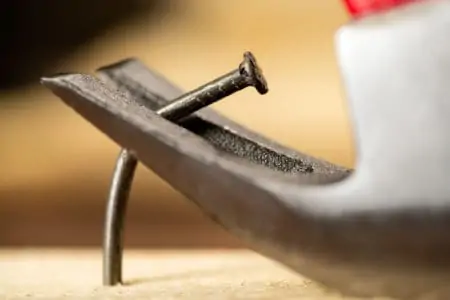
A nail puller is such a simple tool but useful in so many ways. And the best bit is it doesn’t require any technical know-how. Getting old rusted nails out of wood is a real pain, so a tool that makes life easier is an asset.
We examine the best nail pullers, looking at different types and models to see which one is the best for budget, ease of use, and customer satisfaction.
- Drives nails as well as extract them
- Ergonomic comfort-grip handle
- Lightweight aluminum die-cast body
- Ideal for small nails
- Lightweight with a forged steel head
- Comfort rubber handles
- Nail slot on the pry and claw
- Lightweight and compact
- Ideal for beginners
- Forged from a single bar of titanium
- Stronger, lighter, and less recoil
- Guaranteed not to tear, or crack
- Forged from carbon steel
- Tapered edges and nail slot
- Lifetime guarantee
- Lightweight and durable
- Great value for money
- Ergonomic rubberized hand grip
- Super-cheap price tag
- Cuts wires
- Lightweight and compact
- 19-inch handle
- Hardened tempered jaw
- Black enamel coating
Review Methodology: At Sensible Digs, we strive to provide you with hands-on, objective analysis of the best nail pullers on the market. Our rigorous testing and research methods measure performance, compare design aspects, and evaluate user experience to ensure we provide you with the most accurate and reliable findings. We rank each product based on key decision-making factors such as durability, effectiveness, and ease of use, and support our evaluations with first-hand evidence. We go beyond standard reviews, looking deeper into product design choices and their effects on users, to distinguish what sets a product apart from its competitors. Trust in our professional assessment to guide your choice for the best nail pullers.
The Best Nail Pullers of 2024
It’s no mean feat to narrow down the vast array of nail pullers to our favorite 8, but after hours of research and diligent investigation, we finally pulled it off.
Here are the 8 top nail pullers money can buy.
Air Locker AP700 Nailer/Nail Remover Kit
Best Pneumatic Nail Puller
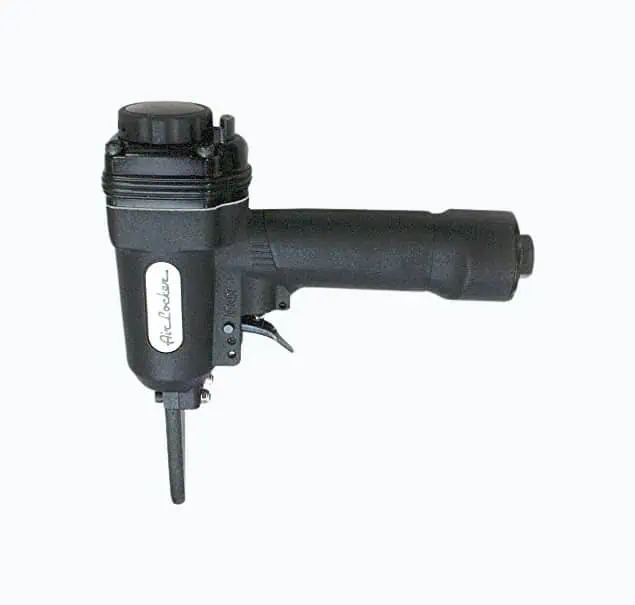
So, we kick off with this Air Locker pneumatic nail puller. Considering it is a powered device, it’s a pretty good price. It retails less than our premium model, and that one is a manual nail puller.
So, what’s it got? The first thing you notice is it is a nail punch and extractor, so it has a dual role. Once you finish removing all those old nails, you can go right ahead and start inserting 10 to 20-gauge nails to complete your project.
It has a lightweight aluminum body and an adjustable exhaust, so you can regulate the flow of air from the compressor. We talk a lot about comfort, so this model has a rubber ergonomic grip, which protects your arm and hands from burnout.
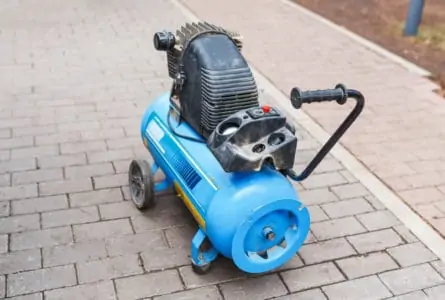
There are downsides too. First, it needs an air compressor, so while the air tool may be keenly priced, don’t forget the extra dollars for the compressor. The second and most important thing is this tool extracts nails by driving them out of the wood.
Whichever way you look at it, that’s pretty dangerous, so you need some skill in handling this device. That said, with a little practice, it can remove nails from a large pallet in about 60 seconds.
Pros
- Drives nails as well as extract them.
- Ergonomic comfort-grip handle to reduce fatigue.
- Lightweight aluminum die-cast body for longevity.
- Adjustable exhaust port for air regulation.
Cons
- Requires an air compressor, which is noisy and expensive.
- Very dangerous to use as it pushes the nails out of the wood.
Product Specs
| Weight | 1.12 pounds |
| Dimensions | 11 x 10 x 2.5 inches |
| Type | Pneumatic |
| Material | Die-cast aluminum |
| Price | $$$$ |
Our Ratings
User Experience
Crescent 11-Inch Nail Puller Pliers
Best Nail Puller for Small Nails
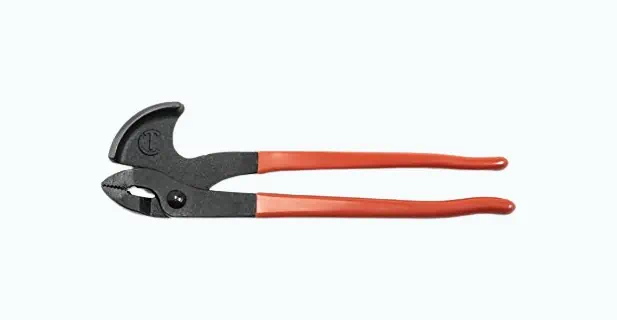
Sometimes you need a bit of delicacy, and these Crescent 11-inch nail pullers tick that box. Small nail pullers are ideal when working on detailed projects like framing and other carpentry.
Simply clamp the nail in the teeth of the pliers and pull down, and thanks to the shape of the forged steelhead, the nail lifts out without damaging the woodwork. They are lightweight, agile, and easy to store in your toolbox, making them the ideal companion of any woodworker.
You can remove nails from the front or back of the wood. It has a comfortable rubber grip and a black-oxide coating to protect it against corrosion.
The only downside is the length of the tools restricts the size of the nails it pulls and if you want to remove really rusted nails, it might struggle. That said, the price is reasonable, and it is the best tool for fiddly nails.
Pros
- Ideal for removing small nails.
- Lightweight with a forged steel head for longevity.
- Comfort rubber handles to reduce hand fatigue.
- Great price-point makes it affordable for most.
- Black-oxide coating reduces the chances of corrosion.
Cons
- Not suitable for rusted or larger nails.
Product Specs
| Weight | 1 pound |
| Dimensions | 11 x 3.25 x 0.75 inches |
| Type | Manual |
| Material | Forged steel |
| Price | $$ |
Our Ratings
Personal Perspective
Crescent Flat Pry Bar Nail Puller
Best Framing Nail Puller
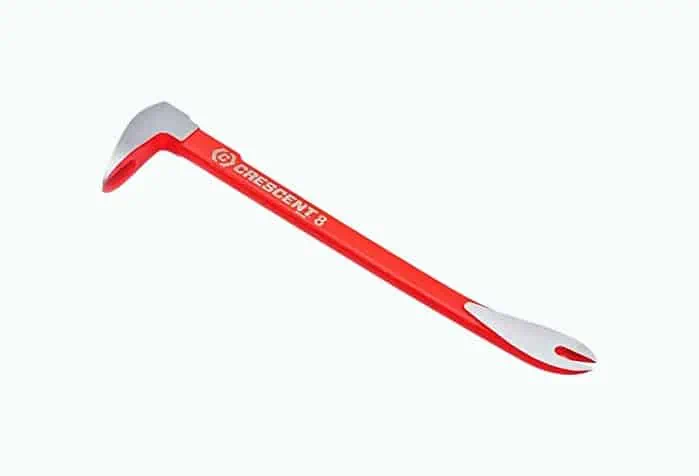
Crescent features quite a lot in this review, which is hardly surprising given their 100-year history. This model differs from the rest because it is a flat pry bar, which is both simple and effective at levering nails from frames without damaging the wood.
It was almost crowned our budget award, but because it’s a pry bar rather than a dedicated nail puller, that award went to another model. That said, the price is one good reason to purchase this device.
When you remove nails from framing, you need a tool that can get into the tightest spots, extracting smaller nails from deep into the wood. Thanks to the shape and size; this tool does everything you could want.
You get a nail slot on the pry and claw end to make pulling the nails out easier without any lasting damage to the wood, and because it’s so small and lightweight, it is the ideal device to store in your toolbox.
The only negative is because it is so small, it only works when removing nails from framing or moldings, restricting its use.
Pros
- Nail slot on the pry and claw for smoother nail extraction.
- Lightweight and compact for precision nail removal.
- Great price, making it ideal for beginners.
Cons
- Not suitable for rusted or larger nails.
- Only suits framing and molding nail removal.
Product Specs
| Weight | 0.35 pounds |
| Dimensions | 11.5 x 3.25 x 0.75 inches |
| Type | Claw bar/pry bar |
| Material | Steel |
| Price | $ |
Our Ratings
Community Feedback
Stiletto TICLW12 Clawbar Titanium Nail Pullers
Best Premium Nail Pullers
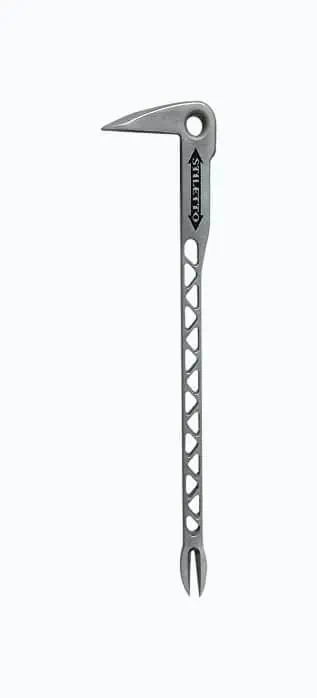
When you want a top-quality nail puller, this Stiletto claw bar is pretty hard to beat. It is cast from a solid bar of titanium with an open truss design. It is lightweight and super-strong.
It has a patented dimpler feature that creates a recess around the nail head, making it easier for the claws to slide and grip tightly. This titanium claw bar is 5 times stronger than steel equivalents, has 10 times less recoil and shock, and is also 45 percent lighter.
You get 2 sets of claws that last longer than steel, with zero mushrooming, cracking, and tearing.
The bad news is if you want to own this claw bar, it will set you back a lot of money. It is almost 8 times the price of the budget model. That said, it is fantastic quality.
Pros
- Forged from a single bar of titanium.
- Stronger, lighter, and 10 times less recoil than steel.
- Guaranteed not to tear, mushroom, or crack.
- Patented dimpler to make nail extraction easier.
Cons
- It is expensive, costing more than any other model to feature.
- Made in Taiwan, so it’s not an American product.
Product Specs
| Weight | 0.5 pounds |
| Dimensions | 0.8 x 4 x 12 inches |
| Type | Claw bar |
| Material | Titanium |
| Price | $$$$$ |
Our Ratings
First-Hand Impression
Edward Tools Wonder Bar Nail Puller
Best Finish Nail Puller
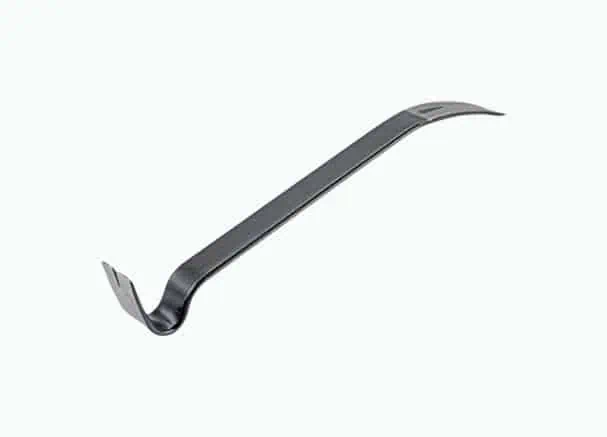
This Wonder Bar by Edward Tools is about as simple as it gets. At one end, you have a nail slot with extra leverage, and at the other, you get a slightly less pronounced curve for more delicate and detailed work like finishing.
This nail puller is constructed from carbon steel, so it is durable, lightweight, and rust-resistant. The ends of the tool are tapered to make it easier for the slot to slide under the nail head.
It also means you can use the tool as a scraper. If you are working on detailed work that requires a bit of precision, this device pays dividends. It also comes with a lifetime guarantee, so you can relax knowing that it will last the distance.
The downside is it is pretty basic. You don’t get any features, and the only leverage comes from the U-shaped curve on the base. That said, it only costs a fraction of many comparable models, so we can cut it some slack.
Pros
- Forged from carbon steel for anti-rust qualities.
- Tapered edges and nail slot to make it easier.
- Lifetime guarantee means it will last the distance.
- Fantastic price compared to other models.
Cons
- Pretty basic design restricts the size of nails.
Product Specs
| Weight | 1.89 pounds |
| Dimensions | 16.02 x 4.06 x 2.8 inches |
| Type | Manual |
| Material | Carbon steel |
| Price | $ |
Our Ratings
User Experience
AeroPro 700V Professional Grade Pneumatic Nail Remover
Best Nail Puller for Pallets
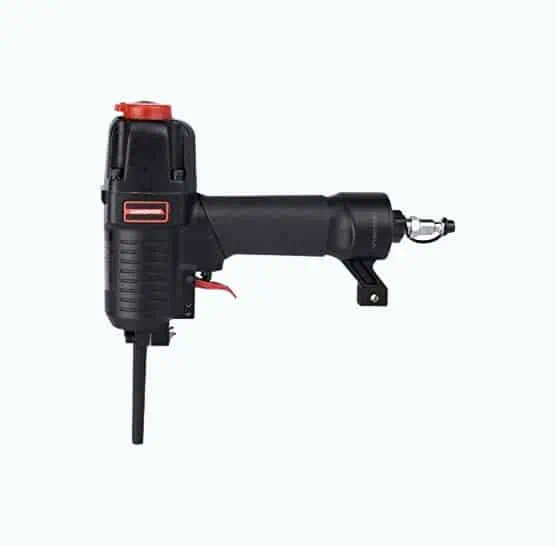
This pneumatic nail remover exists purely to punch bent and rusted nails through boards, pallets, and any other heavy-duty material you can think of.
It has a soft, rubberized handgrip that is both comfortable and practical, making it ideal for extended use. This is in part thanks to the ergonomically designed aluminum body, which is lightweight and durable.
It has a 0.25-inch NPT-thread air inlet with an operating pressure of 80 to 120 PSI (pounds per square inch), and it removes 10 to 20-gauge nails.
This is an air-powered device, so you will need an air compressor, which eats into the overall good value because compressors are expensive. You need to factor this in when making your purchase.
Plus, while this tool gets the job done in double-quick time, it is noisy and dangerous, so getting in a bit of practice would be advisable before you are let loose with this tool. Most air compressors operate at about 80 decibels, so if you are using this at home, consider your neighbors.
Pros
- Lightweight and durable.
- Great value for money.
- Rubberized hand grip for added comfort and less strain.
- Ergonomic aluminum body for reduced weight.
Cons
- Requires an air compressor, which adds to the costs.
- Needs a degree of skill to handle.
- Noisy, thanks to the air compressor.
Product Specs
| Weight | 1.72 pounds |
| Dimensions | 11 x 10 x 2.5 inches |
| Type | Pneumatic |
| Material | Aluminum |
| Price | $$$ |
Our Ratings
Personal Perspective
Bates Nail Pullers and Cutting Plier
Best Budget Nail Pullers
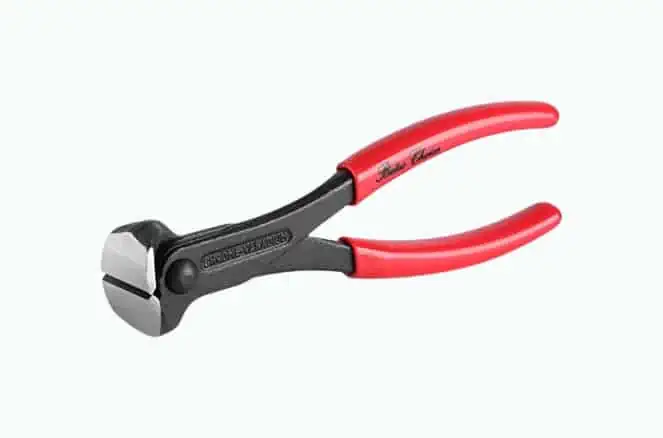
This Bates plier nail puller is one of the best-selling models on the market. It is a classic design and so simple to use. You can pull nails, staples and other fasteners thanks to the 7-inch cutting ends.
You get soft-coated plastic grips for greater control and comfort, and the carbon steel body ensures that it is robust and rust-resistant. You can even use the dual-end nippers to cut wires and electrical cables.
These nail removers are super cheap, which is part of the reason they are so popular, plus they are lightweight, compact, and easy to store in your toolbox.
The only negative point is you don’t get much leverage, which might restrict the size and types of nails you can pull. Most of the effort comes from you, yanking the nail free rather than clever design.
You are also restricted to the size of nail you can pull with this device, so it is better suited to smaller fasteners.
Pros
- Super-cheap price tag makes it a great starter nail puller.
- Ideal for electricians as it cuts wires.
- Lightweight and compact for easy storage.
- Carbon steel body with a soft grip for extra comfort.
Cons
- Restricted to the size and type of nail you can pull.
- Lacks any real leverage to help draw the nail out.
Product Specs
| Weight | 0.4 pounds |
| Dimensions | 9.4 x 3.2 x 0.5 inches |
| Type | Manual |
| Material | Carbon steel |
| Price | $ |
Our Ratings
Community Feedback
Crescent 19-Inch Nail Puller
Best Nail Puller for Large Nails
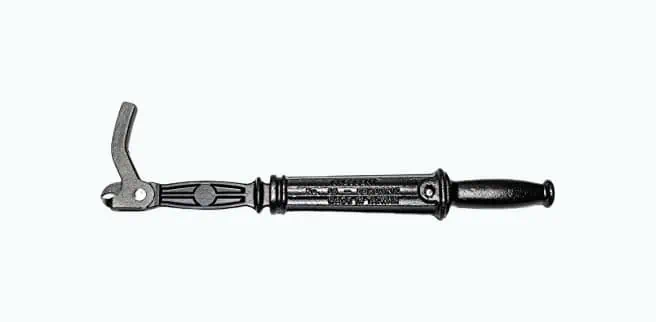
To gain the extra strength needed to pull large nails free, you need the forged alloy box joint and hardened tempered jaw that this nail puller offers. You can get it in a short or long jaw design, and it comes with a black enamel finish for durability and rust resistance.
The design works great with flush and hard-to-reach nails, and the 19-inch handle ensures that no matter how rusted the nail, this tool gives you the leverage to get it free.
It does weigh quite a bit more than the other models, coming in at 3.89 pounds, but the added weight makes it feel sturdy and able to cope with heavy-duty tasks. Crescent states that this nail puller is built to withstand job site conditions.
Pros
- 19-inch handle gives you extra leverage.
- Hardened tempered jaw and hinged alloy box joint for better grip.
- Black enamel coating for rust protection.
- Gets hard-to-reach nails that are flush with the surface.
Cons
- Expensive for a manual nail puller.
- Weighs almost double other manual nail pullers in its class.
Product Specs
| Weight | 3.89 pounds |
| Dimensions | 19 x 5 x 1.5 inches |
| Type | Manual |
| Material | Alloy steel |
| Price | $$$$ |
Our Ratings
First-Hand Impression
| Product | Best | Weight | Dimensions | Type | Material | Price |
|---|---|---|---|---|---|---|
| Air Locker AP700 Nailer/Nail Remover Kit | Best Pneumatic | 1.12 lbs | 11″ x 10″ x 2.5″ | Pneumatic | Die-cast aluminum | $$$$ |
| Crescent 11-Inch Nail Puller Pliers | Best for Small Nails | 1 lb | 11″ x 3.25″ x 0.75″ | Manual | Forged steel | $$ |
| Crescent Flat Pry Bar Nail Puller | Best for Framing | 0.35 lbs | 11.5″ x 3.25″ x 0.75″ | Claw bar/pry bar | Steel | $ |
| Stiletto TICLW12 Clawbar Titanium Nail Pullers | Best Premium | 0.5 lbs | 0.8″ x 4″ x 12″ | Claw bar | Titanium | $$$$$ |
| Edward Tools Wonder Bar Nail Puller | Best Finish | 1.89 lbs | 16.02″ x 4.06″ x 2.8″ | Manual | Carbon steel | $ |
| AeroPro 700V Pneumatic Punch Nailer | Best for Pallets | 1.72 lbs | 11″ x 10″ x 2.5″ | Pn4,eumatic | Aluminum | $$$ |
| Bates Nail Pullers and Cutting Plier | Best Budget | 0.4 lbs | 9.4″ x 3.2″ x 0.5″ | Manual | Carbon steel | $ |
| Crescent 19-Inch Nail Puller | Best for Large Nails | 3.89 lbs | 19″ x 5″ x 1.5″ | Manual | Alloy steel | $$$$ |
How To Choose the Best Nail Puller
All nail pullers do the same thing, but not all nail pullers are born equal. We look at the specifics of what makes a nail puller so useful and what you should be looking for.

What About Durability?
Given the amount of pressure exerted on your nail pulling tool, it’s important that you look for a model that’s up to the task. If the nail puller is made of inferior materials, it might bend or even snap.
Try and buy a tool forged from the same piece of metal, and look for models with enamel or paint to protect them from rusting. Titanium is strong, lightweight, and corrosion-free.

What About Comfort?
You will be placing your hands and arms under extreme amounts of pressure when operating a manual nail extractor. It needs to be comfortable to use, especially as you might be using it for several hours in one go.
Look for comfort-grip handles and the way the nail puller removes the nail. Some are so simple that you slide the puller under the head of the nail and lever it up like a claw bar. Others have a mechanism that lets you pull a lever, and it lifts the nail free.
A lot of what you learn will be trial and error, so don’t beat yourself up if the first model that you buy doesn’t work out.

Manual or Pneumatic?
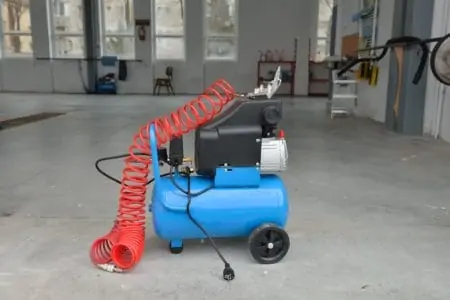
Air nail pullers take all the effort away. You can extract the most stubborn nails with ease. All you need is an air compressor. The problem with air compressors is they are heavy, noisy, and expensive, so you aren’t going to save the pennies.
However, if you are pulling a lot of nails in one hit, an air tool will speed you up, getting the job done in a fraction of the time.
Manual nail pullers are cheaper to buy in most instances, and they are simple to operate. They don’t require compressors. They aren’t noisy, but they are slower.

What About the Budget?
Nail pullers range in price according to the model. The least expensive is no more than $15 and looks like oversized pliers. Air nail pullers are among the most costly, but then again, you are getting a powerful device that is efficient and powerful.
The premium nail pullers are forged from lightweight titanium, which is robust and doesn’t rust.