If you want to switch between welding techniques but don’t want to swap welders, you need to get your hands on the best multi-process welder. You probably know that different types of welding methods suit materials and applications better than others.
We look at the best multi-process welders to give you the lowdown on which is the best.
- Quality materials
- Easy set-up
- Includes aluminum extension
- Top quality construction
- High-frequency starts
- Multi-voltage plug
- Lightweight & portable
- Gasless flux-core
- Value for money
- 30 percent duty cycle
- Weighs 30 pounds
- Relatively inexpensive
- Plasma capabilities
- Dual-voltage
- 0.50-inch cutting depth
- Great for aluminum
- 200 amp square wave inverter
- High-frequency start
- Cast aluminum wire drive
- 10-foot MIG gun
- Easy to load and unload
Review Methodology: At Sensible Digs, we dive deep into analysis and hands-on testing of the top multi-process welders, using professional expertise and experience. We evaluate each product from a user’s perspective, comparing performance, design choices and their effect on users. Our assessment process includes rigorous checks and measurements based on key decision-making factors, such as power output, duty cycle, and portability. Using this data, we rank each welder, highlighting what sets it apart from its competitors. Our reviews are grounded in facts and evidence, ensuring you have the most accurate information to make the best choice.
The Best Multi-Process Welders of 2024
In our search for the best multi-process welders, we have managed to boil the list down to 7 to make your choices easier.
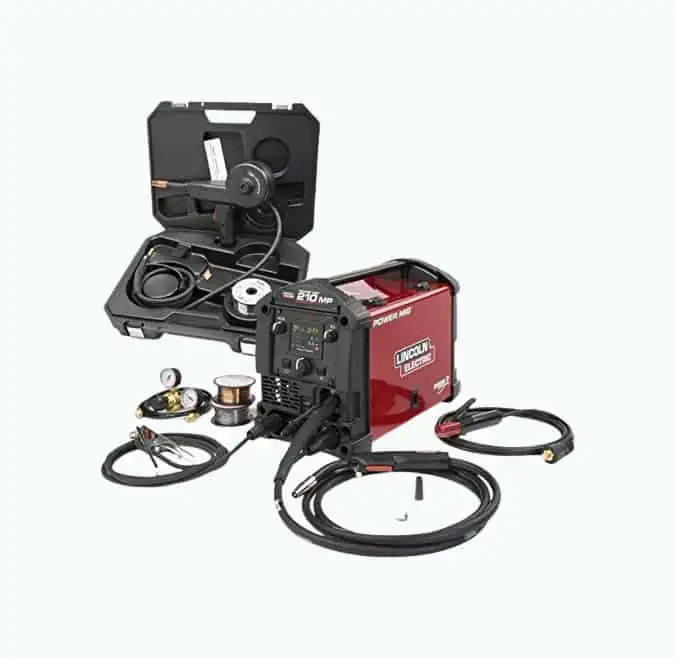
Lincoln Electric Power 210 MP Multi-Process Welder
Best Compact Multi-Process Welder
This is a quality welder, with easy to follow controls. It is made from the highest quality materials, and it is so simple to set up, it’s child’s play. This is thanks to Lincoln’s intuitive push and pull digital controls. You don’t even need the manual. It weighs just 40 pounds with a tiny footprint, making it the best compact welder.
It has a 25 percent duty cycle at 200 amps, a maximum wire feed rate of 500 inches per minute, and even comes with a Magnum Pro welding spool gun for MIG welding aluminum. This welder has a 3-year warranty, but given the quality and the all-metal casing, this product will outlive that warranty by many years.
What We Like
Quality Materials
It is a premium welder, designed to last for years. The quality of the components and the all-metal casing makes this a hard-wearing welding machine that will last the distance.
Easy Set-Up
If you are new to welding, setting up some machines can feel like the space shuttle’s launch procedure, so it’s reassuring to know that setting this welder is simple. It has intuitive, push and pull controls and a digital display for guidance.
Includes Aluminum Extension
This welder comes with an aluminum spool gun to get the best results from welding aluminum.
What We Don't Like
No AC Setting
If you want to TIG weld aluminum with this welder, you will struggle as it has no AC setting. For the price-tag, you would have expected it to have more versatility.
Professional’s Price Tag
And what about that price? It is certainly not aimed at the beginner end of the market. Professionals and dedicated welding enthusiasts will most likely make up the bulk of the interest in this machine.
Product Specs
| Weight (pounds) | 40 |
| Dimensions (inches) | 29.02 x 10.51 x 5.98 |
| Multi-process | MIG, flux-cored, TIG, stick |
| Voltage | 120/230 |
| Max amps | 210 |
| Duty cycle | 25 percent |
| Price | $$$$ |
| Warranty | 3-year machine + 1-year gun |
Our Ratings
User Experience
Miller Multimatic 215 Multi-Process Welder
Best Professional Grade Multi-Process Welder
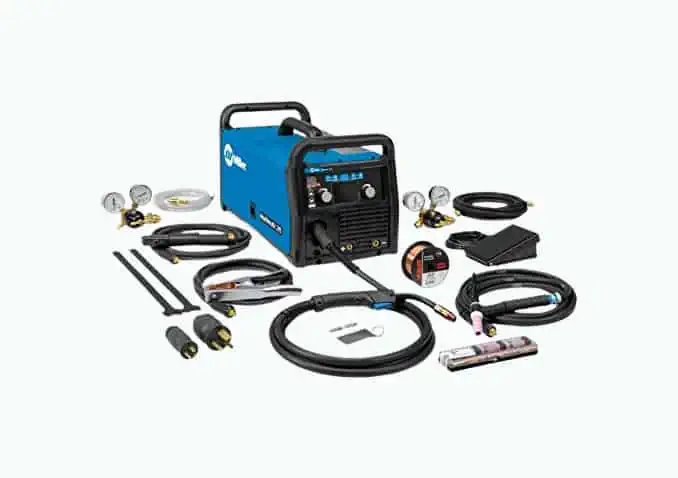
No self-respecting review of professional-grade welders would be complete without the Millermatic. The only thing that stopped this machine from scoring higher is the prohibitive cost. It is even more expensive than the Lincoln Electric model, and it doesn’t come with an aluminum spool gun.
It does have a multi-voltage plug, adapting the power supply from 110 to 240 volts. It also has a color LCD with automatic settings. The instructions are easy to follow, and the high-frequency starts make striking an arc a lot easier. It also has an AC setting for TIG welding aluminum.
What We Like
Top Quality Construction
You’d have to go a long way to find a welder that didn’t rate the qualities of this product. Miller is synonymous with quality and workmanship, and this welder is no different. It is a firm favorite with professionals and experienced operators alike.
High-Frequency Starts
High frequency starts means it is easier to strike an arc and to maintain a stable arc. All it requires is gentle contact with the base metal for a few seconds, and the arc is formed.
Multi-Voltage Plug
The multi-voltage plug means that you can plug this into the domestic power supply without worrying about overloading the electrical system. It makes a heavy-duty welder suitable for use indoors.
What We Don't Like
Incredibly Expensive
You will do a double-take when you see the price of this welder. Even when you compare it to the Lincoln model, it looks like poor value for money.
No Aluminum Spool Gun
For the price, you’d think this would come with an aluminum spool gun for when you need the added flexibility, but it doesn’t. That is an extra cost you have to consider.
Product Specs
| Weight (pounds) | 56 |
| Dimensions (inches) | 21 x 13 x 11 |
| Multi-process | MIG, flux-cored, TIG, stick |
| Voltage | 120/240 |
| Max amps | 230 |
| Duty cycle | 15 percent |
| Price | $$$$ |
| Warranty | 3-year |
Our Ratings
Personal Perspective
Forney Easy Weld 140 MP Multi-Process Welder
Best Budget Multi-Process Welder
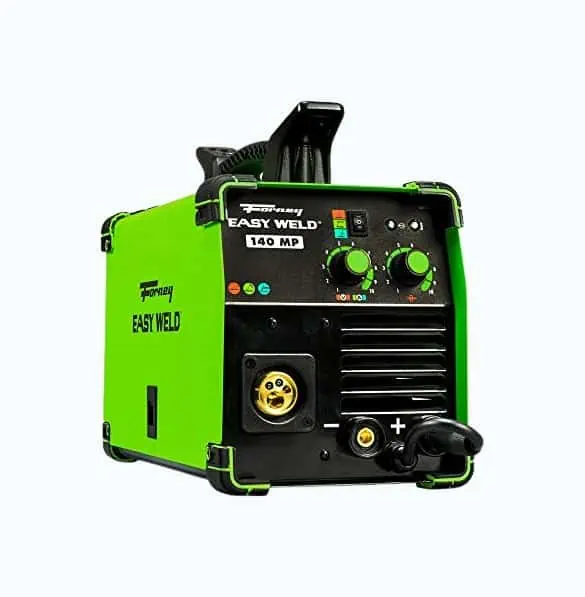
When you name your product “Easy Weld,” you can be sure it is an ideal machine to learn the craft. This is a MIG welder, so it is the easiest method to learn. It has a maximum output of 140 amps and a 120-volt input.
It can TIG, MIG and stick weld, as well as perform as a gasless, flux-cored welder, so again, if you are learning the ropes, you don’t have to pay out for expensive gas canisters. It also makes it an easier process to learn. This welder has infinite voltage and wire speed control to regulate the welding rate.
This welder is ultra-lightweight, compact, and easy to store away, making it the ideal choice for hobbyists and DIY enthusiast welders working from the garage or home workshop.
What We Like
Lightweight and Portable
These compact welders are for the home market, so being lightweight and compact is a major bonus. They are easy to set up and pack away, taking up a minimum amount of space.
Gasless Flux-Core
Because there is no gas, it means you can start welding straight from the box. Sure, at some point, you are going to need to learn about gas protection, but for now, enjoy the process in its simplified state to get you used to how a welder handles.
Great Price
This welder is a third of the price of the Weldpro. When you are a beginner, the budget is always a factor because you don’t need to spend piles of cash to get onto the welding ladder. Some budget machines will get you started for a fraction of the price.
What We Don't Like
No AC Setting
The AC setting enables you to TIG weld aluminum. Without this, you will need a separate aluminum spool gun to perform that task.
Slow Feed Rate
Some users have complained that the wire feed rate is on the slow side. It isn’t such an issue when you are a beginner, but as you learn, you increase your speed, and then it can slow you down, which can become a problem.
Build Quality Issues
As with all products built on a budget, this Easy Weld is no different. To save costs, Forney has used lesser grade materials, relying on plastic instead of metal. It isn’t a massive issue if you accept that you get what you pay for. It’s the difference between a welder for now or a welder for life.
Product Specs
| Weight (pounds) | 25.8 |
| Dimensions (inches) | 14.2 x 19.3 x 11.6 |
| Multi-process | MIG, TIG, stick |
| Voltage | 120 |
| Max amps | 140 |
| Duty cycle | Not stated |
| Price | $$ |
| Warranty | 1-year |
Our Ratings
Community Feedback
Weldpro 200 Amp Inverter Multi-Process Welder
Best Dual Voltage Multi-Process Welder
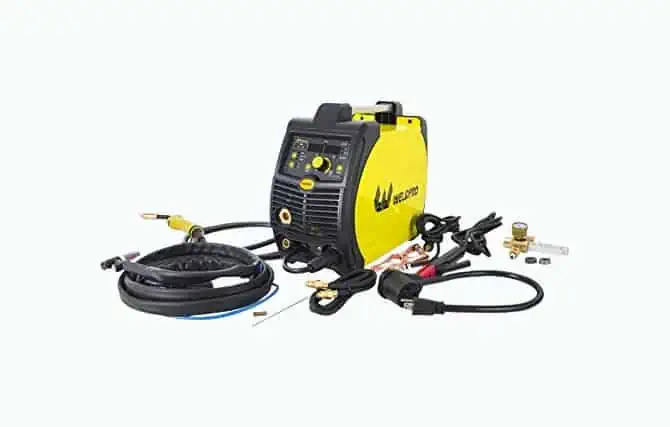
This is Weldpro’s flagship welder, performing MIG, TIG and stick welding with ease. It has a 30 percent duty cycle rating of 200 amps. It has dual voltage capabilities and an IGBT inverter for lightweight yet responsive control.
It comes with all the kit you need to get started, including a WP-17 13 ft MIG torch and a TIG torch, as well as the gas connectors and regulators. It is lightweight, at just over 30 pounds, and portable.
The only thing this welder lacks is an AC setting for TIG welding aluminum. You can purchase an aluminum spool gun separately. Despite that, there isn’t much this welder can’t do.
What We Like
30 Percent Duty Cycle
A 30 percent duty cycle is actually a good performance considering some welders only operate on 15 percent. It means that you can weld for 3 minutes and then allow the torch to cool for the next 7 minutes.
Weighs 30 Pounds
This unit weighs just over 30 pounds, making it lightweight and compact, which is ideal for storing it away in the garage or workshop.
Relatively Inexpensive
Compared to some multi-process welders, this model is priced to occupy the center ground. It should appeal to experienced welders as well as hardcore hobbyists who take their craft seriously.
What We Don't Like
No AC Setting
Most aluminum welding is performed in DC, this is true, but if you want to TIG weld, you need an AC setting. You can buy a dedicated aluminum spool gun, but that costs extra.
Inverter Technology
It was a tough call because some see inverters as a plus, not a minus. All we know is that inverters are prone to malfunctioning, and they make the welder less robust.
Product Specs
| Weight (pounds) | 30.4 |
| Dimensions (inches) | 17.72 x 8.66 x 14.96 |
| Multi-process | MIG, TIG, stick |
| Voltage | 230 |
| Max amps | 200 |
| Duty cycle | 30 percent |
| Price | $$ |
| Warranty | 2-year |
Our Ratings
First-Hand Impression
Lotos Non-Touch Pilot Arc Plasma Cutter
Best Multi-Process Welder With Plasma Cutter
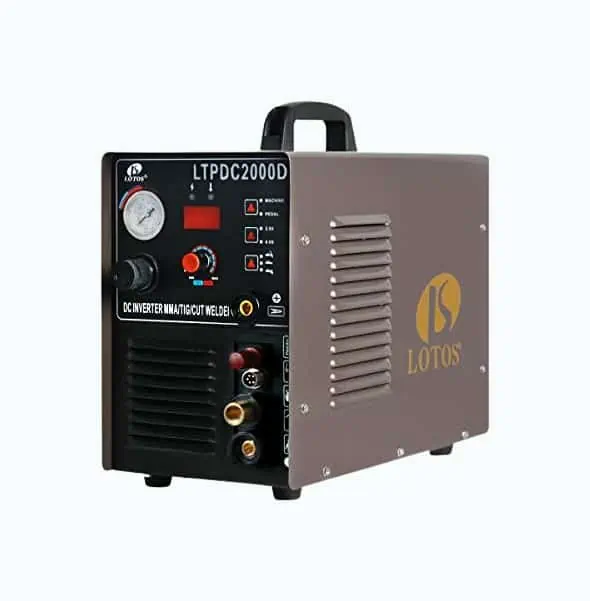
This is the first of two outings for Lotos in the review. This first to feature is a 3-in-1 welding machine with plasma cutting capabilities. It TIG welds and sick welds, but it doesn’t MIG weld.
The plasma cutter torch cuts through painted, rusted, and uneven surfaces, producing minimal slag in the process. It uses non-hazardous compressed air to easily slice through stainless steel, alloy steel, mild steel, copper and aluminum.
It is a dual voltage machine with a hot strike arc feature that creates an easier arc, making it more stable.
What We Like
Plasma Capabilities
Using a plasma cutter to slice through metal makes life easier. It also means that you can switch the cutter into a welding machine and get straight to work when you need to join the two pieces.
Great Price
Compared to some models, this welder with plasma capabilities is relatively affordable. You could spend double this and still only get a welding machine without the plasma feature.
0.50-Inch Cutting Depth
This plasma cutter is capable of cutting through steel up to half an inch thick. It makes light work of aluminum and other metals too.
What We Don't Like
No MIG Capability
While it is a multi-purpose welder, it can only TIG and stick weld. There is no MIG feature, so it isn’t going to appeal to novices who want to learn the easiest form of welding. You will need some experience of TIG and stick welding to get the most out of this machine.
Product Specs
| Weight (pounds) | 42.35 |
| Dimensions (inches) | 17 x 8 x 12.5 |
| Multi-process | TIG, stick, plasma |
| Voltage | 220 |
| Max amps | 200 |
| Duty cycle | 40 percent |
| Price | $$ |
| Warranty | 1-year |
Our Ratings
User Experience
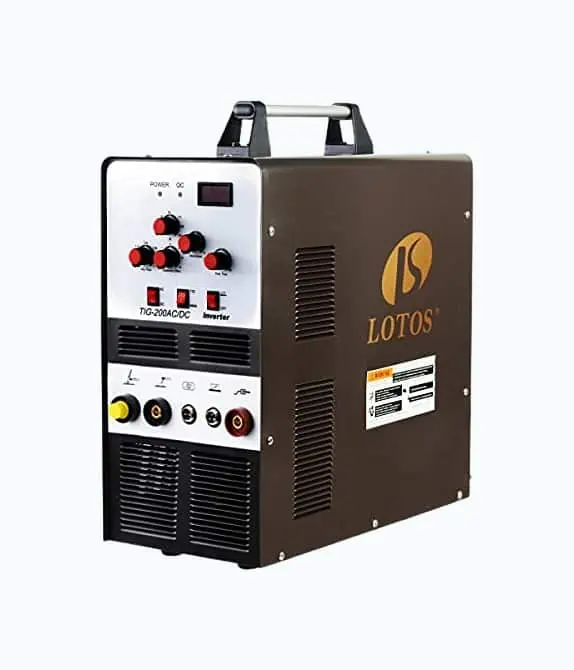
Lotos AC/DC Aluminum TIG Welder
Best Multi-Process Welder for Aluminum
If you are looking for a welder to weld aluminum, this could be your best choice. It has a 200 amp square wave inverter, specifically designed for aluminum. This welder also works well with stainless steel, as well as thinner gauge material.
It has a high-frequency start function that creates an arc easier, making it more stable, and a durable foot pedal that gives you complete control. It has both AC and DC settings and a DC stick setting, as well as MIG functions.
It comes with all the kit to get you started, including gas regulators and a ground clamp.
What We Like
Great for Aluminum
Unlike some more expensive welders, this model comes with both AC and DC capabilities. It means that you can get to welding aluminum straight out of the box without paying out for a specialty spool gun.
Ideally Priced
The price point is sensible because it will appeal to professionals and experienced welders. Sometimes you have to question why some welders are so expensive or unbelievably cheap. You don’t ask that question with this welder.
High-Frequency Start
High-frequency start is a feature typically found on professional models. Simply position the torch, make gentle contact with the base metal, press the trigger and the arc will form. There is no messing about trying to strike and restrike.
What We Don't Like
Build Quality Issues
Many have complained that this welder didn’t work straight out of the box, or stopped working soon after. For an item that costs this much, it seems that quality control is somewhat lacking.
Inverter Technology
Square wave inverters convert DC into AC, making it possible to lift TIG weld with this welder. Unfortunately, square wave inverters are notoriously easy to malfunction, with overheating being a particular problem.
Product Specs
| Weight (pounds) | 58 |
| Dimensions (inches) | 28 x 13 x 17 |
| Multi-process | MIG, TIG, stick |
| Voltage | 220 |
| Max amps | 200 |
| Duty cycle | 60 percent |
| Price | $$ |
| Warranty | 1-year |
Our Ratings
Personal Perspective
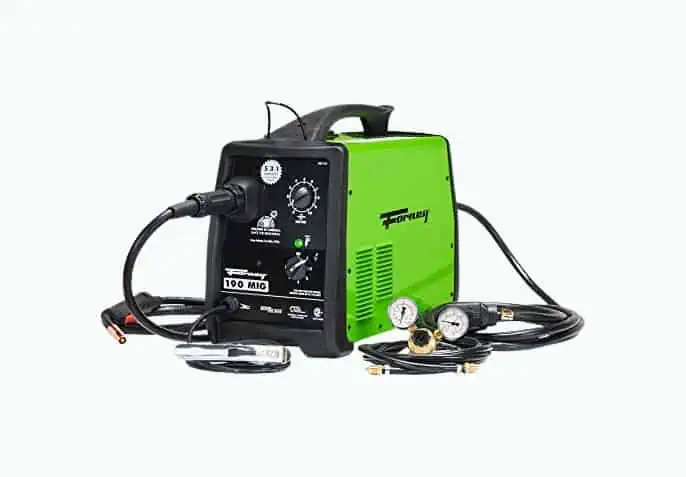
Forney 318 190-Amp MIG Welder
Best Beginner Multi-Process Welder
This is the second Forney product to feature in the review. It is MIG welding in the compact package of 230 or 120 volts. It means this is the ultimate multi-process beginner welder.
This unit is easy to use. The Euro-Connect MIG gun has TWECO style consumables, and it features a fast disconnect option for you to swap out the torch and clean the liner.
The most impressive thing about this welder is the 5-year warranty, ensuring peace of mind for the owner and confirming that the manufacturer is supremely confident in its quality.
What We Like
Cast Aluminum Wire Drive
The upgraded design makes this a high-quality option. It is made of cast aluminum to ensure that it’s very durable. It has a wire drive system, drive roll and dual geared idler all to help with easier de-spooling.
You’ll also appreciate the torch wrap for cable organizing, strain relief and integrated feet.
10-Foot MIG Gun
Users might love the sound of a longer MIG gun. A 10-foot Tweco MIG gun is included, giving you a total working envelope of around 25 feet.
Easy to Load and Unload
Thanks to the lift up door, it’s easy to load and unload this welder. It also has a large cabinet for on-board storage.
What We Don't Like
Expensive for Beginners
While this is a great choice for beginners, it’s an expensive option, coming in almost twice as much as other options. Some beginners may not want to invest that right away.
No TIG Option
This welder is multi-process in that it’s MIG and flux-cored, but it’s not a TIG welder. So keep that in mind if you were looking for one with different processes.
Product Specs
| Weight (pounds) | 76 |
| Dimensions (inches) | 20.25 x 10.25 x 16 |
| Multi-process | MIG and flux-core |
| Voltage | 120/230 |
| Max amps | 190 |
| Duty cycle | 25 percent |
| Price | $$$ |
| Warranty | 5-year |
Our Ratings
Community Feedback
| Product | Best | Weight | Dimensions | Multi-process | Voltage | Max amps | Duty cycle | Warranty |
|---|---|---|---|---|---|---|---|---|
| Lincoln Electric Power Welder | Compact | 40 lbs | 29.02 x 10.51 x 5.98″ | MIG, flux-cored, TIG, stick | 120/230 | 210 | 25% | 3-year |
| Miller Multimatic Multi-Process Welder | Professional | 56 lbs | 21 x 13 x 11″ | MIG, flux-cored, TIG, stick | 120/240 | 230 | 15% | 3-year |
| Forney Easy Weld Multi-Process Welder | Budget Pick | 25.8 lbs | 14.2 x 19.3 x 11.6″ | MIG, TIG, stick | 120 | 140 | N/A | 1-year |
| Weldpro Inverter Multi-Process Welder | Dual Voltage | 30 lbs | 17.72 x 8.66 x 14.96″ | MIG, TIG, stick | 230 | 200 | 30% | 2-year |
| Lotos Non-Touch Pilot Arc Plasma Cutter | Plasma Cutter | 42.35 lbs | 17 x 8 x 12.5″ | TIG, stick, plasma | 220 | 200 | 40% | 1-year |
| Lotos AC/DC Aluminum TIG Welder | Aluminum | 58 lbs | 28 x 13 x 17″ | MIG, TIG, stick | 220 | 200 | 60% | 1-year |
| Forney 318 | Beginner | 76 lbs | 20.25″ x 10.25″ x 16″ | MIG and flux-core | 120/230 | 190 | 25% | 5-year |
What Is a Multi-Process Welder?
It is a welder that has multiple applications. It can function as a TIG, MIG and stick welder, giving you the freedom to switch if you so choose. Not every welder will cater to all 3 methods. Some can TIG and stick weld, while others are better at MIG and stick welding. Some even plasma cut.
Are Multi-Process Welders Any Good?
It depends on what you want out of the welder. Most multi-process welders lean towards one particular style. While a welder might advertise it can perform all 3 methods, it might be better at TIG or MIG welding, as an example.
The watchword, when buying a multi-process welder, is quality. Getting the best welder for your dollars is crucial if you want a machine that will last for years and years, delivering the best consistent performance.
You could also levy the accusation that they are “Jack of all trades” machines, but they are cost-effective because they keep your expenditure low by allowing you to be flexible without adding to your costs.
They also speed up your work rate because you only need to configure one machine rather than drag another from the truck when you switch welding styles.
On a professional level, you are more likely to purchase a welder that caters to a specific style, but that’s because the standards are so much higher in the commercial and industrial sectors.
Pros
- Cost-effective.
- Saves time on set-up.
- You can swap techniques at will.
- Compact and lightweight.
- Comes with all the equipment.
- Cheaper set-up costs.
- Portable.
- Versatile.
Cons
- Putting all your eggs in one basket.
- Doesn’t specialize in any method.
- Varying degrees of quality.
- Too many cheap models that break.
How To Choose the Best Multi-Process Welder
Here are some things you need to consider when shopping for your new welder.

What Is the Primary Purpose?
As we’ve already said, multi-process welders may cater to all welding types, but they almost always perform one style better than the others. It doesn’t make sense to buy a welder for MIG work when the advertisement says it is better for TIG.
Make sure you are choosing the right machine for the correct tasks. Multi-process or not, it is likely that you will weld in one particular style for the majority of the time, and you want the welder that best compliments your favored method.
Also, some welding styles only work when you have enough power to back them up. TIG isn’t a fan of 110-volt machines, instead it typically requires a higher voltage to perform key tasks.

Welder Quality
A lot of this comes down to the budget. The more you pay, the better quality you get. That’s the theory, at least. Look for the manufacturer’s warranty as a sign of the confidence they have in their product. Expensive models tend to have longer warranties, but the flip side is you pay more.
Cheaper welders have smaller warranties, and this is because the components used in the manufacturing process are often less expensive and prone to failing sooner.

What Are You Welding?
The material you are welding requires different settings. Softer metals like mild steel are easy to weld because they require lower penetration and lower amperage and voltage. It lends itself to 110-volt welders.
Hard materials like stainless steel or cast iron may require a welder with the punch to penetrate deep enough to get the strongest bond between the two metals. In this instance, getting the most powerful machine with 220 volts and a maximum of 200 amps is required to have any impact.
If you are welding lighter or thinner materials, the amperage is less important, and a welder with a range up to 140 amps will suffice.
The current is also a factor. If you want to TIG weld aluminum, get a machine with AC and DC capabilities. DC alone won’t work with aluminum.

What Do You Want To Spend?
You can spend a little and get a budget machine that looks good on the surface. It will even perform well, though not as well as some premium brands. If you peel away the welder’s outer layer, you will discover cheaper quality components that will fail on you a lot faster than high-end models.
You always get what you pay for, and going cheap with a multi-process welder is not the best option unless you are operating with a limited budget. If you want to spend less, you might have less freedom of choice because you always have one eye on the price-tag.
Multi-Process Welder FAQs

What Is the Hardest Metal To Weld?
Surprisingly, the hardest metal to weld is aluminum. It is an alloy, and so has chemical properties that need to be understood before you start welding.

Which Type of Weld Is the Strongest?
TIG welding is more precise and accurate, and has a higher penetration level, making it the strongest type of weld. That said, different materials require different welding techniques, with some bonding better as a result.
Can I Plug a Welder Into a Regular Outlet?
You can if the voltage is 110 or even 120 volts. Anything higher and you would need an electrician to install a socket that can handle an increased amperage from a 220-volt welder. These welders are geared towards commercial and industrial use, and so have a higher voltage and amperage.

Is a Multi-process Welder Worth It?
A multi-process welder can be a worthwhile investment because it can perform multiple welding processes, such as MIG, TIG, and Stick welding. This versatility can save you money in the long run by eliminating the need to purchase separate machines for each process.
It may make it more convenient for you to switch between processes as needed for different projects.
However, multi-process welders can be more expensive than single-process welders. The added versatility may not be necessary if you only use one welding process.
It’s always a good idea to consider your specific welding needs and budget before deciding.

What Type of Welder Is Most Versatile?
A multipurpose welder, or a multi-process welder, is the most versatile. They can do MIG, TIG, stick, and flux-cored welding which is great because you can switch between welding processes without having to buy a bunch of different machines.
A multi-process welder gives you the flexibility to choose the best process for the job. So it’s more efficient and cost-effective if you’ve got a ton of different of welding projects to do.

What Is the Best Welder for Doing Body Work?
If you’re searching for the perfect welder for doing body work, the Miller 951674 Multimatic is a great option.
It has multi-process capabilities and an auto spool gun detection feature that allows the operator to quickly and easily switch between MIG, TIG, and Stick welding processes.
This multipurpose machine has dual voltage flexibility that operates on 115V and 230V outlets, cutting installation costs. At the same time, its two-gas connection feature makes it easier to avoid gas bottle mishaps with quick swapping of shielding gas bottles.

What Is the Best Multipurpose Welder?
The Lincoln Electric Powermig is an ideal multipurpose welder for DIYers and professionals. It’s incredibly lightweight and portable because of its dual-voltage input, making it perfect for taking on the road or storing away when not in use.
Its push-and-turn digital controls give users all the information they need hassle-free, and simple data entry makes programming fast and easy.
The Powermig’s intuitive user interface lets even novice welders be productive quickly, enabling them to produce professional quality welds with their first few attempts.
What a Wonderful Weld It Could Be
With a multi-process welder, you are getting the best of all worlds. You can TIG, MIG and stick to your heart’s content, and all from the comfort and convenience of one welding machine. What’s not to love about that?
So, the next time you look to upgrade your welder, think about buying a multi-process model and cover all your needs in one.