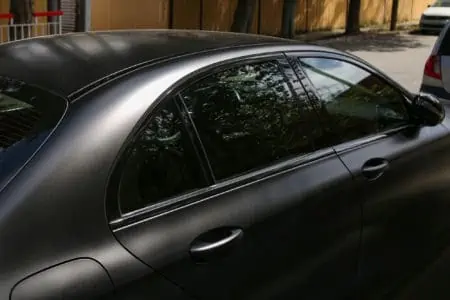
Have you ever seen a matte black car and wished your own car could look like that? Many people will tell you that matte black paint for a car isn’t worth the price.
We share all the matte black paint insider knowledge so you can determine whether it’s worth it or not yourself.
Key Takeaways
- Matte black car paint is a finish that gives cars a dull, smooth sheen and comes in various styles like true flat, satin, and semi-gloss finishes.
- Pros of matte paint include its forgiving nature with imperfections and low visibility of wash marks, while cons include higher maintenance costs and the need for specialized care products.
- Painting a car in matte black can cost anywhere from $1,000 to $6,000, with most car shops charging around $2,500.
- To maintain a matte black car, wash it every two to three weeks using wax-free shampoo, microfiber cloths, and avoid using abrasive tools and cleaners.
What is Matte Black Car Paint?
Cars with a matte black finish are actually painted in the same way as cars with standard paint. The secret is in the coat that’s applied after.
Glossy cars are given a coat with a smooth and shiny finish. While matte cars use a different clear coat, giving them a sandier texture and muted finish.
Types of Matte Black Paint for a Car
Different spray paints are used to get a variation on the finish of the matte look.
True Flat Finish
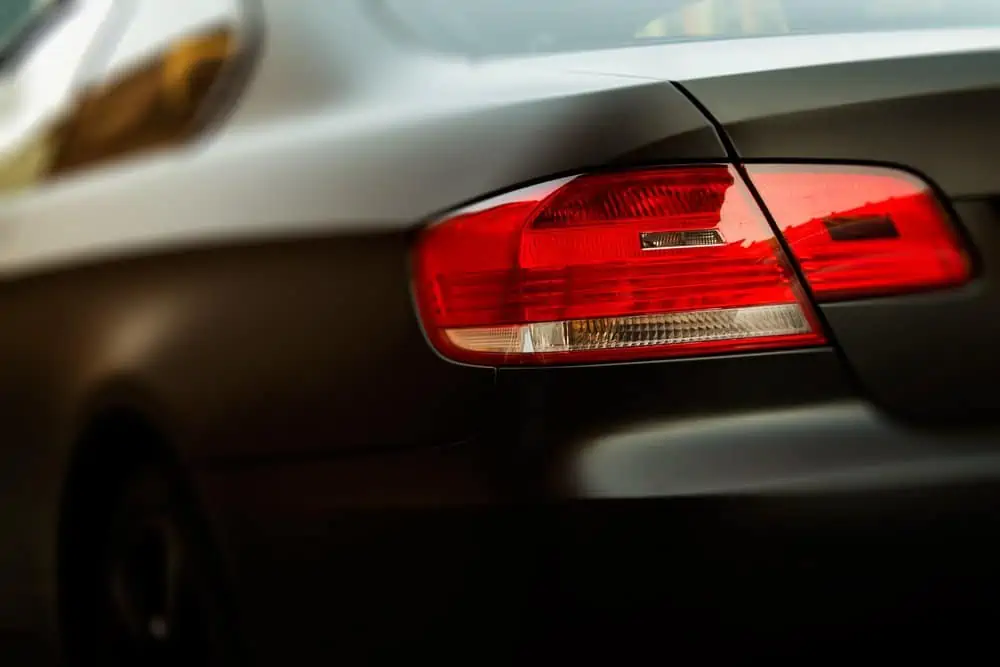
When thinking of matte paint, the finish that comes to mind is completely flat black car paint. This particular matte finish style has no gloss and gives the appearance of being gritty.
When working with a genuine flat, it is essential to steer clear of the appearance of a car that has recently been primed but does not yet have its actual paint on.
Satin Finish
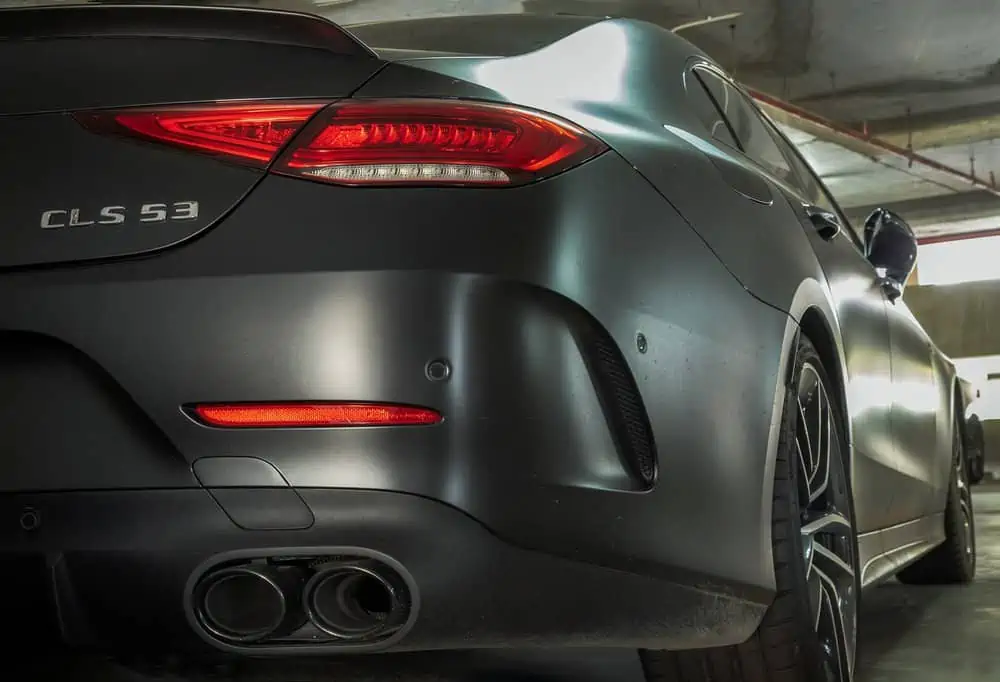
The satin look is quite stunning compared to a true flat matte or a glossy finish. The word “sheen” is the one that most accurately describes how a satin paint finish reflects light.
A satin finish on a wall has a slight shine that reflects light without creating a highly-reflective surface that a gloss finish would.
Most matte alternatives available from the manufacturer fall into this satin category. Something about it gives off an impression that is more professional and less stealthy than a finish that is a completely flat matte.
Painters can achieve satin finishes on automobiles by using a clear finish that is designed specifically for satin. This clear coat will already have a sheen applied to it when you apply it.
Semi-Gloss Finish
Even though it is the most reflective of the matte alternatives, the semi-gloss finish is still less reflective than typical automobile finishes. It can be differentiated from a satin finish in the same way an eggshell may be distinguished from white plastic.
Semi-gloss creates a more muted surface than satin. This retains the pebbled appearance of matte while semi-gloss smoothes over the matte’s tiny dimples ever so slightly.
Pros and Cons of Matte Black Paint
Yes, it’s beautiful. But use this pros and cons list to determine if it’s the right fit for you.
Pros of Matte Paint
- Plenty of products specific for maintaining a nice look on a matte black painted car exist.
- Matte black paint in itself is very forgiving with imperfections.
- Wash marks are not as visible as they are on glossy surfaces.
- Whether a BMW or a Dodge, your car can ditch that dull look.
Cons of Matte Paint
- If the clear coat is scratched, you have to repaint the area.
- Specialized care products for matte black paint translate into extra costs for maintenance.
- You need to clean a car with matte black paint using microfiber cloth only.
- It’s advisable to clean matte paint by yourself and avoid taking the car to an automatic car wash.
- A matte paint job does not come with an extra warranty despite being more difficult to care for.
- It costs more to paint the car in a matte finish than in a glossy finish.
How Much Does It Cost to Paint a Car Matte Black?
If you are considering giving your current car a matte paint finish, you should prepare for the cost. This can range anywhere from $1,000 to $6,000, depending on the quality of the paint.
However, most car shops across the US usually charge around $2,500 to paint a car matte black. A single gallon of matte paint can cost between $25 and $50.
Maintenance Tips for Matte Black Cars
Maintain your black matte coat of paint and clean it every two to three weeks. Use either ceramic coating or paint sealant to protect it, and remember, you can’t polish matte paint.
Washing the Car
Whenever your matte black car is dirty, you need to wash it using wax-free shampoo and microfiber cloths. You can also resort to prewashing using Snow Foam wash.
Dodging Scratches
To ensure matte paint doesn’t get scratched, you want to clean it using non-abrasive tools and cleaners. Remove dust and debris beforehand and wash your car using a special microfiber mitt.
Avoiding Common Mistakes
People that never owned a matte car before usually make a few common mistakes when washing the car, so here are some proper maintenance tips:
- Lubricate the paint finish instead of scrubbing it whenever you want to remove dirt.
- Don’t use sponges and brushes when cleaning your matte car.
- Avoid using dishwashing soap because it causes the paint to crack over time.
How to Protect Flat Black Car Paint
Use these tips if you have a matte black car or are considering matte black for your car.
Hand Wash the Car
Paint with a matte finish will gradually get etched. And if you are truly concerned about it, this is when a protective sealant product designed specifically for matte finishes will save you some hassle.
You can’t just take out your old arsenal of car wash supplies and use them on this vehicle like you usually would.
There is very little debate on the assertion that the washing method is equally as significant as the substance used. Don’t clean your car in one of those automatic car washes.
Matte paint requires that it be washed by hand instead. With an automatic car wash, the abrasive brushes and rollers, along with the harsh chemicals, will damage the sealants on the surface of your vehicle.
Use Matte-Specific Product
Use soaps designed specifically for matte finishes when washing your car. They perform the same functions as their conventional equivalents, but they do not contain any harsh components that can cause negative side effects.
Do not use conventional paste wax. Instead, use a paste wax that is specifically designed for matte finishes.
Alternatives to Matte Car Paint
Matte car paint isn’t your only finish option. Let’s take a peek at some other interesting ideas.
Metallic Paint Finish
Metallic automobile paint is worth considering if you’re looking for something that’s a little more flashy and reflects on the road.
A metallic finish provides a bit more flash and shine than a regular solid finish.
But you will also have access to a wider range of color options with a metallic finish as opposed to a solid finish. Metallic paints have a small amount of aluminum powder incorporated directly into the paint to give it that extra shine.
Pearlescent Paint Finish
Pearlescent finish car paint is an option drivers should consider if they want a paint job that shines out more than any other. Some dealers and manufacturers offer pearlescent finishes as an optional upgrade for an additional fee at the time of purchase.
This type of finish will reflect and refract light, making the paint color appear to have even more dimension.
A pearlescent finish can look excellent for many years if it is properly maintained, and it may even increase the value of the vehicle if it is ever sold.
FAQs

Is Matte Car Paint Still in Style?
Yes. Having a matte car is making a statement. For people who are willing to invest some money in having a car that stands out, matte auto paint is definitely the way to go.

How Do You Get Scratches Out of Matte Paint?
Since you can’t polish a matte car, dealing with scratches is more complicated. You might have to repaint the entire area for deep scratches or use touch-up paint to cover it.

Can Matte Paint Be Polished?
You can’t polish matte paint. If you do that, you will damage the finish, causing it to become shiny and blotched.

Do You Put a Clear Coat on Matte Paint?
You can. There are matte finish products available at auto part stores. These products will bond with the clear coat’s surface.
The Verdict
Matte black paint for a car makes your vehicle look awesome. There’s no questioning that. However, it does up the maintenance costs, and you have to be careful with potential scratches.
After weighing the pros and cons, it’s up to you to decide if matte black car paint is worth the cost.