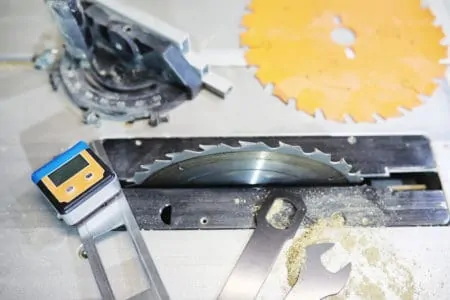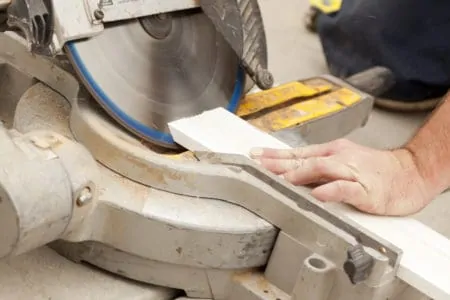
Jigsaws are one of the most important tools for any woodworker who needs to cut pieces of wood into unusual shapes. A handheld model will let you do this anywhere, rather than restricting you to your workshop as a stationary unit would.
As they are such important tools, it is no surprise that most of the world’s leading power saw brands offer handheld jigsaws. The only downside of having so many options is that you might struggle to choose a saw from the various models that are available.
To help you make an informed choice, we have reviewed seven of the best jigsaws that are available today. We chose these saws for their cutting speed and power, their grip designs, and whether or not they are cordless.
- Great versatility
- 7-amp motor
- Toolless blade removal
- Dust blower
- Beveling shoe
- Very reliable
- All-metal gear case
- Large grip
- Plastic foot cover for delicate materials
- Lightweight and cordless
- LED light
- BladeSaver
- 0 to 3,300 SPM speed control
- 4-position tracking
- Dust port adapter
- LED light illuminates cutting line
- 5.8 pounds with battery
- Brushless motor prevents overheating
- 9000 SPM maximum speed
- Dust extraction
- Robust 9.55-pound weight
Review Methodology: At Sensible Digs, we take pride in our rigorous, hands-on evaluation of the best jigsaws in the market. Our professional team brings years of experience and expertise to the table, conducting thorough research and analysis to give you reliable, data-driven recommendations. We measure and rank each product based on key performance criteria, like power, precision, durability, and user comfort. Our reviews also delve into the design choices made by manufacturers and their impact on user experience. We don’t just compare, we benchmark, providing first-hand evidence of what sets each jigsaw apart from its rivals. This thorough approach helps you make an informed decision, knowing you’re armed with the most relevant facts and findings. Trust in our standards; we’ve got your back on this journey to find the best jigsaw for your needs.
The Best Jigsaws of 2024
There are many jigsaws to choose from, including models from some of the leading names in power tools. To help you choose the right one, we looked at numerous products before reviewing seven of the best jigsaws that are currently available. These saws were chosen for their cutting speed and power, how easy they are to control, and whether they are corded or cordless.
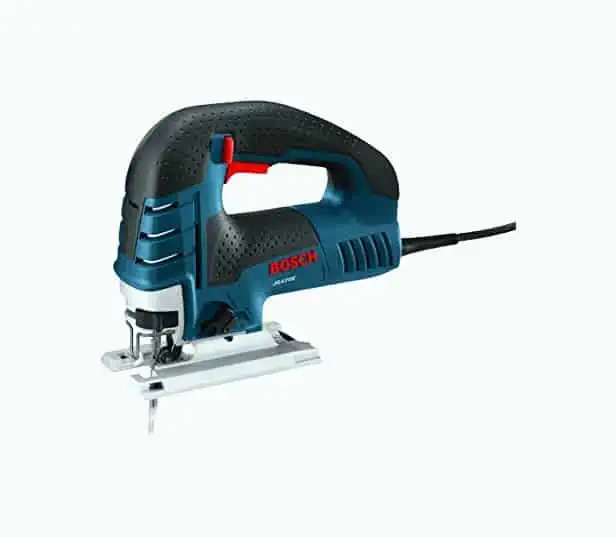
Bosch JS470E JigSaw
Best Corded Jigsaw
Bosch developed the first jigsaw and the brand remains one of the most popular options with DIYers and professionals alike. This corded saw is another great example of why the company has earned its very high reputation.
It makes smooth cuts, which reduces how much it vibrates during use. That means it is easier to handle even when cutting thick or tough materials. It has four orbital action settings, variable speed, and a 45-degree maximum bevel cut angle.
This Bosch jigsaw offers toolless blade swapping. It even has a blade ejection lever, so you won’t need to touch the blade if it is hot immediately after cutting. It is straightforward to use but very versatile, making it a great all-around option.
What We Like
Very Versatile
This jigsaw makes precise cuts while being comfortable to use, which makes it a great option for professional use. The stroke length and variable speed make it suitable for most materials, and there are four different orbital settings to ensure clean cuts.
Powerful
The 7-amp motor means this saw has enough power even for professional woodworkers. It generates a maximum speed of 3500 strokes per minute, which should help you cut through even the toughest materials.
Toolless Blade Removal
Toolless blade replacement means you can use the right blade for a specific job with a minimum of fuss. The ejection lever will allow you to remove the blade without touching it.
What We Don't Like
Quite Expensive
This saw is quite expensive compared to its competitors. It isn’t one of the most expensive power tools out there, but its price point might be too high for amateur woodworkers.
No Laser Guide
This Bosch jigsaw lacks some of the features that newer models have. One of the most helpful of these is a laser guide for precision cutting, so you will need to rely on your line of sight to make accurate cuts.
Product Specs
| Power | 7 amp motor |
| Stroke length | On wood up to 5-⅞ -inches, on aluminum up to ⅞ of an inch, and ⅜ of an inch on mild steel. |
| Speed | 500-3100 SPM |
| Weight | 5.9 pounds |
| Dust blower | Yes |
Our Ratings
User Experience
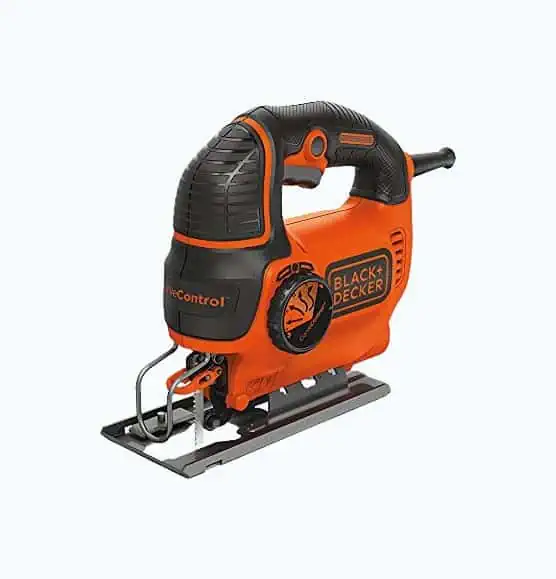
Black+Decker BDEJS600C Smart Select JigSaw
Best Jigsaw for Beginners
This Black+Decker jigsaw is user-friendly but still powerful and fast enough to make short work of most DIY projects. It is a great intermediate-level jigsaw if you want an effective saw but without spending the amount of money required for professional-grade equipment.
A major part of this Black+Decker saw’s user-friendliness is its maneuverability, as it is cordless and lightweight. You will be able to move it around more freely without having to worry about the cord getting in the way or accidentally cutting it.
This jigsaw is suitable for cutting through various types of materials. The adjustable, beveling shoe makes angled cuts easy and the orbit size can also be customized.
What We Like
Reasonably Priced
This jigsaw offers an excellent balance of cutting power and value for money. It is a safe investment for beginner woodworkers and occasional DIYers.
Useful Features
The Black+Decker BDEJS600C has all the features we expect from an intermediate jigsaw. It has a dust blower, customizable orbit size, and a beveling shoe — all of which you might see on more expensive models.
Very Reliable
Black+Decker is one of the most respected names in power tools and this jigsaw should give you years of service. This reliability means whatever money you spend on this saw can be considered a long-term investment.
What We Don't Like
Lacks Power
If you want a professional jigsaw, you might need to spend more. This model’s motor is at the low end of the scale with 5 amps, which probably won’t generate enough cutting power to slice through tougher materials.
Instability
This jigsaw has a light, stamped metallic base. This means it is less stable than some of the more expensive models, which usually have solid steel bases.
Product Specs
| Power | N/A, 5 amp variable speed motor |
| Stroke length | ¾-inch |
| Speed | Up to 3,000 SPM |
| Weight | 4.6 pounds |
| Dust blower | Yes |
Our Ratings
Personal Perspective
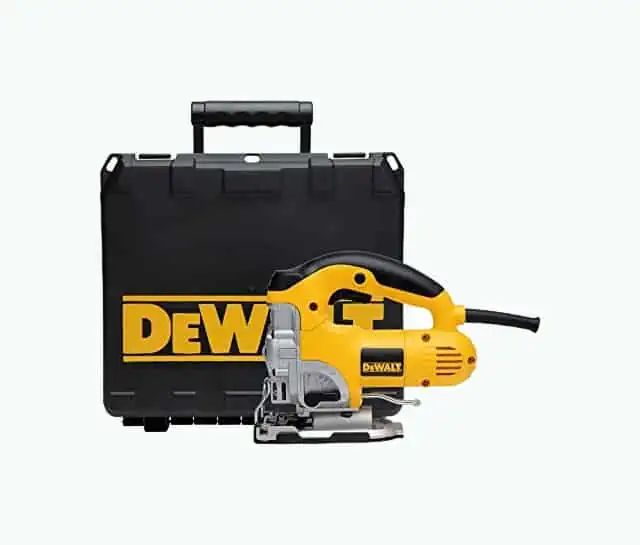
DeWalt DW331K
Best Jigsaw for Cutting Metal
This DeWalt jigsaw is an excellent versatile model that is suitable for DIYers and professionals alike. Its key features are a powerful motor and adjustable speed, which make it ideal for cutting metal.
You can slow its cutting strokes to 500 per minute. It also includes all the usual features you might need, such as its 4-position orbit changes and 4 bevel angles. The blade can be replaced without the use of tools, which makes it a quick, convenient jigsaw for users of any experience level.
With a sturdy all-metal gear case, you can trust this saw to deliver years of service for your money.
What We Like
All-Metal Gear Case
The all-metal gear case increases the saw’s durability significantly. If you want a product that will endure years of heavy use, this is a good option.
Easy Blade Replacement
This saw’s keyless blade lever allows you to swap its blade quickly and easily. It can also be used to eject the blade without touching it, which is helpful when the blade is hot immediately after cutting.
Strong Grip
The saw’s large grip helps you maintain a stable hold, ensuring it moves less while cutting. This should be reflected in your work by helping you make smoother, more precise cuts.
Sturdy Foot
The saw’s foot is very sturdy, which should result in smoother cuts. It also includes a plastic cover to protect more delicate materials by reducing the risk of scratching or other damage.
What We Don't Like
Quite Expensive
This is a mid-range saw but costs more than most saws with similar performance. It might be too expensive for beginners but doesn’t have the high-end performance that professionals and more serious amateurs expect.
Lack of Lighting
The DeWalt DW331K doesn’t have an LED light at the front, which makes it more difficult to see the cutting line. Due to its tall, sturdy design, it can also be challenging to see the cutting line from above the saw.
Product Specs
| Power | 701 watts at 6.5 amps |
| Stroke length | 1 inch |
| Speed | 500 to 3,100 |
| Weight | 6.4 pounds |
| Dust blower | Yes |
Our Ratings
Community Feedback
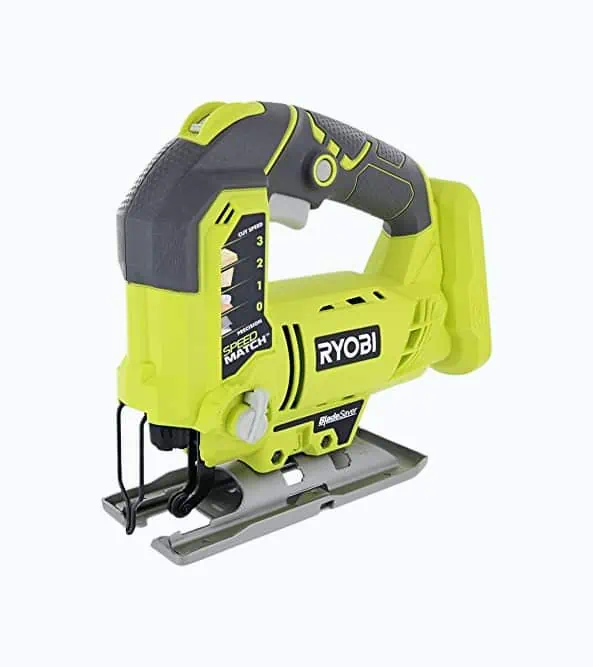
Ryobi One+ P523
Best Jigsaw for Cutting Plywood
Plywood can be challenging to cut neatly, which is why we included the Ryobi One+ P534 to address that need. The key is keeping both the orbit and speed at a minimum while cutting to avoid splintering the plywood.
This Ryobi saw will do exactly that thanks to its speed and orbit adjustments. The cordless saw is not particularly powerful, which means it won’t be suitable for tougher materials, but that also means it is ideal for cutting plywood.
Its special BladeSaver feature allows you to use another part of the blade when the usual cutting area becomes dull. This can extend the life of your blades significantly.
What We Like
Portable
This saw is both cordless and lightweight, which means it is ideal for taking wherever you need it. As it is so easy to handle, it is also a good first jigsaw for beginner DIYers.
Extra Features
The LED light and dust blower will ensure you maintain a clear view of your cutting line. It is also easy to remove and replace your blades, as you won’t even need to touch them.
BladeSaver
The BladeSaver is the standout feature of this Ryobi saw and helps to prolong the life of your blades. It extends the base of the saw so the bottom teeth can be used when the upper ones become dull.
What We Don't Like
Low Speed
The 3,000 strokes-per-minute blade speed is ideal for plywood and other soft materials, but it is unlikely to be enough for hardwood or tougher cutting jobs.
Product Specs
| Power | N/A but the battery is 18 volts |
| Stroke length | 1 inch |
| Speed | 3,000 SPM |
| Weight | 4.9 pounds |
| Dust blower | Yes |
Our Ratings
First-Hand Impression
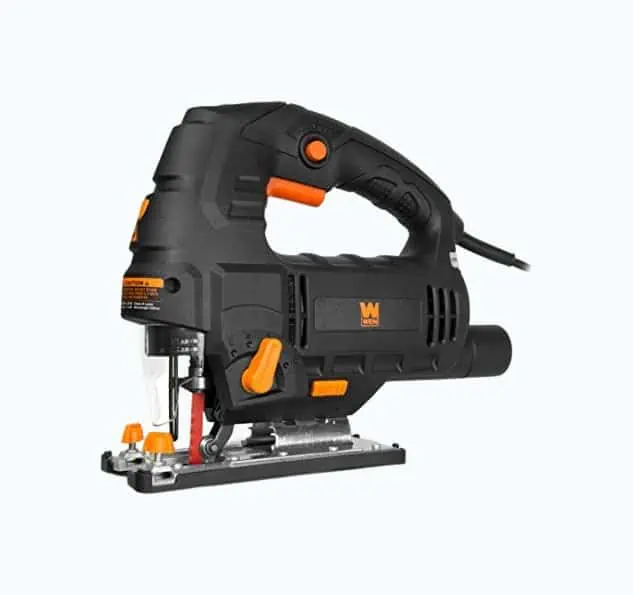
WEN 33606 6.6-Amp Variable Speed Orbital Jigsaw
Best Budget Jigsaw
This WEN jigsaw is proof that a lower price doesn’t have to mean sacrificing quality. It is affordable, user-friendly, and cuts effectively.
A 6.6-amp motor provides up to 3,300 blade strokes per minute. The speed can be adjusted to tackle different materials, making this one of the more versatile saws for people who don’t want to pay for a high-end saw.
In terms of extra features, it also has a laser guide and LED lighting to ensure you can see what you’re doing and follow your cutting line accurately. There is also a very effective dust port adapter that will help you effectively remove sawdust.
What We Like
Dust Port Adapter
This saw’s integrated dust removal device will keep sawdust away from your cutting line, which could otherwise ruin the quality of your finish or make it hard to see what you are doing. A shield and a blower keep unwanted debris out of the way to ensure you can always work in a clean space.
Adjustable Cutting
There is 4-position tracking that enables you to change the settings to suit your needs. This will help you make specialist cuts by adjusting the bevel angle (from -45 to 45 degrees) and the speed can also be adjusted to adapt the saw to different materials.
Full Speed Control
The ability to adjust speed is a key feature of any power tool and this jigsaw offers true freedom to use whichever settings you like. You can freely adjust the speed from 0 to 3,300 SPM to suit the material you are cutting and ensure you can use the saw comfortably.
What We Don't Like
Not Lightweight
At 5.4 pounds, this jigsaw is not one of the heaviest models that are available, but it is not one of the lightest either. If you will need to use it daily, consider whether or not you will be comfortable using this saw.
Alignment Issues
Some customer reviews mention experiencing alignment issues. This makes it difficult to cut straight lines, which is a common issue with handheld jigsaws.
Product Specs
| Power | 792 watts at 6.6 amps |
| Stroke length | Not specified |
| Speed | 3000 SPM |
| Weight | 5.5 pounds |
| Dust blower | Yes |
Our Ratings
User Experience
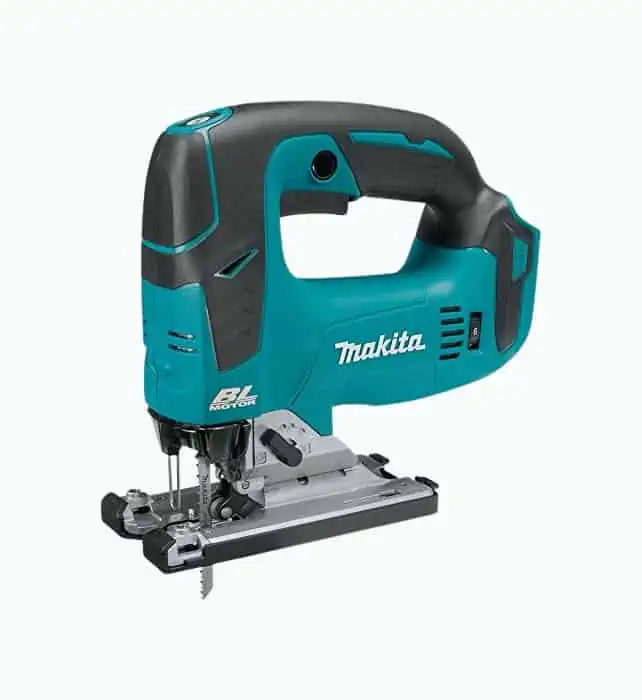
Makita XVJ02Z 18-Volt LXT
Best Cordless Jigsaw
This cordless Makita jigsaw is easy to maneuver but still provides enough cutting power to be suitable for some professional projects. It is a great option if you want a versatile cordless jigsaw without sacrificing speed or power.
It has dual LED lights to illuminate your cutting line and a bevel cut angle of up to 45 degrees. A slow start feature reduces how much the saw vibrates when you activate it, which makes it far easier to control.
The motor has no carbon brushes, which makes it highly unlikely that you will have any overheating issues. It also optimizes battery use, which also extends the life of the jigsaw itself.
What We Like
User-Friendly
This Makita saw has all the standard functions you need from a jigsaw. You can adjust its cutting speed, it has a 45-degree bevel angle, and LED lights provide a clearer view of the area you are cutting.
Average Weight
Cordless models can be quite heavy due to the addition of a battery. This one isn’t lightweight but it isn’t one of the heavier battery-powered jigsaws either.
No Overheating
The carbon-brush-free motor makes the battery last longer and means the saw won’t overheat during use. This feature could prove very valuable if you are working on a large-scale project and need to cut for longer periods.
What We Don't Like
Battery Not Included
The battery is not included with the saw, which will probably be frustrating if you don’t already have one. If you don’t have a suitable battery, buying one alongside this jigsaw could quickly get expensive.
Slow Start Mode
Some users complain that they find the slow start feature a nuisance instead of useful. This is largely a matter of personal preference.
Product Specs
| Power | N/A but the battery is 18 volts |
| Stroke length | 1 inch |
| Speed | 800-3500 SPM |
| Weight | 4.9 pounds, 5.8 with battery |
| Dust blower | Yes |
Our Ratings
Personal Perspective
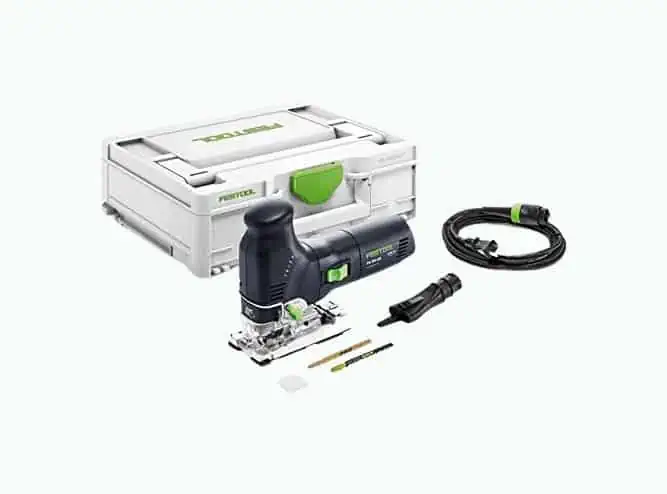
Festool 561443 PS 300 EQ
Best Jigsaw for Woodworking
This barrel-grip Festool jigsaw has been praised extensively in customer reviews. Festool may not be a household name like Bosch or Makita, but it is a highly-regarded brand among professional woodworkers.
Its extremely fast 9,000 strokes per minute will be able to cut through almost any material you require, even if its 6-amp motor is not one of the most powerful that are available.
The soft start mechanism reduces vibrations when you activate the saw, making it easier to handle. There are also splinter guards, which help reduce damage to the surrounding material when you make cuts.
What We Like
High Speed
This handheld jigsaw has one of the highest cutting speeds we have seen. Although the motor is only 6 amps, the 9000 strokes per minute are about three times the average. This speed should help it work its way through any type of wood, even large pieces of hardwood.
Dust Extraction
This model includes a dust extractor that will keep the line of sight clear while cutting, resulting in greater accuracy and safer work.
Easy to Maneuver
The Festool 551443 is both robust and easy to maneuver. It is just heavy enough that it shouldn’t vibrate much during use, which means it is more stable and easier to use for neat cuts.
What We Don't Like
Expensive
This saw is suitable for professional woodwork, which is reflected in its price. Still, if you are a professional or a serious amateur, this is an excellent jigsaw.
Product Specs
| Power | 720 watts at 6 amps |
| Stroke length | 1 inch |
| Speed | Up to 9,000 SPM |
| Weight | 9.55 pounds. |
| Dust blower | Dust Extractor |
Our Ratings
Community Feedback
| Product | Best | Power | Stroke length | Speed | Weight | Dust blower |
|---|---|---|---|---|---|---|
| Bosch JS470E | Corded Jigsaw | 7 amp motor | Wood: 5-⅞”; Aluminum: ⅞”; Mild steel: 3/8″ | 500-3100 SPM | 5.9 lbs | Yes |
| Black+Decker | Beginners | 5 amp variable speed motor | ¾” | 3,000 SPM | 4.6 lbs | Yes |
| DeWalt DW331K | Cutting Metal | 701 W at 6.5 amps | 1″ | 500 to 3,100 | 6.4 lbs | Yes |
| Ryobi One+ P523 | Cutting Plywood | 18V battery | 1″ | 3,000 SPM | 4.9 lbs | Yes |
| WEN Jigsaw | Budget Jigsaw | 792 watts at 6.6 amps | N/A | 3000 SPM | 5.4 lbs | Yes |
| Makita XVJ02Z 18-Volt LXT | Cordless Jigsaw | 18V battery | 1″ | 800-3500 SPM | 4.9 lbs | Yes |
| Festool 561443 PS 300 EQ | Woodworking | 720 W at 6 amps | 1″ | 9,000 SPM | 9.55 lbs | Extractor |
What is a Jigsaw Used For?
A jigsaw is a power tool designed for cutting circles and other awkward shapes into wood, laminate, metal, or PVC (1). It uses thin blades that can be changed to suit the material being cut.
Jigsaws aren’t very suitable for cutting straight lines and they are less sturdy than circular saws. Their blades are also vulnerable to breaking, especially if the saw is not used correctly. Even so, with a little practice, they are the best option for cutting smaller and more intricate shapes, such as circular holes and rounded corners.
The biggest advantage of a jigsaw is its versatility. While it probably won’t be very useful if you are working on a large-scale project, it is a great tool for smaller cutting jobs.
These saws are also very helpful if you know you will need to cut a variety of different materials. They will effectively cut wood and metal with the right blades, and can also be used for cutting tiles or laminate.
Choosing the Best Jigsaw
Like any power tool, the quality of jigsaws varies greatly from model to model. This can make it challenging to find the right one for you. However, there are a few things you can keep in mind that should make it easier to choose the best jigsaw possible.

Grip
There are two main types of jigsaw grips: a barrel handle and a top handle. This is largely a matter of which type you find more comfortable, but many users say they find the barrel grip easier to control. If you are unsure which grip will be right for you, you should be able to hold both types at your local hardware store to get a better idea.

Power
A strong motor is an essential part of any power saw, especially if you will use it frequently or you need to cut through tough materials. Look at the number of amps while shopping. The best saws are usually 6 to 7 amps, while cheaper saws might be around 5 amps.

Speed
In addition to the motor power, pay close attention to the strokes per minute (SPM) listed in the product specifications.
Variable speed is an important feature if you need to cut different material types. Slower speeds are better for metals, but faster cutting will provide a smoother finish, which is ideal for intricate designs.

Cord vs Cordless
Corded saws will provide power indefinitely, but they restrict your movement and mean you will need to stay near an electrical outlet. A cordless saw offers complete freedom but these battery-powered saws are usually weaker and don’t have enough power to cut hardwood or thicker pieces of material. Consider whether you will exclusively use your saw in your workshop or want to be able to make cuts anywhere.

Orbital Setting
Basic jigsaws simply move the blade up and down in a sawing motion. More advanced saws move the blade in an elliptical motion, with a slight back-and-forth action in addition to up and down. This provides a smoother cut and preserves your blades for longer.
How to Use a Jigsaw
Your first task is to choose the correct jigsaw blade for your task. You might need to buy multiple blades if you are working with different materials.
For example, metal will quickly ruin blades with big teeth and fewer teeth per inch. It requires blades with smaller, sharper teeth. If you need to cut thick pieces of metal, make sure you have some extra blades in reserve — they will wear out quickly.
Jigsaws are quite straightforward to use; you simply place the saw on the material, activate it, and guide it through. If your saw has variable speed settings, adjust it for the thickness and hardness of the material you are cutting. Wood can be cut with faster strokes, but metal and laminate should be cut more slowly.
It might take you a couple of tries to get your settings right and use your saw comfortably, so it can be helpful to cut a piece of scrap material first. It is even more important to be comfortable using the saw if you need to cut intricate designs. You should always draw the outline or design before you start sawing.
Important
Do your best to keep your hand stable with a firm grip so the blade doesn’t jump. Apply gentle pressure to keep the shoe of the jigsaw firmly on the material you are cutting. Don’t try to force the blade by moving it too quickly, as this could damage the material, the blade, or even your jigsaw itself.
FAQs

How to Cut a Straight Line With a Jigsaw
A jigsaw isn’t the best tool for reliably cutting straight lines, but that doesn’t mean it can’t be done. With a little preparation, you should be able to do it relatively easily.
Choose a wider blade for cutting straight lines, as its rigidity will make your task much easier. Narrower blades are more flexible, which makes them ideal for cutting curves but also means straight cuts will be very difficult.
You can use another block of wood, a ruler, or a straightedge to guide the jigsaw’s shoe in a straight line.

Can a Jigsaw Cut 2×4?
It is usually possible to cut a 2×4 with a jigsaw, but you need to make sure your blade is long enough. Ensure you have enough space to maneuver the saw. A 4-inch blade should technically be enough for cutting through 2×4.
Your jigsaw’s cutting power is an important factor. For cutting 2×4 wood, you will need a powerful saw, probably with a power cord instead of a battery-powered one.
Like any jigsaw cut, choosing the right blade type is essential. The thicker the wood, the fewer teeth the blade should have. It will be more difficult to cut circular shapes or anything other than a straight line when the material is thicker.
Thin blades are flexible and may end up twisting while cutting, so choose a thicker blade. If you are going to be cutting thick pieces of wood frequently, keep in mind that jigsaws are not designed for 2×4, so you should try to use an alternative saw.
Which Is Better: Jigsaws or a Circular Saws?
Whether to choose a jigsaw or a circular saw depends on the material you are cutting and the specific task. If you need to cut thicker pieces of tough wood, a circular saw will be far more suitable. Circular saws are also better for making precise straight cuts or cutting large quantities of wood.
If you need a lightweight, versatile tool, a jigsaw might be the better option. These saws enable you to cut through a variety of different materials, including cutting unusual shapes and intricate designs. They are easier to handle and can fit into spaces where a circular saw can’t.
A jigsaw will make an excellent addition to your power tool collection and can be used for various DIY tasks around your home. They are also safer due to having smaller blades and they create less mess than circular saws.

Do Jigsaw Blades Fit All Jigsaws?
Jigsaw blades are interchangeable but there are a couple of different types, so they won’t fit every saw model. The two main blade types are T-shank and U-shank. T-shank blades allow you to change the blade without tools, which makes them a more user-friendly option. They have quickly become the industry standard, but some manufacturers still make U-shank blades and you might need them if you have an older saw model.

How Much Should I Spend on a Jigsaw?
The price of jigsaws ranges between $30 and $300, and that price depends on the features it includes. Cordless jigsaws typically have a higher price tag than their corded models. But, regardless, a good jigsaw will run you close to one hundred dollars on average.

Which Type of Jigsaw Blade Offers the Cleanest Cut?
There are several things to consider, including the thickness of the blade and the material you’re cutting.
A thicker blade is better suited for cutting hardwoods, while a thinner blade gives you a more precise cut on softwoods.
In general, the best way to get a clean cut is to use a carbide-tipped blade, regardless of the material. These blades are designed to stay sharp for longer, so you won’t have to replace them as often.
Also, carbide-tipped blades produce less friction when you’re cutting, which produces less heat build-up and a much cleaner cut.

Why Do My Jigsaw Blades Keep Breaking?
There are several reasons why a jigsaw blade might break prematurely. One of the most common reasons is that the blade has become dull from repeated use.
As the blade dulls, it becomes more difficult to cut through material, putting additional tension on the blade and eventually leading to breakage.
Another common reason for premature breakage is incorrect installation. If the blade is not installed correctly, it can become loose and come out of the saw during use, leading to dangerous accidents.
Finally, blades can also break if they are made of poor-quality materials or damaged through improper care and storage. Not using enough (or too much) tension when cutting can also lead the blades to break prematurely.

Is a Brushless Jigsaw Better?
Brushless motors are very popular because they offer several advantages over traditional brushed motors.
For one, brushless motors are more efficient, meaning they’ll run longer on a single charge. They also tend to be more powerful, making them ideal for tougher cuts.
Also, brushless motors generate less heat, which makes them more durable in the long run.

What Is the Best Jigsaw Brand?
Bosch is one of the leading brands of jigsaws because their products are known for their quality and durability. They’re available in tons of styles and sizes, so they’re a good choice for both professional and beginner woodworkers.
This brand’s jigsaws are pretty easy to use, thanks to their user-friendly controls and clear instructions. Bosch also offers a wide range of accessories that you can use with their jigsaws, like blades and sanding pads.

Safety
Jigsaws are powerful tools, so it is vital to take all the necessary precautions before you start working. This includes protecting your eyes from flying debris with goggles and wearing gloves to protect your hands from splinters. You should also wear a mask — breathing in sawdust is harmful, especially if you are cutting MDF.
Always clamp the piece you are cutting in place. Make sure you are in a comfortable position and have a firm grip on the jigsaw before you start. Most importantly, always move the blade away from yourself and keep your fingers well out of the way.
Be wary of the blade when you finish cutting. It might not stop moving immediately when you release the trigger, so keep your hands away from it. The friction of cutting might also leave the blade very hot, so wait a while before you touch it. Some jigsaws have a blade release which means you won’t need to touch the blade itself to remove it.